High-density optical disc and recording/reproducing method thereof
US20100177616A1
2010-07-15
12/659,650
2010-03-16
✅ Patent granted
US 8,331,209 B2
2012-12-11
-
-
Nathan Danielsen
2030-12-07
Abstract:
A high-density optical disc such as BD-RE (Blu-ray Disc Rewritable) or BD-ROM, and a recording/reproducing method thereof are disclosed.
Assignee:
- LG ELECTRONICS INC. 44,418 🇰🇷 Seoul, South Korea
Interested in similar patents?
Get notified when new applications in this technology area are published.
Classification:
G11B20/1217 » CPC main
Signal processing not specific to the method of recording or reproducing; Circuits therefor; Digital recording or reproducing; Formatting, e.g. arrangement of data block or words on the record carriers on discs
G11B7/005 » CPC further
Recording or reproducing by optical means, e.g. recording using a thermal beam of optical radiation , reproducing using an optical beam at lower power ; Record carriers therefor; Recording, reproducing or erasing methods; Read, write or erase circuits therefor Reproducing
G11B7/00736 » CPC further
Recording or reproducing by optical means, e.g. recording using a thermal beam of optical radiation , reproducing using an optical beam at lower power ; Record carriers therefor; Arrangement of the information on the record carrier, e.g. form of tracks, actual track shape, e.g. wobbled, or cross-section, e.g. v-shaped; Sequential information structures, e.g. sectoring or header formats within a track Auxiliary data, e.g. lead-in, lead-out, Power Calibration Area [PCA], Burst Cutting Area [BCA], control information
G11B7/126 » CPC further
Recording or reproducing by optical means, e.g. recording using a thermal beam of optical radiation , reproducing using an optical beam at lower power ; Record carriers therefor; Heads, e.g. forming of the optical beam spot or modulation of the optical beam; Optical beam sources therefor, e.g. laser control circuitry specially adapted for optical storage devices; Modulators, e.g. means for controlling the size or intensity of optical spots or optical traces Circuits, methods or arrangements for laser control or stabilisation
G11B20/00086 » CPC further
Signal processing not specific to the method of recording or reproducing; Circuits therefor Circuits for prevention of unauthorised reproduction or copying, e.g. piracy
G11B2020/122 » CPC further
Signal processing not specific to the method of recording or reproducing; Circuits therefor; Digital recording or reproducing; Formatting, e.g. arrangement of data block or words on the record carriers on discs wherein the formatting concerns a specific area of the disc Burst cutting area [BCA]
G11B2020/1267 » CPC further
Signal processing not specific to the method of recording or reproducing; Circuits therefor; Digital recording or reproducing; Formatting, e.g. arrangement of data block or words on the record carriers wherein the formatting concerns a specific kind of data; Control data, system data or management information, i.e. data used to access or process user data Address data
G11B2020/1268 » CPC further
Signal processing not specific to the method of recording or reproducing; Circuits therefor; Digital recording or reproducing; Formatting, e.g. arrangement of data block or words on the record carriers wherein the formatting concerns a specific kind of data; Control data, system data or management information, i.e. data used to access or process user data; Address data Address in pregroove [ADIP] information
G11B2020/1285 » CPC further
Signal processing not specific to the method of recording or reproducing; Circuits therefor; Digital recording or reproducing; Formatting, e.g. arrangement of data block or words on the record carriers wherein the formatting concerns a specific kind of data; Control data, system data or management information, i.e. data used to access or process user data Status of the record carrier, e.g. space bit maps, flags indicating a formatting status or a write permission
G11B2220/2541 » CPC further
Record carriers by type; Disc-shaped record carriers characterised in that the disc is based on a specific recording technology; Optical discs Blu-ray discs; Blue laser DVR discs
G11B20/12 IPC
Signal processing not specific to the method of recording or reproducing; Circuits therefor; Digital recording or reproducing Formatting, e.g. arrangement of data block or words on the record carriers
G11B7/007 IPC
Recording or reproducing by optical means, e.g. recording using a thermal beam of optical radiation , reproducing using an optical beam at lower power ; Record carriers therefor Arrangement of the information on the record carrier, e.g. form of tracks, actual track shape, e.g. wobbled, or cross-section, e.g. v-shaped; Sequential information structures, e.g. sectoring or header formats within a track
G11B7/004 IPC
Recording or reproducing by optical means, e.g. recording using a thermal beam of optical radiation , reproducing using an optical beam at lower power ; Record carriers therefor Recording, reproducing or erasing methods; Read, write or erase circuits therefor
Description
This is a Continuation Application of application Ser. No. 10/645,566, filed Aug. 22, 2003, which claims priority under 35 U.S.C. §119 to Republic of Korea in Patent Application No. 10-2002-0049637, filed on Aug. 22, 2002, and Republic of Korea in Patent Application No. 10-2002-0062522, filed on Oct. 14, 2002, the contents of each of which are hereby incorporated by reference in their entirety.
BACKGROUND OF THE INVENTION
1. Field of the Invention
The present invention relates to a high-density optical disc such as BD-RE (Blu-ray Disc Rewritable) or BD-ROM, and a recording/reproducing method thereof.
2. Description of the Related Art
Recently, high-density optical discs have been developed, for example, DVD (Digital Versatile Disc), which can store a large quantity of high-quality video and audio data. Currently, such high-density optical discs are widely commercially available.
On a DVD, main A/V data is recorded in the unit of sectors each having a size of 2,084 bytes, as shown in FIG. 1. In each sector of 2,048 bytes, additional information of 16 bytes is recorded which may include ID (Identification Data), IED (ID Error Detection Code), CPR_MAI (Copyright Management Information), and EDC (Error Detection Code).
The sector ID information, which is included in the additional information, consists of 4 bytes including 1-byte sector information and 3-byte sector number information, as shown in FIG. 2.
The 1-byte sector information includes sector format type information, tracking method information, disc reflectivity information, reserved information, data type information, and layer number information, each of which has a size of 1 bit. The sector information also includes area type information of 2 bits.
For example, where the sector formation type information corresponds to ‘0b’, it represents that the main A/V data recorded on the associated sector can be reproduced or recorded by a CLV (Constant Linear Velocity) type. On the other hand, where the sector formation type information corresponds to ‘1b’, it represents that the main A/V data recorded on the associated sector can be reproduced or recorded by different types for different zones, respectively.
Also, where the tracking method information corresponds to ‘0b’, it represents a pit-based tracking operation. On the other hand, where the tracking method information corresponds to ‘1b’, it represents a groove-based tracking operation. Where the disc reflectivity information corresponds to ‘0b’, it represents a reflectivity of more than 40%. On the other hand, where the reflectivity information corresponds to ‘1b’, it represents a reflectivity of not more than 40%.
Meanwhile, where the area type information corresponds to ‘00b’, it represents that the current position corresponds to a data area. Also, where the area type information corresponds to ‘01b’, it represents that the current position corresponds to a lead-in area. The area type information corresponding to ‘10b’ represents a lead-out area, whereas the area type information corresponding to ‘11b’ represents a middle area on a dual layer optical disc. Where the data type information corresponds to ‘0b’, it represents that the main A/V data of the associated sector is read-only data. On the other hand, where the data type information corresponds to ‘1b’, it represents that the main A/V data of the associated sector is data other than read-only data.
Also, where the layer number information corresponds to ‘0b’, it represents that the current disc has a single layer or that the current layer is a first layer Layer 0 in a dual layer optical disc. On the other hand, where the layer number information corresponds to ‘1b’, it represents that the current layer is a second layer Layer 1 in the dual layer optical disc.
Accordingly, once such a DVD is loaded in an optical disc apparatus, the optical disc apparatus reads sector format type information, tracking method information, disc reflectivity information, data type information, layer number information, and area type information recorded on the DVD as sector information, in order to normally carry out a data recording or reproducing operation corresponding to the read information.
For example, servo control for data recording or reproduction should be determined in accordance with whether the sector formation type information represents a CLV type or a different type having different linear velocities for respective zones. Also, the gain of a read signal should be determined in accordance with the disc reflectivity information. Focus servo control also has to be determined in accordance with the layer information. Thus, the recording or reproducing condition should be determined in accordance with the additional information.
Meanwhile, standardization of new high-density optical discs such as BD-RE and BD-ROM has recently been conducted by associated companies. However, the data format of such BDs is essentially different from that of DVDs. Furthermore, there is no method for effectively and appropriately recording diverse information corresponding to sector information, as recorded on a DVD, on the above mentioned high-density optical disc. Accordingly, such a method is strongly demanded.
SUMMARY OF THE INVENTION
The present invention has been made in view of the above-mentioned problems, and an object of the invention is to provide a high-density optical disc such as BD-RE or BD-ROM and a recording or reproducing method thereof in which diverse additional information corresponding to sector information, as used in a DVD, is efficiently recorded in a particular information field included in a data unit recorded on a burst cutting area of the high-density optical disc or a particular 1-byte address field included in an address unit recorded on the high-density optical disc so that it can be read when the high-density optical disc is loaded in an optical disc apparatus or when a data recording or reproducing operation for the high-density optical disc is carried out.
In accordance with one aspect, the present invention provides a high-density recording medium, comprising: a burst cutting area; and a data area including an address unit, wherein additional information is recorded on at least one of the burst cutting area and the address unit, while the additional information being used to control a recording or reproduction of the recording medium.
In accordance with another aspect, the present invention provides a recording/reproducing method for a high-density optical disc, comprising the steps of: identifying information recorded in a particular information field included in a data unit read from a burst cutting area of the optical disc or in a particular address field included in an address unit read from the optical disc; and controlling a data recording or reproducing operation, based on the identified information.
BRIEF DESCRIPTION OF THE DRAWINGS
The above objects, and other features and advantages of the present invention will become more apparent after reading the following detailed description when taken in conjunction with the drawings, in which:
FIG. 1 is a schematic view illustrating the structure of a data frame in a general DVD;
FIG. 2 is a schematic view illustrating the structure of sector information in a general DVD;
FIG. 3 is a schematic view illustrating a BCA on a high-density optical disc according to the present invention;
FIG. 4 is a schematic view illustrating the structure of data units on a high-density optical disc according to an embodiment of the present invention;
FIG. 5 is a schematic view illustrating one exemplary structure of a particular information field on the high-density optical disc according to the first embodiment of the present invention;
FIG. 6 is a schematic view illustrating another exemplary structure of a particular information field on the high-density optical disc according to the first embodiment of the present invention;
FIG. 7 is a schematic view illustrating the structure of an address unit on a high-density optical disc according to a second embodiment of the present invention;
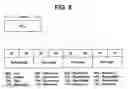
FIG. 8 is a schematic view illustrating the structure of a particular address field on the high-density optical disc according to the second embodiment of the present invention;
FIG. 9 is a schematic view illustrating the structure of a physical ADIP (Address In Pre-groove) address on the high-density optical disc according to the first or second embodiment of the present invention; and
FIG. 10 is a schematic block diagram illustrating the configuration of an optical disc apparatus for recording data on the high-density optical disc or reproducing data recorded on the high-density optical disc according to the first or second embodiment of the present invention.
DETAILED DESCRIPTION OF PREFERRED EMBODIMENTS
Hereinafter, preferred embodiments of a high-density optical disc and a recording/reproducing method thereof according to the present invention will be described in detail with reference to the annexed drawings.
The high-density optical disc according to the present invention may be either a BD-RE or a BD-ROM.
In accordance with a first embodiment of the present invention, diverse additional information required to enable a normal data recording or reproducing operation may be recorded on a burst cutting area (BCA) assigned to the high-density optical disc.
The BCA, which is assigned to the high-density optical disc, as shown in FIG. 3, is an innermost area that the optical disc apparatus first accesses when the high-density optical disc is loaded therein. On the BCA, diverse information such as enciphering information for anti-duplication of the disc is recorded in the form of a BCA code.
As shown in FIG. 4, the BCA code recorded on the BCA has a data structure in which a plurality of data units are successively recorded. Each data unit consists of data of 4 rows including a sync field of 1 byte and an information field of 4 bytes, and parity of 4 rows including a sync field of 1 byte and a carrier field of 4 bytes.
Meanwhile, diverse additional information corresponding to sector information, as used in DVDs and described with reference to FIG. 2, may be recorded in an optional information field in each data unit, for example, a first information field of each data unit, I0,0, I0,2, or I0,3. For example, recorded in the first information field I0,0, of each data unit written on the BCA of a BD-ROM may be number-of-layers information of 2 bits (b7b6=Number of Layers), disc reflectivity information of 2 bits (b5b4=Reflectivity), reserved information of 1 bit (b3=reserved), application indicator information of 1 bit (b2=Application Indicator), and data unit sequence number information of 2 bits (b1b0=Data Unit Sequence Number), as shown in FIG. 5.
In this case, where the 2-bit number-of-layers information ‘b7b6’ corresponds to ‘00b’, it represents that the associated optical disc has a structure consisting of one layer, that is, a single layer structure. Also, the number-of-layers information ‘b7b6 ’ corresponding to ‘01b’ represents that the associated optical disc has a dual layer structure. On the other hand, where the number-of-layers information ‘b7b6 ’ corresponds to ‘10b’ or ‘11b’, it represents that the associated optical disc has a triple layer structure having a third layer Layer 2 or a quadruple layer structure having a fourth layer Layer 3.
Where the 2-bit reflectivity information ‘b5b4’ corresponds to ‘00b’, it represents that the optical disc has a low reflectivity lower than a first predetermined reference value. Also, the reflectivity information ‘b5b4’ corresponding to ‘01b’ represents that the optical disc has a middle reflectivity being higher than the first predetermined reference value and lower than a second predetermined reference value, whereas the reflectivity information ‘b5b4’ corresponding to ‘11b’ represents that the optical disc has a high reflectivity higher than the second predetermined reference value.
For reference, the recording density of a BD-RE or BD-ROM is about 5 times as high as that of general DVDs. By virtue of such a high recording density, it is possible to allocate 2 bits to reflectivity information in the case of the BD-RE or BD-ROM, so that the reflectivity information can be more finely defined. Accordingly, more appropriate OPC (Optical Power Control) and AGC (Automatic Gain Control) can be carried out during data recording and reproducing operations.
Where the 1-bit application indicator information ‘b2’ corresponds to ‘0b’, it represents nonuse of an anti-duplication system. On the other hand, the application indicator information ‘b2’ corresponding to ‘1b’ represents use of the anti-duplication system.
Also, where the 2-bit data unit sequence number information ‘b1b0’ corresponds to ‘00b’, it represents that the number of the associated data unit is ‘Data Unit 0’. The data unit sequence number information ‘b1b0’ corresponding to ‘01b’ represents ‘Data Unit 1’, whereas the data unit sequence number information ‘b1b0’ corresponding to ‘10b’ represents ‘Data Unit 2’. On the other hand, the data unit sequence number information ‘b1b0’ corresponding to ‘11b’ represents ‘Data Unit 3’.
In addition to the above-described information, regional playback control information (not shown) may be recorded. Optical discs recorded with such regional playback control information cannot be played back in a particular optical recording/reproducing apparatus.
Meanwhile, the 2-bit layer information may be substituted with disc type information, as shown in FIG. 6. For example, where the disc type information ‘b7b6 ’ corresponds to ‘00b’, it represents a BD-ROM type. Also, the disc type information ‘b7b6 ’ corresponding to ‘01b’ represents a BD-R (Blu-ray Disc Recordable), whereas the disc type information ‘b7b6’ corresponding to ‘10b’ represents a BD-RE.
Also, diverse additional information corresponding to sector information, as used in DVDs, may be repeatedly recorded in the remaining information fields In,1 to In,15 (n=0, 1, 2, 3) of each data unit, in order to stably read the additional information.
In accordance with a second embodiment of the present invention, diverse additional information required to enable a normal data recording or reproducing operation may also be recorded in an address unit written on the high-density optical disc.
As shown in FIG. 7, an address unit having a size of 16 addresses×9 bytes (rows) is recorded on the high-density optical disc. Meanwhile, diverse additional information corresponding to sector information, as used in a DVD and described above in conjunction with FIG. 2, is recorded in a particular 1-byte address field of the address unit, for example, an address field corresponding to a row number of ‘4’ and an address number of ‘S’, AF4,S (S=0, 1 . . . 15).
As shown in FIG. 8, the additional information recorded in the address field AF4,S may be disc reflectivity information, zone type information, data type information, and disc type information, each of which has a size of 2 bits. Here, the disc reflectivity information and disc type information are the same as those described above.
Where the zone type information corresponds to ‘00b’, it represents that the current position corresponds to a data zone. The zone type information corresponding to ‘01b’ represents an inner zone, whereas the zone type information corresponding to ‘10b’ represents an outer zone. The zone type information is linked to the layer number information recorded in a state of being included in a physical ADIP address.
For example, where the zone type information corresponds to ‘01b’ representing an inner zone under the condition in which the current layer is determined to be the first layer of a dual layer structure, based on the layer number information, the current position corresponds to the lead-in zone of the first layer. On the other hand, where the zone type information corresponds to ‘01b’ representing an inner zone under the condition in which the current layer is determined to be the second layer of a dual layer structure, the current position corresponds to the lead-out zone of the second layer.
Meanwhile, where the data type information corresponds to ‘00b’, it represents that the associated main A/V data is read-only data. Also, the data type information corresponding to ‘01b’ represents recordable data, whereas the data type information corresponding to ‘10b’ represents rewritable data.
Also, where the disc type information corresponds to ‘00b’, it represents that the associated optical disc is a BD-ROM. On the other hand, the disc type information corresponding to ‘01b’ represents a BD-R, whereas the disc type information corresponding to ‘10b’ represents a BD-RE.
Meanwhile, layer information of 2 bits representing the current layer may be recorded in place of the data type information, in addition to the layer number information recorded in a state of being included in a physical ADIP address. Where the layer information corresponds to ‘00b’, it represents that the current layer is a first layer Layer 0. Also, the layer information corresponding to ‘01b’ represents a second layer Layer 1, whereas the layer information corresponding to ‘10b’ represents a third layer Layer 2. On the other hand, the layer information corresponding to ‘11b’ represents a fourth layer Layer 3. Alternatively, the layer information may represent the number of layers included in the associated disc.
It is also possible to perform desired control operations when a recording or reproducing operation is carried out, using the additional information according to the present invention in a state of being linked to the layer information. For example, although the layers of a high-density optical disc may be different from one another in terms of tracking control method, disc reflectivity, and data type, it is possible to carry out a stable recording or reproducing operation by performing a control operation by the unit of layers, based on the additional information.
When a BD-RE or BD-ROM according to the first embodiment of the present invention is loaded in an optical disc apparatus including an optical pickup 11, a VDR (Video Disc Recording) system 12, and an encoder 13, as shown in FIG. 10, the optical disc apparatus preferentially accesses the BCA of the optical disc, and reads the reflectivity information recorded in the first information field of each data unit, thereby performing OPC and AGC operations. Also, the optical disc apparatus reads the layer information and disc type information recorded in the first information field of each data unit, so that it carries out a normal data recording or reproducing operation, based on the read information.
On the other hand, when a BD-RE or BD-ROM according to the second embodiment of the present invention is loaded in the optical disc apparatus, the optical disc apparatus reads the reflectivity information, zone type information, data type information and disc type information recorded in the address unit of the optical disc while performing a data recording or reproducing operation thereof, so that it normally carries out the data recording or reproducing operation, based on the read information.
Alternatively, the additional information according to the present invention may be recorded in a state of being included in file system data or navigation data recorded at the leading position of the data area on an optical disc. Where this method is combined with the method according to the first or second embodiment of the present invention, so as to record the additional information in both the leading position of the data area and the BCA or address unit, it is possible to perform a desired control operation using the information before and/or during the data recording or reproducing operation.
As apparent from the above description, the present invention provides a high-density optical disc and a recording/reproducing method thereof which enable optimal optical power control and automatic gain control or identification of a current position, while enabling a normal data recording or reproducing operation corresponding to the type of the optical disc.
Although the preferred embodiments of the invention have been disclosed for illustrative purposes, those skilled in the art will appreciate that various modifications, additions and substitutions are possible, without departing from the scope and spirit of the invention as disclosed in the accompanying claims.
Claims
What is claimed is:1. A recording medium, comprising:
an information zone including a lead-in area, a data zone in which main data is recorded or to be recorded and a lead-out zone; and
a burst cutting area prior to the information zone, the burst cutting area including one or more data units;
wherein the control information is included in at least one data unit, the control information containing medium type information,
wherein each data unit includes 4 rows data and 4 rows parity, each row of said 4 rows data including a sync field of 1 byte and an information field of 4 bytes, each row of said 4 rows parity including a sync field of 1 byte and a parity field of 4 bytes.
2. The recording medium as set forth in claim 1, wherein the medium type information represents the type of a BD-ROM (BD-Read Only Memory), a BD-R (BD-Recordable), or BD-RE (BD-Rewritable).
3. The recording medium as set forth in claim 1, wherein the information field of 4 bytes or the parity field of 4 bytes is preceded by the sync field of 1 byte.
4. The recording medium as set forth in claim 1, wherein the control information is recorded in a first data unit.
5. The recording medium as set forth in claim 1, wherein the control information is repeatedly recorded in each data unit.
6. The recording medium as set forth in claim 1, wherein the medium information in the lead-in area includes the control information in the burst cutting area.
7. The recording medium as set forth in claim 1, wherein the control information further includes layer information.
8. The recording medium as set forth in claim 1, wherein the control information further includes a sequence number to identity a data unit.
9. The recording medium as set forth in claim 1, wherein the control information further includes a reflectivity information, the reflectivity information representing the reflectivity of the recording medium.
10. A method for recording or reproducing data on or from recording medium, comprising the steps of:
identifying information recorded in a lead-in area and a burst cutting area of the recording medium; and
controlling data to record or reproduce the recording medium based on the identified information,
wherein the information is included in at least one data unit, the information containing medium type information,
wherein each data unit includes 4 rows data and 4 rows parity, each row of said 4 rows data including a sync field of 1 byte and an information field of 4 bytes, each row of said 4 rows parity including a sync field of 1 byte and a parity field of 4 bytes.
11. The method as set forth in claim 10, wherein the information field of 4 bytes or the parity field of 4 bytes is preceded by the sync field of 1 byte.
12. The method as set forth in claim 10, wherein the identifying step identifies the information recorded in a first data unit.
13. The method as set forth in claim 10, wherein the information is repeatedly included in each data.
14. The method as set forth in claim 10, wherein the medium type information represents the type of a BD-ROM (BD-Read Only Memory), a BD-R (BD-Recordable), or a BD-RE (BD-Rewritable).
15. The method as set forth in claim 10, wherein the information includes reflectivity information of the recording medium, thereby controlling an optical power or an automatic gain for a recording or reproducing operation.
16. The method as set forth in claim 10, wherein the information includes a sequence number to identify a data unit, thereby identifying the data unit that includes the information.
17. The method as set forth in claim 10, further comprising:
moving an optical pickup to read data recorded on the burst cutting area of the recording medium; and
processing the read data to identify the information.
18. An apparatus for recording or reproducing data on or from a recording medium, the apparatus comprising:
an optical pickup configured to read data from a recording medium or record data on a recording medium;
a controller operatively connected to the optical pickup and configured to control the optical pickup to read information recorded in a lead-in area and a burst cutting area of the recording medium, the burst cutting area being located prior to a lead-in area, and including one or more data units,
wherein the information is included in at least one data units and the information includes medium type information,
wherein each data unit includes 4 rows data and 4 rows parity, each row of said 4 rows data field including a sync field of 1 byte and an information field of 4 bytes, each row of said 4 rows parity field including a sync field of 1 byte and a parity field of 4 bytes sequentially.
19. The apparatus of claim 18, wherein the information further includes layer information.
20. The apparatus of claim 18, wherein the medium type information represents the type of a BD-ROM (BD-Read Only Memory), a BD-R (BD-Recordable), or BD-RE (BD-Rewritable).
21. The apparatus of claim 18, wherein the information further includes reflectivity information and the reflectivity information indicates the reflectivity of the recording medium.
22. The apparatus of claim 21, wherein the reflectivity information is required for an optical power control or an automatic gain control when a data recording or reproducing operation is carried out.
23. The apparatus of claim 18, wherein the information further includes an application indicator to indicate use of a copy protection system.
24. The apparatus of claim 18, wherein the information is recorded in a first data unit.
Images & Drawings included:






Sources:
- United States Patent and Trademark Office - verify current appl. status at the USPTO↗
Similar patent applications:
Recent applications in this class:
- » 20250182792 2025-06-05
SECTOR SLIDING IN SHINGLED MAGNETIC RECORDING HARD DISK DRIVE - » 20250182791 2025-06-05
DYNAMIC TRACK PITCH IN SHINGLED MAGNETIC RECORDING HARD DISK DRIVE - » 20250095684 2025-03-20
MAGNETIC DISK APPARATUS AND METHOD - » 20250054517 2025-02-13
Magnetic disk drive and data control method - » 20230402061 2023-12-14
Recording medium, recording apparatus, recording method, reproducing apparatus, and reproduction method - » 20220262400 2022-08-18
Magnetic disk device and write processing method - » 20220013145 2022-01-13
Hard disk format conversion method and apparatus, and storage device - » 20210090606 2021-03-25
MAGNETIC DISK DEVICE - » 20210065744 2021-03-04
MAGNETIC DISK DEVICE AND METHOD OF CONTROLLING MAGNETIC DISK DEVICE - » 20200294548 2020-09-17
Method for accessing shingled magnetic recording SMR disk, and server
Recent applications for this Assignee:
- » 20250294563 2025-09-18
METHOD AND DEVICE FOR INCREASING UPLINK CONTROL RESOURCES IN WIRELESS COMMUNICATION SYSTEM - » 20250294548 2025-09-18
METHOD AND DEVICE FOR TRANSMITTING/RECEIVING SIGNAL IN WIRELESS COMMUNICATION SYSTEM - » 20250294465 2025-09-18
METHOD AND APPARATUS FOR PERFORMING UPLINK TRANSMISSION IN WIRELESS COMMUNICATION SYSTEM - » 20250294425 2025-09-18
METHOD AND APPARATUS FOR MOBILITY BASED ON HEIGHT IN A WIRELESS COMMUNICATION SYSTEM - » 20250294206 2025-09-18
DISPLAY DEVICE AND CONTENT SHARING METHOD FOR SHARING CONTENT WITH EXTERNAL DISPLAY DEVICE - » 20250294153 2025-09-18
METHOD FOR CODING IMAGE ON BASIS OF SELECTIVE TRANSFORM AND DEVICE THEREFOR - » 20250294150 2025-09-18
METHOD AND APPARATUS FOR CABAC-BASED ENTROPY CODING - » 20250294136 2025-09-18
AFFINE MOTION PREDICTION-BASED IMAGE DECODING METHOD AND APPARATUS USING AFFINE MVP CANDIDATE LIST IN IMAGE CODING SYSTEM - » 20250292745 2025-09-18
SINK DEVICE AND OPERATING METHOD THEREOF - » 20250291418 2025-09-18
ELECTRONIC DEVICE HAVING TOUCH PAD REGION AND KEYBOARD