NON-WOVEN GAUNTLETS FOR BATTERIES
US20100203395A1
2010-08-12
11/913,112
2006-04-27
Abstract:
The present invention concerns non-woven, cartridge belt type gauntlet for lead acid batteries comprising two sheets of spunbond, needled and flat calendared thermobonded bicomponent PET-PBT nonwoven fabric assembled together at regular intervals.
Assignee:
- AMER-SIL S.A. 4 🇱🇺 KEHLEN, Luxembourg
Interested in similar patents?
Get notified when new applications in this technology area are published.
Classification:
D04H3/105 » CPC main
Non-woven fabrics formed wholly or mainly of yarns or like filamentary material of substantial length characterised by the method of strengthening or consolidating with bonds between yarns or filaments made mechanically by needling
H01M50/463 » CPC further
Constructional details or processes of manufacture of the non-active parts of electrochemical cells other than fuel cells, e.g. hybrid cells; Separators; Membranes; Diaphragms; Spacing elements inside cells Separators, membranes or diaphragms characterised by their shape
B32B1/08 » CPC further
Layered products having a general shape other than plane Tubular products
B32B5/022 » CPC further
Layered products characterised by the non- homogeneity or physical structure, i.e. comprising a fibrous, filamentary, particulate or foam layer; Layered products characterised by having a layer differing constitutionally or physically in different parts characterised by structural features of a layer Non-woven fabric
B32B5/06 » CPC further
Layered products characterised by the non- homogeneity or physical structure, i.e. comprising a fibrous, filamentary, particulate or foam layer; Layered products characterised by having a layer differing constitutionally or physically in different parts characterised by structural features of a layer characterised by a fibrous layer to another layer, e.g. of fibres, of paper
B32B5/08 » CPC further
Layered products characterised by the non- homogeneity or physical structure, i.e. comprising a fibrous, filamentary, particulate or foam layer; Layered products characterised by having a layer differing constitutionally or physically in different parts characterised by structural features of a layer the fibres or filaments of a layer being of different substances, e.g. conjugate fibres, mixture of different fibres
B32B5/26 » CPC further
Layered products characterised by the non- homogeneity or physical structure, i.e. comprising a fibrous, filamentary, particulate or foam layer; Layered products characterised by having a layer differing constitutionally or physically in different parts characterised by the presence of two or more layers which are next to each other and are fibrous, filamentary, formed of particles or foamed one layer being a fibrous or filamentary layer another layer also being fibrous or filamentary
B32B7/09 » CPC further
Layered products characterised by the relation between layers; Layered products characterised by the relative orientation of features between layers, or by the relative values of a measurable parameter between layers, i.e. products comprising layers having different physical, chemical or physicochemical properties; Layered products characterised by the interconnection of layers; Interconnection of layers by mechanical means by stitching, needling or sewing
B32B7/10 » CPC further
Layered products characterised by the relation between layers; Layered products characterised by the relative orientation of features between layers, or by the relative values of a measurable parameter between layers, i.e. products comprising layers having different physical, chemical or physicochemical properties; Layered products characterised by the interconnection of layers; Interconnection of layers at least one layer having inter-reactive properties
B32B7/12 » CPC further
Layered products characterised by the relation between layers; Layered products characterised by the relative orientation of features between layers, or by the relative values of a measurable parameter between layers, i.e. products comprising layers having different physical, chemical or physicochemical properties; Layered products characterised by the interconnection of layers; Interconnection of layers using interposed adhesives or interposed materials with bonding properties
D04H3/14 » CPC further
Non-woven fabrics formed wholly or mainly of yarns or like filamentary material of substantial length characterised by the method of strengthening or consolidating with bonds between thermoplastic yarns or filaments produced by welding
H01M50/403 » CPC further
Constructional details or processes of manufacture of the non-active parts of electrochemical cells other than fuel cells, e.g. hybrid cells; Separators; Membranes; Diaphragms; Spacing elements inside cells Manufacturing processes of separators, membranes or diaphragms
H01M50/411 » CPC further
Constructional details or processes of manufacture of the non-active parts of electrochemical cells other than fuel cells, e.g. hybrid cells; Separators; Membranes; Diaphragms; Spacing elements inside cells; Separators, membranes or diaphragms characterised by the material Organic material
H01M50/44 » CPC further
Constructional details or processes of manufacture of the non-active parts of electrochemical cells other than fuel cells, e.g. hybrid cells; Separators; Membranes; Diaphragms; Spacing elements inside cells; Separators, membranes or diaphragms characterised by the material Fibrous material
B32B2250/02 » CPC further
Layers arrangement 2 layers
B32B2250/20 » CPC further
Layers arrangement All layers being fibrous or filamentary
B32B2260/023 » CPC further
Layered product comprising an impregnated, embedded, or bonded layer wherein the layer comprises an impregnation, embedding, or binder material; Composition of the impregnated, bonded or embedded layer; Fibrous or filamentary layer Two or more layers
B32B2260/046 » CPC further
Layered product comprising an impregnated, embedded, or bonded layer wherein the layer comprises an impregnation, embedding, or binder material; Impregnation, embedding, or binder material Synthetic resin
B32B2262/0284 » CPC further
Composition or structural features of fibres which form a fibrous or filamentary layer or are present as additives; Synthetic macromolecular fibres; Polyester fibres Polyethylene terephthalate [PET] or polybutylene terephthalate [PBT]
B32B2262/12 » CPC further
Composition or structural features of fibres which form a fibrous or filamentary layer or are present as additives Conjugate fibres, e.g. core/sheath or side-by-side
B32B2307/206 » CPC further
Properties of the layers or laminate having particular electrical or magnetic properties, e.g. piezoelectric Insulating
B32B2307/50 » CPC further
Properties of the layers or laminate having particular mechanical properties
B32B2307/51 » CPC further
Properties of the layers or laminate having particular mechanical properties Elastic
B32B2307/54 » CPC further
Properties of the layers or laminate having particular mechanical properties Yield strength; Tensile strength
B32B2307/736 » CPC further
Properties of the layers or laminate; Other properties; Dimensional properties; Dimensional stability Shrinkable
B32B2307/738 » CPC further
Properties of the layers or laminate; Other properties Thermoformability
B32B2457/10 » CPC further
Electrical equipment Batteries
B32B2597/00 » CPC further
Tubular articles, e.g. hoses, pipes
H01M10/06 » CPC further
Secondary cells; Manufacture thereof Lead-acid accumulators
H01M2300/0085 » CPC further
Electrolytes Immobilising or gelification of electrolyte
Y02E60/10 » CPC further
Enabling technologies; Technologies with a potential or indirect contribution to GHG emissions mitigation Energy storage using batteries
Y02E60/10 » CPC further
Enabling technologies; Technologies with a potential or indirect contribution to GHG emissions mitigation Energy storage using batteries
Y10T428/24826 » CPC further
Stock material or miscellaneous articles; Structurally defined web or sheet [e.g., overall dimension, etc.]; Discontinuous or differential coating, impregnation or bond [e.g., artwork, printing, retouched photograph, etc.] Spot bonds connect components
Y10T442/2861 » CPC further
Fabric [woven, knitted, or nonwoven textile or cloth, etc.]; Coated or impregnated woven, knit, or nonwoven fabric which is not [a] associated with another preformed layer or fiber layer or, [b] with respect to woven and knit, characterized, respectively, by a particular or differential weave or knit, wherein the coating or impregnation is neither a foamed material nor a free metal or alloy layer Coated or impregnated synthetic organic fiber fabric
Y10T442/662 » CPC further
Fabric [woven, knitted, or nonwoven textile or cloth, etc.]; Nonwoven fabric [i.e., nonwoven strand or fiber material]; Including an additional nonwoven fabric; Additional nonwoven fabric is a spun-bonded fabric Needled
D04H1/42 IPC
Non-woven fabrics formed wholly or mainly of staple fibres or like relatively short fibres from fleeces or layers composed of fibres without existing or potential cohesive properties characterised by the use of certain kinds of fibres insofar as this use has no preponderant influence on the consolidation of the fleece
B32B27/36 IPC
Layered products comprising synthetic resin comprising polyesters
Description
TECHNICAL FIELD OF THE INVENTION
The present invention relates to non-woven gauntlets for lead-acid batteries.
BRIEF DESCRIPTION OF RELATED ART
Lead acid batteries are widely used and include adjacent positive and negative electrodes immersed in an electrolyte and spaced by separators.
Lead-acid batteries of the tubular type are customarily constructed with tubular positive plates, constituent parts of which include: a grid member having a top bar; a post or burning lug and a plurality of current carrying spines; pencils of active material surrounding the current carrying spines; tubular bodies arranged to support and confine the pencils of active material and maintain such active mass in contact with the current carrying spines; and means for closing ends of the tubes.
The tubular bodies are required to provide a number of functions including: enclosure and support of the active material to maintain the active material in contact with the spines; maintenance of the dimensional stability of the pencils of active material particularly during periods of swelling of the active material; and, finally, provision of adequate communication between the electrolyte and the active material throughout the length of the tubular bodies.
From the early 1950s up to now, the tubular plate has evolved from the single tube design (PVC tubes and woven or braided tubes of C-glass fibers protected first by a perforated plastic armor, then by impregnation with phenolic resin to the more economical and productive multitube gauntlet concept. The first generation of gauntlets, still in use for some applications, were made of woven polyester fabric impregnated with phenolic and then thermoplastic acrylic resin.
Since the 1980s, the tubular gauntlet has further evolved to include modern non-woven fabrics.
Up to now the standard (and only) material used by the industry to produce non-woven gauntlets, in which the positive active mass (lead dioxide) is inserted for the production of tubular positive plates of lead-acid batteries is a point-bonded polyester spunbond material, which means that the fabric strength and cohesion is made by melting the PET filament in many points with a hot calendar. The number of points per cm2 and the point size depends on the calendar roll. The fabric is impregnated with an acrylic resin in order to protect the PET filaments from chemical attack from the sulphuric acid electrolyte or the oxidative positive active mass (Pb02).
BRIEF SUMMARY OF THE INVENTION
The invention provides a new, non-woven gauntlet with a higher burst strength and a lower electrical resistance.
In order to overcome the above-mentioned problems, the present invention proposes a non-woven, cartridge belt type gauntlet for lead acid batteries comprising two sheets of spunbond, needled and flat thermobonded bicomponent PET-PBT non-woven fabric assembled together at regular intervals.
The fabric used in the present invention is a flat calendared material made of a mixture of PET and PBT filaments, the later having a lower melting point and being melted during calendaring in order to impart the fabric strength.
Surprisingly, these gauntlets have an electrical resistance of less than 180 mΩ·cm2, and a burst pressure of more than 16 bars.
Up to now it was not possible to obtain a non-woven gauntlet having such a high burst pressure and at the same time such a low electrical resistance.
Preferably, the fabric is assembled by sewing, stitching, thermal bonding, ultrasonic bonding, gluing or a combination thereof so as to form the cartridge belt type of gauntlet.
According to a preferred embodiment, the non-woven fabric is impregnated with a thermoplastic resin. The resin is chosen among the group consisting of: acrylic resins like e.g. methyl methacrylate resins or butyl acrylate/methyl acrylate copolymer resins, styrene-butadiene resins, phenolic resins or mixtures thereof. The fabric can be impregnated during the production between the calendaring and the winding steps, or the impregnation can be made off line.
Furthermore, the invention also concerns the use of spunbond, flat calendared bicomponent PET-PBT non-woven fabric for the manufacture of a non-woven, cartridge belt type gauntlet for lead acid batteries comprising two sheets of said fabric stitched together at regular intervals.
Additionally, the invention also concerns lead acid battery of the tubular type, stationary gel batteries and stationary flooded batteries comprising a gauntlet as described above.
BRIEF DESCRIPTION OF THE FIGURES
The present invention can more fully be understood from the following description taken in conjunction with accompanying figures in which:
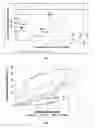
FIG. 1 shows the electrical resistance versus mechanical strength for gauntlets made with different types of non-woven fabric;
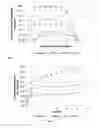
FIG. 2 shows the mechanical properties of gauntlets made with different types of non-woven fabrics-Tube expansion as a function of increasing and decreasing internal pressure load;
FIG. 3 represents the hysteresis of tube deformation: difference between tube expansion while increasing internal tube pressure and decreasing internal tube pressure after a load at 10 bars (based on FIG. 2);
FIG. 4 shows the elastic properties of gauntlets: tube submitted to 10 successive expansions from 0 to 10 bars (simulation of positive active mass breathing);
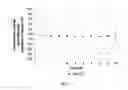
FIG. 5 represents the gauntlets elastic properties: tube diameter changes when internal tube pressure is back to 0 after successive pressure loads up to 10 bars (simulation of positive active mass breathing).
DETAILED DESCRIPTION OF THE INVENTION
The process to manufacture non-woven (cartridge-belt type) gauntlets consists on joining two strips of polyester non-woven fabric at predetermined intervals with a multi-needles sewing machine, then thermo forming the multitube panel into the desired tube geometry. The thermoforming is made in an oven by inserting hot rods in between both fabric layers, between each two adjacent sewing lines.
The fabric has to have the ability to shrink around the rods at the desired temperature (typically between 160 and 200° C.) in order to keep the 3 dimensional tube shape and dimensions. The preferred shrinkage is typically around 1.5% at 160° C. and 2.5% at 200° C.:
-
- if the shrinkage is higher, the fabric will be too strongly bound around the rods, leading to production problems (low speed, difficulty to push the rods out of the formed tubes . . . );
- if the shrinkage is lower, the formed tubes will not keep the requested shape, the tube will not be rigid enough and the gauntlets dimensions will not be adequate (width and thickness).
Therefore, beside the initial fabric strip width and sewing pitch, the fabric shrinkage and applied temperature during formation are very important parameters, as they determine the final gauntlet width and tubes diameter. These dimensions are of first importance, as they will fix the final positive plate width and thickness (directly correlated to the amount of active mass entrapped and therefore to the battery capacity) to be inserted in the battery container.
Besides the shrinkage, other fabric characteristics are important for a good final gauntlet quality:
-
- The tensile strength of the fabric in the machine direction (MD) and cross direction (CD) has to be high enough so that the formed gauntlet resists some internal pressures (burst strength) above 10 bars. The reason is that the gauntlets filling with the positive active mass may be done by injection of a lead oxide paste at moderate, high or very high pressure depending on the filling machine.
- The electrical resistance has to be as low as possible in order to limit the internal resistance of the battery cells.
- The fabric elongation has to be chosen carefully so that the finished gauntlets have good elastic properties. This is of first importance because the positive active mass undergoes volume changes during alternate charges and discharges due to the alternate transformation of Pb02 into PbSO4 and vice versa. This phenomenon is known as active mass “breathing”. The gauntlet has to limit the active mass expansion and, more importantly, to be elastic enough to perfectly constrain the active mass during contraction and recover its initial tube diameter after contraction. This is the only way to ensure the permanent cohesion of the active mass particles among themselves and around the lead spine and is of first importance to maintain the capacity along the life.
Even if gauntlets made with the current PB1 type fabric (sold e.g. by Johns Manville under the trade name Duraspun™, or by Mogul company under the trade name Moped™) improve performance of most of the industrial traction batteries compared to woven gauntlets, they keep some mechanical weaknesses which don't enable battery manufacturers to generalize their use to any type of lead-acid batteries with any type of production tools:
-
- (1) For example, the standard fabrics type PB1 are well suited for moderate pressure of the “Hadi” machines, but are most of the time too weak for the aggressive filling of the “Hoppecke” machines (cf. Table 1 burst strength of gauntlets made with PB1a and PB1b coming from two different suppliers).
- (2) Gauntlets made with the standard type PB1 fabrics have enough elasticity to be used in industrial traction flooded batteries. However, their oxidation resistance, mechanical properties and elasticity are more questionable for an utilization in the most demanding applications like stationary gel batteries and stationary flooded batteries due to the longer cycle life requested from these batteries. With fabric type PB1 non-woven gauntlets, the active mass is suspected to be not constraint enough and undergoes density changes and connections loss leading to capacity decay.
Different methods have been tried to reinforce the standard point bonded polyester fabric type PB1 by changing the formulation and production parameters in various ways. The best results were obtained with polyester point-bonded fabric type PB2, which is a modified version of Duraspun™ sold by Johns Manville. As mentioned in Table 1, the tensile strength in both directions have bee improved.
The impact on gauntlets properties was a slight increase of the burst strength (from 13.6 to 14.6 bars) and a slightly better elastic modulus, as illustrated by the testing results on FIGS. 2 to 4.
Unfortunately, however, beside to the improvement of the mechanical properties and elasticity, the electrical resistance has also been increased very much (from 195-250 to 405 mΩ·cm2), which is harmful for the battery electrical performance (Table 1).
| TABLE 1 |
| physical properties of different types of non-woven polyester |
| fabrics and main properties of resulting non-woven gauntlets. |
| Fabric properties | FABRIC TYPE |
| (typical values) | PB1 | PB2 | New FC | |
| Grammage | g/m2 | 150 +/− 10 | 190 +/− 10 | 190 +/− 10 |
| Bonding points | mm | 0.8 | 0.8 | None |
| size | ||||
| Bonding points | 1952 | 1952 | None | |
| per 100 cm2 | ||||
| Filament dtex | 4 | 4 | 4 | |
| Tension MD | N/5 cm | 433 | 552 | 549 |
| Tension CD | N/5 cm | 375 | 546 | 435 |
| Elongation MD | % | 28.2 | 33.9 | 35.8 |
| Elongation CD | % | 33.7 | 34.5 | 23.1 |
| Electrical | mΩ · cm2 | 60 | 160 | 70 |
| Resistance | ||||
| Air permeability | l/m2 · s | 1320 | 600 | 950 |
| Pore volume | % | 74.6 | 64.5 | 71.6 |
| Pore size | min | 19 | 14 | 17 | |
| mean | μm | 39 | 38 | 41 | |
| max | 62 | 116 | 108 |
| Shrinkage at | % | 1.5 | 1.5 | 0.5 |
| 160° C. | ||||
| Shrinkage at | % | 2.5 | 2.5 | 1 |
| 200° C. | ||||
| Gauntlets properties | PB1 |
| (typical values) | PB1a | PB1b | PB2 | New FC | |
| Burst strength | bars | 13.6 | 10.4 | 14.6 | 19.5 |
| Electrical Resistance | mΩ · cm2 | 195 | 250 | 405 | 157 |
The gauntlets according to the present invention have been developed with different type of non-woven polyester fabric (referred as New FC in Table 1).
The fabric is a mixture of PET (polyethylene terephthalate) and PBT (polybutylene terephtalate) filaments with a higher denier (leading to higher oxidation resistance), which are deposited on a belt using the spunbond technology, and calendared under heat and pressure in between flat rolls. Such fabrics are sold e.g. by Freudenberg Politex under the trade name Terbond™ and usually used for roofing applications.
This material has a totally different aspect than the other fabrics used in the manufacture of gauntlets. Furthermore, its physical properties do not look promising compared to the standard PB1 or reinforced PB2 materials:
-
- the tensile strength and elongation are better than PB1 but lower than PB2, while the electrical resistance, pore volume, air permeability are better than PB2 but lower than PB1.
- Most importantly, the shrinkage of the fabric at 160 and 200° C. is much lower than requested, which would lead to the production problems already mentioned earlier.
Nevertheless, in spite of the apparent unsuitability of the fabric for the production of non-woven gauntlets, many efforts have been made to be able to run this fabric onto forming machines.
The oven and pre-oven equipments had to be changed and adapted to the new product requirements. A complete energetic study has been made in order to be able to shrink the fabric around the rods at temperatures adapted to the equipment. The coating of the rods had to be changed for a more resistant one. A very precise recalibration of all the machine parameters has been necessary.
The gauntlets produced with this type of fabric showed surprising results: not only the mechanical strength had been improved very much (from 13.6-14.6 bars with the point bonded fabrics to 19.5 bars with the new FC), but the electrical resistance has been reduced at the same time (157 mc·cm2 only for the gauntlets made with the new FC compared to 195 up to 405 mc·cm2 with the point-bonded technology). These enhancements in the performance could not have been foreseen from the physical properties of the starting material.
This is the first time that both the mechanical and electrical properties have been improved simultaneously.
The technologic gap is illustrated by FIG. 1.
Additionally FIGS. 2 to 5 show the big improvement in the elastic properties of the gauntlets formed with fabric FC compared to any of the point-bonded materials.
A further surprising effect and a considerable advantage of the gauntlets made with the new FC fabric is the ability to come back to a narrower tube diameter after successive expansions at 10 bars (test results on FIG. 5).
This will enable the gauntlet to constrain the positive active mass very efficiently and avoid density changes, connection loss . . . , leading to early capacity decay.
The gauntlets made with the new EC fabric can be used even in very aggressive filling technology due to their very high rigidity, without affecting the electrical properties of the battery because of their reduced electrical resistance.
The improvement of the elastic properties and the higher filament denier render possible their use even in the most demanding applications like stationary gel batteries or stationary flooded batteries. This product opens thus new markets for non-woven gauntlets.
Claims
1. Non-woven, cartridge belt type gauntlet for lead acid batteries comprising two sheets of spunbond, needled and flat thermobonded, bicomponent PET-PBT, nonwoven fabric assembled together at regular intervals.
2. Gauntlet for lead acid batteries according to claim 1, wherein the fabric is assembled by sewing, stitching, thermal bonding, ultrasonic bonding, gluing or a combination thereof.
3. Gauntlet for lead acid batteries according, to claim 1, wherein the fabric is impregnated with a thermoplastic resin.
4. Gauntlet for lead acid batteries according to claim 3, wherein the thermo-plastic resin comprises an acrylic resin chosen from the group consisting of methyl methacrylate resins, butyl acrylate/methyl acrylate copolymer resins, styrene-butadiene resins, phenolic resins, and mixtures thereof.
5. Gauntlet for lead acid batteries according to claim 1, wherein said gauntlet has
an electrical resistance of less than 180 mΩ·cm2 and
a burst pressure of more than 16 bars.
6. Lead acid battery of the tubular type comprising a gauntlet according to claim 1.
7. Stationary gel battery comprising a gauntlet according to claim 1.
8. Stationary flooded battery comprising a gauntlet according to claim 1.
9. Spunbond, needled and flat calendared thermobonded bicomponent PET-PBT nonwoven fabric for the manufacture of a non-woven, cartridge belt type gauntlet for lead acid batteries comprising two sheets of said fabric assembled together at regular intervals.
Images & Drawings included:

Sources:
- United States Patent and Trademark Office - verify current appl. status at the USPTO↗
Similar patent applications:
- » 20240170801
NON-WOVEN GAUNTLETS FOR BATTERIES
Recent applications in this class:
- » 20220136157 2022-05-05
Recyclable, asymmetrical-faced composite nonwoven textile having varied denier - » 20170292211 2017-10-12
System and method for transport of fibers to/from a circular needle-punching loom - » 20140364031 2014-12-11
METHOD OF FORMING A WEB FROM FIBROUS MATERIALS - » 20110039055 2011-02-17
Base material for artificial leather and process for producing the same - » 20090004942 2009-01-01
Method for manufacturing a particularly soft and three-dimensional nonwoven and nonwoven thus obtained - » 20080318487 2008-12-25
Method for manufacturing a particularly soft and three-dimensional nonwoven and nonwoven thus obtained - » 20080026660 2008-01-31
Elastic Nonwoven Fabric
Recent applications for this Assignee:
- » 20090186259 2009-07-23
ELECTRIC STORAGE BATTERIES WITH ELECTROLYTE AGITATION - » 20060177731 2006-08-10
Process for manufacturing plate electrode stackings - » 20060014075 2006-01-19
Process for manufacturing plate electrode stackings