Catalyst for treating exhaust gas
US20100210455A1
2010-08-19
12/670,420
2009-02-26
✅ Patent granted
US 8,410,013 B2
2013-04-02
WO; PCT/JP2009/053573; 20090226
WO; WO2009/107729; 20090903
Patricia L Hailey
Westerman, Hattori, Daniels & Adrian, LLP
2030-01-21
Abstract:
Provided is a catalyst for treating exhaust gas capable of reducing the amount of a highly corrosive mercury-chlorinating agent to be added while keeping the mercury oxidation efficiency high in an exhaust gas treatment. By the catalyst for treating exhaust gas, nitrogen oxide in the exhaust gas is removed upon contact with ammonia serving as a reducing agent, and mercury is oxidized using a halogen serving as an oxidant. The catalyst includes: TiO2 as a support; an oxide of at least one selected from the group consisting of V, W and Mo, which is supported as an active component on the support; and at least one selected from the group consisting of Bi, P, and compounds containing Bi and/or P, which is supported as a co-catalyst component on the support.
Inventors:
- Katsumi Nochi 15 🇯🇵 Hiroshima, Japan
- Masashi Kiyosawa 9 🇯🇵 Nagasaki, Japan
- Yoshiaki Obayashi 19 🇯🇵 Hiroshima, Japan
- Yoshiaki Obayashi 1 🇯🇵 Hiroshimia, Japan
Assignee:
- MITSUBISHI HEAVY INDUSTRIES, LTD. 4,947 🇯🇵 Tokyo, Japan
Applicant:
Interested in similar patents?
Get notified when new applications in this technology area are published.
Classification:
B01J27/19 IPC
Catalysts comprising the elements or compounds of halogens, sulfur, selenium, tellurium, phosphorus or nitrogen; Catalysts comprising carbon compounds; Phosphorus; Compounds thereof with arsenic, antimony, bismuth, vanadium, niobium, tantalum, polonium, chromium, molybdenum, tungsten, manganese, technetium or rhenium with chromium, molybdenum, tungsten or polonium Molybdenum
C01B23/00 IPC
Noble gases; Compounds thereof
B01J23/31 » CPC main
Catalysts comprising metals or metal oxides or hydroxides, not provided for in group of arsenic, antimony, bismuth, vanadium, niobium, tantalum, polonium, chromium, molybdenum, tungsten, manganese, technetium or rhenium; Chromium, molybdenum or tungsten combined with bismuth
B01D53/8628 » CPC further
Separation of gases or vapours; Recovering vapours of volatile solvents from gases; Chemical or biological purification of waste gases, e.g. engine exhaust gases, smoke, fumes, flue gases, aerosols,; Chemical or biological purification of waste gases; General processes for purification of waste gases; Apparatus or devices specially adapted therefor; Catalytic processes; Removing nitrogen compounds; Nitrogen oxides Processes characterised by a specific catalyst
B01D53/8665 » CPC further
Separation of gases or vapours; Recovering vapours of volatile solvents from gases; Chemical or biological purification of waste gases, e.g. engine exhaust gases, smoke, fumes, flue gases, aerosols,; Chemical or biological purification of waste gases; General processes for purification of waste gases; Apparatus or devices specially adapted therefor; Catalytic processes Removing heavy metals or compounds thereof, e.g. mercury
B01J23/22 » CPC further
Catalysts comprising metals or metal oxides or hydroxides, not provided for in group of arsenic, antimony, bismuth, vanadium, niobium, tantalum, polonium, chromium, molybdenum, tungsten, manganese, technetium or rhenium; Vanadium, niobium or tantalum Vanadium
B01J27/199 » CPC further
Catalysts comprising the elements or compounds of halogens, sulfur, selenium, tellurium, phosphorus or nitrogen; Catalysts comprising carbon compounds; Phosphorus; Compounds thereof with arsenic, antimony, bismuth, vanadium, niobium, tantalum, polonium, chromium, molybdenum, tungsten, manganese, technetium or rhenium with vanadium, niobium or tantalum; Vanadium with chromium, molybdenum, tungsten or polonium
B01J37/0009 » CPC further
Processes, in general, for preparing catalysts; Processes, in general, for activation of catalysts Use of binding agents; Moulding; Pressing; Powdering; Granulating; Addition of materials ameliorating the mechanical properties of the product catalyst
B01J37/0018 » CPC further
Processes, in general, for preparing catalysts; Processes, in general, for activation of catalysts; Use of binding agents; Moulding; Pressing; Powdering; Granulating; Addition of materials ameliorating the mechanical properties of the product catalyst Addition of a binding agent or of material, later completely removed among others as result of heat treatment, leaching or washing,(e.g. forming of pores; protective layer, desintegrating by heat)
B01D2251/108 » CPC further
Reactants; Oxidants Halogens or halogen compounds
B01D2251/2062 » CPC further
Reactants; Reductants; Ammonium compounds Ammonia
B01D2255/20707 » CPC further
Catalysts; Metals or compounds thereof; Transition metals Titanium
B01D2255/20723 » CPC further
Catalysts; Metals or compounds thereof; Transition metals Vanadium
B01D2255/20769 » CPC further
Catalysts; Metals or compounds thereof; Transition metals Molybdenum
B01D2255/20776 » CPC further
Catalysts; Metals or compounds thereof; Transition metals Tungsten
B01D2257/602 » CPC further
Components to be removed; Heavy metals or heavy metal compounds Mercury or mercury compounds
B01J21/063 » CPC further
Catalysts comprising the elements, oxides, or hydroxides of magnesium, boron, aluminium, carbon, silicon, titanium, zirconium, or hafnium; Silicon, titanium, zirconium or hafnium; Oxides or hydroxides thereof Titanium; Oxides or hydroxides thereof
B01J35/04 » CPC further
Catalysts, in general, characterised by their form or physical properties; Solids Foraminous structures, sieves, grids, honeycombs
Y10T428/24149 » CPC further
Stock material or miscellaneous articles; Structurally defined web or sheet [e.g., overall dimension, etc.] Honeycomb-like
B01J23/28 IPC
Catalysts comprising metals or metal oxides or hydroxides, not provided for in group of arsenic, antimony, bismuth, vanadium, niobium, tantalum, polonium, chromium, molybdenum, tungsten, manganese, technetium or rhenium; Chromium, molybdenum or tungsten Molybdenum
B01J21/06 IPC
Catalysts comprising the elements, oxides, or hydroxides of magnesium, boron, aluminium, carbon, silicon, titanium, zirconium, or hafnium Silicon, titanium, zirconium or hafnium; Oxides or hydroxides thereof
B01J8/02 IPC
Chemical or physical processes in general, conducted in the presence of fluids and solid particles; Apparatus for such processes with stationary particles, e.g. in fixed beds
B01J27/00 IPC
Catalysts comprising the elements or compounds of halogens, sulfur, selenium, tellurium, phosphorus or nitrogen; Catalysts comprising carbon compounds
B01J27/198 IPC
Catalysts comprising the elements or compounds of halogens, sulfur, selenium, tellurium, phosphorus or nitrogen; Catalysts comprising carbon compounds; Phosphorus; Compounds thereof with arsenic, antimony, bismuth, vanadium, niobium, tantalum, polonium, chromium, molybdenum, tungsten, manganese, technetium or rhenium with vanadium, niobium or tantalum Vanadium
B01J27/188 IPC
Catalysts comprising the elements or compounds of halogens, sulfur, selenium, tellurium, phosphorus or nitrogen; Catalysts comprising carbon compounds; Phosphorus; Compounds thereof with arsenic, antimony, bismuth, vanadium, niobium, tantalum, polonium, chromium, molybdenum, tungsten, manganese, technetium or rhenium with chromium, molybdenum, tungsten or polonium
B01J27/192 IPC
Catalysts comprising the elements or compounds of halogens, sulfur, selenium, tellurium, phosphorus or nitrogen; Catalysts comprising carbon compounds; Phosphorus; Compounds thereof with arsenic, antimony, bismuth, vanadium, niobium, tantalum, polonium, chromium, molybdenum, tungsten, manganese, technetium or rhenium with chromium, molybdenum, tungsten or polonium; Molybdenum with bismuth
B01J23/00 IPC
Catalysts comprising metals or metal oxides or hydroxides, not provided for in group
C01G11/00 IPC
Compounds of cadmium
C01G13/00 IPC
Compounds of mercury
C01G28/00 IPC
Compounds of arsenic
C01G30/00 IPC
Compounds of antimony
B32B3/12 IPC
Layered products comprising a layer with external or internal discontinuities or unevennesses, or a layer of non-planar form ; Layered products having particular features of form characterised by a discontinuous layer, i.e. formed of separate pieces of material characterised by a layer of regularly- arranged cells, e.g. a honeycomb structure
C22B17/00 IPC
Obtaining cadmium
C22B19/00 IPC
Obtaining zinc or zinc oxide
C22B19/04 IPC
Obtaining zinc or zinc oxide Obtaining zinc by distilling
C22B43/00 IPC
Obtaining mercury
B01D53/56 IPC
Separation of gases or vapours; Recovering vapours of volatile solvents from gases; Chemical or biological purification of waste gases, e.g. engine exhaust gases, smoke, fumes, flue gases, aerosols,; Chemical or biological purification of waste gases; Removing components of defined structure; Nitrogen compounds Nitrogen oxides
B01D53/94 IPC
Separation of gases or vapours; Recovering vapours of volatile solvents from gases; Chemical or biological purification of waste gases, e.g. engine exhaust gases, smoke, fumes, flue gases, aerosols,; Chemical or biological purification of waste gases of engine exhaust gases by catalytic processes
C01B21/00 IPC
Nitrogen; Compounds thereof
C01B25/00 IPC
Phosphorus; Compounds thereof
C01B33/00 IPC
Silicon; Compounds thereof
C01B35/00 IPC
Boron; Compounds thereof
Description
TECHNICAL FIELD
The present invention relates to a catalyst for treating exhaust gas having a denitration activity and a mercury oxidation activity.
BACKGROUND ART
Among methods for treating exhaust gas in which NOx is removed from exhaust gas in a reduction denitration unit and then SO2 is removed in a wet desulfurization unit using an alkaline absorbing solution as an absorbent, there has been studied a method for treating metallic mercury and a mercury compound (hereinafter, collectively referred to as mercury, unless otherwise stated) in exhaust gas while performing denitration and desulfurization at the same time.
Mercury in flue gas exists in forms of metallic mercury which is insoluble in water and mercury chloride which is soluble in water. When in the form of metallic mercury, mercury is hardly dissolved in water. When mercury is in the metallic form, the efficiency of removing mercury by a wet desulfurization unit is lowered. Meanwhile, when mercury is in the form of HgCl or HgCl2, HgCl or HgCl2 in exhaust gas is dissolved in water through the gas-liquid contact in the wet desulfurization unit, and thereby mercury can be removed. In other words, if metallic mercury can be converted into mercury chloride in the presence of a catalyst such as a denitration catalyst, mercury can be removed in the desulfurization unit located in the downstream.
An example of such a conventional method for treating exhaust gas utilizing this scheme will be described with reference to FIG. 2. In FIG. 2, a NH3 supply spot 20 and a supply spot 21 are provided in a flow path from a boiler 10 to a reduction denitration unit 60. At the NH3 supply spot 20, NH3 supplied from a NH3 tank 30 is injected into exhaust gas. At the supply spot 21, a mercury-chlorinating agent such as HCl is injected into the exhaust gas from a tank 40 for supplying the mercury-chlorinating agent. The exhaust gas from the boiler 10 is introduced into the reduction denitration unit 60. In the reduction denitration unit 60, NH3 and NOx in the exhaust gas into which NH3 and HCl are injected react with each other, and simultaneously metallic Hg is oxidized to HgCl2 in the presence of HCl. After passing through an air heater 70 and a heat exchanger 80, the soot and dust are removed in a dust collector 90. Then, SO2 and HgCl2 in the exhaust gas are simultaneously removed in a wet desulfurization unit 100. At this point, an excessive amount of HCl is contained in the exhaust gas having passed through the reduction denitration unit 60, but is never discharged from a stack, since HCl is absorbed by an alkaline aqueous solution such as lime milk in the desulfurization unit 100. Together with the above-described method, a system is proposed in which a chlorinating agent such as HCl is sprayed at an upstream of a denitration catalyst to oxidize (chlorinate) mercury on the catalyst, and then the mercury is removed in a wet desulfurization unit located at a downstream (see, for example, Patent Literature 1).
Patent Literature 1: JP-A Hei 10-230137
DISCLOSURE OF THE INVENTION
Problems to be Solved by the Invention
However, in a case of a coal with a low Cl content, a large amount of a mercury-chlorinating agent such as HCl needs to be supplied into exhaust gas to maintain the rate of conversion to mercury chloride. Moreover, in order to vaporize HCl, a large amount of a high-temperature heat source, steam, or the like is needed. Furthermore, in addition to NH3, which is considered hazardous in power plants, highly corrosive HCl is used, which induces material corrosion, thereby presenting problems of increased utility and storage costs.
Accordingly, an object of the present invention is to provide a method and an apparatus for treating exhaust gas which are capable of reducing the amount of a highly corrosive mercury-halogenating agent such as a mercury-chlorinating agent to be added in an exhaust gas treatment with the mercury-removing efficiency kept high.
In order to achieve the above object, according to the present invention, a catalyst for treating exhaust gas in which nitrogen oxide in the exhaust gas is removed upon contact with ammonia serving as a reducing agent, and in which mercury is oxidized using a halogen as an oxidant includes: TiO2 as a support; an oxide of at least one selected from the group consisting of V, W and Mo, which is supported as an active component on the support; and at least one selected from the group consisting of Bi, P, and compounds containing Bi and/or P, which is supported as a co-catalyst component on the support. The halogen as the oxidant for mercury is preferably a compound containing chlorine (Cl) such as NH4Cl besides HCl or a compound containing bromine (Br). Moreover, the co-catalyst component can be used in forms as follows.
(a) in a form of only a Bi element.
(b) in a form of only a P element.
(c) in a form of containing both a Bi element and a P element.
(d) in a form of a compound of Bi and P.
(e) in a form of a compound containing Bi.
(f) in a form of a compound containing P.
(g) in a form of a compound containing Bi and P.
According to another aspect of the present invention, in the catalyst for treating exhaust gas, the co-catalyst component is formed of any one of P and a compound containing P.
According to yet another aspect of the present invention, in the catalyst for treating exhaust gas, the co-catalyst component is formed of any one of Bi and a compound containing Bi.
Effects of the Invention
The present invention provides a catalyst for treating exhaust gas capable of reducing the amount of a highly corrosive mercury-chlorinating agent to be added while keeping the mercury oxidation efficiency high in an exhaust gas treatment.
BRIEF DESCRIPTION OF THE DRAWINGS
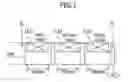
FIG. 1 is a conceptual diagram for describing arrangement of catalysts for treating exhaust gas in Examples 1 and 2.
FIG. 2 is a conceptual diagram for describing a conventional method for treating exhaust gas.
EXPLANATION OF REFERENCE NUMERALS
- 1 Catalyst for treating exhaust gas
- 21 HCl injection spot
- 40 Mercury-chlorinating-agent tank
- 60 Reduction denitration unit
- 70 Air heater
- 80 Heat exchanger
- 90 Dust collector
- 100 Desulfurization unit
BEST MODE FOR CARRYING OUT THE INVENTION
Hereinafter, a catalyst for treating exhaust gas according to the present invention will be described in further details with reference to an embodiment thereof.
A support of the catalyst for treating exhaust gas according to the present invention is formed of TiO2. As the catalyst support, generally, at least one selected from the group consisting of TiO2, SiO2, ZrO2, Al2O3, complex oxides thereof, and zeolite can be used.
Moreover, the catalyst for treating exhaust gas according to the present invention supports an oxide of at least one selected from the group consisting of V, W and Mo as an active component on such a support.
Furthermore, the catalyst for treating exhaust gas according to the present invention supports at least one selected from the group consisting of Bi, P, and compounds containing Bi and/or P as a co-catalyst component on the support. The co-catalyst component exists preferably in the form of an oxide, complex oxide or heteropoly acid. Since the compound containing Bi or P is in the form of a compound having a different oxidation number, the oxidation of mercury can be promoted owing to the effect of the oxidation-reduction cycle. Bi can form a complex oxide with Mo, and thus functions as a co-catalyst. Meanwhile, P can form a heteropoly acid having a considerably strong oxidizing power by combining with Mo or W. Both Bi and P do not exist independently and they are an element that can form a compound. Thus, Bi and P function as a co-catalyst.
The compounding ratio of the co-catalyst component with respect to the active component is as follows.
For example, suppose a case where V oxide is used as the active component and a heteropoly acid containing P (molybdophosphoric acid) is used as the co-catalyst component. In this case, the ratio of the number of V atoms contained, the number of Mo atoms contained and the number of P atoms contained is preferably 32:12:1 to 10:12:1.
As another example, suppose a case where V oxide is used as the active component and a compound containing Bi is used as the co-catalyst component. In this case, the ratio of the number of V atoms contained, the number of Mo atoms contained and the number of Bi atoms contained is preferably 1:3:0.1 to 1:10:1.5.
In the above cases, preferably 0.1 to 2 mass % of the active component is supported per 100 g of the support.
Schematically, the catalyst for treating exhaust gas according to the present invention is produced as follows.
(1) For example, a catalyst paste containing a support component and an active component is molded into a honeycomb shape and fired.
(2) The honeycomb is impregnated with a co-catalyst component and fired.
A specific mode of preparing Bi2O3(1.5)-MoO3(7)-V2O5/TiO2 will be described in Example 1 below.
A specific mode of preparing P—MoO3(7)-V2O5(0.5)/TiO2 will be described in Example 2 below.
Example 1
Preparation of Bi2O3(1.5)-MoO3(7)-V2O5/TiO2
A TiO2-V2O5-based denitration catalyst (TiO2:V2O5=95.5:0.5 (mass ratio)) was prepared as follows.
Ammonia water with a NH3 content of 25% was added to 3600 g of a metatitanic acid slurry (TiO2 content: 30 mass %), and the pH was adjusted to 6.5, followed by wet-kneading for 2 hours, drying, and furthermore firing at 550° C. for 5 hours. Thereby, a titanium oxide powder was obtained. To the powder, an ammonium metavanadate aqueous solution and an ammonium molybdate aqueous solution were added so as to make the V2O5 and MoO3 contents be 0.5 mass % and 7 mass %, respectively, and then were sufficiently mixed with the powder. Thereafter, the mixture was dried and fired at 450° C. for 4 hours. Thereby, a powder (A) formed of titanium oxide [TiO2]-vanadium oxide [V2O5]-molybdenum oxide [MoO3] was obtained. To 1000 g of the powder (A), 25 g of carboxymethyl cellulose and 12.5 g of polyethylene oxide were put and kneaded together in a kneader for 30 minutes with an adequate amount of water being added thereto, followed by extrusion into a honeycomb shape with 30 mm2, drying and then firing at 500° C. for 5 hours. A bismuth nitrate aqueous solution was further prepared, and the honeycomb was impregnated therewith so as to make the Bi2O3 content be 1.5 mass %. The resultant was fired at 500° C. for 3 hours. Thus, a Bi2O3(1.5)-MoO3(7)-V2O5/TiO2 catalyst was prepared.
[Test for Mercury Oxidation Activity]
The honeycomb-shaped catalysts 1 for treating exhaust gas prepared as described above were provided at three stages, each catalyst having 4 conduits×7 conduits in 500-mm length as shown in FIG. 1, and a test was carried out for the mercury oxidation activity.
Exhaust gas samples having the following O2 to NOx features shown in Table 1 were allowed to flow under the conditions in the same Table 1, and the mercury oxidation activity of the catalyst 1 for treating exhaust gas was tested. Note that symbols in the table represent the following meanings.
Ugs: superficial velocity
AV: the amount of gas to be treated based on gas-contact area
The exhaust gas samples were extracted at positions S1 and S2 in FIG. 1.
| TABLE 1 | |||
| Gas Amount | m3N/hr | 8.49 | |
| Temperature | ° C. | 400 | |
| Ugs | mN/S | 2.30 | |
| NH3/NOx | — | 0.9 | |
| AV | m3N/m2hr | 11.96 | |
| O2 | % | 4.0 | |
| H2O | % | 12.0 | |
| Hg | μg/m3N | 20 | |
| HCl | ppm | 50 | |
| SOx | ppm | 1000 | |
| NOx | ppm | 350 | |
Table 2 shows the test result. As seen from the result in Table 2, it is understood that, by using the catalyst 1 for treating exhaust gas according to the present invention, 79.8% of mercury was oxidized after passing through the three stages.
| TABLE 2 | |||||||||
| Hg(2+) | |||||||||
| Sampled | AV | NOx | NH3 | HCl | Hg(2+) | Hg(0) | Total Hg | Proportion | |
| Position | m3N/m2hr | ppm | ppm | ppm | μg/m3N | μg/m3N | μg/m3N | % | Notes |
| S1 | Inlet | 351 | 315 | 50.1 | 6.9 | 13.1 | 20.0 | 34.5 | Humidity: 12.1% |
| S2 | 16.0 | 48.8 | 13.1 | — | 17.4 | 4.4 | 21.8 | 79.8 | Oxygen Concentration: 4.0 vol % |
Example 2
Preparation of P—MoO3(7)-V2O5(0.5)/TiO2
A TiO2-V2O5-based denitration catalyst (TiO2:V2O5=95.5:0.5 (mass ratio)) was prepared as follows.
Ammonia water with a NH3 content of 25% was added to 3600 g of a metatitanic acid slurry (TiO2 content: 30 mass %), and the pH was adjusted to 6.5, followed by wet-kneading for 2 hours, drying, and furthermore firing at 550° C. for 5 hours. Thereby, a titanium oxide powder was obtained. To the powder, an ammonium metavanadate aqueous solution was added so as to make the V2O5 content be 0.5 mass %, and then was sufficiently mixed with the powder. Thereafter, the mixture was dried and fired at 450° C. for 4 hours. Thereby, a powder (A) formed of titanium oxide [TiO2]-vanadium oxide [V2O5] was obtained. To 1000 g of the powder (A), 25 g of carboxymethyl cellulose and 12.5 g of polyethylene oxide were put and kneaded together in a kneader for 30 minutes with an adequate amount of water being added thereto, followed by extrusion into a honeycomb shape with 30 mm2, drying and then firing at 500° C. for 5 hours. A phosphomolybdic acid aqueous solution was further prepared, and the honeycomb was impregnated therewith so as to make the MoO3 content be 7 mass %. The resultant was fired at 500° C. for 3 hours. Thus, a P—MoO3(7)-V2O5(0.5)/TiO2 catalyst was prepared.
[Test for Mercury Oxidation Activity]
As in the case of Example 1, the honeycomb-shaped catalysts 2 for treating exhaust gas prepared as described above were provided at three stages, each catalyst having 4 conduits×7 conduits in 500-mm length as shown in FIG. 1, and a test was carried out for the mercury oxidation activity.
Exhaust gas samples having the same O2 to NOx features as those shown in Table 1 were allowed to flow under the conditions in Table 3, and the mercury oxidation activity of the catalyst 2 for treating exhaust gas was tested.
| TABLE 3 | |||
| Gas Amount | m3N/hr | 8.49 | |
| Temperature | ° C. | 400 | |
| Ugs | mN/S | 2.30 | |
| NH3/NOx | — | 0.9 | |
| AV | m3N/m2hr | 11.96 | |
| O2 | % | 4.0 | |
| H2O | % | 12.0 | |
| Hg | μg/m3N | 20 | |
| HCl | ppm | 50 | |
| SOx | ppm | 1000 | |
| NOx | ppm | 350 | |
Table 4 shows the test result. As seen from the result in Table 4, it is understood that, by using the catalyst 2 for treating exhaust gas according to the present invention, 89.1% of mercury was oxidized after passing through the three stages.
| TABLE 4 | |||||||||
| Hg(2+) | |||||||||
| Sampled | AV | NOx | NH3 | HCl | Hg(2+) | Hg(0) | Total Hg | Proportion | |
| Position | m3N/m2hr | ppm | ppm | ppm | μg/m3N | μg/m3N | μg/m3N | % | Notes |
| S1 | Inlet | 353 | 319 | 51.5 | 6.3 | 12.9 | 19.2 | 32.8 | Humidity: 12.1% |
| S2 | 16.0 | 38.0 | 4.4 | — | 18.8 | 2.3 | 21.1 | 89.1 | Oxygen Concentration: 4.0 vol % |
Comparative Example
Preparation of MoO3(7)-V2O5(0.5)/TiO2
A TiO2-V2O5-based denitration catalyst (TiO2:V2O5=95.5:0.5 (mass ratio)) was prepared as follows.
Ammonia water with a NH3 content of 25% was added to 3600 g of a metatitanic acid slurry (TiO2 content: 30 mass %), and the pH was adjusted to 6.5, followed by wet-kneading for 2 hours, drying, and furthermore firing at 550° C. for 5 hours. Thereby, a titanium oxide powder was obtained. To the powder, an ammonium metavanadate aqueous solution and an ammonium molybdate aqueous solution were added so as to make the V2O5 and MoO3 contents be 0.5 mass % and 7 mass %, respectively, and then where sufficiently mixed with the powder. Thereafter, the mixture was dried and fired at 450° C. for 4 hours. Thereby, a powder (A) formed of titanium oxide [TiO2]-vanadium oxide [V2O5]-molybdenum oxide [MoO3] was obtained. To 1000 g of the powder (A), 25 g of carboxymethyl cellulose and 12.5 g of polyethylene oxide were put and kneaded together in a kneader for 30 minutes with an adequate amount of water being added thereto, followed by extrusion into a honeycomb shape with 30 mm2, drying and then firing at 500° C. for 5 hours. Thus, a MoO3(7)-V2O5/TiO2 catalyst of Comparative Example was prepared.
[Test for Mercury Oxidation Activity]
As in the case of Example 1, the comparative honeycomb-shaped catalysts for treating exhaust gas prepared as described above were provided at three stages, each catalyst having 4 conduits×7 conduits in 500-mm length as shown in FIG. 1, and a test was carried out for the mercury oxidation activity.
Exhaust gas samples having the same O2 to NOx features as those shown in Table 1 were allowed to flow, and the mercury oxidation activity of the comparative catalyst for treating exhaust gas was tested.
Table 5 shows the test result. As seen from the result in Table 5, it is understood that, by using the comparative catalyst for treating exhaust gas according to the present invention, 79.5% of mercury was oxidized after passing through the three stages.
| TABLE 5 | |||||||||
| Hg(2+) | |||||||||
| Sampled | AV | NOx | NH3 | HCl | Hg(2+) | Hg(0) | Total Hg | Proportion | |
| Position | m3N/m2hr | ppm | ppm | ppm | μg/m3N | μg/m3N | μg/m3N | % | Notes |
| S1 | Inlet | 349 | 320 | 50.2 | 6.9 | 13.0 | 19.9 | 34.7 | Humidity: 12.1% |
| S2 | 16.0 | 36.9 | 7.5 | — | 15.9 | 4.1 | 20.0 | 79.5 | Oxygen Concentration: 4.0 vol % |
INDUSTRIAL APPLICABILITY
As seen from the results of Example 1, Example 2 and Comparative Example, by using a catalyst for treating exhaust gas according to the present invention, the amount of a highly corrosive mercury-chlorinating agent to be added can be reduced with the mercury oxidation efficiency kept high.
When the catalyst for treating exhaust gas according to the present invention is used, only an addition of a considerably small amount of mercury oxidant suffices for an HCl/HBr spray unit or an NH4Cl supply unit for oxidizing mercury. For this reason, flue corrosion due to highly corrosive HCl can be reduced.
Moreover, when exhaust gas contains several tens ppm of HCl originating from coal, it is not necessary to install an HCl spray unit. In that case, the facility cost for safety control measure of HCl requiring care in handling can be greatly reduced.
Therefore, the catalyst for treating exhaust gas according to the present invention can be used in the method for treating exhaust gas described in FIG. 2.
Claims
1. A catalyst for treating exhaust gas in which nitrogen oxide in the exhaust gas is removed upon contact with ammonia serving as a reducing agent, and in which mercury is oxidized using a halogen as an oxidant, the catalyst comprising:
TiO2 as a support;
an oxide of at least one selected from the group consisting of V, W and Mo, which is supported as an active component on the support; and
at least one selected from the group consisting of Bi, P, and compounds containing Bi and/or P, which is supported as a co-catalyst component on the support.
2. The catalyst for treating exhaust gas according to claim 1, wherein the co-catalyst component is formed of any one of P and a compound containing P.
3. The catalyst for treating exhaust gas according to claim 1, wherein the co-catalyst component is formed of any one of Bi and a compound containing Bi.
Images & Drawings included:


Sources:
- United States Patent and Trademark Office - verify current appl. status at the USPTO↗
Similar patent applications:
- » 20160001230
Exhaust gas treating catalyst and exhaust gas purification apparatus using the same - » 20120014841
Exhaust gas treating catalyst and exhaust gas purification apparatus using the same - » 20140127084
Exhaust gas catalyst, method for the production of carrier, method for the production of exhaust gas catalyst, and apparatus for treating exhaust gas - » 20140322119
SUPPORTED NOBLE METAL CATALYST FOR TREATING EXHAUST GAS - » 20080152560
Titanium oxide, catalyst for treating exhaust gas and method for purifying exhaust gas - » 20090044521
Catalyst for treating exhaust gas and device for treating exhaust gas using the same - » 20070207078
Catalyst for treating exhaust gas and method for producing the same - » 20080176742
Method For Producing Catalyst For Treating Exhaust Gas - » 20140170045
Platinum group metal (PGM) catalyst for treating exhaust gas - » 20140271426
Catalyst for treating exhaust gas
Recent applications in this class:
- » 20240351004 2024-10-24
CATALYST AND PROCESS FOR THE DEHYDROGENATION OF ALKANES TO OLEFINS - » 20200406233 2020-12-31
Bismuth oxide/bismuth subcarbonate/bismuth molybdate composite photocatalyst and preparation method thereof - » 20170216819 2017-08-03
Preparation method for rod-shaped molybdenum oxide and preparation method for molybdenum oxide composite - » 20110245535 2011-10-06
Multi-metal oxide catalyst and method for producing (meth)acrylic acid by using the same - » 20110243806 2011-10-06
Multi-metal oxide catalyst and method for producing (meth)acrylic acid by using the same - » 20110189069 2011-08-04
EXHAUST GAS PURIFICATION CATALYST AND METHOD FOR PRODUCTION THEREOF - » 20090292086 2009-11-26
Multi-metal oxide catalyst and method for producing (meth)acrylic acid by using the same - » 20090246111 2009-10-01
EXHAUST GAS PURIFICATION CATALYST AND METHOD FOR PRODUCTION THEREOF
Recent applications for this Assignee:
- » 20250274052 2025-08-28
POWER CONVERSION DEVICE - » 20250270941 2025-08-28
SOUNDPROOF WALL AND STEAM TURBINE - » 20250258139 2025-08-14
ULTRASONIC DEFECT DETECTION APPARATUS AND ULTRASONIC DEFECT DETECTION METHOD - » 20250256289 2025-08-14
DUST COLLECTION SYSTEM AND DUST COLLECTION METHOD - » 20250256242 2025-08-14
EXHAUST GAS TREATMENT APPARATUS, COMBUSTION FACILITY, POWER GENERATION FACILITY, AND EXHAUST GAS TREATMENT METHOD - » 20250256238 2025-08-14
CARBON DIOXIDE RECOVERY SYSTEM - » 20250249406 2025-08-07
EXHAUST GAS TREATMENT APPARATUS, COMBUSTION FACILITY, AND EXHAUST GAS TREATMENT METHOD - » 20250232887 2025-07-17
DRIVE MECHANISM, CONTROL ROD DRIVE MECHANISM, AND NUCLEAR REACTOR - » 20250226289 2025-07-10
COOLING DEVICE - » 20250223911 2025-07-10
SHAFT SEALING DEVICE AND ROTARY MACHINE