Method of manufacturing a synthetic leather formed with a pattern
US20100225019A1
2010-09-09
12/400,018
2009-03-09
✅ Patent granted
US 8,557,348 B2
2013-10-15
-
-
Mark Kopec | Haidung Nguyen
Ming Chow | Sinorica, LLC
2032-01-21
Abstract:
A method of manufacturing a synthetic leather formed with a pattern includes a mixing step (A) in which at least a first material and a second material are properly mixed in proportion into a mixture; a first coating step (B) in which the mixture is coated on a substrate to form a blocking layer; a printing step (C) in which a determined pattern is printed on the surface of blocking layer to form a pattern layer; and a second coating step (D) in which at least the mixture is coated on the pattern layer to form a surface layer, thereby a product being finished. Thus, the pattern layer may be sandwiched between the blocking layer and the surface layer, which prevents the pattern layer contacting the substrate or outside from fading in color and shedding off and prevents the child from eating, by accident, the fall-off pattern layer.
Inventors:
- Lung-Wen CHOU 8 🇹🇼 Longjing Township, Taiwan
- Lung-Wen Chou 3 🇹🇼 Longjing Township, Taichung County, Taiwan
Applicant:
Interested in similar patents?
Get notified when new applications in this technology area are published.
Classification:
B29C43/265 » CPC main
Compression moulding, i.e. applying external pressure to flow the moulding material; Apparatus therefor of articles of indefinite length in several steps for making multilayered articles
B32B27/08 » CPC further
Layered products comprising synthetic resin as the main or only constituent of a layer, next to another layer of a of synthetic resin
B32B27/12 » CPC further
Layered products comprising synthetic resin next to a fibrous or filamentary layer
B32B27/20 » CPC further
Layered products comprising synthetic resin characterised by the use of special additives using fillers, pigments, thixotroping agents
B32B27/40 » CPC further
Layered products comprising synthetic resin comprising polyurethanes
D06N3/145 » CPC further
Artificial leather, oilcloth or other material obtained by covering fibrous webs with macromolecular material, e.g. resins, rubber or derivatives thereof with macromolecular compounds obtained otherwise than by reactions only involving carbon-to-carbon unsaturated bonds, e.g. gelatine proteins with polyurethanes two or more layers of polyurethanes
B29C43/46 » CPC further
Compression moulding, i.e. applying external pressure to flow the moulding material; Apparatus therefor; Component parts, details or accessories; Auxiliary operations; Compression means for making articles of indefinite length Rollers
B29C2043/3433 » CPC further
Compression moulding, i.e. applying external pressure to flow the moulding material; Apparatus therefor; Component parts, details or accessories; Auxiliary operations; Feeding the material to the mould or the compression means using dispensing heads, e.g. extruders, placed over or apart from the moulds
B29K2711/08 » CPC further
Use of natural products or their composites, not provided for in groups - , for preformed parts, e.g. for inserts Leather
B32B37/02 » CPC further
Methods or apparatus for laminating, e.g. by curing or by ultrasonic bonding characterised by a sequence of laminating steps, e.g. by adding new layers at consecutive laminating stations
B32B38/145 » CPC further
Ancillary operations in connection with laminating processes; Printing or colouring Printing
B32B2037/243 » CPC further
Methods or apparatus for laminating, e.g. by curing or by ultrasonic bonding characterised by the properties of the layers with at least one layer not being coherent before laminating, e.g. made up from granular material sprinkled onto a substrate Coating
B32B2255/10 » CPC further
Coating on the layer surface on synthetic resin layer or on natural or synthetic rubber layer
B32B2307/4026 » CPC further
Properties of the layers or laminate having particular optical properties; Coloured within the layer by addition of a colorant, e.g. pigments, dyes
B32B2307/75 » CPC further
Properties of the layers or laminate; Other properties Printability
B32B2451/00 » CPC further
Decorative or ornamental articles
B29C43/00 » CPC further
Compression moulding, i.e. applying external pressure to flow the moulding material; Apparatus therefor
B05D1/36 IPC
Processes for applying liquids or other fluent materials Successively applying liquids or other fluent materials, e.g. without intermediate treatment
B05D7/12 IPC
Processes, other than flocking, specially adapted for applying liquids or other fluent materials to particular surfaces or for applying particular liquids or other fluent materials to leather
Description
BACKGROUND OF THE INVENTION
1. Field of the Invention
This invention relates to a method of manufacturing a synthetic leather formed with a pattern.
2. Description of the Prior Art
A conventional synthetic leather is extensively used in various fields, and the appearance of the synthetic leather is optionally various. In order to satisfy all consumer groups, the synthetic leather is formed with a pattern in the technology of printing for enhancement of observability.
However, in the technology of printing, the pattern is generally printed on the substrate or surface of the synthetic leather. When the pattern is printed on the surface of substrate, the substrate absorbs coloring materials and fades in color and is not vivid in color after being used for a long time. Besides, when the pattern is printed on the surface of synthetic leather, because the surface of synthetic leather is exposed to a space contacting the outside for a long time, a print-off issue might be caused. When there is a child home, the child licks or puts the print in his or her mouth, which might cause the child to eat the peel-off print by accident and then endanger the child in health. Thus, improvement of the conventional method of manufacturing the synthetic leather is necessarily made.
Consequently, because of the technical defects of described above, the applicant keeps on carving unflaggingly through wholehearted experience and research to develop the present invention, which can effectively improve the defects described above.
SUMMARY OF THE INVENTION
A method of manufacturing a synthetic leather formed with a pattern according to this invention comprises a mixing step (A) in which at least a first material and a second material are properly mixed in proportion into a mixture; a first coating step (B) in which the mixture is coated on a substrate to form a blocking layer; a printing step (C) in which a determined pattern is printed on the surface of blocking layer to form a pattern layer; and a second coating step (D) in which at least the mixture is coated on the pattern layer to form a surface layer, thereby a product being finished. Thus, the pattern layer may be sandwiched between the blocking layer and the surface layer, which prevents the pattern layer contacting the substrate or outside from fading in color and shedding off and prevents the child from eating, by accident, the fall-off pattern layer.
BRIEF DESCRIPTION OF THE DRAWINGS
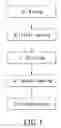
FIG. 1 is a flow chart of a method of manufacturing a synthetic leather according to this invention;
FIG. 2 is a schematic view illustrating the method of manufacturing the synthetic leather according to this invention;
FIG. 3 is a 3D view of a finished synthetic leather product according to this invention; and
FIG. 4 is an exploded view of the finished synthetic leather product according to this invention.
DETAILED DESCRIPTION OF THE PREFERRED EMBODIMENTS
Now, the present invention will be described more specifically with reference to the following embodiments. It is to be noted that the following descriptions of preferred embodiments of this invention are presented herein for purpose of illustration and description only; it is not intended to be exhaustive or to be limited to the precise form disclosed.
Firstly, with reference to FIGS. 1 through 4, a method of manufacturing a synthetic leather formed with a pattern comprises steps of mixing, first coating, printing, and second coating.
-
- A. Mixing: A first material of isocyanate polymer containing NCO, a second material of hydroxy compound containing OH are mixed into a first mixture, and a third material with a determined color are respectively placed in a first metric output device 10, a second metric output device 20, and a third metric output device 30 and then filled into an injection mixing device 40. The injection mixing device 40 is further linked with a bubbling device 50 containing a bubbling material, and the materials are evenly mixed into a mixture. The mixture is a material of TPU (Thermoplastic Polyurethane).
- B. First coating: The mixture falls of itself into the surface of a substrate 100 from the injection material mixing device 40, in which the substrate 100 is a cloth material or a plastic material. Further, a pressing device 60 is used to press and mold the substrate 100 and the mixture in a determined shape and thickness. The pressing device 60 is located under the injection mixing device 40 and comprises a first roller 61 and a second roller 62 that are parallel with each other. The first roller 61 may roll the substrate 100, while the second roller 62 rolls a release paper 500 and drives the substrate 100 and the release paper 500 to run toward the first roller 61 and the second roller 62 at the same time, and transmits downwards. Further, a blocking layer 200 is formed on the substrate 100. The release paper 500 keeps close to the blocking layer 200. The release paper 500 is used to keep the surface of blocking layer 200 level up. Still, the second roller 62 may be used for assistance to control the thickness of mixture on the substrate 100.
- C. Printing: A first rewinding roller 70 is used to roll the release paper 500 kept close at the step of first coating (B) out of the blocking layer 200, and a determined pattern is printed by a printing device 80 on the surface of blocking layer 200 to form a pattern layer 300. The method of printing comprises dye sublimation, spray, transfer, or screen printing.
- D. Second coating: the mixture is infused downwards onto the substrate 100 processed at the step of printing (C) and the substrate 100 is pressed by the first roller 61 and the second roller 62 to form a surface layer 400 on the pattern layer 300, thereby a product being finished. Still, at the time of press fit through the first roller 61 and the second roller 62, the release paper 500 is rolled by the second roller 62 and thus is kept close to the surface of surface layer 400 and may be torn off for use, and the release paper 500 protects the surface of surface layer 400 from being scratched or stained with foreign matters. Further, the finished product is delivered to a second rewinding roller 90 to be rolled.
While the invention has been described in terms of what is presently considered to be the most practical and preferred embodiments, it is to be understood that the invention needs not be limited to the disclosed embodiment. On the contrary, it is intended to cover various modifications and similar arrangements included within the spirit and scope of the appended claims which are to be accorded with the broadest interpretation so as to encompass all such modifications and similar structures.
Claims
What is claimed is:1. A method of manufacturing a synthetic leather formed with a pattern, comprising steps of:
Mixing (A) in which a first material and a second material are mixed into a mixture;
first coating (B) in which the mixture is coated on a substrate to form a blocking layer;
printing (C) in which a determined pattern is printed on the surface of blocking layer to form a pattern layer; and
second coating (D) in which the mixture is coated on the pattern layer to form a surface layer, thereby a finished product being formed.
2. The method of manufacturing the synthetic leather formed with the pattern according to claim 1, wherein the first material is a material of isocyanate polymer containing NCO.
3. The method of manufacturing the synthetic leather formed with the pattern according to claim 1, wherein the second material is a material of hydroxy compound containing OH.
4. The method of manufacturing the synthetic leather formed with the pattern according to claim 1, wherein in the step of mixing (A), a third material in a determined color is further added.
5. The method of manufacturing the synthetic leather formed with the pattern according to claim 1, wherein the mixture is a material of TPU (Thermoplastic Polyurethane).
6. The method of manufacturing the synthetic leather formed with the pattern according to claim 1, wherein the printing (C) is spray printing.
7. The method of manufacturing the synthetic leather formed with the pattern according to claim 1, wherein the printing (C) is transfer printing.
8. The method of manufacturing the synthetic leather formed with the pattern according to claim 1, wherein the printing (C) is screen printing.
9. The method of manufacturing the synthetic leather formed with the pattern according to claim 1, wherein in the step of mixing (A), a bubbling material is further added to accelerate bubbling.
10. The method of manufacturing the synthetic leather formed with the pattern according to claim 1, wherein the substrate is a cloth material.
11. The method of manufacturing the synthetic leather formed with the pattern according to claim 1, wherein the substrate is a plastic material.
12. The method of manufacturing the synthetic leather formed with the pattern according to claim 1, wherein in the step of first coating (B), a release paper is further kept close to the blocking layer.
13. The method of manufacturing the synthetic leather formed with the pattern according to claim 12, wherein the release paper pasted in the step of first coating (B) is torn off the blocking layer and is further processed for printing.
14. The method of manufacturing the synthetic leather formed with the pattern according to claim 1, wherein in the step of second coating (D), a release paper is further kept close to the surface layer.
15. The method of manufacturing the synthetic leather formed with the pattern according to claim 1, wherein in the step of mixing (A), the first material and the second material are separately arranged in a first metric output device and a second metric output device and further infused from the first metric output device and the second metric output device into an injection mixing device to be mixed.
16. The method of manufacturing the synthetic leather formed with the pattern according to claim 15, wherein in the step of first coating (B), the mixture falls onto the surface of substrate from the injection material mixing device and a pressing device is used to press and mold the substrate and the mixture in a determined shape and thickness.
17. The method of manufacturing the synthetic leather formed with the pattern according to claim 1, wherein in the step of printing (C), a determined pattern is printed on the surface of blocking layer to form a pattern layer.
Images & Drawings included:



Sources:
- United States Patent and Trademark Office - verify current appl. status at the USPTO↗
Recent applications in this class:
- » 20240123657 2024-04-18
CONTINUOUS COMPRESSION MOLDING MACHINES AND METHODS OF CONTINUOUS COMPRESSION MOLDING A CONSOLIDATED THERMOPLASTIC MATRIX COMPOSITE MATERIAL - » 20230249384 2023-08-10
Continuous compression molding machines and methods of continuous compression molding a consolidated thermoplastic matrix composite material - » 20190299500 2019-10-03
Continuously compression molding a composite body with a complex geometry - » 20180079117 2018-03-22
Method for manufacturing elastic mat with successive mixed color type - » 20140265050 2014-09-18
Multi-layer and Multi-fiber Orientation Compression Rolling Process