Behind-the-ear accessory module for a helix hearing instrument
US20100226517A1
2010-09-09
12/399,318
2009-03-06
✅ Patent granted
US 8,121,324 B2
2012-02-21
-
-
Jasmine Clark
2030-05-27
Abstract:
The capabilities of a helix hearing instrument may expanded with a behind-the-ear accessory module. The module accommodates additional batteries and a variety of accessory functions including an external volume control.
Assignee:
- SIEMENS HEARING INSTRUMENTS, INC. 50 🇺🇸 Piscataway, NJ, United States
Interested in similar patents?
Get notified when new applications in this technology area are published.
Classification:
H04R25/00 IPC
Deaf-aid sets, i.e. electro-acoustic or electro-mechanical hearing aids; Electric tinnitus maskers providing an auditory perception
H04R25/02 » CPC main
Deaf-aid sets, i.e. electro-acoustic or electro-mechanical hearing aids; Electric tinnitus maskers providing an auditory perception adapted to be supported entirely by ear
H04R25/556 » CPC further
Deaf-aid sets, i.e. electro-acoustic or electro-mechanical hearing aids; Electric tinnitus maskers providing an auditory perception using an external connection, either wireless or wired External connectors, e.g. plugs or modules
H04R2225/0216 » CPC further
Details of deaf aids covered by , not provided for in any of its subgroups; Behind the ear [BTE] hearing aids BTE hearing aids having a receiver in the ear mould
Description
BACKGROUND AND SUMMARY OF THE INVENTION
A helix hearing instrument comprises a receiver inserted into the ear canal and an electronics assembly, comprising a microphone, amplifier, and battery, which typically resides in the helix of the user's ear. The helix hearing instrument has a capability limited in part by the size of the electronics assembly and the space available for batteries and the instrument's components. Additional capabilities or functions for the instrument and longer battery life may be offered in an accessory module that rides behind the ear in the same fashion as a behind-the-ear hearing instrument.
BRIEF DESCRIPTION OF THE DRAWINGS
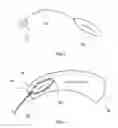
FIG. 1 is a drawing of a helix hearing instrument receiver, electronics pod, and an interconnecting cable;
FIG. 2 is a drawing of the helix hearing instrument receiver, electronics pod, and interconnecting cable of FIG. 1, where the electronics pod is connected to a behind-the-ear accessory module;
FIG. 3 is a drawing of the behind-the-ear accessory module of FIG. 2;
FIG. 4 is a drawing of the helix hearing instrument electronics pod and interconnecting cable of FIG. 1, with electrical contacts shown in phantom; and
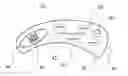
FIG. 5 is a drawing of the behind-the-ear accessory module illustrating internal features and an external volume control.
DESCRIPTION OF THE INVENTION
A helix hearing instrument receiver 10, an electronics pod 20, and an interconnecting cable 30 are shown in FIG. 1. The electronics pod 20 and the connecting cable 30 are shown again in FIG. 2, together with a behind-the-ear accessory module 40. The electronics pod 20 resides in a receptacle 42 of the behind-the-ear accessory module 40. The electronics pod 20 may be selectively inserted and removed from the receptacle 42. Detents or similar structures may be used to securely retain the electronics pod 20 in the module receptacle 42. A channel 44 in the accessory module 40 accommodates the interconnecting cable 30.
In FIG. 3, the behind-the-ear accessory module 40 is shown with the electronics pod 20 removed from the module receptacle 42, revealing a set of electrical contacts 46 within the receptacle 42. While four rectangular contacts 46 are shown in the figures, contacts of any quantity, shape, and configuration may be employed.
The electronics pod 20 and the interconnecting cable 30 are shown again in FIG. 4, with a set of complementary contacts 22 shown in phantom. The number, size, and configuration of the electronic pod contacts 22 conforms to the contacts 46 in the behind-the-ear accessory module receptacle 42, but again could assume a different quantity, size, shape, and configuration.
The behind-the-ear accessory module 40 is shown again in FIG. 5. By way of example, several accessory features are shown within the accessory module 40. These are one or more batteries 50, a microphone 52, wireless capability 54 (e.g., Bluetooth [a trademark of the Bluetooth SIG]), and an unspecified accessory function 56. The drawing also shows an external volume control 58. Although the electronics pod 20 has a microphone (not shown in the drawings), the microphone 52 within the accessory module 40 should be understood to be one of greater functionality, such as a s directional microphone.
Claims
What is claimed is:1. A behind-the-ear accessory module for a helix hearing instrument comprising a receiver, an electronics pod, and an interconnecting cable, the module comprising:
at least one accessory; and
a receptacle for selectively receiving the helix hearing instrument electronics pod.
2. A behind-the-ear accessory module as set forth in claim 1, where the receptacle comprises electrical contacts.
3. A behind-the-ear accessory module as set forth in claim 1, where the accessory comprises a battery.
4. A behind-the-ear accessory module as set forth in claim 1, where the accessory comprises a microphone.
5. A behind-the-ear accessory module as set forth in claim 1, where the accessory comprises wireless capability.
6. A behind-the-ear accessory module as set forth in claim 1, further comprising a volume control.
7. A hearing instrument assembly, comprising:
a helix hearing instrument comprising a receiver, an electronics pod, and an interconnecting cable; and
a behind-the-ear accessory module, comprising
at least one accessory; and
a receptacle for selectively receiving the helix hearing instrument electronics pod.
8. A hearing instrument assembly as set forth in claim 7, where the receptacle comprises electrical contacts and the electronics pod comprises complementary electrical contacts.
9. A hearing instrument assembly as set forth in claim 7, where the accessory comprises a battery.
10. A hearing instrument assembly as set forth in claim 7, where the accessory comprises a microphone.
11. A hearing instrument assembly as set forth in claim 7, where the accessory comprises wireless capability.
12. A hearing instrument assembly as set forth in claim 7, where the behind-the-ear accessory module further comprises a volume control.
Images & Drawings included:


Sources:
- United States Patent and Trademark Office - verify current appl. status at the USPTO↗
Recent applications in this class:
- » 20240305933 2024-09-12
EAR-WEARABLE HEARING DEVICE - » 20240179477 2024-05-30
SOUND PROCESSING APPARATUS, SOUND PROCESSING APPARATUS MAIN BODY AND HOLDER - » 20240007799 2024-01-04
Hearing Device Cable - » 20230276179 2023-08-31
Hearing device for occlusion reduction and components thereof - » 20230095933 2023-03-30
Ear-wearable hearing device - » 20220345830 2022-10-27
Artificial cochlea for mechanical processing of sound - » 20220240025 2022-07-28
Hearing aid for placement in a user's ear canal - » 20220240024 2022-07-28
Hearing device and method of operating the hearing device - » 20220232329 2022-07-21
Hearing device system incorporating phased array antenna arrangement - » 20220174427 2022-06-02
Hearing device cable
Recent applications for this Assignee:
- » 20120008808 2012-01-12
Hearing aid with occlusion reduction - » 20110289764 2011-12-01
Method of Assembling A Hearing Aid - » 20100290656 2010-11-18
Domes for a receiver-in-the-canal hearing instrument - » 20100286964 2010-11-11
Method of generating an optimized venting channel in a hearing instrument - » 20100226502 2010-09-09
Method For Fabricating A Hearing Device - » 20100131090 2010-05-27
METHOD AND PROCESS FOR AUTOMATING THE DESIGN OF A LOCKING MECHANISM FOR A HEARING INSTRUMENT - » 20100094446 2010-04-15
Feature driven rule-based framework for automation of modeling workflows in digital manufacturing - » 20100092001 2010-04-15
Test coupler for hearing instruments employing open-fit ear canal tips - » 20100067724 2010-03-18
Molded pull string for custom hearing instruments - » 20100026775 2010-02-04
Simultaneous negative cast and shell fabrication for custom hearing aids