ASYMMETRIC PHYSICAL EXERCISE SYSTEM
US20100227744A1
2010-09-09
12/399,964
2009-03-08
Abstract:
Asymmetric Physical Exercise method and hardware system wherein two trainee's body member units apply a load referred as isometric load against each other directly or indirectly while an additional load referred as bias load from an external source is applied to one of the body member units, each of said body member units includes at least one trainee's body member, and the said bias load direction is independent from the directions of body member units instantaneous motion velocities and has a component parallel to the isometric load.
Interested in similar patents?
Get notified when new applications in this technology area are published.
Classification:
A63B21/0023 » CPC main
Exercising apparatus for developing or strengthening the muscles or joints of the body by working against a counterforce, with or without measuring devices isometric or isokinetic, i.e. substantial force variation without substantial muscle motion or wherein the speed of the motion is independent of the force applied by the user for isometric exercising, i.e. substantial force variation without substantial muscle motion
A63B21/00181 » CPC further
Exercising apparatus for developing or strengthening the muscles or joints of the body by working against a counterforce, with or without measuring devices comprising additional means assisting the user to overcome part of the resisting force, i.e. assisted-active exercising
A63B21/154 » CPC further
Exercising apparatus for developing or strengthening the muscles or joints of the body by working against a counterforce, with or without measuring devices; Arrangements for force transmissions; Using flexible elements for reciprocating movements, e.g. ropes or chains using special pulley-assemblies
A63B21/4035 » CPC further
Exercising apparatus for developing or strengthening the muscles or joints of the body by working against a counterforce, with or without measuring devices; Interfaces with the user related to strength training; Details thereof; Specific exercise interfaces; Handles, pedals, bars or platforms for operation by hand
A63B21/4043 » CPC further
Exercising apparatus for developing or strengthening the muscles or joints of the body by working against a counterforce, with or without measuring devices; Interfaces with the user related to strength training; Details thereof characterised by the movements of the interface Free movement, i.e. the only restriction coming from the resistance
A63B23/03525 » CPC further
Exercising apparatus specially adapted for particular parts of the body for limbs, i.e. upper or lower limbs, e.g. simultaneously; For both arms together or both legs together; Aspects related to the co-ordination between right and left side limbs of a user Supports for both feet or both hands performing simultaneously the same movement, e.g. single pedal or single handle
A63B23/03533 » CPC further
Exercising apparatus specially adapted for particular parts of the body for limbs, i.e. upper or lower limbs, e.g. simultaneously; For both arms together or both legs together; Aspects related to the co-ordination between right and left side limbs of a user With separate means driven by each limb, i.e. performing different movements
A63B23/12 » CPC further
Exercising apparatus specially adapted for particular parts of the body for limbs, i.e. upper or lower limbs, e.g. simultaneously for upper limbs or related muscles, e.g. chest, upper back or shoulder muscles
A63B23/1209 » CPC further
Exercising apparatus specially adapted for particular parts of the body for limbs, i.e. upper or lower limbs, e.g. simultaneously for upper limbs or related muscles, e.g. chest, upper back or shoulder muscles Involving a bending of elbow and shoulder joints simultaneously
A63B21/00058 » CPC further
Exercising apparatus for developing or strengthening the muscles or joints of the body by working against a counterforce, with or without measuring devices Mechanical means for varying the resistance
A63B21/0552 » CPC further
Exercising apparatus for developing or strengthening the muscles or joints of the body by working against a counterforce, with or without measuring devices using resilient force-resisters extension element type Elastic ropes or bands
A63B21/4017 » CPC further
Exercising apparatus for developing or strengthening the muscles or joints of the body by working against a counterforce, with or without measuring devices; Interfaces with the user related to strength training; Details thereof; Arrangements for attaching the exercising apparatus to the user's body, e.g. belts, shoes or gloves specially adapted therefor to the upper limbs
A63B2220/51 » CPC further
Measuring of physical parameters relating to sporting activity; Force related parameters Force
A63B21/002 IPC
Exercising apparatus for developing or strengthening the muscles or joints of the body by working against a counterforce, with or without measuring devices isometric or isokinetic, i.e. substantial force variation without substantial muscle motion or wherein the speed of the motion is independent of the force applied by the user
A63B21/06 » CPC further
Exercising apparatus for developing or strengthening the muscles or joints of the body by working against a counterforce, with or without measuring devices User-manipulated weights
A63B21/04 IPC
Exercising apparatus for developing or strengthening the muscles or joints of the body by working against a counterforce, with or without measuring devices using resilient force-resisters attached to static foundation, e.g. a user
Description
BACKGROUND OF THE INVENTION
1. Field of the Invention
The present invention relates to the field of physical exercises, particularly to strength training and muscle building.
2. Background of the Invention
For strength training, there are several concepts including:
-
- Isometrics: Static Isometric resistance training refers to muscular action during which no change in the length of the muscle takes place. Static Isometric exercises develop static strength. This is the strength one needs to push or pull a heavy object or hold it up. The Dynamic Isometric exercise concept is referred as an exercise technique wherein the trainee uses force applied symmetrically by opposite sides of his body or by two different body parts such as leg versus arm, substantially without any external resistance. The motion includes (“positive”) concentric phase wherein the muscle contracts to produce movement and (“negative”) eccentric phase wherein the muscle lengthens to produce movement. The load can be applied directly or via a device, the two body members are alternately subjected to opposite motion phase: when one is in (“positive”) concentric phase, then the other is in (“negative”) eccentric phase, and vice versa. The most advantage of this technique is that the exerciser controls the resistance, speed, and pre-stretch; unfortunately, the advantage is also the disadvantage since the exerciser needs to master the technique to enjoy the best benefits. For rehabilitation, the Static Isometric mode is commonly used pre and post operatively or when pain associated with motion is a factor. Isometric contractions are effective at developing strength and decreasing joint effusion while avoiding painful points in the range of motion. Static Isometric exercises have great benefits for joint rehabilitation programs because by definition they involve no movement and so can be performed in joint positions that produce no pain or excessive stress, which avoids jeopardizing the healing process of the injury. In addition, useful isometric exercises can be performed in any house without any equipment.
- Dynamic Constant External Resistance: Used to be called isotonic exercise. Muscle exerts a constant tension. The motion includes a concentric (“positive”) phase wherein the muscle contracts to produce movement and an eccentric (“negative”) phase wherein the muscle lengthens to produce movement. The weight on a machine or bar stays constant but at the various angles in a range of motion there are changes in the mechanical advantage, thus the force exerted by the muscle is not constant.
- Variable Resistance Training: using cams, lever arms and pulleys, these types of machines alter the resistance in an attempt to match the increases and decreases in strength throughout the exercises range of motion. These are typical strength curves:
- Ascending strength curve=squat, easier at the top.
- Descending strength curve=upright row, easier at the bottom.
- Bell-shaped curve=biceps curl easier in the middle.
- No machine has been enabling to match the three types of strength curves or be able to accommodate differences in body height and limb lengths. Lots of studies using various combinations of sets and reps have determined that dynamic variable resistance can cause significant increases in strength.
- Eccentric Training: Also called “negative” training refers to a muscular action in which the muscle lengthens in a controlled manner. Eccentric force output is greater than concentric output—one can lower more than you can lift so strength can be improve greatly. This training technique usually requires a spotter to assist with the concentric phase of the lift since the optimum load for the eccentric phase is greater than the load that the trainee can lift during the concentric phase.
- Isokinetic Training: Isokinetic exercise was first introduced by Hislop et al. in 1967, and since then it has been used widely in rehabilitation. Unlike isometric and isotonic contraction, isokinetic contractions provide muscle training throughout the range of motion (ROM) of a joint at a pre-set, constant speed of contractions. When a specific speed is reached the device will automatically accommodate to give resistance to each point in the range of motion (ROM) while allowing the specific speed to be maintained. If the trainee is working as fast and as hard as he/she can, the muscles will work at the maximum force at all points in the ROM at that particular speed. This type of training is very safe. When the trainee applies force, the device provides resistance. If the force stops, the resistance stops automatically. Force changes caused by muscle length/tension relationship, skeletal leverage, pain or fatigue is then easily accommodated. Though the advantage of being able to train at several contractile speeds has not been specifically illustrated, most athletic events, however, occur at fast speed of contraction. Early studies have shown that strength gained at relatively fast speed of contraction could be carried over into relatively slow speed of contraction.
- It can be Concentric or Eccentric. Results of a study suggest Concentric Isokinetic and Eccentric isokinetic training equally improve Concentric muscular torque and rate of torque production. In addition, Eccentric training results in greater Eccentric torque and rate of torque production improvements compared to Concentric training. Another study suggests: The preloaded isokinetic exhibited retention of strength and endurance gains for as long as a year. The results indicated that the preloaded isokinetic yielded superior gains in strength and endurance as compared with the pure isokinetic except for isometric endurance. The observed retention of gains in the preloaded isokinetic during follow-ups may help direct rehabilitation to include eccentrics with isokinetic training. In U.S. Pat. No. 4,822,036, U.S. Pat. No. 4,750,738, and U.S. Pat. No. 4,751,440, Dang disclosed design concepts for Isokinetic training system that can provide preload Concentric Isokinetic and Eccentric Isokinetic training employing an electrical motor; however, the system can be very expensive to produce and maintain.
- Plyometrics Training: The word plyometric is beginning to be replaced by the term “stretch-shortening cycle exercise”. This refers to the sequence of: Eccentric>isometric>concentric.
- When the sequence of eccentric to concentric action is performed quickly; the muscle is stretched slightly prior to the concentric action. The slight stretching stores elastic energy, which is added to the normal force developed only by the concentric muscle action. The pre-stretch might also result in quicker recruitment of muscle fibers. Elastic energy may account for a 30% increase in force production. It's important to introduce stretch-shortening training slowly into the program and keep the volume of training relatively low.
None of the above training techniques can meet all of these advantages that produce effective results and can be cost effective:
-
- Producing Maximum load (resistance) that matches the trainee maximum capacity through out the range of motion and through out the course of training for each and every repetition of every set.
- The generated Eccentric load (resistance) is greater than the generated Concentric load (resistance).
- Providing Preload (Pre-stretch) before the motion.
- Feasibility for injury rehabilitation.
- Control of motion speed through out the range of motion.
- The means to monitor the load and the speed of the training motion.
- The ease of training.
- Safe training, minimum risk of injury.
- Without the need for an assistant such as a spotter.
- Low cost to produce and maintain the training equipments.
In U.S. Pat. No. 5,234,396, Miller disclosed an adjustable resistance upper body exerciser that includes a generally arcuate belt encircling the waist of a user and having a generally flat, rigid posterior central portion and flexible anterior portions including buckling means. A flexible inelastic cord having a length and left and right ends passes through an elongated guide means attached to the belt, slidably retaining a central portion of the length the cord and leaving the right and left ends of the cord extending in the anterior direction. A snubber is attached to the rigid posterior portion of the belt, contacting the slidable cord and applying an adjustable friction load to the slidably retained cord. A pair of handles are attached to left and right ends of the cord, whereby a user wearing the belt encircling the waist may alternately pull said left and right handles with a tension force generally proportional to the friction load applied to the cord by the snubber. In this concept, the load is the sum Isometric resistance produced by the trainee and the Isotonic resistance produced by friction force having direction opposite to the cord motion. As result: the concentric load is always greater than the eccentric load. This concept does not meet these criteria: Producing maximum load that matches the trainers maximum capacity through out the range of motion and through out the course of training for each and every repetition of every set, producing Eccentric load is greater than Concentric load, the means to monitor the load and the speed of the training motion and Control of motion speed through out the range of motion. The force diagram is illustrated in FIG. 3a. In U.S. Pat. No. 4,441,707, Bosch disclosed an exerciser, which includes a belt shaped for encircling the waist of a user, and attachment thereabout in a selected orientation. A flexible line with handles attached to opposite ends is slidingly connected with the belt for longitudinal, reciprocating motion of the flexible line with respect to the belt. While jogging, the user can simultaneously exercise his upper body muscles by grasping the handles in opposite hands, and alternately pushing one handle forwardly, while simultaneously resisting rearward movement of the other handle, thereby isometrically exercising the user's arm and upper body muscles. This concept does not meet these criteria: Producing maximum load that matches the trainers maximum capacity through out the range of motion and through out the course of training for each and every repetition of every set, producing Eccentric load is greater than Concentric load, the means to monitor the load and the speed of the training motion and Control of motion speed through out the range of motion. The force diagram is illustrated in FIG. 3a.
In U.S. Pat. No. 5,328,432, Gvoich disclosed A reciprocating variable isotonic resistance upper extremity and upper torso exerciser comprising: a plurality of removable and flexible housings having a channel and a bore interiorly said housing being slidingly mounted on a waist encircling belt; a means for buckling said belt; a flexible inelastic rope having a length and right and left ends; a plurality of guide tubes mounted in said bores of said housings, said members slidably retaining said rope, leaving said right and left ends extending therefrom in the anterior direction; a resistance means being mounted in one of said bores of one of said housing, which contacts and slidable rope to impart a resistance thereon, further including: notched guide means having a threaded orifice in a outward facing wall thereof, a threaded thumb screw engaging therein, a U-shaped metal shoe having flanges at its left and right ends whereby said shoe is docked in a lumen of said notched guide with one of said flanges interlocking with one of said notches of said guide means to retain said shoe in place during use, whereby a turning of said crew adjust the friction load born on said rope; and handles attached to a left and a right end of said rope, whereby, during use, a user may reciprocally pull said left and right handles against a resistance provided by said means for providing a resistance. In this concept, the load is the sum Isometric resistance produced by the trainee and the Isotonic resistance produced by friction force having direction opposite to the cord motion, as result: the concentric load is always greater than the eccentric load. This concept does not meet these criteria: Producing maximum load that matches the trainers maximum capacity through out the range of motion and through out the course of training for each and every repetition of every set, producing Eccentric load is greater than Concentric load, the means to monitor the load and the speed of the training motion and Control of motion speed through out the range of motion. The force diagram is illustrated in FIG. 3a.
In U.S. Pat. No. 5,328,429, Potash proposed a concept to provide eccentric load that is larger tan the concentric load wherein: An attachment for a weight stack type exercise machine to pull the weight stack down while it is being lowered, so that the eccentric exercise force required to lower the stack is greater than the concentric exercise force required to raise it. Such asymmetric exercise forces more closely match muscle strengths, which are normally greater for eccentric exercise than for concentric exercise. The attachment has an electric motor and a control unit including a keypad, a display and a microcontroller. The motor is coupled to the weight stack by an eccentric force control cable. The keypad allows the user to select the amount of force added during the eccentric phase of exercise, when the weight stack is moving down and part of a lifting cable connected to a handle or engageable member on the weight stack type machine is moving in. A sensor enables the controller to determine whether the weight stack is moving up or down. As the weights in the stack are being raised, no significant. This concept is complicate and expensive for practical application. With inclined gravity trainer such as Versa Swim Trainer (versatrainer.com), the training is completely Dynamic Isometric wherein the trainee uses force applied symmetrically by opposite arms, substantially without any external resistance; the total applied to both arm is a ratio of the trainee weight. This concept does not meet these criteria: Producing maximum load that matches the trainers maximum capacity through out the range of motion and through out the course of training for each and every repetition of every set, producing Eccentric load is greater than Concentric load.
With ergometer trainer such as Versa Ergometer Trainer (versatrainer.com), the load is the sum Isometric resistance produced by the trainee and the Isotonic resistance produced by friction force having direction opposite to the cord motion, as result: the concentric load is always greater than the eccentric load. This concept does not meet these criteria: Producing maximum load that matches the trainers maximum capacity through out the range of motion and through out the course of training for each and every repetition of every set, producing Eccentric load is greater than Concentric load.
A hand held Heartflex device produce by “heartflex.com” is based on the frictional force, which is generated by bending and twisting a component connecting two hand grips; The total training force depends on the relative motion of the two hands and includes no isometric component.
In a training concept wherein the trainee is trained using weight equipments with the assistance of a spotter who is equipped with all necessary tools to monitor the resistance and speed of the motion, the spotter applies additional load during both concentric phase and eccentric phase to ensure maximum load (resistance) that matches the trainee maximum capacity through out the range of motion and though out the course of training for each and every repetition of every set, Eccentric load (resistance) to be greater than the generated Concentric load (resistance), and safe training with minimum risk of injury, then this training concept would meet all desirable criteria except for the fact that the spotter assistance is not cheap. However, if the spotter is the trainee himself, then the expense or trouble in obtaining the spotter assistance can be eliminated, and that is the core idea of this invention.
SUMMARY OF THE INVENTION AND OBJECTS
The objects of this invention is to provide physical training method and system that meet these criteria:
-
- Producing Maximum load (resistance) that matches the trainee maximum capacity through out the range of motion and through out the course of training for each and every repetition of every set.
- The generated Eccentric load (resistance) is greater than the generated Concentric load (resistance).
- Providing Preload (Pre-stretch) before the motion.
- Feasibility for injury rehabilitation.
- Control of motion speed through out the range of motion.
- The means to monitor the load and the speed of the training motion.
- The ease of training.
- Safe training, minimum risk of injury.
- Without the need for an assistant such as spotter.
- Low cost to produce and maintain the training equipments.
To achieve the above objective, this invention proposes:
-
- Asymmetric Physical Exercise method wherein two trainee's body member units apply a load referred as isometric load against each other directly or indirectly while an additional load referred as bias load from an external source is applied to one of the body member units, each of said body member units includes at least one trainee's body member, and the said bias load direction is independent from the directions of body member units instantaneous motion velocities and has a component parallel to the isometric load.
- Hardware system architectures to perform the said Asymmetric Physical Exercise method.
BRIEF DESCRIPTION OF THE DRAWINGS
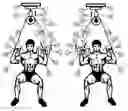
FIG. 1a and FIG. 1b subsequently demonstrate the Lateral Pull-Down muscle training for right Arm/Torso and left Arm/Torso using a preferred embodiment of the Asymmetric Physical Exercise System of the present invention.
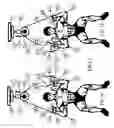
FIG. 2a and FIG. 2b subsequently demonstrate the Lateral Shoulder Press muscle training for left Arm/Shoulder and right Arm/Shoulder using a preferred embodiment of the Asymmetric Physical Exercise System of the present invention.
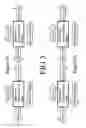
FIG. 3a and FIG. 3b subsequently demonstrate the load diagram of the prior-art design concepts and the load diagram of the design concept proposed by this invention.
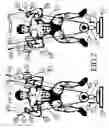
FIG. 4 partially illustrates an alternative preferred embodiment of the Asymmetric Physical Exercise System of the present invention.
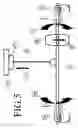
FIG. 5 partially illustrates an alternative preferred embodiment of the Asymmetric Physical Exercise System of the present invention.
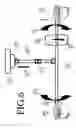
FIG. 6 partially illustrates an alternative preferred embodiment of the Asymmetric Physical Exercise System of the present invention.
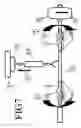
FIG. 7 partially illustrates an alternative preferred embodiment of the Asymmetric Physical Exercise System of the present invention using a barbell.
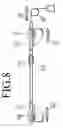
FIG. 8 partially illustrates an alternative preferred embodiment of the Asymmetric Physical Exercise System of the present invention using a cable weight machine
FIG. 9a and 9b subsequently illustrate asymmetric lateral raise & iron cross training for left and right shoulder & torso.
FIG. 10a and 10b subsequently illustrate asymmetric front & back flyer training for left and right chest & back.
DETAILED DESCRIPTION OF THE INVENTION
As partially illustrated in FIG. 1, wherein FIG. 1a and FIG. 1b subsequently demonstrate the Lateral Pull-Down muscle training for right Arm/Torso and left Arm/Torso using a preferred embodiment of the Asymmetric Physical Exercise System of the present invention, which comprises:
-
- Interconnecting means that includes attachment means 1 such as handles, stirrups, hand grips, straps, pedals at each end of a flexible cable 2 for the trainee's right hands 3R and left hand 3L to apply isometric load 10R and 10L against each other through the cable 2, the said cable 2 runs through a pulley system 4 including at least one pulley, which is connected to the rigid platform 5 such as the upper portion of a rigid frame via a supporting means comprising a supporting bracket 6 and a load sensing means 7 such as a load cell to monitor the supporting load 11, the length of the supporting bracket 6 is adjustable to accommodate for the trainee height;
- A bias load generating means 8 such as a weight unit for directly or indirectly applying a bias load 9 that is independent from the instantaneous motion velocity of the attachment interconnecting means to one of the trainee's hands; for right Arm/Torso training, the bias load generating means 8 is attached to the trainee's left hand 3L via the attachment means 1; alternately for left Arm/Torso training, the bias load generating means 8 is attached to the trainee's right hand 3R via the attachment means 1. At equilibrium, the sum of all loads equals zero.
During right Arm/Torso training as illustrated in FIG. 1a, as both arms pull the cable 2 while moving in reciprocal motion, to keep the total load balanced the right arm 1 2R must exert a load that equals to the sum of the isometric load produced by the left arm 12L and the bias load 9 imposed by the bias load generating means 8; since the right arm 12R must exert greater load than the left arm 12L, the right arm 12R is the trainee member and the left arm 12L is the trainer member. With the assistance of the bias load 9, the left arm 12L only needs to exert an isometric load that is below its maximum endured capacity through out the routine in order to impose the total load to the right arm 12R at the right arm maximum capacity during concentric and eccentric motions. In left Arm/Torso training as illustrated in FIG. 1b, the role is reversed, the right arm 12R becomes the trainer member and the left arm 12L becomes the trainee member. Basically, the member that must resist the additional load produced by the bias load generating means is the trainee member, and the other is the trainer member. The force diagram is illustrated in FIG. 3b. The load sensing means 7 can be a device to continuously measure the load 11 amplitude or just to indicate when/where the load 11 has reached certain limits such as maximum and/or minimum limits; the output signal can be visually displayed with such as a graph, chart and numerical output, or can be audibly displayed with such as a sound with variable amplitude or frequency or a verbal announcement.
As partially illustrated in FIG. 2, wherein FIG. 2a and FIG. 2b subsequently demonstrate the Lateral Shoulder Press muscle training for left Arm/Shoulder and right Arm/Shoulder using the same above preferred embodiment of the Asymmetric Physical Exercise System. In this arrangement, the rigid platform 5 is the lower portion of a rigid frame, and the arm that carries the bias load generating means 8 becomes the trainee member since it must resist the additional load beside the isometric load.
Beside gravity force generating means such as a weight unit, the bias load generating means 8 can be one or a plurality of elastic devices such as mechanical or air springs for producing elastic force. The electromagnetic force produced by an electromagnetic motor is another excellent alternative choice since it can be incorporated into the pulley system 4, the bias load magnitude and direction can be varied and controlled electronically, and however it is expensive and not portable. One important feature of the bias load generating means is ability to vary the load amplitude.
An alternative design is partially illustrated in FIG. 4, wherein the system comprises:
-
- Interconnecting means that includes attachment means 1 such as handles, hand grips, straps, pedals at each end of a bar 13 for the trainee's right hands 3R and left hand 3L to apply isometric load 10R and 10L against each other through the bar 13, a supporting means comprising a connecting bracket 14 with swivel ends and a load sensing means 7 such as a load cell for monitoring the supporting load 11 to connect the rigid platform 5 such as the upper portion of a rigid frame to the said bar 13 at a location between the two attachment means 1, the length of the connecting bracket 14 is adjustable to accommodate for the trainee's height; the connecting bracket 14 can be a flexible cable 15 as illustrated in FIG. 5 or a belt 16 with adjusting buckle 17 as illustrated in FIG. 6 or any other flexible means such as chain, rope or cord. During training, the reciprocal motion of the arms is produced by the reciprocal rotation of the bar.
- A bias load generating means 8 such as a weight unit for directly or indirectly applying a bias load 9 that is independent from the bar 13 instantaneous motion velocity direction to one of the trainee's hands; for right Arm/Torso training, the bias load generating means 8 is attached to the trainee's left hand 3L via the attachment means 1; alternately for left Arm/Torso training, the bias load generating means 8 is attached to the trainee's right hand 3R via the attachment means 1; the bias load generating means 8 can be slid along the bar 13 to vary the effective bias load. At equilibrium, the sum of all loads equals zero.
During right Arm/Torso training as illustrated in FIG. 4, as both arms pull the bar 13 while moving in opposite directions during reciprocal rotation of the said bar 13, to keep the total load balanced the right arm 12R must exert a load that equals to the sum of the isometric load produced by the left arm 12L and the Bias load 9 imposed by the bias load generating means 8; since the right arm 12R must exert greater load than the left arm 12L, the right arm 12R is the trainee member and the left arm 12L is the trainer member. With the assistance of the bias load 9, the left arm 12L only needs to exert an isometric load that is below its maximum endured capacity through out the routine in order to impose the total load to the right arm 12R at the right arm maximum capacity during concentric and eccentric motions. In left Arm/Torso training wherein the bias load generating means 8 is relocated to right hand portion of the bar 13, the role is reversed, the right arm 12R becomes the trainer member and the left arm 12L becomes the trainee member. Basically, the member that must resist the additional load produced by the bias load generating means is the trainee member, and the other is the trainer member. The force diagram is illustrated in FIG. 3b. It is obvious that the above asymmetric training concept is applicable for training two body member units that apply isometric load against each other, with each body member unit includes at least one trainee's body member such as hand, foot, arm, leg, elbow, head or a combination.
When a dumbbell set having different weight is available, each dumbbell can be utilized as the combination of attachment means 1 and bias load generating means 8 as illustrated in FIG. 1 and FIG. 2; it is also feasible to use a pair of dumbbells having different weights with the lighter one as the attachment means 1 and the heavier one as the combination of attachment means 1 and bias load generating means 8; the difference in weight is the bias load 9.
It is obvious that when barbells are available, the bar can be utilized as the bar 13, and the weight plates can be utilized as the bias load generating means 8, as illustrated in FIG. 7.
When a cable weight machine, wherein cables that connect the handles to the weight stacks run through adjustable pulleys that can be fixed at any height is available, the bias load 9 can be generated in any direction with gravity force, then another alternative design is possible as partially illustrated in FIG. 8, wherein the system comprises:
-
- Interconnecting means that includes two attachment means 1 such as handles, hand grips, straps, pedals at each of a bar 13 for the trainee's right hands 3R and left hand 3L to apply isometric load 10R and 10L against each other through the bar 13 that comprises a load sensing means 7 such as a load cell to monitor the isometric load, the length of bar 13 is adjustable. During training, the reciprocal motion of the arms is produced by the reciprocal motion of the bar. The load sensing means 7 can be a device to continuously measure the isometric load amplitude or just to indicate when/where the isometric load has reached certain limits such as maximum and/or minimum limits; the output signal can be visually displayed with such as a graph, chart and numerical output, or can be audibly displayed with such as a sound with variable amplitude or frequency or a verbal announcement.
- A bias load generating means 8 such as a cable weight machine for directly applying a bias load 9 that is independent from the bar 13 instantaneous motion velocity direction to the bar, the said bias load 9 must have the longitudinal component along the bar length substantially larger than the orthogonal component.
In right arm triceps muscle training, as both arms pull on the bar 13 with the forearms rotating about the elbows to produce reciprocal linear motion, the right arm triceps must exert a load that equals to the sum of the isometric load produced by the left arm and the bias load 9 imposed by the bias load generating means 8; since the right arm triceps must exert greater load than the left arm triceps, the right arm triceps is the trainee member and the left arm triceps is the trainer member. With the assistance of the bias load 9, the left arm triceps only needs to exert isometric load that is below its maximum endured capacity through out the routine in order to impose the total load to the right arm triceps at the right arm triceps maximum capacity during concentric and eccentric motions. In left arm triceps muscle training wherein the bias load generating means 8 is relocated to right hand portion of the bar 13, the role is reversed, the right arm triceps becomes the trainer member and the left arm triceps becomes the trainee member. Basically, the member that must resist the additional load produced by the bias load generating means is the trainee member, and the other is the trainer member. By pushing on the bar with the forearm rotating about the elbows, the training becomes the arm biceps training. The force diagram is illustrated in FIG. 3b.
FIG. 9a partially illustrates the asymmetric lateral raise shoulder training with the right shoulder & arm 12R as the trainer members, the left shoulder & arm 12L as the trainee members and the dumbbell as the bias load generating means 8; with this technique, as standing, both arms pull against each other through the bar 13 while reciprocally rotate about the shoulder joints to produce a reciprocal swinging motion in a vertical plane, the left shoulder & arm 12L are the trainee members since they are subjected to an isometric load and an additional bias load. With the same arrangement, both arms push against each other through the bar 13 while reciprocally rotate about the shoulder joints to produce a reciprocal swinging motion in a vertical plane, the technique becomes an asymmetric iron cross torso training with the right torso & arm 12R as the trainee members, the left torso & arm 12L as the trainer members and the dumbbell as the bias load generating means 8; the right torso & arm 12R are the trainee members since they are subjected to an isometric load and an additional bias load.
FIG. 9b partially illustrates the asymmetric lateral raise shoulder training with the left shoulder & arm 12L as the trainer members, the right shoulder & arm 12R as the trainee members and the dumbbell as the bias load generating means 8; with this technique, as standing, both arms pull against each other through the bar 13 while reciprocally rotate about the shoulder joints to produce a reciprocal swinging motion in a vertical plane, the right shoulder & arm 12R are the trainee members since they are subjected to an isometric load and an additional bias load. With the same arrangement, both arms push against each other through the bar 13 while reciprocally rotate about the shoulder joints to produce a reciprocal swinging motion in a vertical plane, the technique becomes an asymmetric iron cross torso training with the left torso & arm 12L as the trainee members, the right torso & arm 12R as the trainer members and the dumbbell as the bias load generating means 8; the left torso & arm 12L are the trainee members since they are subjected to an isometric load and an additional bias load.
FIG. 10a partially illustrates the asymmetric flyer chest training with the right chest & arm 12R as the trainer members, the left chest & arm 12L as the trainee members and the dumbbell as the bias load generating means 8; with this technique, as laying in horizontal position, both arms push against each other through the bar 13 while reciprocally rotate about the shoulder joints to produce a reciprocal swinging motion in a vertical plane, the left chest & arm 12L are the trainee members since they are subjected to an isometric load and an additional bias load. With the same arrangement, both arms pull against each other through the bar 13 while reciprocally rotate about the shoulder joints to produce a reciprocal swinging motion in a vertical plane, the technique becomes an asymmetric flyer back training with the right back & arm 12R as the trainee members, the left back & arm 12L as the trainer members and the dumbbell as the bias load generating means 8; the right back & arm 12R are the trainee members since they are subjected to an isometric load and an additional bias load.
FIG. 10b partially illustrates the asymmetric flyer chest training with the left chest & arm 12L as the trainer members, the right chest & arm 12R as the trainee members and the dumbbell as the bias load generating means 8; with this technique, as laying in horizontal position, both arms push against each other through the bar 13 while reciprocally rotate about the shoulder joints to produce a reciprocal swinging motion in a vertical plane, the right chest & arm 12R are the trainee members since they are subjected to an isometric load and an additional bias load. With the same arrangement, both arms pull against each other through the bar 13 while reciprocally rotate about the shoulder joints to produce a reciprocal swinging motion in a vertical plane, the technique becomes an asymmetric flyer back training with the left back & arm 12L as the trainee members, the right back & arm 12R as the trainer members and the dumbbell as the bias load generating means 8; the left back & arm 12L are the trainee members since they are subjected to an isometric load and an additional bias load.
It is obvious that some of these training methods can be performed without the bar 13 while the isometric load and the bias load are applied directly through the trainee's hands, however there is no means to monitor the isometric load in this method.
It is obvious that the above systems can be utilized for static asymmetry training wherein no motion is produced while the two body member units apply isometric load against each other with the addition of a bias load.
Claims
Having described and disclosed my invention, I claim:1. Asymmetric Physical Exercise System, which comprises:
two attachment means, each is attached to one of two trainee's body member units, each of said body member units includes at least one trainee's body member,
an attachment interconnecting means that connects the said two attachment means to at least provide means for the two body member units to apply a load referred as isometric load against each other, and
a bias loading generating means to apply an additional load referred as bias load to one body member unit directly or indirectly, the said bias load direction is independent from the instantaneous motion velocity direction of the attachment interconnecting means and comprises a component parallel to the isometric load.
2. Asymmetric Physical Exercise System of claim 1 wherein the attachment interconnecting means comprises a load sensing means to monitor the isometric load applied by the two body member units against each other.
3. Asymmetric Physical Exercise System of claim 1 wherein the spacing distance between the two attachment means is adjustable.
4. Asymmetric Physical Exercise System of claim 1 wherein the bias loading generating means comprises a means for generating bias load with gravity force.
5. Asymmetric Physical Exercise System of claim 1 wherein the bias loading generating means comprises a means for generating bias load with elastic force.
6. Asymmetric Physical Exercise System of claim 1 further comprises a supporting means to connect the attachment interconnecting means to a rigid platform.
7. Asymmetric Physical Exercise System of claim 6 wherein the supporting means comprises a load sensing means to monitor the supporting load provided by the supporting means.
8. Asymmetric Physical Exercise System of claim 6 wherein the supporting means length is adjustable.
9. Asymmetric Physical Exercise System of claim 6 wherein the attachment interconnecting means comprises:
a pulley system that comprises at least one pulley, and a flexible cable that runs through the pulley system, each end of said flexible cable is connected to each attachment means.
10. Asymmetric Physical Exercise System of claim 6 wherein the attachment interconnecting means comprise a bar, each end of said bar is connected to each attachment means and the supporting means connects to said bar at a location between the two attachment means.
11. Asymmetric Physical Exercise System of claim 10 wherein the bias loading generating means that comprises a means for generating bias load with gravity force is mounted on the bar at adjustable location along the bar for varying the bias load.
12. Asymmetric Physical Exercise System of claim 10 wherein the supporting means comprises a flexible cable with adjustable length.
13. Asymmetric Physical Exercise System of claim 10 wherein the supporting means comprises a belt with buckle for adjusting the supporting means length.
14. Asymmetric Physical Exercise method wherein two trainee's body member units apply a load referred as isometric load against each other directly or indirectly, during which a load referred as bias load is applied to one of the body member units, each of said body member units includes at least one trainee's body member, and the said bias load direction is independent from the directions of body member units instantaneous motion velocities and comprises a component parallel to the isometric load.
15. Asymmetric Physical Exercise method of claim 14 wherein the two trainee's body member units move in reciprocal motion.
16. Asymmetric Physical Exercise method of claim 14 wherein the two trainee's body member units remain motionless at one or a plurality of joint positions.
17. Asymmetric Physical Exercise method involving two trainee's body member units referred as first body member unit and second body member unit, each of said body member unit includes at least one trainee's body member, wherein:
the total load applied to the first body member unit comprises an isometric load produced by the second body member unit against the first body member unit,
the total load applied to the second body member unit comprises an isometric load produced by the first body member unit against the second body member unit and a bias load, and the said bias load direction is independent from the directions of body member units instantaneous motion velocities and comprises a component parallel to the isometric load.
18. Asymmetric Physical Exercise method of claim 17 wherein the two trainee's body member units move in reciprocal motion.
19. Asymmetric Physical Exercise method of claim 17 wherein the two trainee's body member units remain motionless at one or a plurality of joint positions.
20. Asymmetric Physical Exercise method of claim 17 wherein the bias load comprises gravity force.
Images & Drawings included:



Sources:
- United States Patent and Trademark Office - verify current appl. status at the USPTO↗
Recent applications in this class:
- » 20250114654 2025-04-10
ISOMETRIC, DYNAMIC ISOTONIC CONCENTRIC AND DYNAMIC ISOTONIC ECCENTRIC MOTORIZED GUIDANCE EXERCISE APPARATUS - » 20240245947 2024-07-25
Isometric Strength Training Device with Load Cell, Adjustable Grip, Haptic Feedback and Wireless Commnuication - » 20240115897 2024-04-11
GRIP AND TWIST ISOMETRIC WORKOUT TOOL - » 20240058636 2024-02-22
ISOMETRIC EXERCISE DEVICES - » 20230405383 2023-12-21
System and method of isometric exercise - » 20230293930 2023-09-21
Exercise devices for muscle isolation - » 20220355149 2022-11-10
Grip and twist isometric workout tool - » 20220331637 2022-10-20
Tensile strength training device - » 20210339067 2021-11-04
Isometric, dynamic isotonic concentric and dynamic isotonic eccentric motorized guidance exercise apparatus - » 20210128963 2021-05-06
Therapeutic isometric testing and isotonic training exercise device