Hybrid aircraft electrical architecture with both variable and constant frequency generators
US20100237733A1
2010-09-23
12/406,992
2009-03-19
✅ Patent granted
US 8,089,179 B2
2012-01-03
-
-
Burton Mullins
2030-04-08
Abstract:
An electrical generation system utilizes a variable frequency generator operating in combination with a constant frequency generator. Also disclosed and claimed are an aircraft electrical architecture, and a gas turbine engine incorporating the above electrical generation system.
Assignee:
- HAMILTON SUNDSTRAND CORPORATION 1,737 🇺🇸 Windsor Locks, CT, United States
Interested in similar patents?
Get notified when new applications in this technology area are published.
Classification:
H02J3/02 » CPC main
Circuit arrangements for ac mains or ac distribution networks using a single network for simultaneous distribution of power at different frequencies; using a single network for simultaneous distribution of ac power and of dc power
H02P9/48 » CPC further
Arrangements for controlling electric generators for the purpose of obtaining a desired output Arrangements for obtaining a constant output value at varying speed of the generator, e.g. on vehicle
H02P2101/30 » CPC further
Special adaptation of control arrangements for generators for aircraft
H02K16/02 IPC
Machines with more than one rotor or stator Machines with one stator and two or more rotors
H02P9/00 IPC
Arrangements for controlling electric generators for the purpose of obtaining a desired output
B60L1/00 IPC
Supplying electric power to auxiliary equipment of vehicles
Description
BACKGROUND OF THE INVENTION
This application relates to an electrical generation system for use in an aircraft environment wherein a pair of generators is associated with a gas turbine engine, with one generator being constant frequency, and the other being a variable frequency generator.
Aircraft are typically provided with gas turbine engines, which include turbine rotors that rotate to provide power. Generators are associated with these gas turbine engines, and generate electricity from the rotation of a shaft driven by the turbine rotors. The electricity is utilized for various functions on the aircraft, including providing electric power to systems associated with the gas turbine engines, as well as providing electricity to other uses on the aircraft.
A gas turbine engine can rotate at varying speed. A simple generator driven by such an engine will generate a variable frequency.
It is known to provide a gas turbine engine with a pair of generators. In some cases, the generators have been variable frequency.
It is also known to provide a pair of constant frequency generators on a gas turbine engine. A constant frequency generator adapts to the engine's speed variation such that the generator still provides a constant speed and thus constant frequency output.
More recently, for several reasons, aircraft designers have wanted to utilize variable frequency generators. The use of the variable frequency generators raises some challenges, such as large, sustained, torsional oscillating loads in associated gear boxes, and a resultant increase in size and weight. Further, there is a limited no brake break break power transfer (NBPT) capability. Also, many components associated with an aircraft require constant frequency power. Thus, complex motor controls have needed to be associated with each of these components to take the variable frequency electric power provided, and transform that into constant frequency power.
SUMMARY OF THE INVENTION
An electrical generation system utilizes a variable frequency generator operating in combination with a constant frequency generator. Also disclosed and claimed are an aircraft electrical architecture, and a gas turbine engine incorporating the above electrical generation system.
These and other features of the present invention can be best understood from the following specification and drawings, the following of which is a brief description.
BRIEF DESCRIPTION OF THE DRAWINGS
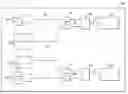
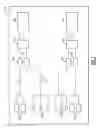
FIG. 1 schematically shows an aircraft incorporating the present invention.
DETAILED DESCRIPTION OF THE PREFERRED EMBODIMENT
An aircraft 20 is illustrated schematically in FIG. 1 incorporating a pair of gas turbine engines 22 and 24. As known, the gas turbine engines include a turbine rotor that is driven to rotate by products of combustion.
The rotation of the turbine rotor drives a shaft 27, which drives a gearbox 129, which in turn drives two different shafts, each of which powers one of the generators (items 26 & 28) in each engine 22 and 24. The shafts are associated with generators 26 and 28, both shown schematically. As known, as the shaft rotates within the generators 26 and 28, electricity is generated. As disclosed, the generator 28 is a variable frequency generator, and provides variable frequency power to a bus 29.
The generator 26 is a constant frequency generator, and may be as known in the art and available from Hamilton Sundstrand Corporation.
One known constant frequency generator is disclosed, as an example, in U.S. Pat. No. 6,838,778. These generators have not been utilized in combination with a variable frequency generator associated with the same gas turbine engine. The constant frequency generator 26 delivers electricity to a bus 25.
In the aircraft 20 as illustrated in FIG. 1, a number of components 30 are associated with the bus 29. In general, these are components that can utilize variable frequency power. As such, they do not require a complex controller.
The bus 25, which is delivering constant frequency power, is associated with other components 32 which do require constant frequency power.
With the above described architecture, the system does not require motor controllers for each of the components 32, as has been the case in the past. Thus, the present invention provides a hybrid architecture with the benefits of both variable and constant frequency generator.
Although an embodiment of this invention has been disclosed, a worker of ordinary skill in this art would recognize that certain modifications would come within the scope of this invention. For that reason, the following claims should be studied to determine the true scope and content of this invention.
Claims
What is claimed is:1. A generation system comprising:
a variable frequency generator for taking rotation from a rotating member and generating power having a variable frequency; and
a constant frequency generator for taking rotation from the rotating member and generating power having a constant frequency.
2. An aircraft electrical architecture comprising:
at least one gas turbine engine, said gas turbine engine being associated with a variable frequency generator and a constant frequency generator, said variable frequency generator being operable to take rotation of a shaft associated with said gas turbine engine, and generate power having a variable frequency to be supplied to a variable frequency bus;
said constant frequency generator also taking rotation of said shaft and generating power having a constant frequency to be supplied to a constant frequency bus; and
a system that requires power of constant frequency being powered by said constant frequency bus.
3. The aircraft electrical architecture as set forth in claim 2, further comprising a system that can utilize power of variable frequency being powered by said variable frequency bus.
4. A gas turbine engine comprising:
a turbine engine having a shaft to be driven for rotation through an engine mounted accessory gearbox, a variable frequency generator and a constant frequency generator; and
said variable frequency generator being operable to generate power having a variable frequency from rotation of the shaft to be supplied to a variable frequency bus, and
said constant frequency generator generating power having a constant frequency from rotation of the shaft to be supplied to a constant frequency bus.
Images & Drawings included:
Sources:
- United States Patent and Trademark Office - verify current appl. status at the USPTO↗
Recent applications in this class:
- » 20250183663 2025-06-05
AIRPORT ELECTRICAL POWER CHARGER SYSTEM FOR CHARGING AIRCRAFTS AND GROUND SUPPORT EQUIPMENT - » 20250062617 2025-02-20
POWER DISTRIBUTION CIRCUIT, METHOD FOR CONTROLLING POWER SUPPLYING OF POWER DISTRIBUTION CIRCUIT, AND POWER SUPPLY SYSTEM - » 20240405553 2024-12-05
SCALABLE POWER DISTRIBUTION SYSTEM AND METHOD - » 20240305098 2024-09-12
HOUSEHOLD ENERGY MANAGEMENT AND DISPATCHING SYSTEM - » 20240258795 2024-08-01
UTILIZING POWER INFRASTRUCTURE TO PROVIDE STABLE REFERENCE FREQUENCY - » 20240022071 2024-01-18
Airport electrical power charger system for charging aircrafts and ground support equipment - » 20220360078 2022-11-10
Airport electric vehicle charging system - » 20220149621 2022-05-12
Converter, arrangement comprising a converter and method for operating same - » 20210050723 2021-02-18
Power supply system - » 20210013717 2021-01-14
Highly flexible electrical distribution grid edge energy manager and router
Recent applications for this Assignee:
- » 20210381779 2021-12-09
Method for manufacturing a curved heat exchanger using wedge shaped segments - » 20210381438 2021-12-09
In flight restart system and method for free turbine engine - » 20210123695 2021-04-29
Heat exchanger with spray nozzle - » 20200182559 2020-06-11
Heat exchanger riblet and turbulator features for improved manufacturability and performance - » 20200077538 2020-03-05
Heat exchange device in directed flow system - » 20190212074 2019-07-11
Method for manufacturing a curved heat exchanger using wedge shaped segments - » 20190060828 2019-02-28
Temperature controlled nitrogen generation system - » 20190010874 2019-01-10
In flight restart system and method for free turbine engine - » 20180306234 2018-10-25
Foil bearing with split key - » 20180237144 2018-08-23
Two mode system that provides bleed and outside air or just outside air