Resistance chair with wheels
US20100240503A1
2010-09-23
12/792,570
2010-06-02
✅ Patent granted
US 7,850,586 B2
2010-12-14
-
-
Glenn Richman
2030-06-02
Abstract:
A resistance chair with wheels assists users with performing correct abdominal crunches by guiding the user's effort. The resistance chair includes a seat connected to a hinged back with back support that extends to support the user's back and assist in the crunch recovery following the crunch extension.
Inventors:
- Johann B. VERHEEM 6 🇺🇸 Carlsbad, CA, United States
- Johann B. VERHEEM 2 🇺🇸 San Clemente, CA, United States
Assignee:
- Fitness IQ LLC 7 🇺🇸 Vista, CA, United States
Interested in similar patents?
Get notified when new applications in this technology area are published.
Classification:
A63B22/20 » CPC main
Exercising apparatus specially adapted for conditioning the cardio-vascular system, for training agility or co-ordination of movements using rollers, wheels, castors or the like, to be moved over the floor or other surface, during exercising
A63B21/0552 » CPC further
Exercising apparatus for developing or strengthening the muscles or joints of the body by working against a counterforce, with or without measuring devices using resilient force-resisters extension element type Elastic ropes or bands
A63B21/4005 » CPC further
Exercising apparatus for developing or strengthening the muscles or joints of the body by working against a counterforce, with or without measuring devices; Interfaces with the user related to strength training; Details thereof; Arrangements for attaching the exercising apparatus to the user's body, e.g. belts, shoes or gloves specially adapted therefor to the shoulder
A63B23/0211 » CPC further
Exercising apparatus specially adapted for particular parts of the body for the abdomen, the spinal column or the torso muscles related to shoulders (e.g. chest muscles); Abdomen moving torso with immobilized lower limbs
A63B23/12 » CPC further
Exercising apparatus specially adapted for particular parts of the body for limbs, i.e. upper or lower limbs, e.g. simultaneously for upper limbs or related muscles, e.g. chest, upper back or shoulder muscles
A61H2015/005 » CPC further
Massage by means of rollers, balls, e.g. inflatable, chains, or roller chains with balls or rollers rotating about their own axis; Balls or spheres multiple on the same axis
A61H2205/081 » CPC further
Devices for specific parts of the body; Trunk Back
A63B21/00065 » CPC further
Exercising apparatus for developing or strengthening the muscles or joints of the body by working against a counterforce, with or without measuring devices; Mechanical means for varying the resistance by increasing or reducing the number of resistance units
A63B21/0442 » CPC further
Exercising apparatus for developing or strengthening the muscles or joints of the body by working against a counterforce, with or without measuring devices using resilient force-resisters attached to static foundation, e.g. a user Anchored at one end only, the other end being manipulated by the user
A63B21/4035 » CPC further
Exercising apparatus for developing or strengthening the muscles or joints of the body by working against a counterforce, with or without measuring devices; Interfaces with the user related to strength training; Details thereof; Specific exercise interfaces; Handles, pedals, bars or platforms for operation by hand
A63B23/0233 » CPC further
Exercising apparatus specially adapted for particular parts of the body for the abdomen, the spinal column or the torso muscles related to shoulders (e.g. chest muscles) Muscles of the back, e.g. by an extension of the body against a resistance, reverse crunch
A63B2023/003 » CPC further
Exercising apparatus specially adapted for particular parts of the body by torsion of the body part around its longitudinal axis
A63B2071/025 » CPC further
Games or sports accessories not covered in groups - for large-room or outdoor sporting games; Supports, e.g. poles on rollers or wheels
A63B2071/027 » CPC further
Games or sports accessories not covered in groups - for large-room or outdoor sporting games; Supports, e.g. poles stabilised by weight using player's own weight, e.g. on a platform
A63B2208/0228 » CPC further
Characteristics or parameters related to the user or player posture Sitting on the buttocks
A63B2208/0238 » CPC further
Characteristics or parameters related to the user or player posture; Sitting on the buttocks with stretched legs, like on a bed
Y10S482/904 » CPC further
Exercise devices Removably attached to wheelchair, home furnishing, or home structure
A63B26/00 IPC
Exercising apparatus not covered by groups -
Description
RELATED APPLICATIONS
This application claims priority from copending U.S. Provisional patent application 60/791,470 filed Apr. 13, 2006, and U.S. Provisional patent application 60/796,650 filed Apr. 21, 2006.
FIELD OF THE INVENTIONS
The inventions described below relate to the field of exercise equipment and more specifically to the field of low-impact abdominal exercisers.
BACKGROUND OF THE INVENTIONS
In an age of exercise and fitness, the time-honored abdominal crunch is under attack as potentially damaging if done incorrectly especially if performed by someone in poor physical condition. What is needed is an exercise tool to enable anyone to perform a correct abdominal crunch, and provide varying levels of resistance or assistance to accommodate people unaccustomed to exercise.
SUMMARY
A resistance chair with wheels assists users with performing correct abdominal crunches by guiding the user's effort and eliminating the initial jerking motion commonly experienced when doing an abdominal crunch. The resistance chair includes a seat connected to a hinged back with back support that extends to support the user's back and assist in the crunch recovery following the crunch extension.
In operation, a resistance chair provides support for a user's back, adjustable resistance moving from the start position to the extended position thus exercising muscles that ordinarily don't receive work in abdominal crunches. The back support and the adjustable resistance of the resistance chair also assist the user by overcoming a portion of gravity to help the user perform a correct crunch moving from the extended position to the start position.
By providing resistance to the backwards movement, the user engages the lower back muscles and thereby exercises the front and the back of the abdominal muscles. The backrest further permits core rotation providing the user the ability to do a sideways twist and engage the oblique muscles.
BRIEF DESCRIPTION OF THE DRAWINGS
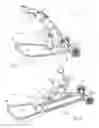
FIG. 1 is a perspective view of a resistance chair in the starting position.
FIG. 2 is a perspective view of the resistance chair of FIG. 1 in the extended position.
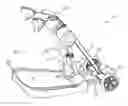
FIG. 3 is an exploded view of the resistance chair of FIG. 1.
DETAILED DESCRIPTION OF THE INVENTIONS
Referring to FIG. 1 and FIG. 3, Resistance chair 10 includes seat 12 pivotally secured to first end 14 of first arm 15 which is pivotally secured to second end 17 of second arm 18. First end 20 of the second arm engages axle 21 and any suitable wheels such as wheels 22 and 23 may be secured to axle 21 to enable extension of resistance chair 10 to extended position 30 as illustrated in FIG. 2. Any suitable back support elements such as rollers 24 and or shoulder support 25 may be secured to first arm 15. Rollers 24 may be secured at any suitable position on first arm 15 and may be included in a backrest such as backrest 27 that may swivel at the point of attachment to first arm 15. Seat 12 may be molded plastic, metal, foam or a combination of wood, steel and upholstery. Front edge 12F may be higher relative to rear edge 12R to place a user at a slight incline into the back support. This position ensures optimal comfort when performing an abdominal crunch.
One or more resistance bands such as bands 26 may be used to provide selectable resistance to a user moving from start position 28 of FIG. 1 to extended position 30 of FIG. 2. The resistance bands also assist the user to perform a correct crunch motion when moving from extended position 30 to start position 28. Resistance bands 26 may be secured between axle 21 and axle 32 using any suitable technique such as band engagement elements 33 directly secured to axle 21 and seat 12 secured to axle 32.
Optional shoulder straps 34 may be attached to hinge 35 between first arm 15 and second arm 18 or to an extension such as extension 15B from first arm 15. Straps 34 may provide additional resistance to a user seeking to extend the crunch position and continue to move their upper body forward past start position 28. This extends the crunch, contracts the user's abdominal muscles farther than the start position and engages the user's arms in the exercise.
In use a user sits upon seat 12 with the user's back adjacent to back rollers 24 in start position 28 of FIG. 1. The user must lean back against the back rollers 24 and shoulder support 25 using the user's back muscles to push against the back rollers 24 and shoulder support 25. Wheels 22 and 23 will begin to roll away from the user and permit first arm 15 and second arm 18 to fold to a horizontal position parallel to the ground as in extended position 30 of FIG. 2. The transition from start position 28 of FIG. 1 to extended position 30 of FIG. 2 stretches resistance bands 26. The energy stored in stretched resistance bands 26 counteracts a portion of the gravitational force on the user's upper body and assists the user to perform an abdominal crunch to return the user's upper body from the extended position 30 of FIG. 2 to at least start position 28 of FIG. 1. By performing these movements the user is doing an abdominal crunch with back support and resistance that stretches the lower back muscles, forces the user to use more muscles when pushing backwards, and supporting the user when the user moves from the fully extended position to the upright start position, thereby creating a more comfortable, efficacious exercise.
While the preferred embodiments of the devices and methods have been described in reference to the environment in which they were developed, they are merely illustrative of the principles of the inventions. Other embodiments and configurations may be devised without departing from the spirit of the inventions and the scope of the appended claims.
Claims
We claim:1. A resistance chair comprising:
a seat having a front edge and a back edge;
a first arm having a first end and a second end, the first end rotatably engaging the back edge of the seat;
a second arm having a first end and a second end, the second end hingeably engaging the second end of the first arm;
a rolling axle secured to the first end of the second arm;
two or more wheels secured to the rolling axle to permit the first and second arms to rotate and hinge away from the seat into a fully extended position;
one or more resistance bands secured between the back edge of the seat and the rolling axle; and
a backrest secured to the first arm for supporting a user's back.
2. The resistance chair of claim 1 further comprising:
one or more shoulder straps secured to the second end of the first arm.
3. The resistance chair of claim 2 further comprising:
an extension of the first arm secured to the second end for engaging the shoulder straps.
4. The resistance chair of claim 1 further comprising:
an upper back support secured to the second end of the first arm.
5. A method of performing an abdominal crunch comprising the steps:
sitting on a resistance chair seat, the seat having a front edge and a back edge, the resistance chair further including;
a first, arm having a first end and a second end, the first end rotatably engaging the back edge of the seat;
a second arm having a first end and a second end, the second end hingeably engaging the second end of the first arm;
a rolling axle secured to the first end of the second arm;
two or more wheels secured to the rolling axle to permit the first and second arms to rotate and hinge away from the seat into a fully extended position;
one or more resistance bands secured between the back edge of the seat and the rolling axle; and
a backrest secured to the first arm for supporting a user's back;
leaning back into the backrest to extend the resistance bands until the first arm and the second arm are fully extended;
leaning forward allowing the resistance bands to contract the first and second arms into a start position.
Images & Drawings included:

Sources:
- United States Patent and Trademark Office - verify current appl. status at the USPTO↗
Similar patent applications:
- » 20070243981
Resistance chair with wheels - » 20110086746
Resistance chair with wheels - » 20120035025
Resistance chair with wheels
Recent applications in this class:
- » 20250010131 2025-01-09
EXERCISE APPARATUS - » 20240350861 2024-10-24
EXERCISE ROLLER SYSTEM - » 20240108943 2024-04-04
Cardio Fitness Machine - » 20230398404 2023-12-14
CONNECTED FITNESS TECHNOLOGY FOR SLIDE BOARDS - » 20230310929 2023-10-05
TWO-PERSON EXERCISE WHEEL MECHANISM - » 20230158366 2023-05-25
EXERCISE DEVICE - » 20220258001 2022-08-18
Multi-purpose exercise equipment - » 20220008782 2022-01-13
Exercise device - » 20220008781 2022-01-13
Exercise device - » 20210362001 2021-11-25
SELECTIVELY MOBILE EXERCISE APPARATUS, METHODS AND SYSTEMS
Recent applications for this Assignee:
- » 20120040806 2012-02-16
LOW-IMPACT INERTIAL EXERCISE DEVICE - » 20120035025 2012-02-09
Resistance chair with wheels - » 20110166001 2011-07-07
Low impact inertial exercise device - » 20110086746 2011-04-14
Resistance chair with wheels - » 20110021328 2011-01-27
Low-impact inertial exercise device - » 20070243981 2007-10-18
Resistance chair with wheels