Materials comprising barium zirconate and methods for manufacturing thereof
US20100248937A1
2010-09-30
12/712,047
2010-02-24
✅ Patent granted
US 7,875,567 B2
2011-01-25
-
-
Karl E Group
2030-02-24
Abstract:
A method for manufacturing barium zirconate particles includes providing a mixture of materials that includes barium, zirconium and a sintering aid, wherein the sintering aid includes at least one of barium tungstate, potassium niobate, tungsten oxide, barium molybdate, molybdenum oxide, potassium tantalate, potassium oxide, sodium niobate, sodium tantalate, sodium oxide, lithium niobate, lithium tantalate, lithium oxide, copper oxide, manganese oxide, zinc oxide, calcium zirconate and strontium zirconate; and heating the mixture of materials to produce barium zirconate particles that include the sintering aid.
Inventors:
- Barry Treadway 6 🇺🇸 Gaithersburg, MD, United States
- Michael D. Hill 12 🇺🇸 Frederick, MD, United States
- David Cruickshank 4 🇺🇸 Rockville, MD, United States
- David Cronin 3 🇺🇸 Frederick, MD, United States
Assignee:
- SKYWORKS SOLUTIONS, INC. 1,237 🇺🇸 Woburn, MA, United States
Interested in similar patents?
Get notified when new applications in this technology area are published.
Classification:
C04B35/48 » CPC main
Shaped ceramic products characterised by their composition ; Ceramics compositions ; Processing powders of inorganic compounds preparatory to the manufacturing of ceramic products based on oxide ceramics based on zirconium or hafnium oxides, zirconates, zircon or hafnates
C04B35/486 » CPC further
Shaped ceramic products characterised by their composition ; Ceramics compositions ; Processing powders of inorganic compounds preparatory to the manufacturing of ceramic products based on oxide ceramics based on zirconium or hafnium oxides, zirconates, zircon or hafnates Fine ceramics
C04B35/62655 » CPC further
Shaped ceramic products characterised by their composition ; Ceramics compositions ; Processing powders of inorganic compounds preparatory to the manufacturing of ceramic products; Forming processes; Processing powders of inorganic compounds preparatory to the manufacturing of ceramic products; Preparing or treating the powders individually or as batches ; preparing or treating macroscopic reinforcing agents for ceramic products, e.g. fibres; mechanical aspects section; Treating the starting powders individually or as mixtures; Thermal treatment of powders or mixtures thereof other than sintering Drying, e.g. freeze-drying, spray-drying, microwave or supercritical drying
C04B35/62695 » CPC further
Shaped ceramic products characterised by their composition ; Ceramics compositions ; Processing powders of inorganic compounds preparatory to the manufacturing of ceramic products; Forming processes; Processing powders of inorganic compounds preparatory to the manufacturing of ceramic products; Preparing or treating the powders individually or as batches ; preparing or treating macroscopic reinforcing agents for ceramic products, e.g. fibres; mechanical aspects section; Treating the starting powders individually or as mixtures Granulation or pelletising
C04B35/64 » CPC further
Shaped ceramic products characterised by their composition ; Ceramics compositions ; Processing powders of inorganic compounds preparatory to the manufacturing of ceramic products; Forming processes; Processing powders of inorganic compounds preparatory to the manufacturing of ceramic products Burning or sintering processes
C04B2235/3201 » CPC further
Aspects relating to ceramic starting mixtures or sintered ceramic products; Composition of constituents of the starting material or of secondary phases of the final product; Constituents and secondary phases not being of a fibrous nature; Metal oxides, mixed metal oxides, or oxide-forming salts thereof, e.g. carbonates, nitrates, (oxy)hydroxides, chlorides Alkali metal oxides or oxide-forming salts thereof
C04B2235/3203 » CPC further
Aspects relating to ceramic starting mixtures or sintered ceramic products; Composition of constituents of the starting material or of secondary phases of the final product; Constituents and secondary phases not being of a fibrous nature; Metal oxides, mixed metal oxides, or oxide-forming salts thereof, e.g. carbonates, nitrates, (oxy)hydroxides, chlorides; Alkali metal oxides or oxide-forming salts thereof Lithium oxide or oxide-forming salts thereof
C04B2235/3208 » CPC further
Aspects relating to ceramic starting mixtures or sintered ceramic products; Composition of constituents of the starting material or of secondary phases of the final product; Constituents and secondary phases not being of a fibrous nature; Metal oxides, mixed metal oxides, or oxide-forming salts thereof, e.g. carbonates, nitrates, (oxy)hydroxides, chlorides; Alkaline earth oxides or oxide forming salts thereof, e.g. beryllium oxide Calcium oxide or oxide-forming salts thereof, e.g. lime
C04B2235/3213 » CPC further
Aspects relating to ceramic starting mixtures or sintered ceramic products; Composition of constituents of the starting material or of secondary phases of the final product; Constituents and secondary phases not being of a fibrous nature; Metal oxides, mixed metal oxides, or oxide-forming salts thereof, e.g. carbonates, nitrates, (oxy)hydroxides, chlorides; Alkaline earth oxides or oxide forming salts thereof, e.g. beryllium oxide Strontium oxides or oxide-forming salts thereof
C04B2235/3215 » CPC further
Aspects relating to ceramic starting mixtures or sintered ceramic products; Composition of constituents of the starting material or of secondary phases of the final product; Constituents and secondary phases not being of a fibrous nature; Metal oxides, mixed metal oxides, or oxide-forming salts thereof, e.g. carbonates, nitrates, (oxy)hydroxides, chlorides; Alkaline earth oxides or oxide forming salts thereof, e.g. beryllium oxide Barium oxides or oxide-forming salts thereof
C04B2235/3248 » CPC further
Aspects relating to ceramic starting mixtures or sintered ceramic products; Composition of constituents of the starting material or of secondary phases of the final product; Constituents and secondary phases not being of a fibrous nature; Metal oxides, mixed metal oxides, or oxide-forming salts thereof, e.g. carbonates, nitrates, (oxy)hydroxides, chlorides; Refractory metal oxides, their mixed metal oxides, or oxide-forming salts thereof; Zirconium oxides, zirconates, hafnium oxides, hafnates, or oxide-forming salts thereof Zirconates or hafnates, e.g. zircon
C04B2235/3255 » CPC further
Aspects relating to ceramic starting mixtures or sintered ceramic products; Composition of constituents of the starting material or of secondary phases of the final product; Constituents and secondary phases not being of a fibrous nature; Metal oxides, mixed metal oxides, or oxide-forming salts thereof, e.g. carbonates, nitrates, (oxy)hydroxides, chlorides; Refractory metal oxides, their mixed metal oxides, or oxide-forming salts thereof; Niobium oxides, niobates, tantalum oxides, tantalates, or oxide-forming salts thereof Niobates or tantalates, e.g. silver niobate
C04B2235/3256 » CPC further
Aspects relating to ceramic starting mixtures or sintered ceramic products; Composition of constituents of the starting material or of secondary phases of the final product; Constituents and secondary phases not being of a fibrous nature; Metal oxides, mixed metal oxides, or oxide-forming salts thereof, e.g. carbonates, nitrates, (oxy)hydroxides, chlorides; Refractory metal oxides, their mixed metal oxides, or oxide-forming salts thereof Molybdenum oxides, molybdates or oxide forming salts thereof, e.g. cadmium molybdate
C04B2235/3258 » CPC further
Aspects relating to ceramic starting mixtures or sintered ceramic products; Composition of constituents of the starting material or of secondary phases of the final product; Constituents and secondary phases not being of a fibrous nature; Metal oxides, mixed metal oxides, or oxide-forming salts thereof, e.g. carbonates, nitrates, (oxy)hydroxides, chlorides; Refractory metal oxides, their mixed metal oxides, or oxide-forming salts thereof Tungsten oxides, tungstates, or oxide-forming salts thereof
C04B2235/326 » CPC further
Aspects relating to ceramic starting mixtures or sintered ceramic products; Composition of constituents of the starting material or of secondary phases of the final product; Constituents and secondary phases not being of a fibrous nature; Metal oxides, mixed metal oxides, or oxide-forming salts thereof, e.g. carbonates, nitrates, (oxy)hydroxides, chlorides; Refractory metal oxides, their mixed metal oxides, or oxide-forming salts thereof; Tungsten oxides, tungstates, or oxide-forming salts thereof Tungstates, e.g. scheelite
C04B2235/3262 » CPC further
Aspects relating to ceramic starting mixtures or sintered ceramic products; Composition of constituents of the starting material or of secondary phases of the final product; Constituents and secondary phases not being of a fibrous nature; Metal oxides, mixed metal oxides, or oxide-forming salts thereof, e.g. carbonates, nitrates, (oxy)hydroxides, chlorides Manganese oxides, manganates, rhenium oxides or oxide-forming salts thereof, e.g. MnO
C04B2235/3281 » CPC further
Aspects relating to ceramic starting mixtures or sintered ceramic products; Composition of constituents of the starting material or of secondary phases of the final product; Constituents and secondary phases not being of a fibrous nature; Metal oxides, mixed metal oxides, or oxide-forming salts thereof, e.g. carbonates, nitrates, (oxy)hydroxides, chlorides Copper oxides, cuprates or oxide-forming salts thereof, e.g. CuO or CuO
C04B2235/5436 » CPC further
Aspects relating to ceramic starting mixtures or sintered ceramic products; Composition of constituents of the starting material or of secondary phases of the final product; Constituents or additives of the starting mixture chosen for their shape or used because of their shape or their physical appearance; Particle size related information expressed by the size of the particles or aggregates thereof micrometer sized, i.e. from 1 to 100 micron
C04B2235/5445 » CPC further
Aspects relating to ceramic starting mixtures or sintered ceramic products; Composition of constituents of the starting material or of secondary phases of the final product; Constituents or additives of the starting mixture chosen for their shape or used because of their shape or their physical appearance; Particle size related information expressed by the size of the particles or aggregates thereof submicron sized, i.e. from 0,1 to 1 micron
C04B2235/768 » CPC further
Aspects relating to ceramic starting mixtures or sintered ceramic products; Aspects relating to sintered or melt-casted ceramic products; Physical characteristics; Crystal structural characteristics, e.g. symmetry Perovskite structure ABO
C04B35/468 IPC
Shaped ceramic products characterised by their composition ; Ceramics compositions ; Processing powders of inorganic compounds preparatory to the manufacturing of ceramic products based on oxide ceramics based on titanium oxides or titanates based on titanates based on alkaline earth metal titanates based on barium titanates
Description
CROSS REFERENCE TO RELATED APPLICATION
This application claims priority to copending U.S. provisional application entitled, “Ceramic Filler Material for Making Polymer-Ceramic Composites Transparent to Microwave Radiation,” having Ser. No. 60/853,174, filed on Oct. 20, 2006, which is entirely incorporated herein by reference.
BACKGROUND
Radio frequency identification (RFID) technology is used in many applications to identify and determine the locations of various items. An example of RFID technology uses a passive RF device, also referred to as an RFID chip, embedded within or otherwise associated with an item. When the RFID device comes within range of a corresponding RFID transceiver, the presence of the RFID device is detected by the RFID transceiver.
One limitation of such a system is that the RFID device may be embedded in the item, causing the material from which the item is formed to attenuate the RF signal between the RFID device and the RFID transceiver, thus limiting the range over which the RFID transceiver can detect the presence of the RFID device. Therefore, it would be desirable to minimize any attenuation between the RFID device and the RFID transceiver.
SUMMARY
Materials comprising barium zirconate and methods for manufacturing such materials are disclosed. An embodiment of a method for manufacturing barium zirconate particles includes providing a mixture of materials that includes barium, zirconium and a sintering aid, wherein the sintering aid includes at least one of barium tungstate, potassium niobate, tungsten oxide, barium molybdate, molybdenum oxide, potassium tantalate, potassium oxide, sodium niobate, sodium tantalate, sodium oxide, lithium niobate, lithium tantalate, lithium oxide, copper oxide, manganese oxide, zinc oxide, calcium zirconate and strontium zirconate, and heating the mixture of materials to produce barium zirconate particles that include the sintering aid.
An embodiment of a mixture of materials for manufacturing barium zirconate particles includes barium, zirconium and at least one of barium tungstate, potassium niobate, tungsten oxide, barium molybdate, molybdenum oxide, potassium tantalate, potassium oxide, sodium niobate, sodium tantalate, sodium oxide, lithium niobate, lithium tantalate, lithium oxide, copper oxide, manganese oxide, zinc oxide, calcium zirconate and strontium zirconate.
An embodiment of barium zirconate particles includes a plurality of particles, wherein each of the plurality of particles includes barium zirconate and at least one of barium tungstate, potassium niobate, tungsten oxide, barium molybdate, molybdenum oxide, potassium tantalate, potassium oxide, sodium niobate, sodium tantalate, sodium oxide, lithium niobate, lithium tantalate, lithium oxide, copper oxide, manganese oxide, zinc oxide, calcium zirconate and strontium zirconate.
Other systems, methods, features, and advantages of the invention will be or become apparent to one with skill in the art upon examination of the following figures and detailed description. It is intended that all such additional systems, methods, features, and advantages be included within this description, be within the scope of the invention, and be protected by the accompanying claims.
BRIEF DESCRIPTION OF THE FIGURES
The invention can be better understood with reference to the following figures. The components within the figures are not necessarily to scale, emphasis instead being placed upon clearly illustrating the principles of the invention. Moreover, in the figures, like reference numerals designate corresponding parts throughout the different views.
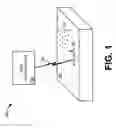
FIG. 1 is a cut away block diagram illustrating a ceramic filler material for making polymer-ceramic composites transparent to microwave radiation.
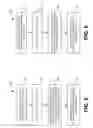
FIG. 2 is a flow chart depicting an embodiment of a method for manufacturing barium zirconate particles.
FIG. 3 is a flow chart depicting an alternative embodiment of a method for manufacturing barium zirconate particles.
FIG. 4 is a flow chart depicting another alternative embodiment of a method for manufacturing barium zirconate particles.
FIG. 5 is a flow chart depicting another alternative embodiment of a method for manufacturing barium zirconate particles.
FIG. 6 is a flow chart depicting another alternative embodiment of a method for manufacturing barium zirconate particles.
FIG. 7 is a flow chart depicting another alternative embodiment of a method for manufacturing barium zirconate particles.
FIG. 8 is a flow chart depicting a method for manufacturing barium zirconate agglomerates.
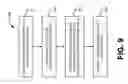
FIG. 9 is a flow chart depicting another method for manufacturing barium zirconate agglomerates.
DETAILED DESCRIPTION
FIG. 1 is a cut away block diagram illustrating a ceramic filler material for making polymer-ceramic composites transparent to microwave radiation. A polymer-ceramic material is illustrated using reference numeral 104. The polymer-ceramic material may also be referred to as a polymer-matrix material. In an embodiment, the polymer-ceramic material comprises polyvinyl chloride (PVC), or a derivative of PVC, and a low dielectric loss ceramic oxide filler 110. Although illustrated in FIG. 1 as located in a particular region of the polymer-ceramic material 104, the low dielectric loss ceramic oxide filler 110 is typically evenly distributed within the polymer-ceramic material 104. However, the low dielectric loss ceramic oxide filler 110 may be unevenly distributed within the polymer-ceramic material 104. The low dielectric loss ceramic oxide filler 110 renders the polymer-ceramic material 104 transparent to microwave energy 106 in the wavelength range of approximately 100 megahertz (MHz) to approximately 18 gigahertz (GHz) emitted from an RFID transceiver 102. In an embodiment, the low dielectric loss ceramic oxide filler 110 permits an RFID chip 108 embedded in the polymer-ceramic material 104 to easily receive RF energy 106 with minimal attenuation and allows the RFID transceiver 102 to communicate with the RFID chip 108. In an embodiment, the low dielectric loss ceramic oxide filler material 110 is fabricated using barium zirconate. However, because barium zirconate is relatively difficult to sinter, the formation of particles of barium zirconate larger than approximately 1 micrometer (μm) is a challenge. Using particles of barium zirconate larger than approximately 1 μm is desirable because the larger particle size improves the percent ceramic loading in the polymer-ceramic material 104.
To facilitate the formation of barium zirconate particles greater in size than approximately 1 μm, a material that improves the ability to sinter the barium zirconate is added. In an embodiment, at least one of barium tungstate and potassium niobate is added to the barium zirconate to improve the ability to sinter particles of barium zirconate larger than approximately 1 μm. Alternatively, one or more of tungsten oxide, barium molybdate, molybdenum oxide, potassium tantalate, potassium oxide, sodium niobate, sodium tantalate, sodium oxide, lithium niobate, lithium tantalate, lithium oxide, copper oxide, manganese oxide and zinc oxide may be added to the barium zirconate to improve the ability to sinter particles of barium zirconate larger than approximately 1 μm. Alternatively, a solid solution (i.e., a solid-state solution of one or more solutes in a solvent) of barium zirconate and at least one of calcium zirconate and strontium zirconate may be used.
FIG. 2 is a flow chart depicting an embodiment of a method 200 for manufacturing barium zirconate particles. As indicated in step 201, barium zirconate is mixed with a sintering aid. The sintering aid is a material selected, for example, from the materials listed in the following Table 1.
| TABLE 1 |
| Sintering Aids For Barium Zirconate |
| Barium tungstate | |
| Potassium niobate | |
| Tungsten oxide | |
| Barium molybdate | |
| Molybdenum oxide | |
| Potassium tantalate | |
| Potassium oxide | |
| Sodium niobate | |
| Sodium tantalate | |
| Sodium oxide | |
| Lithium niobate | |
| Lithium tantalate | |
| Lithium oxide | |
| Copper oxide | |
| Manganese oxide | |
| Zinc oxide | |
| Calcium zirconate | |
| Strontium zirconate | |
In an embodiment, the sintering aid comprises about 1%-4% of the mixture of materials by weight. The barium zirconate and the sintering aid are then heated to produce barium zirconate particles that comprise the sintering aid, as indicated in step 202. The resulting barium zirconate particles have a perovskite crystal structure. A perovskite crystal structure is one that resembles the structure of perovskite (calcium titanium oxide). The perovskite crystal structure of the barium zirconate particles enables the particles to have sizes between about 1-4 μm in diameter. Heating the materials may be performed, for example, at a temperature between about 1500° C. and 1600° C. for a period between about 8 to 12 hours.
FIG. 3 is a flow chart depicting an alternative method 300 for manufacturing barium zirconate particles. As indicated in step 301, a barium source is mixed with a zirconium source and a sintering aid. The sintering aid may be a material selected, for example, from the materials listed in Table 1, above. In an embodiment, the sintering aid comprises about 1%-4% of the mixture of materials by weight. The barium source may be, for example, barium carbonate. The zirconium source may be, for example, zirconium oxide. The mixture of materials is then heated to produce barium zirconate particles that comprise the sintering aid, as indicated in step 302. The resulting barium zirconate particles have a perovskite crystal structure and are between about 1-4 μm. Heating the materials may be performed, for example, at a temperature between about 1500° C. and 1600° C. for a period between about 8 to 12 hours.
FIG. 4 is a flow chart depicting another alternative method 400 for manufacturing barium zirconate particles. As indicated in step 401, barium carbonate is mixed with zirconium oxide and a sintering aid. The sintering aid may be a material selected, for example, from the materials listed in Table 1, above. In an embodiment, the mixture of materials includes about 59%-65% barium carbonate, about 36%-40% zirconium oxide, and about 1-4% sintering aid. The mixture of materials is then heated to produce barium zirconate particles that comprise the sintering aid, as indicated in step 402. The resulting barium zirconate particles have a perovskite crystal structure and are between about 1-4 μm. Heating the materials may be performed, for example, at a temperature between about 1500° C. and 1600° C. for a period between about 8 to 12 hours.
FIG. 5 is a flow chart depicting another alternative method 500 for manufacturing barium zirconate particles. As indicated in step 501, barium zirconate is mixed with a sintering aid and a liquid. The sintering aid may be a material selected, for example, from the materials listed in Table 1, above. In an embodiment, the sintering aid comprises about 1%-4% of the mixture of materials by weight. The liquid may comprise, for example, water and/or alcohol. The liquid is used to enable the barium zirconate and the sintering aid to be more thoroughly mixed. The mixture of materials is then dried, as indicated in step 502. The drying may be performed by heating the mixture or by spray-drying (i.e., spraying the mixture into a heated chamber). The barium zirconate and the sintering aid are then heated to produce barium zirconate particles that comprise the sintering aid, as indicated in step 503. The resulting barium zirconate particles have a perovskite crystal structure and are between about 1-4 μm. Heating the materials may be performed, for example, at a temperature between about 1500° C. and 1600° C. for a period between about 8 to 12 hours. The barium zirconate particles are then sorted (e.g., by sifting, sieving or centrifuging) to extract desired particle sizes, as indicated in step 504. The desired particle sizes may be, for example, between about 1-4 μm.
FIG. 6 is a flow chart depicting another alternative method 600 for manufacturing barium zirconate particles. As indicated in step 601, a barium source is mixed with a zirconium source, a sintering aid and a liquid. The sintering aid may be a material selected, for example, from the materials listed in Table 1, above. The barium source may be, for example, barium carbonate. The zirconium source may be, for example, zirconium oxide. The liquid may comprise, for example, water and/or alcohol. The liquid is used to enable the barium source, the zirconium source and the sintering aid to be more thoroughly mixed. The mixture of materials is then dried, as indicated in step 602. The drying may be performed by heating the mixture or by spray-drying (e.g., as described above). The mixture of materials is then heated to produce barium zirconate particles that comprise the sintering aid, as indicated in step 603. The resulting barium zirconate particles have a perovskite crystal structure and are between about 1-4 μm. Heating the materials may be performed, for example, at a temperature between about 1500° C. and 1600° C. for a period between about 8 to 12 hours. The barium zirconate particles are then sorted (e.g., by sifting, sieving or centrifuging) to extract desired particle sizes, as indicated in step 604. The desired particle sizes may be, for example, between about 1-4 μm.
FIG. 7 is a flow chart depicting another alternative method 700 for manufacturing barium zirconate particles. As indicated in step 701, barium carbonate, zirconium oxide, a sintering aid and a liquid are mixed. The sintering aid may be a material selected, for example, from the materials listed in Table 1, above. The liquid may comprise, for example, water and/or alcohol. The liquid is used to enable the barium carbonate, zirconium oxide and the sintering aid to be more thoroughly mixed. In an embodiment, the mixture of materials includes about 59%-65% barium carbonate, about 36%-40% zirconium oxide, and about 1-4% sintering aid by weight. The mixture of materials is then dried, as indicated in step 702. The drying may be performed by heating the mixture or by spray-drying (e.g., as described above). The mixture of materials is then heated to produce barium zirconate particles that comprise the sintering aid, as indicated in step 703. The resulting barium zirconate particles have a perovskite crystal structure and are between about 1-4 μm. Heating the materials may be performed, for example, at a temperature between about 1500° C. and 1600° C. for a period between about 8 to 12 hours. The barium zirconate particles are then sorted (e.g., by sifting, sieving or centrifuging) to extract desired particle sizes, as indicated in step 704. The desired particle sizes may be, for example, between about 1-4 μm.
Depending on the methods and/or materials used to produce a polymer-ceramic material that is transparent to microwave energy, agglomerates of barium zirconate particles may be desired for inclusion in the polymer-ceramic material. An agglomerate is defined as a cluster. FIG. 8 is a flow chart depicting a method 800 for manufacturing such barium zirconate agglomerates. As indicated in step 801, barium zirconate particles, which include a sintering aid as described above, are mixed with a binder material. The barium zirconate particles are produced, for example, via one of the methods illustrated in FIGS. 2-7. The binder material is used to bind barium zirconate particles to form barium zirconate agglomerates. The binder material may comprise, for example, polyvinyl alcohol and/or polyethylene glycol. A solvent, such as water, may also be added to the barium zirconate-binder mixture to enable the barium zirconate and the binder material to be more thoroughly mixed.
After the barium zirconate particles are mixed with the binder material, the barium zirconate-binder mixture is then spray-dried (e.g., sprayed into a heated chamber), as indicated in step 802. The dried barium zirconate-binder mixture is then sintered to produce various barium zirconate agglomerate sizes, as indicated in step 803. The sintering of the materials may be performed, for example, at a temperature between about 1500° C. and 1600° C. for a period between about 8 to 12 hours. The sintering enables the binder to bind barium zirconate particles together to form larger agglomerates (or clusters) of barium zirconate. The barium zirconate agglomerates are then sorted (e.g., via sifting, sieving or centrifuging) to extract desired barium zirconate agglomerate sizes, as indicated in step 804. The desired barium zirconate agglomerate sizes may be, for example, between about 40-100 μm.
Depending on the methods and/or materials used to produce a polymer-ceramic material that is transparent to microwave energy, agglomerates of barium zirconate that are smaller than 40 μm may be desired for inclusion in the polymer-ceramic material.
FIG. 9 is a flow chart depicting another method 900 for manufacturing barium zirconate agglomerates. As indicated in step 901, barium zirconate particles, which include a sintering aid as described above, are mixed with a binder material. The barium zirconate particles are produced, for example, via one of the methods illustrated in FIGS. 2-7. The binder material is used to bind barium zirconate particles to form barium zirconate agglomerates. The binder material may comprise, for example, polyvinyl alcohol and/or polyethylene glycol. A solvent, such as water, may also be added to the barium zirconate-binder mixture to enable the barium zirconate and the binder material to be more thoroughly mixed.
After the barium zirconate particles are mixed with the binder material, the barium zirconate-binder mixture is then spray-dried (e.g., sprayed into a heated chamber), as indicated in step 902. The dried barium zirconate-binder mixture is then sintered to produce barium zirconate agglomerates, as indicated in step 903. The sintering of the materials may be performed, for example, at a temperature between about 1500° C. and 1600° C. for a period between about 9 and 12 hours.
The barium zirconate agglomerates are then crushed, as indicated in step 904. The crushed barium zirconate agglomerates have sizes in a range of about 10-20 μm. The crushed barium zirconate agglomerates may optionally be sorted (e.g., via sifting, sieving or centrifuging) in order to extract barium zirconate agglomerates that are in a desired size range that is a subset of the 10-20 μm range of sizes.
While various embodiments of the invention have been described, it will be apparent to those of ordinary skill in the art that many more embodiments and implementations are possible that are within the scope of this invention. Accordingly, the invention is not to be restricted except in light of the following claims and their equivalents.
Claims
1.-19. (canceled)
20. A material comprising:
a plurality of particles, wherein each of the plurality of particles includes barium zirconate and an additive in the amount of between about one percent and about four percent by weight of a total weight of the material, the additive including at least one of barium tungstate, potassium niobate, tungsten oxide, barium molybdate, molybdenum oxide, potassium tantalate, potassium oxide, sodium niobate, sodium tantalate, sodium oxide, lithium niobate, lithium tantalate, lithium oxide, manganese oxide, zinc oxide, calcium zirconate and strontium zirconate.
21. The material of claim 20, wherein the particles each comprise a perovskite crystal structure.
Images & Drawings included:


Sources:
- United States Patent and Trademark Office - verify current appl. status at the USPTO↗
Similar patent applications:
Recent applications in this class:
- » 20250257012 2025-08-14
ZIRCONIA SINTERED BODY - » 20250197295 2025-06-19
METHOD FOR PRODUCING SINTERED BODY - » 20250197294 2025-06-19
CALCINED BODY AND SINTERED BODY OF ZIRCONIA - » 20250178967 2025-06-05
SINTERED BODY - » 20240417331 2024-12-19
ZIRCONIA SINTERED BODY AND METHOD FOR PRODUCING SAME - » 20240400459 2024-12-05
LAMINATION-SHAPED FIRED BODY, METHOD FOR PRODUCING LAMINATION-SHAPED FIRED BODY, AND KIT FOR PRODUCING LAMINATION-SHAPED FIRED BODY - » 20240383814 2024-11-21
CHEMICAL MODIFIER FOR PbZrO3-BASED ANTIFERROELECTRIC CERAMICS TO REDUCE FABRICATION TEMPERATURE AND IMPROVE DIELECTRIC BREAKDOWN STRENGTH - » 20240376011 2024-11-14
GRAIN-BOUNDARY AND SURFACE-DOPED RARE-EARTH ZIRCONIUM-BASED CERAMIC MATERIAL, PREPARATION METHOD THEREFOR, AND USE THEREOF - » 20240376010 2024-11-14
DIELECTRIC POWDER FOR CERAMIC DIELECTRIC POWDER FOR CERAMIC CAPACITORS AND CERAMIC CAPACITOR USING SAME - » 20240262752 2024-08-08
METHOD FOR MANUFACTURING AN ABRADABLE LAYER
Recent applications for this Assignee:
- » 20240306175 2024-09-12
Systems, devices, and methods related to configuring multi-stream network based on stream capability - » 20240015773 2024-01-11
Systems, devices, and methods related to configuring a multi-stream network with a messaging schedule - » 20240015214 2024-01-11
Systems, devices, and methods related to desynchronizing co-located devices with transaction shift - » 20220253081 2022-08-11
Biasing scheme for power amplifiers - » 20220100216 2022-03-31
Biasing scheme for power amplifiers - » 20220029623 2022-01-27
Electrostatic discharge clamp topology - » 20210281223 2021-09-09
Power amplifier output power protection - » 20210075462 2021-03-11
Fast antenna switching - » 20200395935 2020-12-17
Electrostatic discharge clamp topology - » 20200272183 2020-08-27
Biasing scheme for power amplifiers