Spinning toy
US20100255752A1
2010-10-07
12/798,576
2010-04-06
Abstract:
A manually powered spinning toy is described. The spinning toy includes a core having two ends. The core and ends are formed in a suitable shape to allow the toy to spin, such that a user can position one of the user's fingers against one of the ends and, by pushing down on the end, the end is forced down and ultimately away from the user's finger, thereby causing the toy to spin.
Inventors:
- Greg Leong 15 🇺🇸 Irvine, CA, United States
- Steven Douglas DeLacy 6 🇺🇸 Santa Ana, CA, United States
- Jim McCafferty 5 🇺🇸 Santa Ana, CA, United States
Interested in similar patents?
Get notified when new applications in this technology area are published.
Description
PRIORITY CLAIM
The present application is a Non-Provisional Utility Patent Application of U.S. Provisional Application No. 61/212,065, filed on Apr. 6, 2009, entitled, “Spinning Toy;” and U.S. Provisional Application No. 61/212,064, filed on Apr. 6, 2009, entitled, “Perpetual Spinning Toy;” and U.S. Provisional Application No. 61/212,085, filed on Apr. 6, 2009, entitled, “Perpetual Spinning Toy with Externally Spinning Wheel;” and U.S. Provisional Application No. 61/212,084, filed on Apr. 6, 2009, entitled, “Launching Device for a Spinning Toy.”
BACKGROUND OF THE INVENTION
(1) Field of Invention
The present invention relates to a spinning toy and, more particularly, to toy that is weighted and formed to spin protractedly upon initiation by a user.
(2) Description of Related Art
Spinning toys (or tops) have long been known in the art. A top, or spinning top, is a toy that can be spun on an axis, balancing on a point. This motion is typically produced by holding the axis firmly while pulling a string. An internal weight then rotates, producing an overall circular motion. The top is one of the oldest recognizable toys found on archaeological sites. Spinning tops originated independently in cultures all over the world. Besides toys, tops have also historically been used for gambling and prophecy. Some role-playing garners still use tops to augment dice in generating randomized results; it is in this case referred to as a spinner.
The action of a top relies on the gyroscopic effect for its operation. Typically the top will at first wobble until the shape of the tip and its interaction with the surface force it upright. After spinning upright for an extended period, the angular momentum, and therefore the gyroscopic effect will gradually lessen, leading to ever increasing precession, finally causing the top to topple in a frequently violent last thrash.
Typical tops or spinning toys are formed as a disk or conical shaped item that includes a rounded circumference with a single tip upon which the item spins. While operable for simple spinning, such typical tops do not provide further interaction and functionality to the user. For example, typical spinning tops generally spin in place and are not formed to allow the user to shoot or direct the top at a particular target.
Thus, a continuing need exists for a spinning toy that is formed differently than a traditional top and that provides for enhanced functionality and interaction to a user.
SUMMARY OF INVENTION
While considering the failure of others to make use of all of the above components in this technology space, the inventor unexpectedly realized that an approximately cylindrical core can be used as a spinning toy. Further, such a shape provides for alterations and enhancements to the shape to alter the spinning characteristics of the toy.
Thus, the present invention relates to a spinning toy. The spinning toy includes a core having two ends. The core and ends are formed in a suitable shape (e.g., cylindrical shaped) to allow the toy to spin, such that a user can position one of the user's fingers against one of the ends and, by pushing down on the end, the end is forced down and ultimately away from the user's finger, thereby causing the toy to spin.
Additionally, at least one cap is included that is formed to attach with at least one of the two ends. The cap can be formed in a variety of shapes to perform a variety of functions, as described herein. To assist the cap with attaching with the core, the cap can be formed of an elastic material to allow it to stretch over and affix with one of the two ends.
In another aspect, the core includes a hole formed therein, with the hole formed to operate as a whistle such that as the core is spin, air passing through the hole forms a whistling sound.
In yet another aspect, the core is formed to include a translucent outer layer with a liquid positioned thereon that is viewable through the translucent outer layer.
In another aspect, the core includes a translucent outer layer with a light positioned therein and, further comprising, a centrifugal force switch positioned within the core for completing a circuit when the core is spun to activate the light and thereby illuminate the core while spinning.
Finally, as can be appreciated by one in the art, the present invention also comprises a method for forming and using the spinning toy described herein.
BRIEF DESCRIPTION OF THE DRAWINGS
The objects, features and advantages of the present invention will be apparent from the following detailed descriptions of the various aspects of the invention in conjunction with reference to the following drawings, where:
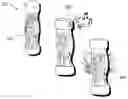
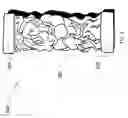
FIG. 1 is a side-view illustration of a spinning toy according to the present invention;
FIG. 2 is a side-view illustration of a spinning toy according to the present invention, depicting the spinning toy being spun by a user;
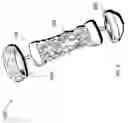
FIG. 3 is a side-view illustration of a spinning toy according to the present invention, depicting caps being attached with e core;
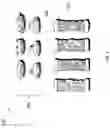
FIG. 4 is a side-view illustration of several caps and cores according to the present invention; and
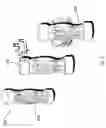
FIG. 5 is an illustration of a spinning toy according to the present invention, depicting additional aspects.
DETAILED DESCRIPTION
The present invention relates to a spinning toy and, more particularly, to toy that is weighted and formed to spin protractedly upon initiation by a user. The following description is presented to enable one of ordinary skill in the art to make and use the invention and to incorporate it in the context of particular applications. Various modifications, as well as a variety of uses in different applications will be readily apparent to those skilled in the art, and the general principles defined herein may be applied to a wide range of embodiments. Thus, the present invention is not intended to be limited to the embodiments presented, but is to be accorded the widest scope consistent with the principles and novel features disclosed herein.
In the following detailed description, numerous specific details are set forth in order to provide a more thorough understanding of the present invention. However, it will be apparent to one skilled in the art that the present invention may be practiced without necessarily being limited to these specific details. In other instances, well-known structures and devices are shown in block diagram form, rather than in detail, in order to avoid obscuring the present invention.
The reader's attention is directed to all papers and documents which are filed concurrently with this specification and which are open to public inspection with this specification, and the contents of all such papers and documents are incorporated herein by reference. All the features disclosed in this specification, (including any accompanying claims, abstract, and drawings) may be replaced by alternative features serving the same, equivalent or similar purpose, unless expressly stated otherwise. Thus, unless expressly stated otherwise, each feature disclosed is only one example of a generic series of equivalent or similar features.
Furthermore, any element in a claim that does not explicitly state “means for” performing a specified function, or “step for” performing a specific function, is not to be interpreted as a “means” or “step” clause as specified in 35 U.S.C. Section 112, Paragraph 6. In particular, the use of “step of” or “act” of in the claims herein is not intended to invoke the provisions of 35 U.S.C. 112, Paragraph 6.
Please note, if used, the labels left, right, front, back, top, bottom, forward, reverse, clockwise and counter clockwise have been used for convenience purposes only and are not intended to imply any particular fixed direction. Instead, they are used to reflect relative locations and/or directions between various portions of an object.
(1) Description
As shown in FIG. 1, the present invention relates to a spinning toy 100. The spinning toy 100 includes a core 102 that operates as the frame of the toy 100. The core 102 includes two ends 104 that operate as gripping portions to allow a user to spin the toy 100. The core 102 and ends 104 are formed in any suitable shape to allow the toy to spin. As a non-limiting example, the core 102 and each of the ends 104 are formed in a cylindrical shape. As yet another non-limiting example, the core 102 includes a figure shaped thereon (as depicted in FIG. 1) while each of the ends 104 is formed in a cylindrical shape. For example, the figure can be integrally molded or formed with the core 102.
A distinction between the present invention and a standard top is in the manner in which it is spun. For example and as depicted in FIG. 2, a user can apply pressure 200 to one of the ends 104, which causes the core 102 to spin 202. As a more specific example, a user can position one of the user's fingers 203 against one of the ends 104. By pushing down (applying pressure 200) on the end 104, the end 104 is forced down and ultimately away from the user's finger 203 (it is forced away due to the cylindrical shape of the end 104), thereby causing the toy 100 to spin about a central axis 204.
To provide additional benefits to the present invention, the toy can be customized to provide a variety of aesthetic and functional features. For example and as depicted in FIGS. 3 and 4, the toy 100 can be customized by adding style caps 300. The style caps 300 are formed to be attached with the end 104 of the core 102. The caps 300 are attached using any suitable technique or mechanism or device for attaching one object with another. For example, each cap 300 may be attached with an end 104 of the core 102 through threads or through a snap configuration. Alternatively, the cap 300 can be formed of an elastic material (e.g., rubber) that allows a user to stretch out the cap 300 and attach the cap with the core 102.
Additionally and as shown in FIG. 4, the style caps 300 can be formed in a variety of forms to provide a variety of different appearances. Further, the different shapes of the caps alter the spinning, function of the toy 100 (due to the shape and weight of the cap). As a non-limiting example, a cap 300 with bumps or protrusions could cause a bouncing effect when the toy 100 is spinning.
The toy 100 can be used for simple spinning or for use in a variety of games, such as battle games where multiple spinning toys 100 are spun toward each other. In this aspect, it may be desirable to include caps 300 of different colors so that each competitor can identify their spinning toy by the color. The color becomes important because when the toys are actually spinning, any shape distinction becomes blurred. However, the color remains while spinning and thereby enables identification of a particular toy while spinning.
As noted above and described herein, several variations to the spinning toy 100 can be employed to provide a variety of functional and aesthetic benefits. For example, listed below are several variations of caps 300 and/or cores 102:
-
- a. STYLE CAPS: Stylized caps are used to change the look of the core. For example, the stylized caps can be formed to represent figures or characters (e.g., genetic mutations) of a television show.
- b. COLOR CAPS: Color caps are caps that are formed in a variety of colors to help a user separate their spinning core from the competitor's spinning core during battle. As a non-limiting example, one user could use blue caps while another user could use yellow caps.
- c. WEAPON CAPS: The spinning toy can be used in a battle game where different players spin their cores toward one another. In a battle game, it may be desirable to alter the physical characteristics of the toy to increase the core's offensive capability when battling against other spinning toys. For example, caps can be provided with different weights, lengths, etc. A heavier cap would provide a greater spinning momentum and force when impacting a spinning core with a lighter cap. Additionally, a longer or elongated cap may also increase the spinning momentum or force, in addition to the diameter or reach of the spinning toy.
- d. SHIELD CAPS: As noted above, the spinning toy can be used in a battle game where different players spin their cores toward one another. For example, shield caps can be used to increase the spinning core's defensive capability when battling against other spinning toys in a battle game by altering the physical characteristics of the caps (e.g., Heavier, shorter caps).
- e. DURATION CAPS: The spinning toy is formed to allow a user to spin it across or on top of a surface. Thus, in some circumstances, it may be desirable to increase the spin time at the expense of accuracy and distance. This can be done by further altering the cap characteristics. For example, super heavy caps can be added to the core. In other words, caps that are considerably heavier than other provided caps.
- f. DISTANCE CAPS: To propel the spinning toy during long range competitions, it may be desirable to alter the characteristics of the toy such that it travels further. This can be accomplished using a light weight cap or a cap with a larger diameter (with respect to other caps).
- g. ACCURACY CAPS: In some cases, it may be desirable to propel the spinning toy toward a particular target for pinpoint or target shooting. In doing so, it is desirable to alter the characteristics of the toy such that it maintains a more direct line once propelled. This can be accomplished using a lighter weight cap with a smaller diameter (with respect to other caps).
- h. GRIP CAPS: To increase the spinning toy's traction with a surface, (which may be desirable for shorter range shots), a grip cap can be employed. The grip cap is a cap with increased traction over other caps, such as through the use of a rubber cap or rubber coating over the cap.
- i. SLICK CAPS: Should a user be using the spinning toy on a high-grip surface, it may be desirable to have a cap that decreases such a grip or traction to increase the ability of the spinning toy to spin. In this aspect, the cap can be formed of a low traction material, such as nylon or a polished metal.
- j. STANDING CAP: In another aspect, the cap can be formed to allow the spinning toy to stand on its end during a spin cycle. For example, the cap is weighted and shaped (e.g., a bulbous shape) to allow the spinning toy to stand.
- k. SOUND EFFECTS CAP: In yet another aspect, the cap can be used to create different sound effects while spinning. This can be accomplished through caps having different textures formed thereon to create different sounds during a spin. For example, a series of bumps can be included in one cap to create a particular sound, while another cap can have a series of ridges to create a different sound.
- l. FIGURAL CENTER PIECE: In another aspect, the core has a three-dimensional sculpted central aesthetic figure which may or may not be removable. The core may have one or two curved caps to allow for spin action and game play
- m. STUNT CAPS: In yet another aspect, the caps can be formed to create high elevation angles when the toy is spinning. For example, the caps can be shaped with elliptical ends such that as the toy spins, it raises the altitude of the spinning toy.
- n. BALANCE CORE: In another aspect, the core can be formed such that it includes a weight which can be variably positioned to affect the core's center of gravity. For example, a weighted ring is positioned about the core that can be slid across the core to the desired location. This has the effect of producing different spin characteristics.
- o. DISSIMILAR END CAPS: In this aspect, the core has a modular capability to accept various replaceable end cap designs. Each cap can have a different weight, size and texture. Each end-cap gives the core a different performance effect due to its physical properties.
- p. ILLUSION CORES: This core provides optical illusion images that are not illuminated with an LED. This item produces visual effects without electronics by using decorated images or shapes on the actual core that become increasingly visible when the spinning toy is spun.
- q. VIEWER CORE: In yet another aspect, the core can take the form of a plastic tube that contains a fixed focusing lens and a viewable translucent cell image. Light can be transmitted thru the tube to take advantage of ambient conditions to illuminate the image. The image can be viewed when held close to the eye like a Viewmaster™ or a kaleidoscope.
- r. SOUND CORE: In yet another aspect, the core has a mechanical sound generating device in the form of a semi-rigid metallic element which is positioned within the core (or on the exterior of the core) and that vibrates when the core is spinning.
- s. CENTER SPIN RING: In another aspect, the core comes with a raised central ring wrapped around the core that allows the core to rotate on this feature when it is spinning flat on the surface. Due to the reduced contact area, the core will continue to spin for a longer period of time.
Additional aspects are depicted in FIG. 5. For example, the spinning toy 100 can come in the form of a whistle core 500. The whistle core includes a hole on one of the ends or end caps. As the product spins, the aerodynamic shape of the hole creates a whistling sound. Thus, the hole is designed to operate as a whistle when the core is spun.
Yet another aspect is the liquid core 502, which includes a liquid inside the core. In this aspect, the core may have an outer layer formed of a clear or translucent material (e.g., clear plastic or acrylic) so that the liquid inside the core can be viewed externally.
Finally, another aspect is the light core 504 which includes a light positioned inside the core to illuminate the core. The light can be exposed from the core or positioned within the core and viewable therein using a translucent shell that forms the core. The light can be actuated via a manual switch or through a centrifugal switch that completes a circuit when the core is spun, thereby lighting the core while spinning.
Claims
What is claimed is:1. A spinning toy, comprising:
a core having two ends, the core and ends being formed in a suitable shape to allow the toy to spin, such that a user can position one of the user's fingers against one of the ends and, by pushing down on the end, the end is forced down and ultimately away from the user's finger, thereby causing the toy to spin.
2. The spinning toy as set forth in claim 2, further comprising at least one cap formed to attach with at least one of the two ends.
3. The spinning toy as set forth in claim 3, wherein the core and two ends are cylindrical shaped.
4. The spinning toy as set forth in claim 3, wherein the cap is formed of an elastic material to allow it to stretch over and affix with one of the two ends.
5. The spinning toy as set forth in claim 3, wherein the core includes a hole formed therein, with the hole formed to operate as a whistle such that as the core is spin, air passing through the hole forms a whistling sound.
6. The spinning toy as set forth in claim 3, wherein the core is formed to include a translucent outer layer with a liquid positioned thereon that is viewable through the translucent outer layer.
7. The spinning toy as set forth in claim 3, wherein the core includes a translucent outer layer with a light positioned therein and, further comprising, a centrifugal force switch positioned within the core for completing a circuit when the core is spun to activate the light and thereby illuminate the core while spinning.
8. The spinning toy as set forth in claim 2, wherein the cap is formed of an elastic material to allow it to stretch over and affix with one of the two ends.
9. The spinning toy as set forth in claim 1, wherein the core and two ends are cylindrical shaped.
10. The spinning toy as set forth in claim 1, wherein the core includes a hole formed therein, with the hole formed to operate as a whistle such that as the core is spin, air passing through the hole forms a whistling sound.
11. The spinning toy as set forth in claim 1, wherein the core is formed to include a translucent outer layer with a liquid positioned thereon that is viewable through the translucent outer layer.
12. The spinning toy as set forth in claim 1, wherein the core includes a translucent outer layer with a light positioned therein and, further comprising, a centrifugal force switch positioned within the core for completing a circuit when the core is spun to activate the light and thereby illuminate the core while spinning.
Images & Drawings included:

Sources:
- United States Patent and Trademark Office - verify current appl. status at the USPTO↗
Similar patent applications:
- » 20210093979
Toy spinning top and toy system with a toy spinning top and a toy figurine - » 20200129873
Spinning top toy and spinning top toy set - » 20120088433
TOY SPINNING TOP - » 20080214088
TOY SPINNING TOP - » 20110212666
Transforming and spinning toy vehicle and game - » 20090325457
ELECTRIC SPINNING TOY - » 20100233934
SPIN TOY - » 20080197034
Wheel spinning toy vehicle in blister package with clutch mechanism - » 20100279782
Portable ride-on bouncing and spinning toy - » 20080090669
Portable ride-on bouncing and spinning toy