Method of fabricating thin film interface for internal light reflection and impurities isolation
US20100267223A1
2010-10-21
12/618,862
2009-11-16
✅ Patent granted
US 8,273,650 B2
2012-09-25
-
-
Thao Le | Eric Jones
2030-10-25
Abstract:
A high-quality epitaxial silicon thin layer is formed on an upgraded metallurgical grade silicon (UMG-Si) substrate. A thin film interface is fabricated between the UMG-Si substrate and the epitaxial silicon thin layer. The interface is capable of internal light reflection and impurities isolation. With the interface, photoelectrical conversion efficiency is improved. Thus, the present invention is fit to be applied for making solar cell having epitaxial silicon thin layer.
Assignee:
- ATOMIC ENERGY COUNCIL- INSTITUTE OF NUCLEAR ENERGY RESEARCH 159 🇹🇼 Taoyuan, Taiwan
- Atomic Energy Council Institute of Nuclear Energy Research 28 🇹🇼 Lungtan Taoyuan, Taiwan
Interested in similar patents?
Get notified when new applications in this technology area are published.
Classification:
H01L21/44 IPC
Processes or apparatus adapted for the manufacture or treatment of semiconductor or solid state devices or of parts thereof; Manufacture or treatment of semiconductor devices or of parts thereof the devices having at least one potential-jump barrier or surface barrier, e.g. PN junction, depletion layer or carrier concentration layer the devices having semiconductor bodies not provided for in groups, , , and with or without impurities, e.g. doping materials Manufacture of electrodes on semiconductor bodies using processes or apparatus not provided for in groups -
H01L21/0243 » CPC further
Processes or apparatus adapted for the manufacture or treatment of semiconductor or solid state devices or of parts thereof; Manufacture or treatment of semiconductor devices or of parts thereof; Forming layers; Forming inorganic semiconducting materials on a substrate; Substrates; Structure Surface structure
H01L21/0262 » CPC further
Processes or apparatus adapted for the manufacture or treatment of semiconductor or solid state devices or of parts thereof; Manufacture or treatment of semiconductor devices or of parts thereof; Forming layers; Forming inorganic semiconducting materials on a substrate; Formation types; Deposition types Reduction or decomposition of gaseous compounds, e.g. CVD
H01L21/02658 » CPC further
Processes or apparatus adapted for the manufacture or treatment of semiconductor or solid state devices or of parts thereof; Manufacture or treatment of semiconductor devices or of parts thereof; Forming layers; Forming inorganic semiconducting materials on a substrate; Special treatments Pretreatments
H01L31/0236 » CPC further
Semiconductor devices sensitive to infra-red radiation, light, electromagnetic radiation of shorter wavelength or corpuscular radiation and specially adapted either for the conversion of the energy of such radiation into electrical energy or for the control of electrical energy by such radiation; Processes or apparatus specially adapted for the manufacture or treatment thereof or of parts thereof; Details thereof; Details Special surface textures
H01L31/02363 » CPC further
Semiconductor devices sensitive to infra-red radiation, light, electromagnetic radiation of shorter wavelength or corpuscular radiation and specially adapted either for the conversion of the energy of such radiation into electrical energy or for the control of electrical energy by such radiation; Processes or apparatus specially adapted for the manufacture or treatment thereof or of parts thereof; Details thereof; Details; Special surface textures of the semiconductor body itself, e.g. textured active layers
H01L31/056 » CPC further
Semiconductor devices sensitive to infra-red radiation, light, electromagnetic radiation of shorter wavelength or corpuscular radiation and specially adapted either for the conversion of the energy of such radiation into electrical energy or for the control of electrical energy by such radiation; Processes or apparatus specially adapted for the manufacture or treatment thereof or of parts thereof; Details thereof adapted as photovoltaic [PV] conversion devices; Optical elements directly associated or integrated with the PV cell, e.g. light-reflecting means or light-concentrating means the light-reflecting means being of the back surface reflector [BSR] type
H01L31/1804 » CPC further
Semiconductor devices sensitive to infra-red radiation, light, electromagnetic radiation of shorter wavelength or corpuscular radiation and specially adapted either for the conversion of the energy of such radiation into electrical energy or for the control of electrical energy by such radiation; Processes or apparatus specially adapted for the manufacture or treatment thereof or of parts thereof; Details thereof; Processes or apparatus specially adapted for the manufacture or treatment of these devices or of parts thereof comprising only elements of Group IV of the Periodic System
H01L31/1812 » CPC further
Semiconductor devices sensitive to infra-red radiation, light, electromagnetic radiation of shorter wavelength or corpuscular radiation and specially adapted either for the conversion of the energy of such radiation into electrical energy or for the control of electrical energy by such radiation; Processes or apparatus specially adapted for the manufacture or treatment thereof or of parts thereof; Details thereof; Processes or apparatus specially adapted for the manufacture or treatment of these devices or of parts thereof comprising only elements of Group IV of the Periodic System including only AB alloys, e.g. SiGe
Y02E10/52 » CPC further
Energy generation through renewable energy sources; Photovoltaic [PV] energy PV systems with concentrators
Y02E10/52 » CPC further
Energy generation through renewable energy sources; Photovoltaic [PV] energy PV systems with concentrators
Y02E10/547 » CPC further
Energy generation through renewable energy sources; Photovoltaic [PV] energy Monocrystalline silicon PV cells
Y02E10/547 » CPC further
Energy generation through renewable energy sources; Photovoltaic [PV] energy Monocrystalline silicon PV cells
Y02P70/50 » CPC further
Climate change mitigation technologies in the production process for final industrial or consumer products Manufacturing or production processes characterised by the final manufactured product
Y02P70/50 » CPC further
Climate change mitigation technologies in the production process for final industrial or consumer products Manufacturing or production processes characterised by the final manufactured product
H01L21/20 IPC
Processes or apparatus adapted for the manufacture or treatment of semiconductor or solid state devices or of parts thereof; Manufacture or treatment of semiconductor devices or of parts thereof the devices having at least one potential-jump barrier or surface barrier, e.g. PN junction, depletion layer or carrier concentration layer the devices having semiconductor bodies comprising elements of Group IV of the Periodic System or AB compounds with or without impurities, e.g. doping materials Deposition of semiconductor materials on a substrate, e.g. epitaxial growth solid phase epitaxy
Description
FIELD OF THE INVENTION
The present invention relates to fabricating a thin film interface; more particularly, relates to fabricating a thin film interface for internal light reflection and impurities isolation fit for an epitaxial silicon thin film solar cell having low cost and high efficiency.
DESCRIPTION OF THE RELATED ARTS
An electrochemical method can be used to form a porous structure on surface of a substrate made of upgraded metallurgical grade silicon (UMG-Si) for obtaining an internal reflective layer owing to different reflective indexes between silicon and the pores (just like air). Furthermore, surface of the pores traps metal impurities from within the UMG-Si substrate for avoid further diffusion into a high quality epitaxial silicon layer. However, chemical methods are used and chemical wastes are produced, which may cause harm to environment. Hence, the prior art does not fulfill all users' requests on actual use.
SUMMARY OF THE INVENTION
The main purpose of the present invention is to fabricate a thin film interface for internal light reflection and impurities isolation fit for an epitaxial silicon thin film solar cell having low cost and high efficiency.
The second purpose of the present invention is to obtain the thin film interface for inhibiting metal impurities in a substrate from diffusing into a high quality epitaxial silicon layer and for acting as an internal reflection layer for improving photoelectrical conversion efficiency.
To achieve the above purposes, the present invention is a method of fabricating a thin film interface for internal light reflection and impurities isolation, comprising steps of: (a) selecting a UMG-Si substrate having a purity ratio greater than 4N (99.99%); (b) through a physical method or a chemical method, forming a surface textured structure on a surface of the UMG-Si substrate; (c) through a physical method or a chemical method, coating a Ge metal thin layer and an amorphous silicon (a-Si) thin layer on UMG-Si substrate sequentially; and (d) processing an epitaxy through chemical vapor deposition (CVD) to form a high quality epitaxial silicon layer on the UMG-Si substrate, where a SiGe metal compound (Si1-xGex) thin film interface layer is obtained by the Ge metal thin layer and the a-Si thin layer between the UMG-Si substrate and the high quality epitaxial silicon layer; and an impurities aggregated area is obtained at interface between the UMG-Si substrate and the SiGe metal compound thin film interface layer. Accordingly, a novel method of fabricating a thin film interface for internal light reflection and impurities isolation is obtained.
BRIEF DESCRIPTIONS OF THE DRAWINGS
The present invention will be better understood from the following detailed description of the preferred embodiment according to the present invention, taken in conjunction with the accompanying drawings, in which
FIG. 1 is the flow view showing the preferred embodiment according to the present invention; and
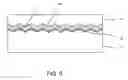
FIG. 2 until FIG. 5 are the structural views showing the preferred embodiment.
DESCRIPTION OF THE PREFERRED EMBODIMENT
The following description of the preferred embodiment is provided to understand the features and the structures of the present invention.
Please refer to FIG. 1 until FIG. 5, which are a flow view and structural views showing the preferred embodiment according to the present invention. As shown in the figures, the present invention is a method of fabricating a thin film interface for internal light reflection and impurities isolation, comprising the following steps:
-
- (a) Selecting substrate 11: In FIG. 2, an upgraded metallurgical grade silicon (UMG-Si) substrate 21 is selected, which has a purity ratio greater than 4N (99.99%).
- (b) Etching texturally 12: In FIG. 3, a surface textured structure 22 is formed on a surface of the UMG-Si substrate 21 through a physical method or a chemical method.
- (c) Coating 13: In FIG. 4, a Ge metal thin layer 23 is coated on the surface textured structure 22 of the UMG-Si substrate 21 and an amorphous silicon (a-Si) thin layer 24 is coated on the Ge metal thin layer 23 through the physical method or the chemical method sequentially.
- (d) High-temperature epitaxy 14: In FIG. 5, an epitaxy is processed through chemical vapor deposition (CVD) at a temperature between 1100° C. and 1200° C. to form a high quality epitaxial silicon layer 25 on the UMG-Si substrate 21, where a SiGe metal compound (Si1-xGex) thin film interface layer 26 is formed by the Ge metal thin layer 23 and the a-Si thin layer 24 between the UMG-Si substrate 21 and the high quality epitaxial silicon layer 25; and an impurities aggregated area 27 is thus formed at interface between the UMG-Si substrate 21 and the SiGe metal compound thin film interface layer 26.
Thus, a novel method of fabricating a thin film interface for internal light reflection and impurities isolation is obtained.
On using the present invention, a UMG-Si substrate 21 having a purity ratio greater than 4N is selected. A surface textured structure 22 is formed on a surface of the UMG-Si substrate 21 through plasma etching. Through a physical method or a chemical method, a Ge metal thin layer 23 and an a-Si thin layer 24 are coated on the surface textured structure of the UMG-Si substrate 21 sequentially. Then, an epitaxy is processed through atmospheric pressure chemical vapor deposition (APCVD) at a high temperature between 1100° C. and 1200° C. to form a high quality epitaxial silicon layer 25 on the UMG-Si substrate 21, where a SiGe metal compound thin film interface layer 26 is formed by the Ge metal thin layer 23 and the a-Si thin layer 24 between the UMG-Si substrate 21 and the high quality epitaxial silicon layer 25.
Si and SiGe metal compound are heterogeneous structures, which have mismatching crystal lattices. Hence, at interface between Si (the UMG-Si substrate 12) and SiGe metal compound (the SiGe metal compound thin film interface layer 26), an impurities aggregated area 27 is formed, which has complex network dislocation defects. These defects trap metal impurities from within the UMG-Si substrate 21 for avoid further diffusion into the high quality epitaxial silicon layer 25; and solar energy conversion efficiency is thus not declined. In addition, since Si and Ge metal compound have different refractive indexes and the surface textured structure 22 is formed on the UMG-Si substrate 21, effects of refraction and diffusion of light passing through the high quality epitaxial silicon layer 25 are enhanced and an optical path in the high quality epitaxial silicon layer is thus increased for improving solar energy conversion efficiency.
The present invention uses a substrate made of UMG-Si for forming a high quality silicon thin layer on the substrate to be used for developing an epitaxial silicon thin film solar cell. For obtaining an epitaxial silicon thin film solar cell having low cost and high efficiency, efficiency of absorbing light by the silicon thin layer has to be enhanced and diffusion of metal impurities in the substrate has to be prevented. Thus, the present invention fabricates a thin film interface between the UMG-Si substrate and the high quality epitaxial silicon layer to inhibit metal impurities in the substrate from diffusing into the high quality epitaxial silicon layer and to act as an internal reflection layer for improving photoelectrical conversion efficiency.
To sum up, the present invention is a method of fabricating a thin film interface for internal light reflection and impurities isolation, where a thin film interface is fabricated between the UMG-Si substrate and the high quality epitaxial silicon layer to inhibit metal impurities in the substrate from diffusing into the high quality epitaxial silicon layer and to act as an internal reflection layer for improving photoelectrical conversion efficiency fit for an epitaxial silicon thin film solar cell having low cost and high efficiency.
The preferred embodiment herein disclosed is not intended to unnecessarily limit the scope of the invention. Therefore, simple modifications or variations belonging to the equivalent of the scope of the claims and the instructions disclosed herein for a patent are all within the scope of the present invention.
Claims
What is claimed is:1. A method of fabricating a thin film interface for internal light reflection and impurities isolation, comprising steps of:
(a) obtaining an upgraded metallurgical grade silicon (UMG-Si) substrate having a purity ratio greater than 4N (99.99%);
(b) obtaining a surface textured structure on a surface of said UMG-Si substrate through a method selected from a group consisting of a physical method and a chemical method;
(c) coating a Ge metal thin layer on said surface textured structure of said UMG-Si substrate through a method and coating an amorphous silicon (a-Si) thin layer on said Ge metal thin layer through said method sequentially; and
(d) processing an epitaxy through chemical vapor deposition (CVD) to obtain a high quality epitaxial silicon layer on said UMG-Si substrate,
wherein said method in step (c) is selected from a group consisting of a physical method and a chemical method;
wherein a SiGe metal compound (Si1-xGex) thin film interface layer is obtained by said Ge metal thin layer and said a-Si thin layer between said UMG-Si substrate and said high quality epitaxial silicon layer; and
wherein an impurities aggregated area is obtained at interface between said UMG-Si substrate and said SiGe metal compound thin film interface layer.
2. The method according to claim 1, wherein, in step (b), said chemical method is plasma etching.
3. The method according to claim 1, wherein, in step (d), said CVD is atmospheric pressure chemical vapor deposition (APCVD).
4. The method according to claim 1, wherein, in step (d), said epitaxy is processed at a temperature between 1100° C. and 1200° C.
5. The method according to claim 1, wherein said SiGe metal compound thin film interface layer is an internal reflection layer to improve photoelectrical conversion efficiency.
6. The method according to claim 1, wherein said impurities aggregated area has complex network dislocation defects to trap metal impurities from within said UMG-Si substrate.
Images & Drawings included:


Sources:
- United States Patent and Trademark Office - verify current appl. status at the USPTO↗
Recent applications in this class:
- » 20250293024 2025-09-18
SUBSTRATE PROCESSING METHOD AND SUBSTRATE PROCESSING APPARATUS - » 20250273462 2025-08-28
PASSIVE CAP FOR GERMANIUM-CONTAINING LAYER - » 20250273461 2025-08-28
METHOD OF FORMING SEMICONDUCTOR STRUCTURE, SEMICONDUCTOR STRUCTURE, AND SEMICONDUCTOR PROCESSING SYSTEM - » 20250079167 2025-03-06
METHODS OF FORMING SEMICONDUCTOR STRUCTURES, SEMICONDUCTOR PROCESSING SYSTEMS AND RELATED COMPUTER PROGRAM PRODUCTS - » 20250079166 2025-03-06
METHODS FOR PROTECTING TO REUSE SILICON CARRIER WAFER BASED ON IR LASER LIFT-OFF PROCESS - » 20250037997 2025-01-30
EPITAXIAL GROWTH OF STRAINED Si/SiGe SUPERLATTICE - » 20240429048 2024-12-26
REDUCED STRAIN AND STOP LAYER FOR Si/SiGe EPI STACKS - » 20240404825 2024-12-05
METHODS OF MAKING SEMICONDUCTOR STRUCTURES, SEMICONDUCTOR STRUCTURES, AND SEMICONDUCTOR PROCESSING SYSTEMS AND COMPUTER PROGRAM PRODUCTS FOR MAKING SEMICONDUCTOR STRUCTURES - » 20240371634 2024-11-07
SEMICONDUCTOR DEVICES AND METHODS OF MANUFACTURING THEREOF - » 20240312782 2024-09-19
VACUUM PACKAGING MANUFACTURING METHOD AND SEMICONDUCTOR DEVICES MANUFACTURED THEREBY
Recent applications for this Assignee:
- » 20160028091 2016-01-28
Method for manufacturing solid oxide fuel cell anode with high stability and high efficiency - » 20130052747 2013-02-28
Quantitative analysis of a function group on the surface of a solid material - » 20120289396 2012-11-15
Method for producing a refractory material from aluminum residues - » 20120279945 2012-11-08
Direct current steam plasma torch and method for reducing the erosion of electrodes thereof - » 20120232174 2012-09-13
Method for increasing the yield of a slurry bed reactor - » 20120115178 2012-05-10
Method of diagnosing gastric cancer by using human neutrophil peptide 1-3 - » 20120101780 2012-04-26
Method of measuring radiation doses on different directions - » 20120100453 2012-04-26
Planar SOFC stack - » 20120070938 2012-03-22
Method of fabricating silicon nanowire solar cell device having upgraded metallurgical grade silicon substrate - » 20110251056 2011-10-13
Method of fabricating layered nano-carbonate used for medium-high temperature COsorbent