Rechargeable battery assembly and power system using same
US20100270972A1
2010-10-28
12/835,060
2010-07-13
✅ Patent granted
US 8,217,625 B2
2012-07-10
-
-
Ramy Ramadan
2030-09-08
Abstract:
A rechargeable battery, battery set or battery pack having a circuit or a plurality of circuits for providing self-discharging thereof electrically connected in parallel are used to form rechargeable battery assemblies and electric power supply systems for use in electric and hybrid vehicles and the like.
Inventors:
- Chun-Chieh Chang 36 🇺🇸 Ithaca, NY, United States
- Tsun-Yu Chang 34 🇹🇼 Taichung, Taiwan
- Olivia Pei-Hua Lee 5 🇺🇸 Fort Lee, NJ, United States
Interested in similar patents?
Get notified when new applications in this technology area are published.
Classification:
H02J7/00 IPC
Circuit arrangements for charging or depolarising batteries or for supplying loads from batteries
B60L53/00 » CPC main
Methods of charging batteries, specially adapted for electric vehicles; Charging stations or on-board charging equipment therefor; Exchange of energy storage elements in electric vehicles
B60L58/15 » CPC further
Methods or circuit arrangements for monitoring or controlling batteries or fuel cells, specially adapted for electric vehicles for monitoring or controlling batteries responding to state of charge [SoC] Preventing overcharging
B60W10/26 » CPC further
Conjoint control of vehicle sub-units of different type or different function including control of energy storage means for electrical energy, e.g. batteries or capacitors
B60W20/10 » CPC further
Control systems specially adapted for hybrid vehicles Controlling the power contribution of each of the prime movers to meet required power demand
H01M10/441 » CPC further
Secondary cells; Manufacture thereof; Methods or arrangements for servicing or maintenance of secondary cells or secondary half-cells; Methods for charging or discharging for several batteries or cells simultaneously or sequentially
H02J7/0016 » CPC further
Circuit arrangements for charging or depolarising batteries or for supplying loads from batteries acting upon several batteries simultaneously or sequentially; Circuits for equalisation of charge between batteries using shunting, discharge or bypass circuits
B60L2200/12 » CPC further
Type of vehicles Bikes
B60W20/00 » CPC further
Control systems specially adapted for hybrid vehicles
B60W2510/24 » CPC further
Input parameters relating to a particular sub-units Energy storage means
B60W2710/24 » CPC further
Output or target parameters relating to a particular sub-units Energy storage means
B60Y2200/12 » CPC further
Type of vehicle; Road Vehicles Motorcycles, Trikes; Quads; Scooters
Y02E60/10 » CPC further
Enabling technologies; Technologies with a potential or indirect contribution to GHG emissions mitigation Energy storage using batteries
Y02E60/10 » CPC further
Enabling technologies; Technologies with a potential or indirect contribution to GHG emissions mitigation Energy storage using batteries
Y02T10/70 » CPC further
Road transport of goods or passengers; Other road transportation technologies with climate change mitigation effect Energy storage systems for electromobility, e.g. batteries
Y02T10/70 » CPC further
Road transport of goods or passengers; Other road transportation technologies with climate change mitigation effect Energy storage systems for electromobility, e.g. batteries
Y02T10/7072 » CPC further
Road transport of goods or passengers; Other road transportation technologies with climate change mitigation effect Electromobility specific charging systems or methods for batteries, ultracapacitors, supercapacitors or double-layer capacitors
Y02T10/7072 » CPC further
Road transport of goods or passengers; Other road transportation technologies with climate change mitigation effect Electromobility specific charging systems or methods for batteries, ultracapacitors, supercapacitors or double-layer capacitors
Y02T90/14 » CPC further
Enabling technologies or technologies with a potential or indirect contribution to GHG emissions mitigation; Technologies relating to charging of electric vehicles Plug-in electric vehicles
Y02T90/14 » CPC further
Enabling technologies or technologies with a potential or indirect contribution to GHG emissions mitigation; Technologies relating to charging of electric vehicles Plug-in electric vehicles
Description
This application is a Divisional Application of pending U.S. application Ser. No. 12/231,920 filed Sep. 8, 2008, which is a continuation-in-part of pending U.S. application Ser. No. 11/805,786, filed May 24, 2007, which claims priority of U.S. Provisional Applications 60/923,747 and 60/930,646.
FIELD OF INVENTION
The present invention is concerned with rechargeable batteries, and in particular with the recharging of rechargeable batteries.
BACKGROUND OF THE INVENTION
-
- 1. For batteries to be used for applications such as vehicle starter, electric bikes, electric motorcycles, electric or hybrid vehicles, etc, high voltage is essential owing to the increase of efficiency and the decrease of cost. The increase of voltage requires batteries to be connected in series.
- 2. Problems associated with batteries in series are:
- a. when one battery has a lower capacity, the capacity of the overall set of batteries is dictated by the capacity of the battery of lower capacity;
- b. if the battery possessing the lower capacity can not be charged to full capacity during charging, the performance of the entire battery set will be degraded owing to the lower capacity battery. This is known in the art as cell imbalance;
- c. the lower capacity of one specific battery can be caused by either high self discharge or defects during battery production.
- 3. Conventional ways to solve the cell imbalance problem are:
- a. sorting the batteries in order to avoid inconsistency of the batteries to be connected in series;
- b. charging the batteries separately (e.g. U.S. Pat. No. 6,586,909), in order to overcome the problems mentioned above, however, low voltage is required for charging each battery to full (for example, the lithium iron battery is charged to 3.65V) and this low voltage charging is not energy efficient owing to conversions from normal high voltage AC power source to low voltage DC power.
Most prior art systems and methods utilized in making the batteries balanced during charging use complicated circuitry to detect and balance the uncharged batteries (e.g. U.S. Pat. No. 7,068,011, U.S. Pat. No. 7,061,207, U.S. Pat. No. 6,882,129, U.S. Pat. No. 6,841,971, U.S. Pat. No. 6,825,638, U.S. Pat. No. 6,801,014, U.S. Pat. No. 6,784,638, U.S. Pat. No. 6,777,908, U.S. Pat. No. 6,700,350, U.S. Pat. No. 6,642,693, U.S. Pat. No. 6,586,909, U.S. Pat. No. 6,511,764, U.S. Pat. No. 6,271,645).
OBJECT OF THE INVENTION
It is an object of the present invention to provide a simple device and method for charging a plurality of batteries electrically connected in a series circuit.
SUMMARY OF THE INVENTION
The present invention is a rechargeable battery assembly, having a rechargeable battery with a positive terminal and a negative terminal, and means for self-discharging the rechargeable battery when a voltage across the terminals is greater or equal to a preset value. The means for self-discharging is electrically connected in parallel with the battery terminals
DESCRIPTION OF THE DRAWINGS
The invention will become more readily apparent from the following description thereof shown, by way of example only, in the accompanying drawings, wherein:
FIGS. 1a-e are schematic illustrations of various embodiments of battery assemblies of the invention;
FIG. 2a is a schematic illustration of a battery assembly of the invention with an enlarged drawing of a self-discharging circuit of the invention;
FIG. 2b is a schematic illustration the battery assembly of the invention with an enlarged drawing of another embodiment of a self-discharging circuit of the invention;
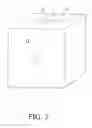
FIG. 3 is a schematic illustration of the battery assembly of the invention having the self-discharging circuit disposed on a case of the battery;
FIG. 4 is a schematic illustration of an electric power supply system having battery assemblies of the invention;
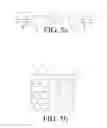
FIGS. 5a-e are schematic illustrations of battery packs having battery assemblies of the invention
FIGS. 6a-e are schematic illustrations of battery packs having battery assemblies of the invention differing from those of FIGS. 5a-e;
FIGS. 7a-e are schematic illustrations of battery packs having battery assemblies of the invention differing from those of FIGS. 5a-e and 6a-e;
FIGS. 8a-e are schematic illustrations of battery packs having battery assemblies of the invention differing from those of FIGS. 5a-e, 6a-e and 7a-e;
FIG. 9 is a schematic illustration of a battery pack assembly having battery assemblies of the invention;
FIG. 10 is a schematic illustration of a battery system having battery assemblies of the invention, as discussed in example 3;
FIG. 11 is a schematic illustration of a battery system having battery assemblies of the invention, as discussed in example 5;
FIG. 12 is a schematic illustration of a battery system having battery assemblies of the invention, as discussed in example 6; and
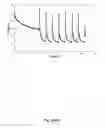
FIGS. 13(a)-(d) show experimental results for Example 6.
DETAILED DESCRIPTION OF THE INVENTION
The present invention is especially important for resolving the problems caused by batteries connected in series. A cell imbalance problem during charging can be alleviated by creating a device and methods that allows the leakage of current (energy) from the batteries being overcharged. Instead of using very expensive devices or ways to prevent overcharging, to achieve battery equalization, as found in prior art devices and methods, the present invention uses a method and device that reduces the current being provided to a battery in the series circuit that is being overcharged. Such method and device can be implemented for each battery or battery set or battery pack being connected in series. The terminology “battery set” used throughout the specification means a plurality of batteries connected in parallel, or series, or parallel-series, or series-parallel. The terminology “battery pack” used throughout the specification means a plurality of battery sets connected in parallel, or series, or parallel-series, or series-parallel. The terminology “assembly” used throughout the specification means a battery, a battery set, or a battery pack accompanied with a means for self-discharge of the battery(s), battery set or battery pack when the battery(s) is(are) being overcharged
In the present invention a battery or batteries self-discharge when overcharged. Since each battery, battery set, or battery pack are provided with a “self-discharge” means, when voltage reaches a preset parameter during charging, or even after charging, a cell balance problem can be eliminated. This is the core idea of the present invention.
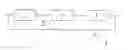
FIG. 1(a) shows the structure of a “battery assembly”. FIG. 1(b) shows the structure of a “parallel battery set assembly”; FIG. 1(c) shows the structure of a “series battery set assembly”; FIG. 1(d) shows the structure of a “parallel-series battery set assembly”; and FIG. 1(e) shows the structure of a “series-parallel battery set assembly”. These assemblies are the basic units for use in providing the battery pack. In these figures, as well as in the remaining figures, an individual rechargeable battery is indicated at 1, and a circuit for self-discharging the rechargeable battery(s) is indicated at 3.
The present method of solving the cell imbalance problem is shown in FIG. 2(a). As indicated in FIG. 2(a), each battery is connected with a device 2 in parallel with the battery. Such device is comprised of a switching element 6, a resistance element 7, a voltage-detecting element 5a, and a switching element controller 5b that opens or closes the switching element 6. The voltage-detecting element detects the voltage of the battery and along with the switching element controller controls the “opened” or “closed” state of the switching element. The switching element, resistance element, voltage-detecting element and switching element controller can be disposed on a printed circuit board. However, since a transistor can function as a combination of a voltage-detecting element, controller, switching element, and a resistance element, the device shown in FIG. 2(a) can be replaced by a transistor, or a plurality of transistors connected in parallel (for adjusting the resistance). Other possibilities are one transistor 8 connected with a resistor 7 in series as shown in FIG. 2(b). In the case of the transistor and resistor connected in series as indicated in FIG. 2(b), the resistance of the resistor should be small in order to minimize the voltage drop caused by the resistor thus affecting the voltage detection of the transistor. The configuration of FIG. 2(b) can also be applicable to diodes such as LEDs, or a printed circuit board consisting of the switching element and the controller only.
When batteries are charged, if the voltage of one of the batteries is above a preset upper limit, the switching element of the device electrically connected in parallel to the battery closes, therefore allowing current to flow through the resistor. Thus, the charging current for the battery that passed the preset upper limit voltage decreases, due to the presence of the device connected in parallel to the battery. Such decrease is shown in Example 1, below. Under such condition, other batteries are charged in a normal current flow but the one that passed the upper voltage limit has a decreased charging action. This is a basic mechanism of the invention for the prevention of battery overcharging. It should be mentioned that the resistance element can be any electronic component that possesses a satisfactory resistance. For example, a light bulb can be used as a source of resistance.
The elements of the device can be on a semiconductor chip 2, which can be disposed anywhere close to the battery. FIG. 3 shows one possibility of the semiconductor chip 2 being built-in on the lid of a case of a battery. Also, for example, the chip can be disposed between the cathode (the case) 11 and the anode (the negative terminal) 12. Also, the chip can be placed inside the battery case.
The resistor can be a variable one if further precise control of the resistance is necessary. Details of the current change for each battery during charging are further described below:
Example 1
Theoretical Demonstration of How Cell Equalization can be Achieved
Assumptions:
-
- 1. Four battery assemblies are connected in series as indicated in FIG. 2(a).
- 2. Batteries (1), (3), (4) have internal resistance of 5 mOhm, battery (2) has an internal resistance of 10 mOhm.
- 3. Batteries (1), (3), (4) have open circuit voltage of 3.3V, battery (2) has an open circuit voltage of 3.6V.
- 4. For each battery assembly, a resistor of 1.0 Ohm is connected parallel to the battery.
- 5. A power supply of 15V is applied to the four battery assemblies connected in series.
Calculation Case 1 (when Paralleled Resistors are All Open):
During charging of the four battery assemblies, the voltage of each battery can be represented as:
- Battery (1): V1=Vo1+I1R1, V1 is the voltage of the battery (1) during charging, Vo1 is the open circuit voltage of battery (1), I1 is the current passing through battery (1) and R1 is the internal resistance of the battery (1).
Battery (2): V2=Vo2+I2R2,
Battery (3): V3=Vo3+I3R3,
Battery (4): V4=Vo4+I4R4,
Since no other resistors are connected, I1=I2=I3=I4=I
15=(V1+V2+V3+V4)=(Vo1+Vo2+Vo3+Vo4)±I(R1+R2+R3+R4)
15−(Vo1+Vo2+Vo3+Vo4)=I(R1+R2+R3+R4)
15−3.3−3.6−3.3−3.3=I(0.005+0.01+0.005+0.005)
I=60 Amp—The current that passes through each battery
Calculation Case 2, (when the Paralleled Resistor Circuit is Closed for Battery (2)):
Assume I′ is the current passing through the resistor and R′ is the resistance of the resistor.
Then,
V2=I′R′, I′=V2/R′
V2=Vo2+I2R2,
Considering the current balance: (I′+I2)=I1=I3=I4=I
So,
V2=Vo2+(I−I′)R2=Vo2+(I−V2/R′)R2
Rearrange, then we get
V2=(Vo2+IR2)/(1+R2/R′)
Thus,
15=(V1+V2+V3+V4)=(Vo1+Vo3+Vo4)±I(R1+R3+R4)+(Vo2+IR2)/(1+R2/R′)
So,
I=61.672 (A),
V2=(Vo2+IR2)/(1+R2/R′)=4.175(V),
I′=V2/R′=4.175 (A),
I2=I−I′=57.497 (A)
If we substitute a resistor of 10 Ohm, then
I=60.168 (A),
V2=Vo2+(I−V2/R′)R2=4.1975(V),
I′=V2/R′=0.4198 (A),
I2=I−I′=59.748 (A)
Conclusions from the Calculations:
-
- 1. With regards to battery assembly of FIG. 2(a), when the switch of the resistor in the parallel circuit is closed, current flows through the resistor, and the charging current for battery (2) is decreased.
- 2. While the switch of the paralleled resistor circuit is closed for the battery assembly of FIG. 2(a), the charging current for other batteries (1, 3, 4) is increased.
- 3. The resistance of the resistor dictates the magnitude of the current decrease for battery (2). The smaller the resistance, the bigger the magnitude of current decrease.
- 4. Thus, the idea of incorporating a resistor with each battery connected in series is effective in balancing the capacity of all batteries by decreasing the charging current of the battery that has a higher capacity, and by increasing the charging current of the other batteries that have a lower capacity.
- 5. It is clear that the resistor connected in parallel with the battery should possess satisfactory cell balancing function. Any electronic devices or components that satisfy the function of voltage sensing and providing the source of resistance are within the focus of the present invention.
Example 2
Theoretical Calculation Demonstrating a Method of Charging a Battery Assembly
Assumptions:
-
- 1. Four battery assemblies are connected in series as indicated in FIG. 2(a).
- 2. Batteries (1), (3), (4) have internal resistance of 5 mOhm, battery (2) has an internal resistance of 10 mOhm.
- 3. Batteries (1), (3), (4) have open circuit voltage of 3.3V, battery (2) has an open circuit voltage of 3.6V.
- 4. Batteries (1), (2), (3), and (4) are subjected to a constant current charge. The current is 2A.
- 5. For demonstration purpose, the battery being investigated, battery (2), a resistor of 1.0 Ohm is connected parallel to the battery and the circuit switch is closed.
Calculations:
Considering the current balance: (I′+I2)=I1=I3=I4=I=2 (A)
V2=Vo2+(I−I′)R2=Vo2+(I−V2/R′)R2
Rearrange, then we get
V2=(Vo2+IR2)/(1+R2/R′)
Substituting Vo2=3.6(V), I=2(A), R2=0.01 Ohm, R′=1 Ohm
We get:
V2=3.5842 (V)
I′=V2/R′=3.5842 (A),
I2=I−I′=2−3.5842=−1.5842 (A)<0
Conclusions from the Calculations:
-
- 1. The battery that is overcharged will undergo discharging when the circuit current (I) is less than the current that passes the resistor (I′). That is, (I-I′<0).
- 2. When batteries being overcharged undergo discharge, cell balance can be achieved.
- 3. By combining the calculation results shown in Example 1 and 2, it can also be concluded that the cell balance charging method can be implemented as either a constant voltage mode (but the charging time required should be longer than the time required for the condition of I<I′), or a constant current mode by passing a current (I) that is less than the current that passes the resistor (I′).
- 4. It can further be concluded that the charger can be designed to have two modes for charging. One mode is the normal constant current/constant voltage charge mode for a battery system's normal use (end of charge executed by setting a certain charging time). The other mode is the cell balance mode (constant current charging) that can be used when a battery system possesses less capacity than their normal use.
Example 3
A Battery Pack and a Battery System
As mentioned above, a battery pack can be comprised of battery sets, or battery set assemblies as shown in FIG. 1(a)-(e). In the present invention, a battery pack may also connect with a parallel circuit containing a switching element, a voltage-detecting element, a controller, and a resistance element to form a “battery pack assembly”. The possible structures of battery packs constructed using battery set assemblies are shown in FIGS. 5(a)-(e), FIGS. 6(a)-(e), FIGS. 7(a)-(e), and FIGS. 8(a)-(e). These figures represent the five unit structures shown in FIGS. 1(a)-(e) being connected in various circuit arrangements. In series (FIGS. 5(a)-(e)), in parallel (FIGS. 6(a)-6(e)), in parallel-series (FIGS. 7(a)-7(e)), and in series-parallel (FIGS. 8(a)-8(e)). Each of the cases shown in FIGS. 5, 6, 7, and 8 can again be combined with a parallel circuit containing the switching element, the controller, the voltage-detecting element and the resistance element to form a “battery pack assembly”. An example of a “battery pack assembly” is shown in FIG. 9
Similar to the case as a battery pack that is comprised of battery sets or battery set assemblies, a battery system is comprised of battery packs or battery pack assemblies. Again, the possible structures of a battery system constructed using battery pack assemblies can be in series, parallel, parallel-series, and series-parallel. An example of a “battery system” is shown in FIG. 10.
One practical case is described here, that is an example of the battery system for an electric motorcycle. Referring to FIG. 10, a typical electric motorcycle uses a battery system having 53V, and 40 Ah. The battery system is comprised of four battery packs (13.3V) connected in series. Each of the battery packs consists of four lithium iron battery sets (3.33V) connected in series. And, each of the battery sets consists of four 10 Ah batteries connected in parallel. In this case, the best structure of the battery system is the utilization of battery pack assemblies and the battery set assemblies, as building blocks for the battery system. In such arrangement, overcharging of battery packs and overcharging of battery sets can be prevented. If the battery system is constructed using battery pack assemblies but the pack assemblies are constructed by battery sets only, some possible overcharging in the battery set may occur after long time cycling. If the battery system is constructed using battery packs only and the battery packs are constructed using battery sets rather than battery set assemblies, cell imbalance accompanied with overcharging during charging can occur.
Example 4
A Preferred Electric Power Supply System
An electric power supply system is the integration of components including a charger 4, a battery system (packs or sets), a control board 10, and a circuit breaker 9, as shown in FIG. 4. Again, four battery assemblies of the invention are connected in series as a simplest example for demonstration. Referring to FIG. 4, it can be seen that each battery is connected in parallel with a circuit consisting of components as shown in FIG. 2(a) or FIG. 2(b). A control board is connected with electrical conductors to each terminal of each of the batteries. Those electrical conductors serve as a means for providing voltage detection. The other end of the control board is connected to a circuit breaker. The charger is connected directly to the two ends of the batteries electrically connected in series. During a normal charging (constant current/constant voltage), if any of the batteries exceeds a preset overcharge voltage, the control board sends a signal to the circuit breaker for charging termination. Similarly, during such discharging, if any of the batteries is below the preset termination voltage, the control board sends a signal to the circuit breaker for discharging termination. These two actions serve as battery protection to avoid overcharging and over discharging. During normal charging, a preset time period is allowed for the charging action (e.g. termination at 1.5 hours after constant voltage charging). At that time, the batteries may be more or less balanced. However, the batteries could be balanced after several chargings, or by just starting a balance charging (small current constant and current charge, current amplitude I<I′) mode, to allow constant current charging until all the batteries are balanced.
In the present case, the control board can be a very simple device for detecting the voltages of each battery connected in series and sending signals to the circuit breaker for charging or discharging action termination. The simplicity of the control board is thus benefited by the characteristics of the batteries of the invention since they possess current leakage during charging. In the present invention, the shutting off of the charging is preferably executed by a electromagnetic relay that turns off the power input or output. This electromagnetic relay preferably requires no power consumption during the idle state, and a pulse signal generated by the control board determines the close and open circuit status of the relay and therefore the on and off of the battery charging.
Example 5
Methods to Achieve Cell Equalization as Described in Example 1
Referring to FIG. 11, in the present example, a total of eight 10 Ah lithium iron batteries are used for demonstrating the charging method and the cell balancing characteristic of the batteries during charging. Two cells are first connected in parallel to form a parallel battery set. Each set of the batteries are then connected with a circuit (a printed circuit board, for example) electrically connected in parallel with the battery set to form a battery assembly. Four battery assemblies are then connected in series. In the present case, the first set, second set, third set, and the fourth set are named for the four battery set assemblies connected in series for clarity. All four set assemblies are first charged to 100% full. The first battery set assembly is then subjected to discharge 10% capacity (2 Ah). After this procedure, all four battery set assemblies are connected in series and this setup is referred to as the battery pack. A preset self-discharge activation voltage is set at 3.75V in the present case. The self-discharge circuit that is parallel to each battery set has a resistance of 2 Ohm. After the above mentioned procedures, the battery pack is subjected to a constant current charge of 1.7A. The voltage changes versus time for each set of the batteries are shown in Table I. From Table I it can be seen that the 2nd, 3rd, and 4th battery set assembly had a voltage increase beyond 3.75V in the initial state. 5 minutes after, the 2nd, 3rd, and 4th battery set assembly came back to be stabilized at 3.75V. At this time, the current passing through the resistor is measured to be 1.8A.
The 1st set of the battery set assembly increases its voltage gradually to 3.75V after 80 minutes and this is the end of the charge balance action. In the present experiment, I (power supply current) is set to be less than I′ (current passing resistor). As a result, the voltages for the 2nd, 3rd, and 4th sets of battery set assemblies were stabilized at 3.75V during charging. Full balances of the four sets of battery set assemblies were achieved after a certain period of time. It was observed that if current I is set to be slightly larger than current I′ (1.8A in this case), and the voltages of the 2nd, 3rd, and 4th battery sets could be higher than 3.75V during the constant current charge. However, if the constant voltage charge is set at 15V as the second step charging, a voltage decrease of 2nd, 3rd, and 4th battery sets can be observed (when current I starts decreasing below current I′) and the four sets of battery set assemblies can be balanced eventually, but requiring a longer time.
In addition to the self-discharge setup and mechanism described above, there is another feature that can be integrated to the self-discharge setup as shown in FIGS. 2 (a) and 2(b) by adding a timer (time counter) or a charge counter that controls the amount of charge being self-discharged under certain conditions. The core idea of adding a timer or a charge counter is to resolve the problem of batteries, battery sets, or battery packs, being connected in series, that can not be charged with prolonged constant voltage charge, that is, when a charger or any means of charging (e.g. solar or wind turbine charging) do not provide long and steady constant voltage charging. In order to make batteries connected in series be balanced, without the presence of prolonged constant voltage charge, the self-discharge setup is provided with a timer. The function of the timer is to set a certain amount of charge in a battery to be self-discharged when certain conditions exist. While batteries are overcharged to a preset voltage V′, the self-discharge mechanism is triggered. The self-discharge action continues until the battery voltage goes below the preset voltage V′ and then the timer is triggered for further self-discharge for a certain period of time (e.g. 2% of the battery capacity, that is the time required to discharge the battery 2% of it's capacity). Although 2% is given as a preferred amount, a discharge amount of between about 2% and 20% of the battery's capacity is possible in practice of the invention. The advantages of this method include the following: (1) This time delayed self-discharge setup offers the functions described earlier in regard to Example 5, above, that is, when any of the battery set assemblies being connected in series is subjected to self-discharge when the voltage exceeds the preset voltage V′, all the battery set assemblies being connected in series will be balanced eventually after prolonged constant voltage charge; (2) Unstable charging conditions, such as renewable energy power source charging (e.g. Solar panels, or wind turbines . . . etc.), or any other type of chargers that do not offer prolonged constant voltage charging will still be useful for charging the batteries while maintaining the performance (function) of battery cell balance. This can be realized using the same battery set assemblies described in Example 5 above, as an example, that is charged to a certain voltage and a cut-off is performed without constant voltage charging. The battery set assemblies being connected in series that have already exceeded the preset voltage limit V′ will be kept discharging and a further self-discharge will be performed even when the battery voltage drops down below the preset voltage V′. Owing to an additional self-discharge performed to those battery set assemblies already exceeding the preset voltage V′, the capacity difference between those exceeding V′ before cut-off (with self-discharge triggered) and those below V′ before cut-off (without self-discharge being triggered) will be closer in capacity if the time utilized for constant voltage charge is insufficient; and (3) The constant voltage charging can be replaced by several voltage cut-off charging methods, as will be discussed in more detail in Example 6, below.
Example 6
Method to Achieve Battery Cell Equalization without Prolonged Constant Voltage Charging
The purpose of the present example is to demonstrate the need for the time delayed function of the invention for the self-discharge setup that achieves a battery cell balance condition without having a prolonged time for constant voltage charging.
Referring to FIG. 12, in the present example a total of four 10 Ah lithium iron batteries are used for demonstrating the charging method and the cell balancing characteristic of the batteries during charging. Each battery 1 is connected with a circuit 2 electrically connected in parallel with the battery to form a battery assembly 3. Each circuit 2 contains a voltage detector 5a, a 10 Ohm resistor 7, and a timer 13, that allows self-discharge of the battery when the battery voltage exceeds or is equal to 3.65V, followed by a further self-discharge for a time period of 15 minutes when the battery voltage goes below 3.65V. Four battery assemblies are connected in series. In the present example the 4 battery assemblies in FIG. 12 have batteries numbered (1), (2), (3), and (4). The voltage changes versus time for each battery assembly are shown from FIGS. 13(a) to 13(d). The current versus time for the battery pack, which contains the four battery assemblies in series, is shown in FIG. 13(e). All four battery assemblies are first charged to 100% of capacity and balanced initially (3.65V±0.03V), as can be seen from FIGS. 13(a) to 13(d). The first battery assembly (battery (1)) is then subjected to discharge 6.6% capacity (0.66 Ah) using a 5 Ohm resistor for one hour. After this procedure, the battery pack that contains the four battery assemblies connected in series is subjected to a constant voltage charge set at 14.7V. However, the charger is set to cut-off when any of the battery assembly is charged above 3.70V. It can be seen from FIGS. 13(a) to 13(d) that the 2nd, 3rd, and the 4th battery assemblies (batteries (2), (3), and (4)) increases rapidly in voltage as soon as the charger starts charging. The charger stops charging almost immediately after it is activated. However, since the 2nd, 3rd, and the 4th battery assemblies triggered the self-discharge voltage preset at 3.65V, a continuous drop in voltage is observed for each of them, even after the cut-off of the charger. In comparison to the 2nd, 3rd, and the 4th battery assemblies, the 1st battery assembly does not have any self-discharge after the cut-off of the charger thus a flatter voltage profile is observed. After 8 cycles of charging it is observed that the 1st battery assembly becomes the only one that performs self-discharge (increase over 3.65V in voltage) and cut-off of the charging process when it exceeds 3.70V. This result suggests cell balance can be achieved with multiple charging by setting voltage as a cut-off. A recovery of 6.6% battery capacity difference can be compensated for with multiple charging steps with the utilization of the time delayed self-discharge setup for each of the batteries. With a further charging of the four batteries in series at 14.7V with the removal of self-discharge setup on each battery, an overall capacity input of 3.7% to 0 current is obtained. This implies that all the batteries are close to being fully charged after 8 consecutive chargings, even without the presence of prolonged constant voltage charging. According to the experimental results shown, there is no rigid limitation of what components are used for the time-delayed self-discharge mechanism. Any integrated circuits, transistors, or even setups integrating components including voltage sensor, resistor, and timer or charge counter manually can achieve the goal of balancing the batteries connected in series without prolonged constant voltage charging.
Although Example 6 is for four battery assemblies connected in series as shown in FIG. 12, the method of the invention applies to batteries arranged as shown in FIGS. 5(a)-11, and expanded versions of those arrangements.
| TABLE I |
| Voltage versus time for each set of the batteries. |
| 40138 12 V20 Ah Lithium Iron Cell Balance |
| Charging Test |
| Constant current charge (current = 1.7 A) |
| Set Number |
| 1 | 2 | 3 | 4 |
| Initial Voltage (V) |
| 3.344 | 3.354 | 3.348 | 3.35 |
| Time (minutes) | Voltage for each set (V) |
| 0 | 3.401 | 3.883 | 3.852 | 3.861 |
| 5 | 3.457 | 3.761 | 3.757 | 3.759 |
| 10 | 3.462 | 3.752 | 3.761 | 3.762 |
| 15 | 3.473 | 3.753 | 3.755 | 3.757 |
| 20 | 3.481 | 3.756 | 3.751 | 3.754 |
| 30 | 3.499 | 3.759 | 3.752 | 3.757 |
| 40 | 3.558 | 3.753 | 3.756 | 3.755 |
| 50 | 3.633 | 3.758 | 3.754 | 3.756 |
| 60 | 3.757 | 3.751 | 3.753 | 3.754 |
| 70 | 3.752 | 3.757 | 3.756 | 3.752 |
| 80 | 3.759 | 3.751 | 3.754 | 3.755 |
Claims
1. A method for charging a plurality of rechargeable battery assemblies electrically connected in series with a battery charger, each battery assembly comprising a rechargeable battery having a positive terminal and a negative terminal, and means for self-discharging the rechargeable battery electrically connected in parallel with the battery terminals, said method comprising
continually determining a voltage across the positive and negative terminals of each battery, then
if the voltage is ≧a preset value, self-discharge the battery until the voltage is equal to the preset voltage, then
further self-discharge the battery for a period of time (t), wherein time (t) provides a discharge of the battery charge corresponding to a preset percentage of the battery's charge capacity.
2. The method for charging of claim 1, wherein the preset percentage of the battery's capacity being further discharged when voltage goes below the preset voltage is in the range of 0.1% to 20%.
3. The method for charging of claim 1, further including providing at least one integrated circuit for controlling the self-discharging of the batteries.
4. The method for charging of claim 3, wherein the at least one integrated circuit performs functions of voltage detection and time control for monitoring the conditions for self-discharging.
Images & Drawings included:









Sources:
- United States Patent and Trademark Office - verify current appl. status at the USPTO↗
Similar patent applications:
Recent applications in this class:
- » 20250249762 2025-08-07
VEHICLE-TO-VEHICLE CHARGING - » 20250214456 2025-07-03
Apparatus, Systems and Methods for Unmanned Aerial Vehicles - » 20250178460 2025-06-05
CONTROLLING ELECTRICAL ACCESS TO A LITHIUM BATTERY ON A UTILITY VEHICLE - » 20250153583 2025-05-15
THREE-TYPE SELF-POWER GENERATION SYSTEM FOR CHARGING ELECTRIC VEHICLE BATTERY - » 20240375527 2024-11-14
METHOD AND INFORMATION PROCESSING APPARATUS - » 20240190270 2024-06-13
ELECTRIC VEHICLE - » 20240140211 2024-05-02
Vehicle to vehicle charging - » 20240092190 2024-03-21
Controlling electrical access to a lithium battery on a utility vehicle - » 20240017627 2024-01-18
VIRTUAL HIGH VOLTAGE INTERLOCK SYSTEM AND METHOD USING A DC-TO-DC CONVERTER IN ELECTRIFIED VEHICLES - » 20230271513 2023-08-31
Method and System for Coordinating Operation of Fuel Cell System and Traction Battery to Improve Durability and Fuel Economy