Extended release formulation of nevirapine
US20100278918A1
2010-11-04
12/523,226
2008-06-04
✅ Patent granted
US 8,460,704 B2
2013-06-11
WO; PCT/US2008/065705; 20080604
WO; WO2008/154234; 20081218
Jane C Oswecki
Michael P. Morris | Alan R. Stempel
2029-03-12
Abstract:
The invention relates to an extended release pharmaceutical composition comprising nevirapine.
Inventors:
- Feng-Jing Chen 5 🇺🇸 Danbury, CT, United States
- Michael L. Cappola 2 🇺🇸 Malvern, PA, United States
- Svetlana Sienkiewicz 1 🇺🇸 New Milford, CT, United States
- Glenn Charles Snow 1 🇺🇸 Sandy Hook, CT, United States
Assignee:
- BOEHRINGER INGELHEIM INTERNATIONAL GMBH 1,537 🇩🇪 Ingelheim am Rhein, Germany
- BOEHRINGER INGELHEIM INTERNATIONAL GMBH 630 🇩🇪 Ingelheim, Germany
Applicant:
Interested in similar patents?
Get notified when new applications in this technology area are published.
Classification:
C07D243/10 IPC
Heterocyclic compounds containing seven-membered rings having two nitrogen atoms as the only ring hetero atoms having the nitrogen atoms in positions 1 and 4 condensed with carbocyclic rings or ring systems
A61K9/2054 » CPC main
Medicinal preparations characterised by special physical form; Pills, tablets, discs, rods; Excipients; Inactive ingredients; Organic macromolecular compounds; Polysaccharides, e.g. alginate, gums; Cyclodextrin Cellulose; Cellulose derivatives, e.g. hydroxypropyl methylcellulose
A61P31/12 » CPC further
Antiinfectives, i.e. antibiotics, antiseptics, chemotherapeutics Antivirals
A61K9/10 IPC
Medicinal preparations characterised by special physical form Dispersions; Emulsions
A61K31/551 » CPC further
Medicinal preparations containing organic active ingredients; Heterocyclic compounds having nitrogen as a ring hetero atom, e.g. guanethidine or rifamycins having seven-membered rings, e.g. azelastine, pentylenetetrazole having two nitrogen atoms, e.g. dilazep
A61P31/18 » CPC further
Antiinfectives, i.e. antibiotics, antiseptics, chemotherapeutics; Antivirals for RNA viruses for HIV
A61K9/00 IPC
Medicinal preparations characterised by special physical form
A61K9/14 IPC
Medicinal preparations characterised by special physical form Particulate form, e.g. powders, Processes for size reducing of pure drugs or the resulting products, Pure drug nanoparticles
A61K9/28 IPC
Medicinal preparations characterised by special physical form; Pills, tablets, discs, rods Dragees; Coated pills or tablets, e.g. with film or compression coating
A61K31/00 IPC
Medicinal preparations containing organic active ingredients
C07D223/10 IPC
Heterocyclic compounds containing seven-membered rings having one nitrogen atom as the only ring hetero atom not condensed with other rings with hetero atoms or with carbon atoms having three bonds to hetero atoms with at the most one bond to halogen, e.g. ester or nitrile radicals, directly attached to ring carbon atoms; Oxygen atoms attached in position 2
A01N43/00 IPC
Biocides, pest repellants or attractants, or plant growth regulators containing heterocyclic compounds
Description
BACKGROUND OF THE INVENTION
(1) Field of the Invention
The invention relates to a pharmaceutical composition comprising nevirapine.
(2) Description of the Related Art
Nevirapine, or 11-cyclopropyl-5,11-dihydro-4-methyl-6H-dipyrido[3,2-b:2′,3′-e][1,4]diazepin-6-one, is a known agent for the treatment of infection by HIV-1 (human immunodeficiency virus, type 1), which acts through specific inhibition of HIV-1 reverse transcriptase. Its synthesis and use are described in various publications including, inter alia, U.S. Pat. No. 5,366,972 and European Patent 0429987B1. Viramune® tablets, a drug product comprising nevirapine, has been approved, in many countries, for use in the treatment of HIV-1 infection.
The currently marketed Viramune® tablets is an immediate release (IR) formulation that is intended to be administered twice daily in order to maintain a therapeutically appropriate blood level of the active ingredient, nevirapine. For the convenience of patients, and to help ensure proper dosing compliance, there has been a longstanding, unmet need for an orally administered, extended release (XR) formulation of nevirapine that could be administered only once per day, while still maintaining a therapeutically appropriate blood level of the active ingredient.
Those having skill in the pharmaceutical art and familiarity with nevirapine will appreciate that nevirapine possesses physicochemical properties that would call into question the feasibility of an XR formulation. More particularly, it will be appreciated that XR formulations are generally designed to be gradually absorbed during transit through the intestines, where the pH is high. Nevirapine is a weak base, and it accordingly can be expected to exhibit low solubility in the intestines. (Nevirapine is a Class II drug substance according to the Biopharmaceutics Classification System.) For this reason, it is reasonable to expect that an XR formulation of nevirapine might transit the GI tract and be excreted without sufficient dissolution and absorption of the nevirapine. This would make an XR formulation unworkable.
Nevirapine has at least one other liability that makes the development of an XR formulation unusually challenging: To be safe, tolerable and effective, the plasma level must never be allowed to fall below the threshhold at which viral replication is inhibited and it must never rise to the level at which there is toxicity or intolerance. For nevirapine, the band between the two is relatively narrow. This means that Cmax,ss/Cmin,ss must be quite flat. Safety/tolerability and efficacy of the immediate release formulation have previously been established while showing a fairly “flat” PK profile observed under steady state conditions after twice daily administration (Cmax,ss/Cmin,ss=1.8 approx). Any extended release (XR) formulation would have to exhibit a peak/trough ratio that is equal to or even less than that of the IR formulation administered twice daily, despite once daily administration of the XR. Otherwise, with a larger peak/trough ratio than observed with IR, the XR formulation would likely be inferior in its clinical risk/benefit profile.
With these rather significant challenges in mind, it is the object of the present invention to provide an orally administered XR formulation of nevirapine.
SUMMARY OF THE INVENTION
The present invention is an extended release (XR) formulation of nevirapine that is suitable for administration only once per day, while still maintaining a therapeutically appropriate blood level of the active ingredient.
BRIEF DESCRIPTION OF THE DRAWINGS
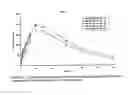
FIGS. 1 and 2, respectively show the concentration of nevirapine in the blood plasma, as a function of time, obtained by the administration to healthy subjects of a single 400 mg or 300 mg tablet extended release dosage form of nevirapine in accordance with the present invention.
FIG. 3 depicts the steady state concentration of nevirapine in the blood plasma, as a function of time, obtained by repeated once daily administration to healthy subjects of 400 mg tablet extended release dosage forms of nevirapine in accordance with the invention.
FIG. 4 depicts the dissolution profile of the extended release formulation according to the invention.
DETAILED DESCRIPTION OF THE INVENTION
In its broadest aspect, the extended release formulation provided by the invention exhibits, after administration of a single dose in fasted state to a healthy volunteer, a distinctive pharmacokinetic profile that is characterized by the following two parameters for a dosage form comprising 300 mg of nevirapine:
-
- (a) a geometric mean Cmax of 1,000 to 2,300 ng/mL; and
- (b) a geometric mean AUC0-∞ of 73,400 to 178,100 ng·h/mL); and
by the following two parameters for a dosage form comprising 400 mg of nevirapine: - (a) a geometric mean Cmax of 1,210 to 2,740 ng/mL; and
- (b) a geometric mean AUC0-∞ of 109,000 to 237,000 ng·h/mL).
The extended release formulation provided by the invention is further characterized by a geometric mean Tmax of 10 to 48 hr (again, after single dose administration in fasted state).
The extended release formulation provided by the invention is additionally characterized by the following PK parameters observed after repeated once-daily dosing under steady state conditions:
For a 300 mg dose:
(a) a geometric mean Cmax,ss of 2,300 to 3,700 ng/mL; and
(b) a geometric mean AUC0-24h,ss of 45,000 to 75,000 ng·h/mL; and
For a 400 mg dose:
(a) a geometric mean Cmax,ss of 3,100 to 4,900 ng/mL; and
(b) a geometric mean AUC0-24h,ss of 60,000 to 99,000 ng·h/mL.
The above noted multiple-dose PK parameters are measured while fasting, during a 24 hour interval after plasma levels of the drug have reached steady state conditions.
The extended release formulation provided by the invention is further characterized by exhibiting a very narrow ratio of Cmax,ss/Cmin,ss which is in the range of 1.1 to 2, for both the 300 and 400 mg doses, with said parameter being measured during steady state.
It should be noted that these PK parameters are to be obtained from observed data and not modeled data.
Still further, the extended release formulation of the invention is characterized by having an in vitro dissolution profile such that at least 2% w/w and no more than 30% w/w of the nevirapine is released at 2 hours; at least 20% w/w and up to 100% w/w of the nevirapine is released at 8 hours; at least 40% w/w and up to 100% w/w of the nevirapine is released at 14 hours, when dissolution is measured by the USP Paddle Method at 50 rpm at a volume of 900 mL aqueous buffer containing 6% w/w of sodium lauryl sulfate, having a pH of 6.8 at 37° C.
In preferred embodiments, the extended release formulation of the invention is characterized by having an in vitro dissolution profile such that at least 5% w/w and no more than 20% w/w of the nevirapine is released at 2 hours; at least 30% w/w and no more than 80% w/w of the nevirapine is released at 8 hours; at least 50% w/w and up to 100% w/w of the nevirapine is released at 14 hours, when dissolution is measured by the USP Paddle Method at 50 rpm at a volume of 900 mL aqueous buffer containing 6% w/w of sodium lauryl sulfate, having a pH of 6.8 at 37° C.
In more preferred embodiments, the extended release formulation of the invention is characterized by having an in vitro dissolution profile such that at least 8% w/w and no more than 15% w/w of the nevirapine is released at 2 hours; at least 45% w/w and no more than 60% w/w of the nevirapine is released at 8 hours; at least 75% w/w and no more than 95% w/w of the nevirapine is released at 14 hours, when dissolution is measured by the USP Paddle Method at 50 rpm at a volume of 900 mL aqueous buffer containing 6% w/w of sodium lauryl sulfate, having a pH of between 6.8 at 37° C.
The pharmaceutical composition of the invention may be formulated by combining nevirapine with conventional carriers or excipients. Preferred embodiments of the invention are tablets.
Also preferred are embodiments of the invention that comprise an extended release matrix which comprises a hydrophilic polymer which imparts controlled release of the nevirapine. The hydrophilic polymer can be, but is not limited to hydroxypropylmethylcellulose (HPMC, also known as hypromellose), hydroxypropylcellulose (HPC), hydroxyethylcellulose (HEC), xanthan gum, sodium alginate, polyethylene oxide, and crosslinked homopolymers and copolymers of acrylic acid. Mixtures of the foregoing hydrophilic polymers may also be used. The preferred hydrophilic polymer is HPMC (hypromellose), especially hypromellose 2910 USP, hypromellose 2906 USP or hypromellose 2208 USP, or a mixture thereof.
The formulation provided by the invention can optionally also include other conventional excipients such as fillers, diluents, glidents and binders.
The formulation provided by the invention can be prepared by mixing the individual components (nevirapine drug substance, hydrophilic polymer(s) and optional filler(s), diluent(s), glidant(s) and binder(s)) and then granulating with a granulation solution until complete. The granulation is then dried. The dried granulation is milled, combined with lubricant and mixed to prepare the final blend for compression into tablets. Tablets are compressed by a force of about 10-25 kN, preferably 11-19 kN, and more preferably 13-17 kN into desirable sizes and shapes of hardness from about 11-26 kP, preferably 16-21 kP.
Formulations comprising an extended release matrix comprising between about 20% and 25% by weight of hypromellose are preferred.
More preferred are formulations comprising Hypromellose 2208 (Methocel™ K4M Premium CR).
Particularly preferred is a pharmaceutical tablet wherein each tablet comprises:
(a) 400 mg of anhydrous nevirapine;
(b) 270 mg of Hypromellose 2208
(Methocel™ K4M Premium CR);
(c) 400 mg of lactose monohydrate; and
(d) 10 mg of Magnesium stearate;
wherein each tablet is compressed by a force of about 10-25 kN.
The invention can be further understood by way of the following non-limiting examples, which describe specific tablet formulations.
Example 1
| 400 mg Strength Nevirapine XR Tablet |
| Ex. 1A | Ex. 1B | Ex. 1C | Ex. 1D | |
| Ingredients | HPMC 20% | HPMC 25% | HPMC 30% | HPMC 40% |
| Nevirapine, | 400.00 mg | 400.000 mg | 400.000 mg | 400.000 mg |
| anhydrous | ||||
| Lactose | 400.00 mg | 400.000 mg | 400.000 mg | 400.000 mg |
| monohydrate, | ||||
| NF | ||||
| Hypromellose | 202.50 mg | 270.000 mg | 347.14 mg | 540.000 mg |
| 2208 | ||||
| (Methocel ™ | ||||
| K4M Premium | ||||
| CR) | ||||
| Magnesium | 10.00 mg | 10.000 mg | 10.000 mg | 10.000 mg |
| stearate | ||||
| (vegetable | ||||
| grade) | ||||
| Tablet weight | 1012.50 mg | 1080.00 mg | 1157.14 mg | 1350 mg |
Processing Method
The lactose, nevirapine drug substance and hypromellose are mixed and then granulated with water until complete. The granulation is then dried. The dried granulation is milled, combined with lubricant (magnesium stearate) and mixed to prepare the final blend for compression into tablets. Tablets are compressed by a force of about 10-25 kN into 9.3×19.0 mm tablets.
Example 2
| 300 mg Strength Nevirapine XR Tablet |
| Ex. 2A | Ex. 2B | Ex. 2C | Ex. 2D | |
| Ingredients | HPMC 20% | HPMC 25% | HPMC 30% | HPMC 40% |
| Nevirapine, | 300.000 mg | 300.000 mg | 300.000 mg | 300.000 mg |
| anhydrous | ||||
| Lactose | 300.000 mg | 300.000 mg | 300.000 mg | 300.000 mg |
| monohydrate | ||||
| (Granulac 200) | ||||
| Hypromellose | 151.875 mg | 202.500 mg | 260.355 mg | 405 mg |
| 2208 | ||||
| (Methocel ™ | ||||
| K4M Premium | ||||
| CR) | ||||
| Magnesium | 7.50 mg | 7.500 mg | 7.50 mg | 7.500 mg |
| stearate | ||||
| (vegetable | ||||
| grade) | ||||
| Tablet weight | 759.375 mg | 810.000 mg | 867.855 mg | 1012.5 mg |
Processing Method
The lactose, nevirapine drug substance and hypromellose are mixed and then granulated with water until complete. The granulation is then dried. The dried granulation is milled, combined with lubricant (magnesium stearate) and mixed to prepare the final blend for compression into tablets. Tablets are compressed by a force of about 10-25 kN into 9.3×19.0 mm tablets.
Example 3
| 400 mg Strength Nevirapine XR Tablet |
| Ex. 3A | Ex. 3B | ||
| Ingredients | HPMC 20% | HPMC 25% | |
| Nevirapine, anhydrous | 400.000 mg | 400.000 mg | |
| Lactose monohydrate | 400.000 mg | 400.000 mg | |
| (Granulac 200) | |||
| Hypromellose 2910 | 202.5 mg | 270 mg | |
| (Methocel ™ E4M | |||
| Premium CR) | |||
| Magnesium stearate | 10 mg | 10 mg | |
| (vegetable grade) | |||
| Tablet weight | 1012.5 mg | 1080 mg | |
Processing Method
The lactose, nevirapine drug substance and hypromellose are mixed and then granulated with water until complete. The granulation is then dried. The dried granulation is milled, combined with lubricant (magnesium stearate) and mixed to prepare the final blend for compression into tablets. Tablets are compressed into 9.3×19.0 mm tablets.
Example 4
| 300 mg Strength Nevirapine XR Tablet |
| Ex. 4A | Ex. 4B | ||
| Ingredients | HPMC 20% | HPMC 25% | |
| Nevirapine, anhydrous | 300.000 mg | 300.000 mg | |
| Lactose monohydrate | 300.000 mg | 300.000 mg | |
| (Granulac 200) | |||
| Hypromellose 2910 | 151.875 mg | 202.500 mg | |
| (Methocel ™ E4M | |||
| Premium CR) | |||
| Magnesium stearate | 7.50 mg | 7.500 mg | |
| (vegetable grade) | |||
| Tablet weight | 759.375 mg | 810.000 mg | |
Processing Method
The lactose, nevirapine drug substance and hypromellose are mixed and then granulated with water until complete. The granulation is then dried. The dried granulation is milled, combined with lubricant (magnesium stearate) and mixed to prepare the final blend for compression into tablets. Tablets are compressed by a force of about 10-25 kN into 9.3×19.0 mm tablets.
The pharmacokinetic parameters of the formulations described above were assessed in a healthy subject population of N=17 following a single dose administration. A summary of the results appears in Table 1, below.
| TABLE 1 |
| Summary of single dose pharmacokinetic parameters |
| [geometric mean (% geometric CV)] for Nevirapine |
| Formulations in normal subjects (N = 17) |
| AUC0-∞ | Cmax | tmax | |
| Formulation | (ng · h/mL) | (ng/mL) | (h) |
| 400 mg Nevirapine, HPMC 20% E | 182,000 | 1,990 | 30.4 |
| (31%) | (28%) | (31%) | |
| 400 mg Nevirapine, HPMC 20% K | 149,000 | 1,990 | 23.5 |
| (32%) | (27%) | (18%) | |
| 400 mg Nevirapine, HPMC 25% K | 155,000 | 1,970 | 22.7 |
| (30%) | (32%) | (44%) | |
| 400 mg Nevirapine, HPMC 30% K | 166,000 | 2,110 | 27.5 |
| (28%) | (24.3%) | (44%) | |
| 400 mg Nevirapine, HPMC 40% K | 145,000 | 1,610 | 25.7 |
| (47%) | (43%) | (43%) | |
| 300 mg Nevirapine, HPMC 20% E | 118,000 | 1,660 | 24.6 |
| (31%) | (26%) | (18%) | |
| 300 mg Nevirapine, HPMC 20% K | 137,000 | 1,660 | 23.9 |
| (51%) | (42%) | (27%) | |
| 300 mg Nevirapine, HPMC 25% K | 126,000 | 1,770 | 24.5 |
| (34%) | (25%) | (29%) | |
| 300 mg Nevirapine, HPMC 30% K | 109,000 | 1,340 | 24.2 |
| (29%) | (27%) | (41%) | |
| 300 mg Nevirapine, HPMC 40% K | 97,800 | 1,350 | 25.0 |
| (64%) | (44%) | (44%) | |
| 400 mg Nevirapine, IR | 210,000 | 3,130 | 4.31 |
| (22%) | (12%) | (117%) | |
| 200 mg Nevirapine, IR | 114,000 | 1,740 | 2.17 |
| (30%) | (21%) | (147%) | |
The pharmacokinetic parameters of the formulations described above were also assessed following multiple dose administration (once daily nevirapine XR for 17 days) in a HIV infected patient population previously treated with Viramune® immediate release tablets. A summary of the results appears in Table 2, below.
| TABLE 2 |
| Summary of steady state pharmacokinetic parameters for Immediate |
| Release (IR) and 400 mg eXtended Release (XR) tablets in HIV-infected |
| patients |
| tmax | Cmax | Cmin | AUC0-24 | |
| Treatment | (hr) | (ng/mL) | (ng/mL) | (hr · ng/mL) |
| IR | gMean | 1.8 | 5,576 | 2,976 | 96,137 |
| (N = 19) | gCV % | 130 | 26 | 31 | 26 |
| ER 25% K | gMean | 4.3 | 3,911 | 2,622 | 75,544 |
| (N = 18) | gCV % | 134 | 26 | 35 | 29 |
| XER 20% K | gMean | 5.8 | 3,904 | 2,609 | 79,308 |
| (N = 9) | gCV % | 92 | 37 | 45 | 38 |
| gMean = geometric mean, | |||||
| gCV = geometric CV. |
| TABLE 3 |
| Projected Summary of steady state pharmacokinetic parameters for |
| 300 mg eXtended Release (XR) tablets in HIV-infected patients |
| tmax | Cmax | Cmin | AUC0-24 | |
| Treatment | (hr) | (ng/mL) | (ng/mL) | (hr · ng/mL) |
| ER 25% K | gMean | 4 | 3,000 | 1,970 | 57,000 |
| ER 20% K | gMean | 5 | 2,930 | 1,960 | 59,500 |
Dissolution
The dissolution profiles of the five formulations described by Examples 1, 2, 3 and 4 are depicted by FIG. 4. The dissolution information depicted was obtained by the test method described below.
Dissolution Test Method
The USP paddle method is the paddle method described, e.g., in U.S. Pharmacopoeia XXII (1990).
USP Apparatus I (baskets) at 50 rpm in 900 mL medium at 37° C. Baskets (#10 mesh) were chosen to assure that the tablets would not stick to the bottom of the vessel and thereby minimize surface area available to solution during testing.
Tablet dissolution was performed using a VanKel VK 750 D Heater/Circulator Model 65-3000, VanKel VK 7000 or 7010 Dissolution Testing Station, and VanKel Pump Model 17-2200 (VanKel, Cary, N.C.).
Drug substance dissolution rate was measured using an on-line Cary 50 UV-Visible Spectrophotometer (Varian Australia Pty LTD) at 330 nm against external standards.
The tested dissolution media: 0.05M phosphate buffer (NaH2PO4/NaOH or NaH2PO4/Na2HPO4/NaOH—all EM Science, Darmstadt, Germany) containing 6% Sodium Lauryl Sulfate (13% Sodium Lauryl Sulfate in deionized water, Anachemia Chemicals, Rouses Point, NY or Sodium Lauryl Sulfate, Spectrum Chemical MFG. CORP.) and adjusted to pH 6.8.
Dissolution was performed using 10 mesh stainless steel baskets.
Dissolution parameters:
-
- medium volume: 900 mL
- temperature: 37.3° C.
- rotation rate: 50 rpm
- sampling timepoints: every 30 min. for initial four hours, then every hour (4-24 hours)
- infinity spin: 15 minutes at 250 rpm
- on line filters: 10 μm full flow filter (VanKel, Cary, N.C. or Quality Lab Accessories L.L.S.).
Claims
What is claimed is:1. A pharmaceutical composition which:
(a) comprises 300 mg of nevirapine in an extended release matrix and which, when administered as a single-dose to a fasting human, exhibits
(1) a geometric mean Cmax of 1,000 to 2,300 ng/mL; and
(2) a geometric mean AUC0-∞ of 73,400 to 178,100 hr(ng/mL); or
(b) comprises 400 mg of nevirapine in an extended release matrix and which, when administered as a single dose to a fasting human, exhibits
(1) a geometric mean Cmax of 1,210 to 2,740 ng/mL; and
(2) a geometric mean AUC0-∞ of 109,000 to 237,000 hr(ng/mL).
2. A pharmaceutical composition according to claim 1 which exhibits a single-dose fasting Tmax of 10 to 48 hr.
3. A pharmaceutical composition according to claim 1 which:
(a) comprises 300 mg of nevirapine in an extended release matrix and which, when administered in multiple doses to a human, exhibits
(1) a geometric mean Cmax,ss of 2,300 to 3,700 ng/mL; and
(2) a geometric mean AUC0-24,ss of 45,000 to 75,000 hr(ng/mL); or
(b) comprises 400 mg of nevirapine in an extended release matrix and which, when administered in multiple doses to a human, exhibits
(1) a geometric mean Cmax,ss of 3,100 to 4,900 ng/mL; and
(2) a geometric mean AUC0-24,ss of 60,000 to 99,000 hr(ng/mL).
4. A pharmaceutical composition according to claim 1 which exhibits a Cmax,ss/Cmin,ss which is in the range of 1.1 to 2, measured during multiple-dosing.
5. A pharmaceutical composition comprising nevirapine in an extended release matrix, said composition having an in-vitro dissolution profile such that at least 2% w/w and no more than 30% w/w of the nevirapine is released at 2 hours; at least 20% w/w and up to 100% w/w of the nevirapine is released at 8 hours; at least 40% w/w and up to 100% w/w of the nevirapine is released at 14 hours, when dissolution is measured by the USP Paddle Method at 50 rpm at a volume of 900 mL aqueous buffer containing 6% w/w of sodium lauryl sulfate, having a pH of 6.8 at 37° C.
6. A pharmaceutical composition according to claim 5, having an in vitro dissolution profile such that at least 5% w/w and no more than 20% w/w of the nevirapine is released at 2 hours; at least 30% w/w and no more than 80% w/w of the nevirapine is released at 8 hours; at least 50% w/w and up to 100% w/w of the nevirapine is released at 14 hours, when dissolution is measured by the USP Paddle Method at 50 rpm at a volume of 900 mL aqueous buffer containing 6% w/w of sodium lauryl sulfate, having a pH of 6.8 at 37° C.
7. A pharmaceutical composition according to claim 5, having an in vitro dissolution profile such that at least 8% w/w and no more than 15% w/w of the nevirapine is released at 2 hours; at least 45% w/w and no more than 60% w/w of the nevirapine is released at 8 hours; at least 75% w/w and no more than 95% w/w of the nevirapine is released at 14 hours, when dissolution is measured by the USP Paddle Method at 50 rpm at a volume of 900 mL aqueous buffer containing 6% w/w of sodium lauryl sulfate, having a pH of 6.8 at 37° C.
8. A pharmaceutical composition which:
(a) comprises 300 mg of nevirapine in an extended release matrix and which, when administered as a single-dose to a fasting human, exhibits
(1) a geometric mean Cmax of 1,000 to 2,300 ng/mL; and
(2) a geometric mean AUC0-∞ of 73,400 to 178,100 hr(ng/mL); or
(b) comprises 400 mg of nevirapine in an extended release matrix and which, when administered as a single dose to a fasting human, exhibits
(1) a geometric mean Cmax of 1,210 to 2,740 ng/mL; and
(2) a geometric mean AUC0-∞ of 109,000 to 237,000 hr(ng/mL); and
which has an in-vitro dissolution profile such that at least 2% w/w and no more than 30% w/w of the nevirapine is released at 2 hours; at least 20% w/w and up to 100% w/w of the nevirapine is released at 8 hours; at least 40% w/w and up to 100% w/w of the nevirapine is released at 14 hours, when dissolution is measured by the USP Paddle Method at 50 rpm at a volume of 900 mL aqueous buffer containing 6% w/w of sodium lauryl sulfate, having a pH of 6.8 at 37° C.
9. A pharmaceutical composition according to claim 8 having an in vitro dissolution profile such that at least 5% w/w and no more than 20% w/w of the nevirapine is released at 2 hours; at least 30% w/w and no more than 80% w/w of the nevirapine is released at 8 hours; at least 50% w/w and up to 100% w/w of the nevirapine is released at 14 hours, when dissolution is measured by the USP Paddle Method at 50 rpm at a volume of 900 mL aqueous buffer containing 6% w/w of sodium lauryl sulfate, having a pH of 6.8 at 37° C.
10. A pharmaceutical composition according to claim 8 having an in vitro dissolution profile such that at least 8% w/w and no more than 15% w/w of the nevirapine is released at 2 hours; at least 45% w/w and no more than 60% w/w of the nevirapine is released at 8 hours; at least 75% w/w and no more than 95% w/w of the nevirapine is released at 14 hours, when dissolution is measured by the USP Paddle Method at 50 rpm at a volume of 900 mL aqueous buffer containing 6% w/w of sodium lauryl sulfate, having a pH of between 6.8 at 37° C.
11. A pharmaceutical composition which:
(a) comprises 300 mg of nevirapine in an extended release matrix and which, when administered as a single-dose to a fasting human, exhibits
(1) a geometric mean Cmax of 1,000 to 2,300 ng/mL; and
(2) a geometric mean AUC0-24,ss of 73,400 to 178,100 hr(ng/mL); and
which, when administered in multiple doses to a human, exhibits
(1) a geometric mean Cmax,ss of 2,300 to 3,700 ng/mL; and
(2) a geometric mean AUC0-24,ss of 45,000 to 75,000 hr(ng/mL); or
(b) comprises 400 mg of nevirapine in an extended release matrix and which, when administered as a single dose to a fasting human, exhibits
(1) a geometric mean Cmax of 1,210 to 2,740 ng/mL; and
(2) a geometric mean AUC0-∞ of 109,000 to 237,000 hr(ng/mL); and
which, when administered in multiple doses to a human, exhibits
(1) a geometric mean Cmax,ss of 3,100 to 4,900 ng/mL; and
(2) a geometric mean AUC0-24,ss of 60,000 to 99,000 hr(ng/mL);
which exhibits a single-dose fasting Tmax of 10 to 48 hr;
which exhibits a Cmax,ss/Cmin,ss which is in the range of 1.1 to 2, measured during multiple-dosing; and
which has an in-vitro dissolution profile such that at least 2% w/w and no more than 30% w/w of the nevirapine is released at 2 hours; at least 20% w/w and up to 100% w/w of the nevirapine is released at 8 hours; at least 40% w/w and up to 100% w/w of the nevirapine is released at 14 hours, when dissolution is measured by the USP Paddle Method at 50 rpm at a volume of 900 mL aqueous buffer containing 6% w/w of sodium lauryl sulfate, having a pH of 6.8 at 37° C.
12. A pharmaceutical composition according to claim 11 having an in vitro dissolution profile such that at least 5% w/w and no more than 20% w/w of the nevirapine is released at 2 hours; at least 30% w/w and no more than 80% w/w of the nevirapine is released at 8 hours; at least 50% w/w and up to 100% w/w of the nevirapine is released at 14 hours, when dissolution is measured by the USP Paddle Method at 50 rpm at a volume of 900 mL aqueous buffer containing 6% w/w of sodium lauryl sulfate, having a pH of 6.8 at 37° C.
13. A pharmaceutical composition according to claim 11 having an in vitro dissolution profile such that at least 8% w/w and no more than 15% w/w of the nevirapine is released at 2 hours; at least 45% w/w and no more than 60% w/w of the nevirapine is released at 8 hours; at least 75% w/w and no more than 95% w/w of the nevirapine is released at 14 hours, when dissolution is measured by the USP Paddle Method at 50 rpm at a volume of 900 mL aqueous buffer containing 6% w/w of sodium lauryl sulfate, having a pH of between 6.8 at 37° C.
14. A pharmaceutical composition according to claim 1, 2, 3, 4, 5, 6, 7, 8, 9, 10, 11, 12 or 13 wherein the extended release matrix comprises between 20% and 25% by weight of hypromellose.
15. A tablet pharmaceutical dosage form wherein each tablet comprises:
(a) 400 mg of anhydrous nevirapine;
(b) 270 mg of Hypromellose 2208
(Methocel™ K4M Premium CR);
(c) 400 mg of lactose monohydrate; and
(d) 10 mg of Magnesium stearate;
wherein each tablet is compressed by a force of 10-25 kN.
16. A tablet dosage form according to claim 15 which, when administered as a single dose to a fasting human, exhibits
(1) a geometric mean Cmax of 1,210 to 2,740 ng/mL; and
(2) a geometric mean AUC0-∞ of 109,000 to 237,000 hr(ng/mL).
17. A tablet dosage form according to claim 16 which exhibits a single-dose fasting Tmax of 10 to 48 hr.
18. A tablet dosage form according to claim 15 having an in-vitro dissolution profile such that at least 2% w/w and no more than 30% w/w of the nevirapine is released at 2 hours; at least 20% w/w and up to 100% w/w of the nevirapine is released at 8 hours; at least 40% w/w and up to 100% w/w of the nevirapine is released at 14 hours, when dissolution is measured by the USP Paddle Method at 50 rpm at a volume of 900 mL aqueous buffer containing 6% w/w of sodium lauryl sulfate, having a pH of 6.8 at 37° C.
19. A tablet dosage form according to claim 18, having an in vitro dissolution profile such that at least 5% w/w and no more than 20% w/w of the nevirapine is released at 2 hours; at least 30% w/w and no more than 80% w/w of the nevirapine is released at 8 hours; at least 50% w/w and up to 100% w/w of the nevirapine is released at 14 hours, when dissolution is measured by the USP Paddle Method at 50 rpm at a volume of 900 mL aqueous buffer containing 6% w/w of sodium lauryl sulfate, having a pH of 6.8 at 37° C.
20. A tablet dosage form according to claim 19, having an in vitro dissolution profile such that at least 8% w/w and no more than 15% w/w of the nevirapine is released at 2 hours; at least 45% w/w and no more than 60% w/w of the nevirapine is released at 8 hours; at least 75% w/w and no more than 95% w/w of the nevirapine is released at 14 hours, when dissolution is measured by the USP Paddle Method at 50 rpm at a volume of 900 mL aqueous buffer containing 6% w/w of sodium lauryl sulfate, having a pH of 6.8 at 37° C.
21. A tablet pharmaceutical dosage form wherein each tablet comprises:
(a) 400 mg of anhydrous nevirapine;
(b) 270 mg of Hypromellose 2208
(Methocel™ K4M Premium CR);
(c) 400 mg of lactose monohydrate; and
(d) 10 mg of Magnesium stearate;
wherein each tablet is compressed by a force of 10-25 kN;
which, when administered as a single dose to a fasting human, exhibits
(1) a geometric mean Cmax of 1,210 to 2,740 ng/mL; and
(2) a geometric mean AUC0-∞ of 109,000 to 237,000 hr(ng/mL); and
which has an in-vitro dissolution profile such that at least 2% w/w and no more than 30% w/w of the nevirapine is released at 2 hours; at least 20% w/w and up to 100% w/w of the nevirapine is released at 8 hours; at least 40% w/w and up to 100% w/w of the nevirapine is released at 14 hours, when dissolution is measured by the USP Paddle Method at 50 rpm at a volume of 900 mL aqueous buffer containing 6% w/w of sodium lauryl sulfate, having a pH of 6.8 at 37° C.
22. A tablet dosage form according to claim 21 having an in vitro dissolution profile such that at least 5% w/w and no more than 20% w/w of the nevirapine is released at 2 hours; at least 30% w/w and no more than 80% w/w of the nevirapine is released at 8 hours; at least 50% w/w and up to 100% w/w of the nevirapine is released at 14 hours, when dissolution is measured by the USP Paddle Method at 50 rpm at a volume of 900 mL aqueous buffer containing 6% w/w of sodium lauryl sulfate, having a pH of 6.8 at 37° C.
23. A tablet dosage form according to claim 22 having an in vitro dissolution profile such that at least 8% w/w and no more than 15% w/w of the nevirapine is released at 2 hours; at least 45% w/w and no more than 60% w/w of the nevirapine is released at 8 hours; at least 75% w/w and no more than 95% w/w of the nevirapine is released at 14 hours, when dissolution is measured by the USP Paddle Method at 50 rpm at a volume of 900 mL aqueous buffer containing 6% w/w of sodium lauryl sulfate, having a pH of between 6.8 at 37° C.
24. A tablet dosage form according to claim 15 which, when administered in multiple doses to a human, exhibits
(1) a geometric mean Cmax,ss of 3,100 to 4,900 ng/mL; and
(2) a geometric mean AUC0-24,ss of 60,000 to 99,000 hr(ng/mL);
which exhibits a single-dose fasting Tmax of 10 to 48 hr;
which exhibits a Cmax,ss/Cmin,ss which is in the range of 1.1 to 2, measured during multiple-dosing; and
which has an in-vitro dissolution profile such that at least 2% w/w and no more than 30% w/w of the nevirapine is released at 2 hours; at least 20% w/w and up to 100% w/w of the nevirapine is released at 8 hours; at least 40% w/w and up to 100% w/w of the nevirapine is released at 14 hours, when dissolution is measured by the USP Paddle Method at 50 rpm at a volume of 900 mL aqueous buffer containing 6% w/w of sodium lauryl sulfate, having a pH of 6.8 at 37° C.
Images & Drawings included:


Sources:
- United States Patent and Trademark Office - verify current appl. status at the USPTO↗
Recent applications in this class:
- » 20250281412 2025-09-11
Pharmaceutical formulations comprising tenofovir alafenamide and emtricitabine - » 20250275925 2025-09-04
PHARMACEUTICAL COMPOSITIONS OF NOR-UDCA - » 20250275924 2025-09-04
Anticholinergic Agents and Muscarinic Agonists for the Treatment of Demodex Related Conditions - » 20250255822 2025-08-14
TRIPTOLIDE FORMULATIONS - » 20250255821 2025-08-14
SOLID DISPERSIONS COMPRISING A SGC STIMULATOR - » 20250255820 2025-08-14
COMPOSITIONS COMPRISING INDIGO AND/OR AN INDIGO DERIVATIVE AND METHODS OF USE THEREOF - » 20250228783 2025-07-17
PHARMACEUTICAL FORMULATIONS OF A BRUTON'S TYROSINE KINASE INHIBITOR - » 20250228782 2025-07-17
SOLID EXTENDED-RELEASE COMPOSITION COMPRISING BRADYKININ B2-RECEPTOR ANTAGONISTS - » 20250228781 2025-07-17
SOLID COMPOSITION COMPRISING SOLUBILISED BRADYKININ B2-RECEPTOR ANTAGONISTS - » 20250213488 2025-07-03
SYNTHETIC PROGESTOGENS AND PHARMACEUTICAL COMPOSITIONS COMPRISING THE SAME
Recent applications for this Assignee:
- » 20250130222 2025-04-24
IDENTIFICATION OF COMMON TUMOR-SPECIFIC T CELL RECEPTORS AND ANTIGENS - » 20250101093 2025-03-27
ANTI-IL-23 ANTIBODIES - » 20250092126 2025-03-20
TREATMENT AND PREVENTION OF ALCOHOLIC LIVER DISEASE - » 20250051759 2025-02-13
METHODS AND MOLECULES FOR RNA INTERFERENCE (RNAi) - » 20240417394 2024-12-19
NOVEL SUBSTITUTED PYRAZINE-CARBOXAMIDE DERIVATIVES - » 20240401057 2024-12-05
ADAMTS14 INHIBITION - » 20240385113 2024-11-21
METHOD OF DETERMINING A FUTURE COLOR VALUE OR CORRESPONDING PROPERTY AND ARRANGEMENT THEREFOR - » 20240368167 2024-11-07
HETEROBICYCLIC AMIDES AS INHIBITORS OF CD38 - » 20240317875 2024-09-26
USE OF ANTI-CD40 ANTIBODIES FOR TREATMENT OF INFLAMMATORY CONDITIONS - » 20240309105 2024-09-19
ANTI-CD40 ANTIBODIES FOR USE IN TREATING AUTOIMMUNE DISEASE