PROCESS IMPROVEMENT USING TMEDA
US20100280247A1
2010-11-04
12/786,951
2010-05-25
Abstract:
An improved chemical synthesis for compounds having useful biological activity is disclosed, where the use of TMEDA or N,N,N′,N′-tetramethyl-ethane-1,2-diamine gives improved yield.
Inventors:
- Stephan MUTTI 1 🇫🇷 Paris, France
- Claude TOUM 1 🇫🇷 Paris, France
- Patrick ROUSSEL 1 🇫🇷 Paris, France
Assignee:
- Millennium Pharmaceuticals, Inc. 478 🇺🇸 Cambridge, MA, United States
Interested in similar patents?
Get notified when new applications in this technology area are published.
Classification:
C07D491/04 » CPC main
Heterocyclic compounds containing in the condensed ring system both one or more rings having oxygen atoms as the only ring hetero atoms and one or more rings having nitrogen atoms as the only ring hetero atoms, not provided for by groups - , , or in which the condensed system contains two hetero rings Ortho-condensed systems
C07D491/044 IPC
Heterocyclic compounds containing in the condensed ring system both one or more rings having oxygen atoms as the only ring hetero atoms and one or more rings having nitrogen atoms as the only ring hetero atoms, not provided for by groups - , , or in which the condensed system contains two hetero rings; Ortho-condensed systems with only one oxygen atom as ring hetero atom in the oxygen-containing ring
Description
FIELD OF THE INVENTION
This invention is directed to an improvement in synthetic processes for making chemical compounds having useful biological activity.
BACKGROUND OF THE INVENTION
The present invention is an improvement in the synthetic preparation of 5-cyclopentyl-5-11-dihydro-10-oxa-1-aza-dibenzo[a,d]cyclohepten-5-ol, which is an intermediate used for the synthesis of biologically active compounds disclosed in U.S. Pat. No. 6,329,385.
SUMMARY OF THE INVENTION
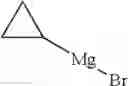
An improved chemical synthesis for compounds having useful biological activity is disclosed, where the use of TMEDA or N,N,N′,N′-tetramethyl-ethane-1,2-diamine gives improved yield. Both quality and yield have been significantly improved by adding TMEDA to cyclopropyl magnesium bromide. The chemical reaction between the Grignard reagent and the tricyclic ketone (1,2-addition to give a tertiary alcohol is limited by both enolisation of the ketone that decreases the rate of transformation and 1,4-addition, the main side reaction. Cyclopropyl magnesium bromide and TMEDA react to form a soluble complex. Thanks to the basicity of its two nitrogen atoms, TMEDA chelates magnesium, avoiding its chelation with the nitrogen atom the the tricyclic pyridine, hence the selectivity of the 1,2-addition is clearly better the rate of transformation of the ketone is improved as well.
DETAILED DESCRIPTION OF THE INVENTION
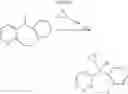
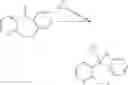
In Scheme 1 is seen the reaction sequence used in the patent cited above.
| Starting | |||
| Material | Commercial Source or | ||
| Reference | Literature Reference for | ||
| Number | Name of Compound | Structure | the Preparation Method |
| I | 11H-10-oxa-1- azadibenzo[a,d] cyclohepten-5-one | Inoue, K.; Sugaya, T.; Ogasa, T. ; Tomioka, S. Synlett 1997, 113-116 | |
| A | Cyclopropylmagnesium bromide (purchased as a 15.3% w/w solution in a mixture of THF and toluene) | Chemetall GMBH | |
| A | Cyclopropylmagnesium bromide (1:1 complex with TMEDA and purchased as an 18.3% w/w solution in pure THF). | Chemetall GMBH | |
In Scheme 2 is seen the reaction being improved by the use of TMEDA disclosed here.
EXAMPLES
Example 1
Synthesis of 5-cyclopropyl-5,11-dihydro-10-oxa-1-azadibenzo[a,d]cyclohepten-5-ol
(Scheme 1, Compound II)
An 8 L jacketed dry glass reactor, equipped with an overhead stirrer, thermometer and a condenser, is purged with nitrogen. A solution of cyclopropyl magnesium bromide (2123 g, 2.23 moles, 15.3% w/w THF/toluene solution) and THF (1.78 L, anhydrous) is added and stirred. The resulting solution is cooled (−3° C.±5° C.) and the cyclopropyl magnesium bromide is precipitated partially. N,N,N′,N′-tetramethyl-ethane-1,2-diamine (TMEDA) (212 g, 1.80 mole) is charged over 1 hour and the reaction mixture is maintained below 0° C. to afford a clear solution. At −3° C.±5° C., a solution of 11H-10-oxa-1-azadibenzo[a,d]cyclohepten-5-one (250 g, 1.18 mole) in THF (750 mL, anhydrous) is added to the reaction mixture drop wise via a dropping funnel over 1 hour. The reaction mixture is stirred for 2 hours at −3±5° C. The progress of the reaction is monitored thereafter by HPLC. To quench, a solution of NH4Cl (250 mL, aqueous saturated) is charged into the reaction mixture and stirred for 30 minutes. Acetic acid (348 g, diluted with 1.875 L of water) is charged while the temperature is raised to ˜20° C. and the reaction mixture is warmed to 50° C. The mixture is filtered over Clarcel® (175 g) and the filter cake is washed with THF (2×500 mL). The mother liquors and washes are mixed, allowed to separate and the aqueous layer is discarded. The organic layer is stirred and heated to remove THF (3.36 L) by distillation under atmospheric pressure. The final reactor temperature is 106° C. The resultant suspension is cooled (15° C./20° C.) and the off-white precipitate is filtered. The cake is washed with toluene (2×500 mL), water (2×500 mL), and is dried under vacuum (40 mmHg/50° C.) to yield final, desired 5-cyclopropyl-5,11-dihydro-10-oxa-1-azadibenzo[a,d]cyclohepten-5-ol (228.1 g, 76.3% yield). HPLC area=98%.
HPLC conditions: Column: INERTSIL® OD3 3 μm, 150×4.6mm; Column temperature: room temperature; Mobile phase: H2O (600 mL): acetonitrile (400 mL): trifluoroacetic acid (0.2 mL); Flow rate: 1 mL/min; Pressure: 120 bars; Detection (UV): 220 nm; Injection volume: 20 μl; Analysis time: 35 min. RT (11H-10-oxa-1-azadibenzo[a,d]cyclohepten-5-one)=11.2 min.; RT (5 -cyclopropyl -5,11-dihydro-10-oxa-1-azadibenzo[a,d]cyclohepten-5 -ol)=3.4 min.; RT=(4-cyclopropyl-4,11-dihydro-1H-10-oxa-1-azadibenzo[a,d]cyclohepten-5-one)=18.9 min.; and RT (toluene)=28.0 min.
Example 1a
Synthesis of 5-cyclopropyl-5,11-dihydro-10-oxa-1-azadibenzo[a,d]cyclohepten-5-ol
(Scheme 1, Compound II)
The title compound is prepared from 11H-10-oxa-1-azadibenzo[a,d]cyclohepten-5-one (7 kg) essentially as described above in Example 1. Isolated Yield=67%.
HPLC conditions: Column: INERTSIL OD3 3 μm, 150×4.6mm; Column temperature: room temperature; Mobile phase: H2O (600 mL): acetonitrile (0.2 mL) : trifluoroacetic acid (0.2 mL); Flow rate: 1 mL/min; Pressure: 120 bars; Detection (UV): 220 nm; Injection volume: 20 μl; Analysis time: 35 min. RT (11H-10-oxa-1-azadibenzo[a,d]cyclohepten-5-one)=11.2 min.; RT (5-cyclopropyl-5,11-dihydro-10-oxa-1-azadibenzo[a,d]cyclohepten-5-ol)=3.4 min.; RT=(4-cyclopropyl-4,11-dihydro-1H-10-oxa-1-azadibenzo[a,d]cyclohepten-5-one)=18.9 min.; and RT (toluene)=28.0 min.
Example 2
Synthesis of 5-cyclopropyl-5,11-dihydro-10-oxa-1-azadibenzo[a,d]cyclohepten-5-ol
(Scheme 1, Compound II)
A 2 L, 3-necked flask equipped with an overhead stirrer, thermometer and a condenser is purged with nitrogen. A solution of THF cyclopropylmagnesium bromide/TMEDA (355 g, 447 mmole of a 15.3% w/w) prepared from cyclopropylmagnesium bromide (as a 1:1 complex with TMEDA and purchased as an 18.3% w/w solution in THF from Chemetall Gmbh) and THF (360 mL, anhydrous), is added and stirred. The resulting solution is cooled (−5±5° C.). A solution of 11H-10-oxa-1-azadibenzo[a,d]cyclohepten-5-one (50 g, 236.7 mmole) in THF (150 mL, anhydrous) is added to the reaction solution dropwise via a dropping funnel over 1 hour. The reaction mixture is stirred for 1 hour at −5±5° C. The progress of the reaction is monitored thereafter by HPLC. To quench, a solution of NH4Cl (50 mL, aqueous saturated) is charged into the reaction mixture and stirred for 30 minutes at 20° C. The reaction mixture is warmed to 45° C. Acetic acid (70 g, diluted with 375 mL of water) is charged over 10 minutes. The reaction mixture is stirred for an additional 25 minutes at 20° C. and is filtered over Clarcel® (35 g). The filter cake is washed with THF (2×50 mL). The mother liquors and washes are poured into a 2 L funnel and the aqueous layer is discarded. Into a 2 L, 3-necked flask equipped with an overhead stirrer, thermometer and a condenser are poured the organic layer and toluene (250 mL). THF (1050 mL) is removed by distillation under atmospheric pressure. The final reactor temperature is 100° C. to afford a suspension, which is cooled to 20° C. The white precipitate is stirred for 1 hour at 20° C., filtered, washed with toluene (2×100 mL) and water (2×100 mL), and is dried under vacuum (40 mmHg/50° C.) to afford desired 5-cyclopropyl-5,11-dihydro-10-oxa-1-azadibenzo[a,d]cyclohepten-5-ol (51 g, 85% yield). mp 210-212° C. HPLC area=99.5%.
HPLC conditions: Column: INERTSIL® OD3 3 μm, 150×4.6mm; Column temperature: room temperature; Mobile phase: H2O (600 mL): acetonitrile (400 mL): trifluoroacetic acid (0.2 mL); Flow rate: 1 mL/minute; Pressure: 120 bars; Detection (UV): 220 nm; Injection volume: 20 μl; Analysis time: 35 min. RT (11H-10-oxa-1-azadibenzo[a,d]cyclohepten-5-one)=11.2 min.; RT (5-cyclopropyl-5,11-dihydro-10-oxa-1-azadibenzo[a,d]cyclohepten-5-ol)=3.4 min.; RT=(4-cyclopropyl-4,11-dihydro-1H-10-oxa-1-azadibenzo[a,d]cyclohepten-5-one)=18.9 min.; and RT (toluene)=28.0 min.
MS m/z (EI): 253 (M+.), 225 (M-CO+.), 212 (M-C3H5+., 184 (212-CO+.). IR (KBr): 3393, 3084, 3066, 3007, 2960, 2882, 1582, 1487, 1449, 1441, 1425, 1282, 1216, 1052, 1042, 881, 806, 770, 744, 728 and 650 cm−1.
H1NMR (300 MHz, (CD3)2SO-d6, δin ppm): 0.24 (m, 2H), 0.49 (m, 1H), 0.59 (m, 1H), 1.99 (m, 1H), 5.00 (d, J=16 Hz, 1H), 5.47 (d, J=16 Hz, 1H), 5.75 (s, 1H), from 7.10 to 7.25 (m, 2H), from 7.25 to 7.40 (m, 2H), 7.63 (dd, J=7.5 and 1.5 Hz, 1H), 8.16 (d, J=8 and 1 Hz, 1H), 8.42 (dd, J=4.5 and 1 Hz, 1H).
The present invention may be embodied in other specific forms without departing from the spirit or essential attributes thereof.
Claims
1. An improved synthesis of 5-cyclopentyl-5-11-dihydro-10-oxa-1-aza-dibenzo[a,d]cyclohepten-5-ol, comprising:
carrying out the reaction:
with TMEDA added.
Images & Drawings included:



Sources:
- United States Patent and Trademark Office - verify current appl. status at the USPTO↗
Recent applications in this class:
- » 20230054782 2023-02-23
BICYCLIC HETEROCYCLE COMPOUNDS METHODS OF USE THEREOF FOR THE TREATMENT OF HERPES VIRUSES - » 20220177483 2022-06-09
Crystal form of acid addition salt of furopyrimidine compound - » 20210171536 2021-06-10
COMPOUND OF EOC315 MOD.I CRYSTAL FORM AND PREPARATION METHOD THEREOF - » 20210024531 2021-01-28
PROCESS FOR PRODUCING HERBICIDAL PYRIDAZINONE COMPOUNDS - » 20200331926 2020-10-22
Tricyclic fused derivatives of 1-(cyclo)alkyl pyrtdin-2-one useful for the treatment of cancer - » 20200071336 2020-03-05
Compound of EOC315 Mod.I crystal form and preparation method thereof - » 20200039993 2020-02-06
COMPOUND FOR ORGANIC ELECTRONIC ELEMENT, ORGANIC ELECTRONIC ELEMENT USING SAME, AND ELECTRONIC DEVICE THEREFOR - » 20190308989 2019-10-10
Opioid receptor antagonist prodrugs - » 20180282345 2018-10-04
Tricyclic fused derivatives of 1-(cyclo)alkyl pyridin-2-one useful for the treatment of cancer - » 20180230160 2018-08-16
2-AMINO-7A-PHENYL-3,4,4A,5,7,7A-HEXAHYDROFURO[3,4-B]PYRIDINES AS BACE1 INHIBITORS
Recent applications for this Assignee:
- » 20240092860 2024-03-21
CD38-binding proteins comprising de-immunized Shiga toxin A subunit effectors - » 20230346938 2023-11-02
CHIMERIC ANTIGEN RECEPTORS TARGETING CD19 AND USE THEREOF - » 20230166877 2023-06-01
Systems and methods for filling containers - » 20220363775 2022-11-17
CHIMERIC RECEPTORS TARGETING ADGRE2 AND/OR CLEC12A AND USES THEREOF - » 20220331316 2022-10-20
HETEROARYL COMPOUNDS USEFUL AS INHIBITORS OF SUMO ACTIVATING ENZYME - » 20220257673 2022-08-18
Methods and products for treatment of gastrointestinal disorders - » 20220097876 2022-03-31
Systems and methods for filling containers - » 20210347888 2021-11-11
Anti-CD19 antibodies and uses therof - » 20210267901 2021-09-02
Solid pharmaceutical compositions and processes for their production - » 20210214361 2021-07-15
Aurora kinase inhibitors for inhibiting mitotic progression