AlphaNumeriDeck
US20100283207A1
2010-11-11
12/775,068
2010-05-06
Abstract:
A deck of 54 cards that, apart from two wild cards, is divided into two color-coded sequences of alphabetic characters. The first sequence has a first color associated with the cards of the first sequence. The second sequence has a second color associated with the cards of the second sequence. The consonant letters in each sequence are assigned a unique points value. The configuration of the cards in this manner facilitates the opportunity for card games that involve word play and points values.
Inventors:
- Gvozden Dokic 1 🇺🇸 Slaterville Springs, NY, United States
- Angelo P. Ippolito 1 🇺🇸 Long Island City, NY, United States
Interested in similar patents?
Get notified when new applications in this technology area are published.
Classification:
A63F1/02 » CPC main
Card games Cards; Special shapes of cards
A63F2001/0466 » CPC further
Card games; Card games combined with other games with single letters
A63F1/00 IPC
Card games
Description
This is a non-provisional application of U.S. Provisional patent application No. 61/175,937 filed on May 6, 2009, and priority is claimed thereto.
FIELD OF THE PRESENT INVENTION
The present invention is a deck of cards relating to 52 color-coded cards featuring alphabetic characters, the cards divided into two sequences in a manner that facilitates the opportunity for card games that involve word play and point values. The deck of cards also contains two wild cards that allow for additional variations in card games.
BACKGROUND OF THE PRESENT INVENTION
Card games have been intertwined in our culture for centuries. Traditionally, card games involve a deck that uses a sequence of numbers and “suits” during the gaming process. People participate in such games in situations ranging from the casino to passing the time on lengthy automobile trips. As such, the market for new card games, as well as novel ways to play, is quite profound. Due to this fact, there is a need for a deck of cards that offers a different set of attributes, since innovative attributes within a deck of cards have the effect of facilitating novel and exciting rules for new methods of card gamesmanship.
The present invention solves this need by providing a deck of cards with 52 cards featuring unique alphabetic characters in two color-coded sequences, along with two wild cards.
SUMMARY OF THE PRESENT INVENTION
The present invention is a deck of 54 cards. Apart from two wild cards, 52 of the cards are configured in two color-coded sequences of alphabetic characters. One sequence of cards is colored red (herein referred to as “the red sequence”), the other is colored black (herein referred to as “the black sequence”). The configuration of the cards of the present invention facilitates the opportunity for card games such as the example methods provided herein.
BRIEF DESCRIPTION OF THE DRAWINGS
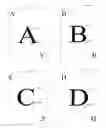
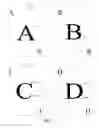
FIG. 1 is a view of the black sequence cards with alphabetic characters “A”, “B”, “C”, and “D”.
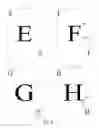
FIG. 2 is a view of the black sequence cards with alphabetic characters “E”, “F”, “G”, and “H”.
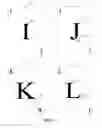
FIG. 3 is a view of the black sequence cards with alphabetic characters “I”, “J”, “K”, and “L”.
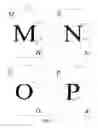
FIG. 4 is a view of the black sequence cards with alphabetic characters “M”, “N”, “O”, and “P”.
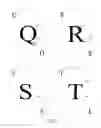
FIG. 5 is a view of the black sequence cards with alphabetic characters “Q”, “R”, “S”, and “T”.
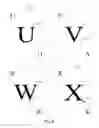
FIG. 6 is a view of the black sequence cards with alphabetic characters “U”, “V”, “W”, and “X”.
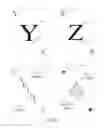
FIG. 7 is a view of the black sequence cards with alphabetic characters “Y”, “Z”, and the two wild cards.
DETAILED DESCRIPTION OF THE PREFERRED EMBODIMENT
The present invention is comprised of a deck of 54 cards. Apart from two wild cards (50 and 60), the cards are configured in two color-coded sequences of alphabetic characters, with 26 cards colored red (herein referred to as “the red sequence”) and 26 cards colored black (herein referred to as “the black sequence”). Both the red sequence and black sequence are configured to feature a specific alphabetic character (30) on each card to reflect all the letters in the alphabet. This means that each color-coded sequence will feature a card with an “A”, a card with a “B”, and so on all the way to a card with a “Z.” In both the red sequence and black sequence, the cards are divided into consonant cards (10) and vowel cards (20). Each consonant card (10) displays a consonant and a points value (40) ranging from 1 to 21, but each vowel card (20) displays only a vowel. The two wild cards (50 and 60) are an “ANY VOWEL” wild card (50) and an “ANY LETTER” wild card (60).
Examples of black sequence cards “A” through “Z” and the two wild cards (50 and 60) are shown in FIG. 1 through FIG. 7. (Although the cards of the red sequence are not shown, they are identical to the cards in FIG. 1 through FIG. 7, except they are colored red instead of black.) FIG. 1 through FIG. 7 display the consonant cards (10), each shown with the alphabetic character (30) and points value (40) assigned to it, as well as the vowel cards (20), each shown with the alphabetic character (30) assigned to it. The “ANY VOWEL” wild card (50) and “ANY LETTER” wild card (60) are shown in FIG. 7.
As mentioned above, the configuration of the cards of the present invention facilitates the opportunity for novel card games. For example, the present invention can be used specifically for the following method of playing a card game.
In this example, the object of this method using the cards of the present invention is to play for the best hand per round. The method can be played incorporating the betting of poker chips or other representative items throughout the round where the winning hand wins the pot, or a non-betting version of the game can be played based on keeping track of scores.
The preferred embodiment of this method is a version called “Four Letter Poker.” This embodiment envisions two to seven players. Each player is dealt four cards face down. Each player can draw up to three cards from the deck of the present invention. In this embodiment, the cards in the red sequence are allotted more points value (40) than the cards in the black sequence. In addition, vowel cards (20) (whether in the red or black sequence) have no points value (40) assigned to them. However, consonant cards (10) from either the red sequence or the black sequence, do have points value (40) assigned to them. Each consonant card (10) has a specific points value (40) assigned to it. Points value (40) for consonant cards (10) start at 1 and end at 21. It also should be noted that in the preferred embodiment of this method, the “Y” cards could be used as vowel cards (20) if there are no other vowel cards (20) in the hand.
Table A displays the preferred embodiment of this method in terms of points value (40) for consonant cards (10). The specific points value (40) for each consonant card (10) is based on an inverse relationship between points value (40) and letter frequency of consonants in all 2, 3 and 4-letter words. For example, “Q” is assigned a points value (40) of 21 because it is the least frequently used consonant, and “S” is assigned a points value (40) of 1 because it is the most frequently used consonant. By design, all vowel cards (20) are assigned no points value (40).
| TABLE A | ||
| Letters | Point Value | |
| A | No points | |
| value | ||
| B | 9 | |
| C | 13 | |
| D | 6 | |
| E | No points | |
| value | ||
| F | 16 | |
| G | 11 | |
| H | 10 | |
| I | No points | |
| value | ||
| J | 18 | |
| K | 14 | |
| L | 4 | |
| M | 8 | |
| N | 5 | |
| O | No points | |
| value | ||
| P | 7 | |
| Q | 21 | |
| R | 3 | |
| S | 1 | |
| T | 2 | |
| U | No points | |
| value | ||
| V | 17 | |
| W | 15 | |
| X | 20 | |
| Y | 12* | |
| Z | 19 | |
| *“Y” cards could act as vowel cards (20) only if there are no other vowels in the hand. |
Continuing with this “Four Letter Poker” example, the players draw their four cards from the deck of cards of the present invention and attempt to put together a word based on their draw (initially from the dealer and then from the maximum three card draw). In addition to the points value (40) of the consonant cards (10), strength of hand also differentiates a winning hand from a losing hand. The following is a strength of hand scenario showing which hands prevail in a game using the deck of cards of the present invention.
Strength of Hand Scenario:
- 4 letter word containing 3 vowels beats
- 4 letter word containing 2 vowels beats
- 4 letter word containing 1 vowel beats
- 4 letter word containing no vowel beats
- Pair of two letter words containing 4 vowels beats
- Pair of two letter words containing 3 vowels beats
- Pair of two letter words containing 2 vowels beats
- Pair of two letter words containing 1 vowel beats
- Pair of two letter words containing no vowel beats
- 3 letter word containing 3 vowels beats
- 3 letter word containing 2 vowels beats
- 3 letter word containing 1 vowel beats
- 3 letter word containing no vowel beats
- 2 letter word containing 2 vowels beats
- 2 letter word containing 1 vowel beats
- 2 letter word containing no vowel beats
- Highest consonant
Continuing with this “Four Letter Poker” example, if two or more players have the same hand, then the winner is decided by the consonant card (10) with highest points value (40). This entails single card comparison as opposed to the sum of all consonant cards (10) points value (40). If two players have the same hand and the same high consonant card (10), then the red sequence trumps or otherwise beats the black sequence. In the event that no hand from the deck of cards of the present invention contains a consonant card (10), then the winner is determined by relative value vowel cards (20). This relative value is as follows: “A”>“E”>“I”>“O”>“U”>“Y”.
Relating again to the “Y” cards, when the “Y” cards are used as vowel cards (20), then the “Y” cards lose their points value (40) and cannot be used as consonant cards (10) for tiebreakers. An example is the word “SHY.” With “Y” being used as a vowel card (20), the highest consonant card (10) is “H” based on its points value (40) of 10 as assigned in Table A.
The following are examples of winning and losing hands using the present invention in “Four Letter Poker” with the strength of hand scenarios given above.
Example 1
| Winner | Loser |
| AQUA | OOZE |
| 4 letter word containing 3 vowels | 4 letter word containing 3 vowels |
| High consonant “Q” = 21 | High consonant “Z” = 19 |
Example 2
| Winner | Loser |
| BLUE | HAND |
| 4 letter word containing 2 vowels | 4 letter word containing 1 vowel |
Example 3
| Winner | Loser | |
| AX and IF | ZOO | |
| Pair of 2 letter words | 3 letter word containing two vowels | |
Example 4
| Winner | Loser |
| BED | BED |
| 3 letter word containing one vowel | 3 letter word containing one vowel |
| High consonant “B” = 9 (“B” is red) | High consonant “B” = 9 |
| (“B” is black) | |
Example 5
| Winner | Loser | |
| SHE | SHY | |
| 3 letter word containing one vowel | 3 letter word containing one | |
| pseudo-vowel | ||
Other card games besides “Four Letter Poker” are possible with the present invention. Four of them are described below to demonstrate the capacity of the AlphaNumeriDeck to be used for novel card games not possible with a conventional deck of playing cards.
1. Solettaire: a version of conventional Solitaire whereby cards are dealt from a shuffled AlphaNumeriDeck into a prescribed table-top arrangement. Players attempt to re-order the deck into four distinct alphabet sequences: two “A” through “M” sequences (one black and one red) and two “N” through “Z” sequences (one black and one red). This is accomplished through a series of moves transferring cards from place to place following either an “alternate color rule” or a “same color rule.” The “same color rule” increases the level of difficulty of the game, an option conventional Solitaire does not offer.
2. Com-Pair: a poker-style game in which players are dealt cards in pairs and table-top share cards are turned over in pairs. The player with the most pairs of letter cards wins. In the event of a tie, the player with the high-card pair wins, where “A” is the highest card and “Z” is the lowest.
3. Sequence: a poker-style game in which players are dealt cards and try to make the longest alphabet sequence from the three cards in hand and three table-top share cards. Examples of alphabet sequences are: “A”, “B”, “C”, “D”; or “L”, “M”, “N”; or “Y”, “Z”. The longest alphabet sequence wins the hand. In the event of a tie, the sequence with the highest card wins, with “A” the highest, “Z” the lowest, and red beating black. In this game the “ANY LETTER” wild card is used, but it cannot be used as a high card.
4. Maranga: a poker-style game in which players try to make as many four, three and two letter words as they can from their hand of four cards. Initially, players are dealt three cards from the stack of 42 consonant cards (10) (the wild cards (50 and 60) are not used in this game). Then the players are dealt a fourth card from a pile of the remaining ten vowel cards (20). Players can draw up to three new consonant cards (10). From the final hand of four cards, players attempt to make as many four, three and two letter words as they can. Points are awarded for each word made: a four letter word is five points, a three letter word is three points, and a two letter word is one point. Players with the most points win the hand and/or game.
In summary, the present invention is a deck of playing cards, comprising a first sequence of 26 cards color-coded with a first color and a unique alphabetic character on each of those 26 cards, a second sequence of 26 cards color-coded with a second color and a unique alphabetic character on each of those 26 cards, and two wild cards. Within the first sequence of 26 cards is a first subset of 21 cards with a unique consonant and unique points value on each of those 21 cards, and a second subset of five cards with a unique vowel on each of those five cards. Furthermore, within the second sequence of 26 cards is a first subset of 21 cards with a unique consonant and unique points value on each of those 21 cards, and a second subset of five cards with a unique vowel on each of those five cards. In addition, the first wild card represents a vowel and the second wild card represents an alphabetic character.
Comparing the first and second sequences, each of which has 26 cards, the cards are identical except for their colors. Examining the first and second sequences, each has a card with the letter “A”, each has a card with the letter “B” and a points value of 9, each has a card with the letter “C” and a points value of 13, each has a card with the letter “D” and a points value of 6, each has a card with the letter “E”, each has a card with the letter “F” and a points value of 16, each has a card with the letter “G” and a points value of 11, each has a card with the letter “H” and a points value of 10, each has a card with the letter “I”, each has a card with the letter “J” and a points value of 18, each has a card with the letter “K” and a points value of 14, each has a card with the letter “L” and a points value of 4, each has a card with the letter “M” and a points value of 8, each has a card with the letter “N” and a points value of 5, each has a card with the letter “O”, each has a card with the letter “P” and a points value of 7, each has a card with the letter “Q” and a points value of 21, each has a card with the letter “R” and a points value of 3, each has a card with the letter “S” and a points value of 1, each has a card with the letter “T” and a points value of 2, each has a card with the letter “U”, each has a card with the letter “V” and a points value of 17, each has a card with the letter “W” and a points value of 15, each has a card with the letter “X” and a points value of 20, each has a card with the letter “Y” and a points value of 12, and each has a card with the letter “Z” and a points value of 19.
Claims
1. A deck of playing cards, comprising:
a first sequence of 26 cards color-coded with a first color;
an alphabetic character on each of said 26 cards of said first sequence;
a first subset of 21 cards of said first sequence;
a consonant and a points value on each of said 21 cards of said first subset of said first sequence;
a second subset of five cards of said first sequence;
a vowel on each of said five cards of said second subset of said first sequence;
a second sequence of 26 cards color-coded with a second color;
an alphabetic character on each of said 26 cards of said second sequence;
a first subset of 21 cards of said second sequence;
a consonant and a points value on each of said 21 cards of said first subset of said second sequence;
a second subset of five cards of said second sequence; and
a vowel on each of said five cards of said second subset of said second sequence.
2. The deck of playing cards of claim 1, wherein each of said 26 cards of said first sequence has said alphabetic character that is a unique letter of the alphabet.
3. The deck of playing cards of claim 1, wherein each of said 21 cards of said first subset of said first sequence has said points value that is a unique number.
4. The deck of playing cards of claim 1, wherein each of said 26 cards of said second sequence has said alphabetic character that is a unique letter of the alphabet.
5. The deck of playing cards of claim 1, wherein each of said 21 cards of said first subset of said second sequence has said points value that is a unique number.
6. The deck of playing cards of claim 2, wherein each of said 21 cards of said first subset of said first sequence has said points value that is a unique number.
7. The deck of playing cards of claim 2, wherein each of said 26 cards of said second sequence has said alphabetic character that is a unique letter of the alphabet.
8. The deck of playing cards of claim 2, wherein each of said 21 cards of said first subset of said second sequence has said points value that is a unique number.
9. The deck of playing cards of claim 3, wherein each of said 26 cards of said second sequence has said alphabetic character that is a unique letter of the alphabet.
10. The deck of playing cards of claim 3, wherein each of said 21 cards of said first subset of said second sequence has said points value that is a unique number.
11. The deck of playing cards of claim 4, wherein each of said 21 cards of said first subset of said second sequence has said points value that is a unique number.
12. The deck of playing cards of claim 1, further comprising a first wild card.
13. The deck of playing cards of claim 12, wherein said first wild card represents a vowel.
14. The deck of playing cards of claim 1, further comprising a second wild card.
15. The deck of playing cards of claim 14, wherein said second wild card represents a letter of the alphabet.
16. The deck of playing cards of claim 12, further comprising a second wild card.
17. The deck of playing cards of claim 16, wherein said second wild card represents a letter of the alphabet.
18. The deck of playing cards of claim 1, further comprising:
a first wild card, wherein said first wild card represents a vowel; and
a second wild card, wherein said second wild card represents a letter.
19. The deck of playing cards of claim 1, wherein said first sequence of 26 cards and said second sequence of 26 cards each has a card with the letter “A”, each has a card with the letter “B” and a points value of 9, each has a card with the letter “C” and a points value of 13, each has a card with the letter “D” and a points value of 6, each has a card with the letter “E”, each has a card with the letter “F” and a points value of 16, each has a card with the letter “G” and a points value of 11, each has a card with the letter “H” and a points value of 10, each has a card with the letter “I”, each has a card with the letter “J” and a points value of 18, each has a card with the letter “K” and a points value of 14, each has a card with the letter “L” and a points value of 4, each has a card with the letter “M” and a points value of 8, each has a card with the letter “N” and a points value of 5, each has a card with the letter “O”, each has a card with the letter “P” and a points value of 7, each has a card with the letter “Q” and a points value of 21, each has a card with the letter “R” and a points value of 3, each has a card with the letter “S” and a points value of 1, each has a card with the letter “T” and a points value of 2, each has a card with the letter “U”, each has a card with the letter “V” and a points value of 17, each has a card with the letter “W” and a points value of 15, each has a card with the letter “X” and a points value of 20, each has a card with the letter “Y” and a points value of 12, and each has a card with the letter “Z” and a points value of 19.
20. A deck of playing cards, comprising:
a first sequence of 26 cards color-coded that have a first color;
an alphabetic character on each of said 26 cards of said first sequence;
a first subset of 21 cards of said first sequence;
a consonant and a points value on each of said 21 cards of said first subset of said first sequence;
a second subset of five cards of said first sequence;
a vowel on each of said five cards of said second subset of said first sequence;
a second sequence of 26 cards color-coded with a second color;
an alphabetic character on each of said 26 cards of said second sequence;
a first subset of 21 cards of said second sequence;
a consonant and a points value on each of said 21 cards of said first subset of said second sequence;
a second subset of five cards of said second sequence;
a vowel on each of said five cards of said second subset of said second sequence;
wherein each of said 26 cards of said first sequence has said alphabetic character that is a unique letter of the alphabet;
wherein each of said 21 cards of said first subset of said first sequence has said points value that is a unique number;
wherein each of said 26 cards of said second sequence has said alphabetic character that is a unique letter of the alphabet;
wherein each of said 21 cards of said first subset of said second sequence has said points value that is a unique number;
further comprising a first wild card;
wherein said first wild card represents a vowel;
further comprising a second wild card;
wherein said second wild card represents a letter of the alphabet;
wherein said first sequence of 26 cards and said second sequence of 26 cards each has a card with the letter “A”, each has a card with the letter “B” and a points value of 9, each has a card with the letter “C” and a points value of 13, each has a card with the letter “D” and a points value of 6, each has a card with the letter “E”, each has a card with the letter “F” and a points value of 16, each has a card with the letter “G” and a points value of 11, each has a card with the letter “H” and a points value of 10, each has a card with the letter “I”, each has a card with the letter “J” and a points value of 18, each has a card with the letter “K” and a points value of 14, each has a card with the letter “L” and a points value of 4, each has a card with the letter “M” and a points value of 8, each has a card with the letter “N” and a points value of 5, each has a card with the letter “O”, each has a card with the letter “P” and a points value of 7, each has a card with the letter “Q” and a points value of 21, each has a card with the letter “R” and a points value of 3, each has a card with the letter “S” and a points value of 1, each has a card with the letter “T” and a points value of 2, each has a card with the letter “U”, each has a card with the letter “V” and a points value of 17, each has a card with the letter “W” and a points value of 15, each has a card with the letter “X” and a points value of 20, each has a card with the letter “Y” and a points value of 12, and each has a card with the letter “Z” and a points value of 19.
Images & Drawings included:
Sources:
- United States Patent and Trademark Office - verify current appl. status at the USPTO↗
Recent applications in this class:
- » 20250083028 2025-03-13
SHUFFLED PLAYING CARDS AND MANUFACTURING METHOD THEREOF - » 20250083027 2025-03-13
TABLE GAME SYSTEM AND METHOD WITH SECURITY AND CARD REPLACEMENT FEATURES - » 20240390775 2024-11-28
GAME TOY - » 20240342585 2024-10-17
Specialized Playing Card Game - » 20240335732 2024-10-10
EXTREME PAI GOW POKER AND METHOD OF ADMINISTERING THEREOF - » 20240307757 2024-09-19
SHUFFLED PLAYING CARD AND METHOD OF MANUFACTURING PLAYING CARD - » 20240181329 2024-06-06
TOY FOR A GAME AND PROGRAM THEREFOR - » 20240115929 2024-04-11
MULTIPLICATION TABLE CARD GAME - » 20240082688 2024-03-14
Method For Enhancing Knowledge of a Religion Using Customized, Illustrated Playing Cards - » 20230381632 2023-11-30
METHOD OF PLAYING A MEMORY GAME AND TILE GAME FOR IMPLEMENTING THIS METHOD