MAGNETIC CATALYST AND METHOD FOR MANUFACTURING THE SAME
US20100285376A1
2010-11-11
12/502,603
2009-07-14
Abstract:
Disclosed is a magnetic catalyst formed by a single or multiple nano metal shells wrapping a carrier, wherein at least one of the metal shells is iron, cobalt, or nickel. The magnetic catalyst with high catalyst efficiency can be applied in a hydrogen supply device, and the device can be connected to a fuel cell. Because the magnetic catalyst can be recycled by a magnet after generating hydrogen, the practicability of the noble metals such as Ru with high catalyst efficiency is dramatically enhanced.
Inventors:
- Jie-Ren Ku 17 🇹🇼 Kaohsiung City, Taiwan
- Reiko Ohara 10 🇹🇼 Tainan City, Taiwan
- Chien-Chang Hung 8 🇹🇼 Pingtung City, Taiwan
- Cheng-Yen Chen 10 🇹🇼 Yongkang City, Taiwan
- Ming-Shan Jeng 10 🇹🇼 Sijhih City, Taiwan
- Cheng-Hong LIU 8 🇹🇼 Chiayi City, Taiwan
- Chan-Li HSUEH 7 🇹🇼 Kaohsiung County, Taiwan
- FangHei Tsau 9 🇹🇼 Kaohsiung County, Taiwan
- Shing-Fen Tsai 6 🇹🇼 Tainan County, Taiwan
- Ya-Yi Hsu 6 🇹🇼 Tainan County, Taiwan
Assignee:
- INDUSTRIAL TECHNOLOGY RESEARCH INSTITUTE 7,431 🇹🇼 HSINCHU, Taiwan
Interested in similar patents?
Get notified when new applications in this technology area are published.
Classification:
B01J35/0033 » CPC main
Catalysts, in general, characterised by their form or physical properties; Catalysts characterised by their physical properties Electric or magnetic properties
B01J23/8906 » CPC further
Catalysts comprising metals or metal oxides or hydroxides, not provided for in group of the iron group metals or copper combined with noble metals Iron and noble metals
B01J23/892 » CPC further
Catalysts comprising metals or metal oxides or hydroxides, not provided for in group of the iron group metals or copper combined with noble metals Nickel and noble metals
B01J31/08 » CPC further
Catalysts comprising hydrides, coordination complexes or organic compounds containing organic compounds or metal hydrides containing polymers Ion-exchange resins
B01J35/008 » CPC further
Catalysts, in general, characterised by their form or physical properties; Catalysts characterised by their physical properties; Distribution of the active metal ingredient egg-shell like
B01J37/0244 » CPC further
Processes, in general, for preparing catalysts; Processes, in general, for activation of catalysts; Impregnation, coating or precipitation; Multiple impregnation or coating Coatings comprising several layers
B01J37/16 » CPC further
Processes, in general, for preparing catalysts; Processes, in general, for activation of catalysts Reducing
B82Y25/00 » CPC further
Nanomagnetism, e.g. magnetoimpedance, anisotropic magnetoresistance, giant magnetoresistance or tunneling magnetoresistance
C01B3/065 » CPC further
Hydrogen; Gaseous mixtures containing hydrogen; Separation of hydrogen from mixtures containing it ; Purification of hydrogen; Production of hydrogen or of gaseous mixtures containing a substantial proportion of hydrogen by reaction of inorganic compounds containing electro-positively bound hydrogen, e.g. water, acids, bases, ammonia, with inorganic reducing agents from a hydride
B01J2531/821 » CPC further
Additional information regarding catalytic systems classified in; Complexes comprising metals of Group VIII as the central metal; Metals of the platinum group Ruthenium
B01J2531/845 » CPC further
Additional information regarding catalytic systems classified in; Complexes comprising metals of Group VIII as the central metal; Metals of the iron group Cobalt
H01M8/04216 » CPC further
Fuel cells; Manufacture thereof; Auxiliary arrangements, e.g. for control of pressure or for circulation of fluids; Arrangements for control of reactant parameters, e.g. pressure or concentration; Reactant storage and supply, e.g. means for feeding, pipes characterised by the choice for a specific material, e.g. carbon, hydride, absorbent
H01M8/065 » CPC further
Fuel cells; Manufacture thereof; Combination of fuel cells with means for production of reactants or for treatment of residues with means for production of gaseous reactants by dissolution of metals or alloys; by dehydriding metallic substances
Y02E60/36 » CPC further
Enabling technologies; Technologies with a potential or indirect contribution to GHG emissions mitigation; Hydrogen technology Hydrogen production from non-carbon containing sources, e.g. by water electrolysis
Y02E60/36 » CPC further
Enabling technologies; Technologies with a potential or indirect contribution to GHG emissions mitigation; Hydrogen technology Hydrogen production from non-carbon containing sources, e.g. by water electrolysis
Y02E60/50 » CPC further
Enabling technologies; Technologies with a potential or indirect contribution to GHG emissions mitigation; Hydrogen technology Fuel cells
Y02E60/50 » CPC further
Enabling technologies; Technologies with a potential or indirect contribution to GHG emissions mitigation; Hydrogen technology Fuel cells
Y02P20/584 » CPC further
Technologies relating to chemical industry; Improvements relating to the production of bulk chemicals Recycling of catalysts
Y02P20/584 » CPC further
Technologies relating to chemical industry; Improvements relating to the production of bulk chemicals Recycling of catalysts
Y02P70/50 » CPC further
Climate change mitigation technologies in the production process for final industrial or consumer products Manufacturing or production processes characterised by the final manufactured product
Y02P70/50 » CPC further
Climate change mitigation technologies in the production process for final industrial or consumer products Manufacturing or production processes characterised by the final manufactured product
H01M8/18 IPC
Fuel cells; Manufacture thereof Regenerative fuel cells, e.g. redox flow batteries or secondary fuel cells
H01F1/04 IPC
Magnets or magnetic bodies characterised by the magnetic materials therefor; Selection of materials for their magnetic properties of inorganic materials characterised by their coercivity of hard-magnetic materials metals or alloys
B05D5/12 IPC
Processes for applying liquids or other fluent materials to surfaces to obtain special surface effects, finishes or structures to obtain a coating with specific electrical properties
Description
CROSS REFERENCE TO RELATED APPLICATIONS
This Application claims priority of Taiwan Patent Application No. 98115299, filed on May 8, 2009, the entirety of which is incorporated by reference herein.
BACKGROUND OF THE INVENTION
1. Field of the Invention
The present invention relates to a hydrogen releasing catalyst, and in particular relates to the magnetic hydrogen releasing catalyst, the preparation thereof, and the application thereof.
2. Description of the Related Art
One major trend of green energy development is hydride for releasing hydrogen. The catalysts of a hydrogen releasing mechanism can be roughly categorized as noble metals such as ruthenium (Ru), palladium (Pd), platinum (Pt), and the likes, or non-noble metals such as copper (Cu), iron (Fe), cobalt (Co), nickel (Ni), and the likes. As for noble metals, mass production thereof is hindered due to high costs. If the used catalyst can be unified and conveniently recycled by specific method, it will be reused to reduce the cost. Also, currently, there is no commercially available catalyst for hydride to release hydrogen. There are several noble metal catalyst preparations which have been disclosed to collocate with a fuel cell which is applied in small electronic products. However, commercialization is hindered by high cost and lack of lower cost solutions, such as recycling.
U.S. Pub. No. 2006/0292067 discloses a catalyst carrier using nickel. Several kinds of metal are grown on a carrier to prepare a multi-metal composite catalyst. The metals include cobalt, ruthenium, zinc, manganese, titanium, tin, chromium, and the likes. In forming the catalyst carrier, 50 g of a composite of 50% sintered nickel powder and 50% compressed nickel fiber is cut to a square plate (0.25 inch*0.25 inch). 6.31 g of CoCl2. 6H2O and 1.431 g of RuCl3.H2O are weighted and dissolved to form a metal salt solution (about 30 mL). The nickel square plate is dipped in a metal salt solution, and heated to 70° C to gradually evaporate the water. After the water is evaporated, different ratios of CoCl2. 6H2O and RuCl3.H2O are deposited on the nickel carrier. The nickel carrier with metal salt surface deposits is charged in a furnace for sintering at 240° C. To reduce metal ion, the 20 mL/min of hydrogen is simultaneously and continuously introduced into the furnace for 3 hours. Thereafter, the composite catalyst of ruthenium (1.2 wt %) and cobalt (3 wt %) is completed. The composite catalyst can be applied in a boron hydride solution to release hydrogen. The bi-metal composite catalyst prepared by high temperature sintering has a hydrogen release rate of about 37 mL/minute g in a solution of 3 wt % sodium hydroxide and 20 wt % boron hydride. If the metal composite catalyst is fastened in a fixed bed to react with 200 mL of a solution (3 wt % sodium hydroxide and 20 wt % boron hydride) at a flow rate of 20 g/minute, and at pressure of 55 to 88 psig for 6 to 8 hours, the conversion ratio of the hydrogen releasing may reach 90%. According to the relationship of time versus temperature, enhancing the pressure may shorten the system initiating time. Although the metal composite catalyst has a fast initiating time for hydrogen release in the boron hydride solution, its preparation needs high temperatures. Furthermore, the prepared catalyst has no magnetic properties.
Taiwan Pat. No. 079936 discloses a promoted nickel and/or cobalt catalyst, application thereof, and a process utilizing the same. For forming the catalyst, a carrier is dipped in an RuCl3.H2O solution, wherein the carrier is an activated aluminum oxide having an internal surface area of 10 to 1000 m2 g−1 and coated by 4 wt % to 40 wt % nickel or cobalt metal oxide. After dipping, the catalyst intermediate is dried and blown by hydrogen at 200° C. to 300° C., such that ruthenium ion is reduced to ruthenium metal and the nickel/cobalt oxide is optionally reduced to nickel/cobalt metal to complete the catalyst used in dehydrogenation and/or hydrogenation. However, preparation also needs high temperatures and the aluminum oxide carrier easily collapses in high alkalinity conditions.
For solving the high temperature sintering problem during preparation, inventors of this invention have disclosed a method in Taiwan Appl. No. 96150963. In the application, the nano ruthenium catalyst is grown on the polymer carrier surface by ion exchange at room temperature. Thus, high temperature preparation is not needed. However, the ruthenium catalyst is still not magnetic.
Accordingly, a novel hydrogen releasing catalyst is called to improve recycling properties.
BRIEF SUMMARY OF THE INVENTION
The invention provides a magnetic catalyst, comprising a carrier; and a first nano metal shell wrapping the carrier surface, wherein the first nano metal shell is iron, cobalt, or nickel.
The invention provides a magnetic catalyst, comprising a carrier; a first nano metal shell wrapping the carrier; and a second nano metal shell wrapping the first nano metal shell, wherein the first and second nano metal shells have different compositions, and at least one of the first and second nano metal shells is iron, cobalt, or nickel.
The invention provides a method for forming a magnetic catalyst, comprising providing a carrier; and forming a first nano metal shell wrapping the carrier surface, wherein the first nano metal shell is iron, cobalt, or nickel.
The invention provides a method for forming a magnetic catalyst, comprising providing a carrier; forming a first nano metal shell wrapping the carrier surface; and forming a second nano metal shell wrapping the first nano metal shell, wherein the first and second nano metal shells have different compositions, and at least one of the first and second nano metal shells is iron, cobalt, or nickel.
A detailed description is given in the following embodiments with reference to the accompanying drawings.
BRIEF DESCRIPTION OF THE DRAWINGS
The present invention can be more fully understood by reading the subsequent detailed description and examples with references made to the accompanying drawings, wherein:
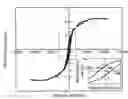
FIG. 1 is a magnetic analysis diagram of the magnetic catalyst in one embodiment of the invention;
FIG. 2 is a thermo gravity analysis diagram of the cobalt amount chelated on the magnetic catalyst surface in one embodiment of the invention;
FIG. 3 shows the relationship between hydrogen releasing rate versus temperature of the magnetic catalyst in an NaBH4 solution in one embodiment of the invention;
FIG. 4 shows the relationship between hydrogen releasing rate versus time of the magnetic catalyst in an NaBH4 solution in one embodiment of the invention;
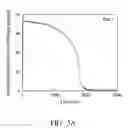
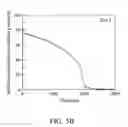
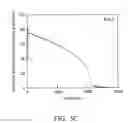
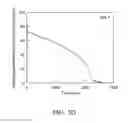
FIGS. 5A-5D show the relationships between hydrogen releasing rate versus time of the recycled magnetic catalysts in an NaBH4 solution in one embodiment of the invention;
FIGS. 6A-6D show the relationships between hydrogen releasing amount versus time of the recycled magnetic catalysts in an NaBH4 solution in one embodiment of the invention;
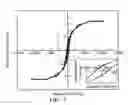
FIG. 7 is a magnetic analysis diagram of the magnetic catalyst in one embodiment of the invention;
FIG. 8 shows the relationship between hydrogen releasing rate versus time of the magnetic catalyst in an NaBH4 solution of different concentration in one embodiment of the invention;
FIGS. 9A-9D show the relationships between hydrogen releasing rate versus time of the recycled magnetic catalysts in an NaBH4 solution in one embodiment of the invention; and
FIGS. 10A-10D show the relationships between hydrogen releasing amount versus time of the recycled magnetic catalysts in an NaBH4 solution in one embodiment of the invention.
DETAILED DESCRIPTION OF THE INVENTION
The following description is of the best-contemplated mode of carrying out the invention. This description is made for the purpose of illustrating the general principles of the invention and should not be taken in a limiting sense. The scope of the invention is best determined by reference to the appended claims.
The invention adopts a chemical reducing and/or electroless plating process to form magnetic catalysts having a single or multi layered nano metal shell.
First, an anionic exchange resin having strong acid (e.g. —SO3H) or weak acid (e.g. COOH) groups on the surface is provided as a carrier. In one embodiment, the anionic exchange resin is ball-like with a diameter of about 100 μm to 200 μm. A suitable anionic exchange resin of the invention can be Amberlite IR-120 in hydrogen form commercially available from Supelco Chemical Co. (Bellefonte, Pa., USA) or Dowex® 50WX8 in hydrogen form commercially available from Dow Chemicals. In one embodiment, the anionic exchange resin can be other manners such as pillar-like, plate-like, or other general catalyst manners (e.g. porous zeolite).
The anionic exchange resin is added to a metal salt solution and stirred to chelate the metal ion to the acidic function groups on the resin surface. The metal salts include iron, cobalt, or nickel ions, and they become magnetic atom type after reduction. The metal salt solution concentration depends on the resin weight, and its concentration is one to five times the theoretical chelate amount. If the concentration is lower than this range, the chelate amount will be insufficient.
Subsequently, the resin is washed by deionized water to remove the unchelated metal ion. This step may improve the dispersity of the metal ion on the resin surface.
The washed resin is charged in a reducing agent solution, such that the chelated metal ion is reduced to atom type. As such, the nano metal shell of iron, cobalt, or nickel is formed to wrap the resin surface. The reducing agent includes sodium boronhydride, potassium boronhydride, dimethylamino borane, B2O6, hydrazine, formaldehyde, formic acid, sulfite, sodium hypophosphite, glucose, or sodium citrate.
The carrier of the invention is not only the anionic exchange resin, but also metal (such as stainless web, nickel web, or brass sheet) or surface activated non-metal (such as silicon dioxide, carbonanotube, or polymer). The non-metal surface can be activated by plasma or SnCl2/PdCl2 solution. The consideration for shape and the size of the metal and non-metal materials are similar to the described anionic exchange resin. The electroless plating solution is prepared as below. The metal salts of iron, cobalt, or nickel, the sodium citrate, and the maleic acid are dissolved to form a solution. The solution is added NaOH(aq) to tune its pH value to 9.5, heated to 80° C., and added a little reducing agent to complete the electroless plating solution. The metal or surface activated non-metal is added to the electroless plating solution to react and form a magnetic catalyst, wherein the thickness of the single-layered nano metal shell is controlled by the reaction time.
In addition to the single-layered magnetic catalyst, the invention may further form bi-layered or multi-layered magnetic catalysts by the electroless plating process.
First, the described anionic exchange resin, metal, or surface activated non-metal is provided as carrier. The carrier surface is then wrapped by a nano metal shell such as copper, iron, cobalt, nickel, ruthenium, palladium, or platinum, by described chemical reducing or electroless plating.
The electroless plating solution is prepared as follows. The metal salts of copper, iron, cobalt, nickel, ruthenium, palladium, or platinum, the sodium citrate, and the maleic acid are dissolved to form a solution. The solution is added NaOH(aq) to tune its pH value to 9.5, heated to 80° C., and added a little reducing agent to complete the electroless plating solution.
The carrier having a surface wrapped by the nano metal shell is added to the electroless plating solution to react for forming another nano metal shell wrapping the original nano metal shell. The magnetic catalyst is washed to remove residue solvent and dried to complete a magnetic catalyst having a bi-layered nano metal shell. Note that at least one of the inner and outer shells must be magnetic metal such as iron, cobalt, or nickel to form the magnetic catalyst. The catalyst has both advantages of the two metals. For example, ruthenium is the most efficient hydrogen releasing catalyst known and iron, cobalt, and nickel are magnetic. The magnetic catalyst prepared by the method of the invention, having the nano nickel inner-shell and the nano ruthenium outer-shell, will simultaneously have the advantages of fast hydrogen releasing rate and being magnetic. In another embodiment, the magnetic catalyst has the nano ruthenium inner-shell and the nano nickel outer-shell, and the nickel outer-shell only partially wraps the ruthenium inner-shell to prevent decreasing the catalyst effect of the ruthenium.
Furthermore, the magnetic catalyst having tri-layered, terta-layered, or more layered nano metal shells can be prepared by repeating the electroless plating process. However, because diminished catalyst activity for the wrapped part of the inner metal shell, the shell number is preferably less than five.
The magnetic catalyst can be applied in a hydrogen supply device. The hydrogen supply device with the magnetic catalyst of the invention has stable hydride solution in an alkalinity condition therein, and releases hydrogen after the magnetic catalyst of the invention is added. The hydride solution includes LiAlH4, NaAlH4, Mg(AlH4)2, Ca(AlH4)2, LiBH4, NaBH4, KBH4, Be(BH44)2, Mg(BH4)2, Ca(BH4)2, LiH, NaH, MgH2, or CaH2. In one embodiment, the hydride is a mild hydride such as NaBH4, KBH4, NH3BH3, and the likes. Other hydrides reacting violently with water are used to assist an initial hydrogen releasing rate, and not for stable and long-term hydrogen releasing rate purposes
The described hydrogen supply device can be further connected to a fuel cell or other device needing hydrogen. The magnetic catalyst is easily recycled by a magnet after use. The recycled magnetic catalyst is ready to be reused after simply washing the catalyst surface to remove the deposition from the hydride.
EXAMPLES
Example 1
30 g of an anionic exchange resin (IR-120, commercially available from Supelco Chemical Co.) was added to a cobalt chloride solution (CoCl2.6H2O, 8.992 g/dL), and stirred for 60 rpm at room temperature, such that the acidic function of the resin surface chelated the cobalt ion. The unchelated cobalt ion on the resin surface was then washed by deionized water. The washed resin was added to an NaBH4 solution to reduce chelated cobalt ion, thereby forming a nano cobalt shell wrapping the resin surface. The resin was then washed by deionized water and dried at room temperature, and analyzed by SEM and XPS to determine the magnetic catalyst having a single-layered nano cobalt shell.
The magnetic performance of the catalyst was shown in FIG. 1. As shown in FIG. 2, the chelated cobalt amount on the catalyst surface was about 30%. While the magnetic catalyst was added in 1.32N of the NaBH4 solution, the hydrogen releasing reaction occurred in different rates at different temperatures as shown in FIG. 3. The hydrogen releasing system without control of the temperature thereof had a rate versus time relation as shown in FIG. 4.
The magnetic catalyst was recycled after the hydrogen releasing reaction was completed. The recycled magnetic catalyst was washed by deionized water to repeat the described hydrogen releasing reaction. As shown in FIGS. 5A-5D, the first hydrogen releasing reaction (FIG. 5A), the second hydrogen releasing reaction after the magnetic catalyst was recycled once (FIG. 5B), the third hydrogen releasing reaction after the magnetic catalyst was recycled twice (FIG. 5C), and the fourth hydrogen releasing reaction after the magnetic catalyst was recycled three times (FIG. 5D) all had similar hydrogen releasing rate. As shown in FIGS. 6A-6D, the first hydrogen releasing reaction (FIG. 6A), the second hydrogen releasing reaction after the magnetic catalyst was recycled once (FIG. 6B), the third hydrogen releasing reaction after the magnetic catalyst was recycled twice (FIG. 6C), and the fourth hydrogen releasing reaction after the magnetic catalyst was recycled three times (FIG. 6D) all had almost 100% hydrogen releasing amount before 2000 seconds of the hydrogen releasing reaction.
Example 2
25 g of an anionic exchange resin (50WX8, commercially available from Dow Chemicals) was added to 0.25 L of a ruthenium chloride solution (RuCl3.xH2O, 2 g/dL), and stirred for 60 rpm at room temperature, such that the acidic function of the resin surface chelated the ruthenium ion. The unchelated ruthenium ion on the resin surface was then washed by deionized water. The washed resin was added to an NaBH4 solution to reduce chelated ruthenium ion, thereby forming a nano ruthenium shell wrapping the resin surface. The resin was then washed by deionized water and dried at room temperature, and analyzed by SEM and XPS to determine the magnetic catalyst having a single-layered nano ruthenium shell.
Subsequently, 2.62 g/dL of NiCl2.H2O, 4 g/dL of sodium citrate (Na3C6H5O7. 2H2O) as a complexing agent, and 0.8 g/dL of maleic acid as a protective agent were weighted and dissolved in water to form 0.1 L of a solution. The solution was added NaOH(aq) or NH3(aq) to tune its pH value to 8.5 to 9.5, heated to 80° C., and added 2.5 mL/dL of hydrazine (N2H4.H2O) as a reducing agent to complete the electroless plating solution.
The magnetic catalyst having a single-layered nano ruthenium shell was added to the electroless plating solution to react for 60 minutes, thereby forming a nano nickel shell on the nano ruthenium shell. The resin was then washed by deionized water and dried at room temperature, and analyzed by SEM and XPS to determine the magnetic catalyst having a bi-layered nano ruthenium-nickel shell.
Subsequently, 2.62 g/dL of RuCl3.H2O, 4 g/dL of sodium citrate (Na3C6H5O7. 2H2O) as a complexing agent, and 0.8 g/dL of maleic acid as a protective agent were weighted and dissolved in water to form 0.1 L of a solution. The solution was added NaOH(aq) or NH3(aq) to tune its pH value to 8.5 to 9.5, heated to 80° C., and added 2.5 mL/dL of hydrazine (N2H4.H2O) as a reducing agent to complete the electroless plating solution.
The magnetic catalyst having a bi-layered nano ruthenium-nickel shell was added to the electroless plating solution to react for 60 minutes, thereby forming a nano ruthenium shell on the nano nickel shell. The resin was then washed by deionized water and dried at room temperature, and analyzed by SEM and XPS to determine the magnetic catalyst having a tri-layered nano ruthenium-nickel-ruthenium shell.
The magnetic performance of the catalyst was shown in FIG. 7. While the magnetic catalyst was added in 1 wt % to 25 wt % of an NaBH4 solution, a stable hydrogen releasing reaction occurred as shown in FIG. 8.
The magnetic catalyst was recycled after the hydrogen releasing reaction. The recycled magnetic catalyst was washed by deionized water to repeat the described hydrogen releasing reaction. As shown in FIGS. 9A-9D, the first hydrogen releasing reaction (FIG. 9A), the second hydrogen releasing reaction after the magnetic catalyst was recycled once (FIG. 9B), the third hydrogen releasing reaction after the magnetic catalyst was recycled twice (FIG. 9C), and the fourth hydrogen releasing reaction after the magnetic catalyst was recycled three times (FIG. 9D) all had similar hydrogen releasing rate. As shown in FIGS. 10A-10D, the first hydrogen releasing reaction (FIG. 10A), the second hydrogen releasing reaction after the magnetic catalyst was recycled once (FIG. 10B), the third hydrogen releasing reaction after the magnetic catalyst was recycled twice (FIG. 10C), and the fourth hydrogen releasing reaction after the magnetic catalyst was recycled three times (FIG. 10D) all had almost 100% hydrogen releasing amount before 2000 seconds of the hydrogen releasing reaction.
While the invention has been described by way of example and in terms of the preferred embodiments, it is to be understood that the invention is not limited to the disclosed embodiments. To the contrary, it is intended to cover various modifications and similar arrangements (as would be apparent to those skilled in the art). Therefore, the scope of the appended claims should be accorded the broadest interpretation so as to encompass all such modifications and similar arrangements.
Claims
What is claimed is:1. A magnetic catalyst, comprising:
a carrier; and
a first nano metal shell wrapping the carrier surface,
wherein the first nano metal shell is iron, cobalt, or nickel.
2. The magnetic catalyst as claimed in claim 1, wherein the carrier comprises strong-acid or weak-acid anionic exchange resin, metal, or surface activated non-metal.
3. The magnetic catalyst as claimed in claim 1 is applied in a hydrogen supply device.
4. The magnetic catalyst as claimed in claim 3, wherein the hydrogen supply device is connected to a fuel cell.
5. A magnetic catalyst, comprising:
a carrier;
a first nano metal shell wrapping the carrier; and
a second nano metal shell wrapping the first nano metal shell,
wherein the first and second nano metal shells have different compositions and at least one of the first and second nano metal shells is iron, cobalt, or nickel.
6. The magnetic catalyst as claimed in claim 5, wherein the carrier comprises strong-acid or weak-acid anionic exchange resin, metal, or surface activated non-metal.
7. he magnetic catalyst as claimed in claim 5, wherein the first and second nano metal shells comprise copper, iron, cobalt, nickel, ruthenium, palladium, or platinum.
8. The magnetic catalyst as claimed in claim 5, being applied in a hydrogen supply device.
9. The magnetic catalyst as claimed in claim 8, wherein the hydrogen supply device is connected to a fuel cell.
10. A method for forming a magnetic catalyst, comprising:
providing a carrier; and
forming a first nano metal shell wrapping the carrier surface,
wherein the first nano metal shell is iron, cobalt, or nickel.
11. The method as claimed in claim 10, wherein the carrier comprises strong-acid or weak-acid anionic exchange resin, metal, or surface activated non-metal.
12. The method as claimed in claim 11, wherein the carrier is strong-acid or weak-acid anionic exchange resin, and the step of forming the first nano metal shell wrapping the carrier surface is chemical reducing.
13. The method as claimed in claim 11, wherein the carrier is metal or surface activated non-metal, and the step of forming the first nano metal shell wrapping the carrier surface is electroless plating.
14. A method for forming a magnetic catalyst, comprising:
providing a carrier;
forming a first nano metal shell wrapping the carrier surface; and
forming a second nano metal shell wrapping the first nano metal shell,
wherein the first and second nano metal shells have different compositions and at least one of the first and second nano metal shells is iron, cobalt, or nickel.
15. The method as claimed in claim 14, wherein the first and second nano metal shells comprise copper, iron, cobalt, nickel, ruthenium, palladium, or platinum.
16. The method as claimed in claim 14, wherein the carrier comprises strong-acid or weak-acid anionic exchange resin, metal, or surface activated non-metal.
17. The method as claimed in claim 16, wherein the carrier is strong-acid or weak-acid anionic exchange resin, and the step of forming the first nano metal shell wrapping the carrier surface is chemical reducing.
18. The method as claimed in claim 16, wherein the carrier is metal or surface activated non-metal, and the step of forming the first nano metal shell wrapping the carrier surface is electroless plating.
19. The method as claimed in claim 14, wherein the step of forming the second nano metal shell wrapping the first nano metal shell is electroless plating.
Images & Drawings included:




Sources:
- United States Patent and Trademark Office - verify current appl. status at the USPTO↗
Similar patent applications:
Recent applications in this class:
- » 20230364596 2023-11-16
CATALYST SUBSTRATE COMPRISING MAGNETIC MATERIAL ADAPTED FOR INDUCTIVE HEATING - » 20230311107 2023-10-05
HONEYCOMB STRUCTURE, ELECTRICALLY HEATED CARRIER, AND EXHAUST GAS PURIFICATION DEVICE - » 20230249170 2023-08-10
HONEYCOMB STRUCTURE, ELECTRICALLY HEATING SUPPORT, AND EXHAUST GAS PURIFICATION DEVICE - » 20230166247 2023-06-01
A STRUCTURED CATALYST - » 20230158482 2023-05-25
Emissions Treatment Articles With Magnetic Susceptor Material and Catalytic Material - » 20230016907 2023-01-19
HONEYCOMB STRUCTURE AND EXHAUST GAS PURIFYING DEVICE - » 20220410136 2022-12-29
Honeycomb structure, exhaust gas purification catalyst, and exhaust gas purification system - » 20220355286 2022-11-10
P-N HETEROJUNCTION COMPOSITE MATERIAL SUPPORTED ON SURFACE OF NICKEL FOAM, PREPARATION METHOD THEREFOR AND APPLICATION THEREOF - » 20210170384 2021-06-10
Molybdenum sulfide nanosheets decorated with iron phosphide for hydrogen gas evolution - » 20210162390 2021-06-03
Catalysts for electrochemical COreduction and associated methods
Recent applications for this Assignee:
- » 20250176079 2025-05-29
MICROWAVE ANNEALING PROCESS AND MICROWAVE ANNEALING DEVICE - » 20250175107 2025-05-29
PROCESSOR, MOTOR CONTROL DEVICE AND CONTROL METHOD FOR CONTROLLING MOTOR - » 20250174609 2025-05-29
PACKAGE STRUCTURE AND MANUFACTURING METHOD THEREOF - » 20250173998 2025-05-29
DEVICE AND METHOD FOR PREDICTING COLLISION AREA OF HIGH SPEED SMALL OBJECT - » 20250173300 2025-05-29
SEMICONDUCTOR DEVICES AND COMMUNICATION METHOD BETWEEN SEMICONDUCTOR DEVICES - » 20250173184 2025-05-29
DEVICE AND METHOD FOR RECOMMENDING PIPELINES FOR ENSEMBLE MODEL - » 20250172453 2025-05-29
MONITORING SYSTEM AND METHOD - » 20250171867 2025-05-29
MICROWAVE ANNEALING PROCESS AND MICROWAVE ANNEALING DEVICE - » 20250171664 2025-05-29
DOUBLE-SIDED ADHESIVE AND MULTILAYER STRUCTURE - » 20250171643 2025-05-29
POLYMER AND COATING MATERIAL