Crystalline minocycline base and processes for its preparation
US20100286417A1
2010-11-11
12/528,209
2008-02-22
✅ Patent granted
US 8,258,327 B2
2012-09-04
WO; PCT/GB2008/000625; 20080222
WO; WO2008/102161; 20080828
Timothy Thomas | Dennis Heyer
2028-09-13
Abstract:
The invention provides crystalline minocycline base. In particular, three crystalline polymorphic forms, designated Form I, Form II and Form III, of minocycline base are provided. These are characterised by XRD and IR data. Processes for preparing the new polymorphic forms are also provided. For example, Form I is prepared by dissolving and/or suspending amorphous minocycline base in an organic solvent chosen from ethers followed by crystallisation from the mixture.
Inventors:
- Zita Mendes 10 🇵🇹 Lisbon, Portugal
- Jose Rafael Antunes 3 🇵🇹 Setubal, Portugal
- Susana Marto 3 🇵🇹 Costa da Caparica, Portugal
- William Heggie 2 🇵🇹 Pamela, Portugal
Assignee:
- HOVIONE INTER LIMITED 7 🇨🇭 Lucerne 7, Switzerland
- Hovlone Inter Limited 1 🇨🇭 Lucerne, Switzerland
Interested in similar patents?
Get notified when new applications in this technology area are published.
Classification:
A61P31/04 » CPC further
Antiinfectives, i.e. antibiotics, antiseptics, chemotherapeutics Antibacterial agents
C07C215/88 IPC
Compounds containing amino and hydroxy groups bound to the same carbon skeleton having hydroxy groups and amino groups bound to carbon atoms of six-membered aromatic rings of the same carbon skeleton having amino groups bound to carbon atoms of six-membered aromatic rings being part of condensed ring systems being formed by at least three rings
C07C213/10 IPC
Preparation of compounds containing amino and hydroxy, amino and etherified hydroxy or amino and esterified hydroxy groups bound to the same carbon skeleton Separation; Purification; Stabilisation; Use of additives
C07C237/26 » CPC main
Carboxylic acid amides, the carbon skeleton of the acid part being further substituted by amino groups having the carbon atom of at least one of the carboxamide groups bound to a carbon atom of a ring other than a six-membered aromatic ring of the carbon skeleton of a ring being part of a condensed ring system formed by at least four rings, e.g. tetracycline
Description
The present invention provides crystalline minocycline base including three new polymorphic forms thereof, and also describes a process to obtain pure minocycline base in a crystalline form wherein all the impurities are controlled, especially the impurity 4-epi minocycline, to very low levels.
BACKGROUND OF THE INVENTION
Minocycline is a member of the broad spectrum tetracycline antibiotics, which has a broader spectrum than the other members of this group of compounds.
Minocycline is widely used in therapy, primarily to treat acne and rosacea at a once daily dose of 100 mg.
The preparation of minocycline is disclosed in U.S. Pat. No. 3,148,212; U.S. Pat. No. 3,226,436 and U.S. Pat. No. 4,849,136.
Minocycline may be used as base per se or as non-toxic acid addition salts of organic or inorganic acids, e.g. sulfonic, trichloroacetic or hydrochloric acid.
Minocycline base, previously known before this invention only in the amorphous form, is not as stable as the corresponding acid addition salts and hence, methods to provide a stable form of minocycline base which makes its use promising as an active ingredient have been examined.
DETAILED DESCRIPTION
The present invention describes crystalline minocycline base, including new polymorphic forms of crystalline minocycline base and novel processes for their preparation.
The present inventors have now found that, surprisingly, minocycline base can in fact be provided in a stable crystalline form. They have also found three new polymorphic forms of crystalline minocycline base.
Accordingly, in its broadest aspect, the invention provides crystalline minocycline base.
In one aspect, polymorphic Form I of crystalline minocycline base is provided. That this is a crystalline form of minocycline base, which up until now has only been known in its amorphous form, is demonstrated by physical attributes whose application in this area is well known to those skilled in the art.
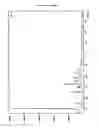
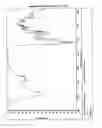
Crystalline Form I of minocycline base has a characteristic X-ray diffraction pattern shown in FIG. 1 and an infrared spectrum of FIG. 2.
Crystalline Form 1 is characterised by an X-ray diffraction pattern having peaks at 5.2, 7.6, 8.8, 12.8, 14.5, 15.0, 15.3, 15.9, 16.4, 17.8, 19.3, 19.5, 20.7, 21.3, 21.8, 22.3, 23.1, 24.0, 25.3, 25.7 and 26.5±0.2° 2θ, as given in FIG. 1. It is further characterised by an infrared spectrum having peaks at 1646, 1602, 1581, 1470, 1397, 1364, 1286, 1218, 1182, 1134, 1072, 1061, 1023, 1001, 969, 950, 874, 850, 716, 636, 620 and 545±4 cm−1 as given in FIG. 2.
In another aspect, the invention provides a process for the preparation of polymorphic Form I of crystalline minocycline base, which process comprises dissolving and/or suspending amorphous minocycline base in an organic solvent chosen from ethers followed by crystallization from the mixture.
Preferably, the process comprises suspending amorphous minocycline base in an organic solvent chosen from ethers, cooling the heterogeneous mixture to a temperature of from 0° C. to 30° C., the preferred range being from 10° C. to 15° C. and isolating Form I from the reaction mixture.
Any suitable ether solvent may be used, but is preferred to use methyl tert-butyl ether.
In another aspect, polymorphic Form II of crystalline minocycline base is provided. That this is a crystalline form of minocycline base, which up until now has only been known in its amorphous form, is demonstrated by physical attributes whose application in this area is well known to those skilled in the art.
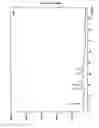
Crystalline Form II of minocycline base has a characteristic X-ray diffraction pattern shown in FIG. 3 and an infrared spectrum of FIG. 4.
Crystalline Form II is characterised by an X-ray diffraction pattern having peaks at 3.4, 6.8, 8.0, 10.0, 13.0, 13.8, 14.6, 14.9, 15.5, 16.1, 17.6, 17.8, 18.6, 19.5, 20.2, 20.6, 21.9, 22.6, 23.9, 24.2, 25.4, 26.3, 27.1, 27.5, 28.0 and 29.1±0.2° 2θ, as given in FIG. 3. It is further characterised by an infrared spectrum having peaks at 1644, 1607, 1582, 1469, 1453, 1413, 1396, 1358, 1287, 1251, 1217, 1186, 1166, 1136, 1061, 999, 970, 874, 716, 621 and 585±4 cm−1, as given in FIG. 4.
In another aspect, a process for the preparation of polymorphic Form II of crystalline minocycline base comprises dissolving and/or suspending amorphous minocycline base in an organic solvent chosen from esters followed by crystallization from the mixture.
Preferably, the process comprises suspending amorphous minocycline base in an organic solvent chosen from esters, cooling the heterogeneous mixture to a temperature of from 0° C. to 30° C., the preferred range being from 10° C. to 15° C. and isolating the Form II from the reaction mixture.
Any suitable ester may be used as solvent, but it is preferred to use ethyl acetate.
In another aspect, polymorphic Form III of crystalline minocycline base is provided. That this is a crystalline form of minocycline base, which up until now has only been known in its amorphous form, is demonstrated by physical attributes whose application in this area is well known to those skilled in the art.
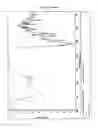
Crystalline Form III of minocycline base has a characteristic X-ray diffraction pattern shown in FIG. 5 and an infrared spectrum of FIG. 6.
Crystalline Form III is characterised by an X-ray diffraction pattern having peaks at 6.5, 10.0, 13.2, 15.1, 16.5, 17.9, 19.6, 20.2, 21.1, 22.3, 23.7, 24.8, 26.4, 28.1 and 30.5±0.2° 2θ, as given in FIG. 5. It is further characterised by an infrared spectrum having peaks at 1647, 1605, 1581, 1470, 1399, 1307, 1286, 1251, 1216, 1195, 1179, 1136, 1094, 1058, 1024, 1000, 973, 950, 870, 825, 806, 716, 680, 634, 615, 584, 515, 496 and 413±4 cm−1, as given in FIG. 6.
In another aspect, a process for the preparation of polymorphic Form III of crystalline minocycline base comprises dissolving and/or suspending amorphous minocycline base in an organic solvent chosen from alcohols followed by crystallization from the mixture.
Preferably, the process comprises suspending amorphous minocycline base in an organic solvent chosen from alcohols, cooling the heterogeneous mixture to a temperature of from 0° C. to 30° C., the preferred range being from 10° C. to 15° C. and isolating the Form III from the reaction mixture.
Any suitable alcohol may be used a solvent, but it is preferred to use ethanol.
The crystalline minocycline bases in Forms I, II and III obtained by the processes described above have a high purity with all the impurities controlled, especially 4-epi minocycline, which is typically below 1.2% w/w (ie by weight of the base).
In another aspect, therefore, the invention provides crystalline minocycline base substantially free of 4-epi minocycline. By substantially free, we mean that no more than about 1.2% impurity by weight of the polymorph (w/w) is present. Preferably the impurity level is less than 1.2% w/w.
In a further aspect, therefore, the invention provides crystalline minocycline base comprising less than 1.2% w/w (by weight of the base) of 4-epi minocycline.
Another aspect of the invention provides processes for preparing amorphous minocycline base on an industrial scale, wherein the minocycline base is obtained in high purity, especially maintaining low levels of the content of 4-epi-minocycline.
In one aspect, there is provided a process for preparing amorphous minocycline base, which process comprises spray drying a solution or suspension of minocycline, in an organic solvent, preferably chosen from methyl tert-butyl ether, dichloromethane or isopropyl acetate
A preferred process for preparing amorphous minocycline base comprises:
-
- 1) dissolving minocycline base in one or more organic solvents to form a solution or a suspension
- 2) spray drying the solution or suspension obtained in step 1)
- 3) optionally drying the amorphous minocycline base so obtained, if necessary under vacuum, at a temperature of from 25° C. to 45° C., preferably from 35° C. to 45° C.
Any suitable solvent may be used, and preferred solvents include methyl tert-butyl ether, dichloromethane or isopropyl acetate.
Any suitable technique for the spray drying may be used. For example, conventional spray drying techniques (as will be clear to those skilled in the art) may be employed.
EXAMPLES
The following examples are provided to illustrate the present invention and do not in any way limit its scope.
Example 1
Preparation of Form I of Crystalline Minocycline Base
Amorphous minocycline base (0.5 g) is suspended in methyl tert-butyl ether (4 ml) and the resulting heterogeneous mixture stirred for about 2 hours at a temperature between 0° C. and 30° C., preferably between 10° C. and 15° C.
The product is filtered, washed with methyl tert-butyl ether (1 ml) and dried under vacuum at about 45° C.-50° C. to yield crystalline minocycline base.
Yield: 0.38 g
The XRPD pattern and infrared are presented in FIG. 1 and FIG. 2.
4-epi minocycline: 0.06% in area (HPLC)
Melting point 113° C.
Example 2
Preparation of Form I of Crystalline Minocycline Base
Amorphous minocycline base (0.5 g) is dissolved in methyl tert-butyl ether (6 ml) and the resulting solution stirred at a temperature between 0° C. and 30° C., preferably between 10° C. and 15° C.
After about 5 minutes Form I of crystalline minocycline base precipitates from the solution.
The resulting suspension is filtered, washed with methyl tert-butyl ether (1 ml) and dried under vacuum at about 45° C.-50° C. to yield Form I of crystalline minocycline base.
Yield: 0.45 g.
Melting point: 113° C.
Example 3
Preparation of Form II of Crystalline Minocycline Base
Amorphous minocycline base (20 g) is suspended in ethyl acetate (160 ml) and the resulting heterogeneous mixture stirred for about 3 hours at a temperature between 0° C. and 30° C., preferably between 10° C. and 15° C.
The product is filtered, washed with ethyl acetate (10 ml) and dried under vacuum at about 45° C.-50° C. to yield crystalline minocycline base.
Yield: 17.4 g
HPLC purity: 99.5% in area
4-epi minocycline: 0.11% in area.
Melting point: 187° C.
The XRPD pattern and infrared are presented in FIG. 3 and FIG. 4.
Example 4
Preparation of Form II of Crystalline Minocycline Base
Amorphous minocycline base (5 g) is dissolved in ethyl acetate (40 ml) and the resulting solution stirred for about 3 hours at a temperature between 0° C. and 30° C., preferably between 10° C. and 15° C. whereupon Form II of crystalline minocycline base precipitated.
The product is filtered, washed with ethyl acetate (5 ml) and dried under vacuum at about 45° C.-50° C. to yield Form II of crystalline minocycline base.
Yield: 3.2 g
Melting point: 187° C.
Example 5
Preparation of Form III of Minocycline Base
Amorphous minocycline base (0.5 g) is suspended in ethyl alcohol (2.5 ml) and the resulting heterogeneous mixture stirred for at least 10 hours at a temperature between 0° C. and 30° C. preferably between 10° C. and 15° C.
The product is filtered, washed with ethyl alcohol (0.5 ml) and dried under vacuum at about 45° C.-50° C. to yield Form III of crystalline minocycline base.
Yield: 0.44 g
The XRPD pattern and infrared are presented in FIG. 5 and FIG. 6.
4-epi minocycline: 0.12% in area (HPLC)
Melting point: 193°.
Example 6
Preparation of Amorphous Minocycline Base
A solution of minocycline base in dichloromethane, isopropyl acetate or methyl tert-butyl ether was isolated by spray drying in conventional spray drying equipment using an inlet temperature between 45° C. and 105° C., and an outlet temperature between 30° C. and 75° C.
The isolated product can be used directly to obtain any of the Forms of crystalline minocycline base or can be subjected to a post drying step under vacuum at about 45° C. to yield pure amorphous minocycline base.
Yield: 24.5 g
HPLC purity: 98.6% in area
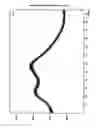
The XRPD pattern and Infra red are presented in FIG. 7 and FIG. 8.
Claims
1. Minocycline base characterized by being crystalline.
2. Crystalline minocycline base, Form I, characterised by an X-ray diffraction pattern having peaks at 5.2, 7.6, 8.8, 12.8, 14.5, 15.0, 15.3, 15.9, 16.4, 17.8, 19.3, 19.5, 20.7, 21.3, 21.8, 22.3, 23.1, 24.0, 25.3, 25.7 and 26.5±0.2° 2θ, as given in FIG. 1.
3. Crystalline minocycline base, Form I, according to claim 2 further characterized by an infrared spectrum having peaks at 1646, 1602, 1581, 1470, 1397, 1364, 1286, 1218, 1182, 1134, 1072, 1061, 1023, 1001, 969, 950, 874, 850, 716, 636, 620 and 545±4 cm−1 as given in FIG. 2.
4. A process for preparing crystalline minocycline base, Form I, which process comprises dissolving and/or suspending amorphous minocycline base in an organic solvent chosen from ethers followed by crystallization from the mixture.
5. A process according to claim 4, wherein the organic solvent is methyl tert-butyl ether.
6. Crystalline minocycline base, Form II, characterised by an X-ray diffraction pattern having peaks at 3.4, 6.8, 8.0, 10.0, 13.0, 13.8, 14.6, 14.9, 15.5, 16.1, 17.6, 17.8, 18.6, 19.5, 20.2, 20.6, 21.9, 22.6, 23.9, 24.2, 25.4, 26.3, 27.1, 27.5, 28.0 and 29.1±0.2° 2θ, as given in FIG. 3.
7. Crystalline minocycline base, Form II, according to claim 6 further characterised by an infrared spectrum having peaks at 1644, 1607, 1582, 1469, 1453, 1413, 1396, 1358, 1287, 1251, 1217, 1186, 1166, 1136, 1061, 999, 970, 874, 716, 621 and 585±4 cm−1, as given in FIG. 4.
8. A process for preparing crystalline minocycline, base Form II, which process comprises dissolving and/or suspending amorphous minocycline base in an organic solvent chosen from esters followed by crystallization from the mixture.
9. A process according to claim 8, wherein the organic solvent is ethyl acetate.
10. Crystalline minocycline base, Form III, characterised by an X-ray diffraction pattern having peaks at 6.5, 10.0, 13.2, 15.1, 16.5, 17.9, 19.6, 20.2, 21.1, 22.3, 23.7, 24.8, 26.4, 28.1 and 30.5±0.2° 2θ, as given in FIG. 5.
11. Crystalline minocycline base, Form III, according to claim 10 further characterised by an infrared spectrum having peaks at 1647, 1605, 1581, 1470, 1399, 1307, 1286, 1251, 1216, 1195, 1179, 1136, 1094, 1058, 1024, 1000, 973, 950, 870, 825, 806, 716, 680, 634, 615, 584, 515, 496 and 413±4 cm−1, as given in FIG. 6.
12. A process for preparing crystalline minocycline base, Form III, which process comprises dissolving and/or suspending amorphous minocycline base in an organic solvent chosen from alcohols followed by crystallization from the mixture.
13. A process according to claim 12, wherein the organic solvent is ethanol.
14. A process for preparing amorphous minocycline base, which process comprises spray drying a solution of minocycline in an organic solvent.
15. A process according to claim 14, wherein the solvent is methyl tert-butyl ether, dichloromethane or isopropyl acetate.
16. A process according to any one of claim 4-5, 8-9 or 12-13, wherein the content of 4-epi minocycline is below 1.2% w/w.
17. Crystalline minocycline base substantially free of 4-epi minocycline.
18. Crystalline minocycline base according to claim 16 comprising less than 1.2% w/w of 4-epi minocycline.
Images & Drawings included:


Sources:
- United States Patent and Trademark Office - verify current appl. status at the USPTO↗
Similar patent applications:
Recent applications in this class:
- » 20250129014 2025-04-24
Modified Tetracycline for Treatment of Alcohol Use Disorder, Pain and Other Disorders Involving Potential Inflammatory Processes - » 20240279160 2024-08-22
METHOD FOR SYNTHESIZING 9-AMINOMETHYL TETRACYCLINE COMPOUNDS - » 20230357135 2023-11-09
CRYSTALLINE FORMS OF OMADACYCLINE, METHODS OF SYNTHESIS THEREOF AND METHODS OF USE THEREOF - » 20230192598 2023-06-22
NOVEL MODIFIED TETRACYCLINES FOR TREATMENT OF ALCOHOL USE DISORDER, PAIN AND OTHER DISORDERS INVOLVING POTENTIAL INFLAMMATORY PROCESSES - » 20230174464 2023-06-08
MYRISTOYL DERIVATIVES OF 9-AMINO-DOXYCYCLINE FOR TARGETING CANCER STEM CELLS AND PREVENTING METASTASIS - » 20230127462 2023-04-27
Modified tetracycline for treatment of alcohol use disorder, pain and other disorders involving potential inflammatory processes - » 20210403416 2021-12-30
Novel Modified Tetracyclines for Treatment of Alcohol Use Disorder, Pain and Other Disorders Involving Potential Inflammatory Processes - » 20210395189 2021-12-23
SUBSTITUTED TETRACYCLINE COMPOUNDS - » 20200392071 2020-12-17
Gene cluster for the biosynthetic production of tetracycline compounds in a heterologous host - » 20200024223 2020-01-23
CRYSTALLINE SALTS OF (4S,4AS,5AR,12AS)-4-DIMETHYLAMINO-3,10,12,12A-TETRAHYDROXY-7-[(METHOXY(METHYL)AMINO)-METHYL]-1,11-DIOXO-1,4,4A,5,5A,6,11,12A-OCTAHYDRO-NAPHTHACENE-2-CARBOXYLIC ACID AMIDE AND METHODS OF USING THE SAME
Recent applications for this Assignee:
- » 20140200341 2014-07-17
Method for the Production of Fluoromethyl Esters of Androstan-17 beta Carboxylic Acids - » 20140155648 2014-06-05
Manufacture of a triiodinated contrast agent - » 20120181201 2012-07-19
Topical Formulation Containing a Tetracycline and a Method of Treating Skin Infections Using the Same - » 20120028928 2012-02-02
Process for isolating tigecycline and tigecycline made therefrom - » 20100240916 2010-09-23
Process for obtaining steroidal phosphate compounds - » 20090326227 2009-12-31
Process for the Preparation of Biphosphonic Acids and Salts Thereof