Backsheet of a solar cell
US20100288342A1
2010-11-18
12/768,125
2010-04-27
✅ Patent granted
US 8,569,611 B2
2013-10-29
-
-
Douglas McGinty
Ming Chow | Sinorica, LLC
2031-06-01
Abstract:
The present invention discloses a backsheet of a solar cell. The backsheet of a solar cell comprises, sequentially from bottom to top, a bottom plastic layer, at least a first insulating layer, a conductive water-proof layer, at least a second insulating layer formed on the conductive water-proof layer, and a weather-resistant layer formed on the second insulating layer. The voltage-resistant ability of the weather-resistant layer is usually about one-third of that of the ordinary insulating layer and the weather-resistant layer is usually has the problem of pinhole which usually results in the defect of arc fail. Therefore, the second insulating layer, in the present invention, deposited between the conductive water-proof layer and the weather-resistant layer, can increase the voltage-resistant ability of the weather-resistant layer and to prevent the pinhole and the arc fail problem.
Assignee:
- NEXPOWER TECHNOLOGY CORP. 9 🇹🇼 Taichung County, Taiwan
Applicant:
Interested in similar patents?
Get notified when new applications in this technology area are published.
Classification:
H01L31/048 IPC
Semiconductor devices sensitive to infra-red radiation, light, electromagnetic radiation of shorter wavelength or corpuscular radiation and specially adapted either for the conversion of the energy of such radiation into electrical energy or for the control of electrical energy by such radiation; Processes or apparatus specially adapted for the manufacture or treatment thereof or of parts thereof; Details thereof adapted as photovoltaic [PV] conversion devices; PV modules or arrays of single PV cells Encapsulation of modules
B32B27/36 » CPC main
Layered products comprising synthetic resin comprising polyesters
B32B7/12 » CPC further
Layered products characterised by the relation between layers; Layered products characterised by the relative orientation of features between layers, or by the relative values of a measurable parameter between layers, i.e. products comprising layers having different physical, chemical or physicochemical properties; Layered products characterised by the interconnection of layers; Interconnection of layers using interposed adhesives or interposed materials with bonding properties
B32B15/08 » CPC further
Layered products comprising a layer of metal comprising metal as the main or only constituent of a layer, next to another layer of a of synthetic resin
B32B27/08 » CPC further
Layered products comprising synthetic resin as the main or only constituent of a layer, next to another layer of a of synthetic resin
B32B27/306 » CPC further
Layered products comprising synthetic resin comprising vinyl (co)polymers; comprising acrylic (co)polymers comprising vinyl acetate or vinyl alcohol (co)polymers
B32B27/308 » CPC further
Layered products comprising synthetic resin comprising vinyl (co)polymers; comprising acrylic (co)polymers comprising acrylic (co)polymers
B32B2270/00 » CPC further
Resin or rubber layer containing a blend of at least two different polymers
B32B2307/20 » CPC further
Properties of the layers or laminate having particular electrical or magnetic properties, e.g. piezoelectric
B32B2307/202 » CPC further
Properties of the layers or laminate having particular electrical or magnetic properties, e.g. piezoelectric Conductive
B32B2307/206 » CPC further
Properties of the layers or laminate having particular electrical or magnetic properties, e.g. piezoelectric Insulating
B32B2307/712 » CPC further
Properties of the layers or laminate; Other properties Weather resistant
B32B2307/7246 » CPC further
Properties of the layers or laminate; Other properties; Permeability to gases, adsorption; Non-permeable Water vapor barrier
B32B2307/7265 » CPC further
Properties of the layers or laminate; Other properties; Permeability to liquids, absorption Non-permeable
B32B2457/12 » CPC further
Electrical equipment Photovoltaic modules
H01L31/049 » CPC further
Semiconductor devices sensitive to infra-red radiation, light, electromagnetic radiation of shorter wavelength or corpuscular radiation and specially adapted either for the conversion of the energy of such radiation into electrical energy or for the control of electrical energy by such radiation; Processes or apparatus specially adapted for the manufacture or treatment thereof or of parts thereof; Details thereof adapted as photovoltaic [PV] conversion devices; PV modules or arrays of single PV cells; Encapsulation of modules Protective back sheets
Y10T428/31536 » CPC further
Stock material or miscellaneous articles; Composite [nonstructural laminate] Including interfacial reaction product of adjacent layers
Y10T428/3154 » CPC further
Stock material or miscellaneous articles; Composite [nonstructural laminate] Of fluorinated addition polymer from unsaturated monomers
Y10T428/31681 » CPC further
Stock material or miscellaneous articles; Composite [nonstructural laminate]; Of metal Next to polyester, polyamide or polyimide [e.g., alkyd, glue, or nylon, etc.]
H01L31/04 IPC
Semiconductor devices sensitive to infra-red radiation, light, electromagnetic radiation of shorter wavelength or corpuscular radiation and specially adapted either for the conversion of the energy of such radiation into electrical energy or for the control of electrical energy by such radiation; Processes or apparatus specially adapted for the manufacture or treatment thereof or of parts thereof; Details thereof adapted as photovoltaic [PV] conversion devices
B32B27/32 » CPC further
Layered products comprising synthetic resin comprising polyolefins
B32B27/30 IPC
Layered products comprising synthetic resin comprising vinyl (co)polymers; comprising acrylic (co)polymers
B32B15/00 IPC
Layered products comprising a layer of metal
B32B15/20 » CPC further
Layered products comprising a layer of metal comprising aluminium or copper
Description
BACKGROUND OF THE INVENTION
1. Field of the Invention
The present invention relates to a solar cell, more particularly relating to a backsheet of a solar cell.
2. Description of the Prior Art
The backsheet of a solar cell can protect the solar cell from water, moisture, and heat-distortion and provide the functions of insulating and bottom lining. The defects of the backsheet of the solar cell will results in a short lifetime of the solar cell. The micro-crystalline (C—Si) solar cell usually comprises the backsheet of the Tedlar/polyethylene terephthalate/Tedlar (TPT) or Tedlar/polyethylene terephthalate/ethylene-vinyl acetate (TPE) structure. The thin-film solar cell usually comprises the backsheet of Tedlar/aluminium/polyethylene terephthalate (TAP) or Tedlar/aluminium/polyethylene terephthalate/ethylene-vinyl acetate (TAPE) structure.
Please refer to FIG. 1, which represents a schematic view of a conventional backsheet of a solar cell. The backsheet 1 of a solar cell comprises, sequentially from bottom to top, a bottom plastic layer 20, a first insulating layer 22, a conductive water-proof layer 24, and a weather-resistant layer 28.
However, the voltage-resistant ability of the weather-resistant layer of the conventional backsheet is usually one-third of that of the normal insulating layer. Such configuration tends to result in the defect of arc fail if a pinhole occurred in the solar cell. The defect of pinhole can be prevented by increasing the thickness of the weather-resistant layer. However, the cost of the manufacturing of the backsheet will be therefore increased as well.
Please refer to FIG. 2, which represents a schematic view of another conventional backsheet of a solar cell. The backsheet 2 of a solar cell comprises, sequentially from bottom to top, a bottom plastic layer 20, a first insulating layer 22, a conductive water-proof layer 24, and a second insulating layer 26.
The second insulating layer 26 is known to comprise a better voltage-resistant ability and a less expense than the normal weather-resistant layer. And the defect of the arc fail can be prevented by increasing the thickness of the second insulating layer up to 50 μm (micrometer). However, the second insulating layer is not resistant to UV light and the defect of pinhole cannot be prevented if the second insulating layer is of single-layered configuration.
SUMMARY OF THE INVENTION
To solve the aforementioned shortcomings, the present invention provides a backsheet of a solar cell. The backsheet of a solar cell comprises, sequentially from bottom to top, a bottom plastic layer, at least a first insulating layer, a conductive water-proof layer, at least a second insulating layer and a weather-resistant layer.
The voltage-resistant ability of the weather-resistant layer is usually about one-third of that of the ordinary insulating layer and the weather-resistant layer is usually has the problem of pinhole. The second insulating layer, in the present invention, is therefore deposited between the conductive water-proof layer and the weather-resistant layer, so as to increase the voltage-resistant ability of the weather-resistant layer and to prevent the pinhole and the arc problem. When the second insulating layer is made from polyethylene terephthalate, the voltage-resistant ability of the weather-resistant layer is increased for 300 kV/mm. When the second insulating layer is made from ethylene-tetrafluoroethylene copolymer, the voltage-resistant ability of the weather-resistant layer is increased for 120 kV/mm.
Therefore, according to the present invention, the second insulating layer can increase the voltage-resistant ability and prevent the defect of pinhole and arc fail occurred in the conventional solar cell.
BRIEF DESCRIPTION OF THE DRAWINGS
The foregoing aspects and many of the attendant advantages of this invention will become more readily appreciated as the same becomes better understood by reference to the following detailed description, when taken in conjunction with the accompanying drawings, wherein:
FIG. 1 represents a schematic view of a conventional backsheet of a solar cell;
FIG. 2 represents a schematic view of another conventional backsheet of a solar cell;
FIG. 3 represents a schematic view of a backsheet of a solar cell according to the first preferred embodiment of the present invention;
FIG. 4 represents a schematic view of another backsheet of a solar cell according to the second preferred embodiment of the present invention.
DESCRIPTION OF THE PREFERRED EMBODIMENT
A detailed description of the present invention will be given below with reference to preferred embodiments thereof, so that a person skilled in the art can readily understand features and functions of the present invention after reviewing the contents disclosed herein.
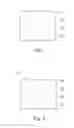
Please refer to FIG. 3, which is the schematic view of the backsheet of a solar cell according to the first preferred embodiment of the present invention. The backsheet of a solar cell 14 comprises a bottom plastic layer 20, at least a first insulating layer 22, a conductive water-proof layer 24, at least a second insulating layer 26 and a weather-resistant layer 28. In addition, the bottom plastic 20, the first insulating layer 22, the conductive water-proof layer 24, the second insulating layer 26 and the weather-resistant layer 28 are formed sequentially from bottom to top.
It is noted that the first insulating layer 22 and the second insulating layer 26 can both of a single-layer or multiple-layer conformation. For an example of illustration, the first insulating layer 22 and the second insulating layer 26 of this embodiment are nonetheless of the single-layer conformation as depicted in the FIG. 3.
The bottom plastic layer 20 can comprise a structure of ethylene-vinyl acetate (EVA), polyethylene (PE), polypropylene (PP) or a structure tending to adhere to ethylene-vinyl acetate. And the bottom plastic layer 20 comprises vinyl acetate (VA) of 2-33 percents by weight. The thickness of the bottom plastic layer 20 ranges from 0.1 to 500 μm (micrometer), and preferably ranges from 25 to 200 μm (micrometer).
The bottom plastic layer 20 can also be made from a polyethylene terephthalate (PET)-based plastic or an acrylic-based plastic. In this scenario, the thickness of the bottom plastic layer 20 ranges from 0.01 to 50 μm (micrometer), and preferably ranges from 1 to 15 μm (micrometer).
The first insulating layer 22 can be made from polyethylene terephthalate (PET), or from the material whose dielectric voltage is at least 1 kV/mm. The thickness of the first insulating layer 22 ranges from 1 to 500 μm (micrometer), and preferably ranges from 25 to 330 μm (micrometer).
The conductive water-proof layer 24 can be made from aluminium (Al), other conductive water-proof metals, or other conductive water-proof alloys, and the moisture vapour transmission rate (MVTR) of the conductive water-proof layer 24 is no larger than (i.e. equals to or be smaller than) 0.5 g/m2·day and the resistivity of the conductive water-proof layer 24 is no larger than 1×10⁸ Ω·m The thickness of the conductive water-proof layer 24 ranges from 0.1 to 200 μm (micrometer), and preferably ranges from 5 to 50 μm (micrometer).
The second insulating layer 26 can be made from polyethylene terephthalate (PET), or from the material whose dielectric voltage is at least 1 kV/mm. The thickness of the second insulating layer 26 ranges from 1 to 500 μm (micrometer), and preferably ranges from 25 to 330 μm (micrometer).
The weather-resistant layer 28 can be made from polyvinyl fluoride (PVF), ethylene-tetrafluoroethylene copolymer (ETFE), polyvinylidene fluoride (PVDF), chlorotrifluoroethylene (CTFE), polyamide (PA), polyethylene terephthalate (PET) with an anti-UV coating or additive, or other flouropolymers. The thickness of the weather-resistant layer 28 ranges from 1 to 500 μm (micrometer), and preferably ranges from 5 to 38 μm (micrometer).
The adhering of the weather-resistant layer 28 to the second insulating layer 26, the second insulating layer 26 to the conductive water-proof layer 24, the conductive water-proof layer 24 to the first insulating layer 22, and the bottom plastic layer 20 to the conductive water-proof layer 24, all can be achieved by an adhesive.
When the bottom plastic layer 20 comprises a structure of ethylene-vinyl acetate (EVA), polyethylene (PE), polypropylene (PP) or the structure tending to adhere to ethylene-vinyl acetate, the bottom plastic layer 20 can adhere to the first insulating layer 22 by an adhesive.
Please refer to FIG. 4, which is the schematic view of the backsheet of a solar cell according to the second preferred embodiment of the present invention. The backsheet 16 of the second preferred embodiment differs from its counterpart of the first preferred embodiment in that the second insulating layer 27 of the second preferred embodiment is made from polyvinyl fluoride (PVF), ethylene-tetrafluoroethylene copolymer (ETFE), polyvinylidene fluoride (PVDF), chlorotrifluoroethylene (CTFE), polyamide (PA), or other flouropolymer, whereas the second insulating layer 26 of the first embodiment is made from polyethylene terephthalate (PET) or from the material whose dielectric voltage is at least 1 kV/mm. Other characteristics of the elements of the second preferred embodiment are substantially the same as those of the first embodiment. The thickness of the second insulating layer 27 ranges from 1 to 500 μm (micrometer), and preferably ranges from 25 to 330 μm (micrometer).
The voltage-resistant ability of the weather-resistant layer is usually about one-third of that of the ordinary insulating layer and the weather-resistant layer is usually has the problem of pinhole. The second insulating layer, in the present invention, is therefore deposited between the conductive water-proof layer and the weather-resistant layer, so as to increase the voltage-resistant ability of the weather-resistant layer and to prevent the pinhole and the arc fail problem. When the second insulating layer is made from polyethylene terephthalate, the voltage-resistant ability of the weather-resistant layer is increased for 300 kV/mm. When the second insulating layer is made from ethylene-tetrafluoroethylene copolymer, the voltage-resistant ability of the weather-resistant layer is increased for 120 kV/mm.
The present invention can also be implemented by or applied in other embodiments, where changes and modifications can be made to the disclosed details from a viewpoint different from that adopted in this specification without departing from the spirit of the present invention.
Claims
What is claimed is:1. A backsheet of a solar cell for protecting the solar cell, comprising
a bottom plastic layer;
at least a first insulating layer formed on the bottom plastic layer;
a conductive water-proof layer formed on the first insulating layer;
at least a second insulating layer formed on the conductive water-proof layer; and
a weather-resistant layer formed on the second insulating layer.
2. The backsheet of a solar cell according to claim 1, wherein the bottom plastic layer has a structure of ethylene-vinyl acetate or a structure tending to adhere to ethylene-vinyl acetate.
3. The backsheet of a solar cell according to claim 1, wherein the bottom plastic layer has a structure of polyethylene or polypropylene.
4. The backsheet of a solar cell according to claim 2, wherein the bottom plastic layer comprises vinyl acetate of 2˜33 percents by weight.
5. The backsheet of a solar cell according to claim 2, wherein the bottom plastic layer comprises a thickness ranging from 0.1 to 500 μm (micrometer), and preferably ranging from 25 to 200 μm (micrometer).
6. The backsheet of a solar cell according to claim 1, wherein the bottom plastic layer comprises a plastic material which is selected from the group consisting of polyethylene terephthalate (PET)-based plastic and a acrylic-based plastic.
7. The backsheet of a solar cell according to claim 6, wherein the bottom plastic layer comprises a thickness ranging from 0.01 to 50 μm (micrometer), and preferably ranging from 1 to 15 μm (micrometer).
8. The backsheet of a solar cell according to claim 1, wherein the first insulating layer comprises polyethylene terephthalate (PET).
9. The backsheet of a solar cell according to claim 1, wherein the first insulating layer comprises a material whose dielectric voltage is at least 1 kV/mm.
10. The backsheet of a solar cell according to claim 8, wherein the first insulating layer comprises a thickness ranging from 1 to 500 μm (micrometer), and preferably ranging from 25 to 330 μm (micrometer).
11. The backsheet of a solar cell according to claim 1, wherein the conductive water-proof layer comprises a water-proof conductive metal or a water-proof alloy.
12. The backsheet of a solar cell according to claim 11, wherein the conductive water-proof layer moisture vapour transmission rate (MVTR) is no larger than 0.5 g/m2·day and resistivity is no larger than 1×10⁸ Ω·m.
13. The backsheet of a solar cell according to claim 11, wherein the conductive water-proof layer comprises aluminium.
14. The backsheet of a solar cell according to claim 11, wherein the conductive water-proof layer comprises a thickness ranging from 0.1 to 200 μm (micrometer) and preferably ranging from 5 to 50 μm (micrometer).
15. The backsheet of a solar cell according to claim 1, wherein the second insulating layer comprises polyethylene terephthalate (PET).
16. The backsheet of a solar cell according to claim 1, wherein the second insulating layer comprises a material whose dielectric voltage is at least 1 kV/mm.
17. The backsheet of a solar cell according to claim 15, wherein the second insulating layer comprises a thickness ranging from 1 to 500 μm (micrometer), and preferably ranging from 25 to 330 μm (micrometer).
18. The backsheet of a solar cell according to claim 1, wherein the second insulating layer comprises a fluoropolymer.
19. The backsheet of a solar cell according to claim 1, wherein the fluoropolymer is selected from the group consisting of polyvinyl fluoride (PVF), ethylene-tetrafluoroethylene (ETFE) copolymer, polyvinylidene fluoride (PVDF), and chlorotrifluoroethylene (CTFE).
20. The backsheet of a solar cell according to claim 18, wherein the second insulating layer comprises a thickness ranging from 1 to 500 μm (micrometer), and preferably ranging from 25 to 330 μm (micrometer).
21. The backsheet of a solar cell according to claim 1, wherein the weather-resistant layer comprises a fluoropolymer.
22. The backsheet of a solar cell according to claim 21, wherein the fluoropolymer is selected from the group consisting of polyvinyl fluoride (PVF), ethylene-tetrafluoroethylene (ETFE) copolymer, polyvinylidene fluoride (PVDF), and chlorotrifluoroethylene (CTFE).
23. The backsheet of a solar cell according to claim 21, wherein the weather-resistant layer comprises a thickness ranging from 1 to 500 μm (micrometer), and preferably ranging from 5 to 38 μm (micrometer).
Images & Drawings included:


Sources:
- United States Patent and Trademark Office - verify current appl. status at the USPTO↗
Similar patent applications:
- » 20120167976
FILM FOR SOLAR CELL BACKSHEET, SOLAR CELL BACKSHEET USING THE SAME, AND SOLAR CELL - » 20130095326
Coating composition for solar cell backsheet and solar cell backsheet - » 20150122330
SOLAR CELL BACKSHEET, SOLAR CELL MODULE, AND SOLAR CELL PANEL - » 20140352776
Polyester film, solar cell backsheet, and solar cell - » 20120291845
SOLAR CELL BACKSHEET AND SOLAR CELL MODULE - » 20140190562
SOLAR CELL BACKSHEET AND SOLAR CELL MODULE - » 20110277834
POLYMER SHEET FOR SOLAR CELL BACKSHEET AND SOLAR CELL MODULE - » 20110203643
SOLAR CELL BACKSHEET AND SOLAR CELL MODULE PROVIDED WITH SAME - » 20130340829
POLYMER SHEET FOR SOLAR CELL, PROCESS FOR PRODUCTION THEREOF, SOLAR CELL BACKSHEET AND SOLAR CELL MODULE - » 20130340830
SOLAR CELL BACKSHEET, PRODUCING METHOD OF THE SAME, AND SOLAR CELL MODULE
Recent applications in this class:
- » 20250222685 2025-07-10
A TRIDIMENSIONAL BIODEGRADABLE CONTAINER WITH IMPROVED SENSORY PROPERTIES - » 20250178329 2025-06-05
REINFORCING TAPE AND FLEXIBLE FLAT CABLE USING THE SAME - » 20250178328 2025-06-05
MULTILAYER BODY AND MULTILAYER CONTAINER - » 20250083430 2025-03-13
BIODEGRADABLE LAMINATE - » 20250083429 2025-03-13
POLYESTER MULTILAYER PLASTICS AND RELATED METHODS - » 20250058554 2025-02-20
IONOMER INTERLAYER WITH ENHANCED ADHESION PROPERTIES - » 20240408859 2024-12-12
BIODEGRADABLE LAMINATING FILM AND CONTAINER MADE OUT OF IT - » 20240399728 2024-12-05
MULTILAYERED BIODEGRADABLE BARRIER FILM, MANUFACTURING METHOD THEREFOR, AND ECO-FRIENDLY PACKAGING MATERIAL COMPRISING SAME - » 20240359445 2024-10-31
MULTILAYER SUBSTRATE - » 20240253338 2024-08-01
TRANSPARENT LAMINATE FOR RADIATIVE COOLING AND RADIATIVE COOLING MATERIAL INCLUDING THE SAME
Recent applications for this Assignee:
- » 20110036392 2011-02-17
Thin-film solar cell module and a manufacturing method thereof - » 20110005585 2011-01-13
Laser-Scribing Method to Make a Bifacial Thin Film Solar Cell and the Structure Thereof - » 20100210063 2010-08-19
Thin film solar cell and manufacturing method thereof - » 20100129953 2010-05-27
Stacked-layered thin film solar cell and manufacturing method thereof - » 20100087025 2010-04-08
Method for defect isolation of thin-film solar cell - » 20100075457 2010-03-25
Method of manufacturing stacked-layered thin film solar cell with a light-absorbing layer having band gradient - » 20100068849 2010-03-18
Manufacturing method of translucent solar cell - » 20090308448 2009-12-17
Stacked-layered thin film solar cell and manufacturing method thereof