Bezel color coordination
US20100289957A1
2010-11-18
12/582,274
2009-10-20
✅ Patent granted
US 8,068,178 B2
2011-11-29
-
-
Brian Yenke
2030-02-04
Abstract:
A processor, such as a TV processor, determines which one of at least two audio-video components is sending signals to a TV for display. Based on the determining act, the processor establishes a color of a bezel of the TV.
Inventors:
- Robert Hardacker 80 🇺🇸 Escondido, CA, United States
- Rafael Calderon 18 🇺🇸 San Diego, CA, United States
- STEVEN RICHMAN 54 🇺🇸 SAN DIEGO, CA, United States
Assignee:
- Sony Corporation 43,269 🇯🇵 Tokyo, Japan
- SONY ELECTRONICS INC. 1,728 🇺🇸 Park Ridge, NJ, United States
Interested in similar patents?
Get notified when new applications in this technology area are published.
Classification:
H04N7/00 IPC
Television systems
H04N1/00347 » CPC main
Scanning, transmission or reproduction of documents or the like, e.g. facsimile transmission; Details thereof; Connection or combination of a still picture apparatus with another apparatus, e.g. for storage, processing or transmission of still picture signals or of information associated with a still picture with another still picture apparatus, e.g. hybrid still picture apparatus
G06F3/147 » CPC further
Input arrangements for transferring data to be processed into a form capable of being handled by the computer; Output arrangements for transferring data from processing unit to output unit, e.g. interface arrangements; Digital output to display device ; Cooperation and interconnection of the display device with other functional units using display panels
H04N1/0035 » CPC further
Scanning, transmission or reproduction of documents or the like, e.g. facsimile transmission; Details thereof User-machine interface; Control console
H04N21/41407 » CPC further
Selective content distribution, e.g. interactive television or video on demand [VOD]; Client devices specifically adapted for the reception of or interaction with content, e.g. set-top-box [STB]; Operations thereof; Structure of client; Structure of client peripherals; Specialised client platforms, e.g. receiver in car or embedded in a mobile appliance embedded in a portable device, e.g. video client on a mobile phone, PDA, laptop
H04N21/42202 » CPC further
Selective content distribution, e.g. interactive television or video on demand [VOD]; Client devices specifically adapted for the reception of or interaction with content, e.g. set-top-box [STB]; Operations thereof; Structure of client; Structure of client peripherals; Input-only peripherals , e.g. global positioning system [GPS] environmental sensors, e.g. for detecting temperature, luminosity, pressure, earthquakes
H04N21/4223 » CPC further
Selective content distribution, e.g. interactive television or video on demand [VOD]; Client devices specifically adapted for the reception of or interaction with content, e.g. set-top-box [STB]; Operations thereof; Structure of client; Structure of client peripherals; Input-only peripherals , e.g. global positioning system [GPS] Cameras
H04N21/4318 » CPC further
Selective content distribution, e.g. interactive television or video on demand [VOD]; Client devices specifically adapted for the reception of or interaction with content, e.g. set-top-box [STB]; Operations thereof; Processing of content or additional data, e.g. demultiplexing additional data from a digital video stream; Elementary client operations, e.g. monitoring of home network or synchronising decoder's clock; Client middleware; Generation of visual interfaces for content selection or interaction ; Content or additional data rendering by altering the content in the rendering process, e.g. blanking, blurring or masking an image region
G09G2310/0232 » CPC further
Command of the display device; Addressing, scanning or driving the display screen or processing steps related thereto Special driving of display border areas
G09G2320/0626 » CPC further
Control of display operating conditions; Adjustment of display parameters for control of overall brightness
G09G2320/0666 » CPC further
Control of display operating conditions; Adjustment of display parameters for control of colour parameters, e.g. colour temperature
G09G2330/022 » CPC further
Aspects of power supply; Aspects of display protection and defect management; Details of power systems and of start or stop of display operation; Power management, e.g. power saving in absence of operation, e.g. no data being entered during a predetermined time
G09G2354/00 » CPC further
Aspects of interface with display user
G09G2360/144 » CPC further
Aspects of the architecture of display systems; Detecting light within display terminals, e.g. using a single or a plurality of photosensors the light being ambient light
G09G2380/16 » CPC further
Specific applications Digital picture frames
H04N5/58 » CPC further
Details of television systems; Receiver circuitry for the reception of television signals according to analogue transmission standards; Control of contrast or brightness in dependence upon ambient light
H04N5/645 IPC
Details of television systems; Constructional details of receivers, e.g. cabinets or dust covers Mounting of picture tube on chassis or in housing
H04N5/00 IPC
Details of television systems
H04N11/00 IPC
Colour television systems
H04N5/46 IPC
Details of television systems; Receiver circuitry for the reception of television signals according to analogue transmission standards for receiving on more than one standard at will
H04N9/30 IPC
Details of colour television systems; Picture reproducers using solid-state colour display devices
H04N5/64 IPC
Details of television systems Constructional details of receivers, e.g. cabinets or dust covers
Description
This application claims priority to U.S. provisional patent app. 61/179,304, filed May 18, 2009.
I. FIELD OF THE INVENTION
Present principles apply to coordinating bezel illumination color in home entertainment systems.
II. BACKGROUND OF THE INVENTION
Home entertainment systems come in a variety of colors, shapes, and sizes. One or more individual electronic pieces may make up the entertainment system. Often individual pieces of equipment work separately, such as a TV by itself, or can synchronize their functions to perform tasks that no single piece could accomplish, i.e. TV displaying a picture from a DVD player and sending its sound to a stereo system.
SUMMARY OF THE INVENTION
As understood herein, synchronization of light sources mounted on each component allows for easily visible designation of the active component.
Home entertainment systems may include a number of components in addition to a TV, such as a DVD player, Blue ray player, VCR player, etc. In order to visually distinguish which component is active, each is designated with a color of light emitted by a light source within the bezel of the component. The light sources may be disposed within any number of corners or as a decorative edge border on the front of the bezel. The TV contains a processor that synchronizes with an audio/video component when active as a light source(s) capable of emitting the colors specific to components. When a first component is active, its light source will emit light of a particular color and the TV's light source will emit light of the same color.
Accordingly, a system includes a TV including a TV display framed by a TV bezel. At least one TV bezel light source is disposed in the TV bezel. Light from the light source passes through the TV bezel to be visible to a person. A first component communicates with the TV and has a first component bezel. At least one first component bezel light source is disposed in the first component bezel, with light from the first component bezel light source passing through the first component bezel to be visible to a person. The first component bezel light source emits light of a first color. Also, a second component communicates with the TV and has a second component bezel. At least one second component bezel light source is disposed in the second component bezel, with light from the second component bezel light source passing through the second component bezel to be visible to a person. The second component bezel light source emits light of a second color different from the first color. A processor causes the TV bezel light source to emit light of the first color when the TV presents information from the first component. In contrast, the processor causes the TV bezel light source to emit light of the second color when the TV presents information from the second component. Without limitation, the first component can be a disk player and the second component can be a home theater or a set-top box (STB) (cable, satellite, SSD server, etc) attached to the TV via a networking method including HDMI, LAN, wireless, etc.
In another aspect, a method includes determining which one of at least two audio-video components is sending signals to a TV for display, and based on the determining act, establishes a color of a bezel of the TV.
In another aspect, a TV has a display, a tuner receiving video signals for presentation on the display, and a processor communicating with the tuner. A bezel frames the display. First light sources characterized by a first color are positioned to illuminate the bezel from the interior of the bezel. And, second light sources characterized by a second color are positioned to illuminate the bezel from the interior of the bezel. The processor energizes the first light sources but not the second light sources to internally illuminate the bezel with the first color in response to the processor determining that it is receiving audio-video data from a first component. In contrast the processor energizes the second light sources but not the first light sources to internally illuminate the bezel with the second color in response to the processor determining that it is receiving audio-video data from a second component.
The details of the present invention, both as to its structure and operation, can best be understood in reference to the accompanying drawings, in which like reference numerals refer to like parts, and in which:
BRIEF DESCRIPTION OF THE DRAWINGS
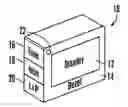
FIG. 1 is a perspective view of a display device, showing interior components schematically;
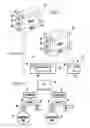
FIG. 2 illustrates the connections that may exist in a home theatre system; and
FIG. 3 is a flow chart of example logic for selecting a bezel illumination color.
DETAILED DESCRIPTION OF THE PREFERRED EMBODIMENT
Referring initially to FIG. 1, a TV, generally designated 10, contains a display screen 12 and is encased by a bezel 14. The display 12 may be of any type and form, i.e. flatscreen LCD. The bezel material may be, but is not limited to, plastic. Internal components of the TV 10 include a tuner 16 used for receiving a signal, a medium 18, and a microprocessor (MP) 20. The processor 20 may be a TV processor and receives and interprets signals from other components of a home theatre system.
A light source 22 is disposed within the bezel 14 of the TV 10 near the edge of the front panel of the bezel 14 in a decorative fashion, where light passes through the bezel 14 and can be seen by a person. The light source 22 may also be disposed in one or more corners of the bezel 14. The light source 22 may use light diffusing techniques and may include multiple triluminous LED's to create a color-customizable illuminated edge around the TV 10. The light source 22 may emitted various forms of light including simple color, color patterns, and dynamic color patterns.
Moving in reference to FIG. 2, the TV 10 is shown in a manner similar to that of FIG. 1, including a display 12, bezel 14, internal components 16, 18, and 20, and a light source 22. An example non-limiting first component 24 of the same home theatre system that comprises the TV 10 incorporates a first component bezel 26, a first component display screen 28, and at least one first component light source 30 disposed within the first component bezel 26. The first component 24 may be, but is not limited to, a disk player. The color of light emitted from the first component light source 30, designated as first light color, passes through the first component bezel 26 and can be seen by a person. In some embodiments, multiple light sources 30 of different colors may be implemented for purposes to be shortly disclosed.
An example non-limiting second component 32 includes a second component bezel 34, second component display screen 36, and a second component light source 38. The color of light emitted from the second component light source 38, designated second light color, passes through the second component bezel 26 and can be seen by a person. The second component 32 may be, but is not limited to, a home theatre or a set-top box (STB) (cable, satellite, SSD server, etc) attached to the TV via a networking method including HDMI, LAN, wireless, etc. In some embodiments, multiple light sources 38 of different colors may be implemented for purposes to be shortly disclosed.
In one implementation, the processor 20 causes the TV bezel light source 22 to emit light of the first color when the TV presents information from the first component 24, the bezel of which also emits the first color of light. Moreover, the processor 20 causes the TV bezel light source 22 to emit light of the second color when the TV presents information from the second component 32, the bezel of which emits light of a second color. Both the component light source 30 and second component light source 38 may be disposed in any number of corners the corresponding bezel 26 or 34, or as a decorative edging similar to that which may comprise the TV light source 22. In any case, in this embodiment and assuming that the component bezels emit light of only a single color, the color of the TV bezel, which may be selected from a menu of colors by a user, is automatically established to match the color of light emitted from the bezel of the “active” component, i.e., the component that is sourcing content to or sinking content from the TV.
In another embodiment, the TV bezel may emit a user-selected color of light, with the TV processor causing the controllers of the other components, which in this case have multiple colors of light sources in their bezels, to match the user-selected color of the TV bezel.
Now referring to FIG. 3, a flow diagram is shown to demonstrate an embodiment of the method accomplished by the processor 20. The TV 10 is linked to and communicates with the first component 24. At state 40 the processor 20 determines whether the first component 24 is active. If the information presented to the processor 20 confirms the first component 24 is in fact active at block 42, the light sources 22 and 30 are synchronized at state 46 in that they are caused by the one of the above processors, e.g., the TV processor 20, to emit corresponding, preferably identical, colors, intensities, durations, synchronization, and/or synchronized sub-time. This may be done by simply causing the light sources in the TV bezel to emit only the color of light emitting by the light sources in the bezel of the component 24, or vice-versa, i.e., by causing the light sources in the component bezel to emit only the color of light, preferably user-selected, emitted by the TV bezel. If the processor 20 determines that the first component 24 is not active (state 44), no action is taken to synchronize the light sources 22 and 30.
The processing for the second component 32 is identical. The second component 32 is analyzed for activity at state 48. If the second component 32 is active (state 50), the light sources 22 and 38 are synchronized at state 54 as described above. If the processor 20 determines that the second component 32 is not active (state 52), no action is taken to synchronize the light sources 22 and 38. Neither first component 24 nor second component 32 require a wired link with the TV as any networking (wired or wireless) may be used.
While the particular BEZEL COLOR COORDINATION is herein shown and described in detail, it is to be understood that the subject matter which is encompassed by the present invention is limited only by the claims.
Claims
What is claimed is:1. System comprising:
a TV including a TV display framed by a TV bezel;
at least one TV bezel light source disposed in the TV bezel, light from the light source passing through the TV bezel to be visible to a person;
a first component communicating with the TV and having a first component bezel; at least one first component bezel light source disposed in the first component bezel, light from the first component bezel light source passing through the first component bezel to be visible to a person, the first component bezel light source emitting light of a first color;
a second component communicating with the TV and having a second component bezel;
at least one second component bezel light source disposed in the second component bezel, light from the second component bezel light source passing through the second component bezel to be visible to a person, the second component bezel light source emitting light of a second color different from the first color; and
a processor causing the TV bezel light source to emit light of the first color when the TV presents information from the first component, the processor causing the TV bezel light source to emit light of the second color when the TV presents information from the second component.
2. The system of claim 1, wherein the processor is a TV processor in the TV.
3. The system of claim 1, wherein the first component is a disk player.
4. The system of claim 3, wherein the second component is a home theater.
5. Method comprising:
determining which one of at least two audio-video components is sending signals to a TV for display; and
based on the determining act, establishing a color of a bezel of the TV.
6. The method of claim 5, wherein the determining act is executed by a TV processor in the TV.
7. The method of claim 6, wherein the light source includes plural LEDs, and the processor executes the establishing act by energizing select LEDs.
8. The method of claim 5, wherein the first component is a disk player.
9. The method of claim 8, wherein the second component is a set top box.
10. System comprising:
a TV including a TV display framed by a TV bezel;
TV bezel light sources disposed in the TV bezel and emitting light of a color demanded by a user of the TV, light from the light source passing through the TV bezel to be visible to a person;
a first component communicating with the TV and having a first component bezel;
a first component bezel light source disposed in the first component bezel, light from the first component bezel light source passing through the first component bezel to be visible to a person, the first component bezel light source being controlled by the TV to emit light having the color demanded by the user;
a second component communicating with the TV and having a second component bezel;
a second component bezel light source disposed in the second component bezel, light from the second component bezel light source passing through the second component bezel to be visible to a person, the second component bezel light source being controlled by the TV to emit light having the color demanded by the user.
11. The TV of claim 10, comprising LEDs establishing the light sources.
12. The system of claim 10, wherein the first component is a disk player.
13. The system of claim 12, wherein the second component is a home theater or set-top box.
Images & Drawings included:
Sources:
- United States Patent and Trademark Office - verify current appl. status at the USPTO↗
Similar patent applications:
- » 20110279731
BEZEL COLOR COORDINATION
Recent applications in this class:
- » 20250008032 2025-01-02
INFORMATION PROCESSING SYSTEM, INFORMATION SYNCHRONIZATION SYSTEM, AND NON-TRANSITORY COMPUTER READABLE MEDIUM - » 20240163380 2024-05-16
Multi-function device communities for optimization of device image quality - » 20220217242 2022-07-07
Communication apparatus having power related predetermined processing, method of controlling the same, and storage medium - » 20210075922 2021-03-11
Information processing apparatus for enabling user access personal setting of another - » 20210021721 2021-01-21
Communication apparatus using an advertising signal, method of controlling the same, and storage medium - » 20200014806 2020-01-09
Communication apparatus having first or second state determination, method of controlling the same, and storage medium - » 20180167524 2018-06-14
Communication apparatus having specific state determination method of controlling the same, and storage medium - » 20170289367 2017-10-05
Viewing aid with tracking system, and method of use - » 20170195506 2017-07-06
IMAGE FORMING APPARATUS FORMING LOCATION FREE PRINT SYSTEM AND PRINT JOB RETRIEVAL METHOD BY THE SAME - » 20170094080 2017-03-30
Image processing apparatus and non-transitory computer readable medium for more uniformly distributing documents
Recent applications for this Assignee:
- » 20250280125 2025-09-04
IMAGE DATA ENCODING AND DECODING - » 20250199527 2025-06-19
INFORMATION PROCESSING DEVICE, INFORMATION PROCESSING METHOD, AND PROGRAM - » 20250175646 2025-05-29
IMAGE PROCESSING APPARATUS AND METHOD - » 20250150244 2025-05-08
INTERFACE CIRCUIT AND INFORMATION PROCESSING SYSTEM - » 20250126294 2025-04-17
IMAGE PROCESSING APPARATUS AND METHOD - » 20250123622 2025-04-17
INFORMATION PROCESSING APPARATUS, INFORMATION PROCESSING METHOD, AND PROGRAM - » 20250119802 2025-04-10
TERMINAL DEVICE AND METHOD - » 20250113080 2025-04-03
REPRODUCING DEVICE, REPRODUCING METHOD, PROGRAM, AND TRANSMITTING DEVICE - » 20250068301 2025-02-27
INFORMATION PROCESSING APPARATUS FOR RESPONDING TO FINGER AND HAND OPERATION INPUTS - » 20250044935 2025-02-06
INFORMATION PROCESSING DEVICE, INFORMATION PROCESSING METHOD, AND PROGRAM