Method for doppler shift estimation and compensation in a communications system
US20100290356A1
2010-11-18
12/526,948
2008-02-18
✅ Patent granted
US 8,254,281 B2
2012-08-28
WO; PCT/IL2008/000208; 20080218
WO; WO2008/099410; 20080821
Ricky Ngo | Kan Yuen
2028-02-18
Abstract:
A communications system comprising at least one Base Station BS, one or more Satellites and Mobile Stations MS connected therebetween, and wherein the mobile station includes means to calculate Doppler frequency shifts. In a preferred embodiment, the mobile station includes means to measure clock mismatch frequency.
Inventors:
- Michael Erlihson 3 🇮🇱 Petah Tikva, Israel
- Zion Hadad 2 🇮🇱 Petah Tikva, Israel
- Doron Ezri 2 🇮🇱 Petah Tikva, Israel
- Ofer Shalem 1 🇮🇱 Petah Tikva, Israel
- Michael Erlihson 1 🇮🇱 Petah Tivka, Israel
Interested in similar patents?
Get notified when new applications in this technology area are published.
Classification:
H04W56/0035 » CPC main
Synchronisation arrangements detecting errors in frequency or phase
H04B7/01 » CPC further
Radio transmission systems, i.e. using radiation field Reducing phase shift
H04L27/2657 » CPC further
Modulated-carrier systems; Systems using multi-frequency codes; Multicarrier modulation systems; Arrangements specific to the receiver only; Synchronisation arrangements Carrier synchronisation
H04B7/185 IPC
Radio transmission systems, i.e. using radiation field; Relay systems; Active relay systems Space-based or airborne stations; Stations for satellite systems
H04W24/00 IPC
Supervisory, monitoring or testing arrangements
H04J1/16 IPC
Frequency-division multiplex systems; Details Monitoring arrangements
Description
The present application claims priority from the patent application No. 181400 filed in Israel on 18 Feb. 2007 by the same applicant and having the same title.
This invention related to communication improvement system and method and more specifically to Doppler correction.
BACKGROUND OF THE INVENTION
In communication systems, wherein a Mobile Subscriber MS is on the move, the frequency varies according to Doppler effect, as it communicates with a Base Station BS.
It is desired to estimate and correct the Doppler effect, and other effects as well which result in frequency error—and reduce communications systems performance.
In many communication protocols, such as 802.16e or WiMAX, there are several frequency carriers and/or subcarriers, at some frequencies and distanced apart.
In S-WiMAX and some other communication protocols and systems,
the carrier spacing may be reduced, such as about 2 KHz. In such cases the expected Doppler shift (e.g. 200 Hz) might be too large to be left uncompensated and may affect performance, thus it may be required to compensate for this effect. Doppler shifts may be compensated at the MS and/or at the BS.
SUMMARY OF THE INVENTION
According to the new invention, it may be possible to further distinguish different factors of frequency variation. Thus, the effect of some of these factors may be reduced, if taken into account as separate factors.
This new invention may be implemented using standard existing hardware means, such as by updating the MS and/or BS software.
This invention may provide means to better estimate and correct the Doppler effect, and perform such estimates over time Frequency errors caused by other effects may be reduced as well—and the overall frequency error, both in BS and MS, may be reduced—allowing better usage of the spectrum, and less interference between adjacent carriers and/or sub carriers and/or frequencies.
Thus, setting a more precise frequency, using corrections in transmitting and/or receiving, at the BS and/or at the MS, may improve communications.
This may be more important in S-WiMAX, WiMAX systems with satellite communications, or similar systems or protocols.
Since in S-WiMAX the carrier spacing may be small, such as about 2 KHz, it may become important to reduce an expected 200 Hz Doppler shift, thus reducing interferes to other adjacent signals and/or data, reducing noise and improving communications speed, and decreasing BER.
According to the new invention, Doppler shifts may be compensated at the MS and/or at the BS, while taking into account additional factors.
BRIEF DESCRIPTION OF THE DRAWINGS
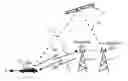
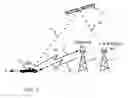
FIG. 1 illustrates a communications system comprising BS's, MS's and a Satellite
FIG. 2 details typical frequency spacing of WiMAX and S-WiMAX systems
FIG. 3 details a method for Doppler shift and clock mismatch estimation and compensation
FIG. 4 details simulation results for one or more UL pilot subframes used.
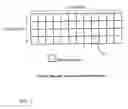
FIG. 5 details a typical allocation of pilots in a communication system
DETAILED DESCRIPTION OF THE PREFERRED EMBODIMENTS
The present invention will be described by way of example, and with reference to the accompanying drawings.
FIG. 1 illustrates a communications system comprising one or more terrestrial 10 and/or S-WiMAX 17 Base Stations BS's, Mobile Stations MS's 12, and optionally one or more Satellites 11,
As a MS moves in a velocity V, Doppler frequency shifts may occur in the
Up Link UL 13 from the MS to the BS, and in the Down Link DL 14, from the BS to the MS.
Communications 15 between the MS 12 and the satellite 11, and/or communications 16 between the BS 17 and the satellite 11, may be initiated as well.
In a preferred embodiment, compensation is implemented at the MS, in order to synchronize on the received DL carrier frequency. Once such synchronization is achieved at the MS, UL transmission may be performed with identical frequency compensation. By communicating between the MS and BS, using Pilots and/or other signals at the UL and DL, it is possible to distinguish the clock mismatch from the Doppler shift, since the Doppler shift is likewise for both directions of communications. Measurements and estimations may be performed by hardware means, wherein data is provided to the communication system—or is used in such a manner to correct transmitted and/or received frequencies accordingly.
FIG. 2 details a typical frequency spacing of WiMAX and S-WiMAX systems. In WiMAX, as described in FIG. 2, when a 10 KHz carrier-spacing between carriers and/or sub-carriers 20 is used, Doppler shifts may have smaller effect.
In case smaller carrier-spacing between carriers and/or sub-carriers 21 is used, such as when a 2 KHz carrier-spacing is used, Doppler shifts may affect performance, such as may be the case in S-WiMAX wherein smaller carrier-spacing approximately 2 KHz may be more vulnerable to the expected 200 Hz Doppler shift 22, and relevant signals should be frequency compensated.
FIG. 3 details a method for Doppler shift estimation and compensation. The method may include the following steps:
- 1. A BS may transmit in DL, a special signal or one or more pilot signals or a mixed signal comprised of any of the above mentioned, to a MS, and may be in a number of time frames. This may be done similarly to standard frequency synchronization in WiMAX. This step 100 may provide initial signal for synchronization.
- 2. The MS receives one or more signals transmitted by the BS 100. In this calculation stage 110, one or more compensation frequencies are found.
- A compensation frequency fT, may be a sum of clocks mismatch frequency fC, and a Doppler shift, fD. Thus fT=fC+fD.
- The clock mismatch frequency may originate from frequency differences between the BS and the MS.
- In case the BS transmits at a frequency f1 and the MS uses a frequency f1′ then fC=f1−f1′. As a result, the compensation frequency is:
- fT=f1−f1′+fD=fC+fD. Thus, the initially calculated compensation frequency fT may be different from the Doppler frequency shift fD.
- 3. In this step 120, The frequency compensation, fT, is stored in the MS memory or in any hardware means. Several compensation frequencies fT may be kept over time, as well. In addition, any equivalent data indicative of this measurement may be kept, as well.
- In step 130, one or more UL transmissions are made, preferably they may be composed of pilots only. The more pilots used in this UL transmission, the more accurate the Doppler estimation by the BS due to the increase in processing gain.
- 4. In step 140, the BS receives the transmission of the MS and estimates the Doppler frequency {circumflex over (f)}D.
- For a signal transmitted by the MS at step 130 in a frequency of
- f1′+fT=f1+fD. The received signal at the BS is about the frequency f1+2 fD, Thus {circumflex over (f)}D may be calculated by subtracting the BS frequency f1 from the received signal:
{circumflex over (f)}D=½*(f1+2fD−f1).
- 5. In step 150, the BS transmits {circumflex over (f)}D or equivalent data to the MS. This may be combined within a regular DL subframe.
- 6. Step 160 is implemented as the MS for calculating {circumflex over (f)}C, which is an estimation of fC. Using the known estimate, {circumflex over (f)}D, of the Doppler shift, which was obtained from the BS. The MS uses {circumflex over (f)}D to estimate the clock mismatch, fC, assumed constant or slowly-varying and wherein fT is already known, such as from step 120, by:
{circumflex over (f)}C={circumflex over (f)}T−{circumflex over (f)}D.
This method or any parts of it can be repeated, such as at the i-th UL subframe, where the MS applies an updated Doppler compensation, {circumflex over (f)}D(i), which satisfies {circumflex over (f)}D(i)=fT(i−1)−{circumflex over (f)}C. This compensation may offer improved frequency compensation abilities, such as by obtaining fT(i−1) from the previous DL subframe.
Preferably, this method involves both the MS and the BS, allowing the estimation of the Doppler shift and its compensation at the MS. Constant updates and estimations may be implemented as part of regular DL and UL transmissions between the BS and the MS, both for measuring the received signals and for providing indicative data.
In a preferred embodiment, mismatch estimation is performed once in about 50 frames, for estimations updates. The period may be determined by the bandwidth of the clock-mismatch process.
It may be possible to perform an equivalent and/or similar method for improved Doppler estimations by using different calculations at the BS and/or MS, by making different transmissions, or by sending different parameters.
FIG. 5 details a typical allocation of pilot subscribers 50 in a communication system. In a preferred embodiment, 4 sub carriers versus 12 symbols are used, as detailed in the figure.
As a system and/or method are used, upon initiating compensation approach, the MS may not be able to distinguish between the two mentioned components of {circumflex over (f)}T: fC and fD.
Thus, it may be possible to perform a frequency compensation for the UL, such as may be used in the WiMAX standard. At the first transmission it may be possible to estimate the Doppler shift experienced at the BS during the UL. Since the number of pilots in regular S-WiMAX UL transmission may imply low processing gain and poor performance, hence inaccurate Doppler shift estimation, the first UL transmission can be composed solely of pilot sub carriers, such as detailed in FIG. 5.
FIG. 4 details simulation results for one or more UL pilot subframes used.
A method, based on the simulation results includes the following steps:
- a. DL transmission by the BS.
- b. Reception of the DL by the MS with Doppler frequency shift, typically about 200 Hz.
- c. The MS synchronizes based on the DL, by locking on the carrier frequency shifted by the assumed Doppler value.
- d. UL transmission of solely pilots subframe that arrives at the BS with carrier frequency shifted by two assumed Doppler values.
- e. Frequency shift by two assumed Doppler values estimation at the BS based on the pilots UL subframe/frames.
The figure details possible results for the Doppler estimation error at the BS.
In some embodiments, as demonstrated in the simulation, it is possible to use one or more pilots UL subframes.
The results are given in terms of standard-deviation (STD) of the Doppler estimation method at the BS.
The STD may decrease with the SNR and with the number of aggregated UL subframes at hand.
Thus, the STD of the Doppler estimation error, such as with SNR of 1 dB and a single UL subframe, can be smaller than 25 Hz, which in this example is one percent of the carrier spacing. This may be sufficient for valid decoding of the UL signals.
In some embodiments, possible changes to the 802.16e Standard may be made, in order to implement the UL Doppler correction mechanism:
a. Inclusion of the first pilot only UL transmission, such as described with reference to FIG. 5.
b. Inclusion of the DL Doppler shift message, such as described with reference to FIG. 3.
In case of Hand-Off HO from the Terrestrial BS, a novel method may be used similarly to the method of FIG. 3.
In case of HO from a terrestrial WiMAX BS to a satellite linked BS, the method's steps may be altered using the following steps, or in a combination thereof:
-
- 1. In order to eliminate the need for a pilots UL transmission, the estimate of the clock mismatch can be achieved using a closed-loop operation with the terrestrial WiMAX BS, in a manner similar to that described with reference to FIG. 3.
- 2. Closed-loop frequency corrections with the terrestrial BS may be done within what is known as the Ranging process in WiMAX.
- 3. The MS or User Terminal UT can estimate the clock mismatch with the terrestrial BS, which can approximate the clock mismatch with the satellite linked BS.
- 4. The subsequent steps of the method described in FIG. 3 may remain unchanged. Thus, it may be possible to maintain the continuous estimation of the Doppler shift using the DL signal and its compensation during the UL.
It will be recognized that the foregoing is but one example of a system and method within the scope of the present invention, and that various modifications will occur to those skilled in the art upon reading the disclosure set forth hereinbefore.
Claims
1. A communications system comprising at least one Base Station (BS), one or more Satellites and Mobile Stations (MS) connected therebetween, and wherein the mobile station includes means to calculate Doppler frequency shifts.
2. The communications system according to claim 1, wherein the communications system is a WiMAX compatible system.
3. The communications system according to claim 2, wherein the BS includes means for calculating Doppler frequency shifts.
4. The communications system according to claim 2, wherein the BS includes means to calculate clock mismatch frequencies.
5. The communications system according to claim 1, wherein the BS includes means for calculating Doppler frequency shifts.
6. The communications system according to claim 1, wherein the BS includes means to calculate clock mismatch frequencies.
7. A communications system comprising at least one Base Station (BS) and one or more Satellites, and wherein the Mobile Station (MS) includes means to measure clock mismatch frequency.
8. The communications system according to claim 7, wherein the BS includes means for calculating Doppler frequency shifts.
9. The communications system according to claim 7, wherein the BS includes means to calculate clock mismatch frequencies.
10. The communications system according to claim 7, wherein the communications system is a WiMAX compatible system.
11. The communications system according to claim 10, wherein the MS further includes means for adjusting its communication frequencies, based on the calculated Doppler frequency shift.
12. The communications system according to claim 10, wherein the MS further includes means for adjusting its communication frequencies, based on the calculated clock mismatch frequency.
13. The communications system according to claim 12, wherein the MS further includes means for adjusting its communication frequencies, based on the calculated Doppler frequency shift, as well.
14. The communications system according to claim 13, wherein the BS includes means for calculating Doppler frequency shifts.
15. The communications system according to claim 13, wherein the BS includes means to calculate clock mismatch frequencies.
16. A method for Doppler shift estimation and compensation in communications system, the method comprising the steps:
transmitting by a base station (BS) one or more downlink (DL) signals with one or more pilots signals, to a mobile station (MS);
receiving the DL signal by the MS and calculating or measuring a compensation frequency fT;
storing the frequency compensation fT into a memory element;
transmitting one or more uplink (UL) signals, with one or more pilots;
receiving the UL signal and estimating a Doppler frequency f′D;
transmitting f′D descriptive data by the BS to the MS; and
calculating at the MS an estimation of clock mismatch/f′C using the known estimate, f′D, of the Doppler shift.
17. The method according to claim 16, wherein using standard communications and coordination between the BS and the MS, calculations and notifications of clock mismatch frequencies are initiated.
18. The method according to claim 16, wherein using standard communications and coordination between the BS and the MS, calculations and notifications of Doppler frequency shifts are initiated.
19. The method according to claim 18, wherein using standard communications and coordination between the BS and the MS, calculations and notifications of clock mismatch frequencies are initiated.
Images & Drawings included:


Sources:
- United States Patent and Trademark Office - verify current appl. status at the USPTO↗
Recent applications in this class:
- » 20250227639 2025-07-10
ANALYZING TIMING OF PACKETS IN FRONTHAUL - » 20250212145 2025-06-26
Clock Quality Measurements and Monitoring in 5G Network - » 20250203546 2025-06-19
TIMING DETECTION IN A DEMODULATOR - » 20250142501 2025-05-01
SYNTONISATION OF SIGNALS BETWEEN SATELLITES - » 20250126581 2025-04-17
HIGH PRECISION POSITIONING FOR MOBILE DEVICES - » 20250106795 2025-03-27
Baudrate Tracking with Using Pattern Detectors for Synchronization Pattern Detection - » 20250031164 2025-01-23
METHOD AND DEVICE FOR ESTIMATING FREQUENCY OFFSET AND COMPENSATING RECEIVED SIGNAL IN WIRELESS COMMUNICATION SYSTEM - » 20250024391 2025-01-16
UPLINK TRANSMISSION METHOD, ELECTRONIC DEVICE AND COMPUTER READABLE STORAGE MEDIUM - » 20240430833 2024-12-26
TIME ALLOCATION FOR NETWORK TRANSMISSION - » 20240406899 2024-12-05
METHOD FOR RESOLVING TIME AMBIGUITY, A RELATED SYSTEM, A RELATED TRANSMITTER AND A RELATED RECEIVER