Intervertebral Disc Implant
US20100298939A1
2010-11-25
11/921,479
2006-03-22
Abstract:
The invention relates to an intervertebral disk implant (1) which is used to implant between two vertebrae (2), comprising at least two components (3,4; 13,14,15) which form at least one sliding pair and which are made of a ceramic material. The at least two ceramic components (3,4; 13,14,15) are arranged in a covering (5).
Assignee:
- Mathys AG Bettlach 24 🇨🇭 Bettlach, Switzerland
Interested in similar patents?
Get notified when new applications in this technology area are published.
Classification:
A61F2/4425 » CPC main
Filters implantable into blood vessels; Prostheses, i.e. artificial substitutes or replacements for parts of the body; Appliances for connecting them with the body; Devices providing patency to, or preventing collapsing of, tubular structures of the body, e.g. stents; Prostheses implantable into the body; Joints for the spine, e.g. vertebrae, spinal discs; Intervertebral or spinal discs, e.g. resilient made of articulated components
A61F2/30965 » CPC further
Filters implantable into blood vessels; Prostheses, i.e. artificial substitutes or replacements for parts of the body; Appliances for connecting them with the body; Devices providing patency to, or preventing collapsing of, tubular structures of the body, e.g. stents; Prostheses implantable into the body; Joints; Designing or manufacturing processes Reinforcing the prosthesis by embedding particles or fibres during moulding or dipping
A61F2002/30331 » CPC further
Filters implantable into blood vessels; Prostheses, i.e. artificial substitutes or replacements for parts of the body; Appliances for connecting them with the body; Devices providing patency to, or preventing collapsing of, tubular structures of the body, e.g. stents; Prostheses implantable into the body; Joints; Additional features of subject-matter classified in , and subgroups thereof; The prosthesis having different structural features at different locations within the same prosthesis; Connections between prosthetic parts; Special structural features of bone or joint prostheses not otherwise provided for; Connections or couplings between prosthetic parts, e.g. between modular parts; Connecting elements made by longitudinally pushing a protrusion into a complementarily-shaped recess, e.g. held by friction fit
A61F2002/443 » CPC further
Filters implantable into blood vessels; Prostheses, i.e. artificial substitutes or replacements for parts of the body; Appliances for connecting them with the body; Devices providing patency to, or preventing collapsing of, tubular structures of the body, e.g. stents; Prostheses implantable into the body; Joints for the spine, e.g. vertebrae, spinal discs; Intervertebral or spinal discs, e.g. resilient made of articulated components having two transversal endplates and at least one intermediate component
A61F2220/0025 » CPC further
Fixations or connections for prostheses classified in groups - or or or or subgroups thereof Connections or couplings between prosthetic parts, e.g. between modular parts; Connecting elements
A61F2220/0033 » CPC further
Fixations or connections for prostheses classified in groups - or or or or subgroups thereof; Connections or couplings between prosthetic parts, e.g. between modular parts; Connecting elements made by longitudinally pushing a protrusion into a complementary-shaped recess, e.g. held by friction fit
A61F2310/00179 » CPC further
Prostheses classified in or - being constructed from or coated with a particular material; The prosthesis being constructed from a particular material Ceramics or ceramic-like structures
A61F2310/00407 » CPC further
Prostheses classified in or - being constructed from or coated with a particular material; The prosthesis being coated or covered with a particular material; Coating or prosthesis-covering structure made of metals or of alloys Coating made of titanium or of Ti-based alloys
A61F2/44 IPC
Filters implantable into blood vessels; Prostheses, i.e. artificial substitutes or replacements for parts of the body; Appliances for connecting them with the body; Devices providing patency to, or preventing collapsing of, tubular structures of the body, e.g. stents; Prostheses implantable into the body; Joints for the spine, e.g. vertebrae, spinal discs
Description
The invention relates to a mobile intervertebral disc implant, in particular an implant with a ceramic/ceramic joint.
An artificial intervertebral disc is known, for example, from EP 1 287 794 A1, which comprises two end plates and a resiliently deformable disc braced axially under prestress between the end plates. The disc is located inside a tubular, resilient fibre ring, the end plates being in tension-resistant connection with the fibre ring. The end plates are made from metal.
A particular disadvantage of the artificial intervertebral disc known from EP 1 287 794 A1 is its poor sliding behaviour. Although the intervertebral disc according to the prior art is readily able to absorb axial expansion and compression, the intervertebral disc may react badly in the event of displacement between the vertebrae or in particular in the event of inclination of the vertebrae towards one another.
This may be circumvented by using ceramic implants, which have better sliding behaviour. However, these have the serious disadvantage that, in the event of breakage of the relatively brittle ceramic material, the risk of injury to the patient equipped with the prosthesis is very high and may have serious consequences, even to the extent of paraplegia or death, if splinters of the ceramic implant enter the spinal cord canal.
The object of the invention is therefore to provide an intervertebral disc implant which on the one hand exhibits good sliding behaviour and on the other hand is so designed that damage to the implant cannot threaten the health of the patient.
The object is achieved with the features of claim 1.
According to the invention, the ceramic intervertebral disc implant is encased in a casing which on the one hand is strong enough to retain the fragments of the implant in the event of damage and on the other hand is sufficiently flexible to allow the natural, unlimited mobility of the implant which is physiologically necessary.
Further advantageous developments of the invention are indicated in the subclaims.
Exemplary embodiments of the invention are explained in greater detail below with reference to partially schematic drawings, in which:
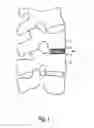
FIG. 1 is a schematic view of a first exemplary embodiment of an intervertebral implant according to the invention, in situ,
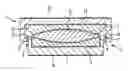
FIG. 2 is an enlarged sectional representation in accordance with FIG. 1 of the first exemplary embodiment of the intervertebral disc implant according to the invention, and
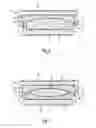
FIG. 3 shows a second exemplary embodiment of an intervertebral disc implant according to the invention in the same view as FIG. 2.
FIG. 1 is a highly schematic lateral representation of an intervertebral disc implant 1 according to the invention between two vertebrae 2 of a human spinal column.
The intervertebral disc implant 1 has to ensure a physiological movement process, with tilting towards one another of the two components 3 and 4 forming the intervertebral disc implant in the first exemplary embodiment being of particular importance. In this respect, the way components 3 and 4 slide on one another plays a decisive role. In contrast with the previously conventional plastics implants which replace defective intervertebral discs, a sliding pair comprising two components 3 and 4 consisting of ceramic material displays better sliding behaviour. In particular, static friction is less even under heavy loads.
However, the problem with ceramic intervertebral disc implants 1 is the high risk of injury resulting in serious injury to the extent of paraplegia or death if, in the event of breakage of the ceramic intervertebral disc implants 1, individual fragments reach the spinal cord canal and penetrate therein with their sharp broken edges.
To prevent this, it is proposed according to the invention to provide the two ceramic components 3 and 4 with a casing 5, which is made from a plastics material, preferably a biocompatible polymer such as polyethylene (PE), polyetheretherketone (PEEK), polyetherketoneketone (PEKK), polyetheracrylketone (PEAK), polyacryletherketone (PAEK) or polymethyl methacrylate (PMMA), and encloses the ceramic intervertebral disc implant 1 on all sides.
Preferably, the casing 5 is in two parts, so as to ensure easy assembly prior to implantation. The two parts 6 and 7 of the casing comprise an area 8 of overlap, in which two suitably shaped collar-like projections 9 and 10 engage one under the other such that, one the one hand, a movement gap 11 remains, which permits to the full extent the desired movement radius of approx. 10° and, on the other hand, the ceramic components 3 and 4 are reliably enclosed.
A circumferential ring 12 may be provided in the casing 5, in particular in the part 7 which is radially larger, said ring enabling stabilisation of the component 4 in the part 7 and being suitable as a fixing means in the event of possible preassembly. The circumferential ring 12 may take the form of an inwardly extending bead in one piece with the part 7 or may be subsequently inserted and fixed in place.
FIG. 3 is a schematic sectional representation, in the same view as FIG. 2, of a second exemplary embodiment of an intervertebral disc implant 1 according to the invention. Identical components are provided with matching reference numerals.
The second exemplary embodiment illustrated in FIG. 3 of an intervertebral disc implant 1 according to the invention is provided with three ceramic components 13, 14, 15, the components 13 and 14 corresponding to the components designated 3 and 4 in FIG. 2. Between the components 13 and 14 there is provided a third, likewise ceramic, lens-shaped component 15, which is embedded in the two components 13 and 14, which are of concave construction in the second exemplary embodiment. An intervertebral disc implant 1 constructed in this way provides great mobility while also being of small structural height. The casing 5 is constructed as in the first exemplary embodiment illustrated in FIG. 2.
A further advantage of a casing 5 according to the invention is the small structural height of only 4 mm to 8 mm. This is important, since ceramic intervertebral disc implants 1 have overall a small structural height which cannot be exceeded due to fitting conditions.
To minimise component dimensions, fibre reinforced parts 6, 7, for example of carbon fibre reinforced PEEK, may therefore also be used.
On its faces facing the vertebrae 2 the casing 5 may be provided with a titanium coating 16. This leads to roughening of the faces and improved osseo-integration.
The invention is not limited to the exemplary embodiments illustrated and is also suitable for further embodiments of intervertebral disc implants 1. All features of the invention may be combined in any desired manner.
Claims
1. An intervertebral disc implant (1) for implanting between two vertebrae (2), comprising at least two components (3, 4; 13, 14, 15), which form at least one sliding pair and which are made from a ceramic material, wherein the at least two ceramic components (3, 4; 13, 14, 15) are arranged in a casing (5).
2. An intervertebral disc implant according to claim 1,
characterised in that
the casing (5) consists of two parts (6, 7).
3. An intervertebral disc implant according to claim 2,
characterised in that
the parts (6, 7) of the casing (5) may be connected detachably together.
4. An intervertebral disc implant according to claim 2 or claim 3,
characterised in that
the parts (6, 7) of the casing (5) each comprise a circumferential collar-like projection (9, 10).
5. An intervertebral disc implant according to claim 4,
characterised in that
the collar-like projections (9, 10) engage one under the other, forming a movement gap (11).
6. An intervertebral disc implant according to one of claims 2 to 5,
characterised in that
a circumferential ring (12) is formed in one or both of the parts (6, 7) of the casing (5).
7. An intervertebral disc implant according to claim 6,
characterised in that
the component (3, 4; 13, 14) of the intervertebral disc implant (1) enclosed in the respective part (6, 7) of the casing (5) is fixed in place by the ring (12).
8. An intervertebral disc implant according to claim 6 or claim 7,
characterised in that
the ring (12) takes the form of a bead in one piece with the respective part (6, 7).
9. An intervertebral disc implant according to claim 6 or claim 7, characterised in that
the ring (12) takes the form of a separate component connectable to the respective part (6, 7).
10. An intervertebral disc implant according to one of claims 1 to 9,
characterised in that
the casing (5) consists of a biocompatible plastics material.
11. An intervertebral disc implant according to claim 10,
characterised in that
the plastics material is a polymer, in particular polyethylene (PE), polyetheretherketone (PEEK), polyetherketoneketone (PEKK), polyetheracrylketone (PEAK), polyacryletherketone (PAEK) or polymethyl methacrylate (PMMA).
12. An intervertebral disc implant according to one of claims 1 to 11,
characterised in that
the casing (5) is provided with a coating (16) on its faces facing the vertebrae (2).
13. An intervertebral disc implant according to claim 12,
characterised in that
the coating (16) consists of titanium.
14. An intervertebral disc implant according to one of claims 1 to 13,
characterised in that
the casing (5) of the intervertebral disc implant (1) has an axial height of 4 mm to 8 mm.
15. An intervertebral disc implant according to one of claims 1 to 14,
characterised in that
the casing (5) is fibre-reinforced.
16. An intervertebral disc implant according to claim 15,
characterised in that
the fibre reinforcement consists of carbon fibre.
Images & Drawings included:
Sources:
- United States Patent and Trademark Office - verify current appl. status at the USPTO↗
Similar patent applications:
- » 20100260723
IMPLANTABLE SYSTEM FOR AN INTERVERTEBRAL DISC AND INTERVERTEBRAL DISC IMPLANT - » 20060095045
Methods for explantation of intervertebral disc implants - » 20050240269
Resilient intervertebral disc implant - » 20060064172
Composite intervertebral disc implants and methods for forming the same - » 20050197702
Intervertebral disc implant - » 20050131540
Instruments for delivery of intervertebral disc implants - » 20060036327
Prosthetic intervertebral disc implant - » 20050251260
Controlled artificial intervertebral disc implant - » 20060064171
Methods for forming and retaining intervertebral disc implants - » 20060089719
In situ formation of intervertebral disc implants
Recent applications in this class:
- » 20250152376 2025-05-15
EXPANDABLE INTERVERTEBRAL IMPLANT AND INSTRUMENTS FOR INSTALLING THE SAME - » 20250127625 2025-04-24
SPINAL IMPLANT DEVICE FOR MOTION PRESERVATION/DISC STABILIZATION - » 20250114213 2025-04-10
EXPANDABLE INTERBODY DEVICE - » 20250107902 2025-04-03
EXPANDABLE INTERVERTEBRAL IMPLANT - » 20250099258 2025-03-27
EXPANDABLE IMPLANT - » 20250082478 2025-03-13
DRIVE INSTRUMENTS WITH RETENTION MECHANISMS, MEDICAL IMPLANTS, AND RELATED TECHNOLOGIES - » 20250057663 2025-02-20
INTRA-VERTEBRAL BODY DEVICE FOR VERTEBRAL KYPHOPLASTY WITH DUAL EXPANSION (CRANIO-CAUDAL AND MEDIO-LATERAL) CAPABILITY - » 20250032271 2025-01-30
EXPANDABLE INTERVERTEBRAL IMPLANT - » 20250032270 2025-01-30
EXPANDABLE INTERBODY IMPLANT - » 20250025315 2025-01-23
EXPANDABLE IMPLANT ASSEMBLY
Recent applications for this Assignee:
- » 20230000646 2023-01-05
Device and a method for preparing a bone transplant - » 20210275309 2021-09-09
Shell to be driven into a bone substance for a prosthetic joint - » 20190151097 2019-05-23
Coated hemi-prosthesis implant - » 20190047862 2019-02-14
Method for producing porous calcium deficient hydroxyapatite granules - » 20190031511 2019-01-31
Method for producing porous calcium deficient hydroxyapatite granules - » 20180228595 2018-08-16
Implantable system with elastic components - » 20170000613 2017-01-05
Coated hemi-prosthesis implant - » 20160075599 2016-03-17
Calcium phosphate cement composition - » 20140336760 2014-11-13
Device for implanting a system for loading a cruciate ligament in a knee joint - » 20140296979 2014-10-02
Implantable system with elastic components