Ultra-thin, electronically conductive slice for button use
US20100300853A1
2010-12-02
12/802,181
2010-06-01
✅ Patent granted
US 8,237,071 B2
2012-08-07
-
-
Briggitte R Hammond
2031-01-28
Abstract:
An ultra-thin, electrically conductive slice for button use, which includes a non-metallic matrix and a metal mesh. The metal mesh is provided in the non-metallic matrix. A plurality of metal touch points are provided on the metal mesh and exposed out of a surface of the non-metallic matrix so as to enable the surface of the non-metallic matrix to form a dense, electrically conductive mesh. The non-metallic matrix is rubber or silica. The metal mesh is electrically conductive.
Interested in similar patents?
Get notified when new applications in this technology area are published.
Classification:
H01H1/20 IPC
Contacts characterised by the manner in which co-operating contacts engage by abutting Bridging contacts
H01B1/22 » CPC main
Conductors or conductive bodies characterised by the conductive materials; Selection of materials as conductors; Conductive material dispersed in non-conductive organic material the conductive material comprising metals or alloys
H01H9/50 » CPC further
Details of switching devices, not covered by groups - Means for detecting the presence of an arc or discharge
H01H35/24 » CPC further
Switches operated by change of a physical condition Switches operated by change of fluid pressure, by fluid pressure waves, or by change of fluid flow
H01H77/101 » CPC further
Protective overload circuit-breaking switches operated by excess current and requiring separate action for resetting in which the excess current itself provides the energy for opening the contacts, and having a separate reset mechanism with electrodynamic opening with increasing of contact pressure by electrodynamic forces before opening
Description
1. CROSS REFERENCE TO RELATED APPLICATIONS
The instant patent application claims priority from Chinese patent application number CN 200920057627.5, filed on May 28, 2009, for an ULTRATHIN ELECTRICALLY CONDUCTIVE SLICE FOR BUTTON USE, and incorporated herein by reference thereto.
2. BACKGROUND OF THE INVENTION
A. Field of the Invention
The embodiments of the present invention relate to buttons, and more particularly, the embodiments of the present invention relate to an ultra-thin, electrically conductive slice for button use.
B. Description of the Prior Art
Normally, a prior art button has components including a keycap and electrically conductive rubber. The electrically conductive rubber is used to connect to a printed circuit board so as to enable normal operation of the button via the cooperation of the electrically conductive rubber and the printed circuit board.
The electrically conductive rubber known in the prior art is formed by mechanical pressing, using a mixture of metal powder and rubber. Due to the random state of the metal powder and the possible uneven mixing, however, the electrically conductive property and the anti-high current and anti-high voltage characteristics are poor such that actuation sensitivity of the button is affected.
3. SUMMARY OF THE INVENTION
Thus, an object of the embodiments of the present invention is to provide an ultra-thin, electrically conductive slice for button use, which avoids the disadvantages of the prior art.
Another object of the embodiments of the present invention is to provide an ultra-thin, electrically conductive slice for button use, which has improved electrically conductive property and anti-high current and anti-high voltage characteristics.
Briefly stated, yet another object of the embodiments of the present invention is to provide an ultra-thin, electrically conductive slice for button use, which includes a non-metallic matrix and a metal mesh. The metal mesh is provided in the non-metallic matrix. A plurality of metal touch points are provided on the metal mesh and exposed out of a surface of the non-metallic matrix so as to enable the surface of the non-metallic matrix to form a dense electrically conductive mesh. The non-metallic matrix is rubber or silica. The metal mesh is electrically conductive.
When compared with the prior art, the embodiments of the present invention—by replacing the prior art metal powder with the electrically conductive metal mesh—has the advantage of the electrical conductivity, the anti-high voltage and the anti-high current characteristics, and the sensitivity of the button being effectively improved. The embodiments of the present invention would bode well for use as cell phone buttons.
The novel features considered characteristic of the embodiments of the present invention are set forth in the appended claims. The embodiments of the present invention themselves, however, both as to their construction and their method of operation together with additional objects and advantages thereof will be best understood from the following description of the specific embodiments when read and understood in connection with the accompanying figures of the drawing.
4. BRIEF DESCRIPTION OF THE FIGURES OF THE DRAWING
The figures of the drawing are briefly described as follows:
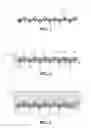
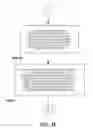
FIG. 1 is a diagrammatic cross sectional view of the electrically conductive metal mesh of the ultra-thin, electrically conductive slice of an embodiment of the present invention;
FIG. 2 is a diagrammatic cross sectional view of the electrically conductive metal mesh and a portion of the rubber or silica matrix of a partially completed ultra-thin, electrically conductive slice of an embodiment of the present invention;
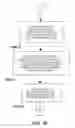
FIG. 3 is a diagrammatic cross sectional view of a completed ultra-thin, electrically conductive slice of an embodiment of the present invention; and
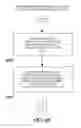
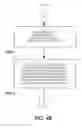
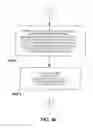
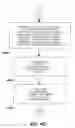
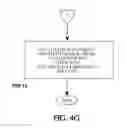
FIGS. 4A-4G are a flow chart of the method of making the ultra-thin, electrically conductive slice.
5. LIST OF REFERENCE NUMERALS UTILIZED IN THE FIGURES OF THE DRAWING
A. General.
-
10 ultra-thin, electrically conductive slice of embodiment of present invention for button use
B. Overall configuration of ultra-thin, electrically conductive slice 10. - 12 non-metallic matrix
- 14 metal mesh
- 16 plurality of metal touch points
- 18 surface of non-metallic matrix 12
-
20 dense, electrically conductive mesh
C. Method of making ultra-thin, electrically conductive slice 10. - 22 entire piece of electrically conductive metal mesh
- 23 gel mesh
- 24 single-piece gelled-mesh
- 26 vulcanized gelled mesh
- 28 metal touch points
- 30 pair of opposing surfaces of vulcanized gelled mesh 26
- 32 electrically conductive mesh piece
- 34 gel mesh piece
- 36 single-piece gelled mesh piece
- 38 vulcanized gelled mesh piece
6. DETAILED DESCRIPTION OF THE PREFERRED EMBODIMENTS
A. General
Referring now to the figures, in which like numerals indicate like parts, and particularly to FIGS. 1-3, which are, respectively, a diagrammatic cross sectional view of the electrically conductive metal mesh of the ultra-thin, electrically conductive slice of an embodiment of the present invention, a diagrammatic cross sectional view of the electrically conductive metal mesh and a portion of the rubber or silica matrix of a partially completed ultra-thin, electrically conductive slice of an embodiment of the present invention, and a diagrammatic cross sectional view of the completed ultra-thin, electrically conductive slice of an embodiment of the present invention, the ultra-thin, electrically conductive slice of an embodiment of the present invention is shown generally at 10 for button use.
B. The Overall Configuration of the Ultra-Thin, Electrically Conductive Slice 10
The ultra-thin, electrically conductive slice 10 comprises a non-metallic matrix 12 and a metal mesh 14. The metal mesh 14 is provided in the non-metallic matrix 12. A plurality of metal touch points 16 are provided on the metal mesh 14 and exposed out of a surface 18 of the non-metallic matrix 12 so as to enable the surface 18 of the non-metallic matrix 12 to form a dense, electrically conductive mesh 20.
C. The Specific Configuration of the Non-Metallic Matrix 12 and the Metal Mesh 14
The non-metallic matrix 12 is rubber or silica. The metal mesh 14 is electrically conductive.
D. The Method of Making the Ultra-Thin, Electrically Conductive Slice 10
The method of making the ultra-thin, electrically conductive slice 10 can best be seen in FIGS. 1, 2, 3, and 4A-4G, which are a flow chart of the method of making the ultra-thin, electrically conductive slice, and as such, will be discussed with reference thereto.
- STEP 1: As shown in FIGS. 1 and 4A, perform a surface treatment on an entire piece of electrically conductive metal mesh 22.
- STEP 2: As further shown in FIGS. 1 and 4A, cut the entire piece of electrically conductive metal mesh 22 into a fixed dimension so as to form the electrically conductive metal mesh 14.
- STEP 3: As shown in FIG. 4B, position the electrically conductive metal mesh 14 into a mold.
- STEP 4: As further shown in FIG. 4B, dispose an appropriate amount of the rubber or silica non-metallic matrix 12 in a liquid gel state onto the electrically conductive metal mesh 14 in the mold so as to form a gel mesh 23.
- STEP 5: As shown in FIG. 4C, press the gel mesh 23 under an appropriate temperature, pressure, and travel limit so as to allow the electrically conductive metal mesh 14 and the rubber or silica non-metallic matrix 12 to join together so as to form a single-piece gelled-mesh 24.
- STEP 6: As further shown in FIG. 4C, vulcanize the single-piece gelled-mesh 24 so as to form a vulcanized gelled mesh 26.
- STEP 7: As shown in FIGS. 2 and 4D, expose metal touch points 28 out of a pair of opposing surfaces 30 of the vulcanized gelled mesh 26 so as to form an electrically conductive mesh piece 32, wherein the pair of opposing surfaces 30 have dense and even touch points.
- STEP 8: As further shown in FIG. 4D, release the electrically conductive mesh piece 32 from the mold.
- STEP 9: As further shown in FIG. 4D, place the electrically conductive mesh piece 32 into another mold.
- STEP 10: As shown in FIG. 4E, dispose an appropriate amount of the rubber or silica non-metallic matrix 12 in a liquid gel state onto the electrically conductive mesh piece 32 so as to form a gel mesh piece 34.
- STEP 11: As further shown in FIG. 4E, press the gel mesh piece 34 under an appropriate temperature, pressure, and travel limit so as to allow the electrically conductive mesh piece 32 and the rubber or silica non-metallic matrix 12 to join together so as to form a single-piece gelled mesh piece 36.
- STEP 12: As shown in FIG. 4F, vulcanize the single-piece gelled mesh piece 36 so as to form a vulcanized gelled mesh piece 38.
- STEP 13: As further shown in FIG. 4F, obtain the vulcanized gelled mesh piece 38 having only the surface 18 of the pair of opposing surfaces 30 thereof with dense and even touch points.
- STEP 14: As further shown in FIG. 4F, release the vulcanized gelled mesh piece 38 from the another mold.
- STEP 15: As shown in FIGS. 3 and 4G, die cut the vulcanized gelled mesh piece 38 so as to obtain the ultra-thin, electrically conductive slice 10.
E. Impressions
It will be understood that each of the elements described above or two or more together may also find a useful application in other types of constructions differing from the types described above.
While the embodiments of the present invention have been illustrated and described as embodied in an ultra-thin, electrically conductive slice for button use, however, they are not limited to the details shown, since it will be understood that various omissions, modifications, substitutions, and changes in the forms and details of the embodiments of the present invention illustrated and their operation can be made by those skilled in the art without departing in any way from the spirit of the embodiments of the present invention.
Without further analysis the foregoing will so fully reveal the gist of the embodiments of the present invention that others can by applying current knowledge readily adapt them for various applications without omitting features that from the standpoint of prior art fairly constitute characteristics of the generic or specific aspects of the embodiments of the present invention.
Claims
The invention claimed is:1. An ultra-thin, electrically conductive slice for button use, comprising:
a) a non-metallic matrix; and
b) a metal mesh;
wherein said metal mesh is provided in said non-metallic matrix; and
wherein a plurality of metal touch points are provided on said metal mesh and exposed out of a surface of said non-metallic matrix so as to enable said surface of said non-metallic matrix to form a dense, electrically conductive mesh.
2. The slice of claim 1, wherein said non-metallic matrix is rubber.
3. The slice of claim 1, wherein said non-metallic matrix is silica.
4. The slice of claim 1, wherein said metal mesh is electrically conductive.
Images & Drawings included:

Sources:
- United States Patent and Trademark Office - verify current appl. status at the USPTO↗
Recent applications in this class:
- » 20250232890 2025-07-17
STRETCHABLE WIRING MATERIAL, AND STRETCHABLE DEVICE - » 20250210217 2025-06-26
PHOTOSENSITIVE CONDUCTIVE PASTE, METHOD FOR PRODUCING LAMINATED ELECTRONIC COMPONENT, AND LAMINATED ELECTRONIC COMPONENT - » 20250174371 2025-05-29
PROCESS FOR PREPARATION OF PLASTIC COPPER NANOWIRE COMPOSITION - » 20250166864 2025-05-22
SILVER-COPPER COMPOSITE CONDUCTIVE PASTE CAPABLE OF BEING SINTERED AT LOW TEMPERATURE AND PREPARATION METHOD AND USE THEREOF - » 20250140437 2025-05-01
SILVER PASTE, AND PREPARATION METHOD AND USE THEREOF - » 20250125065 2025-04-17
OVERHEAD CONDUCTORS WITH HIGH-TEMPERATURE RESISTANT CURED COATINGS - » 20250069771 2025-02-27
SILVER PASTE AND METHOD FOR PRODUCING SAME, AND METHOD FOR PRODUCING BONDED ARTICLE - » 20250029747 2025-01-23
Conductive particle, conductive materials and connection structure - » 20250022629 2025-01-16
CONDUCTIVE FILM AND DISPLAY DEVICE - » 20250014775 2025-01-09
CONDUCTIVE FILM AND DISPLAY DEVICE