Power ramping for RACH
US20100302934A1
2010-12-02
12/739,417
2008-10-28
✅ Patent granted
US 8,320,318 B2
2012-11-27
WO; PCT/IB2008/054445; 20081028
WO; WO2009/057043; 20090507
Xavier Szewai Wong
2029-08-03
Abstract:
The present invention relates to a method for requesting access to a resource, said method comprising a secondary station transmitting an access preamble to a primary station, upon failure of correct transmission of the access preamble, the secondary station starting a first power ramping scheme for transmitting the access preamble, upon failure of correct transmission of the access preamble with the first power ramping scheme, the secondary station transmitting a second access preamble with a second power ramping scheme being different from the first power ramping scheme.
Inventors:
- Matthew P. J. Baker 120 🇬🇧 Canterbury, United Kingdom
- Matthew P.J. Baker 78 🇬🇧 Canterbury, United Kingdom
- Timothy J. Moulsley 123 🇬🇧 Caterham, United Kingdom
Assignee:
- Koninklijke Philips Electronics, N.V. 13,903 🇳🇱 Eindhoven, Netherlands
Interested in similar patents?
Get notified when new applications in this technology area are published.
Classification:
H04W4/00 IPC
Services specially adapted for wireless communication networks; Facilities therefor
H04W52/16 » CPC main
Power management, e.g. TPC [Transmission Power Control], power saving or power classes; TPC; TPC algorithms Deriving transmission power values from another channel
H04W52/04 » CPC further
Power management, e.g. TPC [Transmission Power Control], power saving or power classes TPC
H04W52/50 » CPC further
Power management, e.g. TPC [Transmission Power Control], power saving or power classes; TPC; TPC being performed in particular situations at the moment of starting communication in a multiple access environment
H04W74/08 » CPC further
Wireless channel access, e.g. scheduled or random access Non-scheduled or contention based access, e.g. random access, ALOHA, CSMA [Carrier Sense Multiple Access]
H04B7/0689 » CPC further
Radio transmission systems, i.e. using radiation field; Diversity systems; Multi-antenna system, i.e. transmission or reception using multiple antennas using two or more spaced independent antennas at the transmitting station; Hybrid systems, i.e. switching and simultaneous transmission using different transmission schemes, at least one of them being a diversity transmission scheme
H04L1/0001 » CPC further
Arrangements for detecting or preventing errors in the information received Systems modifying transmission characteristics according to link quality, e.g. power backoff
H04W52/362 » CPC further
Power management, e.g. TPC [Transmission Power Control], power saving or power classes; TPC using constraints in the total amount of available transmission power with a discrete range or set of values, e.g. step size, ramping or offsets Aspects of the step size
H04J3/14 IPC
Time-division multiplex systems; Details Monitoring arrangements
H04M9/00 IPC
Arrangements for interconnection not involving centralised switching
Description
FIELD OF THE INVENTION
This invention relates to a method of gaining access to resources of a channel, like a RACH, and to a secondary station carrying out the method of the invention, like a mobile station in a mobile telecommunication system. More specifically, the invention relates to a configurable shortened power ramping procedure.
BACKGROUND OF THE INVENTION
In UMTS WCDMA there is a mechanism defined for Random Access transmission in the uplink. The UE (User Equipment or mobile station) transmits a randomly-selected preamble signal characterised by the following parameters:
-
- Signature sequence (i.e. bit sequence),
- Scrambling code,
- Sub-channel (i.e. timing of the access slot in the frame).
If the base station receives the signature, it acknowledges it on the Acquisition Indicator Channel (AICH) with a corresponding signature. If the UE receives a positive acknowledgement it transmits a message part on a RACH data channel.
If the UE does not receive an acknowledgement after transmitting the preamble signal, it can retransmit with a higher power using a procedure known as power ramping, usually comprising increasing power in predetermined steps.
If the UE still does not receive an acknowledgement after a number of steps (or receives a negative acknowledgement indicated by an inverted signature on the AICH) it can make another attempt following a further random selection of the above parameters.
If two or more UEs select the same signature and scrambling code in the same access slot, a collision occurs, and one or more of the UEs will have to restart the access procedure. The probability of collision depends on the number of Signature sequences, Scrambling codes, Access slots from which the UEs make their selection for the randomly-selected preamble signal.
According to known procedures, if a UE receives a NACK or a collision occurs, it has to start the power ramping procedure again from the beginning with the next-selected preamble. Typically the initial transmit power is quite low, usually derived from an open-loop power estimate, and repeating the ramping procedure can result in significant delay for the UE to access the network.
SUMMARY OF THE INVENTION
It is an object of the present invention to propose a method enabling a quicker random access scheme.
It is another object of the invention to propose a method of random access which is more configurable.
In accordance with a first aspect of the invention, a method is proposed for requesting access to a resource, said method comprising a secondary station transmitting an access preamble to a primary station, upon failure of correct transmission of the access preamble, the secondary station starting a first power ramping scheme for transmitting the access preamble, upon failure of correct transmission of the access preamble with the first power ramping scheme, the secondary station transmitting a second access preamble with a second power ramping scheme being different than the first power ramping scheme.
In accordance to a second aspect of the invention, it is proposed a secondary station comprising requesting means for requesting access to a resource, said requesting means comprising means for transmitting an access preamble to a primary station, said requesting means being arranged for, upon failure of correct transmission of the access preamble, starting a first power ramping scheme for transmitting the access preamble, and for, upon failure of correct transmission of the access preamble with the first power ramping scheme, transmitting a second access preamble with a second power ramping scheme being different from the first power ramping scheme.
According to the present invention, if one or both of a collision occurs or the UE receives a NACK, the UE reselects a new preamble signal (combination of signature and/or scrambling code and/or access slot) and transmits it using a simplified preamble transmission procedure. This has the advantage of reducing access delay.
These and other aspects of the invention will be apparent from and will be elucidated with reference to the embodiments described hereinafter.
BRIEF DESCRIPTION OF THE DRAWING
The present invention will now be described in more detail, by way of example, with reference to the accompanying drawing, wherein:
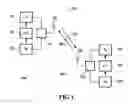
FIG. 1 is a block diagram of a system in which is implemented the invention.
DETAILED DESCRIPTION OF THE INVENTION
The present invention relates to a system of communication 300 as depicted on FIG. 1, comprising a primary station 100, like a base station, and at least one secondary station 200 like a mobile station.
The radio system 300 may comprise a plurality of the primary stations 100 and/or a plurality of secondary stations 200. The primary station 100 comprises a transmitter means 110 and a receiving means 120. An output of the transmitter means 110 and an input of the receiving means 120 are coupled to an antenna 130 or an antenna array comprising a plurality of antennas, by a coupling means 140, which may be for example a circulator or a changeover switch. Coupled to the transmitter means 110 and receiving means 120 is a control means 150, which may be for example a processor. The secondary station 200 comprises a transmitter means 210 and a receiving means 220. An output of the transmitter means 210 and an input of the receiving means 220 are coupled to an antenna 230 or an antenna array comprising a plurality of antennas, by a coupling means 240, which may be for example a circulator or a changeover switch. Coupled to the transmitter means 210 and receiving means 220 is a control means 250, which may be for example a processor. Transmission from the primary radio station 100 to the secondary station 200 takes place on a downlink channel 160 and transmission from the secondary radio station 200 to the first radio station 100 takes place on an uplink channel 260.
Some preferred embodiments of the invention are as follows:
The simplified preamble transmission procedure may comprise one or more of:
-
- using a larger power step between preambles
- starting with a higher power
- starting with the same power as the last transmission of the previous preamble.
The use or non-use of the simplified preamble transmission procedure may be dependent on one or more of the following:
-
- the particular preamble selected the first time
- the type of RACH access (for example Release 99 RACH or E-RACH)
- one or more characteristics of the data or transmissions to follow the RACH access.
In a typical embodiment, the invention is applied in UMTS WCDMA.
A detailed embodiment is described below.
In R1-074976, “Enhanced Uplink for CELL_FACH”, Philips, available at http://www.3gpp.org/ftp/tsg_ran/WG1_RL1/TSGR1—51/Docs/R1074976.zip, we discussed a number of issues related to the use of RACH preambles for the initial phase of starting Enhanced Uplink in Cell_FACH. In this paper we focus on the E-DCH resource allocation phase.
Note that in this paper, when we refer to “E-DCH Resource” we mean a combination of an UL scrambling code, E-RNTI, F-DPCH code and time-offset, E-RGCH/E-HICH code and signatures, and E-AGCH code.
E-DCH Resource Allocation Methods
Overview of Possibilities
In general, two extreme possibilities may be identified:
-
- Each E-RACH preamble is directly associated with one E-DCH resource. The E-DCH resource is effectively selected randomly by the UE, and no additional resource allocation signalling is transmitted by the NodeB when acknowledging the preamble. If the E-DCH resource corresponding to the preamble selected by the UE is already in use, the NodeB responds to the preamble with a NACK on the AICH.
- There is no predetermined association between E-RACH preambles and E-DCH resources. The allocation of E-DCH resources is carried out by the eNodeB and signalled in response to an E-RACH preamble.
Intermediate cases are also possible, where an association exists between each E-RACH preamble and a set of E-DCH resources. When the UE selects a preamble it therefore also selects a corresponding set of E-DCH resources, and the particular E-DCH resource within that set is selected by the NodeB and signalled in response to the preamble.
As discussed in R1-074976, in all cases the total set of E-DCH resources available should be broadcast, so that any signalling by the NodeB can simply comprise an index.
E-DCH Resource Allocation Signalling
The main factor governing which of the above methods should be used depends on how many signalling bits can be transmitted when the NodeB responds to an E-RACH preamble.
If no bits are available (i.e. the NodeB simply sends a conventional AICH response with no extension), then option (1) (each E-RACH preamble directly associated with one E-DCH resource) should be used. However, in our view, the set-up delay associated with option (1) is likely to be too long. This is because the collision probability becomes limited by the number of E-DCH resources available, not the number of E-RACH preambles available. Whenever a UE happens to select a preamble corresponding to an E-DCH resource which is already in use, it has to start again with random preamble selection.
Therefore possibilities for reducing the delay of option (1) might be considered, for example:
-
- use the reserved part at the end of the AICH to broadcast the indices of the E-DCH resources which are not yet in use, so that the UE can select a corresponding E-RACH preamble, and/or
- shorten the power ramping phase. For example by omitting the power-ramping phase of the RACH for a subsequent access attempt if the UE's first preamble transmission of the previous attempt is NACK'ed. (If the UE has already established a power level at which its first preamble was acknowledged, it introduces unnecessary delay if the UE has to start with a lower power level when selecting a different preamble. The process could be speeded up by allowing the UE to use the same power level as for the previous NACK'ed preamble.)
However, in practice it seems entirely possible to transmit a few additional signalling bits together with the AICH response. Possible methods for this include:
-
- using certain existing AICH signatures, or groups of simultaneously-transmitted signatures, to allocate E-DCH resources, as proposed in R1-074303, “Resource assignment for E-DCH access in CELL_FACH state” Nokia Corporation, Nokia Siemens Networks, available at http://www.3gpp.org/ftp/tsg_ran/WG1_RL1/TSGR1—50b/Docs/R1-074303.zip.
- extending the number of available AICH signatures, and using them for signalling, as also proposed in R1-074303.
- signalling using the reserved part at the end of the AICH.
Method (1) used on its own without extending the information-carrying ability of the
AICH reduces the number of signatures available for access requests and therefore results in an increased collision probability. Therefore we do not prefer such a solution.
The number of bits available with each of methods (2) and (3) needs further evaluation. In principle, 16 additional signatures are available with method (2), although this would generate some additional interference to existing R99 AICH responses which needs to be evaluated. The number of bits available with method (3) is more limited (8 bits with SF256), but does not cause interference to existing AICH responses.
The amount of interference could be reduced in a default resource is indicated by sending only an ACK on the AICH, and in case this resource is not available, another may be indicated by sending additional signalling bits.
Both of these methods 2) and 3) (or even a combination of the two) should be evaluated further.
If the E-DCH resource allocation is indicated entirely by the choice of E-RACH preamble then methods for reducing the delay might be considered, for example: use the reserved part at the end of the AICH to broadcast the indices of the E-DCH resources which are not yet in use, so that the UE can select a corresponding E-RACH preamble, shorten the power ramping phase.
If additional signalling bits are used to indicate the E-DCH resource allocation, we propose to transmit a few additional signalling bits together with the AICH response. Possible methods for this include:
-
- extending the number of available AICH signatures, and using them for signalling, as also proposed in R1-074303.
- signalling using the reserved part at the end of the AICH
In the present specification and claims the word “a” or “an” preceding an element does not exclude the presence of a plurality of such elements. Further, the word “comprising” does not exclude the presence of other elements or steps than those listed.
The inclusion of reference signs in parentheses in the claims is intended to aid understanding and is not intended to be limiting.
From reading the present disclosure, other modifications will be apparent to persons skilled in the art. Such modifications may involve other features which are already known in the art of radio communication and which may be used instead of or in addition to features already described herein.
Claims
1. A method for requesting access to a resource,
said method comprising a secondary station transmitting an access preamble to a primary station,
upon failure of correct transmission of the access preamble, the secondary station starting a first power ramping scheme for transmitting the access preamble,
upon failure of correct transmission of the access preamble with the first power ramping scheme,
the secondary station transmitting a second access preamble with a second power ramping scheme being different from the first power ramping scheme.
2. The method of claim 1, wherein the first power ramping scheme comprises transmitting the first access preamble successively with a transmission power increased by a first power step, wherein the second power ramping scheme comprises transmitting the second access preamble successively with a transmission power increased by a second power step larger than the first power step.
3. The method of claims 1, wherein the first power ramping scheme comprises starting from a first power level, and wherein the second power ramping scheme comprises starting from a second power level being higher than the first power level.
4. The method of claim 3, wherein the second power level equals the power level of the last transmission according to the first ramping power scheme.
5. The method of claim 1, wherein the use or non-use of the second power ramping scheme depends on at least one factor of the following:
a signalled instruction;
the first access preamble;
the type of access request;
the type of resource for which access is requested;
one or more characteristics of the data or transmissions to follow access request.
6. The method of claim 5, wherein at least one factor determining the use or non-use of the second power ramping scheme is signalled to the secondary station by the primary station.
7. A secondary station comprising requesting means for requesting access to a resource, said requesting means comprising means for transmitting an access preamble to a primary station, said requesting means being arranged for, upon failure of correct transmission of the access preamble, starting a first power ramping scheme for transmitting the access preamble, and for, upon failure of correct transmission of the access preamble with the first power ramping scheme, transmitting a second access preamble with a second power ramping scheme being different from the first power ramping scheme.
Images & Drawings included:

Sources:
- United States Patent and Trademark Office - verify current appl. status at the USPTO↗
Similar patent applications:
- » 20130044715
Power ramping for RACH - » 20150319704
Power ramping for RACH - » 20190268060
Power ramping for random access channel (RACH) preamble transmissions with beam switching
Recent applications in this class:
- » 20250081120 2025-03-06
POWER BOOSTING AND ENERGY HARVESTING SLOT INDICATIONS - » 20240422693 2024-12-19
FULL-DUPLEX NON-ORTHOGONAL MULTIPLE ACCESS-BASED TRANSMIT POWER CONTROL DEVICE EMPLOYING DEEP REINFORCEMENT LEARNING - » 20240340805 2024-10-10
NETWORK OPERATOR CONTROLLED POWER UPDATE FOR PHYSICAL RESOURCE BLOCKS - » 20230388936 2023-11-30
POWER CONTROL FOR CONCURRENT TRANSMISSION SCENARIOS IN MULTI-BAND OPERATION - » 20230247562 2023-08-03
TERMINAL, AND COMMUNICATION METHOD - » 20230105877 2023-04-06
SIMULTANEOUS PRIMARY AND SECONDARY RADIO FREQUENCY LINK TRANSMISSIONS WITHIN RADIO FREQUENCY EXPOSURE LIMITS - » 20230093264 2023-03-23
METHOD, DEVICE AND COMPUTER STORAGE MEDIUM FOR COMMUNICATION - » 20230080162 2023-03-16
POWER CONTROL USING AT LEAST ONE POWER CONTROL PARAMETER - » 20230049634 2023-02-16
WIRELESS COMMUNICATION NODE - » 20220086767 2022-03-17
NR V2X sidelink structures for PSCCH cover enhancement
Recent applications for this Assignee:
- » 20210337645 2021-10-28
METHOD AND ADJUSTMENT SYSTEM FOR ADJUSTING SUPPLY POWERS FOR SOURCES OF ARTIFICIAL LIGHT - » 20210290972 2021-09-23
BODY ILLUMINATION SYSTEM USING BLUE LIGHT - » 20190191921 2019-06-27
METHOD AND SYSTEM FOR BREWING INGREDIENTS IN A SOLVENT, APPARATUS USING SAID SYSTEM - » 20170325686 2017-11-16
System and method for extracting physiological information from remotely detected electromagnetic radiation - » 20150380899 2015-12-31
Eye-safe laser-based lighting - » 20150305720 2015-10-29
Ultrasonic synthetic transmit focusing with motion compensation - » 20150189712 2015-07-02
LED lighting arrangement and method of controlling a LED lighting arrangement - » 20150181667 2015-06-25
Driver circuit between fluorescent ballast and LED - » 20150171273 2015-06-18
Solid state light emitting devices based on crystallographically relaxed structures - » 20150146407 2015-05-28
Lighting device having a remote wavelength converting layer