Piezoceramic multi-layer element
US20100307669A1
2010-12-09
12/682,883
2008-10-20
✅ Patent granted
US 9,598,319 B2
2017-03-21
WO; PCT/EP2008/064123; 20081020
WO; WO2009/050299; 20090423
Alex Efta
Norton Rose Fulbright US LLP
2029-06-28
Abstract:
According to the state of the art, piezoceramic multi-layer elements are sintered in air at temperatures of approximately 1100 DEG C or higher. Therefore, only a noble metal having a high melting temperature can be used as the inner electrode. Non-noble metals would oxidize. Therefore, a silver-palladium alloy having up to 40% palladium is normally used. However, such a measure is associated with high material costs. Lower melting temperatures of the inner electrode material, however, also require a ceramic material having correspondingly low sintering temperatures. The invention therefore proposes that an electrically non-conductive sintering additive added be added to the base material, and that the inner electrode comprise silver, preferably pure silver, as the main material component thereof, and an electrically non-conductive material component and/or a metal alloy or metal oxide mixture.
Inventors:
- Reiner Bindig 16 🇩🇪 Bindlach, Germany
- Hans-Jürgen Schreiner 11 🇩🇪 Neunkirchen am Sand-Rollhofen, Germany
- Reiner Bindig 1 🇩🇪 Bindiach, Germany
Assignee:
- CERAMTEC GMBH 88 🇩🇪 Plochingen, Germany
Applicant:
Interested in similar patents?
Get notified when new applications in this technology area are published.
Classification:
C04B35/468 » CPC further
Shaped ceramic products characterised by their composition ; Ceramics compositions ; Processing powders of inorganic compounds preparatory to the manufacturing of ceramic products based on oxide ceramics based on titanium oxides or titanates based on titanates based on alkaline earth metal titanates based on barium titanates
C04B35/475 » CPC further
Shaped ceramic products characterised by their composition ; Ceramics compositions ; Processing powders of inorganic compounds preparatory to the manufacturing of ceramic products based on oxide ceramics based on titanium oxides or titanates based on titanates based on bismuth titanates
H01L41/18 IPC
Piezo-electric devices in general; Electrostrictive devices in general; Magnetostrictive devices in general; Processes or apparatus specially adapted for the manufacture or treatment thereof or of parts thereof; Details thereof; Selection of materials for piezo-electric or electrostrictive devices, e.g. bulk piezo-electric crystals
H01B1/02 IPC
Conductors or conductive bodies characterised by the conductive materials; Selection of materials as conductors mainly consisting of metals or alloys
H01L41/273 » CPC further
Piezo-electric devices in general; Electrostrictive devices in general; Magnetostrictive devices in general; Processes or apparatus specially adapted for the manufacture or treatment thereof or of parts thereof; Details thereof; Processes or apparatus specially adapted for the assembly, manufacture or treatment of piezo-electric or electrostrictive devices or of parts thereof; Manufacturing multilayered piezo-electric or electrostrictive devices or parts thereof, e.g. by stacking piezo-electric bodies and electrodes by integrally sintering piezo-electric or electrostrictive bodies and electrodes
C04B35/6303 » CPC further
Shaped ceramic products characterised by their composition ; Ceramics compositions ; Processing powders of inorganic compounds preparatory to the manufacturing of ceramic products; Forming processes; Processing powders of inorganic compounds preparatory to the manufacturing of ceramic products; Preparing or treating the powders individually or as batches ; preparing or treating macroscopic reinforcing agents for ceramic products, e.g. fibres; mechanical aspects section using additives specially adapted for forming the products, e.g.. binder binders Inorganic additives
C04B35/622 » CPC further
Shaped ceramic products characterised by their composition ; Ceramics compositions ; Processing powders of inorganic compounds preparatory to the manufacturing of ceramic products Forming processes; Processing powders of inorganic compounds preparatory to the manufacturing of ceramic products
C04B37/006 » CPC further
Joining burned ceramic articles with other burned ceramic articles or other articles by heating by means of an interlayer consisting of a combination of materials selected from glass, or ceramic material with metals, metal oxides or metal salts consisting of metals or metal salts
H01L41/0471 » CPC further
Piezo-electric devices in general; Electrostrictive devices in general; Magnetostrictive devices in general; Processes or apparatus specially adapted for the manufacture or treatment thereof or of parts thereof; Details thereof; Details of piezo-electric or electrostrictive devices; Electrodes or electrical connection arrangements Individual layer electrodes of multilayer piezo-electric or electrostrictive devices, e.g. internal electrodes
H01L41/1876 » CPC further
Piezo-electric devices in general; Electrostrictive devices in general; Magnetostrictive devices in general; Processes or apparatus specially adapted for the manufacture or treatment thereof or of parts thereof; Details thereof; Selection of materials for piezo-electric or electrostrictive devices, e.g. bulk piezo-electric crystals; Ceramic compositions, i.e. synthetic inorganic polycrystalline compounds incl. epitaxial, quasi-crystalline materials; Lead based oxides Lead zirconate titanate based
H01L41/43 » CPC further
Piezo-electric devices in general; Electrostrictive devices in general; Magnetostrictive devices in general; Processes or apparatus specially adapted for the manufacture or treatment thereof or of parts thereof; Details thereof; Processes or apparatus specially adapted for the assembly, manufacture or treatment of piezo-electric or electrostrictive devices or of parts thereof; Forming piezo-electric or electrostrictive materials; Inorganic materials by sintering
C04B2235/3201 » CPC further
Aspects relating to ceramic starting mixtures or sintered ceramic products; Composition of constituents of the starting material or of secondary phases of the final product; Constituents and secondary phases not being of a fibrous nature; Metal oxides, mixed metal oxides, or oxide-forming salts thereof, e.g. carbonates, nitrates, (oxy)hydroxides, chlorides Alkali metal oxides or oxide-forming salts thereof
C04B2235/3213 » CPC further
Aspects relating to ceramic starting mixtures or sintered ceramic products; Composition of constituents of the starting material or of secondary phases of the final product; Constituents and secondary phases not being of a fibrous nature; Metal oxides, mixed metal oxides, or oxide-forming salts thereof, e.g. carbonates, nitrates, (oxy)hydroxides, chlorides; Alkaline earth oxides or oxide forming salts thereof, e.g. beryllium oxide Strontium oxides or oxide-forming salts thereof
C04B2235/3251 » CPC further
Aspects relating to ceramic starting mixtures or sintered ceramic products; Composition of constituents of the starting material or of secondary phases of the final product; Constituents and secondary phases not being of a fibrous nature; Metal oxides, mixed metal oxides, or oxide-forming salts thereof, e.g. carbonates, nitrates, (oxy)hydroxides, chlorides; Refractory metal oxides, their mixed metal oxides, or oxide-forming salts thereof Niobium oxides, niobates, tantalum oxides, tantalates, or oxide-forming salts thereof
C04B2235/3255 » CPC further
Aspects relating to ceramic starting mixtures or sintered ceramic products; Composition of constituents of the starting material or of secondary phases of the final product; Constituents and secondary phases not being of a fibrous nature; Metal oxides, mixed metal oxides, or oxide-forming salts thereof, e.g. carbonates, nitrates, (oxy)hydroxides, chlorides; Refractory metal oxides, their mixed metal oxides, or oxide-forming salts thereof; Niobium oxides, niobates, tantalum oxides, tantalates, or oxide-forming salts thereof Niobates or tantalates, e.g. silver niobate
C04B2235/3272 » CPC further
Aspects relating to ceramic starting mixtures or sintered ceramic products; Composition of constituents of the starting material or of secondary phases of the final product; Constituents and secondary phases not being of a fibrous nature; Metal oxides, mixed metal oxides, or oxide-forming salts thereof, e.g. carbonates, nitrates, (oxy)hydroxides, chlorides; Iron group oxides, their mixed metal oxides, or oxide-forming salts thereof Iron oxides or oxide forming salts thereof, e.g. hematite, magnetite
C04B2235/447 » CPC further
Aspects relating to ceramic starting mixtures or sintered ceramic products; Composition of constituents of the starting material or of secondary phases of the final product; Constituents and secondary phases not being of a fibrous nature; Metal salt constituents or additives chosen for the nature of the anions, e.g. hydrides or acetylacetonate Phosphates or phosphites , e.g. orthophosphate, hypophosphite
C04B2235/6025 » CPC further
Aspects relating to ceramic starting mixtures or sintered ceramic products; Aspects relating to the preparation, properties or mechanical treatment of green bodies or pre-forms; Making the green bodies or pre-forms by moulding Tape casting, e.g. with a doctor blade
C04B2235/72 » CPC further
Aspects relating to ceramic starting mixtures or sintered ceramic products; Aspects relating to sintered or melt-casted ceramic products Products characterised by the absence or the low content of specific components, e.g. alkali metal free alumina ceramics
C04B2235/727 » CPC further
Aspects relating to ceramic starting mixtures or sintered ceramic products; Aspects relating to sintered or melt-casted ceramic products; Products characterised by the absence or the low content of specific components, e.g. alkali metal free alumina ceramics Phosphorus or phosphorus compound content
C04B35/462 » CPC further
Shaped ceramic products characterised by their composition ; Ceramics compositions ; Processing powders of inorganic compounds preparatory to the manufacturing of ceramic products based on oxide ceramics based on titanium oxides or titanates based on titanates
H01L41/0477 » CPC further
Piezo-electric devices in general; Electrostrictive devices in general; Magnetostrictive devices in general; Processes or apparatus specially adapted for the manufacture or treatment thereof or of parts thereof; Details thereof; Details of piezo-electric or electrostrictive devices; Electrodes or electrical connection arrangements Conductive materials
C04B2235/768 » CPC further
Aspects relating to ceramic starting mixtures or sintered ceramic products; Aspects relating to sintered or melt-casted ceramic products; Physical characteristics; Crystal structural characteristics, e.g. symmetry Perovskite structure ABO
C03B29/00 IPC
Reheating glass products for softening or fusing their surfaces; Fire-polishing; Fusing of margins
C04B35/00 IPC
Shaped ceramic products characterised by their composition ; Ceramics compositions ; Processing powders of inorganic compounds preparatory to the manufacturing of ceramic products
C04B35/63 IPC
Shaped ceramic products characterised by their composition ; Ceramics compositions ; Processing powders of inorganic compounds preparatory to the manufacturing of ceramic products; Forming processes; Processing powders of inorganic compounds preparatory to the manufacturing of ceramic products; Preparing or treating the powders individually or as batches ; preparing or treating macroscopic reinforcing agents for ceramic products, e.g. fibres; mechanical aspects section using additives specially adapted for forming the products, e.g.. binder binders
C04B35/491 » CPC main
Shaped ceramic products characterised by their composition ; Ceramics compositions ; Processing powders of inorganic compounds preparatory to the manufacturing of ceramic products based on oxide ceramics based on zirconium or hafnium oxides, zirconates, zircon or hafnates containing also titanium oxides or titanates based on lead zirconates and lead titanates, e.g. PZT
C04B37/00 IPC
Joining burned ceramic articles with other burned ceramic articles or other articles by heating
H01L41/047 IPC
Piezo-electric devices in general; Electrostrictive devices in general; Magnetostrictive devices in general; Processes or apparatus specially adapted for the manufacture or treatment thereof or of parts thereof; Details thereof; Details of piezo-electric or electrostrictive devices Electrodes or electrical connection arrangements
C04B37/001 » CPC further
Joining burned ceramic articles with other burned ceramic articles or other articles by heating directly with other burned ceramic articles
C04B2235/5445 » CPC further
Aspects relating to ceramic starting mixtures or sintered ceramic products; Composition of constituents of the starting material or of secondary phases of the final product; Constituents or additives of the starting mixture chosen for their shape or used because of their shape or their physical appearance; Particle size related information expressed by the size of the particles or aggregates thereof submicron sized, i.e. from 0,1 to 1 micron
B32B27/00 IPC
Layered products comprising synthetic resin
H01L41/187 IPC
Piezo-electric devices in general; Electrostrictive devices in general; Magnetostrictive devices in general; Processes or apparatus specially adapted for the manufacture or treatment thereof or of parts thereof; Details thereof; Selection of materials for piezo-electric or electrostrictive devices, e.g. bulk piezo-electric crystals Ceramic compositions, i.e. synthetic inorganic polycrystalline compounds incl. epitaxial, quasi-crystalline materials
Description
The invention relates to a material for producing a piezoceramic multi-layer element, a method for producing the material, a method for producing the multi-layer element, and also an inner-electrode material for use in the multi-layer element.
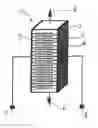
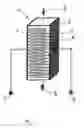
A piezoceramic multi-layer element, as known from the prior art, is shown in the accompanying FIGURE. A multi-layer element 1 consists of stacked thin layers of piezoelectrically active material 2, for example lead zirconate titanate (PZT), with conductive inner electrodes 4 arranged in between that are directed alternately to the element surface. Outer electrodes 3 connect these inner electrodes 4. As a result, the inner electrodes 4 are electrically connected in parallel and combined to form two groups that represent the two terminal poles 7 and 8 of the multi-layer element 1. When an electric voltage is applied to the terminal poles 7 and 8, this is transmitted in parallel to all the inner electrodes 4 and gives rise to an electric field in all the layers of the active material, which is mechanically deformed as a result. The sum of all these mechanical deformations is available at the end faces of the element as a useful extension 6 and/or force.
In accordance with the prior art, piezoceramic multi-layer elements are sintered in air at temperatures of approximately 1100° C. or above. That is why only a noble metal with a high melting temperature can be used as the inner electrode. Non-noble metals would oxidize. A silver-palladium alloy with up to 40% by weight palladium is therefore normally used. However, this is associated with high material costs. Low melting temperatures of the inner-electrode material, though, also require a ceramic material that has correspondingly low sintering temperatures.
The underlying object of the invention is to eliminate the disadvantages of the prior art and to reduce the costs of piezoceramic multi-layer elements by means of a ceramic material with a lower sintering temperature than is usual and also inner electrodes without a proportion of noble metal or at least with a substantially lower proportion of noble metal.
The object is achieved with the aid of a material for producing a piezoceramic multi-layer element from a PZT material as a base material according to one of claims 1 to 10, a method for producing this material according to one of claims 11 to 21, a method for producing the multi-layer element according to claim 22, and an inner-electrode material according to one of claims 23 to 28 for use in the piezoceramic multi-layer element.
Advantageous developments of the invention are claimed in the dependent claims.
Silver is not graded as a noble metal in the description that follows, although, considered electrochemically, it does belong to the noble metals.
The multi-layer element in accordance with the invention contains inner electrodes, the main-material component of which consists of pure silver without any other proportion of noble metal. Since silver melts at 961° C. and this temperature drops even further in the presence of piezoceramic material, a sintering temperature of 950° C. should not be exceeded. This aim can be achieved by means of three measures:
-
- a) A PZT ceramic material that sinters at low temperatures must be used;
- b) The PZT material must be robust with respect to the inward diffusion of silver when sintering. The silver that diffuses in out of the inner electrode lowers the sintering temperature further considerably. However, it should affect the piezomechanical properties of the material as little as possible;
- c) The inner electrode must be stabilized by additions of PZT or related types of ceramic material and/or a metal alloy and/or metal-oxide mixture, since otherwise it largely diffuses into the ceramic material, changes the properties thereof or loses its conductivity.
The ceramic material in accordance with the invention preferably consists of lead zirconate titanate, barium titanate or bismuth titanate. The reduction in the sintering temperature is achieved by adding to the base material PZT an electrically non-conductive sintering aid, the concentration of which in the sum of the substances amounts to <5% by weight, preferably <1% by weight, particularly preferably <0.5% by weight.
The following sintering aids are used in accordance with the invention:
-
- Sintering aids are selected from monovalent, bivalent or trivalent metal oxides, such as Na2O, K2O, MgO, CaO, SrO, Al2O3, Fe2O3, NiO, Mn2O3 or Cr2O3.
- Sintering aids are used that contain tetravalent cations, with SiO2, GeO2, InO2, TlO2 or SnO2 preferably being used.
- Sintering aids are used that contain pentavalent cations, with P2O5, As2O5, Sb2O5 or Bi2O5 preferably being used.
- The sintering aid can consist of one substance or a combination of the afore-mentioned substances of a group or a combination of the afore-mentioned substances of the various groups.
- The concentration of the sintering aid in the sum of the substances is <5% by weight, preferably <2% by weight and particularly preferably <1% by weight.
- The concentration of an individual substance of a sintering aid is <3% by weight, preferably <1% by weight and particularly preferably <0.5% by weight.
- The addition of the quantity of the sintering aid can already be taken into account in the recipe if it is effected during the mixing of the raw materials before calcination or after calcination.
- The addition of the quantity of the sintering aid is effected by measuring and doping to a target value in order thus to take into account fluctuations in the raw materials and the method of preparation.
- Coating with liquid addition of the sintering aid can also be effected before or after calcination.
By means of the PZT material in accordance with the invention it is possible to lower the sintering temperature to below 900° C. and to produce a multi-layer element that has the same properties as an element containing noble metal in accordance with the prior art.
In the case of a monolithic multi-layer element in accordance with the invention that can comprise, for example, 1 to 1000 courses of piezoelectrically active material, the material in accordance with the invention of the inner electrodes, which are located in the active material, consists of silver, preferably of pure silver, to which in addition an electrically non-conductive material can be added in a proportion by weight of 0% to a maximum of 30%, preferably less than 15%. The silver of the inner electrodes, in the starting state before sintering, is present as spherical particles (powder).
Lead titanate zirconate (PZT), consisting in particular of a co-doped material, can be added to the inner electrodes as an electrically non-conductive material in a proportion by weight of up to a maximum of 30%, preferably 5% to 15%.
In addition to the electrically non-conductive material it is also possible to add to the material of the inner electrodes a metal alloy and/or a metal-oxide mixture in a proportion of no more than 30% by weight, preferably less than 10, particularly preferably less than 5% by weight. The proportion of the two added substances can thus amount in total to 60% by weight, and the substances can be mixed together in any composition. This metal alloy and/or metal-oxide mixture can, however, also replace the proportion of the electrically non-conductive material. Noble metal, with the exception of silver, can be used as the metal alloy and/or metal-oxide mixture. The metal alloy and/or metal-oxide mixture can contain palladium or platinum. In order to produce a multi-layer element in accordance with the invention, use is made of a calcined PZT material, for example in accordance with the composition 0.98Pb(Zr0.53Ti0.47)O3−0.02Sr(K0.25Nb0.75)O3, as known from DE 19 840 488 A1.
The production of a multi-layer element in accordance with the invention is explained in greater detail with reference to a method that is generally possible. The film technique is applied in order to produce multi-layer elements. The procedure described and the parameters described only give an example. Similar procedures and parameters are obvious at any time to the person skilled in the art.
The calcined starting material is pre-comminuted and ground in an annular-gap ball mill to an average grain size of, for example, 0.8 μm.
A castable slip is prepared in accordance with the prior art from the resultant powder, with one or more of the substances mentioned above being added thereby in a defined manner as the sintering aid. The castable slip is cast to form a continuous film, dried and rolled up. Casting bands that operate according to the doctor-blade method are suitable for this, for example. According to this method, after drying the film has a thickness of, for example, 70 μm and after sintering a thickness of 60 μm.
The film is divided into sections of approximately 200×200 mm. Thereupon, the inner-electrode patterns of metal paste are printed on by means of screen-printing. The subsequent dimension of the multi-layer element is defined by the form of the print layout.
The inner-electrode paste can be produced from pure silver powder or, for example, from a mixture of silver powder with a PZT powder of the composition predetermined above in terms of the formula. In addition, a metal alloy or a metal-oxide mixture of the kind specified above can be added. This metal alloy or metal-oxide mixture can, however, also replace the proportion of the electrically non-conductive material. Binders, such as ethyl cellulose, and solvents, such as terpineol, ensure that there is good printability of the paste. The paste is printed on in such a way that the thickness of the inner electrode after sintering amounts to approximately 3 μm.
The film sections that have been printed on and dried are stacked in such a way that the structure of the multi-layer element develops.
The stacked films are now compressed in accordance with the prior art at an elevated pressure and an elevated temperature to form a laminate.
Subsequently, the laminate is separated into the forms that are predetermined by the print layout and the number of the multi-layer elements, for example by sawing or punching.
The multi-layer elements are freed of the organic binder portions at a temperature of 500° C. and subsequently sintered at 900° C.
The sintered multi-layer elements are ground at the narrow edges and printed on with a basic metallization for the connection of the outer electrodes.
As a result of applying a voltage of 200 V, the multi-layer elements are now polarized in such a way that a polarization that is continuous in one direction develops.
For a first exemplary embodiment multi-layer elements having the dimensions 7×7×30 mm are produced in accordance with the method described above with the addition of phosphorus pentoxide and iron oxide as sintering aids. The addition is performed in such a way that the content, according to analysis of the unsintered ceramic film, amounts to 200 ppm phosphorus and 0.4% iron relative to the weight of the solid ceramic matter. A mixture of pure silver powder, 90% by weight, and finely ground PZT powder, 10% by weight, is used as the inner-electrode material. The mixture is stirred with ethyl cellulose and terpineol to form a paste containing 50% of the mixture.
The multi-layer elements are sintered at 900° C. The thickness of the ceramic films, after sintering, amounts to 90 μm. When a 200 V operating voltage is applied, the component has a specific extension of 1.4 parts per thousand of the total length and a blocking tension of 40 N/mm2.
For a second exemplary embodiment, multi-layer elements having the dimensions 7×7×30 mm are produced in accordance with the method described above with the addition of phosphorus pentoxide and iron oxide as sintering aids. The addition is performed in such a way that the content, according to analysis of the unsintered ceramic film, amounts to 200 ppm phosphorus and 0.4% iron relative to the weight of the solid ceramic matter.
A mixture of pure silver powder, 80% by weight, and finely ground PZT powder, 20% by weight, is used as the inner-electrode material. The mixture is stirred with ethyl cellulose and terpineol to form a paste containing 50% of the mixture.
The multi-layer elements are sintered at temperatures around 900° C. The thickness of the ceramic films, after sintering, amounts to 60 μm.
When a 200 V operating voltage is applied, the component has a specific extension of 2.0 parts per thousand of the total length and a blocking tension of 56 N/mm2.
For the purposes of comparison, multi-layer elements having the dimensions 7×7×30 mm are produced in accordance with the method described above, but in the composition known from the prior art, that is, without the addition of sintering aids. A commercially available metal paste with the composition AgPd 70/30 is used in the metal portion as the inner-electrode material.
The multi-layer elements are sintered at temperatures around 1000° C. The thickness of the ceramic films, after sintering, amounts to 90 μm.
When a 200 V operating voltage is applied, the component has a specific extension of 1.7 parts per thousand of the total length and a blocking tension of 40 N/mm2.
When the two exemplary embodiments are compared with the prior art it becomes apparent that the specific extension of the multi-layer elements amounts to approximately 80% of the extension of standard multi-layer elements provided with AgPd 70/30 inner electrodes. At the same time, however, the multi-layer elements in accordance with the invention, as a result of the effect of the sintering aids, are more rigid and dense, something which can be seen from the unchanged value for the mechanical blocking tension and a considerably higher electrical breakdown voltage.
It is therefore possible to reduce the layer thickness in the case of the multi-layer elements and, as a result, given the same operating voltage increase the operating field strength in the active material and produce equivalent or even superior multi-layer elements.
Claims
1. A material for producing a piezoceramic multi-layer element from a PZT material as a base material, wherein an electrically non-conductive sintering aid is added to the base material.
2. A material according to claim 1, wherein the base material is selected from the group consisting of lead zirconate titanate, barium titanate and bismuth titanate.
3. A material according to claim 1, wherein the sintering aid is selected from the group consisting of from monovalent, bivalent and trivalent metal oxides.
4. A material according to claim 1, wherein the sintering aid comprises a tetravalent cation.
5. A material according to claim 1, wherein the sintering aid comprises a pentavalent cation.
6. A material claim 1, wherein the sintering aid consists of one substance or a combination of the afore-mentioned substances of a group or a combination of the afore-mentioned substances of the various groups.
7. A material claim 1, wherein the concentration of the sintering aid in the sum of the substances amounts to <5% by weight, preferably <2% by weight and particularly preferably <1% by weight.
8. A material claim 1, wherein the concentration of an individual substance of the sintering aid amounts to <3% by weight.
9. A material claim 1, wherein the addition of the quantity of the sintering aid is already taken into account in the recipe if it is effected during the mixing of the raw materials before calcination or after calcination.
10. A material claim 1, wherein the sintering temperature of the material for the production of the piezoceramic multi-layer element is lower than 1000° C.
11. A method for producing a material for producing a piezoceramic multi-layer element from a PZT material as a base material, wherein an electrically non-conductive sintering aid is added to the base material.
12. A method according to claim 11, wherein lead zirconate titanate, barium titanate, bismuth titanate is chosen as the base material.
13. A method according to claim 11, wherein the sintering aid is selected from the group consisting of a monovalent metal oxide, a bivalent metal oxide and a trivalent metal oxide.
14. A method according to claim 11, wherein a sintering aid comprises a tetravalent cation.
15. A method according to claim 11, wherein a sintering aid comprises a pentavalent cation.
16. A method claim 11, wherein the sintering aid is composed of one substance or a combination of the afore-mentioned substances of a group or a combination of the afore-mentioned substances of the various groups.
17. A method claim 11, wherein <5% by weight is chosen as the concentration of the sintering aid in the sum of the substances.
18. A method claim 11, wherein <3% by weight, preferably <1% by weight is chosen as the concentration of an individual substance of the sintering aid.
19. A method according to claim 11 or 18, wherein the addition of the quantity of the sintering aid is already taken into account in the recipe if it is effected during the mixing of the raw materials before calcination or after calcination.
20. A method claim 11 to wherein the addition of the quantity of the sintering aid is effected by measuring and doping to a target value in order to take into account fluctuations in the raw materials and the method of preparation.
21. A method claim 11, wherein coating with liquid addition of the sintering aid is effected before or after calcination.
22. A method for producing a piezoceramic multi-layer element from the material for producing a piezoceramic multi-layer element from a PZT material as a base material, wherein an electrically non-conductive sintering aid is added to the base material wherein a calcined PZT material is ground as the base material, wherein there is prepared from the powder a castable slip to which a sintering aid consisting of one of or a combination of the substances is added according to the method of claim 13 in a quantity of <5% by weight, wherein the castable slip is cast to form a continuous film, preferably according to the doctor-blade method, is dried and is divided into film sections, wherein these film sections are printed on with the metal paste of the inner electrodes in the form of the print layout thereof, wherein the film sections that have been printed on and dried are stacked in such a number that the structure of the multi-layer element develops, wherein the stacked films are compressed in accordance with the prior art at an elevated pressure and an elevated temperature to form a laminate, wherein the laminate is separated into the forms that are predetermined by the print layout and the number of the multi-layer elements, for example by sawing or punching, wherein the multi-layer elements are freed of the organic binder portions at a temperature of approximately 500° C. and are subsequently sintered at temperatures below 1000° C.
23. An inner-electrode material having silver as at least one metallic component for use in a piezoceramic multi-layer element which is produced according to a method according to claim 22, wherein the inner electrode contains as a main-material component silver, preferably pure silver, and furthermore an electrically non-conductive material component in a proportion by weight of 0% to a maximum of 30%, preferably below 15%, or a metal alloy or a metal-oxide mixture in a proportion of no more than 30% by weight.
24. An inner-electrode material according to claim 23, wherein the silver, in the starting state, before sintering is present as spherical particles.
25. An inner-electrode material according to claim 23, wherein the electrically non-conductive material component is lead titanate zirconate in a proportion of no more than 30% by weight, preferably 5% to 15%, which comprises a co-doped material.
26. An inner-electrode material claim 23, wherein the proportion of the added metal alloy and/or metal-oxide mixture amounts to less than 10% by weight.
27. An inner-electrode material claim 23, wherein the metal alloy and/or metal-oxide mixture consists of noble metal with the exception of silver.
28. An inner-electrode material according to claim 27, wherein the metal alloy and/or metal-oxide mixture contains palladium or platinum.
Images & Drawings included:
Sources:
- United States Patent and Trademark Office - verify current appl. status at the USPTO↗
Recent applications in this class:
- » 20250206672 2025-06-26
3D-PRINTABLE PIEZOELECTRIC CERAMIC COMPOSITIONS WITH CARBON NANOMATERIALS - » 20240351953 2024-10-24
IMPREGNATION OF CERAMIC COMPOSITE MATERIAL - » 20210347698 2021-11-11
POROUS PIEZOELECTRIC MATERIAL MOLDED BODY, METHOD OF MANUFACTURING SAME, AND PROBE USING SAID MOLDED BODY - » 20180257991 2018-09-13
Dielectric material, method of manufacturing thereof, and dielectric devices and electronic devices including the same - » 20170129815 2017-05-11
Composition for forming Mn and Nb co-doped PZT-based piezoelectric film - » 20170107156 2017-04-20
Ce-DOPED PZT-BASED PIEZOELECTRIC FILM - » 20160340258 2016-11-24
Ceramic material and capacitor comprised thereof - » 20120257324 2012-10-11
Multilayer capacitors, method for making multilayer capacitors - » 20120181474 2012-07-19
CERAMIC MATERIAL AND PROCESS FOR PRODUCING THE CERAMIC MATERIAL - » 20120104309 2012-05-03
Lead-based piezoelectric material and production method therefor
Recent applications for this Assignee:
- » 20210384115 2021-12-09
Module with connection lugs for supply lines - » 20210071697 2021-03-11
Connection arrangement of two components - » 20200030888 2020-01-30
Tool system - » 20190366444 2019-12-05
Tool system - » 20190091031 2019-03-28
Knee endoprosthesis for replacing at least parts of the knee joint - » 20190006578 2019-01-03
Production of lead-free piezoceramics in aqueous surroundings - » 20190001419 2019-01-03
Carrier tool, cutting insert, and clamping element - » 20170362131 2017-12-21
α/β-sialon having improved sintering activity and high edge strength - » 20170348464 2017-12-07
COMPONENTS FOR FUSING VERTEBRAL BODIES - » 20170341154 2017-11-30
Cutting insert geometry