Method of treating female sexual dysfunction with a PDE1 inhibitor
US20100323997A1
2010-12-23
12/517,945
2007-12-05
✅ Patent granted
US 9,006,258 B2
2015-04-14
WO; PCT/US2007/024866; 20071205
WO; WO2008/070095; 20080612
Kendra D Carter
Hoxie & Associates, LLC
2030-03-01
Abstract:
The present invention relates to a new use for compounds that inhibit phosphodiesterase 1 (PDE1), e.g., that inhibit PDE1-mediated suppression of the dopamine D1 receptor and/or progesterone signaling pathways, including, e.g., methods of treatment or prophylaxis for conditions which may be ameliorated by enhancing the progesterone signaling response, particularly female sexual dysfunction.
Inventors:
- Lawrence P. Wennogle 29 🇺🇸 New York, NY, United States
- Sharon Mates 53 🇺🇸 New York, NY, United States
- Allen A. Fienberg 7 🇺🇸 New York, NY, United States
Assignee:
- INTRA-CELLULAR THERAPIES, INC. 178 🇺🇸 New York, NY, United States
- INTRACELLULAR THERAPIES, INC. 2 🇺🇸 New York, NY, United States
Applicant:
Interested in similar patents?
Get notified when new applications in this technology area are published.
Classification:
A61K31/57 » CPC further
Medicinal preparations containing organic active ingredients; Compounds containing cyclopenta[a]hydrophenanthrene ring systems; Derivatives thereof, e.g. steroids substituted in position 17 beta by a chain of two carbon atoms, e.g. pregnane or progesterone
A61P5/00 » CPC further
Drugs for disorders of the endocrine system
A61P5/30 » CPC further
Drugs for disorders of the endocrine system of the sex hormones Oestrogens
A61P15/00 » CPC further
Drugs for genital or sexual disorders ; Contraceptives
A61P15/08 » CPC further
Drugs for genital or sexual disorders ; Contraceptives for gonadal disorders or for enhancing fertility, e.g. inducers of ovulation or of spermatogenesis
A61P15/10 » CPC further
Drugs for genital or sexual disorders ; Contraceptives for impotence
A61P15/12 » CPC further
Drugs for genital or sexual disorders ; Contraceptives for climacteric disorders
A61P25/00 » CPC further
Drugs for disorders of the nervous system
A61P37/02 » CPC further
Drugs for immunological or allergic disorders Immunomodulators
A61P37/06 » CPC further
Drugs for immunological or allergic disorders; Immunomodulators Immunosuppressants, e.g. drugs for graft rejection
A61P43/00 » CPC further
Drugs for specific purposes, not provided for in groups -
A61P15/06 » CPC further
Drugs for genital or sexual disorders ; Contraceptives Antiabortive agents; Labour repressants
A61K2300/00 » CPC further
Mixtures or combinations of active ingredients, wherein at least one active ingredient is fully defined in groups -
A61P19/10 » CPC further
Drugs for skeletal disorders for bone diseases, e.g. rachitism, Paget's disease for osteoporosis
A61P13/08 » CPC further
Drugs for disorders of the urinary system of the prostate
A61P5/14 » CPC further
Drugs for disorders of the endocrine system of the thyroid hormones, e.g. T3, T4
A61K31/495 » CPC main
Medicinal preparations containing organic active ingredients; Heterocyclic compounds having nitrogen as a ring hetero atom, e.g. guanethidine or rifamycins having six-membered rings with two nitrogen atoms as the only ring heteroatoms, e.g. piperazine
A61K31/519 » CPC further
Medicinal preparations containing organic active ingredients; Heterocyclic compounds having nitrogen as a ring hetero atom, e.g. guanethidine or rifamycins having six-membered rings with two nitrogen atoms as the only ring heteroatoms, e.g. piperazine; Pyrimidines; Hydrogenated pyrimidines, e.g. trimethoprim ortho- or peri-condensed with heterocyclic rings
A61P35/00 » CPC further
Antineoplastic agents
A01N43/54 IPC
Biocides, pest repellants or attractants, or plant growth regulators containing heterocyclic compounds having rings with two nitrogen atoms as the only ring hetero atoms 1,3-Diazines; Hydrogenated 1,3-diazines
A61K31/505 IPC
Medicinal preparations containing organic active ingredients; Heterocyclic compounds having nitrogen as a ring hetero atom, e.g. guanethidine or rifamycins having six-membered rings with two nitrogen atoms as the only ring heteroatoms, e.g. piperazine Pyrimidines; Hydrogenated pyrimidines, e.g. trimethoprim
A01N43/52 IPC
Biocides, pest repellants or attractants, or plant growth regulators containing heterocyclic compounds having rings with two nitrogen atoms as the only ring hetero atoms 1,3-Diazoles; Hydrogenated 1,3-diazoles condensed with carbocyclic rings, e.g. benzimidazoles
A61K31/415 IPC
Medicinal preparations containing organic active ingredients; Heterocyclic compounds having nitrogen as a ring hetero atom, e.g. guanethidine or rifamycins having five-membered rings with two or more ring hetero atoms, at least one of which being nitrogen, e.g. tetrazole 1,2-Diazoles
A01N43/56 IPC
Biocides, pest repellants or attractants, or plant growth regulators containing heterocyclic compounds having rings with two nitrogen atoms as the only ring hetero atoms 1,2-Diazoles; Hydrogenated 1,2-diazoles
C07D491/00 IPC
Heterocyclic compounds containing in the condensed ring system both one or more rings having oxygen atoms as the only ring hetero atoms and one or more rings having nitrogen atoms as the only ring hetero atoms, not provided for by groups - , , or
C07D239/70 IPC
Heterocyclic compounds containing 1,3-diazine or hydrogenated 1,3-diazine rings condensed with carbocyclic rings or ring systems
A61K31/00 » CPC further
Medicinal preparations containing organic active ingredients
A61K31/565 » CPC further
Medicinal preparations containing organic active ingredients; Compounds containing cyclopenta[a]hydrophenanthrene ring systems; Derivatives thereof, e.g. steroids not substituted in position 17 beta by a carbon atom, e.g. estrane, estradiol
Description
This application claims priority from U.S. Provisional Application No. 60/873,104, filed on Dec. 5, 2006, the contents of which are hereby incorporated by reference in their entirety.
TECHNICAL FIELD
The present invention relates to a new use for compounds that inhibit phosphodiesterase 1 (PDE1), e.g., that inhibit PDE1-mediated suppression of the dopamine D1 receptor intracellular pathway and/or the progesterone signaling pathway, e.g., in a method for treating conditions that may be ameliorated through enhanced progesterone signaling, particularly female sexual dysfunction.
BACKGROUND OF THE INVENTION
In the past decade, the success of sildenafil citrate (Viagra®, Pfizer) in the treatment of erectile dysfunction has drawn much attention to the development of sexual dysfunction drugs. The focus, however, has primarily been in treating male sexual dysfunction through the use of phosphodiesterase (PDE) V inhibitors to facilitate smooth muscle relaxation and increase blood flow in the corpus cavernosum.
Eleven families of phosphodiesterases (PDEs) have been identified but only PDEs in Family I, the Ca2+-calmodulin-dependent phosphodiesterases (CaM-PDEs), have been shown to mediate the calcium and cyclic nucleotide (e.g. cAMP and cGMP) signaling pathways. The three known CaM-PDE genes, PDE1A, PDE1B, and PDE1C, are all expressed in central nervous system tissue. PDE1A is expressed throughout the brain with higher levels of expression in the CA1 to CA3 layers of the hippocampus and cerebellum and at a low level in the striatum. PDE1A is also expressed in the lung and heart. PDE1B is predominately expressed in the striatum, dentate gyrus, olfactory tract and cerebellum, and its expression correlates with brain regions having high levels of dopaminergic innervation. Although PDE1B is primarily expressed in the central nervous system, it may be detected in the heart. PDE1C is primarily expressed in olfactory epithelium, cerebellar granule cells, and striatum. PDE1C is also expressed in the heart and vascular smooth muscle.
Cyclic nucleotide phosphodiesterases downregulate intracellular cAMP and cGMP signaling by hydrolyzing these cyclic nucleotides to their respective inactive 5′-monophosphates (5′AMP and 5′GMP). CaM-PDEs play a critical role in mediating signal transduction in brain cells, particularly within an area of the brain known as the basal ganglia or striatum. For example, NMDA-type glutamate receptor activation and/or dopamine D2 receptor activation result in increased intracellular calcium concentrations, leading to activation of effectors such as calmodulin-dependent kinase II (CaMKII) and calcineurin and to activation of CaM-PDEs, resulting in reduced cAMP and cGMP. Dopamine DI receptor activation, on the other hand, leads to activation of calcium dependent nucleotide cyclases, resulting in increased cAMP and cGMP. These cyclic nucleotides in turn activate protein kinase A (PKA; cAMP-dependent protein kinase) and/or protein kinase G (PKG; cGMP-dependent protein kinase) that phosphorylate downstream signal transduction pathway elements such as DARPP-32 (dopamine and cAMP-regulated phosphoprotein) and cAMP responsive element binding protein (CREB). Phosphorylated DARPP-32 inhibits the activity of protein phosphatase-1 (PP-1), which helps maintain the state of phosphorylation of many PP-1 substrate proteins, e.g., progesterone receptor (PR), leading to the induction of physiological responses. Studies in rodents have suggested that inducing cAMP and cGMP synthesis through activation of dopamine D1 or progesterone receptor enhances progesterone signaling associated with various physiological responses, including the lordosis response associated with receptivity to mating in some rodents. See Mani, et al., Science (2000) 287: 1053, the contents of which are incorporated herein by reference.
CaM-PDEs can therefore affect dopamine-regulated and other intracellular signaling pathways in the basal ganglia (striatum), including but not limited to nitric oxide, noradrenergic, neurotensin, CCK, VIP, serotonin, glutamate (e.g., NMDA receptor, AMPA receptor), GABA, acetylcholine, adenosine (e.g., A2A receptor), cannabinoid receptor, natriuretic peptide (e.g., ANP, BNP, CNP), DARPP-32, and endorphin intracellular signaling pathways.
Phosphodiesterase (PDE) activity, in particular, phosphodiesterase 1 (PDE1) activity, functions in brain tissue as a regulator of locomotor activity and learning and memory. PDE1 is a therapeutic target for regulation of intracellular signaling pathways, preferably in the nervous system, including but not limited to a dopamine D1 receptor, dopamine D2 receptor, progesterone receptor, nitric oxide, noradrenergic, neurotensin, CCK, VIP, serotonin, glutamate (e.g., NMDA receptor, AMPA receptor), GABA, acetylcholine, adenosine (e.g., A2A receptor), cannabinoid receptor, natriuretic peptide (e.g., ANP, BNP, CNP), endorphin intracellular signaling pathway and progesterone signaling pathway. For example, inhibition of PDE1B may potentiate the effect of a dopamine D1 agonist by protecting cGMP and cAMP from degradation, and similarly inhibit dopamine D2 receptor signaling pathways, by inhibiting PDE1 activity. PDE1 inhibitors are therefore potentially useful in diseases characterized by reduced dopamine D1 receptor signaling activity. See generally, WO 03/020702.
EP 0201188 and EP 0911333, the contents of which are incorporated herein by reference, disclose certain 1,3,5,-substituted, 6,7-dihydro-1H-pyrazolo[4,3-d]pyrimidin-7-one compounds, claimed to be useful for treatment of cardiovascular disease, erectile dysfunction, and other disorders. Although erectile and female sexual dysfunction are disclosed, these compounds are not, however, taught or suggested to be useful for the treatment of diseases involving disorders of the dopamine D1 receptor intracellular pathway, particularly diseases relating to progesterone signaling pathway. PCT/US2006/33179, the contents of which are incorporated herein by reference, discloses the use of 1,3,5,-substituted, 6,7-dihydro-1H-pyrazolo[4,3-d]pyrimidin-7-one compounds for treatment of diseases involving disorders of the dopamine D1 receptor intracellular pathway, but does not specifically disclose the use of such compounds in the enhancement of progesterone signaling pathway associated with female sexual dysfunction. PCT/US2006/022066, the contents of which are incorporated herein by reference, discloses PDE1 inhibitors which are 7,8-dihydro-[1H or 2H]-imidazo[1,2-a]pyrazolo[4,3-e]pyrimidin-4(5H)-ones or 7,8,9-trihydro-[1H or 2H]-pyrimido[1,2-a]pyrazolo[4,3-e]pyrimidin-4(5H)-ones, but does not specifically disclose their use for the enhancement of progesterone signaling. WO 03/042216, U.S. Pat. No. 5,939,419, EP 0 538 332, U.S. Pat. No. 5,393,755, U.S. Pat. No. 6,969,719 B2, Xia et al., J. Med. Chem. (1997), 40, 4372-4377 and Ahn et al., J. Med. Chem. (1997), 40, 2196-2210, the contents of which are incorporated herein by reference, disclose PDE1/PDE5 cGMP phosphodiesterase inhibitors which are substituted pyrazolo[3,4-d]pyrimidine or imidazo[2,1-b]purin-4-one analogues useful for the treatment of hypertensive, cardiovascular, sexual dysfunction and other cGMP-PDEV related disorders, but do not specifically disclose their use for the enhancement of progesterone signaling, particularly in female sexual dysfunction.
SUMMARY OF THE INVENTION
The invention provides a new method of treatment or prophylaxis of conditions that may be ameliorated by enhancement of progesterone signaling pathways, for example female sexual dysfunction, comprising administering an effective amount of a phosphodiesterase-1 (PDE1) inhibitor to a patient in need thereof. PDE1 inhibitors include, for example, 7,8-dihydro-[1H or 2H]-imidazo[1,2-a]pyrazolo[4,3-e]pyrimidin-4(5H)-ones or 7,8,9-trihydro-[1H or 2H]-pyrimido[1,2-a]pyrazolo[4,3-e]pyrimidin-4(5H)-ones, substituted at the 1 or 2 position with C2-9 alkyl or C3-9 cycloalkyl, or optionally substituted heteroarylalkyl or substituted arylalkyl, in free, salt or prodrug form (hereinafter a PDE 1 Inhibitor, e.g., as described below) or a 1,3,5-substituted 6,7-dihydro-1H-pyrazolo[4,3-d]pyrimidin-7-one, in free, salt or prodrug form (also included in PDE 1 Inhibitors, e.g., as described below), to a patient in need thereof.
PDE1 inhibitors also include, for example, substituted imidazo[2,1-b]purin-4-one, e.g., (6aR,9aS)-2(biphenyl-4-ylmethyl)-5,6a,7,8,9,9a-hexahydro-5-methyl-3(phenylmethyl)-cyclopent-[4,5]imidazo-[2,1-b]purin-4(3H)-one, (6aR,9aS)-5,6a,7,8,9,9a-hexahydro-5-methyl-2,3-bis(phenylmethyl)cyclopent-[4,5]imidazo-[2,1-b]purin-4(3H)-one, 5′-methyl-2′,3′-bis(phenylmethyl)spiro[cyclopentane-1,7′(8′H)-[3H]imidazo[2,1-b]purin]-4′(5′H)-one, or 5′-methyl-2′-(biphenyl-4-ylmethyl)-3′-(phenylmethyl)spiro[cyclopentane-1,7′(8′H)-[3H]imidazo[2,1-b]purin]-4′(5′H)-one (hereinafter a PDE 1 Inhibitor, e.g., as described below). These compounds are found to selectively inhibit phosphodiesterase 1 (PDE1) activity, especially PDE1B activity, and to be useful for the treatment or prophylaxis of conditions that may be ameliorated by enhancement of progesterone signaling pathways such as female sexual dysfunction.
DETAILED DESCRIPTION OF THE INVENTION
Compounds for Use in the Methods of the Invention
Preferably, the PDE 1 Inhibitors for use in the methods of treatment described herein are a 7,8-dihydro-[1H or 2H]-imidazo[1,2-a]pyrazolo[4,3-e]pyrimidin-4(5H)-ones or 7,8,9-trihydro-[1H or 2H]-pyrimido[1,2-a]pyrazolo[4,3-e]pyrimidin-4(5H)-ones, of formula I:
wherein
-
- (i) R1 is H or C1-4 alkyl (e.g., methyl);
- (ii) R4 is H or C1-4 alkyl and R2 and R3 are, independently, H or C1-4 alkyl (e.g., R2 and R3 are both methyl, or R2 is H and R3 is isopropyl), aryl, heteroaryl, (optionally hetero)arylalkoxy, or (optionally hetero)arylalkyl; or
- R2 is H and R3 and R4 together form a di-, tri- or tetramethylene bridge (pref. wherein the R3 and R4 together have the cis configuration, e.g., where the carbons carrying R3 and R4 have the R and S configurations, respectively);
- (iii) R5 is a substituted heteroarylalkyl, e.g., substituted with haloalkyl or
- R5 is attached to one of the nitrogens on the pyrazolo portion of Formula I and is a moiety of Formula Q
-
- wherein X, Y and Z are, independently, N or C, and R8, R9, R11 and R12 are independently H or halogen (e.g., Cl or F), and R10 is halogen, alkyl, cycloalkyl, haloalkyl (e.g., trifluoromethyl), aryl (e.g., phenyl), heteroaryl (e.g., pyridyl (for example pyrid-2-yl), or thiadiazolyl (e.g., 1,2,3-thiadiazol-4-yl)), diazolyl, triazolyl, tetrazolyl, arylcarbonyl (e.g., benzoyl), alkylsulfonyl (e.g., methylsulfonyl), heteroarylcarbonyl, or alkoxycarbonyl; provided that when X, Y, or Z is nitrogen, R8, R9, or R10, respectively, is not present; and
- (iv) R6 is H, alkyl, aryl, heteroaryl, arylalkyl (e.g., benzyl), arylamino (e.g., phenylamino), heterarylamino, N,N-dialkylamino, N,N-diarylamino, or N-aryl-N-(arylakyl)amino (e.g., N-phenyl-N-(1,1′-biphen-4-ylmethyl)amino); and
- (v) n=0 or 1;
- (vi) when n=1, A is —C(R13R14)—
- wherein R13 and R14, are, independently, H or C1-4 alkyl, aryl, heteroaryl, (optionally hetero)arylalkoxy or (optionally hetero)arylalkyl;
in free, salt or prodrug form, including its enantiomers, diasterisomers and racemates.
The invention further provides the use of PDE 1 Inhibitors of Formula I as follows:
-
- 1.1 Formula I wherein R1 is methyl and n=0;
- 1.2 Formula I or 1.1 wherein R4 is H or C1-4 alkyl and at least one of R2 and R3 is lower alkyl, such that when the carbon carrying R3 is chiral, it has the R configuration, e.g., wherein both R2 and R3 are methyl, or wherein one is hydrogen and the other isopropyl;
- 1.3 Formula I or 1.1 wherein R4 is H and at least one of R2 and R3 is arylalkoxy;
- 1.4 Formula I wherein R1 is methyl, R2, R3, and R4 are H, n=1, and R13 and
- R14 are, independently, H or C1-4 alkyl (e.g., methyl or isopropyl);
- 1.5 Formula I or 1.1 wherein R2 is H and R3 and R4 together form a tri- or tetramethylene bridge, having the cis configuration, preferably wherein the carbons carrying R3 and R4 have the R and S configurations respectively;
- 1.6 Formula I, 1.1 or 1.5 wherein R5 is a substituted heteroarylmethyl, e.g., para-substituted with haloalkyl;
- 1.7 Formula I, 1.1, 1.2, 1.3, 1.4 or 1.5 wherein R5 is a moiety of Formula Q wherein R8, R9, R11, and R12 are H and R10 is phenyl;
- 1.8 Formula I, 1.1, 1.2, 1.3, 1.4 or 1.5 wherein R5 is a moiety of Formula Q wherein R8, R9, R11, and R12 are H and R10 is pyridyl or thiadiazolyl;
- 1.9 Formula I, 1.1, 1.2, 1.3, 1.4 or 1.5 wherein R5 is a moiety of Formula Q wherein R8, R9, R11, and R12 are, independently, H or halogen, and R10 is haloalkyl;
- 1.10 Formula I, 1.1, 1.2, 1.3, 1.4 or 1.5 wherein R5 is a moiety of Formula Q wherein R8, R9, R11, and R12 are, independently, H, and R10 is alkyl sulfonyl;
- 1.11 any of the preceding formulae wherein R5 is attached to the 2-position nitrogen on the pyrazolo ring;
- 1.12 any of the preceding formulae wherein R6 is benzyl;
- 1.13 any of the preceding formulae wherein R6 is phenylamino or phenylalkylamino (e.g., benzylamino);
- 1.14 any of the preceding formulae wherein R6 is phenylamino;
- 1.15 any of the preceding formulae wherein X, Y, and Z are all C,
- 1.16 any of the preceding formulae wherein X, Y, and Z are all C and R10 is phenyl or 2-pyridyl; and/or
- 1.17 any of the preceding formulae wherein the compounds inhibit phosphodiesterase-mediated (e.g., PDE1-mediated, especially PDE1B-mediated) hydrolysis of cGMP, e.g., with an IC50 of less than 1 μM, preferably less than 25 nM in an immobilized-metal affinity particle reagent PDE assay, for example, as described in Example 1;
- in free or salt form.
For example, the PDE 1 Inhibitors include 7,8-dihydro-[1H or 2H]-imidazo[1,2-a]pyrazolo[4,3-e]pyrimidin-4(5H)-ones of Formula Ia
wherein
-
- (i) R1 is H or C1-4 alkyl [e.g., methyl];
- (ii) R4 is H and R2 and R3 are, independently, H or C1-4 alkyl [e.g., R2 and R3 are both methyl, or R2 is H and R3 is isopropyl], aryl, or arylalkyl;
- or R2 is H and R3 and R4 together form a di-, tri- or tetramethylene bridge [pref. wherein the R3 and R4 have the cis configuration, e.g., where the carbons carrying R3 and R4 have the R and S configurations respectively];
- (iii) R5 is attached to one of the nitrogens on the pyrazolo portion of formula Ia and is a substituted benzyl of formula B
-
- wherein R8, R9, R11 and R12 are independently H or halogen (e.g., Cl or F); and R10 is halogen, alkyl, cycloalkyl, haloalkyl (e.g., trifluoromethyl), aryl (e.g., phenyl), heteroaryl (e.g., pyridyl (for example pyrid-2-yl), or thiadiazolyl (e.g., 1,2,3-thiadiazol-4-yl)), arylcarbonyl (e.g., benzoyl), alkyl sulfonyl or heteroarylcarbonyl; and
- (iv) R6 is H, alkyl, aryl, heteroaryl, arylalkyl [e.g., benzyl], arylamino [e.g., phenylamino], heteroarylamino, arylalkylamino, N,N-dialkylamino, N,N-diarylamino, or N-aryl-N-(arylalkyl)amino [e.g. N-phenyl-N-(1,1′-biphen-4-ylmethyl)amino];
in free, salt or prodrug form.
The invention further provides the use of PDE 1 Inhibitors of Formula Ia as follows:
-
- 2.1: Formula Ia wherein R1 is methyl;
- 2.2: Formula Ia or 2.1 wherein R4 is H and at least one of R2 and R3 is lower alkyl, such that when the carbon carrying R3 is chiral, it has the R configuration, e.g., wherein both R2 and R3 are methyl, or wherein one is hydrogen and the other isopropyl;
- 2.3: Formula Ia or 2.1 wherein R2 is H and R3 and R4 together form a tri- or tetramethylene bridge, having the cis configuration, preferably wherein the carbons carrying R3 and R4 have the R and S configurations respectively;
- 2.4: Formula Ia, 2.1, 2.2 or 2.3 wherein R5 is a moiety of formula B wherein R8, R9, R11, and R12 are H and R10 is phenyl;
- 2.5: Formula Ia, 2.1, 2.2, or 2.3 wherein R5 is a moiety of formula B wherein R8, R9, R11, and R12 are H and R10 is pyridyl or thiadiazolyl;
- 2.6: Formula Ia, 2.1, 2.2, 2.3, 2.4, or 2.5 wherein R5 is attached to the 2-position nitrogen on the pyrazolo ring;
- 2.7: Formula Ia, 2.1, 2.2, 2.3, 2.4, 2.5 or 2.6 wherein R6 is benzyl;
- 2.8: Formula Ia, 2.1, 2.2, 2.3, 2.4, 2.5 or 2.6 wherein R6 is phenylamino or phenylalkylamino (e.g., benzylamino); and/or
- 2.9: Formula Ia, 2.1, 2.2, 2.3, 2.4, 2.5, 2.6, 2.7, or 2.8 wherein the compounds inhibit phosphodiesterase-mediated (e.g., PDE1-mediated, especially PDE1B-mediated) hydrolysis of cGMP, e.g., with an IC50 of less than 1 μM, preferably less than 25 nM in an immobilized-metal affinity particle reagent PDE assay, for example, as described in Example 1; in free or salt form.
In an another embodiment, the PDE 1 Inhibitors are compounds of Formula I wherein
-
- (i) R1 is methyl;
- (ii) R2, R3 and R4 are H;
- (iii) n=1 and Ra and Rb, are, independently, H or methyl;
- (iv) R5 is a moiety of Formula Q wherein R8, R9, R11 and R12 are H and R10 is phenyl, pyridyl (for example pyrid-2-yl), or thiadiazolyl (e.g., 1,2,3-thiadiazol-4-yl);
- (v) R6 is benzyl, phenylamino or benzylamino; in free or salt form.
In another embodiment, the PDE 1 Inhibitors are compounds of Formula I wherein
-
- (i) R1 is methyl;
- (ii) n=0;
- (iii) R2 is H and R3 and R4 together form a tri- or tetra-methylene bridge [pref. with the carbons carrying R3 and R4 having the R and S configuration respectively]; or at least one of R2 and R3 is methyl, isopropyl or arylalkoxy and R4 is H; or R2 and R3 are H and R4 is a C1-4 alkyl;
- (iv) R5 is a substituted heteroarylmethyl, e.g., para-substituted with haloalkyl; or
- R5 is a moiety of Formula Q wherein R8, R9, R11 and R12 are H or halogen and R10 is haloalkyl, phenyl, pyridyl (for example pyrid-2-yl), or thiadiazolyl (e.g., 1,2,3-thiadiazol-4-yl); and
- (v) R6 is benzyl, phenylamino or benzylamino; in free or salt form.
In another embodiment, the PDE 1 Inhibitors are compounds of Formula Ia wherein
-
- (i) R1 is methyl;
- (ii) R2 is H and R3 and R4 together form a tri- or tetra-methylene bridge [pref. with the carbons carrying R3 and R4 having the R and S configuration respectively]; or R2 and R3 are each methyl and R4 is H; or R2 and R4 are H and R3 is isopropyl [pref. the carbon carrying R3 having the R configuration];
- (iii) R5 is a moiety of Formula B wherein R8, R9, R11, and R12 are H and R10 is haloalkyl, phenyl, pyridyl (for example pyrid-2-yl), or thiadiazolyl (e.g., 1,2,3-thiadiazol-4-yl); and
- (iv) R6 is benzyl, phenylamino or benzylamino; in free or salt form.
In another embodiment, the PDE 1 Inhibitors are compounds of Formula Ia selected from the following:
For example, PDE 1 Inhibitors include compounds according to Formulae II, III and IV.
wherein
-
- Ra and Rb are, independently, H or C1-4 alkyl;
- R6 is phenylamino or benzylamino;
- R10 is phenyl, pyridyl (for example pyrid-2-yl), or thiadiazolyl (e.g., 1,2,3-thiadiazol-4-yl);
- in free or salt form.
wherein
-
- R2 is H and R3 and R4 together form a tri- or tetra-methylene bridge [pref. with the carbons carrying R3 and R4 having the R and S configuration respectively];
- or at least one of R2 and R3 is methyl, isopropyl or arylalkoxy and R4 is H; or
- R2 and R3 are H and R4 is a C1-4 alkyl;
- R6 is phenylamino or benzylamino;
- R10 is haloalkyl, phenyl, pyridyl (for example pyrid-2-yl), or thiadiazolyl (e.g., 1,2,3-thiadiazol-4-yl);
- in free or salt form.
wherein
-
- R2 is H and R3 and R4 together form a tri- or tetra-methylene bridge [pref. with the carbons carrying R3 and R4 having the R and S configuration respectively]; or at least one of R2 and R3 is methyl, isopropyl or arylalkoxy and R4 is H; or R2 and R3 are H and R4 is a C1-4 alkyl;
- R6 is phenylamino or benzylamino;
- R10 is phenyl, pyridyl (for example pyrid-2-yl), or thiadiazolyl (e.g., 1,2,3-thiadiazol-4-yl);
- in free or salt form.
In a preferred embodiment, the PDE 1 Inhibitors for use in the methods of treatment described herein are a 1,3,5-substituted 6,7-dihydro-1H-pyrazolo[4,3-d]pyrimidin-7-one, of formula V
-
- wherein
- Ra is methyl or C2-C6 alkyl;
- R1 is H or C1-C4 alkyl;
- wherein
each of R2 and R3 is independently selected from H and C1-C4 alkyl, or R2 is H or C1-C4 alkyl and R3 is OH, C2-C4 alkanoyloxy or fluoro, or R2 and R3 when taken together represent C2-C6 alkylene, or R2 and R3 when taken together with the carbon atom to which they are attached represent a carbonyl group;
-
- Ar is either (a)
Wherein
-
- each of R4, R5 and R6 is independently selected from
- H
- C1-C4 alkyl,
- C1-C4 alkoxy,
- C1-C4 alkoxy-Z—,
- halo,
- halo(C1-C4)alkyl,
- phenoxy, optionally substituted by up to three substitutents each of which substitutent is independently selected from halo, C1-4 alkyl, and C1-C4 alkoxy,
- nitro,
- hydroxy,
- hydroxy-Z—,
- C2-C4 alkanoyl,
- amino,
- amino-Z—,
- (C1-C4 alkyl)NH,
- (C1-C4 alkyl)2N—,
- (C1-C4 alkyl)NH—Z—,
- (C1-C4 alkyl)2N—Z—,
- —COOH,
- —Z—COOH,
- —COO(C1-C4 alkyl),
- —Z—COO(C1-C4 alkyl)
- C1-C4 alkanesulphonamido,
- C1-C4 alkanesulphonamido-Z—,
- halo(C1-C4)alkanesulphonamido,
- halo(C1-Ca)alkanesulphonamido-Z—,
- C1-C4 alkanamido,
- C1-C4 alkanamido-Z—,
- HOOC—Z—NH—,
- HOOC—Z—NH—Z—,
- (C1-C4 alkyl)OOC—Z—NH—,
- (C1-Ca alkyl)C—Z—NH—Z—,
- C1-C4 alkyl-NH—SO2—NH—,
- C1-C4 alkyl-NH—SO2—NH—Z—,
- (C1-C4 alkyl)2-N—SO2—NH—,
- (C1-C4 alkyl)2-N—SO2—NH—Z—,
- C1-C4 alkoxy CH═CH—Z—CONH—,
- C1-C4 alkoxy CH═CHCONH
- C1-C4 alkyl-SO2—N(C1-C4 alkyl)-,
- C1-C4 alkyl-SO2—N(C1-C4 alkyl)-Z—,
- (C1-C4 alkyl)NH—Z—SO2—NH—,
- (C1-C4 alkyl)2N—Z—SO2—NH—,
- (C1-C4 alkyl)NH—Z—SO2—NH—Z—,
- (C1-C4 alkyl)2N—Z—SO2—NH—Z—,
- benzenesulphonamido, optionally ring substituted by up to three substitutents each of which is independently selected from halo, C1-4 alkyl, and C1-C4 alkoxy,
- C1-C4 alkanoyl-N(C1-C4 alkyl)-,
- C1-C4 alkanoyl-N(C1-C4 alkyl)-Z—,
- C1-C4 alkoxycarbonyl-CH(CH2OH)NHSO2—,
- —SO3H,
- —SO2NH2,
- H2NOC—CH(CH2OH)—NHSO2—,
- HOOC—Z—O—, and
- (C1-C4 alkyl)OOC—Z—O—,
- or optionally one of R4, R5 and R6 is a G-Het group and wherein the others of R4, R5 and R6 are independently selected from the R4, R5 and R6 substitutents listed above;
- Z is C1-C4 alkylene,
- G is a direct link, Z, O, —SO2NH—, SO2, or —Z—N(C1-C4 alkyl)SO2—,
- Het is a 5- or 6-membered heterocyclic group containing 1, 2, 3 or 4 nitrogen heteroatoms; or 1 or 2 nitrogen heteroatoms and 1 sulphur heteroatom or 1 oxygen heteroatom; or the heterocyclic group is furanyl or thiophenyl; wherein the Het group is saturated or partially or fully unsaturated and optionally substituted by up to 3 substitutents, wherein each substitutent is independently selected from C1-C4 alkyl, oxo, hydroxy, halo, and halo(C1-C4) alkyl;
- or (b) any one of the following bicyclic groups:
- benzodioxolanyl,
- benzodioxanyl,
- benzimidazolyl,
- quinolinyl,
- indolyl,
- quinazolinyl,
- isoquinolinyl,
- benzotriazolyl,
- benzofuranyl,
- benzothiophenyl,
- quinoxalinyl, or
- phthalizinyl,
- wherein said bicyclic Ar groups are linked to the neighbouring —C(R2R3)— group via the benzo ring portion,
- and wherein the heterocyclic portion of said bicyclic Ar group is optionally partially or fully saturated, said group being optionally substituted by one or more of C1-C4 alkyl, halo, hydroxy, oxo, amino, and C1-C4 alkoxy;
- each of R4, R5 and R6 is independently selected from
or a pharmaceutically acceptable salt of the compound, or a pharmaceutically acceptable solvate of the compound or the salt.
For example, PDE 1 Inhibitors for use in the present invention include 1,3,5,-substituted, 6,7-dihydro-1H-pyrazolo[4,3-d]pyrimidin-7-one, in free or pharmaceutically acceptable salt form, particularly compounds of Formula V or the following formulae:
3.2 Of Formula V wherein Ra is a C2-5 alkyl group;
3.3 Of Formula V wherein Ra is a C2-4 alkyl group.
3.4 Of Formula V wherein Ra is a C3 alkyl group.
3.5 Of Formula V wherein Ra is methyl
3.6 Of Formula V, 3.2, 3.3, 3.4 or 3.5 wherein R1 is a C1-6 alkyl group.
3.7 Of any of the preceding formulae wherein R1 is a C1-3 alkyl group.
3.8 Of any of the preceding formulae wherein R1 is a methyl group.
3.9 Of any of the preceding formulae wherein R2 is H.
3.10 Of any of the preceding formulae wherein R3 is H.
3.11 Of any of the preceding formulae wherein R4, R5 and R6 are independently selected from H1 (C1-4 alkyl)2N—, C1-4 alkanesulphonamido and benzenesulphonamido.
3.12 Of any of the preceding formulae wherein R4, R5 and R6 are independently selected from H, diethylamino, methanesulphonamido and benzenesulphonamido.
3.13 Of any of the preceding formulae wherein Ar is 4-diethylaminophenyl.
3.14 Of any of the preceding formulae wherein Ar is 2-methanesulphonamidophenyl.
3.15 Of any of the preceding formulae wherein Ar is 4-benzenesulphonamidophenyl.
3.16 Of any of the preceding formulae wherein one of R4, R5 and R6 is (C1-4 alkyl)2N— and wherein the other two of R4, R5 and R6 are H.
3.17 Of any of the preceding formulae wherein one of R4, R5 and R6 is diethylamino and wherein the other two of R4, R5 and R6 are H.
3.18 Of any of the preceding formulae wherein Ra is methyl.
3.19 Of any of the preceding formulae wherein Ra is C2-C6 alkyl.
3.20 Of any of the preceding formulae wherein the compound is selected from the following:
3.21 Of any of the preceding formulae wherein the compound is
3.22 A compound which is a 1,3,5,-substituted, 6,7-dihydro-1H-pyrazolo[4,3-d]pyrimidin-7-one, in free or pharmaceutically acceptable salt form, e.g. a compound of Formula V or according to any of formulae 3.2-3.21, wherein the compound inhibits phosphodiesterase-mediated (e.g., PDE1-mediated, especially PDE1B-mediated) hydrolysis of cGMP, e.g., with an IC50 of less than 1 μM, preferably less than 25 nM in an immobilized-metal affinity particle reagent PDE assay, for example, as described in Example 1 below.
In another embodiment, the PDE 1 Inhibitors for use in the methods of treatment described herein are substituted imidazo[2,1-b]purin-4-one of Formula VIIa or VIIb:
in free, salt or prodrug form, including its enantiomers, diasterisomers and racemates, wherein:
-
- i) q=0, 1 or 2;
- ii) R1, Ra, Rb, Rc and Rd are each independently H, alkyl, aryl, heteroaryl, cycloalkyl or heterocycloalkyl groups, wherein each alkyl group of R1, Ra, Rb, Rc and Rd is independently unsubstituted or substituted with 1 to 5 independently selected R3 moieties which can be the same or different, each R3 moiety being independently selected from the group consisting of hydroxy, alkoxy, cycloalkoxy, aryloxy, alkylthio, arylthio, aryl, haloaryl, heteroaryl, cycloalkyl, heterocycloalkyl, amino, alkylamino, dialkylamino, cycloalkylamino and heterocycloalkylamino groups;
- wherein each of the aryl, heteroaryl, cycloalkyl and heterocycloalkyl groups of R1, Ra, Rb, Rc and Rd is independently unsubstituted or substituted with 1 to 5 independently selected R4 moieties which can be the same or different, each R4 moiety being independently selected from the group consisting of: halo, optionally substituted aryl (e.g., phenyl, chlorophenyl, methoxyphenyl), heteroaryl (e.g., pyridyl, pyrrolyl), nitro, cyano, haloalkyl, haloalkoxy, alkyl, alkoxy, cycloalkyl, heterocycloalkyl (e.g., pyrrolidinyl, morpholin-4-yl, pyrrol-1-yl), cycloalkylalkyl, amino, alkylamino, dialkylamino, —OCF3, acyloxy, —OR8, —C(O)R9, —C(O)OR8, —NR10C(O)R9, —NR10C(O)OR8, —NR10S(O)2R9, —S(O)0-2R9 groups, carbonyl when two hydrogens attached to the same carbon atom of the cycloalkyl or heterocycloalkyl group of R′ are substituted, and ═CR8R9 when two hydrogens attached to the same carbon atom of the cycloalkyl or heterocycloalkyl groups of R1 are substituted, wherein each of the aryl, heteroaryl, cycloalkyl and heterocycloalkyl groups of the R3 and R4 moieties above is independently unsubstituted or substituted with 1 to 5 independently selected R12 moieties which can be the same or different, each R12 moiety being independently selected from the group consisting of: halo, phenyl, nitro, cyano, haloalkyl, haloalkoxy, alkyl, cycloalkyl, cycloalkylalkyl, amino, alkylamino, —OCF3, acyloxy, —OR8, —C(O)R9, —C(O)OR8, —NR10C(O)R9, —NR10C(O)OR8, —NR10S(O)2R9, —S(O)0-2R9 groups, carbonyl when two hydrogens attached to the same carbon atom of the cycloalkyl or heterocycloalkyl group of R3 or R4 are substituted, and ═CR8R9 when two hydrogens attached to the same carbon atom of the cycloalkyl or heterocycloalkyl group of R3 or R4 are substituted; or
- iii) Ra and Rb, together with the carbon to which they are both attached, form a 4- to 7-membered cycloalkyl or heterocycloalkyl ring, and Rd are each independently H or an alkyl group; or
- iv) Ra and Rc, together with the respective carbons to which they are attached, form a 4- to 7-membered cycloalkyl or heterocycloalkyl ring, and Rb and Rd are each independently H or an alkyl group, preferably Ra and Rc together have the cis configuration, e.g., where the carbons carrying Ra and Rc have the R and S configurations, respectively;
- v) R2 is H, halo, alkyl, haloalkyl, alkoxy, alkylthio, amino, aminosulfonyl, monoalkylamino, dialkylamino, hydroxyalkylamino, aminoalkylamino, carboxy, alkoxycarbonyl, aminocarbonyl or alkylaminocarbonyl group, wherein each alkyl group of R2 is independently unsubstituted or substituted with 1 to 5 independently selected R13 moieties which can be the same or different, each R13 moiety being independently selected from the group consisting of halo, hydroxy, alkoxy, alkyl, aryl (e.g., phenyl, naphthyl) heteroaryl (e.g., 1H-imidazol-2-yl), cycloalkyl, heterocycloalkyl (e.g., pyrrolidin-1-yl), amino, monoalkylamino or dialkylamino group,
- wherein each aryl group of R13 is independently unsubstituted or substituted with 1 to 5 independently selected R4 moieties which can be the same or different;
- vi) Y is H or an alkyl group substituted with (i) an aryl, heteroaryl, cycloalkyl, hydroxy, alkoxy, amino, monoalkylamino or dialkylamino group, or (ii) an aryl group substituted with from one to three moieties each independently selected from the group consisting of: halo, alkyl, phenyl, hydroxy, alkoxy, phenoxy, amino, monoalkylamino and dialkylamino group;
- vii) each R8 is independently H, alkyl or aryl;
- viii) each R9 is independently H, alkyl, aryl or —NR10R11;
- ix) each R10 is independently H, alkyl, aryl, heteroaryl, arylalkyl or heteroarylalkyl, wherein each alkyl, aryl, heteroaryl, arylalkyl or heteroarylalkyl of R10 is unsubstituted or independently substituted with 1 to 5 R14 moieties which can be the same or different, each R14 moiety being independently selected from the group consisting of halo, alkyl, aryl, cycloalkyl, —CF3, —OCF3, —CN, —OR8, —CH2OR8, —C(O)OR8 and —C(O)NR8R8; and
- x) each R11 is independently H, alkyl, aryl, heteroaryl, arylalkyl or heteroarylalkyl, wherein each alkyl, aryl, heteroaryl, arylalkyl or heteroarylalkyl of R11 is unsubstituted or independently substituted with 1 to 5 R14 moieties which can be the same or different.
The invention further provides the use of PDE 1 Inhibitors of Formula VIIa or VIIb, in free or salt form, as follows:
-
- 4.1: Formula VIIa or VIIb, wherein q=0, 1 or 2;
- 4.2: Formula VIIa or VIIb, wherein q=0;
- 4.3: Formula VIIa or VIIb or 4.1 or 4.2, wherein R1 is alkyl;
- 4.4: Formula VIIa or VIIb or 4.1-4.2, wherein R1 is methyl;
- 4.5: Formula VIIa or VIIb or 4.1-4.4, wherein Ra and Rc, together with the respective carbons to which they are attached, form a 4- to 7-membered cycloalkyl or heterocycloalkyl ring, and Rb and Rd are each independently H or an alkyl group;
- 4.6: Formula VIIa or VIIb or 4.1-4.4, wherein Ra and Rc, together with the respective carbons to which they are attached, form a 5-membered heterocycloalkyl ring, and Rb and Rd are each independently H,
- 4.7: Formula VIIa or VIIb or 4.1-4.4, wherein Ra and Rb, together with the respective carbons to which they are attached, form a 5-membered heterocycloalkyl ring, and Rc and Rd are each independently H,
- 4.8: Formula VIIa or VIIb or 4.1-4.7, wherein R2 is alkyl or haloalkyl;
- 4.9: Formula VIIa or VIIb or 4.1-4.7, wherein R2 is biphenyl-4-ylmethyl;
- 4.10: Formula VIIa or VIIb or 4.1-4.7, wherein R2 is benzyl;
- 4.11: Formula VIIa or VIIb or 4.1-4.7, wherein R2 is cyclopentylmethyl;
- 4.12: Formula VIIa or VIIb or 4.1-4.7, wherein R2 is cyclopropylmethyl;
- 4.13: Formula VIIa or VIIb or 4.1-4.12, wherein Y is benzyl; and/or
- 4.14: Of any of the preceding formulae wherein the compound is selected from the following:
-
- 4.15: Of any of the preceding formulae wherein the compound is
-
- 4.16: A compound which is a substituted imidazo[2,1-b]purin-4-one, in free or pharmaceutically acceptable salt form, e.g. a compound of Formula VIIa or according to any of formulae 4.1-4.15, wherein the compound inhibits phosphodiesterase-mediated (e.g., PDE1-mediated, especially PDE 1 B-mediated) hydrolysis of cGMP, e.g., with an IC50 of less than 1 preferably less than 25 nM in an immobilized-metal affinity particle reagent PDE assay, for example, as described in Example 1 below.
Preferably, compounds of Formula VIIa or VIIb are selected from a group consisting of (6aR,9aS)-5,6a,7,8,9,9a-hexahydro-5-methyl-2,3-bis(phenylmethyl)-yclopent[4,5]imidazo[2,1-b]purin-4(3H)-one, (6aR,9aS)-2-(biphenyl-4-ylmethyl)-5,6a,7,8,9,9a-hexahydro-5-methyl-3-(phenylmethyl)cyclopent[4,5]imidazo[2,1-b]purin-4(3H)-one, 5′-methyl-2′,3′-bis(phenylmethyl)spiro[cyclopentane-1,7′(8′H)-[3H]imidazo[2,1-b]purin]-4′(5′H)-one and 5′-methyl-2′-(biphenyl-4-ylmethyl)-3′-(phenylmethyl)spiro-[cyclopentane-1,7′(8′H)-[3H]imidazo[2,1-b]purin]-4(5′H)-one, in free or pharmaceutically acceptable salt form.
In an especially preferred embodiment, compound of Formula VIIa is (6aR,9aS)-2-(biphenyl-4-ylmethyl)-5,6a,7,8,9,9a-hexahydro-5-methyl-3-(phenylmethyl)cyclopent-[4,5]imidazo[2,1-b]purin-4(3H)-one, in free or salt form.
The numbering of substituted imidazo[2,1-b]purin-4-one of Formula VIIa or VIIb as described herein is shown below as an example, wherein q=0:
wherein q=1:
In another embodiment, the PDE 1 Inhibitors for use in the methods of treatment described herein are Compounds of Formula VIIIa or VIIIb:
in free or salt form, wherein:
-
- J is oxygen or sulfur,
- R1 is hydrogen, alkyl or alkyl substituted with aryl or hydroxy;
- R2 is hydrogen, aryl, heteroaryl, cycloalkyl, alkyl or alkyl substituted with aryl, heteroaryl, hydroxy, alkoxy, amino, monoalkyl amino or dialkylamino, or —(CH2)—, TCOR20 wherein m is an integer from 1 to 6, T is oxygen or —NH— and R20 is hydrogen, aryl, heteroaryl, alkyl or alkyl substituted with aryl or heteroaryl;
- R3 is hydrogen, halo, trifluoromethyl, alkoxy, alkylthio, alkyl, cycloalkyl, aryl, aminosulfonyl, amino, monoalkylamino, dialkylamino, hydroxyalkylamino, aminoalkylamino, carboxy, alkoxycarbonyl or aminocarbonyl or alkyl substituted with aryl, hydroxy, alkoxy, amino, monoalkylamino or dialkylamino;
- Ra, Rb, Rc and Rd independently represent hydrogen, alkyl, cycloalkyl or aryl; or (Ra and Rb) or (Rc and Rd) or (Rb and Rc) can complete a saturated ring of 5- to 7-carbon atoms, or (Ra and Rb) taken together and (Rb and Rc) taken together, each complete a saturated ring of 5- to 7-carbon atoms, wherein each ring optionally can contain a sulfur or oxygen atom and whose carbon atoms may be optionally substituted with one or more or the following: alkenyl, alkynyl, hydroxy, carboxy, alkoxycarbonyl, alkyl or alkyl substituted with hydroxy, carboxy or alkoxycarbonyl; or such saturated ring can have two adjacent carbon atoms which are shared with an adjoining aryl ring; and
- n is zero or one.
The invention further provides the use of PDE 1 Inhibitors of Formula VIIIa or VIIIb, in free or salt form, as follows:
-
- 5.1: Formula VIIIa or VIIIb, wherein J=0.
- 5.2: Formula VIIIa or VIIIb or 5.1, wherein R1 is alkyl.
- 5.3: Formula VIIIa or VIIIb, 5.1 or 5.2, wherein R2 is hydrogen, benzyl, 4-chlorobenzyl, cyclohexylmethyl or trimethylacetoxymethyl.
- 5.4: Formula VIIIa or VIIIb, 5.1, 5.2 or 5.3, wherein R3 is hydrogen, or alkyl such as methyl or ethyl.
- 5.5: Formula VIIIa or VIIIb, 5.1, 5.2, 5.3 or 5.4, wherein n is zero; and
- 5.6: Formula VIIIa or VIIIb, 5.1, 5.2, 5.3, 5.4 or 5.5, wherein Ra and Rb form a saturated 5 membered ring, or (Rb and Rc) form a saturated 5, 6 or 7 membered ring, or (Ra and Rb) and (Rb and Rc) each complete a saturated ring and each ring contains 5 or 6 carbon atoms.
The invention further provides the use of PDE 1 Inhibitors of Formula VIIIa or VIIIb, in free or salt form, selected from the following:
- cis-5,6a,7,8,9,9a-Hexahydro-5-methyl-3-(phenylmethyl)cyclopenta[4,5]imidazo-[2,1-b]purin-4-one;
- 7,8-Dihydro-5-methyl-3-(phenylmethyl)-3H-imidazo[2,1-b]purin-4(5H)-one;
- cis-6a,7,8,9,10,10a-Hexahydro-5-methyl-3-(phenylmethyl)-3H-benzimidazo[2,1-b]purin-4(5H)-one;
- 5,7,8,9-Tetrahydro-5-methyl-3-(phenylmethyl)pyrimido[2,1-b]purin-4(3H)-one;
- 7,8-Dihydro-8-phenyl-5-methyl-3-(phenylmethyl)-3H-imidazo[2,1-b]purin-4(5H)-one;
- 5′,7′-Dihydro-5′-methyl-3′-(phenylmethyl)spiro[cyclohexane-1,8′-(8H)imdazo-[2,1-b]purin]-4′(3′H)-one;
- cis-5,6a,11,11a-Tetrahydro-5-methyl-3-(phenylmethyl)indeno[1′,2′:4,5]imidazo-[2,1-b]purin-4(3H)-one;
- 5′,7′-Dihydro-2′,5′dimethyl-3′-(phenylmethyl)spiro{cyclohexane-1,7′(8′H)-imidazo[2,1-b]purin}-4′-(3′H)-one;
- 7,8-Dihydro-2,5,7,7,8(R,S)-pentamethyl-3H-imidazo[2,1-b]purin-4(5H)-one;
- cis-5,6a,7,11b-Tetrahydro-5-methyl-3-(phenylmethyl)indeno[2′,1′,:4,5]imidazo[2,1-b]purin-4(3H)-one;
- cis-5,6a,7,8,9,9a-Hexahydro-2,5-dimethyl-3-(phenylmethyl)cyclopent[4,5]-imidazo[2,1-b]purin-4-(3H)-one;
- 5′-Methyl-3′-(phenylmethyl)-spiro[cyclopentane-1,7′-(8′H)-(3′H)imdazo[2,1-b]purin]-4-(5′H)-one;
- 7,8-Dihydro-2,5,7,7-tetramethyl-3-(phenylmethyl)-3H-imidazo[2,1-b]purin-4(5′H)-one;
- 7,8-Dihydro-7(R)-phenyl-2,5-dimethyl-3-(phenylmethyl)-3H-imidazo[2,1-b]purin-4(5H)-one;
- 7,8-Dihydro-2,5-dimethyl-3,7(R)-bis(phenylmethyl)-3H-imidazo[2,1-b]purin-4(5H)-one;
- (±)-7,8-Dihydro-2,5-dimethyl-7-ethyl-3-(phenylmethyl)-3H-imidazo[2,1-b]purin-4(5H)-one;
- 6a(S)-7,8,9,10,10a(R)-Hexhydro-2,5-dimethyl-3-(phenylmethyl)-3H-benzimidazo[2,1-b]purin-4(5H)-one;
- 6a(R)-7,8,9,10,10a(S)-hexahydro-2,5-dimethyl-3-(phenylmethyl)-3H-benzimidazo-[2,1-b]purin-4(5H)-one;
- 7,8-Dihydro-2,5-dimethyl-7(R)-isopropyl-3-(phenylmethyl)-3H-imidazo[2,1-b]purin-4(5H)-one;
- 7,8-Dihydro-2,5,7(R)-trimethyl-3-(phenylmethyl)-3H-imidazo[2,1-b]purin-4(5H)-one;
- cis-7,7a,8,9,10,10a-Hexahydro-2,5-dimethyl-3-(phenylmethyl)-3H-cyclopenta-[5,6]pyrimido[2,1-b]purin-4(5H)-one;
- 7,8-Dihydro-2,5-dimethyl-7(S)-(1-methylpropyl)-3-(phenylmethyl)-3H-imidazo-[2,1-b]purin-4(5H)-one;
- 7,8-Dihydro-2,5-dimethyl-7(R)-(2-methylpropyl)-3-(phenylmethyl)-3H-imidazo-[2,1-b]purin-4(5H)-one;
- 7,8-Dihydro-2,5-dimethyl-7(R,S)-(methoxycarbonyl)-3-(phenylmethyl)-3H-imidazo[2,1-b]purin-4(5H)-one;
- 7,8-Dihydro-2,5-dimethyl-7(R,S)-(1-propyl)-3-(phenylmethyl)-3H-imidazo[2,1-b]purin-4(5H)-one;
- 7,8-Dihydro-2,5-dimethyl-7(S)-(1-methylethyl)-3-(phenylmethyl)-3H-imidazo[2,1-b]purin-4(5H)-one;
- 7,8-Dihydro-2,5,7,7,8(R,S)-pentamethyl-3H-imidazo[2,1-b]purin-4(5H)-one;
- 5,7,8,9-Tetrahydro-2,5,7,9(R,S)-pentamethyl-3-(phenylmethyl)-pyrimido[2,1-b]purin-4(3H)-one;
- 5,6a(R),7,8,9,9a(S)-Hexahydro-2,5-dimethyl-3-(phenylmethyl)cyclopent-[4,5]imidazo[2,1-b]purin-4(3H)-one;
- 5,6a(S),7,8,9,9a(R)-Hexahydro-2,5-dimethyl-3-(phenylmethyl)cyclopent-[4,5]imidazo[2,1-b]purin-4(3H)-one;
- cis-6a,7,8,9,10,10a-Hexahydro-2,5-dimethyl-3-(phenylmethyl)-3H-benzimidazo[2,1-b]purin-4(5H)-one;
- 5′,7′-Dihydro-2′,5′-dimethyl-3′-(phenylmethyl)spiro[cyclohexane-1,8-(8H)-imidazo[2,1-b]purin]-4-(3′H)-one;
- cis-5,6a,7,8,9,9a-Hexahydro-2,5-dimethyl-3-(phenylmethyl)cyclohept-[6,7]imidazo[2,1-b]purin-4(3H)-one;
- cis-5,6a,7,8,9,9a-Hexahydro-5-methyl-2-ethyl-3-(phenylmethyl)cyclopent-[4,5]imidazo[2,1-b]purin-4(3H)-one;
- cis-6a,7,8,9,10,10a-Hexahydro-5-methyl-2-ethyl-3-(phenylmethyl)-3H-benzimidazo[2,1-b]purin-4-(5H)-one;
- cis-5,6a,7,8,9,9a-Hexahydro-5-methyl-2-ethyl-3-(phenylmethyl)cyclopent-[4,5]imidazo[2,1-b]purin-4(3H)-one;
- cis-5,6a,7,8,9,9a-Hexahydro-5-methyl-2-phenyl-3-(phenylmethyl)cyclopent-[4,5]imidazo[2,1-b]purin-4(3H)-one;
- cis-6a,7,8,9,10,10a-Hexahydro-5-methyl-2-phenyl-3-(phenylmethyl)-3H-benzimidazo[2,1-b]purin-4(5H)-one;
- cis-5,6a,7,8.9,9a-Hexahydro-5-methylcyclopenta[4,5]imidazo[2,1-b]purin-4(3H)-one;
- cis-5,6a,7,8,9,9a-Hexahydro-2,5-dimethylcyclopenta[4,5]imidazo[2,1-b]purin-4(3H)-one;
- cis-5,6a(R), 7,8,9,9a(S)-Hexahydro-2,5-di-methylcyclopent[4,5]imidazo[2,1-b]purin-4(3H)-one;
- 2′,5′-dimethyl-spiro{cyclopentane-1,7′-(8′H)-(3′H)-imidazo[2,1-b]purin}-4′(5′H)-one;
- 7,8-Dihydro-2,5-dimethyl-7(R)-(1-methylethyl)-3H-imidazo[2,1-b]purin-4(5H)-one;
- 7,8-Dihydro-2,5,7,7-tetramethyl-3H-imidazo[2,1-b]purin-4(5H)-one;
- 7,8-Dihydro-2,5-di methyl-7(S)-(1-methylethyl)-3H-imidazo[2,1-b]purin-4(5H)-one;
- 6a(R),7,8,9,10,10a(S)-Hexahydro-2,5-dimethyl-3H-benzimidazo[2,1-b]purin-4(5H)-one;
- 5′,7′-Dihydro-2′,5′-dimethylspiro{cyclohexane-1,7-(8′H)-imidazo[2,1-b]purin}-4′(3′H)-one;
- cis-5,6a,7,8,9,9a-Hexahydro-5-methyl-3-(phenylmethyl)cyclopenta[4,5]-imidazo[2,1-b]purin-4(3H)-thione;
- 5,6a(R),7,8,9,9a(S)-Hexahydro-2,5-dimethyl-3-(phenylmethyl)cyclopent-[4,5]imidazo[2,1-b]purin-4(3H)-thione;
- cis-5,6a,7,8,9,9a-Hexahydro-5-methyl-3-(4-chlorophenylmethyl)cyclopenta[4,5]-imidazo[2,1-b]purin-4(3H)-one;
- cis-5,6a,7,8,9,9a-Hexahydro-5-methyl-3-(cyclohexylmethyl)cyclopent[4,5]-imidazo[2,1-b]purin-4(3H)-one;
- cis-5,6a,7,8,9,9a-Hexahydro-5-methyl-3-(2-naphthylmethyl)cyclopent[4,5]-imidazo[2,1-b]purin-4(3H)-one;
- 5,6a(R),7,8,9,9a(S)-Hexahydro-2,5-dimethyl-3-(4-bromophenylmethyl)-cyclopent[4,5]imidazo[2,1-b]purin-4(3H)-one;
- 5,6a(R)-7,8,9,9a(S)-Hexahydro-2,5-dimethyl-3-(4-methoxyphenylmethyl)-cyclopent[4,5]imidazo[2,1-b]purin-4(3H)-one;
- cis-5,6a,7,8,9,9a-Hexahydro-2,3,5-trimethylcyclopent[4,5]imidazo[2,1-b]purin-4(3H)-one;
- cis-5,6a,7,8,9,9a-Hexahydro-2-(hydroxymethyl)-5-methyl-3-(phenylmethyl)-cyclopent[4,5]imidazo[2,1-b]purin-4(3H)-one;
- cis-5,6a,7,8,9,9a-Hexahydro-2-methylthio-5-methyl-3-(Phenylmethyl)cyclopent-[4,5]imidazo[2,1-b]purin-4(3H)-one;
- cis-3,4,5,6a,7,8,9,9a-Octahydro-5-methyl-4-oxo-3-(phenylmethyl)cyclopent-[4,5]imidazo[2,1-b]purin-2-carboxylic acid;
- cis-3,4,5,6a,7,8,9,9a-Octahydro-5-methyl-4-oxo-3-(phenylmethyl)cyclopent-[4,5]imidazo[2,1-b]purin-2-carboxylic acid, methyl ester;
- cis-5,6a,7,8,9,9a-Hexahydro-2-bromo-5-methyl-3-(phenylmethyl)cyclopent[4,5]imidazo[2,1-b]purin-4(3H)one;
- cis-5,6a,7,8,9,9a-Hexahydro-2-(methylaminosulfonyl)-5-methyl-3-(phenylmethyl)cyclopent[4,5]imidazo[2,1-b]purin-4(3H)one;
- cis-1-Cyclopentyl-5,6a,7,8,9,9a-hexahydro-5-methylcyclopent[4,5]imidazo[2,1-b]purin-4-(1H)one;
- cis-5,6a,7,8,9,9a-Hexahydro-3,5-bis-(phenylmethyl)cyclopent(4,5)imdazo[2,1-b]purin-4(3H)one;
- cis-6a,7,8,9,10,10a-Hexahydro-3,5-bis-(phenylmethyl)-3H-benzimidazo[2,1-b]purin-4(5H)one;
- cis-3-Cyclopentyl-5,6a,7,8,9,9a-hexahydro-5-methylcyclopent[4,5]imidazo[2,1-b]purin-4(3H)one;
- 5′-Methyl-3′-(phenylmethyl)spiro[cyclopentane-1,7-(8′H)-(3′H)imdazo[2,1-b]purin]-4-(5H)one;
- 2′,5′-Dimethyl-3′-(phenylmethyl)-spiro[cyclopentane-1,7-(8′H)-(3H)imdazo[2,1-b]purin]-4-(5′H)one;
- cis-5,6a,(R)7,8,9,9a(S)-Hexahydro-5-methyl-3-(phenylmethyl)cyclopent[4,5]-imidazo[2,1-b]purin-4(3H)one;
- cis-3-Cyclopentyl-5,6a,7,8,9,9a-Hexahydro-2,5-dimethylcyclopent[4,5]imidazo-[2,1-b]purin-4(3H)one;
- 5′-Methyl-2′-trifluoromethyl-3′-(phenylmethyl)spiro{cyclo-pentane-1,7′(8′H)-(3′H)imdazo[2,1-b]purin}-4-(5′H)-one;
- 7,8-Dihydro-5,7,7-trimethyl-2-trifluoromethyl-3-(phenylmethyl)-3H-imidazo[2,1-b]purin-4(5H)-one;
- (+/−)-cis-5,6a,7,8,9,9a-Hexahydro-5-methyl-2-trifluoromethyl-3-(phenylmethyl)-cyclopent[4,5]imidazo[2,1-b]purin-4(3H)-one;
- (+/−)-6a,7,8,9,9a,10,11,11a-Octahydro-2,5-dimethyl-3-(phenylmethyl)-3H-pentaleno[6a′,1′:4,5]imidazo[2,1-b]purin-4(5H)-one;
- (+)-6a,7,8,9,9a,10,11,11a-Octahydro-2,5-dimethyl-3-phenylmethyl-3H-pentaleno[6a′,1′:4,5]imidazo[2,1-b]purin-4(5H)-one;
- (−)-6a,7,8,9,9a,10,11,11a-Octahydro-2,5-dimethyl-3-phenylmethyl-3H-pentaleno[6a′,1′:4,5]Imidazo[2,1-b]purin-4(5H)-one;
- (+/−)6a,7,8,9,9a,10,11,11a-Octahydro-2,5-dimethyl-3H-pentaleno[6a′,1′:4,5]-imidazo[2,1-b]purin-4(5H)-one;
- (+)-6a,7,8,9,9a,10,11,11a-Octahydro-2,5-dimethyl-3H-pentaleno[6a′,1′:4,5]-imidazo[2,1-b]purin-4(5H)-one;
- (−)-6a,7,8,9,9a,10,11,11a-Octahydro-2,5-dimethyl-3H-pentaleno[6a′,1′:4,5]-imidazo[2,1-b]purin-4(5H)-one;
- 6a,7,8,9,10,10a,11,12,13,13a-Decahydro-2,5-dimethyl-(3-phenylmethyl)-napth[1,8a-d]imidazo[2,1-b]purin-4(5H)one;
- 7(R)-Cyclohexyl-7,8-dihydro-2,5-dimethyl-3-(phenylmethyl)-3H-imidazo[2,1-b]purin-4(3H)-one;
- 7(R)-Cyclohexyl-7,8-dihydro-2,5-dimethyl-3H-imidazo[2,1-b]purin-4(5H)-one;
- 7(S)-Cyclohexyl-7,8-dihydro-2,5-dimethyl-3-(phenylmethyl)-3H-imidazo[2,1-b]purin-4(3H)-one;
- 7(S)-Cyclohexyl-7,8-dihydro-2,5-dimethyl-3H-imidazo[2,1-b]purin-4(5H)-one;
- 5,6a(R),7,8,9,9a(S)-Hexahydro-2,5-dimethyl-[3-(trimethylacetoxy)methyl]-cyclopent[4,5]imidazo[2,1-b]purin-4(3H)-one;
- 5,6a(R),7,8,9,9a(S)-Hexahydro-2,5-dimethyl-3-(4-pyridylmethyl)cyclopent-[4,5]imidazo[2,1-b]purin-4(3H)-one;
- 5,6a(R),7,8,9,9a(S)-Hexahydro-2,5-dimethyl-3-[2-(4-morpholinyl)-ethyl]cyclopent[4,5]imidazo[2,1-b]purin-4(3H)-one;
- 5,6a(R),7,8,9,9a(S)-Hexahydro-2,5-dimethyl-3-[acetoxymethyl]cyclopent-[4,5]imidazo[2.1-b]purin-4(3H)-one;
- 5,6a,7,8,9,9a-Hexahydro-2,5,6a-trimethyl-3-(phenylmethyl)cyclopent-[4,5]imidazo[2,1-b]purin-4(3H)-one;
- 5,6a(R),7,8,9,9a(S)-Hexahydro-2,5,6a-trimethyl-3-(phenylmethyl)-cyclopent[4,5]imidazo[2,1-b]purin-4(3H)-one;
- 5,6a(S),7,8,9,9a(R)-Hexahydro-2,5,6a-trimethyl-3-(phenylmethyl)-cyclopent[4,5]imidazo[2,1-b]purin-4(3H)-one;
- cis-6a,7,8,9,10,10a-Hexahydro-2,5,7-trimethyl-3-(phenylmethyl)-3H-benzimidazo[2,1-b]purin-4(5H)-one;
- cis-5,6a,7,8,9,9a-Hexahydro-2,5,6a-trimethylcyclopent[4,5]imidazo[2,1-b]purin-4(3H)-one; or
- cis-[6a,7,8,9,10,10a-Hexahydro-2,5,7-trimethyl-3H-benzimidazo[2,1-b]purin-4(5H)-one].
In another embodiment, the PDE 1 Inhibitors for use in the methods of treatment described herein are Compounds of Formula IXa or IXb
or a pharmaceutically acceptable salt thereof, wherein,
q=0 or 1;
R1 is H, cycloalkyl, alkyl, R23-alkyl- or R26;
Ra, Rb and Rc are, independently of one another, each H, alkyl, cyoloalkyl, aryl, R22-aryl- or R24-alkyl-; or
Ra and Rb, together with the carbon to which they are both attached, form a 4- to 7-membered ring, and Rc is H or alkyl; or
Ra and Rc, together with the respective carbons to which they are attached, form a 4- to 7-membered ring, and Rb is H or alkyl;
(i) X is a bond;
-
- Y is aryl-alkyl or R22-aryl-alkyl-; and
- R2 is monohaloalkyl, polyhaloalkyl, provided that it is not trifluoromethyl, azido, cyano, oximino, cycloalkenyl, heteroaryl, R22-heteroaryl- or R27-alkyl-;
(ii) X is a bond;
-
- Y is aryl-alkyl or R22-aryl-alkyl-; and
- R2 is H, halo, —CONHR6, —CONR6R7, —CO2R6, monohaloalkyl, polyhaloalkyl, azido, cyano, —C═N—OR6, cycloalkyl, cycloalkylalkyl, R26, aminosulfonyl, alkyl or R23-alkyl-
(iii) X is —O— or —S—;
-
- Y is aryl-alkyl or R22-aryl-alkyl-; and
- R2 is R26, cycloalkyl cycloalkylalkyl, heterocycloalkyl, cycloalkenyl or R26-alkyl-;
(iv) X is —O— or —S—;
-
- Y is aryl-alkyl or R22-aryl-alkyl-; and
- R2 is alkyl, R26, cycloalkyl, cycloalkylalkyl, heterocycloalkyl, cycloalkenyl or R28-alkyl-;
(v) X is —SO— or —SO2—;
-
- Y is aryl-alkyl or R22-aryl-alkyl-; and
- R2 is alkyl, R26, cycloalkyl, cycloalkylalkyl, heterocycloalkyl, cycloalkenyl or R28-alkyl-;
(vi) X is —NR8—;
-
- Y is aryl-alkyl or R22-aryl-alkyl-; and
- R2 is (R29)p-alkyl-, cycloalkyl, (R30)p-cycloalkyl-, cycloalkenyl,
- (R30)p-cycloalkenyl-, heterocycloalkyl or (R30)p-heterocycloalkyl-:
(vii) X is —NR8—;
-
- Y is aryl-alkyl or R22-aryl-alkyl-; and
- R2 is alkyl, R26, cycloalkyl, cycloalkylalkyl, heterocycloalkyl, cycloalkenyl or R31-alkyl-; or
(viii) X is —C≡C—;
-
- Y is aryl-alkyl or R22-aryl-alkyl-; and
- R2 is alkyl, R26, cycloalkyl, cycloalkylalkyl or R23-alkyl-;
where,
R6 is H or R7;
-
- R7 is alkyl, cycloalkyl or cycloalkylalkyl;
- R8 is heterocycloalkyl or R6;
- R21 is 1-6 substituents each independently selected from the group consisting of halo, hydroxy, alkoxy, phenoxy, phenyl, nitro, aminosulfonyl, cyano, monohaloalkyl, polyhaloalkyl, thiol, alkylthio, cyoloalkyl, cycloalkylalkyl, amino, alkylamino, acylamino, carboxyl, —C(O)OR34, carboxamido, —OCF3 and acyloxy;
- R22 is 1-6 substituents each independently selected from the group consisting of alkyl and R21;
- R23 is cycloalkoxy aryloxy, alkylthio, arylthio, cycloalkyl or R28;
- R24 is cycloalkyl or R26;
- R25 is hydroxy, alkoxy, amino, monoalkylamino, dialkylamino or R26;
- R26 is aryl, R22-aryl-, heteroaryl or R22-heteroaryl-;
- R27 is cycloalkoxy, aryloxy, alkylthio, arylthio, heteroaryl, R22-heteroaryl-, cycloalkyl, heterocycloalkyl, cycloalkenyl, cycloalkylamino or heterocycloalkylamino;
- R28 is cycloalkylamino, heterocycloalkylamino or R25;
- R29 is alkoxy, cycloalkylamino, heterocycloalkylamino or R26;
- R30 is halo, hydroxy, alkoxy, amino, aminosulfonyl, cyano, monohaloalkyl, polyhaloalkyl, thiol, alkylthio, alkyl, cyoloalkyl, cycloalkylalkyl or acyloxy;
- R31 is cycloalkyl or R28;
- R34 is alkyl, aryl, aralkyl and heteroaryl; and
- p is 1 to 4.
- 6.1 The invention further provides the use of PDE 1 Inhibitors of Formula IXa or IXb, in free or salt form, selected from the following:
In another embodiment, the invention provides the use of PDE 1 Inhibitors of Formula X:
in free or a pharmaceutically acceptable salt thereof, wherein:
R1, R2 and R3 are independently selected from the group consisting of hydrogen, lower alkyl, lower alkoxy, halogeno, hydroxy, (di-lower alkyl)amino, 4-morpholinyl, 1-pyrrolidinyl, 1-pyrrolyl, —CF3, —OCF3, phenyl and methoxyphenyl; or R1 and R2 together are methylenedioxy; or R1 and R2 together with the carbon atoms to which they are attached form a benzene ring; and
Ra is hydrogen and Rb and Rc, together with the carbon atoms to which they are attached, form a saturated ring of 5 carbons; or Ra is lower alkyl, Rb is hydrogen or lower alkyl, and Rc is hydrogen; or Ra, Rb and the carbon atom to which they are attached form a saturated ring of 5-7 carbons, and Rc is hydrogen; or Ra is hydrogen, and Rb, Rc and the carbon atoms to which they are attached form a tetrahydrofuran ring; or Ra and Rb, together with the carbon atom to which they are attached, and Rb and Rc, together with the carbon atoms to which they are attached, each form a saturated ring of 5-7 carbons.
In a further embodiment, the invention provides the use of PDE 1 Inhibitors of Formula X as follows:
-
- 7.1 Formula X, wherein R1, R2 and R3 are independently selected from the group consisting of hydrogen, lower alkyl, lower alkoxy, halogeno, hydroxy, (di-lower alkyl)amino, 4-morpholinyl, 1-pyrrolidinyl, 1-pyrrolyl, —CF3, —OCF3, phenyl and methoxyphenyl; or R1 and R2 together are methylenedioxy; or R1 and R2 together with the carbon atoms to which they are attached form a benzene ring;
- 7.2 Formula X or 7.1, wherein R1 is H, methoxy or trifluoromethyl;
- 7.3 Formula X or 7.1 or 7.2, wherein R1 is H;
- 7.4 Formula X or any of 7.1-7.3, wherein R2 is selected from a group consisting of H, halo (e.g., F, Cl), methoxy, methyl, trifluoromethyl, dimethylamino, phenyl, methoxyphenyl-, —OCF3, 3,4-OCH2O—, pyrrolidin-1-yl, pyrol-1-yl and morpholin-4-yl;
- 7.5 Formula X or any of 7.1-7.4, wherein R1 and R2 together with the carbon atoms to which they are attached form a benzene ring;
- 7.6 Formula X or any of 7.1-7.5, wherein R3 is H or methoxy;
- 7.7 Formula X or any of 7.1-7.6, wherein R3 is H,
- 7.8 Formula X or any of 7.1-7.7, wherein Ra is hydrogen and Rb and Rc, together with the carbon atoms to which they are attached, form a saturated ring of 5 carbons; or Ra is lower alkyl, Rb is hydrogen or lower alkyl, and Rc is hydrogen; or Ra, Rb and the carbon atom to which they are attached form a saturated ring of 5-7 carbons, and Rc is hydrogen; or Ra is hydrogen, and Rb, Rc and the carbon atoms to which they are attached form a tetrahydrofuran ring; or Ra and Rb, together with the carbon atom to which they are attached, and Rb and Rc, together with the carbon atoms to which they are attached, each form a saturated ring of 5-7 carbons;
- 7.9 Formula X or any of 7.1-7.8, wherein Ra is hydrogen and Rb and Rc together with the carbon atoms to which they are attached, form a saturated ring of 5 carbons, and wherein R1, R2 and R3 are as defined in the following table
| R1 | R2 | R3 |
| H | H | H |
| —OCH3 | H | H |
| H | F | H |
| H | —OCH3 | H |
| H | OH | H |
| H | —CH3 | H |
| H | (CH3)2N— | H |
| —OCH3 | —OCH3 | —OCH3 |
| —OCH3 | —OCH3 | H |
| —CF3 | H | H |
| H | C6H5— | H |
| H | —OCF3 | H |
| H | H | |
| H | H | |
| 3,4-OCH2O— | H |
| H | H | |
| H | H | |
| R1 and R2, together with the | H | |
| carbon atoms to which they are | ||
| attached form a benzene ring | ||
| H | Cl | H. |
-
- 7.10 Formula X or any of 7.1-7.9, selected from a group consisting of
-
- 7.11 Formula X or any of 7.1-7.9, selected from a group consisting of:
- 2′-benzyl-5′-methyl-spiro[cyclopentane-1′,7′(8′H)-[3′H]-imidazo[2,1-b]purin]-4′-(5′H)-one;
- 2′-benzyl-5,7,7-trimethyl-3H-imidazo[2,1-b]purin-4-(5H)-one;
- (+)-2-benzyl-7,8-dihydro-5-methyl-7-(1-methylethyl)-1H-imidazo[2,1-b]-purin-4(5H)-one;
- (+,−)-6a,7,8,9,9a, 10,11,11a-octahydro-5-methyl-2-(3,4-methylene-dioxyphenylmethyl)-3H-pentalen[6a, 1:4,5]imidazo[2,1-b]purin-4(5H)-one; and
- (+)-cis-6a,7,9,9a-tetrahydro-5-methyl-2-[4-(trifluoromethyl)-phenylmethyl]-3H-furo[3′,4′:4,5]imidazo[2,1-b]purin-4(5H)-one,
in free or salt form.- 7.12 Formulae X or 7.1-7.11, wherein the compounds inhibit phosphodiesterase-mediated (e.g., PDE1-mediated, especially PDE1B-mediated) hydrolysis of cGMP, e.g., with an IC50 of less than 1 μM, preferably less than 25 nM in an immobilized-metal affinity particle reagent PDE assay, for example, as described in Example 1;
In another embodiment, the invention provides the use of PDE 1 Inhibitors selected from the following:
in free or salt form (Formula XI).
If not otherwise specified or clear from context, the following terms as used herein have the following meetings:
-
- a. “Alkyl” as used herein is a saturated or unsaturated hydrocarbon moiety, preferably saturated, preferably one to seven carbon atoms in length, which may be linear or branched, and may be optionally substituted, e.g., mono-, di-, or tri-substituted, e.g., with halogen (e.g., chloro or fluoro), hydroxy, or carboxy.
- b. “Cycloalkyl” as used herein is a saturated or unsaturated nonaromatic hydrocarbon moiety, preferably saturated, preferably comprising three to nine carbon atoms, at least some of which form a nonaromatic mono- or bicyclic, or bridged cyclic structure, and which may be optionally substituted, e.g., with halogen (e.g., chloro or fluoro), hydroxy, or carboxy.
- c. “Heterocycloalkyl” as used herein is a saturated or unsaturated nonaromatic hydrocarbon moiety, preferably saturated, preferably comprising three to nine carbon atoms, at least one atom selected from a group consisting of N, O or S, at least some of which form a nonaromatic mono- or bicyclic, or bridged cyclic structure, and which may be optionally substituted, e.g., with halogen (e.g., chloro or fluoro), hydroxy, or carboxy. Examples of heterocycloalkyl include pyrrolidinyl (e.g., pyrrolidin-1-yl), morpholinyl (e.g., morpholin-4-yl),
- d. “Aryl” as used herein is a mono or bicyclic aromatic hydrocarbon (e.g., phenyl, naphthyl), preferably phenyl, optionally substituted, e.g., with alkyl (e.g., methyl), halogen (e.g., chloro or fluoro), haloalkyl (e.g., trifluoromethyl), hydroxy, carboxy, or an additional aryl or heteroaryl (e.g., biphenyl or pyridylphenyl).
- e. “Heteroaryl” as used herein is an aromatic moiety wherein one or more of the atoms making up the aromatic ring is sulfur or nitrogen rather than carbon, e.g., pyridyl, thiadiazolyl, pyrrolyl (e.g., pyrrol-2-yl) or imidazolyl (e.g., 1H-imidazol-2-yl), which may be optionally substituted, e.g., with alkyl, halogen, haloalkyl, hydroxy or carboxy.
PDE 1 Inhibitors may exist in free or salt form, e.g., as acid addition salts. In this specification unless otherwise indicated language such as PDE 1 Inhibitors is to be understood as embracing the compounds in any form, for example free or acid addition salt form, or where the compounds contain acidic substituents, in base addition salt form. The PDE 1 Inhibitors are intended for use as pharmaceuticals, therefore pharmaceutically acceptable salts are preferred. Salts which are unsuitable for pharmaceutical uses may be useful, for example, for the isolation or purification of free PDE 1 Inhibitors or their pharmaceutically acceptable salts.
PDE 1 Inhibitors may in some cases also exist in prodrug form, for example when the compounds contain physiologically hydrolysable and acceptable esters. As used herein, “physiologically hydrolysable and acceptable ester” means esters of PDE 1 Inhibitors which are hydrolysable under physiological conditions to yield acids (in the case of PDE 1 Inhibitors which have hydroxy substituents) or alcohols (in the case of PDE 1 Inhibitors which have carboxy substituents) which are themselves physiologically tolerable at doses to be administered. As will be appreciated the term thus embraces conventional pharmaceutical prodrug forms.
Methods of making and formulating the PDE 1 Inhibitors, novel intermediates useful for making PDE 1 Inhibitors, and methods of using the PDE 1 Inhibitors for treatment of diseases are generally disclosed in EP 0201188 (or U.S. Pat. No. 4,666,908) and EP 0911333 (or U.S. Pat. No. 6,235,742); PCT/US2006/022066; PCT/US2006/033179; WO 03/042216 (U.S. Pat. No. 6,943,171); U.S. Pat. No. 6,969,719; U.S. Pat. No. 5,939,419; EP 0 538 332 (U.S. Pat. No. 5,393,755); Xia et al., J. Med. Chem. (1997), 40, 4372-4377 and Ahn et al., J. Med. Chem. (1997), 40, 2196-2210, the contents of each of which are incorporated herein by reference by their entirety.
Methods of Treatment
The invention provides methods of enhancing progesterone signaling in a human or animal patient suffering from disorders that may be ameliorated by said enhancement comprising administering an effective amount of a PDE 1 inhibitor, e.g., a PDE 1 Inhibitor as hereinbefore described, for example a Compound of Formula I, Ia, II, III, IV, V, VIIa, VIIb, VIIIa, VIIIb, IXa, IXb, or any of Formulae 1.2-1.17, 2.1-2.9, 3.2-3.22, 4.1-4.16, 5.1-5.6 to a human or animal patient, preferably a human, in need thereof. PDE 1 inhibitors of said method also include Compound of Formula X or XI or any of 6.1 or 7.1-7.12.
Disorders that may be ameliorated by enhancement of progesterone signaling include, but are not limited to, female sexual dysfunction, secondary amenorrhea (e.g., exercise amenorrhoea, anovulation, menopause, menopausal symptoms, hypothyroidism), pre-menstrual syndrome, premature labor, infertility, for example infertility due to repeated miscarriage, irregular menstrual cycles, abnormal uterine bleeding, osteoporosis, autoimmmune disease, multiple sclerosis, prostate enlargement, prostate cancer, and hypothyroidism. For example, by enhancing progesterone signaling, the PDE 1 inhibitors may be used to encourage egg implantation through effects on the lining of uterus, and to help maintain pregnancy in women who are prone to miscarriage due to immune response to pregnancy or low progesterone function.
The PDE 1 inhibitors, e.g., as described herein, may also be useful to enhance the effectiveness of hormone replacement therapy, e.g., administered in combination with estrogen/estradiol/estriol and/or progesterone/progestins in postmenopausal women, and estrogen-induced endometrial hyperplasia and carcinoma.
The methods of the invention are also useful for animal breeding, for example to induce sexual receptivity and/or estrus in a nonhuman female mammal to be bred.
PDE 1 Inhibitors may be used in the foregoing methods of treatment or prophylaxis as a sole therapeutic agent, but may also be used in combination or for co-administration with other active agents, for example in conjunction with hormone replacement therapy. Thus, the invention further comprises a method of treating disorders that may be ameliorated by enhancement of progesterone signaling comprising administering simultaneously, sequentially, or contemporaneously administering therapeutically effective amounts of
-
- (i) a PDE 1 Inhibitor, e.g., of Formula I, Ia, II, III, IV, V, VIIa, VIIb, VIIIa, VIIIb, IXa or IXb or any of Formulae 1.2-1.17, 2.1-2.9, or 3.2-3.22, 4.1-4.16, 5.1-5.6;
- (ii) a hormone, e.g., selected from estrogen and estrogen analogues (e.g., estradiol, estriol, estradiol esters) and progesterone and progesterone analogues (e.g., progestins)
to a patient in need thereof.
The invention also comprises a method of treating disorders that may be ameliorated by enhancement of progesterone signaling comprising administering simultaneously, sequentially, or contemporaneously administering therapeutically effective amounts of sss
-
- (i) a PDE 1 Inhibitor, e.g., of Formula X or XI or any of 6.1 or 7.1-7.12;
- (ii) a hormone, e.g., selected from estrogen and estrogen analogues (e.g., estradiol, estriol, estradiol esters) and progesterone and progesterone analogues (e.g., progestins)
to a patient in need thereof.
The present invention also provides
-
- (i) a PDE 1 Inhibitor for use in the treatment of any disease or condition as hereinbefore set forth, or in a method of treatment as hereinbefore set forth;
- (ii) the use of a PDE 1 Inhibitor in the manufacture of a medicament for treating a disease or condition as hereinbefore set forth, or manufacture of a medicament for use in a method of treatment as hereinbefore set forth; and
- (iii) a pharmaceutical composition comprising a PDE 1 Inhibitor in combination or association with a pharmaceutically acceptable diluent or carrier for use in the treatment of a disease or condition as hereinbefore set forth, or for use in a method of treatment as hereinbefore set forth.
The words “treatment” and “treating” are to be understood accordingly as embracing prophylaxis and treatment or amelioration of any of the symptoms of disease as well as treatment of the cause of the disease.
The term “enhanced progesterone signaling” refers to an enhanced activation and/or phosphorylation of progesterone receptors compared to a reference. Enhancement of progesterone signaling may be measured by intracellular cAMP or cGMP levels or DARRP-32 phosphorylation, or by analyzing the lordosis response in an animal model in the presence and absence of PDE1 inhibitor, wherein increases in lordosis response compared to the response in a female mammal in the absence of the PDE1 inhibitor is indicative of enhanced progesterone signaling.
The term “female sexual dysfunction” is known in the art and generally refers to the impairment of the sexual function. For example, female sexual dysfunction may refer to conditions or disorders wherein the female patients experience symptoms including, but not limited to low, decreased or lack of receptivity to sexual activities, low or lack of sexual arousal, painful intercourse, and infrequent or lack of sexual climax.
The term “patient” herein refers to male, female or intersexual or transsexual male or female.
Dosages employed in practicing the present invention will of course vary depending, e.g. on the particular disease or condition to be treated, the particular PDE 1 Inhibitor used, the mode of administration, and the therapy desired. PDE 1 Inhibitors may be administered by any suitable route, including orally, parenterally, transdermally, or by inhalation, but are preferably administered orally. In general, satisfactory results, e.g. for the treatment of diseases as hereinbefore set forth are indicated to be obtained on oral administration at dosages of the order from about 0.01 to 2.0 mg/kg. In larger mammals, for example humans, an indicated daily dosage for oral administration will accordingly be in the range of from about 0.75 to 150 mg, conveniently administered once, or in divided doses 2 to 4 times, daily or in sustained release form. Unit dosage forms for oral administration thus for example may comprise from about 0.2 to 75 or 150 mg, e.g. from about 0.2 or 2.0 to 50, 75 or 100 mg of a PDE 1 Inhibitor, together with a pharmaceutically acceptable diluent or carrier therefor.
Pharmaceutical compositions comprising PDE 1 Inhibitors may be prepared using conventional diluents or excipients and techniques known in the galenic art. Thus oral dosage forms may include tablets, capsules, solutions, suspensions and the like.
EXAMPLES
1. Measurement of PDE1B inhibition in vitro using IMAP Phosphodiesterase Assay Kit
Phosphodiesterase 1B (PDE1B) is a calcium/calmodulin dependent phosphodiesterase enzyme that converts cyclic guanosine monophosphate (cGMP) to 5′-guanosine monophosphate (5′-GMP). PDE1B can also convert a modified cGMP substrate, such as the fluorescent molecule cGMP-fluorescein, to the corresponding GMP-fluorescein. The generation of GMP-fluorescein from cGMP-fluorescein can be quantitated, using, for example, the IMAP (Molecular Devices, Sunnyvale, Calif.) immobilized-metal affinity particle reagent.
Briefly, the IMAP reagent binds with high affinity to the free 5′-phosphate that is found in GMP-fluorescein and not in cGMP-fluorescein. The resulting GMP-fluorescein-IMAP complex is large relative to cGMP-fluorescein. Small fluorophores that are bound up in a large, slowly tumbling, complex can be distinguished from unbound fluorophores, because the photons emitted as they fluoresce retain the same polarity as the photons used to excite the fluorescence.
In the phosphodiesterase assay, cGMP-fluorescein, which cannot be bound to IMAP, and therefore retains little fluorescence polarization, is converted to GMP-fluorescein, which, when bound to IMAP, yields a large increase in fluorescence polarization (Δmp). Inhibition of phosphodiesterase, therefore, is detected as a decrease in Δmp.
Enzyme Assay
Materials: All chemicals are available from Sigma-Aldrich (St. Louis, Mo.) except for IMAP reagents (reaction buffer, binding buffer, FL-GMP and IMAP beads), which are available from Molecular Devices (Sunnyvale, Calif.).
Assay: 3′,5′-cyclic-nucleotide-specific bovine brain phosphodiesterase (Sigma, St. Louis, Mo.) is reconstituted with 50% glycerol to 2.5 U/ml. One unit of enzyme will hydrolyze 1.0 μmole of 3′,5′-cAMP to 5′-AMP per min at pH 7.5 at 30° C. One part enzyme is added to 1999 parts reaction buffer (30 μM CaCl2, 10 U/ml of calmodulin (Sigma P2277), 10 mM Tris-HCl pH 7.2, 10 mM MgCl2, 0.1% BSA, 0.05% NaN3) to yield a final concentration of 1.25 mU/ml. 99 μl of diluted enzyme solution is added into each well in a flat bottom 96-well polystyrene plate to which 1 μl of test compound dissolved in 100% DMSO is added. The compounds are mixed and pre-incubated with the enzyme for 10 min at room temperature.
The FL-GMP conversion reaction is initiated by combining 4 parts enzyme and inhibitor mix with 1 part substrate solution (0.225 μM) in a 384-well microtiter plate. The reaction is incubated in dark at room temperature for 15 min. The reaction is halted by addition of 60 μl of binding reagent (1:400 dilution of IMAP beads in binding buffer supplemented with 1:1800 dilution of antifoam) to each well of the 384-well plate. The plate is incubated at room temperature for 1 hour to allow IMAP binding to proceed to completion, and then placed in an Envision multimode microplate reader (PerkinElmer, Shelton, Conn.) to measure the fluorescence polarization (Δmp).
A decrease in GMP concentration, measured as decreased Δmp, is indicative of inhibition of PDE activity. IC50 values are determined by measuring enzyme activity in the presence of 8 to 16 concentrations of compound ranging from 0.0037 nM to 80,000 nM and then plotting drug concentration versus ΔmP, which allows IC50 values to be estimated using nonlinear regression software (XLFit; IDBS, Cambridge, Mass.).
Example 2
PDE 1 Inhibitor Effect on Sexual Response in Female Rats
The effect of PDE1 inhibitors on Lordosis Response in female rats is measured as described in Mani, et al., Science (2000) 287: 1053. Ovariectomized and cannulated wild-type rats are primed with 2 μg estrogen followed 24 hours later by intracerebroventricular (icy) injection of progesterone (2 μg), PDE1 inhibitors of the present invention (0.1 mg and 2.5 mg) or sesame oil vehicle (control). The rats are tested for lordosis response in the presence of male rats. Lordosis response is quantified by the lordosis quotient (LQ=number of lordosis/10 mounts×100). The LQ for estrogen-primed female rats receiving compounds 1 or 2, even at 0.1 mg, is over 75, similar to estrogen-primed rats receiving progesterone and significantly higher (p<0.001) than for estrogen-primed rats receiving vehicle.
Claims
1. A method of treatment or prophylaxis of a condition which may be ameliorated by enhancing the progesterone signaling response comprising administering an effective amount of a PDE 1 inhibitor to a patient in need thereof.
2. The method of claim 1 wherein the PDE 1 inhibitor is a compound of the formula (I)
wherein
(i) R1 is H or C1-4 alkyl;
(ii) R4 is H or C1-4 alkyl and R2 and R3 are, independently, H or C1-4 alkyl, aryl, heteroaryl, heteroarylalkoxy, arylalkoxy, heteroarylaklyl, or arylalkyl;
or R2 is H and R3 and R4 together form a di-, tri-, or tetra-methylene bridge;
(iii) R5 is attached to one of the nitrogens on the pyrazolo portion of Formula I and is a substituted heteroarylalkyl or is a moiety of Formula Q
wherein X, Y and Z are, independently, N or C; R8, R9, R11 and R12 are independently H or halogen; and R10 is halogen, alkyl, cycloalkyl, haloalkyl, aryl, heteroaryl, or thiadiazolyl, diazolyl, triazolyl, tetrazolyl, arylcarbonyl, alkylsulfonyl, heteroarylcarbonyl, or alkoxycarbonyl; provided that when X, Y, or Z is nitrogen, R8, R9, or R10, respectively, is not present;
(iv) R6 is H, alkyl, aryl, heteroaryl, arylalkyl, arylamino, heterarylamino, N,N-dialkylamino, N,N-diarylamino, or N-aryl-N-(arylakyl)amino; and
(v) n=0 or 1;
(vi) when n=1, A is —C(R13R14)—
wherein R13 and R14, are, independently, H or C1-4 alkyl, aryl, heteroaryl, heteroarylalkoxy, arylalkoxy, heteroarylalkyl or arylalkyl;
in free, salt or prodrug form.
3. The method according to claim 1 wherein the PDE 1 inhibitor is a compound of Formula II
Wherein
Ra and Rb are, independently, H or C1-4 alkyl;
R6 is phenylamino or benzylamino;
R10 is phenyl, pyridyl, or thiadiazolyl;
in free or salt form.
4. The method according to claim 1 wherein the PDE 1 inhibitor is a compound of Formula III
wherein
R2 is H and R3 and R4 together form a tri- or tetra-methylene bridge; or at least one of R2 and R3 is methyl, isopropyl or arylalkoxy and R4 is H; or R2 and R3 are H and R4 is a C1-4 alkyl;
R6 is phenylamino or benzylamino;
R10 is haloalkyl, phenyl, pyridyl (for example pyrid-2-yl), or thiadiazolyl (e.g., 1,2,3-thiadiazol-4-yl);
in free or salt form.
5. The method according to claim 1 wherein the PDE 1 inhibitor is a compound of Formula IV
wherein
R2 is H and R3 and R4 together form a tri- or tetra-methylene bridge; or at least one of R2 and R3 is methyl, isopropyl or arylalkoxy and R4 is H; or R2 and R3 are H and R4 is a C1-4 alkyl;
R6 is phenylamino or benzylamino;
R10 is phenyl, pyridyl, or thiadiazolyl;
in free or salt form.
6. The method according to claim 1 wherein the PDE 1 inhibitor is a compound of formula Ia
wherein
(i) R1 is H or C1-4 alkyl;
(ii) R4 is H and R2 and R3 are, independently, H or C1-4 alkyl, aryl, or arylalkyl; or R2 is H and R3 and R4 together form a di-, tri- or tetramethylene bridge;
(iii) R5 is attached to one of the nitrogens on the pyrazolo portion of formula Ia and is a substituted benzyl of formula B
wherein R8, R9, R11 and R12 are independently H or halogen; and R10 is halogen, alkyl, cycloalkyl, haloalkyl, aryl, heteroaryl, arylcarbonyl, or heteroarylcarbonyl, and
(iv) R6 is H, alkyl, aryl, heteroaryl, arylalkyl, arylamino, heteroarylamino, arylalkylamino, N,N-dialkylamino, N,N-diarylamino, or N-aryl-N-(arylalkyl)amino;
in free, salt or prodrug form.
7. The method according to claim 1 wherein the PDE 1 inhibitor is a compound of Formula VI
wherein
R2 is H and R3 and R4 together form a tri- or tetra-methylene bridge; or R2 and R3 are each methyl and R4 is H; or R2 and R4 are H and R3 is isopropyl [pref. the carbon carrying R3 having the R configuration];
R6 is phenylamino or benzylamino;
R10 is phenyl, pyridyl, or thiadiazolyl;
in free or salt form.
8. The method of claim 1 wherein the PDE 1 inhibitor is a compound of the Formula (V)
wherein
Ra is methyl or C2-C6 alkyl;
R1 is H or C1-C4 alkyl;
each of R2 and R3 is independently selected from H and C1-C4 alkyl, or R2 is H or C1-C4 alkyl and R3 is OH, C2-C4 alkanoyloxy or fluoro, or R2 and R3 when taken together represent C2-C6 alkylene, or R2 and R3 when taken together with the carbon atom to which they are attached represent a carbonyl group;
Ar is either (a)
wherein
each of R4, R5 and R6 is independently selected from
H
C1-C4 alkyl,
C1-C4 alkoxy,
C1-C4 alkoxy-Z—,
halo,
halo(C1-C4)alkyl,
phenoxy, optionally substituted by up to three substitutents each of which substitutent is independently selected from halo, C1-4 alkyl, and C1-C4 alkoxy,
nitro,
hydroxy,
hydroxy-Z—,
C2-C4 alkanoyl,
amino,
amino-Z—,
(C1-C4 alkyl)NH,
(C1-C4 alkyl)2N—,
(C1-C4 alkyl)NH—Z—,
(C1-C4 alkyl)2N—Z—,
—COOH,
—Z—COOH,
—COO(C1-C4 alkyl),
—Z—COO(C1-C4 alkyl)
C1-C4 alkanesulphonamido,
C1-C4 alkanesulphonamido-Z—,
halo(C1-C4)alkanesulphonamido,
halo(C1-C4)alkanesulphonamido-Z—,
C1-C4 alkanamido,
C1-C4 alkanamido-Z—,
HOOC—Z—NH—,
HOOC—Z—NH—Z—,
(C1-C4 alkyl)OOC—Z—NH—,
(C1-C4 alkyl)OOC—Z—NH—Z—,
C1-C4 alkyl-NH—SO2—NH—,
C1-C4 alkyl-NH—SO2—NH—Z—,
(C1-C4 alkyl)2-N—SO2—NH—,
(C1-C4 alkyl)2-N—SO2—NH—Z—,
C1-C4 alkoxy CH═CH—Z—CONH—,
C1-C4 alkoxy CH═CHCONH
C1-C4 alkyl-SO2—N(C1-C4 alkyl)-,
C1-C4 alkyl-SO2—N(C1-C4 alkyl)-Z—,
(C1-C4 alkyl)NH—Z—SO2—NH—,
(C1-C4 alkyl)2N—Z—SO2—NH—,
(C1-C4 alkyl)NH—Z—SO2—NH—Z—,
(C1-C4 alkyl)2N—Z—SO2—NH—Z—,
benzenesulphonamido, optionally ring substituted by up to three substitutents each of which is independently selected from halo, C1-4 alkyl, and C1-C4 alkoxy,
C1-C4 alkanoyl-N(C1-C4 alkyl)-,
C1-C4 alkanoyl-N(C1-C4 alkyl)-Z—,
C1-C4 alkoxycarbonyl-CH(CH2OH)NHSO2—,
—SO3H,
—SO2NH2,
H2NOC—CH(CH2OH)—NHSO2—,
HOOC—Z—O—, and
(C1-C4 alkyl)OOC—Z—O—,
or optionally one of R4, R5 and R6 is a G-Het group and wherein the others of R4, R5 and R6 are independently selected from the R4, R5 and R6 substitutents listed above;
Z is C1-C4 alkylene,
G is a direct link, Z, O, —SO2NH—, SO2, or —Z—N(C1-C4 alkyl)SO2—,
Het is a 5- or 6-membered heterocyclic group containing 1, 2, 3 or 4 nitrogen heteroatoms; or 1 or 2 nitrogen heteroatoms and 1 sulphur heteroatom or 1 oxygen heteroatom; or the heterocyclic group is furanyl or thiophenyl; wherein the Het group is saturated or partially or fully unsaturated and optionally substituted by up to 3 substitutents, wherein each substitutent is independently selected from C1-C4 alkyl, oxo, hydroxy, halo, and halo(C1-C4) alkyl;
or (b) any one of the following bicyclic groups:
benzodioxolanyl,
benzodioxanyl,
benzimidazolyl,
quinolinyl,
indolyl,
quinazolinyl,
isoquinolinyl,
benzotriazolyl,
benzofuranyl,
benzothiophenyl,
quinoxalinyl, or
phthalizinyl,
wherein said bicyclic Ar groups are linked to the neighbouring —C(R2R3)— group via the benzo ring portion,
and wherein the heterocyclic portion of said bicyclic Ar group is optionally partially or fully saturated, said group being optionally substituted by one or more of C1-C4 alkyl, halo, hydroxy, oxo, amino, and C1-C4 alkoxy;
in free or pharmaceutically acceptable salt form.s
9. The method according to claim 1 wherein the PDE 1 inhibitor is selected from the following:
in free or pharmaceutically acceptable salt form.
10. The method according to claim 1 wherein the compound is
in free or pharmaceutically acceptable salt form.
11. The method according to claim 1 wherein the PDE 1 inhibitor is a compound of the Formula VIIIa or VIIb:
in free or salt form, wherein:
i) q=0, 1 or 2;
ii) R1, Ra, Rb, Rc and Rd are each independently H, alkyl, aryl, heteroaryl, 10 cycloalkyl or heterocycloalkyl groups,
wherein each alkyl group of R1, Ra, Rb, Rb and Rd is independently unsubstituted or substituted with 1 to 5 independently selected R3 moieties which can be the same or different, each R3 moiety being independently selected from the group consisting of hydroxy, alkoxy, cycloalkoxy, aryloxy, alkylthio, arylthio, aryl, haloaryl, heteroaryl, cycloalkyl, heterocycloalkyl, amino, alkylamino, dialkylamino, cycloalkylamino and heterocycloalkylamino groups;
wherein each of the aryl, heteroaryl, cycloalkyl and heterocycloalkyl groups of R1, Ra, Rb, Rb and Rd is independently unsubstituted or substituted with 1 to 5 independently selected R4 moieties which can be the same or different, each R4 moiety being independently selected from the group consisting of: halo, optionally substituted aryl, heteroaryl, nitro, cyano, haloalkyl, haloalkoxy, alkyl, alkoxy, cycloalkyl, heterocycloalkyl, cycloalkylalkyl, amino, alkylamino, dialkylamino, —OCF3, acyloxy, —OR8, —C(O)R9, —C(O)OR8, —NR10C(O)R9, —NR10C(O)OR8, —NR10S(O)2R9, —S(O)0-2R9 groups, carbonyl when two hydrogens attached to the same carbon atom of the cycloalkyl or heterocycloalkyl group of R′ are substituted, and ═CR8R9 when two hydrogens attached to the same carbon atom of the cycloalkyl or heterocycloalkyl groups of R1 are substituted,
wherein each of the aryl, heteroaryl, cycloalkyl and heterocycloalkyl groups of the R3 and R4 moieties above is independently unsubstituted or substituted with 1 to 5 independently selected R12 moieties which can be the same or different, each R12 moiety being independently selected from the group consisting of: halo, phenyl, nitro, cyano, haloalkyl, haloalkoxy, alkyl, cycloalkyl, cycloalkylalkyl, amino, alkylamino, —OCF3, acyloxy, —OR8, C(O)R9, —C(O)OR8, —NR10C(O)R9, —NR10C(O)OR8, —NR10S(O)2R9, —S(O)0-2R9 groups, carbonyl when two hydrogens attached to the same carbon atom of the cycloalkyl or heterocycloalkyl group of R3 or R4 are substituted, and ═CR8R9 when two hydrogens attached to the same carbon atom of the cycloalkyl or heterocycloalkyl group of R3 or R4 are substituted; or
iii) Ra and Rb, together with the carbon to which they are both attached, form a 4- to 7-membered cycloalkyl or heterocycloalkyl ring, and Rc and Rd are each independently H or an alkyl group; or
iv) Ra and Rc, together with the respective carbons to which they are attached, form a 4- to 7-membered cycloalkyl or heterocycloalkyl ring, and Rb and Rd are each independently H or an alkyl group, preferably Ra and Rc together have the cis configuration, e.g., where the carbons carrying Ra and Rc have the R and S configurations, respectively;
v) R2 is H, halo, alkyl, haloalkyl, alkoxy, alkylthio, amino, aminosulfonyl, monoalkylamino, dialkylamino, hydroxyalkylamino, aminoalkylamino, carboxy, alkoxycarbonyl, aminocarbonyl or alkylaminocarbonyl group,
wherein each alkyl group of R2 is independently unsubstituted or substituted with 1 to 5 independently selected R13 moieties which can be the same or different, each R13 moiety being independently selected from the group consisting of halo, hydroxy, alkoxy, alkyl, aryl, heteroaryl, cycloalkyl, heterocycloalkyl, amino, monoalkylamino or dialkylamino group,
wherein each aryl group of R13 is independently unsubstituted or substituted with 1 to 5 independently selected R4 moieties which can be the same or different;
vi) Y is H or an alkyl group substituted with (i) an aryl, heteroaryl, cycloalkyl, hydroxy, alkoxy, amino, monoalkylamino or dialkylamino group, or (ii) an aryl group substituted with from one to three moieties each independently selected from the group consisting of: halo, alkyl, phenyl, hydroxy, alkoxy, phenoxy, amino, monoalkylamino and dialkylamino group;
vii) each R8 is independently H, alkyl or aryl;
viii) each R9 is independently H, alkyl, aryl or —NR10R11;
ix) each R10 is independently H, alkyl, aryl, heteroaryl, arylalkyl or heteroarylalkyl, wherein each alkyl, aryl, heteroaryl, arylalkyl or heteroarylalkyl of R10 is unsubstituted or independently substituted with 1 to 5 R14 moieties which can be the same or different, each R14 moiety being independently selected from the group consisting of: halo, alkyl, aryl, cycloalkyl, —CF3, —OCF3, —CN, —OR8, —CH2OR8, —C(O)OR8 and —C(O)NR8R8; and
x) each R11 is independently H, alkyl, aryl, heteroaryl, arylalkyl or heteroarylalkyl, wherein each alkyl, aryl, heteroaryl, arylalkyl or heteroarylalkyl of R11 is unsubstituted or independently substituted with 1 to 5 R14 moieties which can be the same or different.
12-21. (canceled)
22. The method according to claim 1, wherein the PDE 1 inhibitor is selected from the following:
in free or salt form.
24. The method according to claim 1, wherein the PDE 1 inhibitor is Compounds of Formula VIIIa or VIIIb:
in free or salt form, wherein:
R10 is hydrogen, alkyl or alkyl substituted with aryl or hydroxy;
R2 is hydrogen, aryl, heteroaryl, cycloalkyl, alkyl or alkyl substituted with aryl, heteroaryl, hydroxy, alkoxy, amino, monoalkyl amino or dialkylamino, or —(CH2)m TCOR20 wherein m is an integer from 1 to 6, T is oxygen or —NH— and R20 is hydrogen, aryl, heteroaryl, alkyl or alkyl substituted with aryl or heteroaryl;
R3 is hydrogen, halo, trifluoromethyl, alkoxy, alkylthio, alkyl, cycloalkyl, aryl, aminosulfonyl, amino, monoalkylamino, dialkylamino, hydroxyalkylamino, aminoalkylamino, carboxy, alkoxycarbonyl or aminocarbonyl or alkyl substituted with aryl, hydroxy, alkoxy, amino, monoalkylamino or dialkylamino;
Ra, Rb, Rc and Rd independently represent hydrogen, alkyl, cycloalkyl or aryl; or (Ra and Rb or Rc and Rd) or (Rb and Rc) can complete a saturated ring of 5- to 7-carbon atoms, or (Ra and Rb) taken together and (Rb and Rc) taken together, each complete a saturated ring of 5- to 7-carbon atoms, wherein each ring optionally can contain a sulfur or oxygen atom and whose carbon atoms may be optionally substituted with one or more or the following: alkenyl, alkynyl, hydroxy, carboxy, alkoxycarbonyl, alkyl or alkyl substituted with hydroxy, carboxy or alkoxycarbonyl; or such saturated ring can have two adjacent carbon atoms which are shared with an adjoining aryl ring; and
n is zero or one.
25. The method according to claim 1, wherein the PDE 1 inhibitor is a Compound of Formula IXa or IXb
or a pharmaceutically acceptable salt thereof, wherein,
q=0 or 1;
R1 is H, cycloalkyl, alkyl, R23-alkyl- or R26;
Ra, Rb and Rc are, independently of one another, each H, alkyl, cyoloalkyl, aryl, R22-aryl- or R24-alkyl-; or
Ra and Rb, together with the carbon to which they are both attached, form a 4- to 7-membered ring, and Rc is H or alkyl; or
Ra and Rc, together with the respective carbons to which they are attached, form a 4- to 7-membered ring, and Rb is H or alkyl;
(i) X is a bond;
Y is aryl-alkyl or R22-aryl-alkyl-; and
R2 is monohaloalkyl, polyhaloalkyl, provided that it is not trifluoromethyl, azido, cyano, oximino, cycloalkenyl, heteroaryl, R22-heteroaryl- or R27-alkyl-;
(ii) X is a bond;
Y is aryl-alkyl or R22-aryl-alkyl-; and
R2 is H, halo, —CONHR6, —CONR6R7, —CO2R6, monohaloalkyl, polyhaloalkyl, azido, cyano, —C═N—OR6, cycloalkyl, cycloalkylalkyl, R26, aminosulfonyl, alkyl or R23-alkyl-
(iii) X is —O— or —S—;
Y is aryl-alkyl or R22-aryl-alkyl-; and
R2 is R26, cycloalkyl cycloalkylalkyl, heterocycloalkyl, cycloalkenyl or R26-alkyl-;
(iv) X is —O— or —S—;
Y is aryl-alkyl or R22-aryl-alkyl-; and
R2 is alkyl, R26, cycloalkyl, cycloalkylalkyl, heterocycloalkyl, cycloalkenyl or R28-alkyl-;
(v) X is —SO— or —SO2—;
Y is aryl-alkyl or R22-aryl-alkyl-; and
R2 is alkyl, R26, cycloalkyl, cycloalkylalkyl, heterocycloalkyl, cycloalkenyl or R28-alkyl-;
(vi) X is —NR8—;
Y is aryl-alkyl or R22-aryl-alkyl-; and
R2 is (R29)p-alkyl-, cycloalkyl, (R30)p-Cycloalkyl-, cycloalkenyl, (R30)p cycloalkenyl-, heterocycloalkyl or (R30)p-heterocycloalkyl-:
(vii) X is —NR8—;
Y is aryl-alkyl or R22-aryl-alkyl-; and
R2 is alkyl, R26, cycloalkyl, cycloalkylalkyl, heterocycloalkyl, cycloalkenyl or R31-alkyl-; or
(viii) X is —C≡C—;
Y is aryl-alkyl or R22-aryl-alkyl-; and
R2 is alkyl, R26, cycloalkyl, cycloalkylalkyl or R23-alkyl-;
where,
R6 is H or R7;
R7 is alkyl, cycloalkyl or cycloalkylalkyl;
R8 is heterocycloalkyl or R6;
R21 is 1-6 substituents each independently selected from the group consisting of halo, hydroxy, alkoxy, phenoxy, phenyl, nitro, aminosulfonyl, cyano, monohaloalkyl, polyhaloalkyl, thiol, alkylthio, cyoloalkyl, cycloalkylalkyl, amino, alkylamino, acylamino, carboxyl, —C(O)OR34, carboxamido, —OCF3 and acyloxy;
R22 is 1-6 substituents each independently selected from the group consisting of alkyl and R21;
R23 is cycloalkoxy aryloxy, alkylthio, arylthio, cycloalkyl or R28;
R24 is cycloalkyl or R26;
R25 is hydroxy, alkoxy, amino, monoalkylamino, dialkylamino or R26;
R26 is aryl, R22-aryl-, heteroaryl or R22-heteroaryl-;
R27 is cycloalkoxy, aryloxy, alkylthio, arylthio, heteroaryl, R22-heteroaryl-, cycloalkyl, heterocycloalkyl, cycloalkenyl, cycloalkylamino or heterocycloalkylamino;
R28 is cycloalkylamino, heterocycloalkylamino or R25;
R29 is alkoxy, cycloalkylamino, heterocycloalkylamino or R26;
R30 is halo, hydroxy, alkoxy, amino, aminosulfonyl, cyano, monohaloalkyl, polyhaloalkyl, thiol, alkylthio, alkyl, cyoloalkyl, cycloalkylalkyl or acyloxy;
R31 is cycloalkyl or R28;
R34 is alkyl, aryl, aralkyl and heteroaryl; and
p is 1 to 4.
26. The method according to claim 1, wherein the PDE 1 inhibitor is a compound of Formula X:
in free or a pharmaceutically acceptable salt thereof, wherein:
R1, R2 and R3 are independently selected from the group consisting of hydrogen, lower alkyl, lower alkoxy, halogeno, hydroxy, (di-lower alkyl)amino, 4-morpholinyl, 1-pyrrolidinyl, 1-pyrrolyl, —CF3, —OCF3, phenyl and methoxyphenyl; or R1 and R2 together are methylenedioxy; or R1 and R2 together with the carbon atoms to which they are attached form a benzene ring; and
Ra is hydrogen and Rb and Rc, together with the carbon atoms to which they are attached, form a saturated ring of 5 carbons; or Ra is lower alkyl, Rb is hydrogen or lower alkyl, and Rc is hydrogen; or Ra, Rb and the carbon atom to which they are attached form a saturated ring of 5-7 carbons, and Rc is hydrogen; or Ra is hydrogen, and Rb, Rc and the carbon atoms to which they are attached form a tetrahydrofuran ring; or Ra and Rb, together with the carbon atom to which they are attached, and Rb and Rc, together with the carbon atoms to which they are attached, each form a saturated ring of 5-7 carbons.
27. The method according to claim 1, wherein the PDE 1 Inhibitor is selected from the following:
in free or salt form.
28. The method according to claim 1 wherein the compound inhibits phosphodiesterase-mediated hydrolysis of cGMP or cAMP.
29. The method according to claim 1 wherein the PDE1 inhibitor is a PDE1B inhibitor.
30. The method according to claim 1 further comprising administering hormone replacement therapy to the patient.
31. The method according to claim 30, wherein hormone replacement therapy comprises administration of a hormone selected from estrogen, estradiol, estriol, estradiol esters, progesterone and progestins.
32. The method according to claim 1, wherein said patient is a suffering from a physiological disorder, symptom or disease selected from a group consisting of female sexual dysfunction, exercise amenorrhoea, anovulation, menopause, menopausal symptoms, hypothyroidism, pre-menstrual syndrome, premature labor, infertility, irregular menstrual cycles, abnormal uterine bleeding, osteoporosis, autoimmmune disease, multiple sclerosis, prostate enlargement, prostate cancer, hypothyroidism, estrogen-induced endometrial hyperplasia and estrogen-induced endometrial carcinoma.
33. The method according to claim 1, wherein said patient is a human suffering from female sexual dysfunction.
34. The method according to any of the preceding claims wherein the condition to be treated is lack of receptivity to mating in a nonhuman female mammal.
35. (canceled)
36-38. (canceled)
39. The method according to claim 1 wherein the PDE1 inhibitor is selected from the following:
in free or pharmaceutically acceptable salt form.
40. The method according to claim 39, wherein said patient is suffering from a physiological disorder, symptom or disease selected from a group consisting of female sexual dysfunction, exercise amenorrhoea, anovulation, menopause, menopausal symptoms, hypothyroidism, pre-menstrual syndrome, premature labor, infertility, irregular menstrual cycles, abnormal uterine bleeding, osteoporosis, autoimmmune disease, multiple sclerosis, prostate enlargement, prostate cancer, hypothyroidism, estrogen-induced endometrial hyperplasia and estrogen-induced endometrial carcinoma.
41. The method according to claim 39, wherein said patient is a human suffering from female sexual dysfunction.
42. The method according to claim 1 wherein the PDE1 inhibitor is selected from the following:
cis-5,6a,7,8,9,9a-Hexahydro-5-methyl-3-(phenylmethyl)cyclopenta[4,5]imidazo-[2,1-b]purin-4-one;
7,8-Dihydro-5-methyl-3-(phenylmethyl)-3H-imidazo[2,1-b]purin-4(5H)-one;
cis-6a,7,8,9,10,10a-Hexahydro-5-methyl-3-(phenylmethyl)-3H-benzimidazo[2,1-b]purin-4(5H)-one;
5,7,8,9-Tetrahydro-5-methyl-3-(phenylmethyl)pyrimido[2,1-b]purin-4(3H)-one;
7,8-Dihydro-8-phenyl-5-methyl-3-(phenylmethyl)-3H-imidazo[2,1-b]purin-4(5H)-one;
5′,7′-Dihydro-5′-methyl-3′-(phenylmethyl)spiro[cyclohexane-1,8′-(8H)imdazo-[2,1-b]purin]-4′(3′H)-one;
cis-5,6a,11,11a-Tetrahydro-5-methyl-3-(phenylmethyl)indeno[1′,′:4,5]imidazo-[2,1-b]purin-4(3H)-one;
5′,7′-Dihydro-2′,5′dimethyl-3′-(phenylmethyl)spiro{cyclohexane-1,7′(8′H)-imidazo[2,1-b]purin}-4′-(3′H)-one;
7,8-Dihydro-2,5,7,7,8(R,S)-pentamethyl-3H-imidazo[2,1-b]purin-4(5H)-one;
cis-5,6a,7,11b-Tetrahydro-5-methyl-3-(phenylmethyl)indeno[2′,1′,:4,5]imidazo[2,1-b]purin-4(3H)-one;
cis-5,6a,7,8,9,9a-Hexahydro-2,5-dimethyl-3-(phenylmethyl)cyclopent[4,5]-imidazo[2,1-b]purin-4-(3H)-one;
5′-Methyl-3′-(phenylmethyl)-spiro[cyclopentane-1,7′-(8′H)-(3′H)imdazo[2,1-b]purin]-4-(5′H)-one;
7,8-Dihydro-2,5,7,7-tetramethyl-3-(phenylmethyl)-3H-imidazo[2,1-b]purin-4(5′H)-one;
7,8-Dihydro-7(R)-phenyl-2,5-dimethyl-3-(phenylmethyl)-3H-imidazo[2,1-b]purin-4(5H)-one;
7,8-Dihydro-2,5-dimethyl-3,7(R)-bis(phenylmethyl)-3H-imidazo[2,1-b]purin-4(5H)-one;
(±)-7,8-Dihydro-2,5-dimethyl-7-ethyl-3-(phenylmethyl)-3H-imidazo[2,1-b]purin-4(5H)-one;
6a(S)-7,8,9,10,10a(R)-Hexhydro-2,5-dimethyl-3-(phenylmethyl)-3H-benzimidazo[2,1-b]purin-4(5H)-one;
6a(R)-7,8,9,10,10a(S)-hexahydro-2,5-dimethyl-3-(phenylmethyl)-3H-benzimidazo-[2,1-b]purin-4(5H)-one;
7,8-Dihydro-2,5-dimethyl-7(R)-isopropyl-3-(phenylmethyl)-3H-imidazo[2,1-b]purin-4(5H)-one;
7,8-Dihydro-2,5,7(R)-trimethyl-3-(phenylmethyl)-3H-imidazo[2,1-b]purin-4(5H)-one;
cis-7,7a,8,9,10,10a-Hexahydro-2,5-dimethyl-3-(phenylmethyl)-3H-cyclopenta-[5,6]pyrimido[2,1-b]purin-4(5H)-one;
7,8-Dihydro-2,5-dimethyl-7(S)-(1-methylpropyl)-3-(phenylmethyl)-3H-imidazo-[2,1-b]purin-4(5H)-one;
7,8-Dihydro-2,5-dimethyl-7(R)-(2-methylpropyl)-3-(phenylmethyl)-3H-imidazo-[2,1-b]purin-4(5H)-one;
7,8-Dihydro-2,5-dimethyl-7(R,S)-(methoxycarbonyl)-3-(phenylmethyl)-3H-imidazo[2,1-b]purin-4(5H)-one;
7,8-Dihydro-2,5-dimethyl-7(R,S)-(1-propyl)-3-(phenylmethyl)-3H-imidazo[2,1-b]purin-4(5H)-one;
7,8-Dihydro-2,5-dimethyl-7(S)-(1-methylethyl)-3-(phenylmethyl)-3H-imidazo[2,1-b]purin-4(5H)-one;
7,8-Dihydro-2,5,7,7,8(R,S)-pentamethyl-3H-imidazo[2,1-b]purin-4(5H)-one;
5,7,8,9-Tetrahydro-2,5,7,9(R,S)-pentamethyl-3-(phenylmethyl)-pyrimido[2,1-b]purin-4(3H)-one;
5,6a(R),7,8,9,9a(S)-Hexahydro-2,5-dimethyl-3-(phenylmethyl)cyclopent-[4,5]imidazo[2,1-b]purin-4(3H)-one;
5,6a(S),7,8,9,9a(R)-Hexahydro-2,5-dimethyl-3-(phenylmethyl)cyclopent-[4,5]imidazo[2,1-b]purin-4(3H)-one;
cis-6a,7,8,9,10,10a-Hexahydro-2,5-dimethyl-3-(phenylmethyl)-3H-benzimidazo[2,1-b]purin-4(5H)-one;
5′,7′-Dihydro-2′,5′-dimethyl-3′-(phenylmethyl)spiro[cyclohexane-1,8-(8H)-imidazo[2,1-b]purin]-4-(3′H)-one;
cis-5,6a,7,8,9,9a-Hexahydro-2,5-dimethyl-3-(phenylmethyl)cyclohept-[6,7]imidazo[2,1-b]purin-4(3H)-one;
cis-5,6a,7,8,9,9a-Hexahydro-5-methyl-2-ethyl-3-(phenylmethyl)cyclopent-[4,5]imidazo[2,1-b]purin-4(3H)-one;
cis-6a,7,8,9,10,10a-Hexahydro-5-methyl-2-ethyl-3-(phenylmethyl)-3H-benzimidazo[2,1-b]purin-4-(5H)-one;
cis-5,6a,7,8,9,9a-Hexahydro-5-methyl-2-ethyl-3-(phenylmethyl)cyclopent-[4,5]imidazo[2,1-b]purin-4(3H)-one;
cis-5,6a,7,8,9,9a-Hexahydro-5-methyl-2-phenyl-3-(phenylmethyl)cyclopent-[4,5]imidazo[2,1-b]purin-4(3H)-one;
cis-6a,7,8,9,10,10a-Hexahydro-5-methyl-2-phenyl-3-(phenylmethyl)-3H-benzimidazo[2,1-b]purin-4(5H)-one;
cis-5,6a,7,8.9,9a-Hexahydro-5-methylcyclopenta[4,5]imidazo[2,1-b]purin-4(3H)-one;
cis-5,6a,7,8,9,9a-Hexahydro-2,5-dimethylcyclopenta[4,5]imidazo[2,1-b]purin-4(3H)-one;
cis-5,6a(R), 7,8,9,9a(S)-Hexahydro-2,5-di-methylcyclopent[4,5]imidazo[2,1-b]purin-4(3H)-one;
2′,5′-dimethyl-spiro{cyclopentane-1,7′-(8′H)-(3′H)-imidazo[2,1-b]purin}-4′(5′H)-one;
7,8-Dihydro-2,5-dimethyl-7(R)-(1-methylethyl)-3H-imidazo[2,1-b]purin-4(5H)-one;
7,8-Dihydro-2,5,7,7-tetramethyl-3H-imidazo[2,1-b]purin-4(5H)-one;
7,8-Dihydro-2,5-di methyl-7(S)-(1-methylethyl)-3H-imidazo[2,1-b]purin-4(5H)-one;
6a(R),7,8,9,10,10a(S)-Hexahydro-2,5-dimethyl-3H-benzimidazo[2,1-b]purin-4(5H)-one;
5′,7′-Dihydro-2′,5′-dimethylspiro{cyclohexane-1,7-(8′H)-imidazo[2,1-b]purin}-4′(3′H)-one;
cis-5,6a,7,8,9,9a-Hexahydro-5-methyl-3-(phenylmethyl)cyclopenta[4,5]-imidazo[2,1-b]purin-4(3H)-thione;
5,6a(R),7,8,9,9a(S)-Hexahydro-2,5-dimethyl-3-(phenylmethyl)cyclopent-[4,5]imidazo[2,1-b]purin-4(3H)-thione;
cis-5,6a,7,8,9,9a-Hexahydro-5-methyl-3-(4-chlorophenylmethyl)cyclopenta[4,5]-imidazo[2,1-b]purin-4(3H)-one;
cis-5,6a,7,8,9,9a-Hexahydro-5-methyl-3-(cyclohexylmethyl)cyclopent[4,5]-imidazo[2,1-b]purin-4(3H)-one;
cis-5,6a,7,8,9,9a-Hexahydro-5-methyl-3-(2-naphthylmethyl)cyclopent[4,5]-imidazo[2,1-b]purin-4(3H)-one;
5,6a(R),7,8,9,9a(S)-Hexahydro-2,5-dimethyl-3-(4-bromophenylmethyl)-cyclopent[4,5]imidazo[2,1-b]purin-4(3H)-one;
5,6a(R)-7,8,9,9a(S)-Hexahydro-2,5-dimethyl-3-(4-methoxyphenylmethyl)-cyclopent[4,5]imidazo[2,1-b]purin-4(3H)-one;
cis-5,6a,7,8,9,9a-Hexahydro-2,3,5-trimethylcyclopent[4,5]imidazo[2,1-b]purin-4(3H)-one;
cis-5,6a,7,8,9,9a-Hexahydro-2-(hydroxymethyl)-5-methyl-3-(phenylmethyl)-cyclopent[4,5]imidazo[2,1-b]purin-4(3H)-one;
cis-5,6a,7,8,9,9a-Hexahydro-2-methylthio-5-methyl-3-(Phenylmethyl)cyclopent-[4,5]imidazo[2,1-b]purin-4(3H)-one;
cis-3,4,5,6a,7,8,9,9a-Octahydro-5-methyl-4-oxo-3-(phenylmethyl)cyclopent-[4,5]imidazo[2,1-b]purin-2-carboxylic acid;
cis-3,4,5,6a,7,8,9,9a-Octahydro-5-methyl-4-oxo-3-(phenylmethyl)cyclopent-[4,5]imidazo[2,1-b]purin-2-carboxylic acid, methyl ester;
cis-5,6a,7,8,9,9a-Hexahydro-2-bromo-5-methyl-3-(phenylmethyl)cyclopent[4,5]imidazo[2,1-b]purin-4(3H)one;
cis-5,6a,7,8,9,9a-Hexahydro-2-(methylaminosulfonyl)-5-methyl-3-(phenylmethyl)cyclopent[4,5]imidazo[2,1-b]purin-4(3H)one;
cis-1-Cyclopentyl-5,6a,7,8,9,9a-hexahydro-5-methylcyclopent[4,5]imidazo[2,1-b]purin-4-(1H)one;
cis-5,6a,7,8,9,9a-Hexahydro-3,5-bis-(phenylmethyl)cyclopent(4,5)imdazo[2,1-b]purin-4(3H)one;
cis-6a,7,8,9,10,10a-Hexahydro-3,5-bis-(phenylmethyl)-3H-benzimidazo[2,1-b]purin-4(5H)one;
cis-3-Cyclopentyl-5,6a,7,8,9,9a-hexahydro-5-methylcyclopent[4,5]imidazo[2,1-b]purin-4(3H)one;
5′-Methyl-3′-(phenylmethyl)spiro[cyclopentane-1,7-(8′H)-(3′H)imdazo[2,1-b]purin]-4-(5H)one;
2′,5′-Dimethyl-3′-(phenylmethyl)-spiro[cyclopentane-1,7-(8′H)-(3H)imdazo[2,1-b]purin]-4-(5′H)one;
cis-5,6a,(R)7,8,9,9a(S)-Hexahydro-5-methyl-3-(phenylmethyl)cyclopent[4,5]-imidazo[2,1-b]purin-4(3H)one;
cis-3-Cyclopentyl-5,6a,7,8,9,9a-Hexahydro-2,5-dimethylcyclopent[4,5]imidazo-[2,1-b]purin-4(3H)one;
5′-Methyl-2′-trifluoromethyl-3′-(phenylmethyl)spiro{cyclo-pentane-1,7′(8′H)-(3′H)imdazo[2,1-b]purin}-4-(5′H)-one;
7,8-Dihydro-5,7,7-trimethyl-2-trifluoromethyl-3-(phenylmethyl)-3H-imidazo[2,1-b]purin-4(5H)-one;
(+/−)-cis-5,6a,7,8,9,9a-Hexahydro-5-methyl-2-trifluoromethyl-3-(phenylmethyl)-cyclopent[4,5]imidazo[2,1-b]purin-4(3H)-one;
(+/−)-6a,7,8,9,9a,10,11,11a-Octahydro-2,5-dimethyl-3-(phenylmethyl)-3H-pentaleno[6a′, 1′:4,5]imidazo[2,1-b]purin-4(5H)-one;
(+)-6a,7,8,9,9a,10,11,11a-Octahydro-2,5-dimethyl-3-phenylmethyl-3H-pentaleno[6a′,1′:4,5]imidazo[2,1-b]purin-4(5H)-one;
(−)-6a,7,8,9,9a,10,11,11a-Octahydro-2,5-dimethyl-3-phenylmethyl-3H-pentaleno[6a′,1′:4,5]Imidazo[2,1-b]purin-4(5H)-one;
(+/−)6a,7,8,9,9a,10,11,11a-Octahydro-2,5-dimethyl-3H-pentaleno[6a′,1′:4,5]-imidazo[2,1-b]purin-4(5H)-one;
(+)-6a,7,8,9,9a,10,11,11a-Octahydro-2,5-dimethyl-3H-pentaleno[6a′,1′:4,5]-imidazo[2,1-b]purin-4(5H)-one;
(−)-6a,7,8,9,9a,10,11,11a-Octahydro-2,5-dimethyl-3H-pentaleno[6a′,1′:4,5]-imidazo[2,1-b]purin-4(5H)-one;
6a,7,8,9,10,10a,11,12,13,13a-Decahydro-2,5-dimethyl-(3-phenylmethyl)-napth[1,8a-d]imidazo[2,1-b]purin-4(5H)one;
7(R)-Cyclohexyl-7,8-dihydro-2,5-dimethyl-3-(phenylmethyl)-3H-imidazo[2,1-b]purin-4(3H)-one;
7(R)-Cyclohexyl-7,8-dihydro-2,5-dimethyl-3H-imidazo[2,1-b]purin-4(5H)-one;
7(S)-Cyclohexyl-7,8-dihydro-2,5-dimethyl-3-(phenylmethyl)-3H-imidazo[2,1-b]purin-4(3H)-one;
7(S)-Cyclohexyl-7,8-dihydro-2,5-dimethyl-3H-imidazo[2,1-b]purin-4(5H)-one;
5,6a(R),7,8,9,9a(S)-Hexahydro-2,5-dimethyl-[3-(trimethylacetoxy)methyl]-cyclopent[4,5]imidazo[2,1-b]purin-4(3H)-one;
5,6a(R),7,8,9,9a(S)-Hexahydro-2,5-dimethyl-3-(4-pyridylmethyl)cyclopent-[4,5]imidazo[2,1-b]purin-4(3H)-one;
5,6a(R),7,8,9,9a(S)-Hexahydro-2,5-dimethyl-3-[2-(4-morpholinyl)-ethyl]cyclopent[4,5]imidazo[2,1-b]purin-4(3H)-one;
5,6a(R),7,8,9,9a(S)-Hexahydro-2,5-dimethyl-3-[acetoxymethyl]cyclopent-[4,5]imidazo[2.1-b]purin-4(3H)-one;
5,6a,7,8,9,9a-Hexahydro-2,5,6a-trimethyl-3-(phenylmethyl)cyclopent-[4,5]imidazo[2,1-b]purin-4(3H)-one;
5,6a(R),7,8,9,9a(S)-Hexahydro-2,5,6a-trimethyl-3-(phenylmethyl)-cyclopent[4,5]imidazo[2,1-b]purin-4(3H)-one;
5,6a(S),7,8,9,9a(R)-Hexahydro-2,5,6a-trimethyl-3-(phenylmethyl)-cyclopent[4,5]imidazo[2,1-b]purin-4(3H)-one;
cis-6a,7,8,9,10,10a-Hexahydro-2,5,7-trimethyl-3-(phenylmethyl)-3H-benzimidazo[2,1-b]purin-4(5H)-one;
cis-5,6a,7,8,9,9a-Hexahydro-2,5,6a-trimethylcyclopent[4,5]imidazo[2,1-b]purin-4(3H)-one; or
cis-[6a,7,8,9,10,10a-Hexahydro-2,5,7-trimethyl-3H-benzimidazo[2,1-b]purin-4(5H)-one],
in free or pharmaceutically acceptable salt form.
Images & Drawings included:
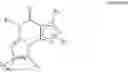
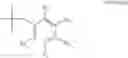
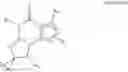
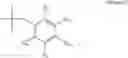

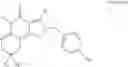
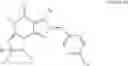
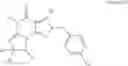
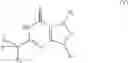
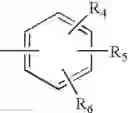

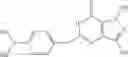
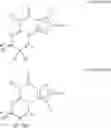

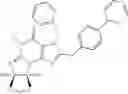
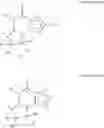
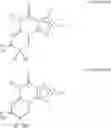
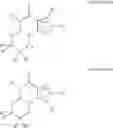
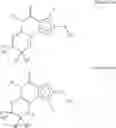







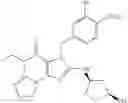
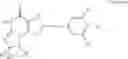
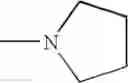
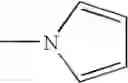
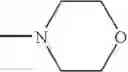
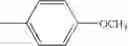

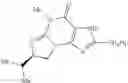

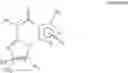
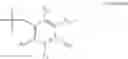

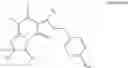
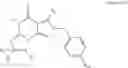
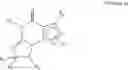
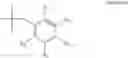
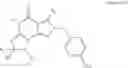
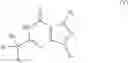
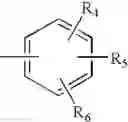
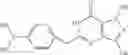
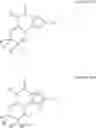

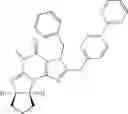
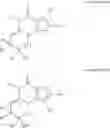
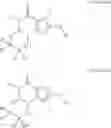
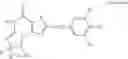

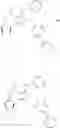
Sources:
- United States Patent and Trademark Office - verify current appl. status at the USPTO↗
Recent applications in this class:
- » 20250205225 2025-06-26
METHODS OF POTENTIATING TEMOZOLOMIDE ACTIVITY AGAINST GLIOBLASTOMA CELLS - » 20250195506 2025-06-19
COMBINATION THERAPEUTICS FOR ANTIVIRAL TREATMENT - » 20250186429 2025-06-12
METHODS AND COMPOSITIONS FOR REDUCING TACTILE DYSFUNCTION AND ANXIETY ASSOCIATED WITH AUTISM SPECTRUM DISORDER, RETT SYNDROME, AND FRAGILE X SYNDROME - » 20250177381 2025-06-05
MEDICINAL SALT OF CARIPRAZINE AND CRYSTAL FORM THEREOF, PHARMACEUTICAL COMPOSITION THEREOF, AND PREPARATION METHOD THEREFOR AND USE THEREOF - » 20250170123 2025-05-29
NON-AQUEOUS ORAL SUSPENSION OF TEMOZOLOMIDE - » 20250152579 2025-05-15
Diketopiperazine Microparticles with Defined Specific Surface Areas - » 20250090522 2025-03-20
LEVOCETIRIZINE AND MONTELUKAST IN THE TREATMENT OF CORONAVIRUS DISEASE AND SYMPTOMS THEREOF - » 20250073228 2025-03-06
GENETICALLY ENGINEERED DRUG RESISTANT T CELLS AND METHODS OF USING THE SAME - » 20250073227 2025-03-06
PREVENTION AND/OR TREATMENT OF CONTRAST-INDUCED ACUTE KIDNEY INJURY - » 20250049786 2025-02-13
DOPAMINE D3/D2 RECEPTOR MODULATING COMPOUNDS
Recent applications for this Assignee:
- » 20250144029 2025-05-08
NOVEL COMPOSITIONS - » 20250129087 2025-04-24
SALT CRYSTALS - » 20240374586 2024-11-14
NOVEL METHODS - » 20240252491 2024-08-01
NOVEL METHODS - » 20240216368 2024-07-04
Pharmaceutical capsules comprising lumateperone mono-tosylate - » 20240208974 2024-06-27
NOVEL COMPOUNDS AND METHODS - » 20240207259 2024-06-27
NOVEL METHODS - » 20240165111 2024-05-23
ORGANIC COMPOUNDS - » 20240115565 2024-04-11
Amorphous solid dispersions - » 20240091224 2024-03-21
Pharmaceutical capsule compositions comprising lumateperone mono-tosylate