Whitening Agent And Skin External Preparation
US20100324096A1
2010-12-23
12/866,472
2009-02-06
Abstract:
The present invention provides a compound having an excellent inhibitory action on melanin production and being useful as a whitening agent, and a skin external preparation containing the compound. The whitening agent of the present invention comprises, as an active ingredient, a heterocyclic compound represented by formula (1) or a pharmacologically acceptable salt thereof:
wherein A is C1-6 alkyl, C5-6 cycloalkyl, benzyl, benzylcarbonyl, benzoyl, phenyl, pyridyl or pyrimidyl; Ra is H, C1-6 alkyl, or C2-6 alkenyl; “” represents a single bond or a double bond wherein n=1 or 2; Y is S or O; and R3 and R4 are each independently H, C1-6 alkyl, hydroxy-C1-6 alkyl, C2-7 acyl, phenyl, pyridyl, pyrimidyl, etc.;with the proviso that at least one R3 is a group other than C1-3 alkyl in the case where: the hetero ring containing Y is a thiazoline ring; R4═Ra═H; X1═X2═CH; and either p =0 or R5═C1-6 alkyl.
Inventors:
- Naoto HANYU 6 🇯🇵 Kanagawa, Japan
- Kiyoshi Sato 7 🇯🇵 Kanagawa, Japan
- Tomoko Saito 4 🇯🇵 Kanagawa, Japan
- Takako Shibata 4 🇯🇵 Kanagawa, Japan
- Kimihiro Ogino 4 🇯🇵 Kanagawa, Japan
Assignee:
- SHISEIDO COMPANY, LTD. 256 🇯🇵 Chuo-ku, Tokyo, Japan
Interested in similar patents?
Get notified when new applications in this technology area are published.
Classification:
A61K31/4439 » CPC main
Medicinal preparations containing organic active ingredients; Heterocyclic compounds having nitrogen as a ring hetero atom, e.g. guanethidine or rifamycins having six-membered rings with one nitrogen as the only ring hetero atom; Non condensed pyridines; Hydrogenated derivatives thereof containing further heterocyclic ring systems containing a five-membered ring with nitrogen as a ring hetero atom, e.g. omeprazole
A61K8/4946 » CPC further
Cosmetics or similar toilet preparations characterised by the composition containing organic compounds containing heterocyclic compounds with more than one nitrogen as the only hetero atom Imidazoles or their condensed derivatives, e.g. benzimidazoles
A61K31/506 » CPC further
Medicinal preparations containing organic active ingredients; Heterocyclic compounds having nitrogen as a ring hetero atom, e.g. guanethidine or rifamycins having six-membered rings with two nitrogen atoms as the only ring heteroatoms, e.g. piperazine; Pyrimidines; Hydrogenated pyrimidines, e.g. trimethoprim not condensed and containing further heterocyclic rings
A61P1/00 » CPC further
Drugs for disorders of the alimentary tract or the digestive system
A61P17/00 » CPC further
Drugs for dermatological disorders
A61P17/16 » CPC further
Drugs for dermatological disorders Emollients or protectives, e.g. against radiation
A61P19/02 » CPC further
Drugs for skeletal disorders for joint disorders, e.g. arthritis, arthrosis
A61K8/49 IPC
Cosmetics or similar toilet preparations characterised by the composition containing organic compounds containing heterocyclic compounds
C07D277/18 IPC
Heterocyclic compounds containing 1,3-thiazole or hydrogenated 1,3-thiazole rings not condensed with other rings having one double bond between ring members or between a ring member and a non-ring member with hetero atoms or with carbon atoms having three bonds to hetero atoms with at the most one bond to halogen, e.g. ester or nitrile radicals, directly attached to ring carbon atoms Nitrogen atoms
C07D417/12 IPC
Heterocyclic compounds containing two or more hetero rings, at least one ring having nitrogen and sulfur atoms as the only ring hetero atoms, not provided for by group containing two hetero rings linked by a chain containing hetero atoms as chain links
A61Q19/02 » CPC further
Preparations for care of the skin for chemically bleaching or whitening the skin
Description
RELATED APPLICATIONS
This application claims the priority of Japanese Patent Application No. 2008-29106 filed on Feb. 8, 2008 and Japanese Patent Application No. 2008-199606 filed on Aug. 1, 2008, which are incorporated herein by reference.
FIELD OF THE INVENTION
The present invention relates to a whitening agent and a skin external preparation, and particularly, to an active ingredient thereof.
BACKGROUND OF THE INVENTION
Pigmentation in the skin such as pigmented spots and freckles are resulted from hyperpigmentation of melanin in the epidermis. The hyperpigmentation is caused by acceleration of melanin production in epidermal melanocytes triggered by hormone abnormality or UV stimulation.
A whitening agent has been mixed into a skin external preparation with an aim to prevent and improve such abnormal melanin pigmentation. At present, as ingredients that are mixed into a skin external preparation as a whitening agent, there are vitamin C derivative, kojic acid, arbutin (4-hydroxyphenyl-β-D-glucopyranoside), Rucinol (4-n-butylresorcinol), ellagic acid, etc., which are known to have an inhibitory action on melanin production.
However, a whitening agent fully satisfactory in terms of the effect, safety, and the like has not yet been obtained, and therefore development of a new whitening agent has been demanded.
On the other hand, Patent Literature 1 describes a 2-aminothiazole compound having an antibacterial or bactericidal effect.
Also, Patent Literature 2 describes a thiazole compound having a C17,20-lyase inhibitory effect.
Further, Patent Literature 3 describes a thiazoline compound having a pest control effect on a harmful organism.
However, these literatures are totally silent on an inhibitory action on the melanin production and a whitening effect.
Patent Literature 1: Japanese Patent No. 3033178
Patent Literature 2: Japanese Unexamined Patent Publication No. 2005-532983
Patent Literature 3: Japanese Unexamined Patent Publication No. H6-25197
DISCLOSURE OF THE INVENTION
Problem to be Solved by the Invention
The present invention has been accomplished in view of the aforementioned problem of the conventional art. An object of the present invention is to provide a compound having an excellent inhibitory action on melanin production and being useful as a whitening agent, and a skin external preparation containing the compound.
Means to Solve the Problem
The present inventors conducted thorough research to solve the aforementioned problem. As a result, they have found that a specific thiazoline or oxazoline compound has an excellent inhibitory action on melanin production and also has extremely low cytotoxicity, thereby completing the present invention.
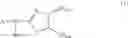
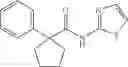
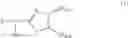
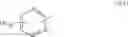
That is, the whitening agent of the present invention comprises, as an active ingredient, a heterocyclic compound represented by the following formula (1) or a pharmacologically acceptable salt thereof:
wherein
A is C1-6 alkyl, C5-6 cycloalkyl, benzyl, benzylcarbonyl, benzoyl, or a group represented by formula (A1):
wherein
X1 is CR1 or N, wherein R1 is H, C1-6 alkyl, C1-6 alkoxy, or OH;
X2 is CR2 or N, wherein R2 is H, C1-6 alkyl, C1-6 alkoxy, or OH;
R5 is C1-6 alkyl, C1-6 alkoxy, or OH; and
p is an integer of 0 to 3, wherein when p is 2 or 3, R5 may be the same or different;
Ra is H, C1-6 alkyl, or C2-6 alkenyl;
“” represents a single bond that leads n=2 or a double bond that leads n=1, wherein when n=2, two R3 may be the same or different, and two R4 may also be the same or different;
Y is S or O; and
R3 and R4 are each independently H, C1-6 alkyl, hydroxy-C1-6 alkyl, C2-7 acyl, or the group (A1), or
one R3 and one R4 may together form a saturated or unsaturated 5- or 6-membered hydrocarbon ring condensed with the hetero ring to which R3 and R4 are bound, or
C(R3)2 or C(R4)2 may each independently be C═CH2;
with the proviso that at least one R3 is a group other than C1-3 alkyl in the case where: the hetero ring containing Y is a thiazoline ring; R4═Ra═H; X1═X2═CH; and p=0 or R5═C1-6 alkyl.
The present invention also provides the whitening agent, wherein Y is S.
The present invention also provides the whitening agent, wherein A is the group (A1).
The present invention also: provides the whitening agent, wherein is a single bond.
The present invention also provides the whitening agent, wherein is represented by formula (1-1):
wherein R3, R4, R5, and Ra are as defined in the formula (1).
The present invention also provides the whitening agent, wherein R3 in the formula (1-1) is each independently H or C1-6 alkyl.
The present invention also provides the whitening agent, wherein R4 in the formula (1-1) is each independently H or C1-6 alkyl, or C(R4)2 is C═CH2.
The present invention also, provides the whitening agent, wherein is represented by formula (1-2):
wherein R3, R4, R5, and Ra are as defined in the formula (1).
The present invention also provides the whitening agent, wherein R3 and R4 in the formula (1-2) are each independently H or C1-6 alkyl.
The present invention also provides the whitening agent, wherein is a double bond.
The present invention also provides the whitening agent, wherein is represented by formula (1-3):
wherein, R3, R4, R5, and Ra are as defined in the formula (1).
The present invention also provides the whitening agent, wherein is represented by formula (1-4):
wherein, R3, R4, R5, and Ra are as defined in the formula (1).
The present invention also provides the whitening agent, wherein R3 in the formula (1-3) or (1-4) is C1-6 alkyl or the group (A1).
The present invention also provides the whitening agent, wherein R4 in the formula (1-3) or (1-4) is H or C1-6 alkyl.
The present invention also provides the whitening agent, wherein Ra is H.
The present invention also provides the whitening agent, wherein R5 is C1-6 alkyl.
The present invention also provides the whitening agent, wherein the active ingredient inhibits melanin production.
The present invention also, provides a skin external preparation or a cosmetic comprising any of the aforementioned heterocyclic compounds or a pharmacologically acceptable salt thereof.
Effect of the Invention
The whitening agent of the present invention has an excellent inhibitory action on melanin production and also has extremely low cytotoxicity; therefore, it can be suitably mixed into a skin external preparation as a whitening agent.
BEST MODE FOR CARRYING OUT THE INVENTION
The whitening agent of the present invention is represented by the following formula (1):
In the formula (1), A is C1-6 alkyl, C5-6 cycloalkyl, benzyl, benzylcarbonyl, benzoyl, or a group represented by the following formula (A1):
In the group (A1), X1 is CR1 or N, wherein R1 is H, C1-6 alkyl, C1-6 alkoxy, or OH.
X2 is CR2 or N, wherein R2 is H, C1-6 alkyl, C1-6 alkoxy, or OH.
Accordingly, an unsaturated 6-membered ring containing X1 and X2 is a benzene ring, a pyridine ring, or a pyrimidine ring.
R5 is C1-6 alkyl, C1-6 alkoxy, or OH, and preferred examples thereof include C1-6 alkyl.
p is an integer of 0 to 3. When p is 2 or 3, R5 can be the same or different.
Ra is H, C1-6 alkyl, or C2-6 alkenyl, and preferred examples thereof include H.
“” represents a single bond or a double bond. When it is a single bond, n=2, When it is a double bond, n=1. When n=2, two R3 may be the same or different, and two R4 may also be the same or different.
Y is S or O. Accordingly, in the formula (1), an unsaturated 5-membered hetero ring containing Y is thiazole, thiazoline, oxazole, or oxazoline.
R3 and R4 can each independently be H, C1-6 alkyl, hydroxy-C1-6 alkyl, C2-7 acyl, or the aforementioned group (A1). Also, one R3 and one R4 may together form a saturated or unsaturated 5- or 6-membered hydrocarbon ring condensed with the hetero ring to which R3 and R4 are bound. Alternatively, C(R3)2 or C(R4)2 may each independently be C═CH2.
However, in the present invention, at least one R3 is a group other than C1-3 alkyl, in the case where: a hetero ring containing Y is a thiazoline ring; R4═Ra═H; X1═X2═CH; and either p=0 or R5═C1-6 alkyl.
An example of the preferred compound represented by the formula (1) is a compound wherein Y═S.
Another example of the preferred compound represented by the formula (1) is a compound wherein A is the group (A1).
An example of the preferred compound wherein A is a group (A1) is a compound wherein is a single bond. Preferred examples of such a compound include a compound represented by the following formula (1-1) or formula (1-2).
In the formula (1-1) and formula (1-2), R3, R4, R5, and Ra are as defined in the formula (1).
A preferred example of the compound represented by the formula (1-1) is a compound wherein R3 is each independently H or C1-6 alkyl.
Another preferred example of the compound represented by the formula (1-1) is a compound wherein R4 is each independently H or C1-6 alkyl, or a compound wherein C(R4)2 is C═CH2.
A preferred example of tho compound represented by the formula (1-2) is a compound wherein R3 and R4 are each independently H or C1-6 alkyl.
It is to be noted that compounds of the formula (1) wherein is a single bond and Ra═H can be tautomers as shown below. In the present invention, such tautomers are also included in the compound of the formula (1).
Also, a preferred example of the compound wherein A is the group (A1) is a compound wherein is a double bond. Preferred examples of such a compound include a compound represented by the following formula (1-3) or formula (1-4).
In the formula (1-3) and formula (1-4), R3, R4, R5, and Ra are as defined in the formula (1).
A preferred example of the compound represented by the formula (1-3) or formula (1-4) is a compound wherein R3 is C1-6 alkyl or the group (A1).
Another preferred example of the compound represented by the formula (1-3) or (1-4) is a compound wherein R4 is H or C1-6 alkyl.
The compound of the formula (1) can be synthesized by a known method or commercially available.
In the case of synthesis, when the molecule has a functional group which blocks or might block a reaction, an appropriate protecting group is preferably used to allow the reaction to proceed efficiently. The use of the protecting group can be carried out according to, for example, Protective Groups in Organic Synthesis by Theodora W. Greene and Peter G. M. Wuts.
Further, when an isomer such as a conformational isomer, a geometric isomer, and an optical isomer is present, a pure isomer or geometric isomer can be obtained by appropriately selecting a raw material and a reaction condition and performing a separation operation. In the present invention, a pure isomer of the compound of the formula (1) as well as a mixture thereof are also included.
A compound wherein is a single bond and Ra═H in the formula (1) can be obtained by, for example, a reaction shown in the following scheme 1.
In scheme 1, a reaction of an iso(thio)cyanate compound (2) with an ethanolamine compound (3) can be carried out, for example, in an appropriate solvent such as chloroform, while heating as needed. A ring closure reaction of the (thio)urea compound (4) thus obtained can be carried out, for example, in the presence of an acid catalyst, while heating. The above reaction can be carried out according to, for example, a method described in Japanese Unexamined Patent Publication No. S62-228089.
Alternatively, as a method described in Japanese Unexamined Patent Publication No. H6-25197, a reaction of 2-imino (or 2-amino) thiazoline compound (or oxazoline compound) with a compound represented by A-X (X is a halogen) can also be adopted. This reaction can typically be carried out in an appropriate solvent in the presence of a base such as triethylamine, while heating as needed.
A compound wherein is a double bond and Ra═H in the formula (1) can be obtained by, for example, a reaction shown in the following scheme 2.
In scheme 2, a reaction of a (thio)urea compound (5) with a α-haloketone compound (6) can be carried out in an appropriate solvent such as methanol, at room temperature or while heating, in the presence of a base such as triethylamine as needed. This reaction can be carried out according to, for example, a method described in Japanese Unexamined Patent. Publication No. 2005-532983 and Japanese Patent No. 3023178.
Alternatively, as a method described in Japanese Patent No. 3023178, a reaction of 2-aminothiazole compound (or 2-aminooxazol compound) with a compound represented by A-X (X is a halogen) can also be adopted. This reaction can typically be carried out in an appropriate solvent in the presence of a base such as triethylamine, while heating as needed.
The compound of the formula (1) can be converted into an acid-addition salt by an ordinary method as needed. Examples of acid in the acid-addition salt include an inorganic salt such as hydrochloric acid, hydrobromic acid, sulfuric acid, and phosphoric acid, and an organic acid such as acetic acid, propionic acid, citric acid, lactic acid, oxalic acid, maleic acid, fumaric acid, succinic acid, tartaric acid, and methanesulfonic acid.
Many of the compounds of the formula (1) are commercially available and can be obtained from various suppliers such as Enamine Ltd. (Ukraine), Pharmeks Ltd. (Russia), Labotest (Germany), Scientific Exchange Inc. (U.S.A), Life Chemicals Inc. (Ukraine), Asinex Ltd. (Russia), Vitas-M Laboratory Ltd. (Russia), ACB Blocks Ltd. (Russia), Bionet (U.S.A), and Princeton Biomolecular Research Inc. (U.S.A).
The compound of the formula (1) has an excellent inhibitory action on melanin production while exhibiting extremely low eytotoxieity. Therefore, the present compound is useful as a whitening agent and can be suitably mixed into various skin external preparations, particularly a skin external preparation intended to improve or prevent pigmented spots, freckles, skin dullness, and the like.
When the compound of the formula (1) is mixed into the skin external preparation as the whitening agent, the compound amount is, in the total amount of the external agent, typically 0.0002% by mass or more, preferably 0.002% by mass or more. When it is too low, the effect cannot be fully exerted. Although no limitation is imposed on the upper limit, it is typically 30% by mass or less, preferably 20% by mass or less, and more preferably 5% by mass or less. When the compound is excessively mixed in, not only a remarkable effect reasonably expected from the increased amount may not be obtained but also formulation designing and usability may be affected.
Other than adding the compound of the formula (1), the skin external preparation of the present invention can be produced by an ordinary method.
In addition to the compound of the formula (1), other ingredients normally used in a skin external preparation such as a cosmetic product and a pharmaceutical product can be appropriately added to the skin external preparation of the present invention as needed as far as the effect of the present invention is not adversely affected. Examples of such an ingredient include oil, a humectant, an ultraviolet protective agent, an antioxidant, a metal ion chelating agent, a surfactant, a preservative, a moisturizer, a fragrance, water, an alcohol, a thickener, powder, a colorant, a crude drug, and various kinds of medicinal ingredients.
Further, other whitening agents such as vitamin C, magnesium ascorbyl phosphate, ascorbyl glucoside, arbutin, kojic acid, Rucinol, ellagic acid, tranexamic acid, and linoleic acid can be appropriately added.
The skin external preparation of the present invention is widely applicable to the fields of cosmetics, drugs, and quasi drugs. No particular limitation is imposed on the form of the skin external preparation as long as it is applicable to the skin. Any form such as a solution, an emulsion, a solid, a semi-solid, a powder, a powder dispersion, a water-oil-separated two-phase liquid, a water-oil-powder-separated three-phase liquid, an ointment, a gel, an aerosol, a mousse, and a stick can be applied. Further, the skin external preparation can be provided in any use form including a facial cosmetic such as a lotion, an emulsion, a cream, a pack, an essence, and a gel, and a makeup cosmetic such as a foundation, a makeup base, and a concealer.
Hereinbelow, the present invention will be further described with specific examples. However, the present invention is not limited thereto.
Examples
A test for melanin production inhibition by the compounds of the formula (1) was conducted. The test method is as follows.
Melanin Production Inhibition Test
(1) Inoculation of Cells and Addition of Test Substances
Mouse B16 melanoma cells were inoculated in a six well plate at 100,000 cells/well. The next day, test substance solutions (solvent: DMSO) were added.
(2) Cell Proliferation Test
Three days after the addition of the test substance solution, the medium was removed by aspiration. Then 1 ml of EMEM medium containing 10% Alamar Blue solution was added, and a reaction was allowed to proceed at 37° C. After 30 minutes, 100 μL of the reaction mixture was transferred to a 96 well plate and fluorescence was measured at an excitation wavelength of 544 nm and a measurement wavelength of 590 nm. Using the value thus measured as a relative value of cell count, a ratio of the cell count (% cell count) of the test substance-added group to the test substance-absent group (group in which only the solvent was added) was calculated. The higher the % cell count, the lower the cytotoxicity. It was determined that a compound having the % cell count of 80% or more was non-cytotoxic, and that a compound having the % cell count of less than 80% was cytotoxic.
(3) Quantification of Melanin
The cells after the cell proliferation test were washed with PBS three times, and then lysed by addition of 200 μL of 1M NaOH to measure an absorbance at 475 nm. Using the value thus measured as a relative value of the melanin amount, a ratio of the melanin amount (%) of the test substance-added group to the test substance-absent group (group in which only the solvent was added) was calculated. The lower the ratio of the melanin amount, the higher the melanin production-inhibitory effect. In the final concentrations of the test substances at which the compound was determined to be non-cytotoxic, the minimum final concentration of the test substance at which the ratio of the melanin amount (%) was 80% or less was provided as a minimum concentration for inhibition of melanin production (ppm). The inhibitory effect on melanin production was evaluated according to the following criteria.
⊚: the minimum concentration for inhibition of melanin production was 1 ppm or less.
◯: the minimum concentration for inhibition of melanin production was more than 1 ppm and 10 ppm or less.
×: no inhibitory effect on melanin production was exhibited at 10 ppm or less
-
- (the ratio of the melanin amount was not 80% or less even at 10 ppm or less).
The results of melanin production inhibition test using the compounds of the present invention are shown in Table 1.
Any of the compounds shown in Table 1 was acknowledged to have an inhibitory effect on melanin production, and most of them exhibited the effect at such an extremely low concentration as 1 ppm or less.
It is to be noted that symbols in Tables represent the following groups.
-
- Me: Methyl, Et: Ethyl, tBu: tert-Butyl, Phe: Phenyl, Ac: Acetyl
| TABLE 1 |
| Inhibitory | |||||||||
| effect on | |||||||||
| melanin | |||||||||
| No. | R3 | R4 | R5a | R5b | R5c | R5d | R5e | Ra | production |
| 1 | pyridin-4-yl | H | Me | H | H | H | H | H | ⊚ |
| 2 | pyridin-2-yl | H | Me | H | H | H | H | H | ⊚ |
| 3 | pyridin-2-yl | H | Et | H | H | H | H | H | ⊚ |
| 4 | pyridin-2-yl | H | H | H | H | H | H | H | ⊚ |
| 5 | tBu | H | Me | H | Me | H | H | H | ⊚ |
| 6 | Me | Ac | Me | H | H | H | H | H | ∘ |
| 7 | 4-methoxyphenyl | Me | Me | H | H | H | Me | H | ⊚ |
| 8 | Phe | H | Me | H | H | H | Me | H | ⊚ |
| 9 | 3,4-dihydroxyphenyl | H | Et | H | H | H | H | H | ⊚ |
| 10 | 2,4-dihydroxyphenyl | H | Et | H | H | H | H | H | ⊚ |
| 11 | —(CH2)4— | Me | H | H | H | H | H | ⊚ |
| TABLE 2 |
| Inhibitory | |||||
| effect on | |||||
| melanin | |||||
| No. | R3 | R4 | A1 | Ra | production |
| 12 | Phe | H | pyridin-2-yl | H | ⊚ |
| 13 | Phe | H | 3-methylpyridin-2-yl | H | ⊚ |
| 14 | pyridin-4-yl | H | pyridin-2-yl | H | ⊚ |
| 15 | pyridin-4-yl | H | 3-methylpyridin-2-yl | H | ⊚ |
| 16 | pyridin-2-yl | H | 5 -methylpyridin-2-yl | H | ⊚ |
| 17 | pyridin-3-yl | H | pyridin-2-yl | H | ⊚ |
| 18 | pyridin-4-yl | H | pyridin-3-yl | H | ⊚ |
| TABLE 3 |
| Inhibitory effect | |||||||||||
| on melanin | |||||||||||
| No. | R3 | R4 | R5a | R5b | R5c | R5d | R5e | Ra | production | ||
| 19 | H, Et | H, H | H | H | H | H | H | H | ⊚ | ||
| 20 | H, H | H, H | H | H | H | H | H | H | ∘ | ||
| 21 | H, H | H, Me | H | H | H | H | H | H | ⊚ | ||
| 22 | H, H | H, H | Me | H | H | H | H | H | ⊚ | ||
| 23 | H, H | H, H | O—Me | H | H | H | H | H | ⊚ | ||
| 24 | Me, Me | H, H | H | H | O—Me | H | H | H | ∘ | ||
| 25 | Me, Me | H, H | H | O—Me | H | H | H | H | ∘ | ||
| 26 | Me, Me | H, H | O—Me | H | H | H | H | H | ∘ | ||
| 27 | H, Me | H, H | Me | H | Me | H | H | H | ∘ | ||
| 28 | H, H | Me, Me | Me | H | H | H | H | H | ⊚ | ||
| 29 | CH2OH, CH2OH | H, H | H | H | H | H | H | H | ∘ | ||
| 30 | CH2OH, CH2OH | H, H | Me | H | Me | H | Me | H | ∘ | ||
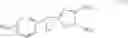
| 31 | ⊚ | |
| 32 | ⊚ | |
| TABLE 4 |
| Inhibitory | ||||||
| effect on | ||||||
| melanin | ||||||
| No. | R3 | R4 | A | Y | Ra | production |
| 33 | Me | Phe | t-Bu | S | H | ⊚ |
| 34 | Me | H | 4-methylbenzoyl | S | H | ∘ |
| 35 | —(CH2)4— | benzoyl | S | H | ⊚ |
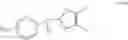
| 36 | ⊚ | |
| 37 | ∘ | |
| TABLE 5 |
| Inhibitory | |||||
| effect on | |||||
| melanin | |||||
| No. | R3 | R4 | A | Ra | production |
| 38 | H, H | Me, Me | pyridin-3-yl | H | ∘ |
| 39 | H, H | Me, Me | cyclohexyl | H | ∘ |
| 40 | H, H | Me, Me | benzyl | H | ∘ |
Hereinbelow, representative Synthesis Examples of the heterocyclic compounds used for the whitening agent of the present invention will be shown. Various heterocyclic compounds can be obtained by carrying out a reaction according to the below-described Synthesis Examples using a corresponding raw material.
Synthesis Example 1-1
Synthesis of 4-(5,5-dimethyl-4,5-dihydrothiazol-2-yl amino)phenol (Compound 41)
To p-anisidine (0.60 g, 4.86 mmol) and methanol (4.0 mL) in a 50 mL recovery flask was added methallyl isothiocyanate (0.50 g, 4.42 mmol) dropwise at room temperature, and then the resulting mixture was stirred for 12 hours at room temperature. Upon completion of the reaction, the mixture was extracted with ethyl acetate once. The organic phase thus obtained was washed with saturated brine and then dried over anhydrous magnesium sulfate. The solvent was distilled off under reduced pressure and the residue was recrystallized from a mixed solvent of ethyl acetate and hexane to give 0.79 g of 1-(4-methoxyphenyl)-3-(2- methylallyl)thiourea (yield 76%).
1-(4-Methoxyphenyl)-3-(2-methylallyl)thiourea (0.50 g, 2.11 mmol) and 35% hydrochloric acid (5.0 mL) were added in a pressure resistant reaction container, and the resulting mixture was stirred at 140° C. for five hours in the sealed container. Upon completion of the reaction, a 3N aqueous solution of sodium hydroxide was added to the reaction mixture to adjust the pH up to 14, and the resulting mixture was extracted with ethyl acetate twice. The organic phase was washed with saturated brine and then dried over anhydrous magnesium sulfate. The solvent was distilled off under reduced pressure, and the residue was purified by silica gel column chromatography (hexane:ethyl acetate=1:2) to give 0.19 g of 4-(5,5-dimethyl-4,5-dihydrothiazol-2-ylamino)phenol (Compound 41) (yield 40%).
Synthesis Example 1-2
Synthesis of (hetero)arylaminothiazolines
(Hetero)arylaminothiazolines as shown in Table 6 were each synthesized in the same manner as in Synthesis Example 1-1 except that raw material A was used instead of anisidine.
| TABLE 6 | ||||
| No. | Structure | Raw material A | NMR | Yield |
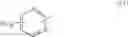
| 41 | p-anisidine | 1H-NMR (DMSO-d6): 1.46 (6 H, s), 3.51 (2 H, br-s), 6.61 (2 H, dd), 7.07 (2 H, br-s), 8.67 (2 H, br-s) | 40% | |
| 42 | m-anisidine | 1H-NMR (DMSO-d6): 1.47 (6 H, s), 3.64 (2 H, br-s), 6.31 (1 H, d), 6.83 (2 H, br-s), 6.97 (1 H, t), 9.17 (2 H, br-s) | 34% | |
| 38 | 3-aminopyridine | 1H-NMR (DMSO-d6): 1.49 (6 H, s), 3.53 (2 H, br-s), 7.23 (1 H, dd), 7.66 (1 H, br-s), 8.12 (1 H, dd), 8.35 (1 H, br-s), 9.10 (1 H, br-s) | 56% | |
Synthesis Example 2
Synthesis of 4-(pyridin-2-yl)-N-o-toluylthiazol-2-amine (Compound 2)
To 975 mL of methanol were added triethylamine (14.0 g, 137 mmol), o-toluylthiourea (11.54 g, 69.4 mmol), and 2-(bromoacetyl)pyridine hydrobromide (19.5 g, 69.4 mmol), and the resulting mixture was stirred for 15 hours at room temperature. Upon completion of the reaction, 1,950 mL of water was added to the mixture and precipitated crystals were collected by filtration. The solid thus collected was crystallized from a mixed solvent of water and methanol to give the title compound (14.0 g, 76%).
1H-NMR (DMSO-d6): 2.30(3H, s), 7.01-7.04(1H, m), 7.22-7.30(3H, m), 7.46(1H, s), 7.82-7.91(2H, m), 7.97(1H, d), 8.56(1H, d), 9.32(1H, s)
Reference Example 1
Synthesis of 4,4-dimethyl-N-phenyl-4,5-dihydrothiazol-2-amine
In 500 g of chloroform was dissolved 2-amino-2-methyl-1-propanol (61.6 g, 0.69 moL). Then, 300 g of chloroform solution containing phenyl isothiocyanate (81.6 g, 0.6 moL) was slowly added dropwise to the mixture over one hour, while stirring. Upon completion of the addition, the resulting mixture was stirred for 12 hours at room temperature. The precipitated crystals were refluxed with heat to be dissolved and then recrystallized. The crystals thus obtained were collected by filtration, washed with 20 mL of diethyl ether three times, and then dried under reduced pressure at room temperature to give 80.1 g of N-(1-hydroxy-2-methylpropan-2-yl)-N′-phenylthiourea (yield 60%).
N-(1-hydroxy-2-methylpropan-2-yl)-N′-phenylthiourea (80.1 g, 0.36 mol) was dissolved in 2,400 mL of 35% HCl, and the resulting mixture was stirred while heating at 90° C. for 1.5 hours. After cooling, the mixture was neutralized with NaOH and extracted with diethyl ether. The extract was washed with saturated brine and then anhydrous sodium sulfate was added. The organic phase was distilled off under reduced pressure and the residue was washed three times with hexane. The crystals thus obtained were dried under reduced pressure at room temperature, and then recrystallized from methanol twice to give 22.4 g of the title compound (yield 18%).
1H-NMR (CDCl3): 1.39(6H, s), 3.08(2H, s), 7.01-7.09(3H, m), 7.26-7.30(2H, m)
Hereinbelow, Formulation Examples of the skin external preparation of the present invention are shown. In each Formulation Example, one or more compounds of the present invention can be used. Any of the skin external preparations shown in Formulation Examples below exerts a whitening effect because of the by the addition of the compound of the present invention.
Formulation Example 1
Cream
(Formulation)
| Stearic acid | 5.0% | by mass | |
| Stearyl alcohol | 4.0 | ||
| Isopropyl myristate | 18.0 | ||
| Glyceryl monostearate | 3.0 | ||
| Propylene glycol | 10.0 | ||
| Compound of the present invention | 0.1 | ||
| Caustic potash | 0.2 | ||
| Sodium bisulfite | 0.05 | ||
| Preservative | q.s. | ||
| Fragrance | q.s. |
| Ion-exchanged water | balance | |
(Production Method)
Propylene glycol and caustic potash were dissolved in ion-exchanged water, and the resulting mixture was heated to and maintained at 70° C. (aqueous phase). Other components were mixed and melted by heat, and maintained at 70° C. (oil phase). The oil phase was gradually added to the aqueous phase, and after the complication of the addition, the resulting mixture was maintained at 70° C. for some time to allow a reaction to proceed. Subsequently, the mixture was homogeneously emulsified by a homomixer, and cooled to 30° C. while thoroughly stirring.
Formulation Example 2
Cream
(Formulation)
| Stearic acid | 5.0 | by mass % | |
| Sorbitan monostearate | 2.5 | ||
| Polyoxyethylene (20) sorbitan monostearate | 1.5 | ||
| Arbutin | 7.0 | ||
| Sodium bisulfite | 0.03 | ||
| Propylene glycol | 10.0 | ||
| Compound of the present invention | 0.05 | ||
| Glyceryl trioctanoate | 10.0 | ||
| Squalene | 5.0 | ||
| Octyl p-dimethylaminobenzoate | 3.0 | ||
| Disodium ethylenediaminetetraacetate | 0.01 | ||
| Ethylparaben | 0.3 | ||
| Fragrance | q.s. |
| Ion-exchanged water | balance | |
(Production Method)
Propylene glycol and disodium ethylenediaminetetraacetate were dissolved in ion-exchanged water and the resulting mixture was maintained at 70° C. (aqueous phase). Other components were mixed and melted by heat, and maintained at 70° C. (oil phase). The oil phase was gradually added to the aqueous phase. The mixture was preliminarily emulsified at 70° C., homogeneously emulsified by a homomixer, and then cooled to 30° C. while thoroughly stirring.
Formulation Example 3
Cream
(Formulation)
| Solid paraffin | 5.0% | by mass | |
| Beeswax | 10.0 | ||
| Petrolatum | 15.0 | ||
| Liquid paraffin | 41.0 | ||
| Glyceryl monostearate | 2.0 | ||
| POE (20) sorbitan monolaurate | 2.0 | ||
| Soap powder | 0.1 | ||
| Borax | 0.2 | ||
| Compound of the present invention | 0.05 | ||
| Sodium bisulfite | 0.03 | ||
| Ethylparaben | 0.3 |
| Fragrance | q.s. | |
| Ion-exchanged water | balance | |
(Production Method)
Powder soap and borax were added to ion-exchanged water and dissolved with heat, and the resulting mixture was maintained at 70° C. (aqueous phase). Other components were mixed and melted by heat, and maintained at 70° C. (oil phase). While stirring, the oil phase was gradually added to the aqueous phase to allow a reaction to proceed. Upon completion of the reaction, the mixture was homogeneously emulsified by a homomixer, and then cooled to 30° C. while thoroughly stirring.
Formulation Example 4
Milky Lotion
(Formulation)
| Stearic acid | 2.5% | by mass | |
| Cetyl alcohol | 1.5 | ||
| Petrolatum | 5.0 | ||
| Liquid paraffin | 10.0 | ||
| POE (10) monooleate | 2.0 | ||
| Polyethylene glycol 1500 | 3.0 | ||
| Triethanolamine | 1.0 | ||
| Carboxyvinyl polymer | 0.05 | ||
| Compound of the present invention | 0.01 | ||
| Sodium bisulfite | 0.01 | ||
| Ethylparaben | 0.3 |
| Fragrance | q.s. | |
| Ion-exchanged water | balance | |
(Production Method)
Carboxyvinyl polymer was dissolved in a small amount of ion-exchanged water (phase A). Polyethylene glycol 1500 and triethanolamine were added to the remaining ion-exchanged water and dissolved with heat, and the resulting mixture was maintained at 70° C. (aqueous phase). Other components were mixed and melted by heat, and maintained at 70° C. (oil phase). The oil phase was added to the aqueous phase and preliminarily emulsified. After addition of phase A, the resulting mixture was homogeneously emulsified by a homomixer and then cooled to 30° C. while thoroughly stirring.
Formulation Example 5
Milky Lotion
(Formulation)
| Microcrystalline wax | 1.0% | by mass | |
| Beeswax | 2.0 | ||
| Lanolin | 20.0 | ||
| Liquid paraffin | 10.0 | ||
| Squalane | 5.0 | ||
| Sorbitan sesquioleate | 4.0 | ||
| POE (20) sorbitan monooleate | 1.0 | ||
| Propylene glycol | 7.0 | ||
| Compound of the present invention | 1.0 | ||
| Sodium bisulfite | 0.01 | ||
| Ethylparaben | 0.3 |
| Fragrance | q.s. | |
| Ion-exchanged water | balance | |
(Production Method)
Propylene glycol was added to ion-exchanged water, and the resulting mixture was heated and maintained at 70° C. (aqueous phase). Other components were mixed and melted by heat, and maintained at 70° C. (oil phase). While stirring the oil phase, the aqueous phase was gradually added to the oil phase. The resulting mixture was homogeneously emulsified by a homomixer and then cooled to 30° C. while thoroughly stirring.
Formulation Example 6
Jelly
(Formulation)
| 95% Ethanol | 10.0% | by mass |
| Dipropylene glycol | 15.0 | |
| POE (50) oleyl ether | 2.0 | |
| Carboxyvinyl polymer | 1.0 | |
| Caustic soda | 0.15 | |
| L-arginine | 0.1 | |
| Compound of the present invention | 5.0 | |
| Sodium 2-hydroxy-4-methoxybenzophenone sulfonate | 0.05 | |
| Trisodium ethylenediaminetetraaceate dihydrate | 0.05 | |
| Methylparaben | 0.2 |
| Fragrance | q.s. |
| Ion-exchanged water | balance |
(Production Method)
Carboxyvinyl polymer was homogeneously dissolved in ion-exchanged water. Separately, the compound of the present invention and POE (50) oleyl ether were dissolved in 95% ethanol and then added to the aqueous phase. After addition of the remaining components, the resulting mixture was neutralized by caustic soda and L-arginine to increase the viscosity.
Formulation Example 7
Essence
(Formulation)
| (Phase A) | |||
| Ethyl alcohol (95%) | 10.0% | by mass | |
| POE (20) octyldodecanol | 1.0 | ||
| Pantothenyl ethyl ether | 0.1 | ||
| Compound of the present invention | 2.0 | ||
| Methylparaben | 0.15 | ||
| (Phase B) | |||
| Potassium hydroxide | 0.1 | ||
| (Phase C) | |||
| Glycerol | 5.0 | ||
| Dipropylene glycol | 10.0 | ||
| Sodium bisulfite | 0.03 | ||
| Carboxyvinyl polymer | 0.2 |
| Purified water | balance | |
(Production Method)
Each of Phase A and Phase C was homogeneously dissolved, and Phase A was added to Phase C to be solubilized. After addition of Phase B, the resulting mixture was packed in a container.
Formulation Example 8
Pack
(Formulation)
| (Phase A) | |||
| Dipropylene glycol | 5.0% | by mass | |
| POE (60) hydrogenated castor oil | 5.0 | ||
| (Phase B) | |||
| Compound of the present invention | 0.05 | ||
| Olive oil | 5.0 | ||
| Tocopherol acetate | 0.2 | ||
| Ethylparaben | 0.2 | ||
| Fragrance | 0.2 | ||
| (Phase C) | |||
| Sodium bisulfite | 0.03 | ||
| Polyvinyl alcohol | 13.0 | ||
| (saponification degree of | |||
| 90 and polymerization | |||
| degree of 2,000) | |||
| Ethanol | 7.0 |
| Purified water | balance | |
(Production Method)
Each of Phase A, Phase B, and Phase C was homogeneously dissolved, and Phase B was added to Phase A to be solubilized. After addition of Phase C, the resulting mixture was packed in a container.
Formulation Example 9
Solid Foundation
(Formulation)
| Talc | 43.1% | by mass | |
| Kaolin | 15.0 | ||
| Sericite | 10.0 | ||
| Zinc oxide | 7.0 | ||
| Titanium dioxide | 3.8 | ||
| Yellow iron oxide | 2.9 | ||
| Black iron oxide | 0.2 | ||
| Squalane | 8.0 | ||
| Isostearic acid | 4.0 | ||
| POE sorbitan monooleate | 3.0 | ||
| Isocetyl octanoate | 2.0 | ||
| Compound of the present invention | 0.5 |
| Preservative | q.s. | |
| Fragrance | q.s. | |
(Production Method)
Powdery components from talc to black iron oxide shown above were thoroughly mixed by a blender. To this mixture were added oily components from squalane to isocetyl octanoate shown above, the compound of the present invention, preservative, and fragrance. The resulting mixture was thoroughly kneaded, packed in a container, and then formed.
Formulation Example 10
Emulsion Foundation (Cream-Type)
(Formulation)
| (Powder part) | |||
| Titanium dioxide | 10.3% | by mass | |
| Sericite | 5.4 | ||
| Kaolin | 3.0 | ||
| Yellow iron oxide | 0.8 | ||
| Red iron oxide | 0.3 | ||
| Black iron oxide | 0.2 | ||
| (Oil phase) | |||
| Decamethylcyclopentasiloxane | 11.5 | ||
| Liquid paraffin | 4.5 | ||
| Polyoxyethylene-modified | 4.0 | ||
| dimethylpolysiloxane | |||
| Compound of the present invention | 0.5 | ||
| (Aqueous phase) | |||
| Purified water | 50.0 | ||
| 1,3-Butylene glycol | 4.5 | ||
| Sorbitan sesquioleate | 3.0 |
| Preservative | q.s. | |
| Fragrance | q.s. | |
(Production Method)
The aqueous phase was stirred with heat and then the powder part, which had been fully mixed and pulverized, was added. The mixture was treated with a homomixer and then the oil phase, which had been mixed with heat, was added. The mixture was treated with a homomixer and then fragrance was added while stirring. The mixture thus obtained was cooled to room temperature.
Formulation Example 11
Lotion
| (1) | Compound of the present invention | 0.05% | by mass |
| (2) | Aspartic acid | 1.0 | |
| (3) | Tocopherol acetate | 0.01 | |
| (4) | Glycerol | 4.0 | |
| (5) | 1,3-Butylene glycol | 4.0 | |
| (6) | Ethanol | 8.0 | |
| (7) | POE (60) hydrogenated castor oil | 0.5 | |
| (8) | Methylparaben | 0.2 | |
| (9) | Citric acid | 0.05 | |
| (10) | Sodium citrate | 0.1 | |
| (11) | Fragrance | 0.05 |
| (12) | Purified water | balance |
(Production Method)
(2), (4), (5), (9), and (10) were dissolved in (12) to provide a purified water solution, Separately, (1), (3), (7), (8), and (11) were dissolved in (6), and the resulting mixture was added to the aforementioned the purified water solution to be solubilized. The mixture thus obtained was filtrated to provide a lotion.
Formulation Example 12
Lotion
| A: Alcohol phase | ||
| Ethanol | 5.0% | by mass |
| POE oleyl ether | 2.0 | |
| 2-Ethylhexyl-p-dimethylaminobenzoate | 0.18 | |
| Compound of the present invention | 0.1 | |
| Fragrance | 0.05 | |
| B: Aqueous phase | ||
| 1,3-Butylene glycol | 9.5 | |
| 2-O-Ethyl ascorbic acid | 0.5 | |
| Sodium pyrrolidonecarboxylate | 0.5 | |
| Whey extract | 5.0 | |
| Nicotinamide | 0.3 | |
| Glycerol | 5.0 | |
| Hydroxypropyl-β-cyclodextrin | 1.0 | |
| Trisodium hydroxyethylethylenediamine triacetate | 1.0 | |
| Lysine | 0.05 | |
| Tranexamic acid | 1.0 |
| Purified water | balance |
(Production Method)
Alcohol phase A was added to Aqueous phase B and solubilized to provide a lotion.
Formulation Example 13
Cream (Whitening)
| Trans-4-(trans-aminomethylcyclohexanecarbonyl) | 1.0% | by mass |
| aminomethylcyclohexanecarboxylic acid hydrochloride | ||
| Potassium 4-methoxysalicylate | 1.0 | |
| 3-O-Ethylascorbic acid | 1.0 | |
| Linoleic acid | 0.3 | |
| Sodium lipoate | 1.0 | |
| Compound of the present invention | 3.0 | |
| Coenzyme Q10(CoQ10) | 0.03 | |
| Petrolatum | 2.0 | |
| Dimethylpolysiloxane | 2.0 | |
| Ethanol | 5.0 | |
| Behenyl alcohol | 0.5 | |
| Batyl alcohol | 0.2 | |
| Glycerol | 7.0 | |
| 1,3-Butylene glycol | 5.0 | |
| Polyethylene glycol 20000 | 0.5 | |
| Jojoba oil | 3.0 | |
| Squalane | 2.0 | |
| Phytosteryl hydroxystearate | 0.5 | |
| Pentaerythritol tetra(2-ethylhexanoate) | 1.0 | |
| Polyoxyethylene hydrogenated castor oil | 1.0 | |
| Potassium hydroxide | 0.1 | |
| Sodium pyrosulfite | 0.01 | |
| Sodium hexametaphosphate | 0.05 | |
| Stearyl glycyrrhetinate | 0.1 | |
| Pantothenyl ethyl ether | 0.1 | |
| Arbutin | 7.0 | |
| Tranexamic acid | 2.0 | |
| Tocopherol acetate | 0.1 | |
| Sodium hyaluronate | 0.05 |
| p-Hydroxybenzoate ester | q.s. |
| Trisodium edetate | 0.05 | |
| 4-t-Butyl-4′-methoxydibenzoylmethane | 0.1 | |
| Glyceryl diparamethoxycinnamate mono-2- | 0.1 | |
| ethylhexanoate |
| Yellow iron oxide | q.s. |
| Xanthan gum | 0.1 | |
| Carboxyvinyl polymer | 0.2 |
| Purified water | balance |
Formulation Example 14
Two-Phase Cream (Sunscreen)
| Tranexamic acid | 2.0% | by mass |
| Potassium 4-methoxysalicylate | 1.0 | |
| Compound of the present invention | 0.03 | |
| Dimethylpolysiloxane | 5.0 | |
| Decamethylcyclopentasiloxane | 25.0 | |
| Trimethylsiloxysilicate | 5.0 | |
| Polyoxyethylene/methylpolysiloxane copolymer | 2.0 | |
| Dipropylene glycol | 5.0 | |
| Dextrin palmitate-coated fine-particle zinc oxide (60 nm) | 15.0 | |
| Dipotassium glycyrrhizinate | 0.02 | |
| Glutathione | 1.0 | |
| Thiotaurine | 0.05 | |
| Sophora flavescens extract | 1.0 |
| Paraben | q.s. |
| Phenoxyethanol | q.s. |
| Trisodium edetate | q.s. |
| 2-Ethylhexyl p-methoxycinnamate | 7.5 | |
| Dimethyldistearylammonium hectorite | 0.5 | |
| Spherical poly(alkyl acrylate) powder | 5.0 | |
| Butylethylpropanediol | 0.5 |
| Purified water | balance |
| Fragrance | q.s. |
Formulation Example 15
Gel (Whitening)
| Potassium 4-methoxysalicylate | 0.1% | by mass | |
| Rucinol | 0.3 | ||
| Dihydrolipoic acid | 1.0 | ||
| Lamium album var. barbatum | 0.1 | ||
| Dimethylpolysiloxane | 5.0 | ||
| Glycerol | 2.0 | ||
| 1,3-Butylene glycol | 5.0 | ||
| Polyethylene glycol 1500 | 3.0 | ||
| Polyethylene glycol 20000 | 3.0 | ||
| Cetyl octanoate | 3.0 | ||
| Citric acid | 0.01 | ||
| Sodium citrate | 0.1 | ||
| Sodium hexametaphosphate | 0.1 | ||
| Compound of the present invention | 1.0 | ||
| Dipotassium glycyrrhizinate | 0.1 | ||
| Ascorbyl glucoside | 2.0 | ||
| Tocopherol acetate | 0.1 | ||
| Scutellaria baicalensis extract | 0.1 | ||
| Saxifraga stolonifera extract | 0.1 | ||
| Trisodium edetate | 0.1 | ||
| Xanthan gum | 0.3 | ||
| Acrylic acid/alkyl methacrylate copolymer | 0.05 | ||
| (Pemulen TR-2) | |||
| Agar powder | 1.5 |
| Phenoxyethanol | q.s. | |
| Dibutylhydroxytoluene | q.s. | |
| Purified water | balance | |
Formulation Example 16
Pack (Moisturizing)
| Trans-4-aminomethylcyclohexanecarboxylic acid | 10.0% | by mass |
| methylamide hydrochloride | ||
| Dihydrolipoamide | 1.0 | |
| Rosa multiflora fruit extract | 0.1 | |
| Ethanol | 10.0 | |
| 1,3-Butylene glycol | 6.0 | |
| Polyethylene glycol 4000 | 2.0 | |
| Olive oil | 1.0 | |
| Macadamia nut oil | 1.0 | |
| Phytosteryl hydroxystearate | 0.05 | |
| Lactic acid | 0.05 | |
| Sodium lactate | 0.1 | |
| Disodium L-ascorbyl sulfate | 0.1 | |
| Compound of the present invention | 0.5 | |
| Potassium 2-L-Ascorbyl α-tocopheryl phosphate | 0.1 | |
| Vitamin E acetate | 0.1 | |
| Fish collagen | 0.1 | |
| Sodium chondroitin sulfate | 0.1 | |
| Sodium carboxymethyl cellulose | 0.2 | |
| Polyvinyl alcohol | 12.0 |
| p-Hydroxybenzoate | q.s. |
| Purified water | balance |
| Fragrance | q.s. |
Formulation Example 17
Lotion (Moisturizing)
| Tranexamic acid | 1.0% | by mass |
| Potassium 4-methoxysalicylate | 1.0 | |
| Lipoic acid | 10.0 | |
| Hamamelis | 0.1 | |
| Silica-coated zinc oxide | 0.1 | |
| Hypotaurine | 0.1 | |
| Sophora flavescens extract | 0.1 | |
| Peach kernel extract | 0.1 | |
| Beech sprout extract | 0.1 | |
| Retinol | 0.1 | |
| Compound of the present invention | 0.01 | |
| Ethyl alcohol | 5.0 | |
| Glycerol | 1.0 | |
| 1,3-Butylene glycol | 5.0 | |
| Polyoxyethylene polyoxypropylene decyltetradecyl ether | 0.2 | |
| Sodium hexametaphosphate | 0.03 | |
| Trimethylglycine | 1.0 | |
| Sodium polyaspartate | 0.1 | |
| Potassium 2-L-Ascorbyl α-tocopheryl phosphate | 0.1 | |
| Thiotaurine | 0.1 | |
| Green tea extract | 0.1 | |
| Peppermint extract | 0.1 | |
| Iris root extract | 1.0 | |
| Trisodium EDTA | 0.1 | |
| Carboxyvinyl polymer | 0.05 | |
| Potassium hydroxide | 0.02 |
| Phenoxyethanol | q.s. |
| Purified water | balance |
| Fragrance | q.s. |
Claims
1-19. (canceled)
20. A whitening agent comprising, as an active ingredient, a heterocyclic compound represented by formula (1) or a pharmacologically acceptable salt thereof:
wherein
A is selected from the group consisting of (a) C1-6 alkyl, (b) C5-6 cycloalkyl, (c) benzyl, (d) benzylcarbonyl, which may be substituted with C2-6 alkylene at the benzyl position, (d) benzoyl, which may be substituted with C1-6 alkyl, and (e) a group represented by formula (A1):
wherein
X1 is CR1 or N, wherein R1 is H, C1-6 alkyl, C1-6 alkoxy, or OH;
X2 is CR2 or N, wherein R2 is H, C1-6 alkyl, C1-6 alkoxy, or OH;
R5 is C1-6 alkyl, C1-6 alkoxy, or OH; and
p is an integer of 0 to 3, wherein when p is 2 or 3, the groups R5 may be the same or different;
Ra is H, C1-6 alkyl, or C2-6 alkenyl;
“” represents a single bond making n=2 or a double bond making n=1, wherein when n=2, two groups R3 may be the same or different, and two groups R4 may also be the same or different;
Y is S or O; and
R3 and R4 are each independently H, C1-6 alkyl, hydroxy-C1-6 alkyl, C2-7 acyl, or the group (A1), or
one R3 and one R4 may together form a saturated or unsaturated 5- or 6-membered hydrocarbon ring condensed with the hetero ring to which R3 and R4 are bound, wherein the 5- or 6-membered hydrocarbon ring may be substituted with C1-6 alkyl, or
C(R3)2 or C(R4)2 may each independently be C═CH2;
with the proviso that at least one R3 is a group other than C1-3 alkyl in the case where the hetero ring containing Y is a thiazoline ring; R4═Ra═H; X1═X2═CH; and p=0 or R5═C1-6 alkyl.
21. The whitening agent of claim 20, wherein Y is S.
22. The whitening agent of claim 20, wherein A is the group (A1).
23. The whitening agent of claim 20, wherein is a single bond.
24. The whitening agent of claim 23, wherein the heterocyclic compound is represented by formula (1-1):
wherein R3, R4, R5, p, and Ra are as defined in formula (1).
25. The whitening agent of claim 24, wherein each group R3 is independently H or C1-6 alkyl.
26. The whitening agent of claim 23, wherein each group R4 is independently H or C1-6 alkyl, or C(R4)2 is C═CH2.
27. The whitening agent of claim 23, wherein the heterocyclic compound is represented by formula (1-2):
wherein R3, R4, R5, p, and Ra are as defined in formula (1).
28. The whitening agent of claim 27, wherein R3 and R4 are each independently H or C1-6 alkyl.
29. The whitening agent of claim 20, wherein is a double bond.
30. The whitening agent of claim 29, wherein the heterocyclic compound is represented by formula (1-3):
wherein, R3, R4, R5, p, and Ra are as defined in formula (1).
31. The whitening agent of claim 29, wherein the heterocyclic compound is represented by formula (1-4):
wherein, R3, R4, R5, p, and Ra are as defined in formula (1).
32. The whitening agent of claim 30, wherein R3 is C1-6 alkyl or the group (A1).
33. The whitening agent of claim 30, wherein R4 is H or C1-6 alkyl.
34. The whitening agent of claim 20, wherein Ra is H.
35. The whitening agent of claim 20, wherein R5 is C1-6 alkyl.
36. The whitening agent of claim 20, wherein the active ingredient inhibits melanin production.
37. A skin external preparation comprising (i) a dermatologically acceptable carrier or adjuvant, and (ii) a heterocyclic compound represented by formula (1) or a pharmacologically acceptable salt thereof:
wherein
A is selected from the group consisting of (a) C1-6 alkyl, (b) C5-6 cycloalkyl, (c) benzyl, (d) benzylcarbonyl, which may be substituted with C2-6 alkylene at the benzyl position, (e) benzoyl, which may be substituted with C1-6 alkyl, and (f) a group represented by formula (A1):
wherein
X1 is CR1 or N, wherein R1 is H, C1-6 alkyl, C1-6 alkoxy, or OH;
X2 is CR2 or N, wherein R2 is H, C1-6 alkyl, Ci-6 alkoxy, or OH;
R5 is C1-6 alkyl, C1-6 alkoxy, or OH; and
p is an integer of 0 to 3, wherein when p is 2 or 3, the groups R5 may be the same or different;
Ra is H, C1-6 alkyl, or C2-6 alkenyl;
“” represents a single bond making n=2 or a double bond making n=1, wherein when n=2, two groups R3 may be the same or different, and two groups R4 may also be the same or different;
Y is S or O; and
R3 and R4 are each independently H, C1-6 alkyl, hydroxy-C1-6 alkyl, C2-7 acyl, or the group (A1), or
one R3 and one R4 may together form a saturated or unsaturated 5- or 6-membered hydrocarbon ring condensed with the hetero ring to which R3 and R4 are bound, wherein the 5- or 6-membered hydrocarbon ring may be substituted with C1-6 alkyl, or
C(R3)2 or C(R4)2 may each independently be C═CH2;
with the proviso that at least one R3 is a group other than C1-3 alkyl in the case where the hetero ring containing Y is a thiazoline ring; R4═Ra═H; X1═X2═CH; and p=0 or R5=C1-6 alkyl.
38. The skin external preparation of claim 37, wherein the preparation is a cosmetic.
39. The whitening agent of claim 31, wherein R3 is C1-6 alkyl or the group (A1).
40. The whitening agent of claim 31, wherein R4 is H or C1-6 alkyl.
41. A method for inhibiting melanin production comprising topically applying to the skin of a subject in need thereof a preparation comprising an effective amount of a heterocyclic compound represented by formula (1) or a pharmacologically acceptable salt thereof:
wherein
A is selected from the group consisting of (a) C1-6 alkyl, (b) C5-6 cycloalkyl, (c) benzyl, (d) benzylcarbonyl, which may be substituted with C2-6 alkylene at the benzyl position, (e) benzoyl, which may be substituted with C1-6 alkyl, and (f) a group represented by formula (A1):
wherein
X1 is CR1 or N, wherein R1 is H, C1-6 alkyl, C1-6 alkoxy, or OH;
X2 is CR2 or N, wherein R2 is H, C1-6 alkyl, C1-6 alkoxy, or OH;
R5 is C1-6 alkyl, C1-6 alkoxy, or OH; and
p is an integer of 0 to 3, wherein when p is 2 or 3, the groups R5 may be the same or different;
Ra is H, C1-6 alkyl, or C2-6 alkenyl;
“” represents a single bond making n=2 or a double bond making n=1, wherein when n=2, two groups R3 may be the same or different, and two groups R4 may also be the same or different;
Y is S or O; and
R3 and R4 are each independently H, C1-6 alkyl, hydroxy-C1-6 alkyl, C2-7 acyl, or the group (A1), or
one R3 and one R4 may together form a saturated or unsaturated 5- or 6-membered hydrocarbon ring condensed with the hetero ring to which R3 and R4 are bound, wherein the 5- or 6-membered hydrocarbon ring may be substituted with C1-6 alkyl, or
C(R3)2 or C(R4)2 may each independently be C═CH2;
with the proviso that at least one R3 is a group other than C1-3 alkyl in the case where the hetero ring containing Y is a thiazoline ring; R4═Ra═H; X1═X2═CH; and p=0 or R5═C1-6 alkyl.
42. The method of claim 41, wherein the heterocyclic compound acts as a skin-whitening agent.
Images & Drawings included:














Sources:
- United States Patent and Trademark Office - verify current appl. status at the USPTO↗
Similar patent applications:
- » 20080131384
External Preparation for Skin Whitening, Whitening Agent, Whitening Method and Method of Production of External Preparation for Skin Whitening - » 20110003817
Whitening agent and skin external preparation - » 20060104926
Whitening agent, skin preparation for external use and cosmetic - » 20100316584
Whitening Agent And Skin External Preparation - » 20070207098
Antioxidant, whitening agent and external preparation for skin using the same - » 20090280197
Cell activator, collagen production promoter, skin whitening agent, antioxidant agent, antiinflammatory agent, aromatase activity promoter, protease activity promoter, external preparation for skin, and food - » 20120141400
EXTERNAL SKIN PREPARATION, WHITENER, ANTIOXIDANT AND ANTI-AGING AGENT
Recent applications in this class:
- » 20250170113 2025-05-29
METHOD OF INCREASING LIFESPAN IN MAMMALS - » 20250170112 2025-05-29
ADENOSINE LIGANDS FOR THE TREATMENT OF NEUROLOGICAL DISORDERS - » 20250161283 2025-05-22
USE OF INDAZOLE COMPOUND FOR TREATING PSORIASIS - » 20250152570 2025-05-15
Uses of Selonsertib in the Preparation of Drugs for the Treatment of Cancer - » 20250152569 2025-05-15
TREATMENT OF CELL PROLIFERATION-ASSOCIATED CONDITIONS USING A COMBINATION OF A CLB-B INHIBITOR AND AN ADDITIONAL THERAPEUTIC AGENT - » 20250144086 2025-05-08
ENHANCEMENT OF TUMOR RESPONSE TO CHEMOTHERAPY BY ACTIVATION OF THE ASMASE/CERAMIDE PATHWAY THROUGH TIMED ADMINISTRATION OF A SHORT-ACTING ANTI-ANGIOGENIC AGENT - » 20250144085 2025-05-08
PHARMACEUTICAL COMPOSITION FOR PREVENTING OR TREATING CANCER COMPRISING OMEPRAZOLE BROWNING MATTER - » 20250127768 2025-04-24
THERAPEUTIC TARGETING OF INOSITOL PYROPHOSPHATE SYNTHESIS IN CANCER - » 20250120956 2025-04-17
Azole Compounds for Enhancing Telomerase Reverse Transcriptase (TERT) Expression - » 20250099448 2025-03-27
HETEROCYCLIC COMPOUNDS
Recent applications for this Assignee:
- » 20250143993 2025-05-08
COSMETIC - » 20250099361 2025-03-27
OIL-IN-WATER EMULSION COSMETIC - » 20250082564 2025-03-13
OIL-IN-WATER EMULSION COSMETIC - » 20250049646 2025-02-13
SOLID POWDER COSMETIC PRODUCT - » 20250041189 2025-02-06
STEM CELL PROLIFERATION PROMOTER - » 20250032392 2025-01-30
HYALURONATE SKIN-PENETRATING COSMETIC - » 20250000768 2025-01-02
OIL-IN-WATER EMULSION COSMETIC - » 20240423886 2024-12-26
COSMETIC COMPOSITION - » 20240390242 2024-11-28
SKIN CARE COMPOSITION CONTAINING ULTRAVIOLET WAVELENGTH-CONVERTING SUBSTANCE AND ALKYLENE OXIDE DERIVATIVE - » 20240382397 2024-11-21
POWDER COSMETIC