Engine control method for a vehicle with idle stop function
US20100324798A1
2010-12-23
12/666,275
2008-02-14
✅ Patent granted
US 8,214,112 B2
2012-07-03
WO; PCT/KR2008/000876; 20080214
WO; WO2009/002002; 20081231
James Trammell | Muhammad Shafi
2028-12-20
Abstract:
The present invention makes it possible to smoothly and quickly shift a transmission from a neutral position to a driving position and prevent a shift shock and a start delay by appropriately controlling an engine output when a vehicle with an idle stop function is started after an idle stop.
Inventors:
- Seunghyun Rew 1 🇰🇷 Gyeonggi-do, South Korea
- Changyoung So 1 🇰🇷 Gyeonggi-do, South Korea
- Jongshin Lee 1 🇰🇷 Incheon, South Korea
- Jungjoo Lee 1 🇰🇷 Gyeonggi-do, South Korea
- Hyeonkyu Lee 1 🇰🇷 Seoul, South Korea
- Seunghyun Rew 1 🇰🇷 Uiwang-si, South Korea
- Changyoung So 1 🇰🇷 Gunpo-si, South Korea
- Jungjoo Lee 1 🇰🇷 Gunpo-si, South Korea
Assignee:
- KEFICO CORPORATION 5 🇰🇷 Gunpo-si Gyeonggi-do, South Korea
- KEFICO CORPORATION 7 🇰🇷 Gunpo-si, South Korea
Interested in similar patents?
Get notified when new applications in this technology area are published.
Classification:
B60W10/06 » CPC main
Conjoint control of vehicle sub-units of different type or different function including control of propulsion units including control of combustion engines
B60K6/365 » CPC further
Arrangement or mounting of plural diverse prime-movers for mutual or common propulsion, e.g. hybrid propulsion systems comprising electric motors and internal combustion engines the prime-movers consisting of electric motors and internal combustion engines, e.g. HEVs characterised by apparatus, components or means specially adapted for HEVs characterised by the transmission gearings with the gears having orbital motion
B60K6/547 » CPC further
Arrangement or mounting of plural diverse prime-movers for mutual or common propulsion, e.g. hybrid propulsion systems comprising electric motors and internal combustion engines the prime-movers consisting of electric motors and internal combustion engines, e.g. HEVs; Architecture of the driveline characterised by arrangement or kind of transmission units; Transmission for changing ratio the transmission being a stepped gearing
B60W10/10 » CPC further
Conjoint control of vehicle sub-units of different type or different function including control of change-speed gearings
B60W10/115 » CPC further
Conjoint control of vehicle sub-units of different type or different function including control of change-speed gearings; Stepped gearings with planetary gears
B60W30/18009 » CPC further
Purposes of road vehicle drive control systems not related to the control of a particular sub-unit, e.g. of systems using conjoint control of vehicle sub-units, or advanced driver assistance systems for ensuring comfort, stability and safety or drive control systems for propelling or retarding the vehicle; Propelling the vehicle related to particular drive situations
B60W30/192 » CPC further
Purposes of road vehicle drive control systems not related to the control of a particular sub-unit, e.g. of systems using conjoint control of vehicle sub-units, or advanced driver assistance systems for ensuring comfort, stability and safety or drive control systems for propelling or retarding the vehicle; Propelling the vehicle Mitigating problems related to power-up or power-down of the driveline, e.g. start-up of a cold engine
F02D11/105 » CPC further
Arrangements for, or adaptations to, non-automatic engine control initiation means, e.g. operator initiated characterised by non-mechanical control linkages, e.g. fluid control linkages or by control linkages with power drive or assistance of the electric type characterised by the function converting demand to actuation, e.g. a map indicating relations between an accelerator pedal position and throttle valve opening or target engine torque
F02D41/065 » CPC further
Electrical control of supply of combustible mixture or its constituents; Circuit arrangements for generating control signals; Introducing corrections for particular operating conditions for engine starting or warming up for starting at hot start or restart
F02N11/0814 » CPC further
Starting of engines by means of electric motors; Circuits or control means specially adapted for starting of engines comprising means for controlling automatic idle-start-stop
B60W20/00 » CPC further
Control systems specially adapted for hybrid vehicles
B60W2510/0638 » CPC further
Input parameters relating to a particular sub-units; Combustion engines, Gas turbines Engine speed
B60W2710/0677 » CPC further
Output or target parameters relating to a particular sub-units; Combustion engines, Gas turbines Engine power
F02D41/023 » CPC further
Electrical control of supply of combustible mixture or its constituents; Circuit arrangements for generating control signals; Introducing corrections for particular conditions exterior to the engine in relation with elements of the transmission in relation with the gear ratio shifting
F02D2250/26 » CPC further
Engine control related to specific problems or objectives; Control of the engine output torque by applying a torque limit
Y02T10/40 » CPC further
Road transport of goods or passengers; Internal combustion engine [ICE] based vehicles Engine management systems
Y02T10/40 » CPC further
Road transport of goods or passengers; Internal combustion engine [ICE] based vehicles Engine management systems
Y02T10/84 » CPC further
Road transport of goods or passengers; Technologies aiming to reduce greenhouse gasses emissions common to all road transportation technologies Data processing systems or methods, management, administration
Y02T10/84 » CPC further
Road transport of goods or passengers; Technologies aiming to reduce greenhouse gasses emissions common to all road transportation technologies Data processing systems or methods, management, administration
G06F17/00 IPC
Digital computing or data processing equipment or methods, specially adapted for specific functions
B60K17/00 IPC
Arrangement or mounting of transmissions or their control in vehicles
B60K17/00 IPC
Arrangement or mounting of transmissions in vehicles
Description
TECHNICAL FIELD
The present invention relates an engine control method for a vehicle with an idle stop function, particularly a technology for overcome shift shock and shift delay generated when the vehicle is started after idle stop.
BACKGROUND ART
If it is possible to quickly and silently start a vehicle, it is preferable to momentarily stop the engine while the vehicle is stopped to reduce fuel consumption and exhaust gas, and a lot of hybrid vehicles are recently provided with an idle stop function.
The shift level is commonly maintained at the D-range (driving) in the idle stop; however, the transmission is shifted to the N-range (neutral) and then returned to the D-range when the driver steps on the acceleration pedal to start the vehicle, in order to softly stop and restart the engine.
When the output torque of the engine is rapidly changed or relatively very large while the transmission is shifted from the N-range to the D-range as described above, shift shock is caused and starting the vehicle is delayed because the transmission is not quickly shifted to the D-range.
A control method of reducing the input torque of the transmission by generating reverse torque in a motor of a hybrid vehicle has been used in the related art to overcome the problem, however, which decreases energy efficiency and is not sufficient to basically overcome the shift shock.
DISCLOSURE
Technical Problem
In order to overcome the problems, it is an object of the invention to provide an engine control method for a vehicle with an idle stop function that makes it possible to smoothly and quickly shift a transmission from a neutral position to a driving position and prevent a shift shock and a start delay by appropriately controlling an engine output when a vehicle with an idle stop function is started after an idle stop.
Technical Solution
In order to accomplish the object, an engine control method for a vehicle with an idle stop function according to the invention sequentially performs: limiting an output that limits the maximum output torque of an engine to a predetermined level when an engine restart condition is satisfied and the engine is started after an idle stop; and removing the limit that removes the limit of the maximum output torque of the engine by gradually increasing the limited maximum output torque as time passes.
The limiting of an output may be performed for a predetermined time within a range of 300 ms to 900 ms.
The limiting of an output may be performed until a transmission controller receives a signal signifying that shift from a neutral position to a driving position is finished.
The limiting of an output may be performed until the accumulated revolution number of times of the engine exceeds a predetermined number of times within four to fifteen after the engine is started.
The limiting of an output may be performed until the number of times of fuel injection exceeds a predetermined number of times within eight to thirty times, after the engine is started, for an engine with four cylinders
A predetermined limit level of the maximum output torque of the engine in the limiting of an output may be determined at a level between 10% and 40% of the maximum output torque of the engine while the opening of a throttle valve is the maximum, within a range of above the minimum output torque needed for driving the engine and under the minimum output torque generating the shift shock.
The removing the limit may be performed to increase the limited maximum output torque of the engine with a predetermined constant inclination as time passes. The limiting of an output may include: determining, as a desired engine output torque, a smaller value between the limited maximum output torque determined by the above method and a torque determined by the driver's operation of the acceleration pedal; and estimating the amount of intake air and ignition angle needed for the desired engine output torque to activate a throttle valve and an ignition system.
Advantageous Effects
According to the invention, it is possible to smoothly and quickly shift a transmission from a neutral position to a driving position and prevent a shift shock and a start delay by appropriately controlling an engine output when a vehicle with an idle stop function is started after an idle stop.
DESCRIPTION OF DRAWINGS
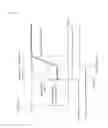
FIG. 1 is a view illustrating an effect of an engine control method for a vehicle with an idle stop function according to the invention.
FIG. 2 is a view illustrating a detailed example of liming an output according to the invention.
BEST MODE
Referring to FIG. 1, the invention sequentially performs, after the engine is started, limiting an output that limits the maximum output torque of the engine to a predetermined level, when the engine restart condition is satisfied and the engine is started after an idle stop, and removing the limit that removes the limit of the maximum output torque of the engine by gradually increasing the limited maximum output torque of the engine as time passes.
That is, the invention is designed to quickly and smoothly shift the transmission by limiting the engine torque to an appropriate level while the transmission is shifted from the N-range (neutral) to the D-range (driving).
The limiting of an output may be performed for a predetermined time that is determined by a test, within a range of 300 ms to 900 ms, or may be performed until a transmission controller receives a signal signifying that the shift from the neutral position to the driving position is finished.
Further, the limiting of an output may be performed until the accumulated revolution number of times of the engine exceeds a predetermined number of times within four to fifteen after the engine is started, or may be performed until the number of times of fuel injection exceeds a predetermine number after the engine is started. Accordingly, for an engine with four cylinders, the limiting of an output may be performed until the number of times of fuel injection exceeds a predetermined number of times within eight to thirty times.
The predetermined limit level of the maximum output torque of the engine in the limiting of an output is determined at a level between 10% and 40% of the maximum output torque of the engine while the opening of a throttle valve is the maximum, within a range of above the minimum output torque needed for driving the engine and under the minimum output torque generating the shift shock.
Describing the limiting of an output in more detail, as shown in FIG. 2, the engine controller determines, as a desired engine output torque, a smaller value between the limited maximum output torque determined by the above method and a torque determined by the driver's operation of the acceleration pedal, estimates the amount of intake air and ignition angle needed for the desired engine output torque, and activates the throttle valve and the ignition system to obtain a desired limited engine output.
After the amount of intake air needed for the desired engine output torque is estimated, a throttle flow rate for securing the amount of intake air is estimated. Further, the amount of opening of a throttle valve is estimated on the basis of the throttle flow rate and the throttle valve is actuated to supply the needed amount of air into the combustion chamber of the engine, and then fuel is injected on the basis of the supplied amount of air and the output of the engine is adjusted by a spark advance or spark retard needed for obtaining a desired output.
The removing the limit is performed to increase the limited maximum output torque of the engine with a predetermined constant inclination as time passes, but may be possible even though the inclination is not constant as long as it removes the limit of the maximum output torque by gradually increasing the limit of the maximum output torque of the engine.
It is possible to prevent the shift shock and quickly and smoothly shift the transmission for driving without the problem of start delay in the related art by gradually removing the limit of the output torque of the engine after quickly and smoothly shifting the transmission from the neutral position to the driving position while momentarily limiting the output of the engine when starting the vehicle after the idle stop.
Claims
1. An engine control method for a vehicle with an idle stop function, comprising: limiting an output that limits the maximum output torque of an engine to a predetermined level when an engine restart condition is satisfied and the engine is started after an idle stop; and
removing the limit that removes the limit of the maximum output torque of the engine by gradually increasing the limited maximum output torque as time passes, the limiting of an output and the removing the limit sequentially performed.
2. The method according to claim 1, wherein the limiting of an output is performed for a predetermined time within a range of 300 ms to 900 ms.
3. The method according to claim 1, wherein the limiting of an output is performed until a transmission controller receives a signal signifying that shift from a neutral position to a driving position is finished.
4. The method according to claim 1, wherein the limiting of an output is performed until the accumulated revolution number of times of the engine exceeds a predetermined number of times within four to fifteen after the engine is started.
5. The method according to claim 1, wherein the limiting of an output is performed until the number of times of fuel injection exceeds a predetermined number of times within eight to thirty times, after the engine is started, for an engine with four cylinders
6. The method according to claim 1, wherein a predetermined limit level of the maximum output torque of the engine in the limiting of an output is determined at a level between 10% and 40% of the maximum output torque of the engine while the opening of a throttle valve is the maximum, within a range of above the minimum output torque needed for driving the engine and under the minimum output torque generating the shift shock.
7. The method according to claim 6, wherein the removing the limit is performed to increase the limited maximum output torque of the engine with a predetermined constant inclination as time passes.
8. The method according to claim 7, wherein the limiting of an output includes:
determining, as a desired engine output torque, a smaller value between the limited maximum output torque determined by the above method and a torque determined by the driver's operation of the acceleration pedal; and
estimating the amount of intake air and ignition angle needed for the desired engine output torque to activate a throttle valve and an ignition system.
9. The method according to claim 2, wherein a predetermined limit level of the maximum output torque of the engine in the limiting of an output is determined at a level between 10% and 40% of the maximum output torque of the engine while the opening of a throttle valve is the maximum, within a range of above the minimum output torque needed for driving the engine and under the minimum output torque generating the shift shock.
10. The method according to claim 9, wherein the removing the limit is performed to increase the limited maximum output torque of the engine with a predetermined constant inclination as time passes.
11. The method according to claim 10, wherein the limiting of an output includes:
determining, as a desired engine output torque, a smaller value between the limited maximum output torque determined by the above method and a torque determined by the driver's operation of the acceleration pedal; and
estimating the amount of intake air and ignition angle needed for the desired engine output torque to activate a throttle valve and an ignition system.
12. The method according to claim 3, wherein a predetermined limit level of the maximum output torque of the engine in the limiting of an output is determined at a level between 10% and 40% of the maximum output torque of the engine while the opening of a throttle valve is the maximum, within a range of above the minimum output torque needed for driving the engine and under the minimum output torque generating the shift shock.
13. The method according to claim 9, wherein the removing the limit is performed to increase the limited maximum output torque of the engine with a predetermined constant inclination as time passes.
14. The method according to claim 13, wherein the limiting of an output includes:
determining, as a desired engine output torque, a smaller value between the limited maximum output torque determined by the above method and a torque determined by the driver's operation of the acceleration pedal; and
estimating the amount of intake air and ignition angle needed for the desired engine output torque to activate a throttle valve and an ignition system.
15. The method according to claim 4, wherein a predetermined limit level of the maximum output torque of the engine in the limiting of an output is determined at a level between 10% and 40% of the maximum output torque of the engine while the opening of a throttle valve is the maximum, within a range of above the minimum output torque needed for driving the engine and under the minimum output torque generating the shift shock.
16. The method according to claim 15, wherein the removing the limit is performed to increase the limited maximum output torque of the engine with a predetermined constant inclination as time passes.
17. The method according to claim 16, wherein the limiting of an output includes:
determining, as a desired engine output torque, a smaller value between the limited maximum output torque determined by the above method and a torque determined by the driver's operation of the acceleration pedal; and
estimating the amount of intake air and ignition angle needed for the desired engine output torque to activate a throttle valve and an ignition system.
18. The method according to claim 5, wherein a predetermined limit level of the maximum output torque of the engine in the limiting of an output is determined at a level between 10% and 40% of the maximum output torque of the engine while the opening of a throttle valve is the maximum, within a range of above the minimum output torque needed for driving the engine and under the minimum output torque generating the shift shock.
19. The method according to claim 18, wherein the removing the limit is performed to increase the limited maximum output torque of the engine with a predetermined constant inclination as time passes.
20. The method according to claim 19, wherein the limiting of an output includes:
determining, as a desired engine output torque, a smaller value between the limited maximum output torque determined by the above method and a torque determined by the driver's operation of the acceleration pedal; and
estimating the amount of intake air and ignition angle needed for the desired engine output torque to activate a throttle valve and an ignition system.
Images & Drawings included:


Sources:
- United States Patent and Trademark Office - verify current appl. status at the USPTO↗
Recent applications in this class:
- » 20250249883 2025-08-07
HYBRID SYSTEM EMISSIONS MANAGEMENT - » 20250236279 2025-07-24
DOWN-SHIFT ACCELERATION OVERSHOOT COMPENSATION IN AUTOMOTIVE ELECTRONIC LONGITUDINAL DYNAMICS CONTROL OF AUTONOMOUS MOTOR VEHICLES - » 20250187579 2025-06-12
VEHICLE CONTROL DEVICE - » 20250178582 2025-06-05
AI-Based Traction Control System Using Real-Time RPM Analysis - » 20250162567 2025-05-22
VEHICLE - » 20250162566 2025-05-22
Work Machine Parameter Selection Device and Parameter Recommendation System - » 20240416890 2024-12-19
Control device for vehicle, control method for vehicle, and non-transitory storage medium - » 20240416889 2024-12-19
Methods and apparatus for mitigating fuel in oil - » 20240409080 2024-12-12
METHODS AND APPARATUS FOR MITIGATING FUEL IN OIL - » 20240391449 2024-11-28
CONTROL ARRANGEMENT AND METHOD FOR SHUTTING DOWN A COMBUSTION ENGINE
Recent applications for this Assignee:
- » 20140318649 2014-10-30
Solenoid valve with magnet filter - » 20140008287 2014-01-09
INJECTOR FILTER AND METHOD OF MANUFACTURING THE SAME - » 20130152881 2013-06-20
Chamber structure for vehicle - » 20130073130 2013-03-21
Fail-safety control method for hybrid vehicle - » 20130062544 2013-03-14
Hydraulic Solenoid Valve for an Automatic Transmission of a Vehicle - » 20120247415 2012-10-04
Intake manifold module for preventing fuel leakage of vehicle and manufacturing method thereof - » 20120150418 2012-06-14
Apparatus and method for controlling fuel injection in a bi-fuel vehicle running on two fuels, I.E. gasoline and LPG - » 20120138020 2012-06-07
Mounting structure for a direct injection fuel rail - » 20100138120 2010-06-03
Shift control method for automatic transmission in four-wheel drive vehicle - » 20080253429 2008-10-16
Method for detecting fault of oil temperature sensor for automatic transmission