Hand-Covering Garment
US20100325776A1
2010-12-30
12/492,516
2009-06-26
Abstract:
A hand-covering garment includes a first hand cover; a first sleeve non-removably connected to the first hand cover such that a first hand of a user may pass into an open end of the first sleeve, through the first sleeve, and out a second end of the first sleeve into the first hand cover, but may not pass out the second end without passing into the first hand cover; a second hand cover; a second sleeve non-removably connected to the second hand cover such that a second hand of the user may pass into an open end of the second sleeve, through the second sleeve, and out a second end of the second sleeve into the second hand cover, but may not pass out the second end without passing into the second hand cover; and a retaining element non-removably connected to the first sleeve and the second sleeve.
Interested in similar patents?
Get notified when new applications in this technology area are published.
Classification:
A41D19/0041 » CPC main
Gloves; Retaining means for connecting the glove to the garment or the arm of the user
A41D19/01 » CPC further
Gloves with undivided covering for all four fingers, i.e. mittens
A41D19/00 IPC
Gloves
Description
BACKGROUND OF THE INVENTION
This invention relates to a garment, more specifically a child's mitten (of various designs) which has the unique characteristic, intrinsic to its design, of preventing the wearer from pulling off the mittens without assistance from an adult, while remaining comfortable and without restricting the child from continuing to participate in most regular daily activities. Infants and young children often exhibit unwanted behaviors (itching; scratching; hair pulling; thumb sucking; etc.) for which hand coverings are commonly used as a preventative measure to assist in stopping such unwanted behavior. If the hand coverings slip off or are pulled off, they are not effective means for stopping the behavior. Also, infants and young children often simply lose their mittens in cold weather and could benefit from a comfortable garment that cannot slip off or be pulled off without assistance, and would therefore less likely be lost or misplaced.
Drawbacks of Patent References: U.S. Pat. Nos. 4,559,647; D449,422; 1,285,917; and 4,016,027.
-
- a. U.S. Pat. No. 4,016,027 Cosmetic Gloves. This patent is designed to cross the neck of the wearer, and has snap closures in the back. This design could be uncomfortable to a child wearer as it would have the potential of constricting or obstructing the child's neck when the child's arms are raised over the child's head. This patent was designed for cosmetic purposes for an adult female and does not take into consideration the design aspects of sleeve openings and a construction that does not have fasteners, which are necessary for the comfort and function of the new invention addressed in this application.
- b. U.S. Pat. No. D449,422 Integral Mitten Garment. The design of this patent includes a fastener, and appears to be primarily designed for the warmth of the wearer and the wearer would be hindered from many routine activities that require precision grasping. Because it is a two-piece garment with a fastening device, it is more likely to be misplaced or lost like typical mittens that come in unconnected pairs. Another drawback is that its design does not take into consideration the aspects of a snug-fitting garment necessary in order to allow for a broad range of precision grasping activities in which the wearer would be engaged in. Its design also does not take into consideration sleeve opening design and the one-piece construction that does not have fasteners, both of which design aspects are necessary for the comfort and function of fulltime daily use of the new invention addressed in this application.
- c. U.S. Pat. No. 1,285,917 Garment. This patent is designed to cross the neck of the wearer, and has a button closure at the neck of the wearer, and the design has a collar that fits somewhat snugly around the neck of the wearer. This design could be uncomfortable to a child wearer as it would have the potential of constricting or obstructing the child's neck, especially when the child's arms are raised over the child's head. This patent appears to have been designed primarily for warmth purposes for an adult and does not take into consideration the design aspects of sleeve openings and a construction that does not have fasteners, which are necessary for the comfort and function of the new invention addressed in this application. This patent is designed with large sleeve openings that extend beyond the elbow between the hand and the elbow and would not well serve the function of preventing a child wearer from removing the garment as the large sleeve openings would facilitate a child wearer from removing the garment without assistance from an adult. Another drawback is that this patent is also designed to be worn over clothing, and by its nature does not take into consideration the aspects of a snug-fitting garment necessary to allow for a broad range of precision grasping activities in which the wearer would be engaged in.
- d. U.S. Pat. No. 4,559,647 Convertible Garment. The primary purpose of this patent is to convert a loose fitting scarf, or loose fitting cuffs, into mittens for warmth of the wearer. A drawback of this patent is that it is designed to be worn over clothing, and because of its loose-fitting nature, does not take into consideration the aspects of a snug-fitting garment necessary to allow for a broad range of precision grasping activities in which the wearer would be engaged in. The design of the sleeve opening on the scarf garment of this patent is primarily for the function of converting the scarf into mittens, and does not take into consideration the necessary comfort of the child wearer to allow for potential comfortable and full time daily use. The sleeve openings are shown as either one elongated slit in a tube, or two slits in a tube, into which the wearer inserts his arms, and would therefore have significant contact in the wearer's underarms that may cause discomfort from the fabric rubbing under the arms. The new patent described in this application has sleeve openings that specifically take into consideration the full rotation of the wearer's arms and the fabric does not continue under the armpit of the wearer, and are not just slits in a continuous tube but have openings that terminate between the elbow and the armpit with one band of cloth continuing across the wearer's back.
Current infant/child protective garments that have been created to help protect against scratching, itching, hair-pulling and/or thumb sucking can generally be categorized as being either a constrictive mitten garment or a shirt/full body garment with hand covers. The constrictive mitten types of protective garments share a common constrictive strategy to keep the mitten from falling off or being pulled off. They typically include separate mittens with a wrist-fastening strategy (drawstrings, elastic, Velcro etc.) to hold the mitten in place. Their common drawback is that the constrictive method trades comfort for security: Either the mittens are worn comfortably and they tend to fall off or they are secured tightly at the cost of the child's comfort and/or proper blood circulation (“comfort/security trade-off”). Some examples include “Gerber Mittens” by Gerber, “No Scratch Mittens” by Kushies Baby, “No Scratch Mittens” by Safety 1st, “Scratch Mittens” by Piccolo Bambino, and “Scratch Mittens” by Luvable Friends.
Currently available shirt/body-garment protective garments with hand covers are generally shirts or body suits whose sleeves have some mechanism to enclose the hands such as buttoning, pocket-folding, zippering or permanently sealing over the child's hands. These garments are not ideal for full-time use as the wearer will lose grasping capabilities of the hands since the garment is loose-fitting over the hands. These garments are also not ideal for use with the child's existing wardrobe, as the garment is not meant to be worn underneath regular clothes, but the garment is intended to be worn as a standalone garment which limits its functionality and practicality for daily full time use. While these shirts & full-body protective suits might be okay for nighttime most parents would love a functional alternative that didn't require commitment to such a cumbersome and unsightly outfit. The invention described in this application may be worn along with almost any garment, allowing full use of the baby's or child's wardrobe. Some examples include “Kitten Mitten Suit” and “Tiger Travel Top”, both produced by SnugglePaws. Also. because it is snug-fitting through to the hands and fingers, the invention described herein does not hinder the majority of normal daily activities of the wearer.
Protective hand covers for thermal/cold protection also exist. Some examples in this category are mitten/glove garments that include various strategies geared toward keeping children's mittens/gloves from falling off. These strategies include attachable mittens/gloves, string-through mittens/gloves, mittens/gloves with a separate securing/attaching device, elongated cuff mittens/glove, and a shirt/body-garment having mittens/gloves.
Attachable mittens/gloves attach at pre-sewn, specific points on the cuff to some other garment such as a sweater, long-sleeve shirt, jacket or other outerwear garment using a pre-attached securing device such as buttons, snaps, clips, velcro etc. They are usually sold as a matching jacket—mitten set or snowsuit. A limitation of attachable mittens/gloves is that since the attachments are pre-sewn into both the mitten and it's matching jacket those mittens do not “work” (attach) when paired with other jackets or garments and therefore have limited options for use. An example currently on the market is “La Petit Rothschild Infant Plush Snowsuit” by S. Rothschild & Co., Inc.
String-though mittens/gloves are attached together by a single string or strap typically strung through an overcoat, and though they may assist in keeping the mittens/gloves on the child, have the primary purpose of keeping the pair of mittens from getting lost. A problem with string-through mittens/gloves is that the string can pose a safety hazard for small children as in a 2003 case where a 3-year old boy was killed when his long mitten string got caught in a closing bus door and the bus drove away. Examples currently on the market include “Brown Bear Childs Mitten with String” by in Fashion Kids and “Mittens on a String” by Ecowool.
A mitten/glove securing/attaching device is a separate device used to either externally secure a mitten/glove to a child's hand such as a strap-down device (See, e.g., U.S. Pat. No. 5,809,569) or a basic mitten clip to secure the mitten to a jacket or sweater. A problem with external straps is that they are easily lost/separated from the mitten, and a problem with clips is that they can pinch the skin. An example currently on the market is “Mitten Clips” by Mommie of 4 Munchkins.
Elongated cuff mittens/gloves include cuffs that extend farther past the wrist than typical mittens, up to and even over the elbow either outside of the outerwear (See, e.g., U.S. Pat. No. 5,361,415), or a cuff that extends under the outerwear (See, e.g., U.S. Pat. No. 6,363,534). The longer cuff gives more surface area for the mitten to cling to the arm, but does not entirely solve the issue of the mitten falling off inadvertently through arm activity, nor does it solve the issue of the child being able to pull the mitten off without assistance. An example currently on the market is “Ski Mittens” by SnowStoppers (U.S. Pat. No. 6,363,534).
Shirt/Body-Garment Type mittens/gloves for thermal protection are similar to the Body-Garment Type discussed above section with respect to existing garments for Scratch/Itch/Hair-Pulling/Thumbsucking prevention. This design implements a jacket with fully attached mittens typically meant to be worn under a more insulated outer garment. A drawback is that child must wear the entire garment for the simple purpose of keeping mittens/gloves from coming off or falling off. The invention described in this patent allows for much more flexibility and layering possibilities for the wearer and is therefore more adaptable to a wider range of cold protection. The invention described in this patent is also more compatible with outer-wear garments as it does not entail an entire shirt or jacket-like torso area that must fit under outer-wear garments. An example currently on the market is “No-Snow Snuggler™” by No Snow Winter Wear LLC (patent pending).
SUMMARY OF THE INVENTION
The primary objective of the invention is to provide a garment to cover babies' and small children's hands that cannot easily slip off or be easily pulled off by the child. In doing so, the garment may serve multiple objectives including the following:
-
- 1. A preventative measure for involuntary skin lacerations most commonly presented in newborns and infants who often scratch their faces with their fingernails due to a lack of control of hand movement combined with sharp and hard-to-cut fingernails.
- 2. A preventative measure for babies and children with a problematic compulsion to itch their skin (e.g., eczema; neurodermatitis, etc.).
- 3. A preventative measure for babies and children with a problematic compulsion to pull out their hair (tricholomania).
- 4. A preventative measure for thumbsucking, and a proactive means to help halt thumbsucking.
- 5. A means simply to keep the child warm in cold weather without the issue of the mittens falling off or being pulled off.
While the mittens are generally intended for babies and small children, the design can be adapted for larger sizes including adults who may have similar needs.
In accordance with an example embodiment of the invention, a hand-covering garment includes a first hand cover having a single open end; a first sleeve having a first open end and a second end, the second end non-removably connected to the open end of the first hand cover such that a first hand of a user may pass into the first open end of the first sleeve, through the first sleeve, and out the second end into the first hand cover, but may not pass out the second end without passing into the first hand cover; a second hand cover having a single open end; a second sleeve having a first open end and a second end, the second end non-removably connected to the open end of the second hand cover such that a second hand of the user may pass into the first open end of the second sleeve, through the second sleeve, and out the second end into the second hand cover, but may not pass out the second end without passing into the second hand cover; and a retaining element non-removably connected to the first sleeve and the second sleeve.
BRIEF DESCRIPTION OF THE DRAWINGS
Preferred and alternative embodiments of the present invention are described in detail below with reference to the following drawings:
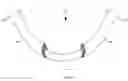
FIG. 1 is a diagram showing a perspective view of a hand-covering garment formed in accordance with an embodiment of the invention;
FIG. 2 is a diagram showing a front view of the hand-covering garment of FIG. 1 as worn by an infant;
FIG. 3 is a diagram showing a rear view of the hand-covering garment of FIG. 1 as worn by an infant;
FIG. 4 is a diagram showing a closed-end tube hand cover formed in accordance with an alternative embodiment of the invention;
FIG. 5 is a diagram showing a five-fingered glove hand cover formed in accordance with an alternative embodiment of the invention; and
FIG. 6 is a diagram showing an outer cuff extending from a hand-covering garment in accordance with an embodiment of the invention.
DETAILED DESCRIPTION OF THE INVENTION
FIG. 1 is a diagram showing a perspective view of a hand-covering garment 20 formed in accordance with an embodiment of the invention. The hand-covering garment 20 includes a first hand cover 22 having a single open end and a second hand cover 24 having a single open end. In the example embodiment shown, the first hand cover 22 is a left mitten and the second hand cover 24 is a right mitten. However, the first hand cover 22 and the second hand cover 24 may be structured in other manners, such as a closed end tube without a thumb socket or a five-fingered glove as shown in FIGS. 4 and 5, for example. The first hand cover 22 and the second hand cover 24 include at least one insulating layer such as Thinsulate® for example, in an example embodiment. The first hand cover 22 and the second hand cover 24 include a waterproof layer such as Helly Tech® for example in some embodiments. In those embodiments where the first and second hand covers 22, 24 include a waterproof layer, the waterproof layer is preferably an outer layer.
A first sleeve 26 having a first open end and a second end is non-removably connected at the second end to the open end of the first hand cover 22 such that a first hand of a user may pass into the first open end of the first sleeve 26, through the first sleeve 26, and out the second end into the first hand cover 22, but may not pass out the second end without passing into the first hand cover 22. In similar fashion, a second sleeve 28 having a first open end and a second end is non-removably connected at the second end to the open end of the second hand cover 24 such that a second hand of the user may pass into the first open end of the second sleeve 28, through the second sleeve 28, and out the second end into the second hand cover 24, but may not pass out the second end without passing into the second hand cover 24. The first sleeve 26 is preferably structured to extend to a first point between a first elbow and a first shoulder when worn by a user and the second sleeve 28 is preferably structured to extend to a second point between a second elbow and a second shoulder when worn by the user, as shown in FIGS. 2 and 3, for example.
A retaining element 30 is non-removably connected to the first sleeve 26 and the second sleeve 28. The hand-covering garment 20 is preferably a one-piece garment formed of a single contiguous piece of fabric such that the first hand cover 22, the second hand cover 24, the first sleeve 26, the second sleeve 28, and the retaining element 30 are all portions of the contiguous piece of fabric. However, the hand-covering garment 20 may be formed of multiple pieces of fabric and/or other materials in other embodiments. The fabric may be a knitted fabric such as a cotton/nylon/spandex or Lycra® blend. In an example embodiment, at least one of the first sleeve 26, the second sleeve 28, and the retaining element 30 are formed of a fabric having a stretchable fiber content such as Lycra®, and in some embodiments, the entire hand-covering garment 20 is formed of a fabric having a stretchable fiber content.
FIGS. 2 and 3 show a front view and a rear view, respectively, of the hand-covering garment 20 of FIG. 1 as worn by an infant. It can be seen in these two figures that the retaining element 30 is structured to extend across the back of the infant, but does not extend across the front of the infant. In a preferred embodiment, the retaining element 30 is the only structure connecting the first sleeve 26 to the second sleeve 28.
In an example embodiment, the hand-covering garment 20 is a one-piece, self-securing mitten or glove garment that cannot inadvertently slip off of, or be purposefully pulled off by an infant or small child without assistance. While the hand-covering termination can vary according to desired purpose (mitten, glove, digitless closed tube), the consistent design features are that the glove or mitten is permanently attached to the sleeve, the sleeve portion ends on the front (ventral) side of a user between the elbow and shoulder, and the garment 20 continues over the back (dorsal) side of the shoulders as a single garment, connecting both sleeves contiguously. The garment 20 is typically worn by inserting one arm into one sleeve, stretching the other sleeve across the back of the infant or child, and inserting the other arm into the other sleeve. The arms of the infant or child may also be placed in a position above the infant's or child's head when placing the garment 20 onto the infant or child. This self-securing design prevents the mittens or gloves from working their way down the arm and ultimately off of the child through natural occurring activity, and also prevents the child from pulling the mitten or glove off intentionally as pulling on one end has the effect of increasing the security of the opposite sleeve.
FIGS. 4 and 5 illustrate alternative hand covers for the hand-covering garment 20 shown in FIG. 1. FIG. 4 is a diagram showing a closed-end tube hand cover 42 connected to a sleeve 46 (partial view shown). The closed-end tube hand cover 42 does not include a thumb socket and may take the place of the first hand cover 22 shown in FIG. 1 in an alternative embodiment. An additional closed-end tube hand cover (not shown) similar to the closed-end tube hand cover 42 would take the place of the second hand cover 24 in such an embodiment. FIG. 5 is a diagram showing a five-fingered glove hand cover 52 connected to a sleeve 56 (partial view shown). The five-fingered glove hand cover 52 may take the place of the first hand cover 22 shown in FIG. 1 in an alternative embodiment. An additional five-fingered glove hand cover (not shown) that is a mirror image of the five-fingered glove hand cover 52 would take the place of the second hand cover 24 in such an embodiment.
FIG. 6 is a diagram showing a mitten hand cover 62 connected to a sleeve 66 (partial view shown). The mitten 62 and the sleeve 66 may take the place of the fist hand cover 22 and the first sleeve 26, respectively in an alternative embodiment. An outer cuff 68 that includes a waterproof layer in an example embodiment is attached to a first wrist area 70 located between the hand cover 62 and the sleeve 66. The outer cuff 68 includes a first securing element 72 positioned at an edge of the outer cuff 68. In an example embodiment, the first securing element 72 is an elastic band. However, the first securing element 72 may be structured in other manners, such as a drawstring, for example. A second hand cover (not shown) with a second outer cuff (also not shown) that is a mirror image of the hand cover 62 would take the place of the second hand cover 24 in an embodiment having outer cuffs that extend from the hand covers.
While the preferred embodiment of the invention has been illustrated and described, as noted above, many changes can be made without departing from the spirit and scope of the invention. For example: garments with thumbholes that allow for thumb-sucking but still prevent many other unwanted behaviors; garments that terminate in a silk or silky fabric mitten ends for children with extreme sensitivity to rubbing or scratching; etc. Accordingly, the scope of the invention is not limited by the disclosure of the preferred embodiment. Instead, the invention should be determined entirely by reference to the claims that follow.
Claims
The embodiments of the invention in which an exclusive property or privilege is claimed are defined as follows:1. A hand-covering garment comprising:
a first hand cover having a single open end;
a first sleeve having a first open end and a second end, the second end non-removably connected to the open end of the first hand cover such that a first hand of a user may pass into the first open end of the first sleeve, through the first sleeve, and out the second end into the first hand cover, but may not pass out the second end without passing into the first hand cover;
a second hand cover having a single open end;
a second sleeve having a first open end and a second end, the second end non-removably connected to the open end of the second hand cover such that a second hand of the user may pass into the first open end of the second sleeve, through the second sleeve, and out the second end into the second hand cover, but may not pass out the second end without passing into the second hand cover; and
a retaining element non-removably connected to the first sleeve and the second sleeve,
wherein the retaining element is structured to extend across a back of the user, wherein the retaining element is not structured to extend across a front of the user, and wherein the retaining element is the only structure connecting the first sleeve to the second sleeve.
2. The hand-covering garment of claim 1, wherein the first hand cover is a first mitten and the second hand cover is a second mitten.
3. The hand-covering garment of claim 1, wherein the first hand cover is a first closed tube without a thumb socket and the second hand cover is a second closed tube without a thumb socket.
4. The hand-covering garment of claim 1, wherein the first hand cover is a first five-fingered glove and the second hand cover is a second five-fingered glove.
5. The hand-covering garment of claim 1, wherein the first hand cover, the second hand cover, the first sleeve, the second sleeve, and the retaining element are all portions of a single contiguous piece of fabric.
6. The hand-covering garment of claim 1, wherein at least one of the first sleeve, the second sleeve, and the retaining element are formed of a fabric having stretchable fiber content.
7. The hand-covering garment of claim 1, wherein the first sleeve is structured to extend to a first point between a first elbow and a first shoulder when worn by the user and the second sleeve is structured to extend to a second point between a second elbow and a second shoulder when worn by the user.
8. The hand-covering garment of claim 1, wherein the first hand cover and the second hand cover include at least one insulating layer.
9. The hand covering garment of claim 1, wherein the first hand cover and the second hand cover include a waterproof layer.
10. The hand-covering garment of claim 9, wherein the waterproof layer is an outer layer.
11. The hand-covering garment of claim 1, further comprising:
a first outer cuff attached to a first wrist area located between the first hand cover and the first sleeve; and
a second outer cuff attached to a second wrist area located between the second hand cover and the second sleeve.
12. The hand-covering garment of claim 11, wherein the first outer cuff includes a waterproof layer and the second outer cuff includes a waterproof layer.
13. The hand-covering garment of claim 11, further comprising a first securing element on the first outer cuff and a second securing element on the second outer cuff.
14. The hand-covering garment of claim 13, wherein the first securing element is a first drawstring positioned at an edge of the first outer cuff and the second securing element is a second drawstring positioned at an edge of the second outer cuff.
15. The hand-covering garment of claim 13, wherein the first securing element is a first elastic band positioned at an edge of the first outer cuff and the second securing element is a second elastic band positioned at an edge of the second outer cuff.
Images & Drawings included:



Sources:
- United States Patent and Trademark Office - verify current appl. status at the USPTO↗
Recent applications in this class:
- » 20250072538 2025-03-06
System and Method for Connecting Garments and Related Articles - » 20230240395 2023-08-03
Golf Glove Securing Device - » 20220330632 2022-10-20
Glove and garment system - » 20220218057 2022-07-14
CLOTHING SET FOR PRACTICING A WINTER SPORT - » 20220218056 2022-07-14
Personal Hygiene Device - » 20210307435 2021-10-07
System and method for connecting garments and related articles - » 20210289857 2021-09-23
RETRACTABLE HAND COVERING - » 20210274866 2021-09-09
GLOVES AND RELATED HEAT-RESISTANT ACCESSORY HOLDER AND STRAP FOR GLOVES AND RELATED SYSTEMS - » 20210093025 2021-04-01
Garment - » 20200345090 2020-11-05
Outerwear article with convertible hand covering