ARTICLE COMPRISING A RUBBER COMPONENT AND A THERMOPLASTIC COMPONENT, AND ITS MANUFACTURE
US20100325783A1
2010-12-30
12/675,303
2008-08-20
Abstract:
A process for making an article comprising a thermoplastic component (4) and a rubber component (3) having an halogenated surface in which the thermoplastic component is welded directly to the halogenated surface of the rubber component by, for example, RF or impulse welding. The product comprises a rubber component having an halogenated surface and a thermoplastic component in which the halogenated surface of the rubber component and the thermoplastic component are fused together.
Inventors:
- Matthew James Hodgson 2 🇬🇧 Wiltshire, United Kingdom
- Philip Adam Smith 1 🇬🇧 Wiltshire, United Kingdom
Assignee:
- AVON POLYMER PRODUCTS LIMITED 1 🇬🇧 Melksham, Wiltshire, GB, United Kingdom
Interested in similar patents?
Get notified when new applications in this technology area are published.
Classification:
C08J7/126 » CPC main
Chemical treatment or coating of shaped articles made of macromolecular substances; Chemical modification Halogenation
B29C65/04 » CPC further
Joining of preformed parts ; Apparatus therefor by heating, with or without pressure Dielectric heating, e.g. high-frequency welding, i.e. radio frequency welding of plastic materials having dielectric properties, e.g. PVC
B29C65/38 » CPC further
Joining of preformed parts ; Apparatus therefor by heating, with or without pressure Impulse heating
B29C66/026 » CPC further
General aspects of processes or apparatus for joining preformed parts; General aspects dealing with the joint area or with the area to be joined; Preparation of the material, in the area to be joined, prior to joining or welding Chemical pre-treatments
B29C66/1122 » CPC further
General aspects of processes or apparatus for joining preformed parts; General aspects dealing with the joint area or with the area to be joined; Particular design of joint configurations particular design of the joint cross-sections; Joint cross-sections comprising a single joint-segment, i.e. one of the parts to be joined comprising a single joint-segment in the joint cross-section; Single lapped joints Single lap to lap joints, i.e. overlap joints
B29C66/472 » CPC further
General aspects of processes or apparatus for joining preformed parts; General aspects of joining substantially flat articles, e.g. plates, sheets or web-like materials; Making flat seams in tubular or hollow articles; Joining single elements to substantially flat surfaces; Joining single elements to sheets, plates or other substantially flat surfaces said single elements being substantially flat
B29C66/712 » CPC further
General aspects of processes or apparatus for joining preformed parts characterised by the composition, physical properties or the structure of the material of the parts to be joined; Joining with non-plastics material characterised by the composition of the plastics material of the parts to be joined the composition of one of the parts to be joined being different from the composition of the other part
B29C66/73755 » CPC further
General aspects of processes or apparatus for joining preformed parts characterised by the composition, physical properties or the structure of the material of the parts to be joined; Joining with non-plastics material characterised by the intensive physical properties of the material of the parts to be joined, by the optical properties of the material of the parts to be joined, by the extensive physical properties of the parts to be joined, by the state of the material of the parts to be joined or by the material of the parts to be joined being a thermoplastic or a thermoset characterised by the state of the material of the parts to be joined uncured, partially cured or fully cured the to-be-joined area of at least one of the parts to be joined being fully cured, i.e. fully cross-linked, fully vulcanized
B29C66/7392 » CPC further
General aspects of processes or apparatus for joining preformed parts characterised by the composition, physical properties or the structure of the material of the parts to be joined; Joining with non-plastics material characterised by the intensive physical properties of the material of the parts to be joined, by the optical properties of the material of the parts to be joined, by the extensive physical properties of the parts to be joined, by the state of the material of the parts to be joined or by the material of the parts to be joined being a thermoplastic or a thermoset characterised by the material of the parts to be joined being a thermoplastic or a thermoset characterised by the material of at least one of the parts being a thermoplastic
B29C66/7394 » CPC further
General aspects of processes or apparatus for joining preformed parts characterised by the composition, physical properties or the structure of the material of the parts to be joined; Joining with non-plastics material characterised by the intensive physical properties of the material of the parts to be joined, by the optical properties of the material of the parts to be joined, by the extensive physical properties of the parts to be joined, by the state of the material of the parts to be joined or by the material of the parts to be joined being a thermoplastic or a thermoset characterised by the material of the parts to be joined being a thermoplastic or a thermoset characterised by the material of at least one of the parts being a thermoset
B29C66/8322 » CPC further
General aspects of processes or apparatus for joining preformed parts; General aspects of machine operations or constructions and parts thereof characterised by the movement of the joining or pressing tools; Reciprocating joining or pressing tools Joining or pressing tools reciprocating along one axis
B29C66/91421 » CPC further
General aspects of processes or apparatus for joining preformed parts; Measuring or controlling the joining process by measuring or controlling the temperature, the heat or the thermal flux by controlling or regulating the temperature, the heat or the thermal flux by controlling or regulating the temperature of the joining tools
B29C66/9161 » CPC further
General aspects of processes or apparatus for joining preformed parts; Measuring or controlling the joining process by measuring or controlling the temperature, the heat or the thermal flux by controlling or regulating the temperature, the heat or the thermal flux by controlling or regulating the heat or the thermal flux, i.e. the heat flux
B29C66/919 » CPC further
General aspects of processes or apparatus for joining preformed parts; Measuring or controlling the joining process by measuring or controlling the temperature, the heat or the thermal flux characterised by specific temperature, heat or thermal flux values or ranges
A41D13/0002 » CPC further
Professional, industrial or sporting protective garments, e.g. surgeons' gowns or garments protecting against blows or punches Details of protective garments not provided for in groups -
A41D27/245 » CPC further
Details of garments or of their making; Hems; Seams made by welding or gluing
A41D2300/52 » CPC further
Details of garments; Seams made by welding or gluing
A62B17/04 » CPC further
Protective clothing affording protection against heat or harmful chemical agents or for use at high altitudes Hoods
B29C65/18 » CPC further
Joining of preformed parts ; Apparatus therefor by heating, with or without pressure using heated tools
B29C65/224 » CPC further
Joining of preformed parts ; Apparatus therefor by heating, with or without pressure using heated tools; Heated wire resistive ribbon, resistive band or resistive strip characterised by the type of heated wire, resistive ribbon, band or strip being a resistive ribbon, a resistive band or a resistive strip
B29C65/5057 » CPC further
Joining of preformed parts ; Apparatus therefor using adhesives, i.e. using supplementary joining material; solvent bonding using adhesive tape, e.g. thermoplastic tape; using threads or the like positioned between the surfaces to be joined
B29C65/62 » CPC further
Joining of preformed parts ; Apparatus therefor using mechanical means or mechanical connections, e.g. form-fits Stitching
B29C65/8207 » CPC further
Joining of preformed parts ; Apparatus therefor; Testing the joint by mechanical methods
B29C65/8223 » CPC further
Joining of preformed parts ; Apparatus therefor; Testing the joint by mechanical methods Peel tests
B29C66/02 » CPC further
General aspects of processes or apparatus for joining preformed parts; General aspects dealing with the joint area or with the area to be joined Preparation of the material, in the area to be joined, prior to joining or welding
B29C66/301 » CPC further
General aspects of processes or apparatus for joining preformed parts; General aspects dealing with the joint area or with the area to be joined; Particular design of joint configurations Three-dimensional joints, i.e. the joined area being substantially non-flat
B29C66/43 » CPC further
General aspects of processes or apparatus for joining preformed parts; General aspects of joining substantially flat articles, e.g. plates, sheets or web-like materials; Making flat seams in tubular or hollow articles; Joining single elements to substantially flat surfaces; Joining substantially flat articles ; Making flat seams in tubular or hollow articles Joining a relatively small portion of the surface of said articles
B29C66/723 » CPC further
General aspects of processes or apparatus for joining preformed parts characterised by the composition, physical properties or the structure of the material of the parts to be joined; Joining with non-plastics material characterised by the structure of the material of the parts to be joined being multi-layered
B29C66/7292 » CPC further
General aspects of processes or apparatus for joining preformed parts characterised by the composition, physical properties or the structure of the material of the parts to be joined; Joining with non-plastics material characterised by the structure of the material of the parts to be joined; Textile or other fibrous material made from plastics coated
B29C66/73365 » CPC further
General aspects of processes or apparatus for joining preformed parts characterised by the composition, physical properties or the structure of the material of the parts to be joined; Joining with non-plastics material characterised by the intensive physical properties of the material of the parts to be joined, by the optical properties of the material of the parts to be joined, by the extensive physical properties of the parts to be joined, by the state of the material of the parts to be joined or by the material of the parts to be joined being a thermoplastic or a thermoset characterised by the optical properties of the material of the parts to be joined, e.g. fluorescence, phosphorescence at least one of the parts to be joined being opaque, transparent or translucent to visible light at least one of the parts to be joined being transparent or translucent to visible light
B29C66/7352 » CPC further
General aspects of processes or apparatus for joining preformed parts characterised by the composition, physical properties or the structure of the material of the parts to be joined; Joining with non-plastics material characterised by the intensive physical properties of the material of the parts to be joined, by the optical properties of the material of the parts to be joined, by the extensive physical properties of the parts to be joined, by the state of the material of the parts to be joined or by the material of the parts to be joined being a thermoplastic or a thermoset characterised by the extensive physical properties of the parts to be joined Thickness, e.g. very thin
B29C66/73773 » CPC further
General aspects of processes or apparatus for joining preformed parts characterised by the composition, physical properties or the structure of the material of the parts to be joined; Joining with non-plastics material characterised by the intensive physical properties of the material of the parts to be joined, by the optical properties of the material of the parts to be joined, by the extensive physical properties of the parts to be joined, by the state of the material of the parts to be joined or by the material of the parts to be joined being a thermoplastic or a thermoset characterised by the state of the material of the parts to be joined amorphous, semi-crystalline or crystalline the to-be-joined area of at least one of the parts to be joined being semi-crystalline
B29C66/73775 » CPC further
General aspects of processes or apparatus for joining preformed parts characterised by the composition, physical properties or the structure of the material of the parts to be joined; Joining with non-plastics material characterised by the intensive physical properties of the material of the parts to be joined, by the optical properties of the material of the parts to be joined, by the extensive physical properties of the parts to be joined, by the state of the material of the parts to be joined or by the material of the parts to be joined being a thermoplastic or a thermoset characterised by the state of the material of the parts to be joined amorphous, semi-crystalline or crystalline the to-be-joined area of at least one of the parts to be joined being crystalline
B29C66/929 » CPC further
General aspects of processes or apparatus for joining preformed parts; Measuring or controlling the joining process by measuring or controlling the pressure, the force, the mechanical power or the displacement of the joining tools characterized by specific pressure, force, mechanical power or displacement values or ranges
B29C66/949 » CPC further
General aspects of processes or apparatus for joining preformed parts; Measuring or controlling the joining process by measuring or controlling the time characterised by specific time values or ranges
B29K2067/00 » CPC further
Use of polyesters or derivatives thereof , as moulding material
B29K2101/12 » CPC further
Use of unspecified macromolecular compounds as moulding material Thermoplastic materials
B29K2105/0032 » CPC further
Condition, form or state of moulded material or of the material to be shaped containing compounding ingredients Pigments, colouring agents or opacifiyng agents
B29K2105/0038 » CPC further
Condition, form or state of moulded material or of the material to be shaped containing compounding ingredients Plasticisers
B29K2105/0044 » CPC further
Condition, form or state of moulded material or of the material to be shaped containing compounding ingredients Stabilisers, e.g. against oxydation, light or heat
B29K2105/16 » CPC further
Condition, form or state of moulded material or of the material to be shaped containing reinforcements, fillers or inserts Fillers
B29K2313/02 » CPC further
coated
B29K2995/0026 » CPC further
Properties of moulding materials, reinforcements, fillers, preformed parts or moulds having particular optical properties, e.g. fluorescent or phosphorescent Transparent
B29K2995/004 » CPC further
Properties of moulding materials, reinforcements, fillers, preformed parts or moulds; Other properties Semi-crystalline
B29K2995/0041 » CPC further
Properties of moulding materials, reinforcements, fillers, preformed parts or moulds; Other properties Crystalline
B29L2009/00 » CPC further
Layered products
B29L2031/26 » CPC further
Other particular articles Sealing devices, e.g. packaging for pistons or pipe joints
B29L2031/48 » CPC further
Other particular articles Wearing apparel
B29L2031/4807 » CPC further
Other particular articles; Wearing apparel Headwear
B29L2031/4835 » CPC further
Other particular articles; Wearing apparel; Headwear Masks
B29L2031/5254 » CPC further
Other particular articles; Sports equipment ; Games; Articles for amusement ; Toys Swimming or diving equipment
C08J2307/00 » CPC further
Characterised by the use of natural rubber
Y10T428/31569 » CPC further
Stock material or miscellaneous articles; Composite [nonstructural laminate]; Of polyamidoester [polyurethane, polyisocyanate, polycarbamate, etc.] Next to natural rubber
B29K2011/00 » CPC further
Use of rubber derived from chloroprene as moulding material
B29K2007/00 » CPC further
Use of natural rubber as moulding material
B29K2067/003 » CPC further
Use of polyesters or derivatives thereof , as moulding material PET, i.e. poylethylene terephthalate
B29K2009/06 » CPC further
SB polymers, i.e. butadiene-styrene polymers
B29K2055/02 » CPC further
ABS polymers, i.e. acrylonitrile-butadiene-styrene polymers
B29C66/71 » CPC further
General aspects of processes or apparatus for joining preformed parts characterised by the composition, physical properties or the structure of the material of the parts to be joined; Joining with non-plastics material characterised by the composition of the plastics material of the parts to be joined
B29K2027/06 » CPC further
Use of polyvinylhalogenides or derivatives thereof as moulding material PVC, i.e. polyvinylchloride
B29K2023/083 » CPC further
Use of polyalkenes or derivatives thereof as moulding material; Polymers of ethylene; Copolymers of ethylene EVA, i.e. ethylene vinyl acetate copolymer
A42B1/06 IPC
Hats; Caps; Hoods; Soft caps; Hoods Caps with flaps; Motoring caps
B29K2023/22 » CPC further
Use of polyalkenes or derivatives thereof as moulding material; Polymers of hydrocarbons having four or more carbon atoms, e.g. polymers of butylene, e.g. PB, i.e. polybutylene Copolymers of isobutene, e.g. butyl rubber
B29K2021/00 » CPC further
Use of unspecified rubbers as moulding material
B32B37/06 » CPC further
Methods or apparatus for laminating, e.g. by curing or by ultrasonic bonding characterised by the heating method
B32B25/08 » CPC further
Layered products comprising natural or synthetic rubber comprising rubber as the main or only constituent of a layer, next to another layer of a of synthetic resin
A41D3/08 IPC
Overgarments Capes
Description
The present invention relates to a process for the manufacture of articles comprising rubber and thermoplastic components and in particular for a process of joining rubber and thermoplastic components together, and to articles made by the process.
Rubber has a long history of use in manufactured goods. For example, rubber seals are widely used in clothing and protective garments where it is desired to form a seal between the body of a person wearing the garment and the garment itself. One type of garment which typically includes rubber seals is the dry suit. Dry suits are typically made from panels of polymer impregnated fabric which are sewn together to form the bulk of the garment. However, the polymer impregnated fabric lacks the necessary elasticity and resilience to form a good seal against the wearer's neck, wrists and ankles and in those places in the dry suit typically includes a rubber seal for that purpose. A further instance is the type of protective hood used by emergency service personnel to protect themselves in the event of chemical, biological, radiological or nuclear event. Such hoods are known as CBRN hoods and conventionally comprise a transparent thermoplastic polyurethane hood portion which covers the head and includes a respirator filter to which the user can breathe. The hood portion is sealed around the wearer's neck with a rubber seal.
The joins between the rubber seals and the thermoplastic polyurethane components should be both strong and free of leaks. Conventional methods of joining rubber seals to polyurethane include using an adhesive such as double-sided adhesive tape, together with stitching for reinforcement. Such methods are labour intensive and inconvenient. For example, a known method of manufacturing a protective CBRN hood involves joining the rubber neck seal to the transparent polyurethane hood using double-sided adhesive tape which requires careful positioning of the seal and hood and a lengthy stepwise procedure bringing the components together with the double-sided tape.
Attempts have been made to provide simpler and more robust methods of joining rubber seals to thermoplastic polymers such as polyurethane. GB 2 355 216A discloses a process in which a rubber neck or cuff seal for a dry suit comprising a dipped rubber layer is coated with a thermoplastic layer such as a polyurethane. The coated seal may then be welded to the rest of the garment by a welding process which involves fusing the polyurethane polymer of the surface coating of the seal.
There remains a need for improved processes of joining rubber and a thermoplastic such as polyurethane together.
The present invention relates to a process of making an article comprising a thermoplastic component and a rubber component having a halogenated surface, the process comprises the step of welding the thermoplastic component directly to the halogenated surface of the rubber component. It has previously been believed that it is not possible to join a rubber directly to a thermoplastic such as polyurethane in a satisfactory manner using welding. Surprisingly, the present inventor has found that it is possible to achieve a strong and leak-free join between rubber and thermoplastic components by welding provided that the surface of the rubber component in the region of the weld has previously been halogenated. The inventor believes that the halogenated surface of the rubber has a degree of thermoplasticity which allow it to be welded to a thermoplastic polymer such as polyurethane.
In the process of the invention, the thermoplastic component is welded directed to the halogenated surface of the rubber component, that is, there are no intervening layers or materials between the thermoplastic and the halogenated surface. The thermoplastic and halogenated rubber therefore fuse together during the welding step, in contrast to the process of GB 2 355 216A in which the body of the garment is welded to the polyurethane coating of the rubber seal.
The rubber component may be of any natural or synthetic rubber which is capable of being halogenated to provide a halogenated surface. Synthetic rubbers are well known to the skilled person and include bromo butyl rubber (BIIR), butadiene rubber (BR), chloro butyl rubber (CIIR), chloroprene rubber (CR), hydrogenated nitrile rubber (HNBR), butyl rubber (IIR), isoprene rubber (IR) including natural rubber (NR), nitrile rubber (NBR), and styrene-butadiene rubber (SBR). Preferably, the rubber component is of isoprene rubber, especially natural rubber. Isoprene rubber components are usually produced in one of two ways. In the first way, a pre-cured latex is spread onto a horizontal belt, cured using heat, passed through a trough of talc to reduce surface tackiness and is then collected onto rolls. The sheet material is then halogenated, if desired, and cut to the desired shape. In the second method, an aluminium sheet is coated with a coagulant and then dipped into a bath of natural rubber latex. The sheet is lifted and the latex remaining on the sheet coagulates to form a rubber sheet. That rubber sheet is then halogenated, if desired, and cut to the desired shape. The rubber component may be made by either of those methods or by any other suitable method.
High levels of contaminants such as talc or silicone oil on the surfaces of rubber component, if present, may interfere with the welding process or otherwise reduce the strength of the weld and where excessive levels of talc or silicone are present, the process of the invention may include the step of removing at least some of the talc or silicone prior to the welding step. The talc or silicone can be removed by conventional washing and cleaning processes.
The halogenation of natural rubber components such as natural rubber seals is well known and is typically carried out in order to reduce the surface tackiness of the rubber so that it slips easily over the skin and to reduce the amount of extractable protein present, thereby lowering the risk of an allergic reaction in the wearer. The halogenation typically involves treating the rubber component with a solution of the appropriate halogen. Those conventional methods have been found to produce a satisfactory halogenated surface for use in the process of the invention although any suitable halogenation technique may be used. Preferably, the rubber component is chlorinated. (References herein to halogenation, chlorination, or bromination should be taken to refer to the above-mentioned surface treatment and not to refer to any halogen present as a constituent of the rubber polymer repeat unit, such as the bromine in bromo butyl rubber and the chlorine in chlorobutyl rubber.)
For the process of the invention to work it is not necessary for the whole surface of the rubber component to be halogenated; it is sufficient that only the region to be welded is halogenated. Accordingly, the surface of the rubber article may include one or more regions which are not halogenated. Preferably, substantially all of the rubber component is halogenated (although any cut edges of the rubber component formed by cutting or stamping the component from a sheet of rubber will typically not be halogenated).
The level of halogenation may vary within a wide range. The halogenation level of the surface of the rubber component may, for example, be within the range of from 0.1 to 20%, optionally from 0.1 to 10%, preferably from 0.5 to 3.5%, and more preferably in the range of from 1 to 3%. The halogenation level can be determined using fluorescence spectroscopy, for example, using an x-ray fluorescence analyser of the type available from ASOMA Instruments of Austin, Tex. which is now part of the SPECTRO group. The ASOMA analyser shines x-rays of 5.9 keV onto the sample and chlorine atoms, if present, emit x-rays at 2.62 keV. Those x-rays are detected and the rate of emission of the x-rays is compared with a calibration curve prepared using samples of known chlorine content to give the chlorine content of the sample.
The rubber component may be of any size and/or shape. The rubber component may be, for example, a component made of rubber sheet cut to a specific desired shape. Where the rubber component is made from a rubber sheet material the thickness of the rubber sheet material is preferably within the range of from 100 microns to 2.0 millimetres. In a preferred embodiment, the rubber component is a seal. The seal may be, for example, a seal for use in an opening of a garment to seal the garment to the wearer's body, for example, a neck, wrist or ankle seal.
The thermoplastic component may be of any thermoplastic which is weldable to the halogenated surface of the rubber component. Optionally, the thermoplastic of the thermoplastic component has a melting point in the range of from 130° C. to 220° C. The thermoplastic should be able to withstand the elevated temperatures involved in the welding step without significant decomposition. The thermoplastic of the thermoplastic component may contain one or more plasticisers to modify the softening point of the thermoplastic material. The thermoplastic component may also comprise one or more other materials such as fillers, pigments, antioxidants and the like. The important point is that the thermoplastic should be able to melt during the welding step and become welded to the halogenated surface of the halogenated rubber component.
The thermoplastic component may be of any weldable thermoplastic, for example a polyurethane or polyvinylchloride. Preferably, the thermoplastic component is of a thermoplastic which is suitable for RF welding such as polyurethanes, polyvinylchloride, nylons, PET, EVA and some ABS resins. RF welding the nylons, PET, EVA and some ABS resins may require special conditions, for example, nylon and PET are RF weldable if preheated welding bars are used in addition to the RF power. In a preferred embodiment, the thermoplastic component is a polyurethane component. The polyurethane may be a semi-crystalline polyurethane. In a preferred embodiment, the polyurethane component is an semi-crystalline polyurethane sheet material suitable for fabrication of a protective CBRN hood. The polyurethane sheet material may be of any suitable thickness. Optionally, the thickness of the polyurethane sheet material is in the range of 100 microns to 1000 microns. Below 100 microns thickness the chemical barrier properties of polyurethane may decline and above 1000 microns flexibility and wearability may reduce. Advantageously, the polyurethane sheet is transparent, that is, is optionally clear. Polyurethane has the further advantage that it is typically very resistant to chemical attack and is therefore suitable for use in protective garments such as protective hoods.
The polyurethane component may be of a crystalline polyurethane. Crystalline polyurethanes are used, for example in the filter housings of protective hoods.
Preferably, the polyurethane does not contain a plasticiser. The skilled reader will understand that the thermoplastic component may comprise one or more elements of non-thermoplastic material, for example metal studs, stitching and the like, which do not take part in the welding. For example, the thermoplastic component could be of a laminate material having a thermoplastic layer, which is involved in the welding step, adhered to a non-thermoplastic substrate. In a similar way, the rubber component may also comprise non-rubber elements which take no part in the welding step. Preferably, however, the thermoplastic component is free of non-thermoplastic elements and the rubber component is free of non-rubber elements.
Any suitable welding technique may be used to fuse together the thermoplastic component and the halogenated surface of the rubber component. For example, impulse welding, RF welding, heated platen welding or continuous heat sealing (also known as band sealing) may be used. Impulse welding and RF welding are preferred welding methods. The welding process preferably involves pressing the thermoplastic component against the halogenated surface of the rubber component and then welding the two components together in the area of contact.
Impulse welding is a well-known method of welding which typically involves welding two thermoplastic components by clamping them together in close contact with a shielded heating element. Impulse welding has the advantage that it is suitable for use with thermoplastics of both high and low polarity and can therefore weld well thermoplastics which are less suitable for RF welding by virtue of having relatively low polarity, such as polyester polyurethanes. The equipment required for impulse welding may also be significantly less costly than that required for RF welding.
The optimum conditions employed in the impulse welding will in general depend on a number of factors and it is within the ability of the skilled person to adjust the welding conditions accordingly. The present inventor has found, for example, that where the thermoplastic component is a polyurethane film having a thickness in the range of from 100 to 300 microns, and the rubber component is an isoprene film having a thickness in the range of from 0.4 to 0.6 mm and is chlorinated to a level of 2%, an impulse weld time of around six seconds, a weld temperature of around 165° C. and a weld pressure of around 0.1N/mm2 or more has produced welds of excellent strength.
In another preferred embodiment, the welding is RF welding (Radio Frequency welding). RF welding is a form of induction welding which is particularly suited to the welding of polymeric materials. The skilled person will be aware that the particular RF welding conditions required for a particular seal will depend on a number of factors including the chemical nature of the materials to be joined and the shape and size of the desired weld. The optimum conditions will in general involve a balance of the pressure applied along the weld line, the weld power and the time over which the weld power is applied. Preferably, the RF weld power is at least 1.0 kW. Preferably the weld time is at least 1.0 seconds. Optionally, the weld frequency will be in the region of 27.120 megahertz. For a process in which a natural rubber neck seal having a thickness of 500 microns is welded to a hood portion of a transparent flexible polyurethane sheet material of a thickness of 250 microns and in which the rubber has a chlorination level of 2%, the present inventor has found that an RF weld power of 2.2 kW, a weld time of 5.5 seconds and a weld pressure of 0.6 Newtons per mm2 at a weld frequency of 27.120 megahertz has produced welds which generally are free of leaks and of excellent strength.
Heated platen welding generally involves mounting a shaped metal tool in a press and heating it. The components to be welded are then laid up between a platen and the tool, the press is brought together and sealing pressure is applied around the tool profile.
Continuous heat sealing or band sealing generally involves feeding components in sheet or film form between rotating elements which create long welds.
The weld may be a 2D weld (i.e. the weld is one plane) or a 3D weld.
The process of the invention is applicable to the manufacture of any article in which it is desired to join a rubber component having a halogenated surface to a suitable thermoplastic component. In a preferred embodiment the article is a garment, and the rubber component is a rubber seal within the garment. In a particular preferred embodiment the article is a protective hood for emergency use such as a CBRN hood, the rubber component is a rubber neck seal and the thermoplastic component is a transparent polyurethane hood which is to be welded to the neck seal. In a further preferred embodiment, the rubber component is a rubber mask, such as a gas mask, and the thermoplastic component is a transparent polyurethane visor, which is to be welded to the rubber mask. Alternatively, the article may be a dry suit. In that case the rubber component will typically be a neck, wrist or ankle seal and the thermoplastic component will be the body of the dry suit which is typically made of polyurethane coated fabric.
In a further aspect the invention provides an article comprising a rubber component having a halogenated surface and a thermoplastic component in which the halogenated surface of the rubber component and the thermoplastic component are fused together. Thus, the halogenated rubber is fused with and thereby bonded directly to the thermoplastic of the thermoplastic component.
Embodiments of the process of the invention will be explained below for the purpose of illustration only, with reference to drawings in which:
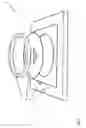
FIG. 1 shows a simplified exploded perspective view of a welding assembly for use in the process of the invention;
FIG. 2 shows a cross section through a part of the welding assembly of FIG. 1;
FIG. 3 shows a cross section similar to that shown in FIG. 2 but immediately following the welding step;
FIG. 4 shows the detail of part of the welded assembly; and
FIG. 5 shows the positions of six samples taken from the assembly of FIG. 4 for use in peel and shear strength testing.
FIG. 1 shows a simplified exploded view of assembly 1 of components arranged to be RF welded according to one embodiment of the process of the invention. The assembly 1 comprises a weld ring 2, a circular neck seal 3 consisting of 0.5 mm synthetic isoprene chlorinated to 2%, a polyurethane component 4 consisting of a section of 0.274 mm thick TUFTANE TFL-1E polyurethane sheet (obtained from Permali of Gloucester, UK), and a weld platen 5.
The components were brought together such that the isoprene component 3 and the polyurethane component 4 were clamped between the weld ring 2 and the weld platen 5 as shown in FIG. 2. Pressure was applied in the direction of the arrow 6 and the RF welding was commenced. The weld power was 2.75 kW and the weld cycle was 0.5 seconds pre-weld, 6.5 seconds of welding time and 1.0 second of dwell time. The weld tool temperature was 51° C. and the nominal weld pressure was 6 bar. Following the welding step, the pressure was released and the weld ring 2 was lifted away as shown in FIG. 3. FIG. 4 shows in detail a section through the welded sample showing that the polyurethane had bonded to the halogenated surface of the rubber component 3.
Six rectangular 25×70 mm samples A1 to A6 were cut from the welded assembly as shown in FIG. 5 and were each subjected to shear and peel strength tests. The same tests were carried out on a similar sample prepared according to the method of the invention using impulse welding rather than RF welding. The results, along with results for assemblies fixed with conventional adhesive tape, are shown in the table. Accordingly, it can be seen that in this example the welding process gave the join between the isoprene component and the polyurethane component of significantly higher shear and peel strength than achieved using conventional adhesive tape.
| Mean Shear Strength | Mean Peel Strength | |
| Welding Method | (N/mm) | (N/mm) |
| RF Weld | 1.75 | 0.98 |
| Impulse Weld | 1.97 | 1.59 |
| Typical Tape Joint | 0.78 | 0.54 |
Whilst the present invention has been described and illustrated with reference to a particular embodiment it will be appreciated by those of ordinary skill in the art that the invention lends itself to many different variations not illustrated herein. For that reason, reference should be made to the claims to determine the true scope of the present invention.
Claims
1. A process of making an article comprising a thermoplastic component and a rubber component having a halogenated surface, the process comprising the step of welding the thermoplastic component directly to the halogenated surface of the rubber component.
2. A process as claimed in claim 1 in which in the rubber component is a natural rubber component.
3. A process as claimed in claim 1 in which the rubber component is a synthetic rubber component.
4. A process as claimed in claim 1 in which the rubber component is a seal.
5. A process as claimed in claim 1 in which the halogenated surface of the rubber component is halogenated to a level in the range of from 0.1 to 20%.
6. A process as claimed in claim 1 in which the halogenated surface of the rubber component is chlorinated.
7. A process as claimed in claim 1 in which the thermoplastic component is a flexible thermoplastic sheet material.
8. A process as claimed in claim 1 in which the thermoplastic component is a polyurethane component.
9. A process as claimed in claim 8 in which the polyurethane component is transparent.
10. A process as claimed in claim 1 in which the article is a garment.
11. A process as claimed in claim 1 in which the article is a protective hood.
12. A process as claimed in claim 11 in which the polyurethane component is a hood portion of a protective hood.
13. A process as claimed in claim 1 in which the welding is RF welding, impulse welding, heated platen welding or continuous heat sealing.
14. A process of making a garment comprising a polyurethane component and a natural rubber seal, in which the natural rubber seal has a halogenated surface and the process comprises the steps of bringing the polyurethane component into contact with the halogenated surface of the natural rubber seal and RF welding or impulse welding the polyurethane component to the halogenated surface of the rubber seal.
15. An article comprising a rubber component having a halogenated surface and a thermoplastic component in which the halogenated surface of the rubber component and the thermoplastic component are fused together.
16. An article as claimed in claim 15 wherein the article is a garment.
17. An article as claimed in claim 15 wherein the article is a protective hood, the thermoplastic component is a transparent polyurethane hood, the rubber component is a halogenated rubber seal, and the halogenated rubber seal is welded to the transparent polyurethane hood.
Images & Drawings included:



Sources:
- United States Patent and Trademark Office - verify current appl. status at the USPTO↗
Recent applications in this class:
- » 20230227619 2023-07-20
METHOD FOR PRODUCING HIGH QUALITY BARRIER PACKAGING USING FLUORINATION - » 20210332207 2021-10-28
Method for direct fluorination of plastics and articles made thereof - » 20210284814 2021-09-16
Modified plastic surfaces with perfluoropolymers and method for producing same - » 20210269610 2021-09-02
Silicone rubber molded body and production method for the same - » 20200317876 2020-10-08
Method for treating surface of resin material layer and resin material - » 20200032019 2020-01-30
ELASTOMER COMPONENT EXPOSED TO BLOW-BY GASES OF AN INTERNAL COMBUSTION ENGINE - » 20190040219 2019-02-07
SYSTEMS AND METHODS FOR TREATING ELASTOMERIC WORKPIECES - » 20180244882 2018-08-30
SUBSTRATE FILM, CATALYST TRANSFER SHEET, METHOD FOR PRODUCING MEMBRANE ELECTRODE ASSEMBLY, AND METHOD FOR PRODUCING CATALYST LAYER-COATED ELECTROLYTE MEMBRANE - » 20170306120 2017-10-26
Optical member, optical semiconductor device, and illumination apparatus - » 20170137589 2017-05-18
METHODS OF MODIFYING SURFACES OF STRUCTURES USED IN THE MANUFACTURE OF A SEMICONDUCTOR DEVICE VIA FLUORINATION