Face cradles, or head cradles
US20100325802A1
2010-12-30
12/459,408
2009-06-30
Abstract:
Improved face cradles, more properly called head cradles, provide increased comfort for clients. Various embodiments of novel frontal and temporal skull support pads eliminate the discomforts of existing face cradles. The head cradle embodiments remove the pressure caused by conventional horseshoe face cradles. These pressures can cause facial discomfort, congestion, and restricted breathing, all of which can adversely affect the ability of the user to maximize relaxation. In addition to novel pad embodiments, the head cradles features embodiments whereby the support bars that attach to the support pads, as well as the support pads, can provide a variety of possible adjustments (e.g. lowered, raised, widened, narrowed, lengthened, and angled) to accommodate individual users. Some embodiments mimic fingers of human hands.
Inventors:
- Kendyl A. Roman 70 🇺🇸 Sunnyvale, CA, United States
- Cara C. Schwartz 1 🇺🇸 San Jose, CA, United States
Interested in similar patents?
Get notified when new applications in this technology area are published.
Classification:
A61H37/00 » CPC main
Accessories for massage
A61G13/009 » CPC further
Operating tables; Auxiliary appliances therefor Physiotherapeutic tables, beds or platforms; Chiropractic or osteopathic tables
A61G13/121 » CPC further
Operating tables; Auxiliary appliances therefor; Parts, details or accessories; Rests specially adapted therefor; Arrangements of patient-supporting surfaces for specific parts of the body Head or neck
A61G2200/325 » CPC further
Information related to the kind of patient or his position; Specific positions of the patient lying prone
A61H2203/0468 » CPC further
Additional characteristics concerning the patient; Position of the patient substantially horizontal Prone
A47C20/00 IPC
Head -, foot -, or like rests for beds, sofas or the like
A47C20/02 IPC
Head -, foot -, or like rests for beds, sofas or the like of detachable or loose type
A47C20/08 IPC
Head -, foot -, or like rests for beds, sofas or the like with means for adjusting two or more rests simultaneously
Description
BACKGROUND
1. Field of the Invention
The present invention relates to replacements for face cradles used on massage tables, or medical procedure tables, in particular the invention related to improved adjustable, lightweight, portable, low cost head cradles, providing greater client comfort.
2. Description of Prior Art
For many years, face cradles have been used on both tables and chairs that hold the face of clients receiving therapy, examination or procedures. For example massage tables have a face cradle, which is attached to the table and comprises a horseshoe shaped board and pad (see FIGS. 1-3). The problem with existing face cradles is that they are not comfortable for the client. They don't adjust for the size of the client's head and face. They put uncomfortable pressure on the cheeks (zygomatic bones) rather than the forehead and sides of the skull. Some face cradles have a metal bar in the tilt mechanism, which hits the client's chin. The pressure on the client's cheeks causes sinus congestion for most clients.
What is needed is an improved face cradle that provides greater comfort and avoids the problems associated with conventional face cradles.
SUMMARY OF THE INVENTION
Our improved face cradle, more properly called a head cradle, is shaped more like a bowl and supports the head on the frontal and temporal bones to support the head while avoiding contact with the cheeks, sinuses and jaw.
Accordingly, it is an objective of the present invention to provide a head cradle which eliminates the discomforts of existing face cradles attached to tables and chairs used for client therapy, examination, or procedures. The various embodiments include novel shaped facial support pads and bars and novel bar and pad adjustment options to increase the comfort of the individual user.
Objects and Advantages
Accordingly, the present invention includes the following advantages:
-
- a) To provide increased comfort by supporting the frontal (forehead) portion of the skull.
- b) To provide increased comfort by supporting the temporal portion (sides) of the skull.
- c) To provide increased comfort by reducing sinus congestion by avoiding pressure on the sinuses, front of the cheeks, and the mandible.
- d) To provide increased breathing comfort.
- e) To provide increased individual comfort with adjustable width and length and angle of the bars of a head cradle.
- f) To provide increased individual comfort with adjustable positioning of pads on a head cradle.
- g) To provide increased individual comfort and support of the individual's head with variously shaped pad embodiments.
- h) To provide increased individual comfort and support of the individual's head with various pad material embodiments.
- i) To provide increased ability to relax for the individual.
- j) To provide an adjustable head cradle.
- k) To provide an inexpensive head cradle.
- l) To provide a simpler way of making a head cradle.
- m) To provide a collapsible head cradle.
- n) To provide an easy to store a head cradle.
- o) To provide an easy to transport head cradle.
- p) To provide a lightweight head cradle.
- q) To provide a simple way to manufacture head cradles.
- r) To provide an inexpensive way to manufacture head cradles.
- s) To provide a simple way to ship head cradle components.
- t) To provide a head cradle made of parts with consistent sizes to minimize manufacturing and make it easier to assemble.
DRAWING FIGURES
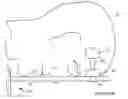
FIG. 1 shows a client on a typical massage table set up with horseshoe face cradle.
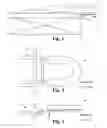
FIG. 2 and FIG. 3 show a conventional horseshoe face cradle with table attachment.
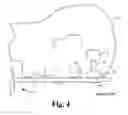
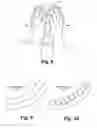
FIG. 4 shows an embodiment of a head cradle with separate frontal and temporal pads.
FIG. 5 shows an embodiment of a head cradle with a single curved pad.
FIG. 6 shows an embodiment of a head cradle with multi-fingered pads.
FIG. 7A and FIG. 7B show embodiments of a head cradle with pads curved to match the top and sides of a head.
FIG. 8 shows position of human hands cradling a human head.
FIG. 9 and FIG. 10 show embodiments of shaped rigid bases covered by various pads.
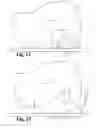
FIG. 11 and FIG. 12 show the operation of various embodiments.
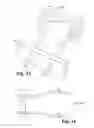
FIG. 13 shows an alternate embodiment of a head cradle with the table attachment.
FIG. 14 shows an embodiment of a head cradle with outward curved support bars.
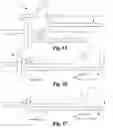
FIG. 15 through FIG. 17 show embodiments of a head cradle with adjustable, support bars.
| REFERENCE NUMERALS IN DRAWINGS |
| 2 | client | |
| 4 | massage table | |
| 5 | receiving socket | |
| 6 | face cradle | |
| 8 | horseshoe pad | |
| 10 | horseshoe board | |
| 12 | table attachment | |
| 13 | inserting member | |
| 14 | tilt mechanism | |
| 15 | attachment chassis | |
| 16 | head | |
| 17 | temporal pad | |
| 18 | frontal pad | |
| 19 | pad connector | |
| 20 | horseshoe support | |
| 21 | support bar | |
| 22 | single curved pad | |
| 24 (a-b) | multi-fingered pad | |
| 25 (a-e) | finger | |
| 26 (a-b) | frontal curved pad | |
| 28 (a-b) | temporal curved pad | |
| 30 (a-b) | cradling hand | |
| 32 | rigid shaped base | |
| 34 | pad | |
| 36 | sectioned pad | |
| 38 (a-b) | outward curved support bar | |
| 40 | adjustable support bar | |
| 42 | roll clamp | |
| 44 | slide clamp | |
DESCRIPTION OF THE INVENTION
Conventional Table with Horseshoe Face Cradle
FIG. 1 shows a client on a conventional massage table set up with a horseshoe face cradle. The face cradle 6 (shown in greater detail in FIG. 2 and FIG. 3) is connected to massage table 4 by table attachment 12, which is inserted into the receiving socket 5. The client 2 lays face down on the massage table 4. The client's head 16 is placed inside the horseshoe pad 8 of the face cradle 6, supporting the head.
FIG. 2 and FIG. 3 show the horseshoe face cradle 6 with table attachment. FIG. 2 shows the top view while FIG. 3 shows the side view. The face cradle 6 is comprised of a horseshoe pad 8 attached to a horseshoe board 10, which is connected to table attachment 12 via horseshow supports 20. The embodiment shown includes an optional tilt mechanism 14. The horseshow supports 20 are connected to attachment chassis 15. The face cradle 6 is inserted into the receiving socket 5 of massage table 4 (as shown in FIG. 1) via industry standard inserting members 13. The inserting members 13 are fully inserted when the attachment chassis 15 engages edge of the table 4 (as shown in FIG. 1). The tilt mechanism 14 allows the face cradle 6 to release and swivel to raise or lower the horseshoe board 10, and then lock it into place at a desired level.
Embodiments of Head
FIG. 4 shows an embodiment of a head cradle having a plurality of pads that are positioned to support a head 16 via the frontal and temporal bones. This side view shows a support bar 21 connected between a table attachment 12, which is connected to massage table 4 (not shown), and a frontal pad 18 via an optional slide clamp 44. The frontal pad 18 is also connected to temporal pad 17 via the pad connector 19. The temporal pad 17, frontal pads 18, pad connector 19, support bar 21 and slide clamp 44 are duplicated symmetrically on the other side (not visualized). The head 16 is placed between the support bars 21 and onto each temporal pad 17 and each frontal pad 18 which are configured match the shape of the human skull and which are individually adjustable to match the width and angle of respective heads 16, of a plurality of clients. In one embodiment, the frontal pads 18 and the connected temporal pads 17 may be adjusted by rotating, or sliding horizontally, on the support bars 21 with the slide clamps 44. The slide clamps 44 may be locked in any desired position or rotation along the support bar 21. In another embodiment (not shown) the pads are individually adjusted where they each attach to the pad connector 19.
An advantage of the head cradles of the present invention is improved comfort by supporting the skull at the frontal and temporal bone rather than compressing the checks (zygomatic bones), as does the conventional horseshoe face cradle 6. Another advantage is that the head cradles are more open providing better breathing and less confinement.
FIG. 5 shows an embodiment of a head cradle with a single curved pad. The single curved pad 22 is curved to match the shape of the skull. The curved pad 22 may be adjusted by sliding horizontally on the support bars 21, using slide clamps 44 (not visible). The support bars 21 are connected to table attachment 12.
FIG. 6 shows an embodiment of a head cradle with multi-fingered pads 24. The multi-fingered pads 24(a-b) are placed in a position of a person cradling their own forehead (for example, see FIG. 8) and may be adjusted by rotating or sliding horizontally on the support bars 21 using the slide clamps 44 (not visible). The support bars 21 are connected to table attachment 12. Each finger 25(a-e) of the multi-fingered pads 24(a-b) could be supported by an internal metal or plastic structure. In one embodiment the structure of the multi-fingered pads 24(a-b) are adjustable so each finger 25(a-e) is adjusted to fit the individual head 16. In yet another embodiment each finger 25 has one or more flexible joints, allowing more precise placement of the tip of each finger 25. FIG. 12 shows the operation of this embodiment. The fingers are positioned so the weight of the held is supported by the fingers while making contact with the surface of the head associated with the frontal bones, temporal bones, and if desired the parietal bones.
In FIG. 6, each multi-fingered pad 24 is shown looking like realistic human hands, having a thumb and four other fingers. While this may be soothing to some clients, other clients may prefer more mechanical looking fingers 25. In such embodiments (not shown), a plurality of fingers 25 is each comprised of at least one adjustable joint, at pad connector 19, and a finger tip pad. The plurality of such fingers 25 maybe connected via adjustable connectors at a common point (e.g. a mechanical wrist), which is then connected to the support bar 21.
FIG. 7A and FIG. 7B show embodiments of a head cradle with a plurality of pads each curved to match the top and sides of the skull.
FIG. 7A shows two frontal curved pads 26(a-b). They may be adjusted by rotating or sliding horizontally on the support bars 21 using the slide clamps 44 (not visible). The support bars 21 are connected to table attachment 12.
FIG. 7B shows an embodiment of a head cradle with a plurality of frontal-temporal curved pads 28(a-b) which are placed in a position of a person cradling their own forehead (FIG. 8). The frontal-temporal curved pads 28(a-b) may be adjusted by rotating or sliding horizontally on the support bars 21 using the slide clamps 44 (not visible). The support bars 21 are connected to table attachment 12. The embodiment shown in FIG. 7B offers a more comfortable version of the frontal curved pads 26 (shown in FIG. 7A) by allowing the frontal-temporal curved pads 28(a-b) to further take some pressure from the sides of the skull.
Human Hands Cradling the Human Head
FIG. 8 shows position of human hands cradling a human head 16. The cradling hands 30(a-b), right and left, respectively, are placed over the face of the head 16 and are positioned in such a way both that pinky fingers touch in the middle of the forehead just above the eyebrows. The hands remain relaxed and curved slightly inward in a natural, unengaged position. The thumbs naturally come to touch the sides of the face and head, just under the temples. The other finger tips touch the head near the frontal, temporal, and, optionally, parietal bones.
Like the human hands shown in FIG. 8, each of these novel structures disclosed here allows the weight of the head to be born by the top and sides of the skull and avoids pressure on the front of the cheeks, on the mandible, or the sinuses. These novel head cradles are more comfortable for the client, reduce sinus congestion, and allow for better airflow for breathing and relaxation.
Shaped Rigid Supports
FIG. 9 and FIG. 10 show embodiments of pads on shaped rigid support pieces made of metal or plastic and covered by a foam or gel pad. The foam could be conventional foam or memory foam. FIG. 9 illustrates a pad 34 on a shaped rigid structure 32. FIG. 10 illustrates an alternate embodiment where the pad could be comprised of multiple small sections, (sectioned pad 36). Each of the single curved pad 22, multi-fingered pad 24, frontal curved pad 26, and frontal-temporal curved pad 28 can be manufacture using either method.
Positioning of the Human Head
FIGS. 11 and FIG. 12 show the operation of the head 16 with various pad embodiments. FIG. 11 shows the head 16 resting on the frontal-temporal curved pad 28 embodiment where the pads are curved to match the top and sides of the skull (e.g. see FIG. 7B). FIG. 12 shows the head 16 resting on the multi-fingered pad 24 embodiment where the pads are shaped like human hands (e.g. see FIG. 6). In both embodiments, the pads (28 and 24, respectively) are adjustably attached onto support bars 21 using slide clamps 44.
Support Bars Forming Inserting Members
FIG. 13 shows an embodiment of a head cradle. In this embodiment, exemplary frontal-temporal curved pads 28(a-b) are attached to support bars 21 using slide clamps 44 (not visible), and the support bars 21 pass through an attachment chassis 15 and act as inserting members 13. In this embodiment, the support bars 21 are at the same distance apart as the industry standard inserting members 13 (and corresponding receiving sockets 5(a-b), see FIG. 1). In this novel embodiment, manufacturing costs are reduced because there are fewer parts, and the head cradle may be more solidly and securely mounted to the table 4 (see FIG. 1).
Outward Curved Support Bars
FIG. 14 shows an embodiment of a head cradle having outward curved support bars 38. The outward curved support bars 38 have an outward curve providing more room for the jaw, mouth, and nose, and provide improved breathing. Similar to the embodiment shown if FIG. 13, the outward curved support bars 38 pass through an attachment chassis 15 and act as inserting members 13. In this novel embodiment, manufacturing costs are reduced because there are fewer parts, and the head cradle may be more solidly and securely mounted to the table 4 (see FIG. 1).
Adjustable Support Bars
FIG. 15 through FIG. 17 show aspects of head cradles with adjustable support bars 40. While inserting members 13 must be straight, the support bars on the face side of an attachment chassis 15 do not have to be straight, allowing for novel rotating, adjustable support bars 40 a plurality of bends.
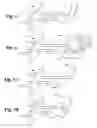
FIG. 15 shows a perspective view and FIG. 16 shows a side view of adjustable support bars 40. As shown in FIG. 15, each adjustable support bar 40 may be individually rotated to allow the various embodiments of pads (e.g. like those in FIGS. 4, 5, 6, 7A, 7B, 11, 12, and 13) to be lowered, raised, widened or narrowed for the most comfort. FIG. 16 shows that the rotation can be temporarily held using a roll clamp 42. Further, FIG. 16 shows that an exemplary frontal-temporal curved pad 28 can be adjusted by rotating or sliding horizontally on the adjustable support bar 40 using the slide clamps 44. In these embodiments, the adjustable support bar 40 continues though an attachment chassis 15 forming the industry standard inserting members 13.
FIG. 17 shows an alternate embodiment where an adjustable support bar 40 is inserted directly into the receiving sockets 5 (see FIG. 1) up to the roll clamps 42, which act as stoppers, eliminating the need for the attachment chassis 15 (e.g. of FIG. 16). In this embodiment the roll clamps 42 provide friction against the table 4 and receiving sockets 5 (both shown in FIG. 1) to hold the desired rotation of the adjustable support bar 40.
In some embodiments, a pad, such as exemplary frontal-temporal curved pad 28, could rotate as well and be held temporarily by the same slide clamp 44 (as shown). In yet another embodiment (not shown), the two bars could be synchronized with a belt or gear system so that they provide the same height.
Advantages
Adjustable
The preferred embodiments of these head cradles are adjustable to provide greater comfort for a wide variety of head sizes and shapes.
Increased Comfort
The configurability and adjustability of the embodiments provides increased comfort through supporting the frontal and temporal portions of the skull, reducing sinus congestion by avoiding pressure on the sinuses, front of the cheeks, and the mandible and ultimately providing for better breathing and increased relaxation.
Lightweight
These head cradles are lightweight.
Low Cost
These head cradles are low cost. They can be made with less material than the conventional face cradles.
Simple to Make and Manufacture
These head cradles are easy to make or to manufacture, having a simpler set of parts and configuration.
Collapsible
These head cradles are collapsible for easier handing.
Easy to Store
These head cradles are easy to store.
Easy to Transport
These head cradles are easy to transport.
Easy to Ship
The modular, molded parts can be shipped easily, compared to having to ship the entire face cradle of convention face cradles.
Easy to Use
These head cradles are easy to use.
Easy to Manufacture
These head cradles made of parts with consistent sizes, which minimize manufacturing and make assembly and disassembly easier.
Conclusion, Ramification, and Scope
Accordingly, the reader will see that the improved adjustable, lightweight, portable, low cost head cradles are easy to use and transport, and importantly provide greater comfort and relaxation.
While the above descriptions contain several specifics these should not be construed as limitations on the scope of the invention, but rather as examples of some of the preferred embodiments thereof. Many other variations are possible. For example, the pads can be manufactured in different ways and/or in different shapes to increase comfort, reduce material, and simplify manufacturing. Removal pads could be custom molded for each client, using their own head and/or hands. Further, the pads could also tilt to change the angle of the client's neck, for example, the multi-fingered pads could tilt at the wrist. The variations could be used without departing from the scope and spirit of the novel features of the present invention.
Accordingly, the scope of the invention should be determined not by the illustrated embodiments, but by the appended claims and their legal equivalents.
Claims
We claim:1. A head cradle for supporting a head of a human comprising:
a) a plurality of inserting members for attaching to receiving sockets on a table or chair,
b) a plurality of support bars connected to the inserting members via a connection means,
c) one or more pads configured to support at least the frontal and temporal bone areas of the head, the one or more pads connected to at least one of the support bars,
whereby the head is supported without putting pressure on check bones, and whereby the human is more comfortable and relaxed.
2. The head cradle of claim 1,
wherein the pads comprise at least two temporal pads and at least two frontal pads, and
wherein each temporal pad is connected to a frontal pad via a pad connector.
3. The head cradle of claim 2, wherein each frontal pad is connected to a respective support bar via an adjustable slide clamp.
4. The head cradle of claim 1,
wherein the one pad comprises a single curved pad,
wherein the single curved pad is configured to support the frontal and temporal bone areas of the head, and
wherein the single curved pad is connected to two support bars.
5. The head cradle of claim 1,
wherein each of the pads comprises a multi-fingered pad,
wherein each multi-fingered pad is comprised of a plurality of fingers, each finger having a finger tip pad, and each finger being connected to a common point,
wherein each multi-fingered pad is configured to support the frontal and temporal bone areas of the head, and
wherein each common point is connected to a respective one of the support bars.
6. The head cradle of claim 5, wherein each finger further comprises an adjustable joint.
7. The head cradle of claim 5, wherein each finger is adjustable connected at the common point.
8. The head cradle of claim 1,
wherein the pads comprise two frontal curved pads, and
wherein each frontal curved pad is connected to a respective support bar.
9. The head cradle of claim 1,
wherein the pads comprise frontal-temporal curved pads, and
wherein each frontal-temporal curved pad is connected to a respective support bar.
10. The head cradle of claim 1, wherein the pads comprise:
a) rigid shaped base, and
b) soft pad, such as a foam or gel pad.
11. The head cradle of claim 1, wherein the pads comprise:
a) rigid shaped base, and
b) a plurality of pad sections forming a sectioned pad.
12. The head cradle of claim 1,
wherein at least two of the pads are connected to respective support bars with an adjustable slide clamp.
13. The head cradle of claim 1,
wherein at least two of the pads are connected to respective support bars with an adjustable slide clamp.
14. The head cradle of claim 1,
wherein the connection means of at least one support bar comprises the support bar being attached to an attachment chassis and the attachment chassis being attached to at least one inserting member.
15. The head cradle of claim 1,
wherein the connection means of at least one support bar comprises the support bar passing through an attachment chassis and forming at least one inserting member.
16. The head cradle of claim 1,
wherein each of the support bars comprise an outward curved support bar,
wherein each outward curved support bar is configured to pass around a face of the human,
whereby the human has more room to breath and is less confined.
17. The head cradle of claim 1,
wherein at least one of the support bars comprises an adjustable support bar, and
wherein the adjustable support bar is configured with a plurality of bends such that, when rotated, a pad connected to the adjustable support bar is moved in one or more of the group of up, down, in, and out.
18. The head cradle of claim 17,
wherein the adjustable support bar is held in place by a roll clamp.
19. The head cradle of claim 18,
wherein the connection means of the adjustable support bar is passing through an attachment chassis and forming at least one inserting member, and
wherein the roll clamp holds the adjustable support bar in place relative to the attachment chassis.
20. A method of supporting a head of a human using a head cradle, wherein the head cradle comprises a plurality of pads, and at least two inserting members, the method comprising the steps of:
a) attaching the head cradle to a table or chair via inserting members,
b) adjusting positions of the pads to match the shape of the head,
c) having the human place the head against the pads such that the pads support at least the frontal and temporal bone areas of the head.
Images & Drawings included:
Sources:
- United States Patent and Trademark Office - verify current appl. status at the USPTO↗
Recent applications in this class:
- » 20250090419 2025-03-20
Portable Massage Support Device - » 20240415735 2024-12-19
Reversible Vibration Glove Device And Method - » 20230270625 2023-08-31
DEVICE FOR THE PHYSICAL RELAXATION OF A PERSON - » 20230233406 2023-07-27
Foot-based massage apparatus - » 20230218479 2023-07-13
MASSAGER HEAD - » 20230165753 2023-06-01
METHOD FOR OPERATING MASSAGE APPARATUS COMPRISING UV STERILIZATION MODULE - » 20230027314 2023-01-26
EXTENDER FOR A PERCUSSION MASSAGE DEVICE - » 20220249322 2022-08-11
AUTO CYCLE LUMBAR MASSAGE SYSTEM AND METHOD OF OPERATING THE SAME - » 20220151869 2022-05-19
SYSTEM, METHOD AND COMPUTER ASSISTED MEDIA IN USE WITH A ROBOTIC THERAPY UNIT FOR ACCOMPLISHING MUSCLE LENGTHENING CONDUCTED ACCORDING TO BEST PRACTICE PROTOCOLS - » 20220133589 2022-05-05
SYSTEMS AND METHODS FOR THERMOGRAPHIC BODY MAPPING WITH THERAPY