Osteosynthetic device
US20100331895A1
2010-12-30
12/063,836
2005-08-15
✅ Patent granted
US 9,125,696 B2
2015-09-08
WO; PCT/CH2005/000471; 20050815
WO; WO2007/019710; 20070222
Michael T Schaper | Tracy Kamikawa
Baker & Hostetler LLP
2029-08-10
Abstract:
The osteosynthetic device for the fixation of a bone or bone fragments has a longitudinal axis (6) and comprises a bone screw (1) with a shaft (2) bearing a thread (3), a front end (4) and a rear end (5), said thread (3) having a maximum outer diameter d; and a wing-like blade (7) with a leading end (8) being connected to the front end (4) of the bone screw (1) and a trailing end (9) being connected to the rear end (5) of the bone screw (1). The blade (7) is further provided with a coaxial longitudinal aperture (17) having a length I extending between the leading end (8) and the trailing end (9) and a width w≧d. Further the blade (7) is coaxially and rotatably mounted on said shaft (3) of said bone screw (1).
Assignee:
- DePuy Synthes Products, Inc. 2,197 🇺🇸 Raynham, MA, United States
Applicant:
Interested in similar patents?
Get notified when new applications in this technology area are published.
Classification:
A61B17/844 » CPC further
Surgical instruments, devices or methods, e.g. tourniquets; Surgical instruments or methods for treatment of bones or joints; Devices specially adapted therefor for osteosynthesis, e.g. bone plates, screws, setting implements or the like; Internal fixation devices, including fasteners and spinal fixators, even if a part thereof projects from the skin; Fasteners therefor or fasteners being internal fixation devices with expandable anchors or anchors having movable parts
A61B17/74 » CPC main
Surgical instruments, devices or methods, e.g. tourniquets; Surgical instruments or methods for treatment of bones or joints; Devices specially adapted therefor for osteosynthesis, e.g. bone plates, screws, setting implements or the like; Internal fixation devices, including fasteners and spinal fixators, even if a part thereof projects from the skin Devices for the head of the femur
A61B17/86 » CPC further
Surgical instruments, devices or methods, e.g. tourniquets; Surgical instruments or methods for treatment of bones or joints; Devices specially adapted therefor for osteosynthesis, e.g. bone plates, screws, setting implements or the like; Internal fixation devices, including fasteners and spinal fixators, even if a part thereof projects from the skin; Fasteners therefor or fasteners being internal fixation devices Pins or screws or threaded wires; nuts therefor
A61B17/864 » CPC further
Surgical instruments, devices or methods, e.g. tourniquets; Surgical instruments or methods for treatment of bones or joints; Devices specially adapted therefor for osteosynthesis, e.g. bone plates, screws, setting implements or the like; Internal fixation devices, including fasteners and spinal fixators, even if a part thereof projects from the skin; Fasteners therefor or fasteners being internal fixation devices; Pins or screws or threaded wires; nuts therefor hollow, e.g. with socket or cannulated
A61B17/8665 » CPC further
Surgical instruments, devices or methods, e.g. tourniquets; Surgical instruments or methods for treatment of bones or joints; Devices specially adapted therefor for osteosynthesis, e.g. bone plates, screws, setting implements or the like; Internal fixation devices, including fasteners and spinal fixators, even if a part thereof projects from the skin; Fasteners therefor or fasteners being internal fixation devices; Pins or screws or threaded wires; nuts therefor Nuts
A61B17/8685 » CPC further
Surgical instruments, devices or methods, e.g. tourniquets; Surgical instruments or methods for treatment of bones or joints; Devices specially adapted therefor for osteosynthesis, e.g. bone plates, screws, setting implements or the like; Internal fixation devices, including fasteners and spinal fixators, even if a part thereof projects from the skin; Fasteners therefor or fasteners being internal fixation devices; Pins or screws or threaded wires; nuts therefor comprising multiple separate parts
A61B2017/8655 » CPC further
Surgical instruments, devices or methods, e.g. tourniquets; Surgical instruments or methods for treatment of bones or joints; Devices specially adapted therefor for osteosynthesis, e.g. bone plates, screws, setting implements or the like; Internal fixation devices, including fasteners and spinal fixators, even if a part thereof projects from the skin; Fasteners therefor or fasteners being internal fixation devices; Pins or screws or threaded wires; nuts therefor with special features for locking in the bone
A61B17/84 IPC
Surgical instruments, devices or methods, e.g. tourniquets; Surgical instruments or methods for treatment of bones or joints; Devices specially adapted therefor for osteosynthesis, e.g. bone plates, screws, setting implements or the like; Internal fixation devices, including fasteners and spinal fixators, even if a part thereof projects from the skin Fasteners therefor or fasteners being internal fixation devices
Description
The invention relates to an osteosynthetic device according to the preamble of claim 1, in particular for fracture fixation in osteoporotic bone.
The osteosynthetic device may be used for all areas of the human skeleton that are predominantly composed of cancellous bone, in particular for the vertebrae and all metaphyseal areas of long bones.
From document WO97/15246 an intervertebral implant is known which consists of a screw and a cage rotatably connected to each other. This implant is designed to be introduced between two vertebrae and not as bone screw. The dimensionally large cage—having the function to fill intervertebral space which has to be prepared to this effect—would not be suitable for other applications and is limited to this specific purpose.
On this point, the invention intends to provide remedial measures. The invention is based on the objective of providing:
-
- a) an improved screw type device that has a load bearing function perpendicular to the long axis of the bone screw by improved resistance against loads in this direction; and
- b) an improved blade type device allowing an improved insertion procedure, which is possible without hammering, and by improved resistance against loads acting along the long axis of the blade, e.g. in intra-operative reduction maneuvers.
The invention solves the posed problem with an osteosynthetic device that displays the features of claim 1.
The osteosynthetic device according to invention combines the main functions of a typical bone screw type device and an osteosynthetical blade type device and thus provides improved anchorage strength against loads from multiple directions (typical in-vivo situation) as compared to both of these devices.
The “wing-like” blade can rotate around the “screw” or vice versa the screw can turn inside the wing during the introduction of the implant and—according to the needs of the particular application—may be secured (blocked) rotationally to each other at the end of the introduction procedure. The rotational blocking can be achieved e.g. by pressing the head of the bone screw against a shoulder by means of a fastener.
For an application aiming at stabilizing a fracture in the neck of the proximal femur and where the wing-like blade is bridging the fracture line, no securing of the rotation is necessary. For other applications—as in the spine area—where no fractures are to be bridged, the rotatability between the screw and the blade is blocked after the insertion in order to obtain a structurally stable implant.
The wing provides improved load bearing capacity against loads acting perpendicular to the long axis of the screw—compared to a normal screw—due to its comparatively large surface area and thus reducing the risk of “cutting out” of the implant through cancellous bone.
The wing also provides rotational strength against loads around the long axis after it is blocked to the screw at the end of the insertion.
Both of these features are of special importance when fractures in osteoporotic bone condition are to be stabilized.
The screw provides improved pullout resistance against loads acting along the axis of the screw—compared to blade type devices. The screw also prohibits a “cutting through” of the wing along the long axis, as it is rigidly connected to the wing.
The advantages of the osteosynthetic device according to the invention compared to state of the art devices are the following:
-
- 1. Combination of the main screw function (resistance against pullout/loads acting in line with its long axis) and the main blade function (resistance against subsidence/loads acting perpendicular to its long axis) in one device that is as easy to implant as a screw and as easy or better to implant than a blade. This leads to improved anchorage of the device compared to screws and compared to blades in their respective “weak” directions.
- 2. Possibility of introduction without hammering and thus reducing the risk of loosing the reduction during this procedure due to the applied high impact forces.
- 3. Possibility of introduction without an aiming arm that assures the necessary twist for the introduction of normal helical blade type devices.
- 4. Possibility of hammering in the wing-like blade first and then securing it with the bone screw afterwards is also given, according to the surgeons preference.
- 5. In summary the osteosynthetic device provides all the advantages of a blade type device with respect to subsidence, but allowing an introduction like a normal bone screw without drawbacks.
- 6. Provision of sufficient anchorage strength in the fracture fragments against all loads in axial, perpendicular (bending) and torsional direction to allow for intra-operative reduction maneuvers with it which typically have to withstand higher loads during the reduction maneuvers than later on during daily activities.
- 7. The osteosynthetic device can be applied to almost any site of the human skeleton where it is important to withstand loads from various directions in the post operative phase and where the fixation element of the load bearing implant has to find its major anchorage strength in cancellous bone.
- 8. Manufacturing of the osteosynthetic device is by far less complicated as compared to a hollow bone screw, which is a screw type device with a large surface area.
- 9. The osteosynthetic device can be “tuned” optimally to the normal loading conditions during daily activities (and the loads necessary during reduction). When pullout forces are dominant, the outer diameter of the bone screw is rather large and the wing-like blades may be designed rather small. If the main loads are directed perpendicular to the long axis, the outer diameter of the bone screw may be chosen smaller and the wings of the wing-like blade are wider.
- 10. Wings with different shapes of their leading and trailing ends can be manufactured with respect to the application side, e.g. for a ventral application in a vertebra the leading end can be made a) rather round for maximum load bearing area in osteoporotic conditions and b) rather sharp for reduced introduction resistance in better bone quality.
- b 11. The wing-like blade can be made as an “add-on” to a screw or even only to the front part of a screw, depending on the necessity of the respective surgical condition, e.g. in the head area of the femur in a stabilization of a proximal femur fracture.
- 12. The core of the screw and the threads can be kept rather thin, to preserve as much bone as possible, as the load bearing surface perpendicular to the axis of the screw is provided by the wings of the blade.
In a special embodiment blocking means are provided for alternatively blocking or de-blocking the rotation between the blade and the bone screw. The blade may be rotatively and axially blocked relative to the bone screw in order to obtain a structurally stable implant in case of applications where no bone fracture has to be bridged.
In another embodiment the blade comprises a coaxial bushing at its trailing end, said bushing having a central bore extending coaxial to the longitudinal axis and being apt for partially receiving the bone screw. The bushing may be configured as a rotational bearing for the bone screw such that the screw head of the bone screw may rotate within the central bore of the bushing and may be axially secured towards the blade by means of a contracted portion in the central bore.
In a further embodiment the central bore is provided with an interior thread and the blocking means comprise a threaded fastener which is screwable into the interior thread of the bushing. This has the advantage that the screw head of the bone screw may be rotatively and axially fixed within the central bore simply by tightening the pre-assembled fastener. Furthermore the manufacture of the blocking means is very simple.
In a further embodiment the bone screw comprises a screw head slideably fitting with a circular cylindrical portion of the central bore in the bushing. This has the advantage that the circular cylindrical portion acts as a rotational bearing for the screw head.
In a further embodiment the central bore in the bushing comprises a contracted portion between the circular cylindrical portion and the blade such that a shoulder abutting the screw head is being formed. The advantage lies in the fact that the screw head may be clamped between the fastener and the shoulder.
In a further embodiment the blade is provided with at least one cutting edge located on the terminal face of the leading end. By this the blade is self-cutting
In a further embodiment the blade is provided with two cutting edges intersecting at the longitudinal axis and enclosing an angle α<180°. An improved cutting quality of the blade results by this arrangement.
In a further embodiment the bushing is provided with a conical exterior lateral area which tapers towards that end of the bushing that is located opposite the blade. The conical configuration of the bushing permits an attachment of other instruments, tools or parts of the implant being used during implantation, reduction and/or the final fixation of the bone fragments.
Purposefully the blade may have a thickness in the range of 0.2 mm to 3.0 mm, preferably in the range of 0.5 mm to 1.5 mm and a width measured transversely to its longitudinal axis in the range of 4 mm to 50 mm, preferably in the range of 10 mm to 25 mm.
In a further embodiment the outer diameter of the thread is constant except for the region of the front end.
In a further embodiment the shaft tapers from the rear end towards the front end, preferably in a conical manner.
Preferably the shaft tapers with a cone angle in the range of 0.5° to 5°.
In a further embodiment the blade is provided with one or more perforations which may have a diameter in the range of 0.5-3.0 mm. Preferably these perforations have a total area of less than 40% of the total surface area of said blade.
In a further embodiment the shaft and the blade (7) are cannulated.
The shaft has preferably a minimal diameter at its front portion of 1.0 mm and a maximum diameter at its rear portion of 15 mm. The depth of said thread has preferably a minimum value of 0.2 mm at said rear portion.
Further objects and advantages of the invention will become apparent from the following description when read with reference to the accompanying drawings which illustrate a preferred embodiment of the invention. In the drawings:
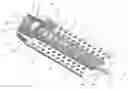
FIG. 1 is a perspective view of an embodiment of the osteosynthetic device according to the invention;
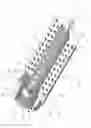
FIG. 2 is a top view on the osteosynthetic device according to FIG. 1; and
FIG. 3 is a lateral view on the osteosynthetic device according to FIGS. 1 and 2.
FIGS. 1 to 3 depict an embodiment of the osteosynthetic device comprising a bone screw 1 and a coaxially attached wing-like blade 7 having plane first and second surfaces 19;20 which are parallel and first and second lateral surfaces 31;32 being transverse to the first and second surfaces 19;20. Furthermore, the blade 7 is provided with an essentially rectangular coaxial aperture 17 which penetrates the blade 7 between the first and second surface 19;20. The aperture 17 being apt to receive the bone screw 1. The bone screw 1 has a screw head 10 at the rear end 5 and adjacent a shaft 2 bearing a thread 3 with a core diameter tapering towards the front end 4 of the bone screw 1. Furthermore, the screw head 10 is provided with receiving means 12 apt for an engagement of a screw driving device, e.g. a hexagonal socket or a TORX (FIG. 3). The blade 7 is beveled at the terminal face of the leading end 8 and comprises two cutting edges 13 extending parallel to the first surface 19 of the blade 7 and intersecting on the longitudinal axis 6. The cutting edges 13 are mutually angled and intersect on the longitudinal axis 6 with an obtuse angle α of about 150°. At the leading end 8 of the blade 7 a coaxial cap 14 is fixedly inserted in the blade 7, whereby the cap 14 tapers towards a tip 16 which is terminally located on the longitudinal axis 6 and is in alignment with the cutting edges 13. Furthermore, the cap 14 is provided with a coaxial bore 29 being apt as a bearing for the front end 4 of the shaft 2. At the trailing end 9 of the blade 7 a bushing 18 is coaxially attached to the blade 7, said bushing 18 having an interior thread 22 arranged in the coaxial central bore 21 of the bushing 18. The blocking means 15 which is configured as a threaded fastener 23 is screwable into the interior thread 22 in the central bore 21 of the bushing 18. The inner diameter d of the interior thread 22 is slightly greater than the outer diameter of the screw head 10 of the bone screw 1 such that the bone screw 1 may be mounted to the device through the central bore 21 of the bushing 18. Towards the blade 7 a circular cylindrical portion 24 of the central bore 21 coaxially adjoins the portion of the central bore 21 which is provided with the interior thread 22. This circular cylindrical portion 24 of the central bore 21 has a diameter D corresponding to the outer diameter of the screw head 10 such that the circular cylindrical portion 24 of the central bore 21 is apt as a rotational bearing for the bone screw 1. Furthermore, the central bore 21 is further provided with a contracted portion 26 having a smaller diameter than the circular cylindrical portion 24 of the central bore 21. Since the contracted portion 26 of the central bore 21 is arranged adjoining the circular cylindrical portion 24 towards the blade 7 a shoulder 25 is formed in the central bore 21 at the transition between the circular cylindrical portion 24 and the contracted portion 26. Upon tightening the fastener 23 the screw head 10 is pressed against the shoulder 25 in the central bore 21 such that the bone screw 1 is axially and rotatively fixed relative to the blade 7. Furthermore, the blade 7 is provided with a plurality of perforations 11 which penetrate the blade 7 between the first and second surfaces 19;20. The fastener 23 is further provided with a through opening 27 being apt for the acceptance of a screw driver and having e.g. a hexagonal cross-section. The inner minimum width of the through opening 27 is slightly greater than the outer maximum width of the receiving means 12 being provided in the screw head 10 of the bone screw 1 such that the bone screw 1 may be screwed into a bone with the pre-assembled fastener 23. The exterior lateral area 28 of the bushing 18 is conically configured such that it tapers towards that end of the bushing 18 which is opposite the blade 7 therewith permitting an attachment of other instruments or tools.
Description of the Surgical Procedure
-
- a) Pre-drilling of a bore according to the planned engagement length of the bone screw 1 with a diameter equal to the diameter of the shaft 2 at the front end 4;
- b) Introduction of the tip into said pre-drilled hole until the threads 3 of the bone screw 1 get in touch with the bone. The front portion of the blade 7 is manually pressed into the bone during this introduction phase.
- c) Turning the bone screw 1 with light axial pressure will lead the threads 3 to find grip in the bone. When the bone screw 1 has found first grip, no further pressing is necessary and pure turning of the bone screw 1 will drive the screw and the blade 7 into the bone;
- d) When the rear portion of the blade 7 gets in touch with the bone, turning shall be stopped and the device is in place;
- e) Now the bone screw 1 and the blade 7 are blocked against each other by tightening the blocking mechanism.
Claims
1-20. (canceled)
21. An osteosynthetic device for the fixation of a bone or bone fragments, the osteosynthetic device comprising:
a bone screw having a front end, a rear end, a longitudinal axis and an externally threaded shaft portion, said thread having a maximum outer diameter d; and
a blade having a leading end, a trailing end, and a longitudinal aperture extending between the leading end and the trailing end and a width w≧d;
wherein the bone screw is receivable in the longitudinal aperture of the blade with the front end of the bone screw operatively coupled to the leading end of the blade and the rear end of the bone screw operably coupled to the trailing end of the blade so that the bone screw is rotatably mounted with respect to the blade within the aperture formed in the blade;
the osteosynthetic device further includes blocking means for rotationally fixing the position of the bone screw with respect to the blade.
22. The osteosynthetic device of claim 21, wherein the trailing edge of the blade includes a bushing having a central bore for receiving at least a portion of the bone screw.
23. The osteosynthetic device of claim 22, wherein the bore includes an interior thread and the blocking means is in the form of a threaded fastener for threadably engaging the interior thread of the bushing.
24. The osteosynthetic device of claim 22, wherein the bone screw includes a head portion and the central bore includes a circular cylindrical portion, at least a portion of the head portion being in slidable contact with the circular cylindrical portion of the central bore.
25. The osteosynthetic device of claim 24, wherein the central bore also includes a contracted portion between the circular cylindrical portion and the blade so that a shoulder for abutting the screw head is formed.
26. The osteosynthetic device of claim 22, wherein the bushing is provided with a conical exterior lateral area which tapers towards the end of the bushing that is located opposite the blade.
27. The osteosynthetic device of claim 21, wherein the trailing end of the blade includes a bushing having a central bore for receiving at least a portion of the bone screw therein, at least a portion of the bore being threaded; and wherein the blocking means is a threaded fastener threadably engageable with the central bore of the bushing.
28. The osteosynthetic device of claim 27, wherein the leading end of the blade includes a bore and the front end of the bone screw includes a projection, the projection receivable within the bore when the front end of the bone screw is operatively coupled to the leading end of the blade.
29. The osteosynthetic device of claim 27, wherein the bushing further includes a circular cylindrical portion, a reduced diameter portion, and a shoulder formed at the transition between the circular cylindrical portion and the reduced diameter portion.
30. The osteosynthetic device of claim 29, wherein rotation of the threaded fastener causes at least a portion of the bone screw to press against the shoulder formed in the bushing so that the bone screw is rotationally fixed relative to the blade.
31. The osteosynthetic device of claim 30, wherein the bone screw is also axially fixed relative to the blade.
32. The osteosynthetic device of claim 21, wherein the blade includes at least one cutting edge located at the leading end.
33. The osteosynthetic device of claim 32, wherein the blade includes two cutting edges intersecting at the longitudinal axis and enclosing an angle α<180°.
34. The osteosynthetic device of claim 21, wherein the blade has a top surface defining a first surface area, the blade further including a plurality of perforations wherein the perforation having a second surface area, the second surface area being less than 40% of the first surface area.
35. The osteosynthetic device of claim 21, wherein the shaft and the blade are cannulated.
Images & Drawings included:

Sources:
- United States Patent and Trademark Office - verify current appl. status at the USPTO↗
Similar patent applications:
Recent applications in this class:
- » 20250082377 2025-03-13
Proximal-femur intraosseous release device - » 20210369310 2021-12-02
Medial trochanteric plate fixation - » 20210307795 2021-10-07
Surgical method for biplane screw fixation of femoral neck fractures (calcar buttressed screw fixation) - » 20190388129 2019-12-26
Systems and methods for anisotropy restoring femoroplasty - » 20150313651 2015-11-05
Systems and methods for anisotropy restoring femoroplasty - » 20150057710 2015-02-26
ORTHOPAEDIC FIXATION COMPONENT AND METHOD - » 20140243907 2014-08-28
Periprosthetic fracture repair system including discrete stabilized crimp lugs for cerclage cable and tool therefor - » 20140243901 2014-08-28
Dynamic compression plate - » 20140243829 2014-08-28
Periprosthetic plating system with compressive plate and transverse bridge plate - » 20140148861 2014-05-29
Hip fracture device with static locking mechanism allowing compression
Recent applications for this Assignee:
- » 20250213276 2025-07-03
CABLE BONE TRANSPORT DEVICE - » 20250195084 2025-06-19
SURGICAL INSTRUMENT HAVING A SELF-CENTERED QUICK CONNECT INTERFACE - » 20250186094 2025-06-12
BONE PLATE AND GUIDE BLOCK COUPLING MECHANISM - » 20250169825 2025-05-29
PULL WIRE DETACHMENT FOR INTRAVASCULAR DEVICES - » 20250169744 2025-05-29
BONE FIXATION MONITORING SYSTEM - » 20250134615 2025-05-01
SET FOR TREATING THE VASCULATURE TO REDUCE OR BLOCK BLOOD FLOW - » 20250127405 2025-04-24
METHOD AND APPARATUS FOR MANAGING ACUTE ISCHEMIC EVENTS - » 20250082335 2025-03-13
HOOK WIRE FOR PREVENTING PREMATURE EMBOLIC IMPLANT DETACHMENT - » 20250065079 2025-02-27
ANNEALING OF DISCRETE SECTIONS OF A REINFORCEMENT LAYER TO MODULATE STIFFNESS OF A CATHETER - » 20250064496 2025-02-27
METHODS AND DEVICES FOR SYNDESMOSIS TENSIONING