Vinyl ether silicone polymers
US20110002867A1
2011-01-06
12/459,481
2009-07-02
✅ Patent granted
US 8,025,870 B2
2011-09-27
-
-
Margaret Moore
2030-04-22
Abstract:
The present invention is directed to a series of vinyl ether based silicone polymers and their use in personal care applications. They are prepared by the hydrosilylation reaction of a vinyl ether and a silanic hydrogen compound. The compounds find use in personal care applications.
Inventors:
- Anthony J. O'Lenick, JR. 103 🇺🇸 Dacula, GA, United States
- Kevin Anthony O'Lenick 11 🇺🇸 Dacula, GA, United States
Assignee:
- Siltech Corporation 4 🇨🇦 Toronto, Ontario, Canada
Interested in similar patents?
Get notified when new applications in this technology area are published.
Classification:
A61Q19/00 » CPC further
Preparations for care of the skin
A61K8/894 » CPC main
Cosmetics or similar toilet preparations characterised by the composition containing organic macromolecular compounds obtained by reactions otherwise than those involving only carbon-carbon unsaturated bonds; Polysiloxanes saturated, e.g. dimethicone, phenyl trimethicone, C24-C28 methicone or stearyl dimethicone modified by a polyoxyalkylene group, e.g. cetyl dimethicone copolyol
A61K8/89 IPC
Cosmetics or similar toilet preparations characterised by the composition containing organic macromolecular compounds obtained by reactions otherwise than those involving only carbon-carbon unsaturated bonds Polysiloxanes
A61K8/891 IPC
Cosmetics or similar toilet preparations characterised by the composition containing organic macromolecular compounds obtained by reactions otherwise than those involving only carbon-carbon unsaturated bonds; Polysiloxanes saturated, e.g. dimethicone, phenyl trimethicone, C24-C28 methicone or stearyl dimethicone
A61Q5/12 » CPC further
Preparations for care of the hair Preparations containing hair conditioners
C08G77/06 IPC
Macromolecular compounds obtained by reactions forming a linkage containing silicon with or without sulfur, nitrogen, oxygen or carbon in the main chain of the macromolecule; Polysiloxanes Preparatory processes
Description
GOVERNMENT SPONSORSHIP
None
FIELD OF THE INVENTION
The present invention is directed to a series of vinyl ether based silicone polymers and their use in personal care applications.
BACKGROUND OF THE INVENTION
Dimethicone compounds conform to the following structure:
Silicone fluids, also called silicone oils, or simple silicone are sold by their viscosity and range from 0.65 cst to 1,000,000 cst. If blending two different viscosity fluids does not make the product the viscosity is related to molecular weight. The viscosity allows for an approximate calculation of the value of “n”. The data is shown below.
| Viscosity 25 C. | Approximate | Approximate | |
| (Centistokes) | Molecular Weight | “n” Value | Compound |
| 5 | 800 | 9 | MD9M |
| 50 | 3,780 | 53 | MD53M |
| 100 | 6,000 | 85 | MD85M |
| 200 | 9,430 | 127 | MD127M |
| 350 | 13,650 | 185 | MD185M |
| 500 | 17,350 | 230 | MD230M |
| 1,000 | 28,000 | 375 | MD375M |
| 10,000 | 67,700 | 910 | MD910M |
| 60,000 | 116,500 | 1,570 | MD1570M |
| 100,000 | 139,050 | 1,875 | MD1875M |
One difficulty that is encountered is that these materials are insoluble in oils, water and in fluoro compounds.
This complication has resulted in difficulty in getting the properties of silicone, including spreadability and feel into systems that contain water or oil.
Molecules that contain water soluble, oil soluble and silicone soluble groups contain in one molecule three mutually insoluble groups. The concept of “hydrophilic and “hydrophobic” is related to water soluble, and in systems containing silicone needs to be expanded to include silicone compounds.
| Hydrophilic (water loving) | Hydrophobic (water hating) | |
| Oleophilic (oil loving) | Oleophobic (oil hating) | |
| Siliphilic (silicone loving | Siliphobic (silicone hating) | |
The way to improve solubility of silicone compounds in other types of solvents is to make molecules that contain silicone groups and groups soluble in the other solvent. Such molecules are amphilic, and have desirable properties.
To make a molecule soluble in oils, an oil soluble alkyl group is reacted onto the silicone backbone. A typical structure is shown:
wherein:
- R is —(CH2)m—CH3;
- m is an integer ranging from 7 to 44.
Some of the undesirable attributes of these products include:
1. They are based upon alpha olefin, CH2═CH—(CH2)m-2—CH3, an impure substance and can contain up to 20% unreactive alkane CH3—(CH2)m-1—CH3.
2. The alkyl group contains no polar groups making them of limited application is solubilizing organic materials that have polarity.
The present invention overcomes these problems and offers unique cosmetic aesthetics by replacing the alkyl group with an alkyl ether group. The raw material used to make the compounds of the present invention are vinyl ethers. They are pure materials (contain no alkane) and have a polar oxygen atom present in the backbone. They satisfy a long felt need n the industry for a chemically pure, polar oil soluble product.
The vinyl ethers useful as raw materials for the synthesis of the compounds of the present invention conform to the following structure:
CH2═CH—O—(CH2)zCH3
These compounds are made by the reaction of the alcohol (which is natural, derived from triglycerides) with acetylene. The chemistry is referred to as Reppe chemistry and is the topic of U.S. Pat. No. 2,017,335 issued to Reppe Dec. 8, 1934, incorporated herein by reference.
The reaction is applicable to both aliphatic and aromatic alcohols, primary and secondary alcohols, and phenols. Potassium hydroxide is employed as the catalyst. Ethers and esters and secondary amines also react with acetylene under pressure. For example, the reaction between methyl alcohol and acetylene goes very smoothly at about 200° C. to give methyl vinyl ether in the presence of KOH:
Additional patents related to this chemistry to Reppe include
- U.S. Pat. No. 1,941,108 entitled Production of Vinyl Ethers;
- U.S. Pat. No. 1,959,927 entitled Production of Vinyl Ethers;
- U.S. Pat. No. 2,021,869 entitled Production of Vinyl Ether;
- U.S. Pat. No. 2,066,076 entitled Producing Vinyl Ethers, all incorporated herein by reference.
These materials have been heretofore not attached to silicone to make the polymers of the present invention addressing the long felt need in the personal care market and providing the desirable unexpected benefits described above.
THE INVENTION
OBJECTIVE OF THE INVENTION
The object of the present invention is to provide a series of alkyl ether based silicone polymers.
Another object of the present invention is to provide a process for treating hair and skin with a series of alkyl ether based silicone polymers.
Other objects of the present invention will become apparent as one reads the disclosure.
SUMMARY OF THE INVENTION
The present invention is directed to a series of alkyl ether based silicone polymers. These materials are made by the hydrosilylation of vinyl ethers, reacted with silanic hydrogen containing polymers.
DETAILED DESCRIPTION OF THE INVENTION
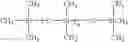
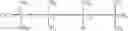
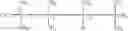
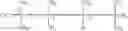
The present invention is directed to a ether alkyl silicone conforming to the following structure;
wherein:
- R is —(CH2)2—O—(CH2)z—CH3;
- z is an integer ranging from 0 to 44;
- a is an integer ranging from 0 to 2,000;
- b is an integer ranging from 1 to 50.
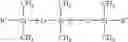
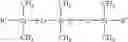
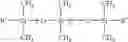
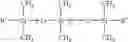
The present invention is also directed to a ether alkyl silicone conforming to the following structure;
wherein:
- R′ is —(CH2)2—O—(CH2)z—CH3;
- z is an integer ranging from 0 to 44;
- c is an integer ranging from 0 to 2,000.
The present invention is also directed to a process for conditioning hair and skin, which comprises contacting the hair or skin with an effective conditioning concentration of to a ether alkyl silicone conforming to the following structure;
wherein:
- R is —(CH2)2—O—(CH2)z—CH3;
- z is an integer ranging from 0 to 44;
- a is an integer ranging from 0 to 2,000;
- b is an integer ranging from 1 to 50;
said effective conditioning concentration ranging from 0.1 to 20% by weight
The present invention is also directed to a process for conditioning hair and skin, which comprises contacting the hair or skin with an effective conditioning concentration of an ether alkyl silicone conforming to the following structure;
wherein:
- R′ is —(CH2)2—O—(CH2)z—CH3;
- z is an integer ranging from 0 to 44;
- c is an integer ranging from 0 to 2,000;
said effective conditioning concentration ranging from 0.1 to 20% by weight.
Preferred Embodiments
In a preferred embodiment a ranges from 1 to 50.
In a preferred embodiment a ranges from 50 to 100.
In a preferred embodiment z is 18.
In a preferred embodiment z is 31.
In a preferred embodiment c ranges from 1 to 50.
In a preferred embodiment c ranges from 50 to 100.
EXAMPLES
Silicone Polymers
The silicone polymers useful as raw materials for the preparation of the compounds of the present invention are items of commerce and are commercially available from a variety of sources including Siltech LLC Dacula, Ga.
Group 1—Internal Silanic Hydrogen Compounds
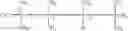
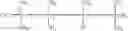
The compounds of this group conform to the following structure:
wherein:
- a is an integer ranging from 0 to 2,000;
- b is an integer ranging from 1 to 50.
Examples 1-7
| Example | a | b |
| 1 | 0 | 1 |
| 2 | 10 | 10 |
| 3 | 20 | 5 |
| 4 | 50 | 10 |
| 5 | 100 | 20 |
| 6 | 1000 | 30 |
| 7 | 2000 | 50 |
Group 2—Terminal Silanic Hydrogen Compounds
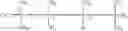
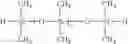
The compounds of this group conform to the following structure:
wherein:
- c is an integer ranging from 0 to 2,000.
Examples 8-15
| Example | c | |
| 8 | 0 | |
| 9 | 2 | |
| 10 | 5 | |
| 11 | 20 | |
| 12 | 50 | |
| 13 | 100 | |
| 14 | 1000 | |
| 15 | 2000 | |
Vinyl Ethers
Vinyl Ethers are items of commerce commercially available from BASF and ISP and conform to the following structure:
CH2═CH—O—(CH2)z—CH3;
wherein;
- z is an integer ranging from 0 to 44;
Examples 16-20
| Example | z | |
| 16 | 0 | |
| 17 | 3 | |
| 18 | 11 | |
| 19 | 18 | |
| 20 | 44 | |
Hydrosilylation
Hydrosilylation is a process that reacts terminal vinyl compounds with silanic hydrogen to obtain a Si—C bond. References to this reaction, incorporated herein by reference, include:
U.S. Pat. Nos. 3,715,334 and 3,775,452 to Karstedt, shows the use of Pt(O) complex with vinylsilicon siloxane ligands as an active hydrosilylation catalyst.
Additional platinum complexes, such as complexes with platinum halides are shown by, U.S. Pat. No. 3,159,601 Ashby and, U.S. Pat. No. 3,220,972, to Lamoreaux.
Another hydrosilylation catalyst is shown by Fish, U.S. Pat. No. 3,576,027. Fish prepares a platinum(IV) catalyst by reacting crystalline platinum(IV) chloroplatinic acid and organic silane or siloxane to form a stable reactive platinum hydrosilylation catalyst.
General Procedure
To a suitable flask equipped with heating, cooling and agitation is added the specified number of grams of the silanic hydrogen compound (Examples 1-15). The mass is mixed well. To that mixture is added the specified number of grams of the vinyl compound (Example 16-20). The reaction mass is mixed well until homogeneous. To that mixture is added 0.1% Karstedt catalyst, which is commercially available from Geleste. The agitation is stopped and the reaction begins. An exotherm is noted and the temperature is increased to 120° C. and held for 4 hours. Once the concentration of silanic hydrogen is below 0.5% is considered complete. The product is used without additional purification.
| Silanic Hydrogen | ||||
| Compound | Vinyl Ether |
| Example | Example | Grams | Example | Grams |
| 22 | 1 | 224 | 16 | 70 |
| 23 | 2 | 150 | 17 | 120 |
| 24 | 3 | 389 | 18 | 256 |
| 25 | 4 | 446 | 19 | 372 |
| 26 | 5 | 7420 | 20 | 809 |
| 27 | 6 | 2532 | 20 | 809 |
| 28 | 7 | 214 | 19 | 372 |
| 29 | 8 | 68 | 18 | 256 |
| 30 | 9 | 142 | 17 | 120 |
| 31 | 10 | 253 | 16 | 70 |
| 32 | 11 | 808 | 16 | 75 |
| 33 | 12 | 1918 | 17 | 125 |
| 34 | 13 | 4727 | 18 | 268 |
| 35 | 14 | 37068 | 19 | 388 |
| 36 | 15 | 74081 | 20 | 815 |
Applications
The compounds of the resent invention have improved oil solubility and can be added to formulated products like lipsticks and pigmented products to minimize syneresis.
The compounds of the present invention can be added to oils to make serums. They enhance the spread and provide unique cosmetic aesthetic, since they are not as hard as the same material made with alkyl groups.
While the illustrative embodiments of the invention have been described with particularity, it will be understood that various other modifications will be apparent to and can be readily made by those skilled in the art without departing from the spirit and scope of the invention. Accordingly, it is not intended that the scope of the claims appended hereto be limited to the examples and descriptions set forth hereinabove but rather that the claims be construed as encompassing all the features of patentable novelty which reside in the present invention, including all features which would be treated as equivalents thereof by those skilled in the art to which the invention pertains.
Claims
We claim:1. An ether alkyl silicone conforming to the following structure;
wherein:
R is —(CH2)2—O—(CH2)z—CH3;
z is an integer ranging from 0 to 44;
a is an integer ranging from 0 to 2,000;
b is an integer ranging from 1 to 50.
2. An ether alkyl silicone of claim 1 wherein a ranges from 1 to 50.
3. An ether alkyl silicone of claim 1 wherein a ranges from 50 to 100.
4. An ether alkyl silicone of claim 1 wherein z is 18.
5. An ether alkyl silicone of claim 1 wherein z is 31.
6. An ether alkyl silicone conforming to the following structure;
wherein:
R′ is —(CH2)2—O—(CH2)z—CH3;
z is an integer ranging from 0 to 44;
c is an integer ranging from 0 to 2,000.
7. An ether alkyl silicone of claim 1 wherein c ranges from 1 to 50.
8. An ether alkyl silicone of claim 1 wherein c ranges from 50 to 100.
9. An ether alkyl silicone of claim 1 wherein z is 18.
10. An ether alkyl silicone of claim 1 wherein z is 31.
11. A process for conditioning hair and skin which comprises contacting the hair or skin with an effective conditioning concentration of to a ether alkyl silicone conforming to the following structure;
wherein:
R is —(CH2)2—O—(CH2)z—CH3;
z is an integer ranging from 0 to 44;
a is an integer ranging from 0 to 2,000;
b is an integer ranging from 1 to 50;
said effective conditioning concentration ranging from 0.1 to 20% by weight
12. A process of claim 11 wherein a ranges from 1 to 50.
13. A process of claim 11 wherein a ranges from 50 to 100.
14. A process of claim 11 wherein z is 18.
15. A process of claim 11 wherein z is 31.
16. A process for conditioning hair and skin which comprises contacting the hair or skin with an effective conditioning concentration of an ether alkyl silicone conforming to the following structure;
wherein:
R′ is —(CH2)2—O—(CH2)z—CH3;
z is an integer ranging from 0 to 44;
c is an integer ranging from 0 to 2,000;
said effective conditioning concentration ranging from 0.1 to 20% by weight.
17. A process of claim 16 wherein c ranges from 1 to 50.
18. A process of claim 16 wherein c ranges from 50 to 100.
19. A process of claim 16 wherein z is 18.
20. A process of claim 16 wherein z is
Images & Drawings included:


Sources:
- United States Patent and Trademark Office - verify current appl. status at the USPTO↗
Recent applications in this class:
- » 20250099363 2025-03-27
COSMETIC WATER-IN-OIL EMULSION COMPRISING A SPECIFIC WATER-SOLUBLE UV SCREENING AGENT, A BASE, A VOLATILE OIL, A HYDROPHOBIC FILM-FORMING POLYMER, A POLYOXYALKYLENATED LINEAR POLYDIMETHYLMETHYLSILOXANE AND A VITAMIN B3 - » 20250082564 2025-03-13
OIL-IN-WATER EMULSION COSMETIC - » 20250073154 2025-03-06
(POLY)GLYCERIN GROUP- AND POLYOXYALKYLENE GROUP-CONTAINING ORGANOPOLYSILOXANE, TREATED HYDROPHOBIC POWDER, DISPERSION, AND COSMETIC - » 20250049695 2025-02-13
SURFACE-COATED PARTICLES - » 20250049694 2025-02-13
COMPOSITION COMPRISING TWO PARTICULAR OXIDATION DYE PRECURSORS AND A PARTICULAR AMINO SILICONE - » 20250000779 2025-01-02
SULFATE-FREE CLEANSING COMPOSITIONS COMPRISING PEG/PPG-DIMETHICONES - » 20240216260 2024-07-04
HAIR TREATMENT COMPOSITIONS THAT IMPART SHINE AND LUSTER - » 20240156713 2024-05-16
Concealer sunscreen facial cream and its preparation method - » 20240016724 2024-01-18
SLURRY DISPERSION, COSMETIC AND METHOD FOR PRODUCING SAME - » 20230149290 2023-05-18
MICROEMULSION COMPOSITION AND COSMETIC CONTAINING THE SAME
Recent applications for this Assignee:
- » 20110033408 2011-02-10
Dimer alkyl silicone polymers in personal care applications - » 20110027206 2011-02-03
Alkyl quaternium silicone compounds - » 12806051 2012-04-10
Silicone based sun screening compositions with improved UVA1/UV ratios