FUNGICIDAL ACTIVE COMPOUND COMBINATIONS
US20110003011A1
2011-01-06
12/832,460
2010-07-08
Abstract:
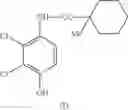
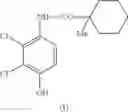
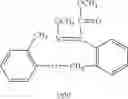
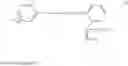
There are described new active compound combinations of a compound of the formula (I)
with known fungicidal active compounds, and their use for the control of phytopathogenic fungi.
Inventors:
- Karl-Heinz Kuck 77 🇩🇪 Langenfeld, Germany
- Bernd-Wieland Krüger 13 🇩🇪 Bergisch Gladbach, Germany
- Wilhelm BRANDES 2 🇩🇪 Leichlingen, Germany
- Heinz-Wilhelm Dehne 2 🇩🇪 Monheim, Germany
- Stefan Dutzmann 4 🇩🇪 Hilden, Germany
Assignee:
- Bayer CropScience AG 961 🇩🇪 Monheim, Germany
Interested in similar patents?
Get notified when new applications in this technology area are published.
Classification:
A01N59/16 » CPC further
Biocides, pest repellants or attractants, or plant growth regulators containing elements or inorganic compounds Heavy metals; Compounds thereof
A01P3/00 IPC
Fungicides
A01N37/46 » CPC further
Biocides, pest repellants or attractants, or plant growth regulators containing organic compounds containing a carbon atom having three bonds to hetero atoms with at the most two bonds to halogen, e.g. carboxylic acids containing at least one carboxylic group or a thio analogue, or a derivative thereof, and a nitrogen atom attached to the same carbon skeleton by a single or double bond, this nitrogen atom not being a member of a derivative or of a thio analogue of a carboxylic group, e.g. amino-carboxylic acids N-acyl derivatives
A01N59/20 IPC
Biocides, pest repellants or attractants, or plant growth regulators containing elements or inorganic compounds; Heavy metals; Compounds thereof Copper
A01N43/64 » CPC further
Biocides, pest repellants or attractants, or plant growth regulators containing heterocyclic compounds having rings with three nitrogen atoms as the only ring hetero atoms
A01N43/40 » CPC further
Biocides, pest repellants or attractants, or plant growth regulators containing heterocyclic compounds having rings with one nitrogen atom as the only ring hetero atom six-membered rings
A01N57/12 » CPC further
Biocides, pest repellants or attractants, or plant growth regulators containing organic phosphorus compounds having phosphorus-to-oxygen bonds or phosphorus-to-sulfur bonds containing acyclic or cycloaliphatic radicals
A01N55/00 » CPC further
Biocides, pest repellants or attractants, or plant growth regulators, containing organic compounds containing elements other than carbon, hydrogen, halogen, oxygen, nitrogen and sulfur
A01N53/00 » CPC further
Biocides, pest repellants or attractants, or plant growth regulators containing cyclopropane carboxylic acids or derivatives thereof
A01N47/38 » CPC further
Biocides, pest repellants or attractants, or plant growth regulators containing organic compounds containing a carbon atom not being member of a ring and having no bond to a carbon or hydrogen atom, e.g. derivatives of carbonic acid the carbon atom having one or more single bonds to nitrogen atoms; Ureas or thioureas containing the groups >N—CO—N< or >N—CS—N< containing the group >N—CO—N< where at least one nitrogen atom is part of a heterocyclic ring; Thio analogues thereof
A01N47/34 » CPC further
Biocides, pest repellants or attractants, or plant growth regulators containing organic compounds containing a carbon atom not being member of a ring and having no bond to a carbon or hydrogen atom, e.g. derivatives of carbonic acid the carbon atom having one or more single bonds to nitrogen atoms; Ureas or thioureas containing the groups >N—CO—N< or >N—CS—N< containing the groups , e.g. biuret; Thio analogues thereof; Urea-aldehyde condensation products
A01N47/26 » CPC further
Biocides, pest repellants or attractants, or plant growth regulators containing organic compounds containing a carbon atom not being member of a ring and having no bond to a carbon or hydrogen atom, e.g. derivatives of carbonic acid the carbon atom having one or more single bonds to nitrogen atoms; Carbamic acid derivatives, i.e. containing the group —O—CO—N<; Thio analogues thereof Oxidation products of dithiocarbamic acid derivatives, e.g. thiuram sulfides
A01N47/20 » CPC further
Biocides, pest repellants or attractants, or plant growth regulators containing organic compounds containing a carbon atom not being member of a ring and having no bond to a carbon or hydrogen atom, e.g. derivatives of carbonic acid the carbon atom having one or more single bonds to nitrogen atoms; Carbamic acid derivatives, i.e. containing the group —O—CO—N<; Thio analogues thereof N-Aryl derivatives thereof
A01N47/18 » CPC further
Biocides, pest repellants or attractants, or plant growth regulators containing organic compounds containing a carbon atom not being member of a ring and having no bond to a carbon or hydrogen atom, e.g. derivatives of carbonic acid the carbon atom having one or more single bonds to nitrogen atoms; Carbamic acid derivatives, i.e. containing the group —O—CO—N<; Thio analogues thereof containing a —O—CO—N< group, or a thio analogue thereof, directly attached to a heterocyclic or cycloaliphatic ring
A01N47/14 » CPC further
Biocides, pest repellants or attractants, or plant growth regulators containing organic compounds containing a carbon atom not being member of a ring and having no bond to a carbon or hydrogen atom, e.g. derivatives of carbonic acid the carbon atom having one or more single bonds to nitrogen atoms; Carbamic acid derivatives, i.e. containing the group —O—CO—N<; Thio analogues thereof containing a —O—CO—N< group, or a thio analogue thereof, neither directly attached to a ring nor the nitrogen atom being a member of a heterocyclic ring Di-thio analogues thereof
A01N47/04 » CPC further
Biocides, pest repellants or attractants, or plant growth regulators containing organic compounds containing a carbon atom not being member of a ring and having no bond to a carbon or hydrogen atom, e.g. derivatives of carbonic acid the carbon atom having no bond to a nitrogen atom containing >N—S—C≡(Hal) groups
A01N43/653 » CPC further
Biocides, pest repellants or attractants, or plant growth regulators containing heterocyclic compounds having rings with three nitrogen atoms as the only ring hetero atoms; Triazoles; Hydrogenated triazoles 1,2,4-Triazoles; Hydrogenated 1,2,4-triazoles
A01N43/50 IPC
Biocides, pest repellants or attractants, or plant growth regulators containing heterocyclic compounds having rings with two nitrogen atoms as the only ring hetero atoms 1,3-Diazoles; Hydrogenated 1,3-diazoles
A01N43/36 » CPC further
Biocides, pest repellants or attractants, or plant growth regulators containing heterocyclic compounds having rings with one nitrogen atom as the only ring hetero atom five-membered rings
A01N47/28 IPC
Biocides, pest repellants or attractants, or plant growth regulators containing organic compounds containing a carbon atom not being member of a ring and having no bond to a carbon or hydrogen atom, e.g. derivatives of carbonic acid the carbon atom having one or more single bonds to nitrogen atoms Ureas or thioureas containing the groups >N—CO—N< or >N—CS—N<
A01N37/38 » CPC further
Biocides, pest repellants or attractants, or plant growth regulators containing organic compounds containing a carbon atom having three bonds to hetero atoms with at the most two bonds to halogen, e.g. carboxylic acids containing at least one carboxylic group or a thio analogue, or a derivative thereof, and a singly bound oxygen or sulfur atom attached to the same carbon skeleton, this oxygen or sulfur atom not being a member of a carboxylic group or of a thio analogue, or of a derivative thereof, e.g. hydroxy-carboxylic acids having at least one oxygen or sulfur atom attached to an aromatic ring system
A01N2300/00 » CPC further
Combinations or mixtures of active ingredients covered by classes - with other active or formulation relevant ingredients, e.g. specific carrier materials or surfactants, covered by classes -
A01N43/54 » CPC further
Biocides, pest repellants or attractants, or plant growth regulators containing heterocyclic compounds having rings with two nitrogen atoms as the only ring hetero atoms 1,3-Diazines; Hydrogenated 1,3-diazines
A01N55/02 IPC
Biocides, pest repellants or attractants, or plant growth regulators, containing organic compounds containing elements other than carbon, hydrogen, halogen, oxygen, nitrogen and sulfur containing metal atoms
A01N37/18 IPC
Biocides, pest repellants or attractants, or plant growth regulators containing organic compounds containing a carbon atom having three bonds to hetero atoms with at the most two bonds to halogen, e.g. carboxylic acids containing the group —CO—N<, e.g. carboxylic acid amides or imides; Thio analogues thereof
A01N43/66 IPC
Biocides, pest repellants or attractants, or plant growth regulators containing heterocyclic compounds having rings with three nitrogen atoms as the only ring hetero atoms 1,3,5-Triazines, not hydrogenated and not substituted at the ring nitrogen atoms
A01N43/84 IPC
Biocides, pest repellants or attractants, or plant growth regulators containing heterocyclic compounds having rings with nitrogen atoms and oxygen or sulfur atoms as ring hetero atoms six-membered rings with one nitrogen atom and either one oxygen atom or one sulfur atom in positions 1,4
A01N43/32 » CPC further
Biocides, pest repellants or attractants, or plant growth regulators containing heterocyclic compounds having rings with one or more oxygen or sulfur atoms as the only ring hetero atoms with two or more hetero atoms six-membered rings
A01N57/10 IPC
Biocides, pest repellants or attractants, or plant growth regulators containing organic phosphorus compounds having phosphorus-to-oxygen bonds or phosphorus-to-sulfur bonds
A01N37/12 IPC
Biocides, pest repellants or attractants, or plant growth regulators containing organic compounds containing a carbon atom having three bonds to hetero atoms with at the most two bonds to halogen, e.g. carboxylic acids containing the group , wherein C means a carbon skeleton not containing a ring; Thio analogues thereof
A01N43/76 » CPC further
Biocides, pest repellants or attractants, or plant growth regulators containing heterocyclic compounds having rings with nitrogen atoms and oxygen or sulfur atoms as ring hetero atoms five-membered rings with one nitrogen atom and either one oxygen atom or one sulfur atom in positions 1,3 1,3-Oxazoles; Hydrogenated 1,3-oxazoles
A01N59/02 » CPC further
Biocides, pest repellants or attractants, or plant growth regulators containing elements or inorganic compounds Sulfur; Selenium; Tellurium; Compounds thereof
A01N37/34 » CPC further
Biocides, pest repellants or attractants, or plant growth regulators containing organic compounds containing a carbon atom having three bonds to hetero atoms with at the most two bonds to halogen, e.g. carboxylic acids Nitriles
A01N37/24 » CPC main
Biocides, pest repellants or attractants, or plant growth regulators containing organic compounds containing a carbon atom having three bonds to hetero atoms with at the most two bonds to halogen, e.g. carboxylic acids containing the group —CO—N<, e.g. carboxylic acid amides or imides; Thio analogues thereof the nitrogen atom being directly attached to an aromatic ring system, e.g. anilides containing at least one oxygen or sulfur atom being directly attached to the same aromatic ring system
Description
This application is a divisional of U.S. Ser. No. 10/860,868 filed Jun. 3, 2004, now allowed, which is a division of Ser. No. 10/022,136, filed on Dec. 13, 2001, now U.S. Pat. No. 6,776,994, which is a division of Ser. No. 09/736,917, filed on Dec. 14, 2000, now U.S. Pat. No. 6,365,195, which is a division of Ser. No. 09/541,950, filed on Apr. 3, 2000, now U.S. Pat. No. 6,235,744, which is a division of Ser. No. 09/249,690, filed on Feb. 12, 1999, U.S. Pat. No. 6,071,940, now U.S. Pat. No. 6,071,940, which is a division of Ser. No. 08/846,872, filed on May 1, 1997, now U.S. Pat. No. 5,922,762, which is a division of Ser. No. 08/629,245, filed on Apr. 8, 1996, now U.S. Pat. No. 5,672,619, which is a divisional of Ser. No. 08/462,408, filed on Jun. 5, 1995, now U.S. Pat. No. 5,532,262, which is a continuation of Ser. No. 08/232,923, filed on Apr. 25, 1994, now abandoned.
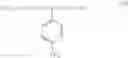
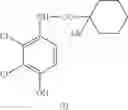
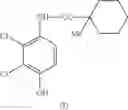
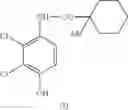
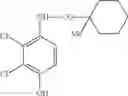
The present application relates to novel active compound combinations which consist of a compound of the formula I
on the one hand and other known fungicidal active compounds on the other hand and are very highly suitable for the control of phytopathogenic fungi.
It is already known that the compounds of the formula (I) has fungicidal properties (cf. EP-A 339,418). The activity of this substance is good; however, in some cases it leaves something to be desired at low application rates.
It is also already known that numerous azole derivatives, aromatic carboxylic acid derivatives, morpholine compounds and other heterocycles can be employed for the control of fungi (cf. K. H. Büchel “Pflanzenschutz and Schädlingsbekämpfung” [Plant protection and pest control] pages 87, 136, 140, 141 and 146 to 153, Georg Thieme Verlag, Stuttgart 1977).
The action of the substances concerned, however, is not always satisfactory at low application rates.
It has now been found that the new active compound combinations of a compound of the formula I
and
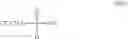
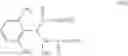
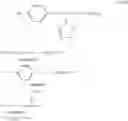
(A) dichlofluanid of the formula
and/or
(B) tolylfluanid of the formula
and/or
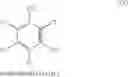
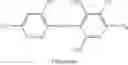
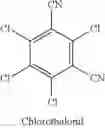
(C) tetrachloro-isophthalo-dinitrile of the formula
and/or
(D) propineb of the formula
and/or
(E) tetramethyl-thiuram disulphide of the formula
and/or
(F) mancozeb of the formula
and/or
(G) anilazine of the formula
and/or
(H) copper oxychloride
and/or
(I) captan of the formula
and/or
(K) a morpholine derivative of the formula
and/or
(L) dithianone of the formula
and/or
(M) phaltan of the formula
and/or
(N) cymoxanil of the formula
and/or
(O) methyl benzimidazole-2-carbamate of the formula
and/or
(P) fosetyl of the formula
-
- or its aluminium adduct
and/or
(Q) metalaxyl of the formula
- or its aluminium adduct
and/or
(R) oxadixyl of the formula
and/or
(S) fluazinam of the formula
and/or
(T) 1-(4-chlorophenyl)-4,4-dimethyl-3-(1,2,4-triazol-1-yl-ethyl)-pentan-3-ol of the formula
and/or
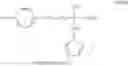
(U) an azole derivative of the formula
and/or
(V) an azole derivative from the group consisting of
a) difenconazole
b) penconazole
c) flusilazole
d) hexaconazole
e) myclobutanil
f) prochloraz
g) fluquinconazole
h) epoxiconazole
i) fenpropidin
j) perifenox
k) 8-t-butyl-2-(N-ethyl-N-n-propylamino)-methyl-1,4-dioxaspiro[4,5]decane
and/or
(W) metiram
and/or
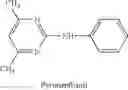
(X) pyrimethanil
and/or
(Y) diethofencarb
and/or
(Z) mepanipyrim and/or cyprodinyl
and/or
(α) phenylpyrrole and/or
(β) iprodione
and/or
(Γ) vinclozolin
and/or
(δ) procymidone
and/or
(e) benomyl
and/or
(⊖) thiophanate and/or
-
- thiophanate-methyl
and/or
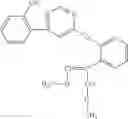
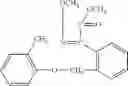
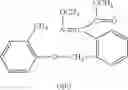
(II) sulphur
and/or
(n) compounds of the formula
- thiophanate-methyl
and/or
have very good fungicidal properties.
The active compound of the formula (I) is known (EP-A-339,418). The components additionally present in the combinations according to the invention are also known.
In addition to the active compound of the formula (I), the active compound combinations according to the invention contain at least one active compound from the compounds of the groups (A) to (II). They may also moreover contain further fungicidally active admixed components.
If the active compounds are present in the active compound combinations according to the invention in certain weight ratios, the synergistic effect is seen particularly distinct. However, the weight ratios of the active compounds in the active compound combinations can be varied with a relatively wide range. In general, the following are proportioned to 1 part by weight of active compound of the formula (I)
0.5 to 50 part by weight, preferably
0.5 to 10 parts by weight of active compound propineb (D)
0.5 to 50 parts by weight, preferably
0.5 to 10 parts by weight of active compound mancozeb (F)
0.5 to 50 parts by weight, preferably
0.5 to 10 parts by weight of active compound TMTD (E)
0.5 to 50 parts by weight, preferably
0.5 to 10 parts by weight of active compound metiram (W)
0.5 to 50 parts by weight, preferably
0.5 to 20 parts by weight of active compound dichlofluanid (A)
0.5 to 50 parts by weight, preferably
0.5 to 20 parts by weight of active compound tolylfluanid (B)
0.5 to 50 parts by weight, preferably
0.5 to 20 parts by weight of active compound phaltan (M)
0.5 to 50 parts by weight, preferably
0.5 to 50 parts by weight of active compound captan (I)
-
- 1 to 50 parts by weight, preferably
- 1 to 20 parts by weight of active compound Cu oxychloride (H)
- 1 to 50 parts by weight, preferably
- 1 to 20 parts by weight of active compound sulphur (II)
0.5 to 50 parts by weight, preferably
0.5 to 10 parts by weight of active compound anilazine (G)
0.5 to 50 parts by weight, preferably
0.5 to 10 parts by weight of active compound chlorothalonil (C)
0.5 to 50 parts by weight, preferably
0.5 to 10 parts by weight of active compound dithianon (L)
0.1 to 10 parts by weight, preferably
0.5 to 5 parts by weight of active compound fluazinam (S)
0.1 to 10 parts by weight, preferably
0.5 to 5 parts by weight of active compound pyrimethanil (X)
0.1 to 10 parts by weight, preferably
0.5 to 5 parts by weight of active compound diethofencarb (Y)
0.1 to 10 parts by weight, preferably
0.5 to 5 parts by weight of active compound mepanipyrim (Z)
0.1 to 10 parts by weight, preferably
0.5 to 5 parts by weight of active compound phenylpyrrole (Saphire) (α) - 0.1 20 parts by weight, preferably
0.5 to 10 parts by weight of active compound iprodione (β)
0.1 to 20 parts by weight, preferably
0.5 to 10 parts by weight of active compound vinclozolin (γ)
0.1 to 20 parts by weight, preferably
0.5 to 10 parts by weight of active compound procymidone (δ)
0.1 to 10 parts by weight, preferably
0.25 to 5 parts by weight of active compound benomyl (ε)
0.1 to 10 parts by weight, preferably
0.25 to 5 parts by weight of active compound carbendazim (o)
0.1 to 10 parts by weight, preferably
0.25 to 5 parts by weight of active compound thiophanate-methyl (Q)
0.1 to 10 parts by weight, preferably
0.25 to 5 parts by weight of active compound cymoxanil (N)
0.1 to 10 parts by weight, preferably
0.25 to 5 parts by weight of active compound metalaxyl (Q)
0.1 to 10 parts by weight, preferably
0.25 to 5 parts by weight of active compound oxadixyl (R)
0.1 to 10 parts by weight, preferably
0.2 to 5 parts by weight of active compound dimethomorph (K)
0.1 to 20 parts by weight, preferably
0.2 to 10 parts by weight of active compound Al fosetyl (P)
0.01 to 10 parts by weight, preferably
0.025 to 5 parts by weight of active compound tebuconazole (T)
0.1 to 10 parts by weight, preferably
0.025 to 5 parts by weight of active compound triadimefon (U XIXc)
0.01 to 10 parts by weight, preferably
0.025 to 5 parts by weight of active compound triadimenol (U XIXa)
0.01 to 10 parts by weight, preferably
0.025 to 5 parts by weight of active compound bitertanol (U XIXb)
0.01 to 10 parts by weight, preferably
0.025 to 5 parts by weight of active compound difenconazole (Va)
0.01 to 10 parts by weight, preferably
0.025 to 5 parts by weight of active compound penconazole (Vb)
0.01 to 10 parts by weight, preferably
0.025 to 5 parts by weight of active compound flusilazole (Vc)
0.01 to 10 parts by weight, preferably
0.025 to 5 parts by weight of active compound hexaconazole (Vd)
0.01 to 10 parts by weight, preferably
0.025 to 5 parts by weight of active compound myclobutanil (Ve)
0.01 to 10 parts by weight, preferably
0.025 to 5 parts by weight of active compound prochloraz (Vf)
0.01 to 10 parts by weight, preferably
0.025 to 5 parts by weight of active compound of formula ({acute over (η)}a)
0.01 to 10 parts by weight, preferably
0.025 to 5 parts by weight of active compound of formula ({acute over (η)}b)
The active compound combinations according to the invention have very good fungicidal properties and can be employed in particular for the control of phytopathogenic fungi, such as Plasmodiophoromycetes, Oomycetes, Chytridiomycetes, Zygomycetes, Ascomycetes, Basidiomycetes, Deuteromycetes etc.
The active compound combinations according to the invention are very particularly suitable for the control of cereal diseases, such as Erysiphe, Cochliobolus, Pyrenophora and Leptosphaeria, and against fungal attack on vegetables, grapes and fruit, for example against Venturia on apples, Botrytis on beans and Phytophthora on tomatoes.
The good plant tolerability of the active compound combinations in the concentrations to necessary for the control of plant diseases enables a treatment of above-ground parts of plants, of plants and seeds, and of the soil.
The active compound combinations according to the invention can be converted into the customary formulations, such as solutions, emulsions, suspensions, powders, foams, pastes, granules, aerosols, very fine capsules in polymeric substances and in coating compositions for seeds, as well as ULV formulations.
These formulations are produced in a known manner, for example by mixing the active compounds or the active compound combinations with extenders, that is, liquid solvents, liquefied gases under pressure, and/or solid carriers, optionally with the use of surface-active agents, that is, emulsifying agents and/or dispersing agents, and/or foam-forming agents. In the case of the use of water as an extender, organic solvents can, for example, also be used as auxiliary solvents. As liquid solvents, there are suitable in the main: aromatics, such as xylene, toluene or alkylnaphthalenes, chlorinated aromatics or chlorinated aliphatic hydrocarbons, such as chlorobenzenes, chloroethylenes or methylene chloride, aliphatic hydrocarbons, such as cyclohexane or paraffins, for example mineral oil fractions, alcohols, such as butanol or glycol as well as their ethers and esters, ketones, such as acetone, methyl ethyl ketone, methyl isobutyl ketone or cyclohexanone, strongly polar solvents, such as dimethylformamide and dimethyl sulphoxide, as well as water. By liquefied gaseous extenders or carriers are meant liquids which are gaseous at ambient temperature and under atmospheric pressure, for example aerosol propellants, such as halogenated hydrocarbons as well as butane, propane, nitrogen and carbon dioxide. As solid carriers there are suitable: for example ground natural minerals, such as kaolins, clays, talc, chalk, quartz, attapulgite, montmorillonite or diatomaceous earth, and ground synthetic minerals, such as highly-disperse silica, alumina and silicates. As solid carriers for granules there are suitable: for example crushed and fractionated natural minerals such as calcite, marble, pumice, sepiolite and dolomite, as well as synthetic granules of inorganic and organic meals, and granules of organic material such as sawdust, coconut shells, maize cobs and tobacco stalks. As emulsifying- and/or foam-forming agents there are suitable: for example non-ionic and anionic emulsifiers, such as polyoxyethylene fatty acid esters, polyoxyethylene fatty alcohol ethers, for example alkylaryl polyglycol ethers, alkylsulphonates alkyl sulphates, arylsulphonates as well as albumen hydrolysis products. As dispersing agents there are suitable: for example lignin-sulphite waste liquors and methylcellulose.
Adhesives such as carboxymethylcellulose and natural and synthetic polymers in the form of powders, granules or lattices, such as gum arabic, polyvinyl alcohol and polyvinyl acetate, as well as natural phospholipids, such as cephalins and lecithins, and synthetic phospholipids, can be used in the formulations. Other additives can be mineral and vegetable oils.
It is possible to use colorants such as inorganic pigments, for example iron oxide, titanium oxide and Prussian Blue, and organic dyestuffs, such as alizarin dyestuffs, azo dyestuffs and metal phthalocyanine dyestuffs, and trace nutrients such as salts of iron, manganese, boron, copper, cobalt, molybdenum and zinc.
The formulations in general contain between 0.1 and 95 percent by weight of active compound, preferably between 0.5 and 90%.
The active compound combinations according to the invention can be present in the formulations as a mixture with other known active compounds, such as fungicides, insecticides, acaricides and herbicides, as well as in mixtures with fertilizers or plant growth regulators.
The active compound combinations can be used as such or in the form of their formulations or the use forms prepared therefrom, such as ready-to-use solutions, emulsifiable concentrates, emulsions, suspensions wettable powders, soluble powders and granules.
They are used in the customary manner, for example by watering, spraying, atomizing, scattering, dusting, brushing on, as a powder for dry seed treatment, as a solution for seed treatment, as a water-soluble powder for seed treatment, as a water-dispersible powder for slurry treatment, or seed-coating.
In the treatment of parts of plants, the active compound concentrations in the use forms can be varied within a substantial range. They are, in general, between 1 and 0.0001% by weight, preferably between 0.5 and 0.001%.
In the treatment of seed, amounts of active compound of 0.001 to 50 g per kilogram of seed, preferably 0.01 to 10 g, are generally required.
For the treatment of soil, active compound concentrations of 0.00001 to 0.1% by weight, preferably 0.0001 to 0.02% by weight, are required at the site of action.
The good fungicidal action of the active compound combinations according to the invention can be seen from the following Examples. While the individual active compounds have weaknesses in their fungicidal action, the combinations exhibit an action which extends beyond a simple additive action.
A synergistic effect is always present with fungicides if the fungicidal action of the active compound combinations is greater than the sum of the actions of the individually applied active compounds.
The action to be expected—for a given combination of two active compounds can be calculated (cf. Colby, S. R., “Calculating Synergistic and Antagonistic Responses of Herbicide Combinations”, Weeds 15, pages 20-22, 1967) as follows:
If
- X denotes the degree of efficacy, expressed in % of the untreated control, on use of the active compound A at a concentration of m ppm,
- Y denotes the degree of efficacy, expressed in % of the untreated control, on use of the active compound B at a concentration of m ppm,
- E denotes the expected degree of efficacy, expressed in % of the untreated control, on use of the active compound A and B at a concentrations of m and n ppm,
then
E = X + Y - X - Y 100
If the actual fungicidal action is larger than calculated, the combination is superadditive in its action, i.e. a synergistic effect is present. In this case, the actually observed degree of efficacy must be greater than the value for the expected degree of efficacy (E) calculated from the abovementioned formula.
EXAMPLE 1
Botrytis Test (Bean)/Protective
To produce a suitable preparation of active compound, commercially available active compound formulations (individual active compounds or active compound combinations) are diluted with water to the desired concentration in each case.
To test for protective activity, young plants are sprayed with the preparation of active compound until dripping wet. After the spray coating has dried on, 2 small pieces of agar covered with Botrytis cinerea are placed on each leaf. The inoculated plants are placed in a darkened humid chamber at 20° C.
3 days after the inoculation, the size of the infected spots on the leaves is evaluated.
In order to demonstrate synergism between the active compounds used in this test, the results were assessed by the method described by Colby (see above).
Active compounds, active compound concentrations and test results can be seen from the following tables.
| TABLE 1 |
| Botrytis test (bean)/protective |
| Degree of | ||
| effectiveness | ||
| Active compound | in % of the | |
| Active compound | concentration in ppm | untreated control |
| 5 | 51 | |
| 100 | 32 | |
| Mixture according to the invention |
| (I) | 5 | |||
| + | {close oversize brace} | + | {close oversize brace} | 89 |
| Dichlofluanid | 100 |
| Expected value, calculated by the | 67 | |
| Colby formula (see above) | ||
| 5 | 51 | |
| 50 | 44 | |
| Mixture according to the invention |
| (I) | 5 | |||
| + | {close oversize brace} | + | {close oversize brace} | 91 |
| Procymidone | 50 |
| Expected value, calculated by the | 73 | |
| Colby formula (see above) | ||
| 5 | 51 | |
| 50 | 0 | |
| Mixture according to the invention |
| (I) | 5 | |||
| + | {close oversize brace} | + | {close oversize brace} | 73 |
| Phaltan | 50 |
| Expected value, calculated by the | 51 | |
| Colby formula (see above) | ||
| 5 | 51 | |
| 5 | 20 | |
| Mixture according to the invention |
| (I) | 5 | |||
| + | {close oversize brace} | + | {close oversize brace} | 99 |
| Fluazinam | 5 |
| Expected value, calculated by the | 61 | |
| Colby formula (see above) | ||
| 5 | 51 | |
| 10 | 0 | |
| Mixture according to the invention |
| (I) | 5 | |||
| + | {close oversize brace} | + | {close oversize brace} | 93 |
| Pyrimethanil | 10 |
| Expected value, calculated by the | 51 | |
| Colby formula (see above) | ||
| 5 | 51 | |
| 5 | 52 | |
| Mixture according to the invention |
| (I) | 5 | |||
| + | {close oversize brace} | + | {close oversize brace} | 87 |
| Carbendazim | 5 |
| Expected value, calculated by the | 76 | |
| Colby formula (see above) | ||
| 5 | 51 | |
| 50 | 32 | |
| Mixture according to the invention |
| (I) | 5 | |||
| + | {close oversize brace} | + | {close oversize brace} | 84 |
| Tolylfluanid | 50 |
| Expected value, calculated by the | 67 | |
| Colby formula (see above) | ||
| 5 | 51 | |
| 200 | 37 | |
| Mixture according to the invention |
| (I) | 5 | |||
| + | {close oversize brace} | + | {close oversize brace} | 73 |
| Chlorothalonil | 200 |
| Expected value, calculated by the | 69 | |
| Colby formula (see above) | ||
EXAMPLE 2
Leptosphaeria nodorum Test (Wheat/Protective
Solvent: 100 parts by weight of dimethylformamide
Emulsifier: 0.25 parts by weight of alkylaryl polyglycol ether
To produce a suitable preparation of active compound, 1-part by weight of active compound is mixed with the stated amounts of solvent and emulsifier, and the concentrate is diluted with water to the desired concentration.
To test for protective activity, young plants are sprayed with the preparation of active compound until dew-moist. After the spray coating has dried on, the plants are sprayed with a spore suspension of Leptosphaeria nodorum. The plants remain for 48 hours in an incubation cabin at 20° C. and 100% relative atmospheric humidity.
The plants are placed in a greenhouse at a temperature of 15° C. and a relative atmospheric humidity of about 80%.
Evaluation is effected 10 days after the inoculation.
In this test, a clearly superior activity compared with the prior art is shown, for example, by the compounds according to the following Preparation Examples:
| TABLE 2 |
| Leptosphaeria nodorum test (wheat)/protective |
| Degree of | ||
| Active compound | effectiveness | |
| concentration of the spray | in % of the | |
| Active compound | liquor in ppm | untreated control |
| 25 | 75 | |
| ∘ | ||
| Tebuconazole + (I) | + | 25.5 | 100 |
| (1:1) | 12.5 | ||
EXAMPLE 3
Erysiphe Test (Barley)/Protective
Solvent: 10 parts by weight N-methylpyrrolidon
Emulsifier: 0.6 parts by weight alkylarylpolyglycolether
To produce a suitable preparation of active compound, 1 part by weight of active compound is mixed with the stated amount of solvent and emulsifier, and the concentrate is diluted with water to the desired concentration.
To test for protective activity, young plants are sprayed with the preparation of active compound until dew-moist. After the spray coating has dried on, the plants are dusted with spores of Erysiphe graminis f. sp. hordei.
The plants are placed in a greenhouse at a temperature of about 20° C. and a relative atmospheric humidity of about 80%, in order to promote-the development of powdery mildew pustules.
Evaluation is carried out 7 days after the inoculation.
In this test, a clearly superior activity compared with the prior art is shown, for example, by the compounds according to the following preparation examples:
| TABLE 3 |
| Erysiphe-Test (barley)/protective |
| Active | Degree of | |
| compound | effectiveness | |
| concen- | in % of the | |
| tration | untreated | |
| Active compound | in g/ha | control |
| (I) | 50 | 0 |
| (ηa) | 50 | 15 |
| (ηb) | 50 | 85 |
| mixtures according to the invention: | ||
| (I) + (η b) | 25 + 25 | 100 |
| (1, 0:1) | ||
| (I) + (η a) | ||
| (1, 0:1) | 25 + 25 | 58 |
EXAMPLE 4
Erysiphe Test (Wheat)/Protective
Solvent: 10 parts by weight N-methylpyrrolidone
Emulsifier: 0.6 parts by weight alkylarylpolyglycolether
To produce a suitable preparation of active compound, 1 part by weight of active compound is mixed with the stated amount of solvent and emulsifier, and the concentrate is diluted with water to the desired concentration.
To test for protective activity, young plants are sprayed with spores of Erysiphe graminis f. sp. Hordei. 48 hours after the inoculation, the plants are sprayed with the preparation of active compound until dew-moist.
The plants are placed in a greenhouse at a temperature of about 20° C. and a relative atmospheric humidity of about 80%, in order to promote the development of powdery mildew pustules.
Evaluation is carried out 7 days after the inoculation.
In this test, a clearly superior activity compared with the prior art is shown, for example, by the compounds according to the following preparation examples:
| TABLE 4 |
| Erysiphe Test (wheat)/protective |
| Degree of | ||
| Active compound | effectiveness | |
| Active Compound | concentration | in % of the |
| known: | in g/ha | untreated control |
| 200 25 | 85 30 | |
| 200 | 79 | |
| 25 | 85 | |
| mixture according to the invention: |
| (I) + (ηb) | + | 12.5 | 100 |
| (1.0:1) | 12.5 | ||
| (I) + (ηa) | + | 100 | 94 |
| (1.0:1) | 100 | ||
EXAMPLE 5
Erysiphe Test (Wheat)/Protective
Solvent: 10 parts by weight N-methylpyrrolidon
Emulsifier: 0.6 parts by weight alkylarylpolyglycolether
To produce a suitable preparation of active compound, 1 part by weight of active compound is mixed with the stated amount of solvent and emulsifier, and the concentrate is diluted with water to the desired concentration.
To test for curative activity, young plants are dusted with spores of Erysiphe graminis f. sp. hordei. 48 hours after the inoculation, the plants are sprayed with the preparation of active compound until dew-moist.
The plants are placed in a greenhouse at a temperature of about 20° C. and a relative atmospheric humidity of about 80%, in order to promote the development of powdery mildew pustules.
Evaluation is carried out 7 days after the inoculation.
In this test, a clearly superior activity compared with the prior art is shown, for example, by the compounds according to the following preparation examples:
| TABLE 5 |
| Erysiphe-test (wheat)/curative |
| Degree of | ||
| Active compound | effectiveness | |
| concentration | in % of the | |
| Active compound | in g/ha | untreated control |
| 200 | 30 | |
| 200 | 75 | |
| mixture according to the invention: |
| (I) + (ηa) | + | 100 | 96 |
| (1.0:1) | 100 | ||
EXAMPLE 6
Leptosphaeria nodorum Test (Wheat)/Curative
Solvent: 10 parts by weight of dimethylformamide
Emulsifier: 0.6 parts by weight of alkylaryl polyglycol ether
To produce a suitable preparation of active compound 1 part by weight of active compound is mixed with the stated amounts of solvent and emulsifier, and the concentrate is diluted with water to the desired concentration.
To test for curative activity, young plants are sprayed with the preparation of active compound until dew-moist. After the spray coating has dried on, the plants are sprayed with a spore suspension of Leptosphaeria nodorum. The plants remain for 48 hours in an incubation cabin at 20° C. and 100% relative atmospheric humidity.
The plants are placed in a greenhouse at a temperature of 15° C. and a relative atmospheric humidity of about 80%.
Evaluation is effected 10 days after the inoculation. In this test, a clearly superior activity compared with the prior art is shown, for example, by the compounds according to the following Preparation Examples:
| TABLE 6 |
| Leptosphaeria nodorum-Test (wheat)/curative |
| Degree of | ||
| Active | activity in % | |
| compound | of the | |
| Active compounds | concentration | untreated |
| known: | in g/ha | control |
| 400 | 25 | |
| 400 | 49 | |
| mixture according to the invention: |
| (I) + (ηb) | + | 200 | 81 |
| (1.0:1) | 200 | ||
EXAMPLE 7
Pyrenophora teres Test (Barley)/Protective
Solvent: 10 parts by weight of N-methylpyrrolidon
Emulsifier: 0.6 parts by weight of alkylaryl polyglycolether
To produce a suitable preparation of active compound, 1 part by weight of active compound is mixed with the stated amounts of solvent and emulsifier, and the concentrate is diluted with water to the desired concentration.
To test for protective activity, young plants are sprayed with the preparation of active compound until dew moist. After the spray coating has dried off, the plants are sprayed with a conidia suspension of Pyrenophora teres. The plants then remain in an incubation cabin at 20° C. and 100% relative atmospheric humidity for 48 hours.
The plants are placed in a greenhouse at a temperature of 20° and a relative atmospheric humidity of about 80%.
Evaluation is carried 7 days after the inoculation.
In this test, a clearly superior activity compared with the prior art is shown, for example, by the compounds according to the following preparation examples:
| TABLE 7 |
| Pyrenophora teres-test(barley)/protective |
| Degree of | ||
| active | Degree of | |
| compound | activity in | |
| concentration | the untreated | |
| Active compound | in g/ha | control |
| 25 | 33 | |
| 25 | 33 | |
| mixture according to the invention: |
| (I) + (ηb) | + | 12.5 | 75 |
| (1.0:1) | 12.5 | ||
Claims
1-3. (canceled)
4. A synergistic fungicidal composition comprising synergistic fungicidally effective amounts of the combination of a compound of the formula
and a second compound selected from the group consisting of
(D) propineb of the formula
and/or
(E) tetramethyl-thiram disulphide of the formula
and/or
(F) mancozeb of the formula
and/or
(G) anilazine of the formula
and/or
(H) copper oxychloride
and/or
(K) a morpholine derivative of the formula
and/or
(L) dithianone of the formula
and/or
(N) cymoxanil of the formula
(P) fosetyl of the formula
or its aluminium adduct
and/or
(q) metalaxyl of the formula
and/or
(R) oxadixyl of the formula
and/or
(U) an azole derivative of the formula
and/or
(V) an azole derivative from the group consisting of
a) difenconazole
b) penconazole
c) flusilazole
d) hexaconazole
e) myclobutanil
f) prochloraz
g) fluquinconazole
h) epoxiconazole
i) fenpropidin
j) perifenox
k) 8-t-butyl-2-(N-ethyl-N-n-propylamino)-methyl-1-4-dioxaspiro[4,5]decane
and/or
(W) metiram
and/or
(X) pyrimethanil
and/or
(Y) diethofencarb
and/or
(Z) mepanipyrim and/or
cyprodinyl
and/or
(α) phenylpyrrole
and/or
(β) iprodione
and/or
(Γ) vinclozolin
and/or
(ε) benomyl
and/or
(θ) thiophanate and/or
thiophanate-methyl
and/or
(II) sulphur
and/or
(n) compounds of the formula
and/or
5. A composition according to claim 4, wherein the weight ratio of the compound of the formula (I)
to active compound of the group (D) is between 1:0.5 and 1:50,
to active compound of the group (E) is between 1:0.5 and 1:50,
to active compound of the group (F) is between 1:0.5 and 1:50,
to active compound of the group (G) is between 1:0.5 and 1:50,
to active compound of the group (H) is between 1:1 and 1:50,
to active compound of the group (K) is between 1:0.1 and 1:10,
to active compound of the group (L) is between 1:0.5 and 1:50,
to active compound of the group (N) is between 1:0.1 and 1:10,
to active compound of the group (P) is between 1:0.1 and 1:20,
to active compound of the group (Q) is between 1:0.1 and 1:10,
to active compound of the group (R) is between 1:0.1 and 1:10,
to active compound of the group (U) is between 1:0.01 and 1:10,
to active compound of the group (V) is between 1:0.01 and 1:10,
to active compound of the group (W) is between 1:0.5 and 1:50,
to active compound of the group (X) is between 1:0.1 and 1:10,
to active compound of the group (Y) is between 1:0.1 and 1:10,
to active compound of the group (Z) is between 1:0.1 and 1:10,
to active compound of the group (α) is between 1:0.1 and 1:10,
to active compound of the group (β) is between 1:0.1 and 1:20,
to active compound of the group (Γ) is between 1:0.1 and 1:20,
to active compound of the group (ε) is between 1:0.1 and 1:10,
to active compound of the group (θ) is between 1:0.1 and 1:150,
to active compound of the group (II) is between 1:1 and 1:50,
to active compound of the group (n) is between 1:0.025 and 1:10.
6. A method of combating fungi which comprises administering to such fungi or to a fungus habitat a synergistic fungicidally effective amount of a composition according to claim 4.
7. The synergistic fungicidal composition according to claim 4, wherein the second compound is (β) iprodione or (γ) vinclozolin.
8. A method of combating fungi which comprises administering to such fungi or to a fungus habitat a synergistic fungicidally effective amount of a composition according to claim 7.
Images & Drawings included:























Sources:
- United States Patent and Trademark Office - verify current appl. status at the USPTO↗
Similar patent applications:
- » 20110218100
Synergistic Fungicidal Active Compound Combinations Containing a Carboxamide, an Azole, a Second Azole or a Strobilurin - » 20080255071
Synergistic fungicidal active compound combinations - » 20080269051
Fungicidal Active Compound Combinations - » 20080108680
Fungicidally active compound combinations - » 20090074887
FUNGICIDAL ACTIVE COMPOUND COMBINATIONS - » 20090286681
Synergistic Fungicidal Active Compounde Combinations Containing a Carboxamide, an Azole, a Second Azole or a Strobilurin - » 20100184757
Fungicidally active compound combinations - » 20100190645
SYNERGISTIC FUNGICIDAL ACTIVE COMPOUND COMBINATIONS COMPRISING FORMONONETIN - » 20090036512
FUNGICIDAL ACTIVE COMPOUND COMBINATION - » 20110281816
Fungicidally active compound combinations
Recent applications in this class:
- » 20210051955 2021-02-25
Insecticidal compounds - » 20200253205 2020-08-13
INSECTICIDAL COMPOUNDS - » 20190075792 2019-03-14
INSECTICIDAL COMPOUNDS - » 20180077930 2018-03-22
INSECTICIDAL COMPOUNDS - » 20170000120 2017-01-05
Insecticidal compounds - » 20120135864 2012-05-31
POLLINATION IMPROVER - » 20090074887 2009-03-19
FUNGICIDAL ACTIVE COMPOUND COMBINATIONS - » 20070178127 2007-08-02
Agrochemical bird repellent and method
Recent applications for this Assignee:
- » 20210053924 2021-02-25
Heterocyclic compounds as pesticides - » 20190367459 2019-12-05
Heterocyclic compounds as pesticides - » 20190239514 2019-08-08
Compositions comprising a biological control agent and an insecticide - » 20190092765 2019-03-28
N-CYCLOALKYL-N-[(HETEROCYCLYLPHENYL)METHYLENE]-(THIO)CARBOXAMIDE DERIVATIVES - » 20180327776 2018-11-15
AXMI554 delta-endotoxin gene and methods for its use - » 20180258036 2018-09-13
Method for producing bis(3-aminophenyl)disulfides and 3-aminothiols - » 20180098540 2018-04-12
Ternary fungicidal mixtures - » 20170339959 2017-11-30
Chemical stabilization of iodosulfuron-methyl sodium salt by hydroxystearates - » 20170305864 2017-10-26
Heterocyclic compounds as pesticides - » 20170245504 2017-08-31
Composition comprising a biological control agent and a fungicide