STACKABLE COSMETIC JAR
US20110006027A1
2011-01-13
12/918,830
2009-02-24
Abstract:
A jar (2) for a cosmetic product is provided which includes a non-circular container body (4) and a cap closure (14). The container body (4) features a closed end (6) defined by a bottom panel (8) and an open end defined by a mouth (12). The bottom panel (8) on an exterior surface is formed with projecting crescent shaped symmetrically disposed feet (66). The cap closure (14) includes a fitment (16) engageable around the mouth (12) and supported on the container body (4). A lid (18) is hingedly connected to the fitment (16) and defined by a roof panel (20) having a domed upper surface. The upper surface includes a pair of crescent shaped indents (24, 26) formed symmetrical to each other along opposite edges of the roof panel (20). The crescent shaped indents (24, 26) allow stacking of one jar upon another with good stability. The domed (curved) roof panel (20) distributes force (from stacked jars) more evenly along the cap closure (14). This permits a decrease in jar wall thickness which leads to a reduction in plastic weight.
Inventors:
- Brett Christopher Domoy 1 🇺🇸 Trumbull, CT, United States
- Christopher Mark Houghton 1 🇬🇧 London, United Kingdom
Interested in similar patents?
Get notified when new applications in this technology area are published.
Classification:
B65D43/16 » CPC main
Lids or covers for rigid or semi-rigid containers; Non-removable lids or covers hinged for upward or downward movement
A45D40/0068 » CPC further
Casings or accessories for storing or handling solid or pasty toilet or cosmetic substances, e.g. shaving soap, lipstick, make-up Jars
B65D1/10 » CPC further
Containers having bodies formed in one piece, e.g. by casting metallic material, by moulding plastics, by blowing vitreous material, by throwing ceramic material, by moulding pulped fibrous material, by deep-drawing operations performed on sheet material Jars, e.g. for preserving foodstuffs
B65D21/0222 » CPC further
Nestable, stackable or joinable containers; Containers of variable capacity; Containers specially shaped, or provided with fittings or attachments, to facilitate nesting, stacking, or joining together stackable or joined together one-upon-the-other in the upright or upside-down position; Containers with a closure presenting stacking elements the closure and the bottom presenting co-operating peripheral ribs and grooves
A45D2200/051 » CPC further
Details not otherwise provided for in; Details of containers Airtight containers
B65D2543/00074 » CPC further
Lids or covers essentially for box-like containers; Details of lids or covers for rigid or semi-rigid containers; Overall construction of the lid; Shape of the outer periphery curved
B65D2543/00296 » CPC further
Lids or covers essentially for box-like containers; Details of lids or covers for rigid or semi-rigid containers; Overall construction of the lid; Materials used Plastic
B65D2543/00351 » CPC further
Lids or covers essentially for box-like containers; Details of lids or covers for rigid or semi-rigid containers; Central part of the lid Dome-like
B65D21/00 IPC
Nestable, stackable or joinable containers; Containers of variable capacity
B65D41/00 IPC
Caps, e.g. crown caps or crown seals, i.e. members having parts arranged for engagement with the external periphery of a neck or wall defining a pouring opening or discharge aperture; Protective cap-like covers for closure members, e.g. decorative covers of metal foil or paper
Description
BACKGROUND OF THE INVENTION
The invention concerns jars which have domed lids and are structured to be stackable one upon another.
Ordinarily the term “jar” refers to a squat large-mouthed container. In the cosmetics art, jars are the packaging of choice for cold creams and for petrolatum. Indeed, petrolatum jars sold under the trademark of VASELINE or VASELINOS are the premier jar cosmetic products. Since these packages are proportionately squat, retailers need to stack one jar upon another to efficiently utilize store shelf space. Stackability is also a desirable feature in transport of these packages from manufacture to the retail store.
Environmental concerns and economics provide an incentive to light weight packages. Excess plastic desirably should be removed from packaging. Ordinarily jars need to be stackable to conserve space. A certain amount of plastic is needed to render walls of the jar sufficiently sturdy for stacking.
We have found that curved (dome) caps distribute force more evenly. Less downward force is generated. Consequently the jars can be constructed with thinner walls than ordinarily required for flat capped jars. Of course the problem with curved surfaces is that objects are not readily stably perched thereon. Curvature presents stackability problems.
U.S. Pat. No. 6,412,634 (Telesca et al.) discloses a domed flip-top dispenser for towelettes. Around the inner towelette dispensing aperture is a domed platform congruent with the domed lid. A special plug seal is described to ensure tight fit between lid and dispensing aperture. A focus of the present invention is to provide a jar with a lid having a curvilinear top surface permitting a second similar jar to be stably positioned atop the first. A secondary objective of certain embodiments according to the present invention is to provide a sealing system suitable for a jar with curvature.
SUMMARY OF THE INVENTION
A jar for cosmetic products is provided which includes:
-
- (i) a non-circular container body having a closed end defined by a bottom panel and an open end defined by a mouth, the bottom panel on an exterior surface formed with projecting crescent shaped symmetrically disposed feet;
- (ii) a cap closure including:
- (a) a fitment engageable around the mouth and supported on the container body;
- (b) a lid hingedly connected to the fitment and defined by a roof panel having a domed upper surface, the upper surface including a pair of crescent shaped indents symmetrical to each other formed along opposite edges of the roof panel.
BRIEF DESCRIPTION OF THE DRAWING
Further features and advantages of the present invention will become more evident upon consideration of the drawings in which:
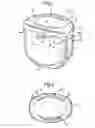
FIG. 1 is a plan perspective view of a jar according to one embodiment of the present invention;
FIG. 2 is a top plan view thereof;
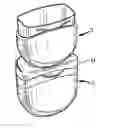
FIG. 3 is an illustration of stacked jars;
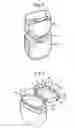
FIG. 4 is a plan elevational view similar to that of FIG. 1 except that the lid has been moved into an open position;
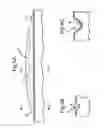
FIG. 5A is a cross-sectional partial view along line 5A-5A of FIG. 2 showing the depth variation and configuration of the crescent shaped indent on the roof panel;
FIG. 5B is a cross-sectional partial view along line 5B-5B of FIG. 5A showing depth near terminal section of the indent;
FIG. 5C is a cross-sectional partial view along line 5C-5C of FIG. 5A showing depth around a middle section of the indent;
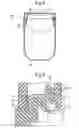
FIG. 6 is a cross-section along line 6-6 of FIG. 1;
FIG. 7 is a cross-sectional view of the partial area in dashed outline shown in FIG. 6; and
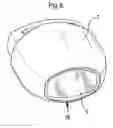
FIG. 8 is an elevational tilted view of the jar showing a bottom panel.
DETAILED DESCRIPTION OF THE INVENTION
We have found that use of a pair of crescent shaped indents (curved grooves) prevent slippage. The indents prevent not only a stacked jar from sliding off the roof panel of another jar but they also prevent a sideways fall. The crescent geometry of the present invention ensures that both directions of instability on a cap closure can be minimized.
FIG. 1 illustrates the jar 2 of the present invention. This package includes a non-circular container body 4 having a closed end 6 defined by a bottom panel 8 and an open end defined by a mouth 12.
A cap closure 14 is placed over the open end 10 of the container body.
FIG. 1 illustrates a fully closed position of the cap closure. FIG. 4 illustrates an open position. The cap closure includes a fitment 16 engageable around the mouth 12 and supported on the container body. A lid 18 is hingedly connected to the fitment. The lid is defined by a roof panel 20 having a domed upper surface.
FIG. 2 illustrates the upper surface as including a pair of crescent shaped indents 24, 26 symmetrical to each other and formed along opposite edges of the roof panel. FIG. 3 illustrates jar 2 serving as a base for jar 3 (shown without a cap closure) in a stacking arrangement.
FIG. 5A illustrates a cross-sectional partial view of the lid with focus upon the crescent shaped indent 24. The indent includes a middle section 28 flanked on either side by terminal sections 30, 32. The middle section 28 has a rounded and at midpoint almost flat floor; it is grooved deeper into the roof panel than the terminal sections 30, 32. FIG. 5C best illustrates the middle section. There is also a geometric difference between the sections. Terminal sections 30, 32 have a V-shaped floor. FIG. 5B best illustrates the terminal sections.
FIG. 4 best illustrates an interior surface 48 of the roof panel 20. The roof panel is bordered by a downward projecting skirt 34. This skirt is defined by a front portion 36, a rear portion 38 and two side portions 40, 42 opposite one another. The side portions bridge the front and rear portions. The front and rear portions have lower concavely formed edges 44.
A seal plug 46 projects downwardly from the interior surface 48 of the roof panel. The seal plug is interior to and uninterruptedly juxtaposed along front, rear and side portions of the skirt. Further, the seal plug has a front section 50, a rear section 52 and two side sections 54, 56. The front and rear sections have lower convexly formed edges 58.
A lid seal 60 surrounds the mouth 12 and projects upwardly toward the lid 18. Along a perimeter of the lid seal 60 is an outwardly projecting seal bead 62, best shown in FIG. 7. The seal bead is seated matingly against an interior of the front portion 36 of the skirt along the lower concavely formed edge 44. In a closed lid position, the jar features the seal plug seated interior to and matingly with the lid seal.
A support ridge 64 is found on the fitment 16 below the seal bead. The support ridge has a convex curvature to matingly engage the concavely formed lower edges of the front and rear portions of the skirt.
FIG. 8 illustrates the bottom panel 8 of the container body being formed concavely outward and downward. This structure creates along an outer perimeter of the bottom panel a set of juxtaposed feet 66 shaped to engage the crescent shaped indent 24 of jar 2 when stacked atop this jar 2.
Claims
1. A jar (12) for cosmetic products comprising:
(i) a non-circular container body (4) having a closed end (6) defined by a bottom panel (8) and an open end defined by a mouth (12), the bottom panel (8) on an exterior surface formed with projecting crescent shaped symmetrically disposed feet; and
(ii) a cap closure (14) comprising:
(a) a fitment (16) engageable around the mouth (12) and supported on the container body (4); and
(b) a lid (18) hingedly connected to the fitment (16) and defined by a roof panel (20) having a domed upper surface, the upper surface comprising a pair of crescent shaped indents (24, 26) symmetrical to each other formed along opposite edges of the roof panel (20).
2. A jar according to claim 1 wherein the crescent shaped indents (24, 26) comprise a middle section (28) flanked on either side by terminal sections (30, 32), the middle section (28) being grooved deeper into the roof panel (20) than the terminal sections (30, 32).
3. A jar according to claim 2 wherein the terminal sections (30, 32) have a V-shaped floor.
4. The jar according to any one of the preceding claims wherein the roof panel (20) is bordered by a downward projecting skirt (34), the skirt (34) having a front portion (36), a rear portion (38) and two side portions (40, 42) opposite one another bridging the front and rear portions (36, 38).
5. A jar according to claim 4 wherein the front and rear portions (36, 38) have lower concavely formed edges (44).
6. A jar according to any one of the preceding claims further comprising a seal plug (46) downwardly projecting from an interior surface of the roof panel (48), the seal plug (46) being interior to and uninterruptedly juxtaposed to the front, rear and side portions of the skirt (36, 38, 40, 42).
7. A jar according to claim 6 wherein the seal plug (46) has a front section (50), a rear section (52) and two side sections (54, 56) opposite one another bridging the front and rear sections (50, 52), the front and rear sections (50, 52) having lower convexly formed edges (58).
8. A jar according to claim 6 or claim 7 wherein a lid seal (60) surrounds the mouth (12) and projects upwardly toward the lid (18).
9. A jar according to claim 8 wherein the seal plug (46) in a closed position is seated interior to and matingly with the lid seal (60).
10. A jar according to claim 8 or claim 9 wherein the lid seal (60) along a perimeter thereof has an outwardly projecting seal bead (62), the seal bead (62) seated matingly with an interior of the front portion of the skirt (36) along a lower concavely formed edge thereof (44).
11. A jar according to claim 10 further comprising a support ridge (64) on the fitment (16) below the seal bead (62), the support ridge (64) having a convex curvature to matingly engage the concavely formed lower edges of the front and rear portions of the skirt (36, 38).
12. A jar according to any one of the preceding claims wherein the bottom panel (8) of the container is formed concavely outward and downward thereby creating along an outer perimeter a set of juxtaposed feet (66) shaped to engage the crescent shaped indents (24, 26) of another jar and stacked one above the other.
Images & Drawings included:
Sources:
- United States Patent and Trademark Office - verify current appl. status at the USPTO↗
Recent applications in this class:
- » 20250108962 2025-04-03
STORAGE BOX AND VEHICLE - » 20240101316 2024-03-28
TOOL STORAGE SYSTEM - » 20240025602 2024-01-25
Chain storage case - » 20220332474 2022-10-20
Lid for container - » 20220097926 2022-03-31
Tool storage system - » 20220063874 2022-03-03
PAPER AND PLASTIC COMBINED PACKAGING BOX - » 20220041342 2022-02-10
Storage device - » 20210130047 2021-05-06
CONTAINER LID APPARATUS - » 20210114778 2021-04-22
SIDE OPENING STORAGE BOX - » 20200377266 2020-12-03
ENHANCED CONTENT SECURITY MECHANISMS AND RELATED CONTAINERS