Dielectric composition with reduced resistance
US20110006271A1
2011-01-13
12/836,150
2010-07-14
✅ Patent granted
US 8,298,449 B2
2012-10-30
-
-
Mark Kopec | Jaison Thomas
2031-05-03
Abstract:
This invention provides a dielectric composition comprising a dielectric which is fireable in air at a temperature in the range of about 450° C. to about 550° C. and a conductive oxide selected from the group consisting of antimony-doped tin oxide, tin-doped indium oxide, a transition metal oxide which has mixed valence states or will form mixed valence states after firing in a nitrogen atmosphere at a temperature in the range of about 450° C. to about 550° C. and normally conducting precious metal oxides such as ruthenium dioxide, wherein the amount of conductive oxide present is from about 0.25 wt % to about 25 wt % of the total weight of dielectric and conductive oxide. This dielectric composition has reduced electrical resistance and is useful in electron field emission devices to eliminate charging of the dielectric in the vicinity of the electron emitter and the effect of static charge induced field emission.
Inventors:
- KENNETH WARREN HANG 64 🇺🇸 HILLSBOROUGH, NC, United States
- David Herbert Roach 23 🇺🇸 Hockessin, DE, United States
- Lap-Tak Andrew Cheng 31 🇺🇸 Newark, DE, United States
- Robert Joseph Bouchard 7 🇺🇸 Wilmington, DE, United States
Assignee:
- E.I. DU PONT DE NEMOURS AND COMPANY 2,145 🇺🇸 Wilmington, DE, United States
- E. I. DU PONT DE NEMOURS AND COMPANY 4,854 🇺🇸 Wilmington, DE, United States
Interested in similar patents?
Get notified when new applications in this technology area are published.
Classification:
H01B3/12 » CPC main
Insulators or insulating bodies characterised by the insulating materials; Selection of materials for their insulating or dielectric properties mainly consisting of inorganic substances ceramics
C03C8/04 » CPC further
Enamels; Glazes; Fusion seal compositions being frit compositions having non-frit additions; Frit compositions, i.e. in a powdered or comminuted form containing zinc
C03C8/14 » CPC further
Enamels; Glazes; Fusion seal compositions being frit compositions having non-frit additions Glass frit mixtures having non-frit additions, e.g. opacifiers, colorants, mill-additions
C03C17/008 » CPC further
Surface treatment of glass, not in the form of fibres or filaments, by coating with materials of composite character comprising a mixture of materials covered by two or more of the groups , , and
C03C17/25 » CPC further
Surface treatment of glass, not in the form of fibres or filaments, by coating with other inorganic material; Oxides by deposition from the liquid phase
C04B35/453 » CPC further
Shaped ceramic products characterised by their composition ; Ceramics compositions ; Processing powders of inorganic compounds preparatory to the manufacturing of ceramic products based on oxide ceramics based on zinc, tin, or bismuth oxides or solid solutions thereof with other oxides, e.g. zincates, stannates or bismuthates
C04B35/6264 » CPC further
Shaped ceramic products characterised by their composition ; Ceramics compositions ; Processing powders of inorganic compounds preparatory to the manufacturing of ceramic products; Forming processes; Processing powders of inorganic compounds preparatory to the manufacturing of ceramic products; Preparing or treating the powders individually or as batches ; preparing or treating macroscopic reinforcing agents for ceramic products, e.g. fibres; mechanical aspects section; Treating the starting powders individually or as mixtures; Wet mixtures Mixing media, e.g. organic solvents
C04B35/63 » CPC further
Shaped ceramic products characterised by their composition ; Ceramics compositions ; Processing powders of inorganic compounds preparatory to the manufacturing of ceramic products; Forming processes; Processing powders of inorganic compounds preparatory to the manufacturing of ceramic products; Preparing or treating the powders individually or as batches ; preparing or treating macroscopic reinforcing agents for ceramic products, e.g. fibres; mechanical aspects section using additives specially adapted for forming the products, e.g.. binder binders
C04B35/632 » CPC further
Shaped ceramic products characterised by their composition ; Ceramics compositions ; Processing powders of inorganic compounds preparatory to the manufacturing of ceramic products; Forming processes; Processing powders of inorganic compounds preparatory to the manufacturing of ceramic products; Preparing or treating the powders individually or as batches ; preparing or treating macroscopic reinforcing agents for ceramic products, e.g. fibres; mechanical aspects section using additives specially adapted for forming the products, e.g.. binder binders Organic additives
H01B3/004 » CPC further
Insulators or insulating bodies characterised by the insulating materials; Selection of materials for their insulating or dielectric properties; Inhomogeneous material in general with conductive additives or conductive layers
H01B3/185 » CPC further
Insulators or insulating bodies characterised by the insulating materials; Selection of materials for their insulating or dielectric properties mainly consisting of organic substances Substances or derivates of cellulose
H01C17/06533 » CPC further
Apparatus or processes specially adapted for manufacturing resistors adapted for coating resistive material on a base by thick film techniques, e.g. serigraphy; Precursor compositions therefor, e.g. pastes, inks, glass frits characterised by the resistive component composed of oxides
H01G4/1209 » CPC further
Fixed capacitors; Processes of their manufacture; Details; Dielectrics; Solid dielectrics; Inorganic dielectrics; Ceramic dielectrics characterised by the ceramic dielectric material
H01J3/40 » CPC further
Details of electron-optical or ion-optical arrangements or of ion traps common to two or more basic types of discharge tubes or lamps Traps for removing or diverting unwanted particles, e.g. negative ions, fringing electrons; Arrangements for velocity or mass selection
C03C2217/23 » CPC further
Coatings on glass; Materials for coating a single layer on glass; Oxides Mixtures
C04B2235/3201 » CPC further
Aspects relating to ceramic starting mixtures or sintered ceramic products; Composition of constituents of the starting material or of secondary phases of the final product; Constituents and secondary phases not being of a fibrous nature; Metal oxides, mixed metal oxides, or oxide-forming salts thereof, e.g. carbonates, nitrates, (oxy)hydroxides, chlorides Alkali metal oxides or oxide-forming salts thereof
C04B2235/3217 » CPC further
Aspects relating to ceramic starting mixtures or sintered ceramic products; Composition of constituents of the starting material or of secondary phases of the final product; Constituents and secondary phases not being of a fibrous nature; Metal oxides, mixed metal oxides, or oxide-forming salts thereof, e.g. carbonates, nitrates, (oxy)hydroxides, chlorides Aluminum oxide or oxide forming salts thereof, e.g. bauxite, alpha-alumina
C04B2235/3222 » CPC further
Aspects relating to ceramic starting mixtures or sintered ceramic products; Composition of constituents of the starting material or of secondary phases of the final product; Constituents and secondary phases not being of a fibrous nature; Metal oxides, mixed metal oxides, or oxide-forming salts thereof, e.g. carbonates, nitrates, (oxy)hydroxides, chlorides; Aluminum oxide or oxide forming salts thereof, e.g. bauxite, alpha-alumina Aluminates other than alumino-silicates, e.g. spinel (MgAlO)
C04B2235/3239 » CPC further
Aspects relating to ceramic starting mixtures or sintered ceramic products; Composition of constituents of the starting material or of secondary phases of the final product; Constituents and secondary phases not being of a fibrous nature; Metal oxides, mixed metal oxides, or oxide-forming salts thereof, e.g. carbonates, nitrates, (oxy)hydroxides, chlorides; Refractory metal oxides, their mixed metal oxides, or oxide-forming salts thereof Vanadium oxides, vanadates or oxide forming salts thereof, e.g. magnesium vanadate
C04B2235/3241 » CPC further
Aspects relating to ceramic starting mixtures or sintered ceramic products; Composition of constituents of the starting material or of secondary phases of the final product; Constituents and secondary phases not being of a fibrous nature; Metal oxides, mixed metal oxides, or oxide-forming salts thereof, e.g. carbonates, nitrates, (oxy)hydroxides, chlorides; Refractory metal oxides, their mixed metal oxides, or oxide-forming salts thereof Chromium oxides, chromates, or oxide-forming salts thereof
C04B2235/327 » CPC further
Aspects relating to ceramic starting mixtures or sintered ceramic products; Composition of constituents of the starting material or of secondary phases of the final product; Constituents and secondary phases not being of a fibrous nature; Metal oxides, mixed metal oxides, or oxide-forming salts thereof, e.g. carbonates, nitrates, (oxy)hydroxides, chlorides Iron group oxides, their mixed metal oxides, or oxide-forming salts thereof
C04B2235/3284 » CPC further
Aspects relating to ceramic starting mixtures or sintered ceramic products; Composition of constituents of the starting material or of secondary phases of the final product; Constituents and secondary phases not being of a fibrous nature; Metal oxides, mixed metal oxides, or oxide-forming salts thereof, e.g. carbonates, nitrates, (oxy)hydroxides, chlorides Zinc oxides, zincates, cadmium oxides, cadmiates, mercury oxides, mercurates or oxide forming salts thereof
C04B2235/3286 » CPC further
Aspects relating to ceramic starting mixtures or sintered ceramic products; Composition of constituents of the starting material or of secondary phases of the final product; Constituents and secondary phases not being of a fibrous nature; Metal oxides, mixed metal oxides, or oxide-forming salts thereof, e.g. carbonates, nitrates, (oxy)hydroxides, chlorides Gallium oxides, gallates, indium oxides, indates, thallium oxides, thallates or oxide forming salts thereof, e.g. zinc gallate
C04B2235/3289 » CPC further
Aspects relating to ceramic starting mixtures or sintered ceramic products; Composition of constituents of the starting material or of secondary phases of the final product; Constituents and secondary phases not being of a fibrous nature; Metal oxides, mixed metal oxides, or oxide-forming salts thereof, e.g. carbonates, nitrates, (oxy)hydroxides, chlorides Noble metal oxides
C04B2235/3293 » CPC further
Aspects relating to ceramic starting mixtures or sintered ceramic products; Composition of constituents of the starting material or of secondary phases of the final product; Constituents and secondary phases not being of a fibrous nature; Metal oxides, mixed metal oxides, or oxide-forming salts thereof, e.g. carbonates, nitrates, (oxy)hydroxides, chlorides Tin oxides, stannates or oxide forming salts thereof, e.g. indium tin oxide [ITO]
C04B2235/3294 » CPC further
Aspects relating to ceramic starting mixtures or sintered ceramic products; Composition of constituents of the starting material or of secondary phases of the final product; Constituents and secondary phases not being of a fibrous nature; Metal oxides, mixed metal oxides, or oxide-forming salts thereof, e.g. carbonates, nitrates, (oxy)hydroxides, chlorides Antimony oxides, antimonates, antimonites or oxide forming salts thereof, indium antimonate
C04B2235/3298 » CPC further
Aspects relating to ceramic starting mixtures or sintered ceramic products; Composition of constituents of the starting material or of secondary phases of the final product; Constituents and secondary phases not being of a fibrous nature; Metal oxides, mixed metal oxides, or oxide-forming salts thereof, e.g. carbonates, nitrates, (oxy)hydroxides, chlorides Bismuth oxides, bismuthates or oxide forming salts thereof, e.g. zinc bismuthate
C04B2235/3409 » CPC further
Aspects relating to ceramic starting mixtures or sintered ceramic products; Composition of constituents of the starting material or of secondary phases of the final product; Constituents and secondary phases not being of a fibrous nature; Non-metal oxides, non-metal mixed oxides, or salts thereof that form the non-metal oxides upon heating, e.g. carbonates, nitrates, (oxy)hydroxides, chlorides Boron oxide, borates, boric acids, or oxide forming salts thereof, e.g. borax
C04B2235/3418 » CPC further
Aspects relating to ceramic starting mixtures or sintered ceramic products; Composition of constituents of the starting material or of secondary phases of the final product; Constituents and secondary phases not being of a fibrous nature; Non-metal oxides, non-metal mixed oxides, or salts thereof that form the non-metal oxides upon heating, e.g. carbonates, nitrates, (oxy)hydroxides, chlorides Silicon oxide, silicic acids, or oxide forming salts thereof, e.g. silica sol, fused silica, silica fume, cristobalite, quartz or flint
C04B2235/658 » CPC further
Aspects relating to ceramic starting mixtures or sintered ceramic products; Aspects relating to heat treatments of ceramic bodies such as green ceramics or pre-sintered ceramics, e.g. burning, sintering or melting processes Atmosphere during thermal treatment
C04B2235/96 » CPC further
Aspects relating to ceramic starting mixtures or sintered ceramic products; Aspects relating to sintered or melt-casted ceramic products Properties of ceramic products, e.g. mechanical properties such as strength, toughness, wear resistance
C04B2235/9661 » CPC further
Aspects relating to ceramic starting mixtures or sintered ceramic products; Aspects relating to sintered or melt-casted ceramic products; Properties of ceramic products, e.g. mechanical properties such as strength, toughness, wear resistance; Optical properties Colour
H01J2229/882 » CPC further
Details of cathode ray tubes or electron beam tubes; Coatings having particular electrical resistive or conductive properties
H01J2329/4691 » CPC further
Electron emission display panels, e.g. field emission display panels; Arrangements of electrodes and associated parts for generating or controlling the electron beams; Insulation layers characterised by the material
H01J2329/8615 » CPC further
Electron emission display panels, e.g. field emission display panels; Vessels; Front or back plates characterised by the material
H01B1/02 IPC
Conductors or conductive bodies characterised by the conductive materials; Selection of materials as conductors mainly consisting of metals or alloys
H01B1/08 IPC
Conductors or conductive bodies characterised by the conductive materials; Selection of materials as conductors mainly consisting of other non-metallic substances oxides
H01J9/04 IPC
Apparatus or processes specially adapted for the manufacture, installation, removal, maintenance of electric discharge tubes, discharge lamps, or parts thereof; Recovery of material from discharge tubes or lamps; Manufacture of electrodes or electrode systems of thermionic cathodes
Description
FIELD OF THE INVENTION
This invention provides a dielectric composition with reduced electrical resistance that is useful in electron field emission devices to eliminate charging of the dielectric in the vicinity of the electron emitter and the effect of static charge induced field emission.
BACKGROUND OF THE INVENTION
In certain designs of cathode plates for field emission devices, e.g., field emission displays, the layout of the cathode surface may require the emitter lines to be bordered by or in close proximity to electrically insolating dielectric surfaces. During field emission, these neighboring dielectric surfaces are bombarded by high energy electrons with shallow angle of incidence. As a result, secondary electron emission may occur from the dielectric surface leaving behind static positive charges. These positively charged surfaces, being only a short distance away from the emitter, will exert a large positive electric field on the emitter resulting in even stronger emission in the direction of the dielectric surfaces. This effect is therefore self-enhancing and will dominate any gate or anode control. Since the static charge continues to build with time, uncontrollable charging induced emission can occur even at very low continuous anode voltage. This problem severely limits the anode voltage. One solution would be to change the cathode layout that may minimize this charging effect. A preferred solution is to develop a single or multilayer dielectric system that does not charge up as a result of having a low secondary emission characteristic or effectively dissipating the charge as the electric field increases.
SUMMARY OF THE INVENTION
This invention provides a dielectric composition comprising a dielectric and a conductive oxide, wherein the dielectric is fireable in air at a temperature in the range of about 450° C. to about 550° C. and the conductive oxide is selected from the group consisting of antimony-doped tin oxide, tin-doped indium oxide, a transition metal oxide which has mixed valence states or will form mixed valence states after firing in a nitrogen atmosphere at a temperature in the range of about 450° C. to about 550° C. and conducting precious metal oxides such as ruthenium dioxide. The amount of conductive oxide present is from about 0.25 wt % to about 25 wt % of the total weight of dielectric and conductive oxide and preferably from about 0.5 wt % to about 15 wt %. The dielectric composition must be capable of being fired in nitrogen after first being fired in air in order to be compatible with the treatment necessary in forming an electron emitter cathode assembly.
This invention also provides a paste for screen printing a dielectric composition comprising a dielectric and a conductive oxide, wherein the dielectric is fireable in air at a temperature in the range of about 450° C. to about 550° C. and the conductive oxide is selected from the group consisting of antimony-doped tin oxide, tin-doped indium oxide, a transition metal oxide which has mixed valence states or will form mixed valence states after firing in a nitrogen atmosphere at a temperature in the range of about 450° C. to about 550° C. and conducting precious metal oxides such as ruthenium dioxide. The amount of conductive oxide present is from about 0.25 wt % to about 25 wt % of the total weight of dielectric and conductive oxide and preferably from about 0.5 wt % to about 15 wt %.
Such dielectric compositions have reduced resistances and are useful in field emission devices.
There is also provided a preferred dielectric for use in the dielectric composition of the invention. This dielectric is a solid solution comprised of about 1 to about 26 wt % SiO2, about 0.5 to about 6 wt % Al2O3, about 6 to about 24 w % B2O3, about 2 to about 24 wt % ZnO, about 0.1 to about 5 wt % Na2O and about 20 to about 75 wt % Bi2O3. Preferably, the solid solution is comprised of about 1 to about 9 wt % SiO2, about 0.6 to about 6 wt % Al2O3, about 6 to about 14 w % B2O3, about 2 to about 13 wt % ZnO, about 0.1 to about 2 wt % Na2O and about 65 to about 72 wt % Bi2O3. More preferably, the solid solution is comprised of about 2 wt % SiO2, about 3 wt % Al2O3, about 13 wt % B2O3, about 9 wt % ZnO, about 1 wt % Na2O and about 72 wt % Bi2O3.
The preferred conductive oxide is antimony-doped tin oxide.
BRIEF DESCRIPTION OF THE DRAWINGS
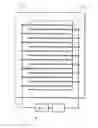
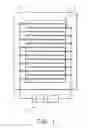
FIG. 1 is a schematic drawing of the electron emitter configuration used in Examples 5-1 and Comparative Experiments A-C.
FIG. 2 shows the emission results obtained with the sample of Comparative Experiment A.
FIG. 3 shows the emission results obtained with the sample of Example 5.
DETAILED DESCRIPTION OF THE INVENTION
The present invention provides a dielectric composition with reduced resistance to reduce or eliminate the charge buildup on the dielectric by introducing a small amount of semiconducting or metallic material. At some concentration of the semiconducting or metallic material, the resistance will drop to the range which is low enough to allow effective static charge dissipation at high fields while still providing the required insulating properties to prevent shorting between adjacent emitter lines or dots. Such a dielectric composition may serve as the entire dielectric or may also be used as a top layer in a multilayer dielectric system which provide good cross layer insulation and effective surface charge dissipation.
The dielectric composition provided by this invention comprises a dielectric which is fireable at a temperature in the range of about 450° C. to about 550° C. and a conductive oxide selected from the group consisting of antimony-doped tin oxide, tin-doped indium oxide, a transition metal oxide which has mixed valence states or will form mixed valence states after firing in a nitrogen atmosphere at a temperature in the range of about 450° C. to about 550° C. and normally conducting precious metal oxides such as ruthenium dioxide. The amount of conductive oxide present is from about 0.25 wt % to about 25 wt % of the total weight of dielectric and conductive oxide and preferably from about 0.5 wt % to about 15 wt %. The optimum amount of conductive oxide required to achieve the desired resistivity will vary depending upon the particular conductor used and its state of dispersion. The desired resistivity of the dielectric composition will depend on the particular configuration of the emitter, i.e., the size of the emitter lines or dots and the separation of the emitter lines or dots. The amount of conductive oxide can be adjusted to the particular configuration used.
The paste for screen printing the dielectric composition of the invention will typically contain the dielectric powder, the conductive oxide, an organic medium, solvent, and surfactant. The role of the medium and solvent is to suspend and disperse the particulate constituents, i.e., the solids, in the paste with a proper rheology for typical patterning processes such as screen printing. There are a large number of such mediums known in the art. Examples of resins that can be used are cellulosic resins such as ethyl cellulose and alkyd resins of various molecular weights. Butyl carbitol, butyl carbitol acetate, dibutyl carbitol, dibutyl phthalate and terpineol are examples of useful solvents. These and other solvents are formulated to obtain the desired viscosity and volatility requirements. A surfactant can be used to improve the dispersion of the particles. Organic acids such oleic and stearic acids and organic phosphates such as lecithin or Gafac® phosphates are typical surfactants. If the screen-printed paste is to be photopatterned, the paste contains a photoinitiator, a developable binder and a photohardenable monomer comprised, for example, of at least one addition polymerizable ethylenically unsaturated compound having at least one screen printing typically contains the dielectric frit and the conductive oxide, an organic medium, solvent and surfactant.
The frit used in pastes for screen printing dielectrics is typically an appropriate mixture of oxides. As is well known to those skilled in the art, inert fillers can be added to the frit to modify some of the properties, e.g., flow characteristics of the frit, strength of the fired composition, temperature coefficient of expansion, etc. All such pastes and the resulting fired dielectric compositions can contain 0-35 wt % of inorganic filler. Typical examples of such filler are alumina, silica, calcium zirconate and zircon. For the purposes herein, dielectric means all of the dielectric including any filler present.
The preferred dielectric frit for use in pastes to screen print the dielectric compositions of the invention is comprised of about 1 to about 26 wt % SiO2, about 0.5 to about 6 wt % Al2O3, about 6 to about 24 w % B2O3, about 2 to about 24 wt % ZnO, about 0.1 to about 5 wt % Na2O and about 20 to about 75 wt % Bi2O3. More preferably, the dielectric frit is comprised of about 1 to about 9 wt % SiO2, about 0.6 to about 6 wt % Al2O3, about 6 to about 14 w % B2O3, about 2 to about 13 wt % ZnO, about 0.1 to about 2 wt % Na2O and about 65 to about 72 wt % Bi2O3. Most preferably, the dielectric frit is comprised of about 2 wt % SiO2, about 3 wt % Al2O3, about 13 wt % B2O3, about 9 wt % ZnO, about 1 wt % Na2O and about 72 wt % Bi2O3.
After firing, this paste provides a dielectric which s a solid solution of SiO2, Al2O3, B2O3, ZnO, Na2O and Bi2O3 with the above ratio weight percent.
EXAMPLES OF THE INVENTION
Examples 1-4
The purpose of these Examples was to compare various conductive oxides for the dielectric composition.
Four pastes were prepared using a bismuth-based dielectric frit and Cr2O3, V2O5, V2O3, and SnO2:Sb. The first three oxides were standard powder reagents. The antimony doped tin oxide, SnO2:Sb, was Zelec® ECP 3010-XC, which can be obtained from E. I. du Pont de Nemours and Company, Wilmington, Del.
The bismuth-based frit used in these Examples, Bi-frit, has the composition shown in Table I:
| TABLE I | ||
| Ingredient | Wt % | |
| Bi2O3 | 71.8 | |
| B2O3 | 13.2 | |
| ZnO | 9.0 | |
| Al2O3 | 3.0 | |
| SiO2 | 2.0 | |
| Na2O | 1.0 | |
The four pastes were prepared with the compositions shown in Table II:
| TABLE II | ||||
| Example | Example. | Example | Example | |
| Ingredient | 1 Wt % | 2 Wt % | 3. Wt % | 4 Wt % |
| Bi-frit | 66.0 | 66.0 | 66.0 | 66.0 |
| SnO2: Sb | 16.5 | None | None | None |
| Cr2O3 | None | 16.5 | None | None |
| V2O5 | None | None | 16.5 | None |
| V2O3 | None | None | None | 16.5 |
| Vehicle | 16.4 | 16.4 | 16.4 | 16.4 |
| Surfactant | 0.6 | 0.6 | 0.6 | 0.6 |
| Pigment | 0.5 | 0.5 | 0.5 | 0.5 |
The vehicle is a standard thick film paste ingredient consisting of a mixture of 10% ethylcellulose in a beta terpineol solvent. The surfactant is an organophosphate, Gafac RE-610. The pigment is standard pigment grade cobalt aluminate.
Each of the four pastes were printed onto a glass slide in the form a pad 0.25 inch (0.6 cm) by 1 inch (2.5 cm). Each pad was about 10 μm thick. Silver electrodes were screen printed onto each pad to measure the resistance using a silver paste composition 7095 available from E. I. du Pont de Nemours and Company, Wilmington, Del. The gap between the silver electrodes over which the resistance was measured was about 1 mm. The resistance of each sample was measured after firing in air at 525° C. and then after firing in nitrogen at 510° C. The electrical properties of the four fired pastes are shown in Table III below:
| TABLE III | |||
| Air Fired | Nitrogen Fired | ||
| Example 1 | 1.2 | MΩ | 0.9 | MΩ | |
| Example 2 | >1 | GΩ | >1 | GΩ | |
| Example 3 | 540 | MΩ | 7 | MΩ | |
| Example 4 | 15 | MΩ | 23 | MΩ | |
All of the conductive oxides reduced the resistance of the dielectric. SnO2:Sb showed the largest reduction after firing in air and the least change after undergoing the second firing in nitrogen.
Examples 5-11
Comparative Experiments A-C
These Examples and Comparative Experiments show the effects of various amounts of the conductive oxide SnO2:Sb in eliminating the charging of the dielectric and the resulting undesirable electron emission.
The paste of Example 1 was blended with a paste with the composition shown in Table IV:
| TABLE IV | ||
| Ingredient | Wt % | |
| Bi-frit | 70.0 | |
| SnO2: Sb | None | |
| Vehicle | 29.0 | |
| Surfactant | 0.5 | |
| Pigment | 0.5 | |
where the Bi-frit, vehicle, surfactant and pigment are identical to those used for the paste of Example 1. Ten different pastes were formed with SnO2:Sb content ranging from 0 to 10 wt % based on the total weight of the paste. The SnO2:Sb content of each Example and Comparative Experiment is shown in Table V below:
| TABLE V | ||||
| Ingredient Example | wt % | |||
| or Comp. Exp. | SnO2: Sb | Resistance | Charging | |
| A | 0 | >200 | GΩ | Extensive |
| B | 2 | >200 | GΩ | Extensive |
| C | 3 | ~200 | GΩ | Some |
| 5 | 3.5 | 152 | GΩ | None@3 kV |
| 6 | 3.75 | 52 | GΩ | None@3 kV |
| 7 | 4 | 3.3 | GΩ | None@3 kV |
| 8 | 4.25 | 236 | MΩ | None@3 kV |
| 9 | 4.5 | 79 | MΩ | None@3 kV |
| 10 | 5 | 33 | MΩ | None@3 kV |
| 11 | 10 | 136 | kΩ | None@3 kV |
The dielectric composition of each of the Examples and Comparative Experiments was printed in 0.75″ (1.9 cm) square pad 1 on a glass slide 2 as shown in FIG. 1. The dielectric composition was then fired in air at 525° C. A test pattern consisting of 15 bars 3, 20 mil (0.51 mm) wide with 20 mil (0.51 mm) spaces between bars was screen printed over the dielectric composition. The bars consisted of silver paste screen printed and then fired at 525° C. in air and emitter paste is subsequently screen printed on top of the silver lines and fired at 510° C. in nitrogen. The silver paste was a composition 7095 available from E. I. du Pont de Nemours and Company, Wilmington, Del. The emitter paste for these Examples was prepared by mixing three components: one a suspension containing single wall carbon nanotubes, one a typical organic medium containing 10% ethylcellulose and 90% beta-terpineol, and one a typical paste containing silver. Laser ablation grown single wall carbon nanotubes were obtained from Tubes @ Rice, Rice University, Houston, Tex. as an unpurified powder produced by laser ablation. A nanotube suspension was prepared by sonicating, i.e. by mixing ultrasonically, a mixture containing 1% by weight of the nanotube powder and 99% by weight of trimethylbenzene. The ultrasonic mixer used was a Dukane Model 92196 with a ¼ inch horn operating at 40 kHz and 20 watts. The emitter paste was prepared by combining the nanotube suspension/organic medium/silver pastes in the ratios by weight of 27/40/33. The combination was mixed in a three-roll mill for ten passes to form the emitter paste.
Alternate bars are connected electrically as indicated 4. A resistance value for the dielectric composition can be determined with an electrometer 5 for this particular line pattern. The data show that the conductive oxide starts to take effect for this configuration when the concentration in the paste is ˜3% and the resistance decreases to ˜200 GΩ. Resistances for all the Examples and Comparative Experiments are shown in Table V.
Field emission tests were carried out for all the Examples and Comparative Experiments using a flat-plate emission measurement unit comprised of two electrodes, one serving as the anode or collector and the other serving as the cathode. The cathode consists of a copper block mounted in a polytetrafluoroethylene (PTFE) holder. The copper block is recessed in a 1 inch by 1 inch (2.5 cm×2.5 cm) area of PTFE and the sample substrate is mounted to the copper block with electrical contact being made between the copper block and the sample substrate by means of copper tape. A high voltage lead is attached to the copper block. The anode is held parallel to the sample at a distance, which can be varied, but once chosen it was held fixed for a given set of measurements on a sample. A spacing of 1.25 mm was used. The anode consists of a glass plate coated with indium tin oxide deposited by chemical vapor deposition. It is then coated with a standard ZnS-based phosphor, Phosphor P-31, Type 139 obtained from Electronic Space Products International. An electrode is attached to the indium tin oxide coating. The test apparatus is inserted into a vacuum system, and the system was evacuated to a base pressure below 1×10⁻⁵ torr (1.3×10⁻³ Pa). A negative voltage pulse with typical pulse width of 3 μsec at a frequency of 60 Hz can applied to the cathode or a constant voltage can be applied. The image emitted by the phosphor as a result of the emission current is recorded with a camera.
The charging problem during field emission and the significant improvement with the dielectric compositions of this invention can be demonstrated using these samples. As a control, the emitter cell of Comparative Experiment A which contains no SnO2:Sb filler was studied with both pulsed and constant anode voltage. FIG. 2a shows the diode emission image when high voltage pulses of 3 μsec duration were applied across the anode-cathode gap at 60 Hz. The onset of charging induced emission, which can be seen as bright patches in FIG. 2a, was observed at 2 kV. The bright patches spread rapidly with time and the charging induced emission became uncontrollable within a few seconds of its onset. When a continuous anode voltage was applied, charging induced emission occurred at an anode voltage of 1 kV as shown in FIG. 2b. FIGS. 3a and 3b demonstrate the effectiveness of using a dielectric composition of this invention to eliminate charging during field emission. When the same diode emission tests were conducted with the emitter cell of Example 5 which contains 3.5% SnO2:Sb, no charging induced emission was observed at pulse anode voltage of 3 kV and continuous anode voltage of 1.5 kV as shown in FIGS. 3a and 3b, respectively.
Claims
What is claimed is:1. A dielectric composition comprising a dielectric and a conductive oxide, wherein said dielectric is fireable in air at a temperature in the range of about 450° C. to about 550° C.; said conductive oxide is selected from the group consisting of antimony-doped tin oxide, tin-doped indium oxide, a transition metal oxide which has mixed valence states or will form mixed valence states after firing in a nitrogen atmosphere at a temperature in the range of about 450° C. to about 550° C. and conducting precious metal oxides such as ruthenium dioxide; and the amount of said conductive oxide present is from about 0.25 wt % to about 25 wt % of the total weight of said dielectric and said conductive oxide.
2. The dielectric composition of claim 1 which has been fired in air at a temperature in the range of about 450° C. to about 550° C. and is subsequently fired in nitrogen at a temperature in the range of about 450° C. to about 550° C.
3. The dielectric composition of claim 1 wherein the amount of said conductive oxide present is from about 0.5 wt % to about 15 wt % of the total weight of said dielectric and said conductive oxide.
4. The dielectric composition of claim 1 wherein said conductive oxide is antimony-doped tin oxide.
5. The dielectric composition of claim 1 wherein said dielectric is a solid solution comprised of about 1 to about 26 wt % SiO2, about 0.5 to about 6 wt % Al2O3, about 6 to about 24 w % B2O3, about 2 to about 24 wt % ZnO, about 0.1 to about 5 wt % Na2O and about 20 to about 75 wt % Bi2O3.
6. The dielectric composition of claim 5 wherein said dielectric is a solid solution comprised of about 1 to about 9 wt % SiO2, about 0.6 to about 6 wt % Al2O3, about 6 to about 14 w % B2O3, about 2 to about 13 wt % ZnO, about 0.1 to about 2 wt % Na2O and about 65 to about 72 wt % Bi2O3.
7. The dielectric composition of any one of claims 1-4 wherein said dielectric is a solid solution comprised of about 2 wt % SiO2, about 3 wt % Al2O3, about 13 wt % B2O3, about 9 wt % ZnO, about 1 wt % Na2O and about 72 wt % Bi2O3.
8. A paste for screen printing a dielectric composition, comprising a dielectric and a conductive oxide, wherein said dielectric is fireable in air at a temperature in the range of about 450° C. to about 550° C.; said conductive oxide is selected from the group consisting of antimony-doped tin oxide, tin-doped indium oxide, a transition metal oxide which has mixed valence states or will form mixed valence states after firing in a nitrogen atmosphere at a temperature in the range of about 450° C. to about 550° C. and conducting precious metal oxides such as ruthenium dioxide; and the amount of said conductive oxide present is from about 0.25 wt % to about 25 wt % of the total weight of said dielectric and said conductive oxide.
9. The paste of claim 8 wherein the amount of said conductive oxide present is from about 0.5 wt % to about 15 wt % of the total weight of said dielectric and said conductive oxide.
10. The paste of claim 8 wherein said conductive oxide is antimony-doped tin oxide.
11. The paste of claim 8 wherein said dielectric is a solid solution comprised of about 1 to about 26 wt % SiO2, about 0.5 to about 6 wt % Al2O3, about 6 to about 24 w % B2O3, about 2 to about 24 wt % ZnO, about 0.1 to about 5 wt % Na2O and about 20 to about 75 wt % Bi2O3
12. The paste of claim 11 wherein said dielectric is a solid solution comprised of about 1 to about 9 wt % SiO2, about 0.6 to about 6 wt % Al2O3, about 6 to about 14 w % B2O3, about 2 to about 13 wt % ZnO, about 0.1 to about 2 wt % Na2O and about 65 to about 72 wt % Bi2O3.
13. The paste of any one of claims 8-10 wherein said dielectric is a solid solution comprised of about 2 wt % SiO2, about 3 wt % Al2O3, about 13 wt % B2O3, about 9 wt % ZnO, about 1 wt % Na2O and about 72 wt % Bi2O3.
14. The paste of any one of claims 8-12 wherein said paste can be photopatterned.
15. The paste of claim 13 wherein said paste can be photopatterned.
16. An electron field emission device using a dielectric composition comprising a dielectric and a conductive oxide, wherein said dielectric is fireable in air at a temperature in the range of about 450° C. to about 550° C.; said conductive oxide is chosen from the group consisting of antimony-doped tin oxide, tin-doped indium oxide, a transition metal oxide which has mixed valence states or will form mixed valence states after firing in a nitrogen atmosphere at a temperature in the range of about 450° C. to about 550° C. and conducting precious metal oxides such as ruthenium dioxide; and the amount of said conductive oxide present is from about 025 wt % to about 25 wt % of the total weight of said dielectric and said conductive oxide.
17. The electron field emission device of claim 16 wherein the amount of said conductive oxide present is from about 0.5 wt % to about 15 wt % of the total weight of said dielectric and said conductive oxide.
18. The electron field emission device of claim 16 wherein said conductive oxide is antimony-doped tin oxide.
19. The electron field emission device of claim 16 wherein said dielectric is a solid solution comprised of about 1 to about 26 wt % SiO2, about 0.5 to about 6 wt % Al2O3, about 6 to about 24 w % B2O3, about 2 to about 24 wt % ZnO, about 0.1 to about 5 wt % Na2O and about 20 to about 75 wt % Bi2O3.
20. The electron field emission device of claim 19 wherein said dielectric is a solid solution comprised of about 1 to about 9 wt % SiO2, about 0.6 to about 6 wt % Al2O3, about 6 to about 14 w % B2O3, about 2 to about 13 wt % ZnO, about 0.1 to about 2 wt % Na2O and about 65 to about 72 wt % Bi2O3.
21. The electron field emission device of any one of claims 16-18 wherein said dielectric is a solid solution is comprised of about 2 wt % SiO2, about 3 wt % Al2O3, about 13 wt % B2O3, about 9 wt % ZnO, about 1 wt % Na2O and about 72 wt % Bi2O3.
Images & Drawings included:

Sources:
- United States Patent and Trademark Office - verify current appl. status at the USPTO↗
Similar patent applications:
Recent applications in this class:
- » 20250232891 2025-07-17
DIELECTRIC STRUCTURE, A METHOD OF MANUFACTURING THEREOF AND A FIRE RATED RADIO FREQUENCY CABLE HAVING THE DIELECTRIC STRUCTURE - » 20240412890 2024-12-12
METHOD OF MANUFACTURING WIRE COVERING MATERIAL FOR PREVENTION OF SPILLOVER LOSS DURING TRANSMISSION OF HIGH FREQUENCY SIGNAL - » 20240186030 2024-06-06
NITRIDE INSULATOR MATERIAL, METHOD FOR PRODUCING SAME, HEAT FLOW SWITCHING ELEMENT, AND THERMOELECTRIC CONVERSION ELEMENT - » 20230282389 2023-09-07
THIN-FILM STRUCTURE AND SEMICONDUCTOR DEVICE COMPRISING THE SAME - » 20220238251 2022-07-28
Insulation film composition for grain-oriented electrical steel sheet, method for forming insulation film for grain-oriented electrical steel sheet using same, and grain-oriented electrical steel sheet - » 20220230776 2022-07-21
DIELECTRIC COMPOSITION AND ELECTRONIC COMPONENT - » 20210174985 2021-06-10
Insulation film composition for grain-oriented electrical steel sheet, method for forming insulation film for grain-oriented electrical steel sheet using same, and grain-oriented electrical steel sheet - » 20210020327 2021-01-21
Dielectric structure, a method of manufacturing thereof and a fire rated radio frequency cable having the dielectric structure - » 20200312484 2020-10-01
DIELECTRIC FILM, ELECTRONIC COMPONENT, THIN FILM CAPACITOR, AND ELECTRONIC CIRCUIT BOARD - » 20200251242 2020-08-06
Dielectric ceramic composition and multilayer ceramic capacitor comprising the same
Recent applications for this Assignee:
- » 20240084319 2024-03-14
COMPOSITIONS AND METHODS TO CONTROL INSECT PESTS - » 20240002842 2024-01-04
COMPOSITIONS AND METHODS TO CONTROL INSECT PESTS - » 20230323374 2023-10-12
PLANT GENOME MODIFICATION USING GUIDE RNA/CAS ENDONUCLEASE SYSTEMS AND METHODS OF USE - » 20230323374 2023-10-12
PLANT GENOME MODIFICATION USING GUIDE RNA/CAS ENDONUCLEASE SYSTEMS AND METHODS OF USE - » 20230279413 2023-09-07
PLANT GENOME MODIFICATION USING GUIDE RNA/CAS ENDONUCLEASE SYSTEMS AND METHODS OF USE - » 20230235345 2023-07-27
PLANT GENOME MODIFICATION USING GUIDE RNA/CAS ENDONUCLEASE SYSTEMS AND METHODS OF USE - » 20230235342 2023-07-27
METHODS FOR PRODUCING A COMPLEX TRANSGENIC TRAIT LOCUS - » 20230220407 2023-07-13
MAIZE EVENT DP-004114-3 AND METHODS FOR DETECTION THEREOF - » 20230212595 2023-07-06
Generation of site specific integration sites for complex trait loci in corn and soybean, and methods of use - » 20230203525 2023-06-29
COMPOSITIONS AND METHODS FOR ENHANCING RESISTANCE TO NORTHERN LEAF BLIGHT IN MAIZE