Point poker card game
US20110012306A1
2011-01-20
12/460,150
2009-07-14
Abstract:
Point Poker is a game which combines skill and luck in which players play against each other. It is also a game which provides several ways to win money from the house. The game features three ways for a player to win. The house deals a five card poker hand to the players who compete against other players at the table. Each card in the fifty two card plus one joker deck is assigned a point value. The player with the highest cumulative point total, based on the five cards dealt, wins the pot, less a percentage vigorish to the house. The pot consists of the wagers made by all the players during the game. The house also provides the players with the option to make bonus bets. One bonus bet is for the point total based on the five dealt cards, the higher the total, or a minimum total, the higher the odds payout. The second bonus bet is for the poker hand which is dealt. A pair of tens or better pays off, with the payout increasing the better the poker hand.
Interested in similar patents?
Get notified when new applications in this technology area are published.
Description
BACKGROUND OF THE INVENTION
The present invention relates to a variation of poker, especially casino table poker, which adds a new and interesting element to the game.
Poker is one of the most popular gambling games. However, it is not one which is generally promoted by casinos. The reason for this is that casino poker games are slower and offer lower proportional winnings than other casino games and, hence, are less exciting for the players and less profitable for the casinos. The playing action in poker is slow since each player must, in turn, make a decision for each round of betting (and/or discarding), and the casino dealer must shuffle the cards, deal to each player, calculate the house cut from the pot, and make change for the players. High-low split pot games, a very popular form of poker, require even more time, since the pot must be divided among the high and low winners. In addition, the physical limitations of a 52-card deck places limits on the number of players who may participate in a given game, and also limits the amounts that can be won by the players and the percentages taken by the casino.
SUMMARY OF THE INVENTION
It is thus an object of the present invention to provide a variation of poker, especially adapted for casino table play, which is novel, interesting and more exciting to its players. The game also provides for more opportunities for players to wager and win both against the house and against other players, and still be a lucrative gaming device for the house.
The present invention, called “Point Poker”, is a game which combines skill and luck, in which players play against each other. It is also a game which provides several ways to win money from the house. The game features three ways for a player to win. The house deals a five card poker hand to the players who compete against other players at the table. Each card in the fifty two card plus one joker deck is assigned a point value. The player with the highest cumulative point total, based on the five cards dealt, wins the pot, less a percentage vigorish to the house. The pot consists of the wagers made by all the players during the game. The house also provides the players with the option to make bonus bets. One bonus bet is for the point total based on the five dealt cards, the higher the total, or a minimum total, the higher the odds payout. The second bonus bet is for the poker hand which is dealt. A pair of tens or better pays off, with the payout increasing the better the poker hand.
The novel features which are considered as characteristic of the invention are set forth in particular in the appended claims. The invention, itself, however, both as to its design, construction and use, together with additional features and advantages thereof, are best understood upon review of the following detailed description with reference to the accompanying drawings.
BRIEF DESCRIPTION OF THE DRAWINGS
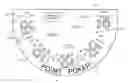
FIG. 1 is a plan view of the gaming table used in the present invention.
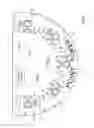
FIG. 2 is a detailed plan view of one player's station on the gaming table used in the present invention.
DETAILED DESCRIPTION OF THE INVENTION
The “Point Poker” game of the present invention utilizes a standard fifty two card deck and a joker card. Each card is assigned a point value, in accordance with the following schedule:
-
- Joker . . . 13
- Ace of Spades . . . 12
- Suicide Kings . . . 11
- One Eyed Jacks . . . 11
- Remaining Face Cards and 10's . . . 10
- All 9's . . . 9
- All 8's . . . 8
- All 7's . . . 7
- All 6's . . . 6
- All 5's . . . 5
- All 4's . . . 4
- All 3's . . . 3
- All 2's . . . 2
- Remaining Aces . . . 1
Casino gaming table 50 is provided having five player stations 52, 54, 56, 58, and 60. There may be more or fewer player stations, the number of stations being optional. Each player station on table 50 comprises card squares 1, 2, 3, 4, and 5; wager circles 6, 7, 8, and 9; point bonus circles 12; and poker bonus circles 14 (See FIG. 2).
To begin the game, players place a bet in wager circle 6, labeled “1+2”. Wager circle 6 represents the first two cards to be dealt, although one bet is placed on the wager circle. At this time, each player has a non-mandatory opportunity to place a bet on point bonus circle 12 and/or poker bonus circle 14. This is the only opportunity a player has to make the point bonus or poker bonus bets.
The dealer, working for the house, then deals five cards to each player, in counter-clockwise direction, placing the dealt cards face down in card square 5. After the cards are dealt to the players, the dealer, in counter-clockwise direction, turns over the top two cards located in card square 5, and places the cards in card squares 1 and 2 respectively. After the dealer places the card in card square 2, he or she adds the total point value of the two cards placed in the player's card squares 1 and 2, calling it out so all players can hear.
After all players have seen the first two cards of each player, the dealer will ask each player, in a counter-clockwise direction, whether that player will remain in the game to see a third card uncovered from card square 5. Any player who desires to see their third card must place a bet in wager circle 7, labeled “3”. All players who are betting must ante up before any of the third cards are exposed.
In order to qualify for the point bonus or poker bonus, a player must remain in the game to see a third card and thus make a second wager. If a player chooses to fold his or her hand before making the second wager, that player forfeits the bonus bets made to the house. The wager made by the folding player located on wager circle 6 is placed in winning hand box 16, located on table 50. The dealer is positioned behind table 50, adjacent to winning hand box 16. The money represented by the wagers of folding players will be paid to the ultimate winner of the hand. The cards of the folding players are then picked up without exposing any other cards and placed in a discard rack.
At this point, the dealer turns over the third card of the players remaining in the game and places that card in card square 3, once again totaling the value of the three cards showing and calling out the total. After the third cards of the players are turned over, the dealer will again go around the table, counter-clockwise, to ask whether players are in and will continue to play or will be folding their hand. If the player stays in, a third wager is placed in wager circle 8, labeled “4”. If the player folds his or her hand, the wagers from wager circles 6 and 7 are collected and placed in winning hand box 16. However, any bonus bets remain, since the player has stayed in the game to see the third card. Players who stay in for the third card qualify for the bonus bets, but their remaining cards are not turned over until after the ultimate point poker winner is determined.
At this point, the dealer, again in counter-clockwise direction, turns over the fourth card of the players from card square 5 and places the card in card square 4, again determining the cumulative point value of the cards and calling out the totals to all players. Only players who have paid to see the fourth card will get their card turned over. The players who have folded must wait until the end of the round to see if their bonus bets will pay off. If there are no bonus bets, the cards of the players who have folded are collected, without being exposed.
After the fourth cards of the players are turned over, the dealer, in a counter-clockwise direction, will ask each player whether they are in or fold. If they are in, a wager is placed in wager circle 9, labeled “5”. If the player folds, the wagers from wager circles 6, 7, and 8 are placed in winning hand box 16. Again, bonus bets remain until the end of the game and the last cards of the folding players do not get exposed until after a winner is determined.
Once the remaining players have placed a wager in wager circle 9, the last cards are turned over, in a counter-clockwise direction, and placed in card square 5. The dealer calculates the cumulative total of all five cards and calls out this total. Once the dealer turns over the fifth card of the second player remaining in the game, the player with the lower cumulative point total between the two players has lost and the dealer collects the wagers on wager circles 6, 7, 8 and 9 made by the losing player and places these wagers in winning hand box 16. The bonus bets and cards remain. The dealer then continues in the same fashion with the remaining players. When the ultimate winner is determined, the wagers in winning players box 16 are counted and ten percent or other appropriate percentage vigorish is removed for the house. The remainder of the wagers is paid to the winning player.
At this point, the dealer in counter-clockwise direction, goes to the first player who has paid to see at least three cards, and turns over any remaining cards, if necessary, to determine if a point bonus or poker bonus is to be paid out. One bonus bet is paid for the total cumulative point total and the other for the poker hand. Payouts are based on how high or low the point total is or the strength of the poker hand of the five dealt and uncovered cards. The joker in the deck is worth thirteen points and is a wild card for the poker bonus. Payouts are made on the bonus bets in accordance with point bonus schedule 30 and poker bonus schedule 40, placed at each players' station on gaming table 50, and as follows:
| Point Bonus | Poker Bonus |
| Points | Payout | Hand | Payout | |
| 40-45 | 3 to 1 | 10's or better | 2 to 1 | |
| 46-50 | 10 to 1 | 2 pair | 5 to 1 | |
| 50+ | 24 to 1 | 3 of a kind | 7 to 1 | |
| 15 or less | 24 to 1 | Straight | 9 to 1 | |
| Flush | 12 to 1 | |||
| Full House | 25 to 1 | |||
| 4 of a kind | 30 to 1 | |||
| Straight Flush | 40 to 1 | |||
| Royal Flush | 50 to 1 | |||
The house pays out based on the above schedule, or takes the bonus wagers, if point totals are between 15 and 40 or the poker hands are weaker then a pair of tens. All cards are then taken up, shuffled and redealt for the next round.
It is noted that if any player's hand or any of the player's cards are exposed during delivery of cards, the whole round is considered dead and every player's hand is picked up and the cards reshuffled. If card point totals result in a tie between two or more players, the winning wagers are divided evenly among these players, after payment of the vigorish to the house.
It is thus apparent that the “Point Poker” card game of the present invention constitutes a fresh and exciting variation of poker and, more particularly casino table poker. It provides players the opportunity to use their playing skills and a little luck to compete and win against both other players and the house, while affording the house a financial benefit as well.
Certain novel features and components of this invention are disclosed in detail in order to make the invention clear in at least one form thereof. However, it is to be clearly understood that the invention as disclosed is not necessarily limited to the exact form and details as disclosed, since it is apparent that various modifications and changes may be made without departing from the spirit of the invention.
Claims
1. A method of playing a poker type card game for at least two players, in which all players compete against each other and, optionally against the house, utilizing a standard poker deck of fifty-two cards and a joker card, comprising the steps of:
assigning point values to each card;
permitting each player to place a wager based on the point values of cards to be dealt to the players;
dealing five cards face down to each player;
displaying two of the face down cards of each player;
adding the point values of the two displayed cards of each player;
comparing the point values of the two displayed cards of each player;
permitting each player, after comparing the displayed cards, to either fold or place a second wager;
displaying a third of the face down cards of each player;
adding the point values of the three displayed cards of each player;
comparing the point values of the three displayed cards of each player;
permitting each player, after comparing the displayed cards, to either fold or place a third wager;
displaying a fourth of the face down cards of each player;
adding the point values of the four displayed cards of each player;
comparing the point values of the four displayed cards of each player;
permitting each player, after comparing the displayed cards, to either fold or place a fourth wager;
displaying the fifth of the face down cards of each player;
adding the point values of the five displayed cards of each player;
comparing the point values of the five displayed cards of each player;
declaring the player with the highest cumulative card point value of the five displayed cards the winner over all the other players; and
remitting to the winner the wagers placed by all the players, less a vigorish percentage to the house.
2. The method of playing a poker type card game as in claim 1 comprising the further step of placing a point bonus wager prior to dealing the cards.
3. The method of playing a poker type card game as in claim 2 comprising the further step of establishing a bonus points schedule with maximum, minimum, and intermediate point values and payouts corresponding to each cumulative card point value of the displayed cards.
4. The method of playing a poker type card game as in claim 3 comprising the further step of comparing the bonus points schedule with the cumulative card point values of the displayed cards of those players who placed a point bonus wager and two or more subsequent wagers.
5. The method of playing a poker type card game as in claim 4 comprising the further step of the house remitting payouts in accordance with the bonus point schedule to all said players who placed a point bonus wager and two or more subsequent wagers and whose card point values are the same or greater than the minimum point values established by the bonus points schedule, and the house collecting the point bonus wagers of those said players whose cumulative card point value is below the minimum point value established by the bonus points schedule.
6. The method of playing a poker type card game as in claim 4 comprising the further step of the house collecting the point bonus wagers of those players who placed only one wager before folding.
7. The method of playing a poker type card game as in claim 1 comprising the further step of placing a poker bonus wager prior to dealing the cards.
8. The method of playing a poker type card game as in claim 7 comprising the further step of establishing a poker bonus schedule with minimum payouts corresponding to recognized poker hands.
9. The method of playing a poker type card game as in claim 8 comprising the further step of comparing the poker bonus schedule with the poker hands represented by the five displayed cards of those players who placed a poker bonus wager and two or more subsequent wagers.
10. The method of playing a poker type card game as in claim 9 comprising the further step of the house remitting payouts in accordance with the poker bonus schedule to all said players who placed a poker bonus wager and two or more subsequent wagers and whose poker hands are shown to be a pair of tens or better, under the recognized rules of poker, and the house collecting the poker bonus wagers of those said players whose poker hand is weaker than a pair of tens, under the recognized rules of poker.
11. The method of playing a poker type card game as in claim 9 comprising the further step of the house collecting the poker bonus wagers of those players who placed only one wager before folding.
12. A method of playing a poker type card game for at least two players, in which all players compete against each other, and optionally against the house, utilizing a standard poker deck of fifty two cards and a joker card, comprising the steps of:
assigning a point value to each card;
permitting each player to place a wager based on the point values of the cards to be dealt to the players;
dealing five cards face down to each player;
displaying one or more of the face down cards of each player;
adding the point values of the displayed cards of each player;
comparing the point values of the displayed cards of each player;
permitting each player, after viewing the displayed cards, to either fold or place a subsequent wager;
declaring the player with the highest cumulative card point value of the displayed cards the winner over all the other players; and
remitting to the winner the wagers placed by all the players, less a percentage vigorish to the house.
13. The method of playing a poker type card game as in claim 12 comprising the further step of placing a point bonus wager prior to dealing the cards.
14. The method of playing a poker type card game as in claim 13 comprising the further step of establishing a bonus points schedule with maximum, minimum, and intermediate point values and payouts corresponding to each cumulative card point value of the displayed cards.
15. The method of playing a poker type card game as in claim 14 comprising the further step of comparing the bonus points schedule with the cumulative card point values of the displayed cards of those players who placed a point bonus wager and a subsequent wager.
16. The method of playing a poker type card game as in claim 15 comprising the further step of the house remitting payouts in accordance with the bonus point schedule to all said players who placed a point bonus wager and a subsequent wager and whose card point values are the same or greater than the minimum point values established by the bonus points schedule, and the house collecting the point bonus wagers of those said players whose cumulative card point value is below the minimum point value established by the bonus points schedule.
17. The method of playing a poker type card game as in claim 15 comprising the further step of the house collecting the point bonus wagers of those players who placed only one wager before folding.
18. The method of playing a poker type card game as in claim 1 comprising the further step of placing a poker bonus wager prior to dealing the cards.
19. The method of playing a poker type card game as in claim 18 comprising the further step of establishing a poker bonus schedule with minimum payouts corresponding to recognized poker hands.
20. The method of playing a poker type card game as in claim 19 comprising the further step of comparing the poker bonus schedule with the poker hands represented by the five displayed cards of those players who placed a poker bonus wager and a subsequent wager.
21. The method of playing a poker type card game as in claim 20 comprising the further step of the house remitting payouts in accordance with the poker bonus schedule to all said players who placed a poker bonus wager and a subsequent wager and whose poker hands are shown to be a pair of tens or better, under the recognized rules of poker, and the house collecting the poker bonus wagers of those said players whose poker hand is weaker than a pair of tens, under the recognized rules of poker.
22. The method of playing a poker type card game as in claim 20 comprising the further step of the house collecting the poker bonus wagers of those players who placed only one wager before folding.
Images & Drawings included:

Sources:
- United States Patent and Trademark Office - verify current appl. status at the USPTO↗
Similar patent applications:
Recent applications in this class:
- » 20240286022 2024-08-29
SYSTEMS AND METHODS FOR A TABLE GAME USING A SPECIAL DECK OF CARDS AND A CONVENTIONAL DECK OF CARDS - » 20240115928 2024-04-11
CARD GAME SYSTEM AND METHOD OF A TABLE GAME - » 20230364494 2023-11-16
GAME WITH INTERIM BETTING - » 20230256321 2023-08-17
BACCARAT PROGRESSIVE SYSTEM - » 20220143486 2022-05-12
NON-COMMISSION PAI GOW POKER GAMES, DEVICES, SYSTEMS AND METHODS THEREOF - » 20210370160 2021-12-02
CARD GAME - » 20210362036 2021-11-25
Method for playing a hold 'em card game with two hands - » 20210362035 2021-11-25
Method for playing a hold 'em card game with two hands - » 20210308555 2021-10-07
Game with interim betting - » 20210205694 2021-07-08
Baccarat progressive system