Shadow image security feature
US20110037247A1
2011-02-17
12/988,690
2008-12-29
✅ Patent granted
US 10,112,434 B2
2018-10-30
WO; PCT/US2008/088402; 20081229
WO; WO2009/139800; 20091119
Justin V Lewis
Hamre, Schumann, Mueller & Larson, P.C.
2031-10-15
Abstract:
A security document created by laminating a metalized foil between transparent layers, and modifying the outside of the foil to form a base color of the document, while leaving a window area formed by an unmodified portion of the foil. A laser is then used to ablate at least a portion of the unmodified portion of the foil in the window area to create an image. The window area includes the laser ablated image formed therein. The resulting image is transparent, with the image being visible from a front of the security document and visible from a rear of the security document.
Assignee:
- DATACARD CORPORATION 77 🇺🇸 Minnetonka, MN, United States
- Entrust Datacard Corporation 56 🇺🇸 Shakopee, MN, United States
Applicant:
Interested in similar patents?
Get notified when new applications in this technology area are published.
Classification:
B42D25/21 » CPC further
Information-bearing cards or sheet-like structures characterised by identification or security features; Manufacture thereof characterised by a particular use or purpose for multiple purposes
B32B5/142 » CPC further
Layered products characterised by the non- homogeneity or physical structure, i.e. comprising a fibrous, filamentary, particulate or foam layer; Layered products characterised by having a layer differing constitutionally or physically in different parts characterised by a layer differing constitutionally or physically in different parts, e.g. denser near its faces Variation across the area of the layer
B32B27/304 » CPC further
Layered products comprising synthetic resin comprising vinyl (co)polymers; comprising acrylic (co)polymers comprising vinyl halide (co)polymers, e.g. PVC, PVDC, PVF, PVDF
B41M3/14 » CPC further
Printing processes to produce particular kinds of printed work, e.g. patterns Security printing
B42D25/318 » CPC further
Information-bearing cards or sheet-like structures characterised by identification or security features; Manufacture thereof; Identification or security features, e.g. for preventing forgery Signatures
B32B27/365 » CPC further
Layered products comprising synthetic resin comprising polyesters comprising polycarbonates
B41M5/24 » CPC further
Duplicating or marking methods; Sheet materials for use therein Ablative recording, e.g. by burning marks; Spark recording
B42D25/41 » CPC further
Information-bearing cards or sheet-like structures characterised by identification or security features; Manufacture thereof; Manufacture; Marking using electromagnetic radiation
B42D25/309 » CPC further
Information-bearing cards or sheet-like structures characterised by identification or security features; Manufacture thereof; Identification or security features, e.g. for preventing forgery Photographs
B42D25/373 » CPC further
Information-bearing cards or sheet-like structures characterised by identification or security features; Manufacture thereof; Identification or security features, e.g. for preventing forgery comprising special materials Metallic materials
B32B27/36 » CPC further
Layered products comprising synthetic resin comprising polyesters
B32B2255/10 » CPC further
Coating on the layer surface on synthetic resin layer or on natural or synthetic rubber layer
B32B2255/205 » CPC further
Coating on the layer surface; Inorganic coating Metallic coating
B32B2307/402 » CPC further
Properties of the layers or laminate having particular optical properties Coloured
B32B2307/414 » CPC further
Properties of the layers or laminate having particular optical properties Translucent
B32B2307/75 » CPC further
Properties of the layers or laminate; Other properties Printability
B32B2425/00 » CPC further
Cards, e.g. identity cards, credit cards
B42D25/435 » CPC main
Information-bearing cards or sheet-like structures characterised by identification or security features; Manufacture thereof; Manufacture; Marking by removal of material using electromagnetic radiation, e.g. laser
B42D15/00 IPC
Printed matter of special format or style not otherwise provided for
B23K26/38 IPC
Working by laser beam, e.g. welding, cutting or boring; Removing material by boring or cutting
B32B2307/412 » CPC further
Properties of the layers or laminate having particular optical properties Transparent
B32B5/14 IPC
Layered products characterised by the non- homogeneity or physical structure, i.e. comprising a fibrous, filamentary, particulate or foam layer; Layered products characterised by having a layer differing constitutionally or physically in different parts characterised by a layer differing constitutionally or physically in different parts, e.g. denser near its faces
B32B27/30 IPC
Layered products comprising synthetic resin comprising vinyl (co)polymers; comprising acrylic (co)polymers
B32B27/08 » CPC further
Layered products comprising synthetic resin as the main or only constituent of a layer, next to another layer of a of synthetic resin
B42D25/00 » CPC further
Information-bearing cards or sheet-like structures characterised by identification or security features; Manufacture thereof
Description
PRIORITY INFORMATION
This application is being filed as a PCT International Application in the name of DataCard Corporation and claims the benefit of US Provisional Patent Application 61/053756 filed May 16, 2008 and entitled “SHADOW IMAGE SECURITY FEATURE,” which is incorporated by reference in its entirety.
FIELD
This disclosure relates to a security feature useable on identification documents, such as plastic and composite cards including identification cards, credit and debit cards, and the like, as well as passports. More particularly, this disclosure relates to a shadow image security feature that is formed on an identification document.
BACKGROUND
Identification documents such as identification cards, credit and debit cards, and the like, and passports, are personalized with information concerning the intended holder of the identification document and then issued to the intended holder. Personalization and issuance are typically handled by government agencies, credit card companies, or entities authorized to handle the personalization and issuance process.
As part of the personalization and issuance process, the identification documents can undergo a number of personalization procedures, including printing, photoprinting, magnetic stripe and/or chip encoding, embossing, lamination of protective laminates, and other known procedures.
A number of security measures have been implemented in order to prevent fraudulent production of identification documents and theft of identification documents during personalization and issuance, as well as prevent fraudulent use of identification documents once issued.
Further improvements to security measures to prevent fraudulent production of identification documents and theft of identification documents, as well as prevent fraudulent use of identification documents once issued, are needed.
SUMMARY
A security feature useable on identification documents including identification cards, driver's licenses, credit and debit cards, and the like, as well as passports, that will prevent counterfeiting, forgery or tampering with the document. If an attempt is made to alter the document, defects will show that can be easily recognized when the document is presented at a point of inspection.
A security document is created by laminating a metalized foil between transparent layers, and modifying the outside of the foil to form a base color of the document, while leaving a window area formed by an unmodified portion of the foil. A laser is then used to ablate at least a portion of the unmodified portion of the foil in the window area to create an image. The window area includes the laser ablated image formed therein. The resulting image is transparent, with the image being visible from a front of the security document and visible from a rear of the security document.
DRAWINGS
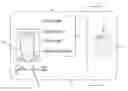
FIG. 1 is a view of the front side of an identification document that includes a shadow image security feature.
FIG. 2 is a cross-sectional view of the identification document taken along line 2-2 of FIG. 1.
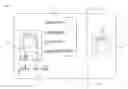
FIG. 3 is a view of the rear side of the identification document of FIG. 1.
FIG. 4 is a view similar to FIG. 1 depicting the transparency of the shadow image security feature.
DETAILED DESCRIPTION
FIG. 1 illustrates an identification document 10 with a shadow image security feature 12. The identification document 10 can be any identification document that has personalization, for example a photograph, or other personal information. Examples of identification documents on which the shadow image security feature can be used include plastic (e.g. PVC, PET, polycarbonate) or composite cards, for example identification cards, credit and debit cards, and the like, and passports. To facilitate the description, the identification document 10 will hereinafter be described as being an identification card or just a card.
With reference to FIG. 2, in constructing the card 10, a metalized foil 14 that is receptive to a laser source is laminated between transparent layers 16a, 16b of the material that is selected for the secure document. A suitable metalized foil 14 is available from Crown Roll Leaf, Inc. of Paterson, N.J. The foil 14 can have a plain or unique color but can also be provided with a holographic effect. The transparent layers 16a, 16b can be any material suitable for forming a card or other identification document, for example PVC, PET, or polycarbonate. The layers 16a, 16b can also be provided with colors, patterns, holographic features, etc. U.S. Patent Publication 2006/0251869, which is incorporated herein by reference, discloses examples of suitable thicknesses for the layers 16a, 16b.
After the foil 14 is laminated with the transparent layers 16a, 16b, the outside surface of the foil 14 can be printed with a suitable printing technique, for example lithographic or screen printing, to get the base color, for example white, for the card 10. The area where the shadow image 12 will be created is not overprinted which creates a “window” area 18 which has the original color of the foil 14.
There is no limitation in size or shape of the window area 18 and the subsequent shadow image 12 other than the size of the card. Therefore, although the window area 18 is illustrated as being rectangular, the broken lines of the window area 18 imply that other shapes and sizes are possible.
The thus formed card “core” is then personalized as with any conventional card. For example, in the illustrated embodiment, the core includes personalization such as a photograph 20, for example a color photograph, of the intended card holder applied thereto. The photograph 20 can be printed onto the outer surface of the layer 16b using known printing techniques, for example dye sublimation, or by an image transfer technique in which the photo is first printed onto a transfer layer which is then laminated to the card surface. Alternatively, the photograph can be applied to the foil layer 14. Additional information 22, for example further personalization such as the card holder's name, a unique identifier such as an account or serial number, the card holder's birthdate, or the card holder's signature 23, or general information such as the card holder's citizenship, can also be applied to the foil layer 14 or to the layer 16b. The additional information 22 and the signature 23 can be applied using known techniques, for example printing technologies like lithography or screen printing, using a laser, embossing, re-transfer, inkjet, and combinations thereof.
After the photograph 20, information 22 and signature 23 have been applied, a protective layer 24 can be laminated to the layer 16b (and optionally over the layer 16a) to protect against forgery and abrasion. The protective layer 24 can be made of a material, for example polyester, that renders the layer 24 generally clear or translucent to permit substantially unobstructed, unaltered viewing of the window area 18, photograph 20, information 22 and signature 23 over which it is laminated.
The thus created card 10 has the same characteristics of a traditional security card and, dependent on the material that has been chosen to form the card, can be used for the same period of time as a traditional card made of the materials.
The shadow image 12 is created in the foil 14 in the window area 18 using a laser. The shadow image 12 is, for example, a monochromatic version of the photograph 20 that is created using the data used to form the photograph 20 in a known manner. The laser that is used is the same that is currently used for the personalisation of documents like identification cards and passports, ranging from 5-30 watts.
When the laser image is created in the window area 18, the laser ablates the foil 14 and creates the shadow image 12 that can be viewed in natural light. Where the image 12 is created, the foil 14 becomes transparent which allows one to see through portions of or the entire image 12. This is illustrated in FIG. 4 which depicts the shadow image 12 as it would appear when the card is held up against a lighter background or light source. The transparency of the image 12 then becomes evident, which is depicted by a pointer 26 that is disposed behind the card and the shadow image 12, where a portion 28 (in solid lines) of the pointer 26 behind the image 12 is visible through the image on the other side of the card 10. In portion of the window area 18 where the image is not located, the pointer 26 is not visible, as depicted by the broken line portions of the pointer in the window area 18.
In addition, the image 12 is visible on both sides of the card, with the normal image visible from a front side 30 as shown in FIG. 1 and the reverse of the image 12 visible from a rear side 32 of the card as shown in FIG. 3. When a standard metalized foil is used the transparent effect of the image 12 is clear. However, when a holographic metalized foil is used, the holographic effect is visible in the transparent part of the image.
The image 12 when viewed against a darker background looks like a normal image. However, as depicted in FIG. 4, when the card 10 is held against a lighter background or light source, for example natural light or a light bulb, the image 12 shows up as a negative or shadow image. The transparent effect of the image 12 then also becomes visible. The shadow image 12 can be combined with shadow text elements like name or date of birth or the unique number of the card, which can add to the security of the card.
The shadow image 12 offers a first line security feature that can be checked by non forensic experts without the use of special tools or techniques, which makes this security feature suitable for large scale use in secure document applications.
The invention may be embodied in other forms without departing from the spirit or novel characteristics thereof. The embodiments disclosed in this application are to be considered in all respects as illustrative and not limitative. The scope of the invention is indicated by the appended claims rather than by the foregoing description; and all changes which come within the meaning and range of equivalency of the claims are intended to be embraced therein.
Claims
1. A process of creating a security document, comprising:
laminating a metalized foil between transparent layers;
modifying the outside of the foil to form a base color of the document while leaving a window area formed by an unmodified portion of the foil; and
using a laser to ablate at least a portion of the unmodified portion of the foil in the window area to create an image, the image being transparent, and the image is visible from a front of the security document and visible from a rear of the security document.
2. The process of claim 1, wherein the image is an image of the intended holder of the security document.
3. The process of claim 1, wherein the security document is an identification card or a passport.
4. The process of claim 1, further comprising applying additional information to the security document at a location spaced from the window area.
5. The process of claim 4, wherein the additional information comprises one or more of a photograph, name, unique document number, birth date, citizenship and a signature.
6. The process of claim 1, wherein modifying comprises printing the outside of the foil.
7. The process of claim 6, wherein printing comprises lithographic or screen printing.
8. A security document comprising:
a metalized foil between transparent layers, a major portion of an outside area of the foil is modified to form a base color of the document;
a window area formed by an unmodified portion of the foil;
a laser ablated image formed in the window area, the image being transparent, and the image is visible from a front of the security document and visible from a rear of the security document.
9. The security document of claim 8, wherein the image is an image of the intended holder of the security document.
10. The security document of claim 8, wherein the security document is an identification card or a passport.
11. The security document of claim 8, further comprising additional information on the document at a location spaced from the window area.
12. The security document of claim 11, wherein the additional information comprises one or more of a photograph, name, unique document number, birth date, citizenship, and a signature.
Images & Drawings included:


Sources:
- United States Patent and Trademark Office - verify current appl. status at the USPTO↗
Recent applications in this class:
- » 20250229566 2025-07-17
PERSONALIZABLE SECURITY DOCUMENT AND METHOD OF PERSONALIZING THE SAME - » 20250187362 2025-06-12
IDENTIFICATION DOCUMENT AND PRODUCTION METHOD - » 20240424823 2024-12-26
DATA CARRIER WITH SECURED SURFACE PERSONALIZATION ELEMENT - » 20240326509 2024-10-03
IDENTIFICATION DOCUMENT, SYSTEM ARRANGEMENT AND METHOD FOR PRODUCING AN IDENTIFICATION DOCUMENT - » 20240262124 2024-08-08
Diffractive Structures Within Polymer Substrates, Their Manufacture and Use - » 20240208259 2024-06-27
FORMATION OF A 3D IMAGE USING A LENTICULAR STRUCTURE - » 20230382149 2023-11-30
METHOD FOR MANUFACTURING AN IDENTITY DOCUMENT, IDENTITY DOCUMENT AND METHOD FOR AUTHENTICATING SUCH AN IDENTITY DOCUMENT - » 20230166556 2023-06-01
METHOD FOR PRODUCING A MULTILAYER BODY, AND A MULTILAYER BODY - » 20220355610 2022-11-10
Method for manufacturing a two-dimensional coloured bar code and associated security device - » 20220258523 2022-08-18
Diffractive structures within polymer substrates, their manufacture and use
Recent applications for this Assignee:
- » 20210407238 2021-12-30
Self-directed access card issuance system - » 20200164672 2020-05-28
Drop-on-demand identification document printing with surface pre-treatment - » 20190366754 2019-12-05
Methods and systems for printing vibrant grey colors on plastic cards - » 20190366750 2019-12-05
Obscuring residual images on print ribbons - » 20190318558 2019-10-17
Self-directed access card issuance system - » 20190303055 2019-10-03
User interface for a customized personalization document printer of an instant issuance system - » 20190230068 2019-07-25
Remote monitoring and management of an instant issuance system - » 20190061356 2019-02-28
Drop-on-demand print head cleaning mechanism and method - » 20180333963 2018-11-22
Out-of sequence retransfer printing - » 20180326761 2018-11-15
Card processing system with adaptable card transport delay