Method for preparing precursor of radioactive 3-iodobenzylguanidine
US20110040119A1
2011-02-17
12/540,448
2009-08-13
✅ Patent granted
US 8,076,499 B2
2011-12-13
-
-
Paul A Zucker
2029-12-08
Abstract:
A method for preparing a precursor of radioactive 3-iodobenzylguanidine-N,N′-bis(tert-butyloxycarbonyl)-3-(tri-n-butyltin)benzylguanidine) (MSnBG) is revealed. The MSnBG is a precursor of [*I]MIBG that is used as radioactive imaging agents and antineoplastic drugs. The method includes following steps. Firstly, obtain 3-iodobenzylguanidine bicarbonate by an addition reaction between 3-iodobenzylamine hydrochloride and cyanamide. Use di-tert-butyl dicarbonate as a protecting agent for NH group and convert 3-iodobenzylguanidine bicarbonate into N,N′-bis(tert-butyloxycarbonyl)-N-(3-iodobenzyl) guanidine. At last, under catalysis of bis(triphenylphosphine) palladium dichloride, obtain a final product MSnBG by a substitution reaction between N,N′-bis(tert-butyloxycarbonyl)-N-(3-iodobenzyl) guanidine and bis(tri-n-butyltin). MSnBG is used in no-carrier-added synthesis of [*I]MIBG. The [*I]MIBG obtained by this method has better effect on neuroblastoma treatment than that obtained by conventional, carrier-added method.
Inventors:
- Cheng-Hsien Lin 8 🇹🇼 Taipei City, Taiwan
- Show-Wen Liu 5 🇹🇼 Shetou Township, Taiwan
- Tsyh-Lang Lin 4 🇹🇼 Bade City, Taiwan
- Cheng-Fang Hsu 5 🇹🇼 Toufen Township, Taiwan
- Show-Wen Liu 5 🇹🇼 Shetou Township, Changhua County, Taiwan
- Tsyh-Lang Lin 4 🇹🇼 Bade, Taiwan
- Cheng-Fang Hsu 5 🇹🇼 Toufen Township, Miaoli County, Taiwan
- Cheng-Hsien Lin 8 🇹🇼 Taipei, Taiwan
Assignee:
- ATOMIC ENERGY COUNCIL-INSTITUTE OF NUCLEAR ENERGY RESEARCH 140 🇹🇼 Taoyuan County, Taiwan
Interested in similar patents?
Get notified when new applications in this technology area are published.
Classification:
C07F3/10 IPC
Compounds containing elements of Groups 2 or 12 of the Periodic System Mercury compounds
C07B2200/05 » CPC further
Indexing scheme relating to specific properties of organic compounds Isotopically modified compounds, e.g. labelled
C07C277/08 » CPC main
Preparation of guanidine or its derivatives, i.e. compounds containing the group , the singly-bound nitrogen atoms not being part of nitro or nitroso groups of substituted guanidines
C07C279/06 » CPC further
Derivatives of guanidine, i.e. compounds containing the group , the singly-bound nitrogen atoms not being part of nitro or nitroso groups having nitrogen atoms of guanidine groups bound to acyclic carbon atoms of a carbon skeleton being further substituted by halogen atoms, or by nitro or nitroso groups
C07C271/20 IPC
Derivatives of carbamic acids, i.e. compounds containing any of the groups , the nitrogen atom not being part of nitro or nitroso groups; Esters of carbamic acids having oxygen atoms of carbamate groups bound to acyclic carbon atoms with the nitrogen atoms of the carbamate groups bound to hydrogen atoms or to acyclic carbon atoms to carbon atoms of hydrocarbon radicals substituted by nitrogen atoms not being part of nitro or nitroso groups
C07F7/00 IPC
Compounds containing elements of Groups 4 or 14 of the Periodic System
Description
BACKGROUND OF THE INVENTION
1. Field of Invention
The present invention relates to a method for preparing a precursor of radioactive agents, especially to a method for preparing N,N′-bis(tert-butyloxycarbonyl)-3-(tri-n-butyltin)benzylguanidine) (MSnBG), a precursor of radioactive 3-iodobenzylguanidine.
2. Description of Related Art
After being found in 1980s, 3-iodobenzylguanidine (Meta-iodo-benzyl-guanidine, MIBG) labeled with I-123 and I-131 ([123I]MIBG and [131I]MIBG) has been used as imaging agents for diagnosis of various diseases such as heart diseases and neuroblastoma. Moreover, the half-life of I-131 gives the value 80.5 days and the energy released per decay is 0.97 MeV so that it can be used for the radiation therapy of tumors. Thus [131I]MIBG is also used as an antineoplastic agent for treatment of neuroblastoma in the image-guided radiation therapy.
For a long time, radioiodine labeled MIBG([*I]MIBG) is prepared by an isotopic exchange method using an radioiodide (I-131 or I-125), as shown in FIG. 1. Beside MIBG with radioactive iodine, the product obtained by this method contains a significant amount of initial reactant-MIBG with natural iodine. The two materials are difficult to separate with each other. While being applied to antineoplastic agents, after being injected into humans, [*I]MIBG and MIBG compete with each other to bind with specific receptors. The amount of MIBG is far more larger than the [*I]MIBG so that a large amount of receptors are occupied by MIBG. Thus effective [*I]MIBG is unable to react with receptors and the effects of radiation therapy have been affected.
Although in the study of G. Vaidyanathan, D. J. Affleck, K. L. Alaton and M. R. Zalutsky, J. Label. Comp. Radiopharm., 50, 177-182 (2007), a similar precursor to be labeled is revealed. However, a method for manufacturing the precursor is disclosed by Dodd and A. P. Kozikowski, Tetrahedron Lett., 35, 977-979 (1994) and G. Vaidyanathan and M. R. Zalutsky, J. Org. Chem., 62, 4867-4869 (1997), as shown in FIG. 2. Moreover, the leaving group of the precursor (C14) to be labeled is (CH3)3Sn.
SUMMARY OF THE INVENTION
Therefore it is a primary object of the present invention to provide a method for preparing a precursor for radioactive agents-N,N′-bis(tert-butyloxycarbonyl)-3-(tri-n-butyltin)benzylguanidine) (MSnBG). The Bu3Sn is an optimal leaving group that is easy to be replaced in a substitution reaction.
It is another object of the present invention to provide a method for preparing a precursor for radioactive drugs-N,N′-bis(tert-butyloxycarbonyl)-3-(tri-n-butyltin)benzylguanidine) (MSnBG) that includes simple reaction steps. After completion of the reaction, the product is obtained only after filtering and washing. There are no complicated separation and purification processes.
In order to achieve objects, a method for preparing a precursor for radioactive drugs-N,N′-bis(tert-butyloxycarbonyl)-3-(tri-n-butyltin)benzylguanidine) (MSnBG) according to the present invention includes a plurality of simple reaction steps. After the reactions, the compound is obtained after filtering and washing, without complicated separation and purification procedures. The Bu3Sn of MSnBG is an optimal leaving group that is easy to be replaced by another group in a substitution reaction. Moreover, the MSnBG is to prepare no-carrier-added radioactive [*I]MIBG that is used as radioactive imaging agents and antineoplastic drugs. The [*I]MIBG obtained by this method has better effect on neuroblastoma treatment than that obtained by conventional, carrier-added method.
BRIEF DESCRIPTION OF THE DRAWINGS
The structure and the technical means adopted by the present invention to achieve the above and other objects can be best understood by referring to the following detailed description of the preferred embodiments and the accompanying drawings, wherein
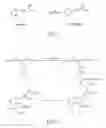
FIG. 1 is a reaction equation of [*I]MIBG in a conventional technique;
FIG. 2 shows reaction equations of another precursor-compound C14 in a conventional technique;
FIG. 3A is a flow chart showing manufacturing processes of an embodiment of MSnBG according to the present invention;
FIG. 3B shows reaction equations of an embodiment of MSnBG according to the present invention;
FIG. 4 are reaction equations showing preparation of [*I]MIBG by a precursor MSnBG according to the present invention.
DETAILED DESCRIPTION OF THE PREFERRED EMBODIMENT
In conventional techniques, the leaving group in the labeled precursor (C14) is (CH3)3Sn. In a substitution reaction, the loss of the (CH3)3Sn is not as easy as Bu3Sn of the present invention. This is due to that the more carbons the compound has, the lower the polarity it has. And the compound becomes more soluble in solvents. The later group (Bu3Sn) is better than the former group (CH3)3Sn due to better salvation effect and easy leaving during reaction. Moreover, besides MIBG with radioactive iodine, the MIBG prepared by conventional techniques contains large amount of initial reactant-MIBG with natural iodine. Yet the product prepared by the present method contains no natural iodine.
Refer to FIG. 3A and FIG. 3B, a method for preparing N,N′-bis(tert-butyloxycarbonyl)-3-(tri-n-butyltin)benzylguanidine (MSnBG) includes the following steps:
- Step S10: obtaining 3-iodobenzylguanidine bicarbonate (C4) by an addition reaction between an initial reactant 3-iodobenzylamine hydrochloride (C1) and cyanamide (C2);
- Step S20: using di-tert-butyl dicarbonate (C6) as a protecting agent for NH group and convert the compound C4 into N,N′-bis(tert-butyloxycarbonyl)-N-(3-iodobenzyl) guanidine (C7) in dimethyl sulfoxide (DMSO)(C5) solution; and
- Step S30: using palladium compounds as a catalyst and obtain a final product MSnBG by a substitution reaction between the compound C7 and bis(tri-n-butyltin) (C8) occurring in 1,4-dioxane (C10).
In the step S10, the synthesis of 3-iodobenzylguanidine bicarbonate (C4) is as following: take 5.88 g (21.8 mmol) 3-iodobenzylamine hydrochloride (C1) and 2.06 g (47.96 mmol) cyanamide (C2) to form a mixture that is heated and refluxed at 105 degrees Celsius for 4 hours. After cooling down, add water (10 mL) into the mixture to dissolve completely. Then add 10 mL aqueous solution of sodium bicarbonate (C3) (1.83 g, 21.8 mmol) to obtain an insoluble solid (precipitate). After filtering, washing with cold water, acetone and ether and drying, the compound C4 (6.7 g, 91%) is obtained.
Analysis of the synthesis product: IR (KBr) ν 3352 (NH), 1697 (CO) cm−1. 1H NMR (CD3OD) δ 7.71 (s, 1 H, C6H4), 7.68 (d, J=7.8 Hz, 1 H, C6H4), 7.33 (d, J=7.8 Hz, 1 H, C6H4), 7.15 (t, J=7.8 Hz, 1 H, C6H4), 4.36 (s, 2 H, CH2). 13C NMR (CD3OD) δ 160.51 (CO), 157.67 (C═N), 139.27, 136.92, 136.12, 130.52, 126.41 and 94.0 (C6H4), 43.58 (CH2)∘
In the step S20, the synthesis of N,N′-bis(tert-butyloxycarbonyl)-N-(3-iodobenzyl) guanidine (C7) is as following: Dissolve the compound C4 (6.7 g, 19.9 mmol) in 30 mL anhydrous dimethyl sulfoxide (C5) and add di-tert-butyl dicarbonate (C6) (11.0 mL, 46.4 mmol). Stir the solution at room temperature overnight and a solid is precipitated. After filtering, washing with water and drying, a product C7 (7.3 g, 77%) is obtained.
Analysis of the synthesis product: IR (KBr) ν 3386 (NH), 1717 (CO) cm−1. 1H NMR (CDCl3) δ 9.2-9.5 (br, 2 H, NH2), 7.64 (s, 1 H, C6H4), 7.57 (d, J=7.8 Hz, 1 H, C6H4), 7.24 (d, J=7.8 Hz, 1 H, C6H4), 7.03 (t, J=7.8 Hz, 1 H, C6H4), 5.11 (s, 2 H, CH2), 1.50 (s, 9 H, Bu), 1.37 (s, 9 H, Bu). 13C NMR (CDCl3) δ 163.58 and 160.55 (CO), 154.67 (C═N), 141.14, 136.52, 135.93, 129.91, 126.40 and 93.84 (C6H4), 84.35 and 78.93 (C(CH3)3), 46.78 (CH2), 28.25 and 27.80 (CH3). MS m/z 475 (M+)∘
In the step S30, the synthesis of N,N′-bis(tert-butyloxycarbonyl)-3-(tri-n-butyltin)benzylguanidine) (MSnBG) is as following: Dissolve the compound C7 (1.111 g, 2.34 mmol), 1.75 mL (3.51 mmol) bis(tri-n-butyltin) (C8) and bis(triphenylphosphine) palladium dichloride (C9) (0.16 g, 0.23 mmol) in 30 mL anhydrous 1,4-dioxane (C10) and heat the solution at 80 degrees Celsius for 5 hours. After filtering, the solvent is removed by decompression and evaporation. Next dissolve the residue in 30 mL n-hexane. The n-hexane is decompressed and condensed. By a separation and purification technique-liquid chromatography (SiO2, ethyl acetate:n-hexane=1:10), the products C7 (0.892 g, 1.9 mmol) and MSnBG (0.266 g, 90.2%) are obtained.
Analysis of the synthesis product: IR (neat) ν 3382 (NH), 1716 (CO) cm−1. 1H NMR (CDCl3) δ 9.60-9.30 (br, 2 H, NH2), 7.20-7.13 (m, 4 H, C6H4), 5.17 (s, 2 H, CH2C6H4), 1.60-1.48 (m, 6 H, CH2CH3), 1.49 (s, 9 H, C(CH3)3), 1.30 (s, 9 H, C(CH3)3), 1.38-1.27 (m, 6 H, CH2CH2CH3), 1.03 (m, 6 H, CH2Sn), 0.88 (t, J=7.2 Hz, 9 H, CH2CH3). 13C NMR (CDCl3) δ 163.75 and 161.0 (CO), 155.02 (C═N), 141.59, 138.22, 134.87, 134.76, 127.61 and 126.40 (C6H4), 83.76 and 78.72 (C(CH3)3), 47.70 (CH2C6H4), 29.03 (CH2CH3), 28.27 and 27.71 (C(CH3)3), 27.30 (CH2CH2Sn), 13.62 (CH3CH2), 9.46 (CH2Sn). MS m/z cluster peaks at 639 (M+), 582 (M+−C(CH3)3)∘
The present invention is based on the following idea: the natural iodine in the compound is replaced by a leaving group Bu3Sn that is easily released to form a precursor. Then a substitution is used to prepare radiopharmaceuticals. The Bu3Sn group is replaced by [*I]+ ion so that the products contain no natural iodine, as shown in FIG. 4.
In summary, the present invention has following advantages:
- 1. According to the present invention, 3-iodobenzylguanidine bicarbonate is obtained by an addition reaction between 3-iodobenzylamine hydrochloride (C1) and cyanamide (C2) under heating without solvent. After completion of the reaction, the product is dissolved in water and is added with aqueous solution of sodium bicarbonate so as to generate insoluble 3-iodobenzylguanidine bicarbonate (C4) precipitate. After filtering and washing, a compound C4 with high purity is obtained. There are no complicated separation and purification processes.
- 2. In the present invention, the protection reaction of NH group of the compound C4 is in dimethyl sulfoxide (DMSO)(C5) solvent. The advantage of this solvent is in that both the compound C4 and the protecting agent-di-tert-butyl dicarbonate (C6) are dissolved in the solvent C5 while the product-N,N′-bis(tert-butyloxycarbonyl)-N-(3-iodobenzyl) guanidine (C7) is insoluble in the solvent C5 and is precipitated. After completion of the reaction, filtering and washing, the compound C7 is obtained. There are no complicated separation and purification processes.
- 3. In the substitution reaction between the compound C7 and bis(tri-n-butyltin) (C8), the solvent is 1,4-dioxane (C10) and bis(triphenylphosphine) palladium dichloride (C9) is a catalyst. React at 80 degrees Celsius, the yield rate of MSnBG is over 90%.
- 4. In the present invention, the Bu3Sn of the precursor MSnBG is an optimal leaving group that is easily replaced in a substitution reaction.
- 5. The protecting group for NH group of MSnBG is Boc((CH3)3OCO) that is stable in alkaline solution but is easy to be hydrolyzed and released in acid solution. Thus after the completion of the substitution reaction between MSnBG and radioactive iodine, a certain amount of acid is added so as to remove the protecting group Boc and obtain the radioactive drug-[*I]MIBG. The preparation processes are relatively simple.
- 6. The MSnBG is used in no-carrier-added synthesis of [*I]MIBG. The [*I]MIBG obtained by this method has better effect on neuroblastoma treatment than that obtained by conventional, carrier-added method.
Additional advantages and modifications will readily occur to those skilled in the art. Therefore, the invention in its broader aspects is not limited to the specific details, and representative devices shown and described herein. Accordingly, various modifications may be made without departing from the spirit or scope of the general inventive concept as defined by the appended claims and their equivalents.
Claims
What is claimed is:1. A method for preparing a precursor of radioactive 3-iodobenzylguanidine comprising the steps of:
melting mixture of 3-iodobenzylamine hydrochloride and cyanamide, and then to be dissolved by water, adding sodium bicarbonate so as to make 3-iodobenzylguanidine bicarbonate precipitate;
using di-tert-butyl dicarbonate as a protecting agent and converting 3-iodobenzylguanidine bicarbonate into N,N′-bis(tert-butyloxycarbonyl)-N-(3-iodobenzyl) guanidine in dimethyl sulfoxide solution; and
using palladium compounds as a catalyst and obtaining N,N′-bis(tert-butyloxycarbonyl)-3-(tri-n-butyltin)benzylguanidine (MSnBG) by a substitution reaction between N,N′-bis(tert-butyloxycarbonyl)-N-(3-iodobenzyl)guanidine and bis(tri-n-butyltin) occurring in 1,4-dioxane.
2. The method as claimed is claim 1, wherein in the step of melting mixture of 3-iodobenzylamine hydrochloride and cyanamide, melting temperature ranges from 80 degrees Celsius to 120 degrees Celsius.
3. The method as claimed is claim 1, wherein in the step of using di-tert-butyl dicarbonate as a protecting agent, a solvent for he protecting agent is dimethyl sulfoxide or N,N-dimthylformamide.
4. The method as claimed is claim 1, wherein in the step of using di-tert-butyl dicarbonate as a protecting agent, reaction temperature ranges from 20 to 70 degrees Celsius.
5. The method as claimed is claim 1, wherein in the step of using palladium compounds as a catalyst and obtaining N,N′-bis(tert-butyloxycarbonyl)-3-(tri-n-butyltin)benzylguanidine (MSnBG) by a substitution reaction between N,N′-bis(tert-butyloxycarbonyl)-N-(3-iodobenzyl)guanidine and bis(tri-n-butyltin) occurring in 1,4-dioxane, a solvent for the substitution reaction is 1,4-dioxane, triethylamine, or tetrahydrofaran.
6. The method as claimed is claim 1, wherein in the step of using palladium compounds as a catalyst and obtaining N,N′-bis(tert-butyloxycarbonyl)-3-(tri-n-butyltin)benzylguanidine (MSnBG) by a substitution reaction between N,N′-bis(tert-butyloxycarbonyl)-N-(3-iodobenzyl)guanidine and bis(tri-n-butyltin) occurring in 1,4-dioxane, the catalyst for the substitution reaction is bis(triphenylphosphine)palladium(II) dichlonide or tetrakis(triphenylphosphine)palladium(0).
7. The method as claimed is claim 1, wherein in the step of using palladium compounds as a catalyst and obtaining N,N′-bis(tert-butyloxycarbonyl)-3-(tri-n-butyltin)benzylguanidine (MSnBG) by a substitution reaction between N,N′-bis(tert-butyloxycarbonyl)-N-(3-iodobenzyl)guanidine and bis(tri-n-butyltin) occurring in 1,4-dioxane, temperature of the substitution reaction ranges from 60 degrees Celsius to 100 degrees Celsius.
Images & Drawings included:



Sources:
- United States Patent and Trademark Office - verify current appl. status at the USPTO↗
Recent applications in this class:
- » 20250188022 2025-06-12
PROCESS FOR THE PREPARATION OF NAFAMOSTAT, CAMOSTAT AND THEIR DERIVATIVES - » 20220388948 2022-12-08
Process for the preparation of a metastable crystal modification of n-(aminoiminomethyl)-2-aminoacetic acid (III) - » 20220380304 2022-12-01
NOVEL METHOD FOR PRODUCING PERAMIVIR TRIHYDRATE, AND WATER-BASED DRYING THEREOF - » 20220289670 2022-09-15
PROCESS FOR THE PREPARATION OF A METASTABLE CRYSTAL MODIFICATION OF N-(AMINOIMINOMETHYL)-2-AMINOETHANOIC ACID (IV) - » 20220274917 2022-09-01
SOLVENT FREE CONTINUOUS PROCESS FOR THE SYNTHESIS OF METFORMIN HYROCHLORIDE - » 20210040035 2021-02-11
Process for the preparation of metformin - » 20200207707 2020-07-02
Process for preparing guanidino acetic acid - » 20200199067 2020-06-25
Hydrogen sulfide donor in organic salt form and preparation method therefor - » 20190185423 2019-06-20
Solar energy devices - » 20180354896 2018-12-13
Method for preparing D-arginine
Recent applications for this Assignee:
- » 20160126369 2016-05-05
Semiconductor device and patterning method for plated electrode thereof - » 20160069981 2016-03-10
Deployment method for high-concentration photovoltaic power generation system - » 20160039190 2016-02-11
Method for packaging secondary optical element - » 20150380465 2015-12-31
Serial module of organic solar cell and method for manufacturing the same - » 20150322005 2015-11-12
Precursor for labeling therapeutic agent for liver cancer and method for manufacturing the same - » 20150252009 2015-09-10
Benzodiazepine derivative and method of producing the same - » 20150194554 2015-07-09
STRUCTURE OF CONCENTRATING SOLAR CELL MODULE WITH REDUCED HEIGHT - » 20150187979 2015-07-02
HETEROJUNCTION SOLAR CELL WITH EPITAXIAL SILICON THIN FILM AND METHOD FOR PREPARING THE SAME - » 20150179854 2015-06-25
METHOD OF PACKAGING BALL LENS OF SOLAR COLLECTOR AND STRUCTURE THEREOF - » 20150151277 2015-06-04
Confined cell structure and method of making the same