Removable External Backpack Liner
US20110042436A1
2011-02-24
12/707,826
2010-02-18
Abstract:
A liner consisting of a back piece and straps that can be worn between a backpack and the wearer's shoulders and back. The liner is affixed to the straps and backpack in a way that it can be easily removed for washing or replacement. The liner consists of layers that allow it to transport moisture and dirt away from the wearer, while shielding the backpack and its contents from the same.
Interested in similar patents?
Get notified when new applications in this technology area are published.
Classification:
A45C13/002 » CPC main
Details; Accessories Protective covers
A45F3/04 » CPC further
Travelling or camp articles ; Sacks or packs carried on the body Sacks or packs carried on the body by means of two straps passing over the two shoulders
Description
CROSS-REFERENCE TO RELATED APPLICATION
This application is a non-provisional application corresponding to provisional application No. 61/154,092 filed on Feb. 20, 2009 by Rebecca Lee Rich, for a Removable External Backpack Liner.
STATEMENT REGARDING FEDERALLY SPONSORED RESEARCH OR DEVELOPMENT
Not Applicable
REFERENCE TO SEQUENCE LISTING, A TABLE, OR A COMPUTER PROGRAM LISTING COMPACT DISK APPENDIX
Not Applicable
FIELD OF THE INVENTION
The present invention relates generally to backpacks, and more particularly, the present invention relates to external layers for backpacks that can be removed.
BACKGROUND OF THE INVENTION
The basic components of a backpack have remained virtually unchanged since its invention. The standard backpack consists of a zippered compartment suspended on the wearer's back by one or two straps that go over the wearer's shoulder and reattach to the compartment. Although the styling and shape of models may vary, all backpacks operate functionally by coming in direct contact with the wearer's body against the back and shoulders. However, this contact can sometimes be both uncomfortable and unhygienic. Regular use may cause the contacting portions of the backpack to become saturated with contaminants such as sweat and dirt. Accumulation of such compounds can become highly unsanitary, resulting in stains, odors, adverse skin conditions of the wearer's back and shoulders, or contamination of the contents of the backpack. Presently, best way to remove unwanted contaminants from the backpack are to empty the contents and wash the entire backpack.
BRIEF SUMMARY OF THE INVENTION
The present disclosure is of a lining system to be attached to a backpack. The liner is fastened to the surface of a backpack that comes in contact with the wearer's back, and can extend to cover the inside surfaces of the straps of the backpack. The liner is composed of a breathable, absorbent top layer, with a water-resistant layer beneath it. The liner is designed to absorb sweat and dirt away from the wearer, while shielding the backpack from the same. The liner can then be removed and washed, minimizing the need to empty and wash the entire backpack.
BRIEF DESCRIPTION OF THE SEVERAL VIEWS OF THE DRAWING
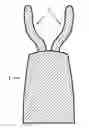
FIG. 1 is a perspective view of the present invention; and
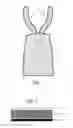
FIG. 2 is a cross-section of the present invention.
DETAILED DESCRIPTION OF THE INVENTION
FIG. 1 shows a view of the backpack liner when laid out flat. It shows back piece 1 which is attached to the portion of the backpack which is work against the wearer's back. The figure shows a pair of straps 2, which attach to the inside of the straps of the backpack. The straps 2 fold over to follow the contour of the shoulder straps while the backpack is being worn.
In more detail, still referring to the invention of FIG. 1, the back piece 1 is attached to the main portion of the backpack by means of some temporary fastener, including, but not limited to, buttons, zippers, snaps, or Velcro®-type closures. The straps 2 are folded over to follow the insides of the shoulder straps of the backpack, and similarly attached. When necessary for washing or replacement, both the back piece 1 and the straps 2 may be removed by detaching the temporary fasteners and reattached at a later time.
In further detail, still referring to the invention of FIG. 1, the size and shape of the back piece 1 and straps 2 are dictated by the size and styling of the backpack to which they are attached. The measurements and shape of the back piece should be that of the inside panel of the backpack that comes into contact with the wearer's back. The straps should similarly mirror the size and shape of the straps to which they will be affixed. The straps should be connected to the back piece at a location and angle which allows them to fold over and fit snugly between the shoulder straps of the backpack and the wearer's shoulders.
FIG. 2 shows a cross-section of the backpack liner. It consists of a porous layer 3, an absorbent layer 4, and a waterproof layer 5. All three layers are used through the back piece 1 and straps 2. The porous layer 3 may be of any natural or synthetic material that is comfortable against the wearer's skin and that allows moisture and dirt to pass through it. The absorbent layer 4 may be of any natural or synthetic material that can absorb and hold moisture. The waterproof layer 5 may be of any natural or synthetic material that does not allow the moisture and dirt to pass through it to reach the backpack. Depending on the materials available, two or more of these layers may be combined or other layers added, so long as the layers serve the dual purposes of (a) taking moisture and dirt away from the wearer's body and (b) keeping the same from reaching the backpack surface.
Claims
What is claimed is:1. A removable barrier comprising an impermeable layer to be worn between a backpack and the wearer's body.
Images & Drawings included:
Sources:
- United States Patent and Trademark Office - verify current appl. status at the USPTO↗
Recent applications in this class:
- » 20250169585 2025-05-29
Pocket Cover - » 20240423339 2024-12-26
REMOVABLE TOTE COVER - » 20240374004 2024-11-14
PROTECTIVE CASE FOR TERMINAL UNIT - » 20240292932 2024-09-05
Laptop Cover and System for Closing - » 20240225222 2024-07-11
LUGGAGE COVER - » 20230389670 2023-12-07
Protective packaging for suitcases - » 20230301410 2023-09-28
WEATHER PROTECTION COVER FOR A HORIZONTALLY ARRANGED DISPLAY UNIT OF A FIELD DEVICE OF PROCESS AND AUTOMATION TECHNOLOGY - » 20230284761 2023-09-14
Kickstand structure provided on a protective casing for terminal device - » 20230270219 2023-08-31
Protective case for a computing device - » 20230232952 2023-07-27
Pocket cover