Reactive ionic liquids
US20110045359A1
2011-02-24
12/990,029
2009-03-31
✅ Patent granted
US 9,006,457 B2
2015-04-14
WO; PCT/EP2009/002329; 20090331
WO; WO2009/132740; 20091105
Nyeemah A Grazier
Oblon, McClelland, Maier & Neustadt, L.L.P.
2030-12-22
Abstract:
The invention relates to reactive ionic liquids containing organic cations with groups or substituents which are susceptible to electrochemical reduction and anions obtained from fluoroalkyl phosphates, fluoroalkyl phosphinates, fluoroalkyl phosphonates, acetates, triflates, imides, methides, borates, phosphates and/or aluminates, for use in electrochemical cells, such as lithium ion batteries and double-layer capacitors.
Inventors:
- Nikolai (Mykola) Ignatyev 59 🇩🇪 Duisburg, Germany
- Michael Schmidt 28 🇩🇪 Seeheim-Jugenheim, Germany
- William-Robert Pitner 6 🇩🇪 Frankfurt, Germany
Assignee:
- BASF SE 6,681 🇩🇪 Ludwigshafen, Germany
- MERCK PATENT GESELLSCHAFT 90 🇩🇪 DARMSTADT, Germany
Applicant:
Interested in similar patents?
Get notified when new applications in this technology area are published.
Classification:
C07C229/12 » CPC main
Compounds containing amino and carboxyl groups bound to the same carbon skeleton having amino and carboxyl groups bound to acyclic carbon atoms of the same carbon skeleton the carbon skeleton being acyclic and saturated having only one amino and one carboxyl group bound to the carbon skeleton the nitrogen atom of the amino group being further bound to acyclic carbon atoms or to carbon atoms of rings other than six-membered aromatic rings to carbon atoms of acyclic carbon skeletons
C07D207/08 » CPC further
Heterocyclic compounds containing five-membered rings not condensed with other rings, with one nitrogen atom as the only ring hetero atom with only hydrogen or carbon atoms directly attached to the ring nitrogen atom having no double bonds between ring members or between ring members and non-ring members with hydrocarbon radicals, substituted by hetero atoms, attached to ring carbon atoms
C07D211/14 » CPC further
Heterocyclic compounds containing hydrogenated pyridine rings, not condensed with other rings with only hydrogen or carbon atoms directly attached to the ring nitrogen atom having no double bonds between ring members or between ring members and non-ring members with hydrocarbon or substituted hydrocarbon radicals directly attached to ring carbon atoms with radicals containing only carbon and hydrogen atoms attached to ring carbon atoms with hydrocarbon or substituted hydrocarbon radicals attached to the ring nitrogen atom
C07F9/28 » CPC further
Compounds containing elements of Groups 5 or 15 of the Periodic System; Phosphorus compounds with one or more P—C bonds
C07F9/301 » CPC further
Compounds containing elements of Groups 5 or 15 of the Periodic System; Phosphorus compounds with one or more P—C bonds; Phosphinic acids RP(=O)(OH); Thiophosphinic acids, i.e. RP(=X)(XH) (X = S, Se) Acyclic saturated acids which can have further substituents on alkyl
H01G11/60 » CPC further
Hybrid capacitors, i.e. capacitors having different positive and negative electrodes; Electric double-layer [EDL] capacitors; Processes for the manufacture thereof or of parts thereof; Electrolytes; Liquid electrolytes characterised by the solvent
H01G11/62 » CPC further
Hybrid capacitors, i.e. capacitors having different positive and negative electrodes; Electric double-layer [EDL] capacitors; Processes for the manufacture thereof or of parts thereof; Electrolytes; Liquid electrolytes characterised by the solute, e.g. salts, anions or cations therein
H01G11/64 » CPC further
Hybrid capacitors, i.e. capacitors having different positive and negative electrodes; Electric double-layer [EDL] capacitors; Processes for the manufacture thereof or of parts thereof; Electrolytes; Liquid electrolytes characterised by additives
H01M10/0567 » CPC further
Secondary cells; Manufacture thereof; Accumulators with non-aqueous electrolyte characterised by the materials used as electrolytes, e.g. mixed inorganic/organic electrolytes the electrolyte being constituted of organic materials only; Liquid materials characterised by the additives
H01M10/0568 » CPC further
Secondary cells; Manufacture thereof; Accumulators with non-aqueous electrolyte characterised by the materials used as electrolytes, e.g. mixed inorganic/organic electrolytes the electrolyte being constituted of organic materials only; Liquid materials characterised by the solutes
Y02E60/10 » CPC further
Enabling technologies; Technologies with a potential or indirect contribution to GHG emissions mitigation Energy storage using batteries
Y02E60/10 » CPC further
Enabling technologies; Technologies with a potential or indirect contribution to GHG emissions mitigation Energy storage using batteries
H01M6/16 IPC
Primary cells; Manufacture thereof; Cells with non-aqueous electrolyte with organic electrolyte
H01M10/05 IPC
Secondary cells; Manufacture thereof Accumulators with non-aqueous electrolyte
C07D207/04 IPC
Heterocyclic compounds containing five-membered rings not condensed with other rings, with one nitrogen atom as the only ring hetero atom with only hydrogen or carbon atoms directly attached to the ring nitrogen atom having no double bonds between ring members or between ring members and non-ring members
C07C229/08 » CPC further
Compounds containing amino and carboxyl groups bound to the same carbon skeleton having amino and carboxyl groups bound to acyclic carbon atoms of the same carbon skeleton the carbon skeleton being acyclic and saturated having only one amino and one carboxyl group bound to the carbon skeleton the nitrogen atom of the amino group being further bound to hydrogen atoms
C07F9/5428 » CPC further
Compounds containing elements of Groups 5 or 15 of the Periodic System; Phosphorus compounds with one or more P—C bonds; Quaternary phosphonium compounds Acyclic unsaturated phosphonium compounds
C07F9/65688 » CPC further
Compounds containing elements of Groups 5 or 15 of the Periodic System; Phosphorus compounds; Heterocyclic compounds, e.g. containing phosphorus as a ring hetero atom having phosphorus atoms, with or without nitrogen, oxygen, sulfur, selenium or tellurium atoms, as ring hetero atoms having phosphorus atoms as the only ring hetero atoms the ring phosphorus atom being part of a phosphonium compound
H01B1/122 » CPC further
Conductors or conductive bodies characterised by the conductive materials; Selection of materials as conductors mainly consisting of other non-metallic substances organic substances Ionic conductors
Y02E60/13 » CPC further
Enabling technologies; Technologies with a potential or indirect contribution to GHG emissions mitigation Energy storage using capacitors
Y02E60/13 » CPC further
Enabling technologies; Technologies with a potential or indirect contribution to GHG emissions mitigation Energy storage using capacitors
C07C211/63 » CPC further
Compounds containing amino groups bound to a carbon skeleton; Quaternary ammonium compounds having quaternised nitrogen atoms bound to acyclic carbon atoms
C07C219/04 » CPC further
Compounds containing amino and esterified hydroxy groups bound to the same carbon skeleton having esterified hydroxy groups and amino groups bound to acyclic carbon atoms of the same carbon skeleton the carbon skeleton being acyclic and saturated
C07C255/25 » CPC further
Carboxylic acid nitriles having cyano groups bound to acyclic carbon atoms containing cyano groups and singly-bound nitrogen atoms, not being further bound to other hetero atoms, bound to the same saturated acyclic carbon skeleton Aminoacetonitriles
C07C309/06 » CPC further
Sulfonic acids; Halides, esters, or anhydrides thereof; Sulfonic acids having sulfo groups bound to acyclic carbon atoms of an acyclic saturated carbon skeleton containing halogen atoms, or nitro or nitroso groups bound to the carbon skeleton
C07C309/65 » CPC further
Sulfonic acids; Halides, esters, or anhydrides thereof; Esters of sulfonic acids having sulfur atoms of esterified sulfo groups bound to acyclic carbon atoms of a saturated carbon skeleton
C07C311/48 » CPC further
Amides of sulfonic acids, i.e. compounds having singly-bound oxygen atoms of sulfo groups replaced by nitrogen atoms, not being part of nitro or nitroso groups having nitrogen atoms of sulfonamide groups further bound to another hetero atom
C07D263/04 » CPC further
Heterocyclic compounds containing 1,3-oxazole or hydrogenated 1,3-oxazole rings not condensed with other rings having no double bonds between ring members or between ring members and non-ring members
C07D295/088 » CPC further
Heterocyclic compounds containing polymethylene-imine rings with at least five ring members, 3-azabicyclo [3.2.2] nonane, piperazine, morpholine or thiomorpholine rings, having only hydrogen atoms directly attached to the ring carbon atoms with substituted hydrocarbon radicals attached to ring nitrogen atoms substituted by singly bound oxygen or sulfur atoms with the ring nitrogen atoms and the oxygen or sulfur atoms attached to the same carbon chain, which is not interrupted by carbocyclic rings to an acyclic saturated chain
C07D295/108 » CPC further
Heterocyclic compounds containing polymethylene-imine rings with at least five ring members, 3-azabicyclo [3.2.2] nonane, piperazine, morpholine or thiomorpholine rings, having only hydrogen atoms directly attached to the ring carbon atoms with substituted hydrocarbon radicals attached to ring nitrogen atoms substituted by doubly bound oxygen or sulphur atoms with the ring nitrogen atoms and the doubly bound oxygen or sulfur atoms attached to the same carbon chain, which is not interrupted by carbocyclic rings to an acyclic saturated chain
C07D295/145 » CPC further
Heterocyclic compounds containing polymethylene-imine rings with at least five ring members, 3-azabicyclo [3.2.2] nonane, piperazine, morpholine or thiomorpholine rings, having only hydrogen atoms directly attached to the ring carbon atoms with substituted hydrocarbon radicals attached to ring nitrogen atoms substituted by carbon atoms having three bonds to hetero atoms with at the most one bond to halogen, e.g. ester or nitrile radicals with the ring nitrogen atoms and the carbon atoms with three bonds to hetero atoms attached to the same carbon chain, which is not interrupted by carbocyclic rings
H01M10/052 » CPC further
Secondary cells; Manufacture thereof; Accumulators with non-aqueous electrolyte Li-accumulators
H01G11/06 » CPC further
Hybrid capacitors, i.e. capacitors having different positive and negative electrodes; Electric double-layer [EDL] capacitors; Processes for the manufacture thereof or of parts thereof; Hybrid capacitors with one of the electrodes allowing ions to be reversibly doped thereinto, e.g. lithium-ion capacitors [LICs]
H01G11/58 » CPC further
Hybrid capacitors, i.e. capacitors having different positive and negative electrodes; Electric double-layer [EDL] capacitors; Processes for the manufacture thereof or of parts thereof; Electrolytes Liquid electrolytes
H01M10/0525 » CPC further
Secondary cells; Manufacture thereof; Accumulators with non-aqueous electrolyte; Li-accumulators Rocking-chair batteries, i.e. batteries with lithium insertion or intercalation in both electrodes; Lithium-ion batteries
C07D207/06 IPC
Heterocyclic compounds containing five-membered rings not condensed with other rings, with one nitrogen atom as the only ring hetero atom with only hydrogen or carbon atoms directly attached to the ring nitrogen atom having no double bonds between ring members or between ring members and non-ring members with radicals, containing only hydrogen and carbon atoms, attached to ring carbon atoms
C07D295/037 » CPC main
Heterocyclic compounds containing polymethylene-imine rings with at least five ring members, 3-azabicyclo [3.2.2] nonane, piperazine, morpholine or thiomorpholine rings, having only hydrogen atoms directly attached to the ring carbon atoms containing only hydrogen and carbon atoms in addition to the ring hetero elements with quaternary ring nitrogen atoms
C07F9/54 IPC
Compounds containing elements of Groups 5 or 15 of the Periodic System; Phosphorus compounds with one or more P—C bonds Quaternary phosphonium compounds
C07F9/6568 IPC
Compounds containing elements of Groups 5 or 15 of the Periodic System; Phosphorus compounds; Heterocyclic compounds, e.g. containing phosphorus as a ring hetero atom having phosphorus atoms, with or without nitrogen, oxygen, sulfur, selenium or tellurium atoms, as ring hetero atoms having phosphorus atoms as the only ring hetero atoms
H01B1/12 IPC
Conductors or conductive bodies characterised by the conductive materials; Selection of materials as conductors mainly consisting of other non-metallic substances organic substances
H01M10/0569 » CPC further
Secondary cells; Manufacture thereof; Accumulators with non-aqueous electrolyte characterised by the materials used as electrolytes, e.g. mixed inorganic/organic electrolytes the electrolyte being constituted of organic materials only; Liquid materials characterised by the solvents
C07C317/04 » CPC further
Sulfones; Sulfoxides having sulfone or sulfoxide groups bound to acyclic carbon atoms of an acyclic saturated carbon skeleton
C07C225/06 » CPC further
Compounds containing amino groups and doubly—bound oxygen atoms bound to the same carbon skeleton, at least one of the doubly—bound oxygen atoms not being part of a —CHO group, e.g. amino ketones having amino groups bound to acyclic carbon atoms of the carbon skeleton the carbon skeleton being saturated and acyclic
Description
The invention relates to reactive ionic liquids containing organic cations with groups or substituents which are susceptible to electrochemical reduction and anions obtained from fluoroalkyl phosphates, fluoroalkyl phosphinates, fluoroalkyl phosphonates, acetates, triflates, methides, borates, phosphates and aluminates, for use in electrochemical cells, such as lithium ion batteries and double-layer capacitors.
Ionic liquids or liquid salts are ionic species which consist of an organic cation and a generally inorganic anion. They do not contain any neutral molecules and usually have melting points below 373 K.
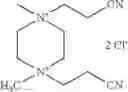
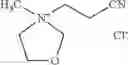
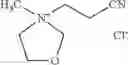
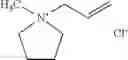
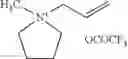
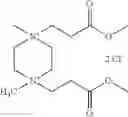
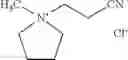
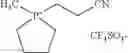
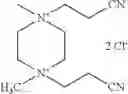
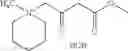
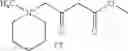
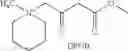
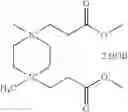
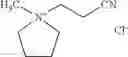
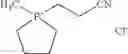
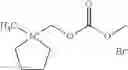
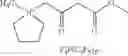
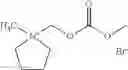
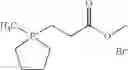
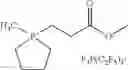
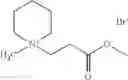
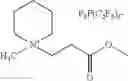
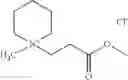
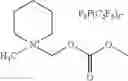
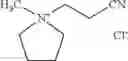
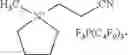
“Reactive ionic liquids” are taken to mean ionic liquids which contain, on the organic cation, groups or substituents which are susceptible to electrochemical reduction, such as cyano groups, ester groups, carbonate groups or side chains with double bonds.
In recent years, ionic liquids have attracted ever increasing interest, and a large number of review articles have described unique properties of ionic liquids (“ILs” for short) and indicated various potential uses.
In particular, ionic liquids appear to be highly promising for use in energy-storage media, such as double-layer capacitors and batteries, with a particular focus on electric and hybrid vehicles.
Outstanding properties of ionic liquids include:
-
- virtually zero volatility and thus very high flash points
- a very large liquid range, in some cases above several 100 K
- very high polarity and thus generally very good solubility for inorganic and organic salts.
Whereas ionic liquids, such as, for example, ethylmethylimidazolium tetrafluoroborate (EMIBF4), are already being employed commercially in double-layer capacitors (super- or ultracapacitors), use in batteries, in particular lithium ion batteries, continues to be difficult.
For battery applications, the following systems comprising ionic liquids have been characterised:
-
- ionic liquids in combination with electrolytes comprising an Li salt
- ionic liquids in combination with electrolytes comprising an Li salt plus additives
The following ionic liquids have been used here:
-
- ionic liquids having AlCl4 as anion (generation 0, very early work)
- ionic liquids having imidazolium-based cations and (per)fluorinated inorganic or organic anions (generation 1)
- ionic liquids having “non-imidazolium”-based cations and (per)fluorinated inorganic or organic anions (generation 2)
AlCl4-based ionic liquids are extremely sensitive to hydrolysis and react with water with liberation of hydrochloric acid HCl. The development for battery systems has been stopped because of this. Imidazolium-based ILs exhibit inadequate reductive stability and are therefore not regarded as very promising for commercial application in high-energy batteries. Ionic liquids having inorganic anions, in particular BF4, cause a significant reduction in capacitance, in particular in the first charge/discharge cycle. The ionic liquids which currently appear to be the most suitable for Li ion batteries use N,N-dialkylpyrrolidinium in combination with bis(trifluoromethyl)imides (see, for example, JP 2006-260952).
However, even these ionic liquids still cause a significant drop in the power densities of lithium ion batteries.
The reason for this is, in particular, the high viscosity of electrochemically stable ionic liquids. This results in significantly lower lithium ion conductivity of the IL-based electrolyte compared with standard electrolyte systems with no ionic liquids (O. Borodin et al., J. of Physical Chemistry B, 2006, 110 (34), pp. 16879-16886). Accordingly, lithium ion batteries comprising IL-based electrolytes still today exhibit a significantly lower power density and charge-carrying capacity compared with lithium ion batteries comprising standard electrolytes.
The latter in particular must be regarded as very critical for applications in electric and hybrid vehicles and prevents—in spite of an increase in safety—the use of IL-based electrolytes.
Lee et al. (Electrochem. Comm. 8 (2006) 460) have been able to show that the use of imidazolium-based ILs having ester ligands on the nitrogen in battery electrolytes results in an improvement in the lithium conductivity and diffusion coefficient of Li ions.
However, these imidazolium-based ionic liquids are not sufficiently electrochemically stable.
The object of the present invention was therefore to develop ionic liquids which have high thermal stability, very good oxidation stability and low corrosiveness, and have anions which have been synthesised inexpensively, and do not have the above-mentioned disadvantages.
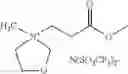
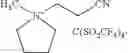
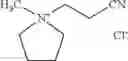
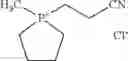
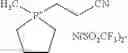
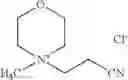
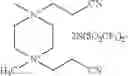
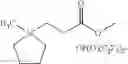
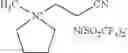
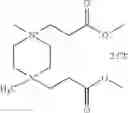
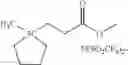
The present object is achieved by ionic liquids of the general formula I
K+A− (I)
-
- in which:
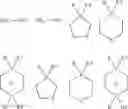
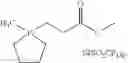
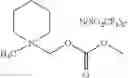
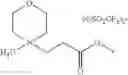
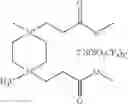
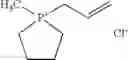
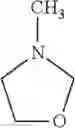
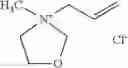
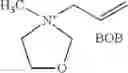
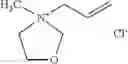
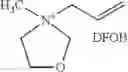
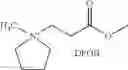
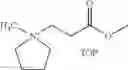
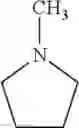
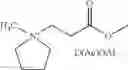
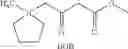
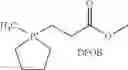
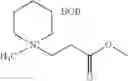
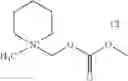
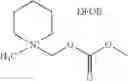
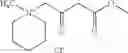
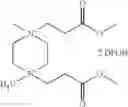
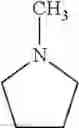
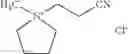
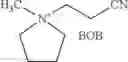
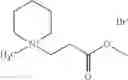
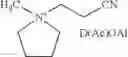
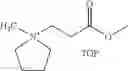
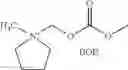
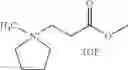
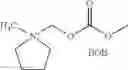
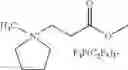
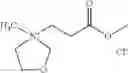
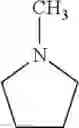
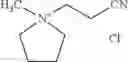
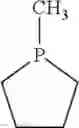
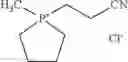
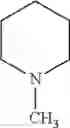
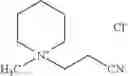
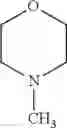
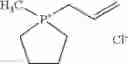
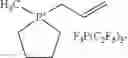
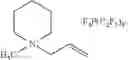
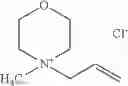
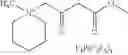
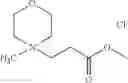
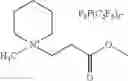
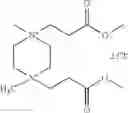
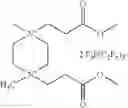
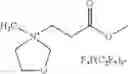
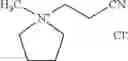
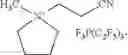
- K+ denotes a cation, preferably reduction-stable, selected from the group of the general formulae II to IX
-
- where
- X denotes CH2, O, S or NR′
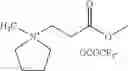
- R′ denotes —(CH2)n—CN, C1- to C16-alkyl, preferably methyl, ethyl, propyl, H
- R denotes H, C1- to C16-alkyl, preferably methyl, ethyl, propyl
- R5 denotes —(CH2)n—O—C(O)—R, —(CH2)n—C(O)—OR, —(CH2)n—O—C(O)—OR, —(CH2)n—HC═CH—R or —(CH2)n—CN, where individual CH2 groups are replaced by O, S or NR,
- where n 1 to 8,
- and
- A− denotes an anion selected from the group
- [FyP(CmF2m+1)6−y]−
- (CmF2m+1)2P(O)O−
- CmF2m+1P(O)O22−
- O—C(O)—CmF2m+1
- O—S(O)2—CmF2m+1
- N(C(O)—CmF2m+1)2
- N(S(O)2—CmF2m+1)2
- N(C(O)—CmF2m+1)(S(O)2—CmF2m+1)
- N(C(O)—CmF2m+1)(C(O)F)
- N(S(O)2—CmF2m+1)(S(O)2F)
- N(S(O)2F)2
- C(C(O)—CmF2m+1)3
- C(S(O)2—CmF2m+1)3
- where
-
-
-
- where y=1, 2, 3, 4 or 5, and m=1 to 8, preferably 1 to 4,
- where some of the CF2 groups may be replaced by O, S(O)2, NR or CH2, and
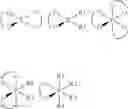
-
- where
-
-
-
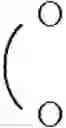
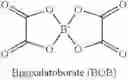
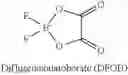
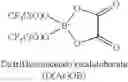
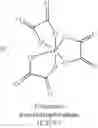
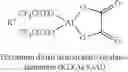
- denotes a 1,2- or 1,3-diol, a 1,2- or 1,3-dicarboxylic acid or a 1,2- or 1,3-hydroxycarboxylic acid
- X denotes B or Al
- R1 to R4 denote halogen, in particular F, and/or a fluorinated or non-fluorinated alkoxy or carboxyl radical.
-
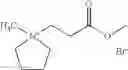
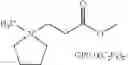
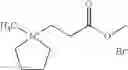
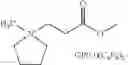
Compared with conventional ionic liquids, the reactive ionic liquids according to the invention are distinguished by the fact that they contain, on the organic cation, groups/substituents or side chains which are susceptible to electrochemical reduction. These are, in particular,
-
- cyano groups —CN
- ester groups —R—C(O)—OR or —R—O—C(O)—R
- carbonate functions —R—O—C(O)—OR
- double bonds in the side chains —R—CH═CH—R
Surprisingly, the reactive ionic liquids according to the invention form a passivating cover layer at potentials between about 2 V and 0.9 V against Li/Li+ significantly sooner than ethylene carbonate (0.7 to 0.8 V against Li/Li+). This cover layer is electronically passivating, but permeable to lithium ions. A further advantage consists in the excellent oxidation stability of >5 V against Li/Li+. In contrast to many other additives employed at present, some of which are highly toxic (for example propane sultone), the reactive ionic liquids according to the invention are non-volatile and have no measurable vapour pressure.
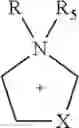
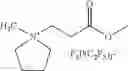
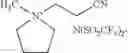
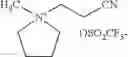
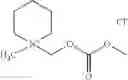
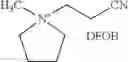
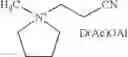
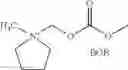
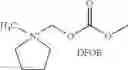
The cations K+ of the ionic liquids according to the invention are preferably cations selected from the general formula IV
-
- where
- X denotes CH2, O, S or NR′
- R′ denotes —(CH2)n—CN, methyl, ethyl, propyl, butyl, H
- R denotes H, methyl, ethyl, propyl, butyl
- R5 denotes —(CH2)n—O—C(O)—R, —(CH2)n—C(O)—OR, —(CH2)n—O—C(O)—OR, —(CH2)n—HC═CH—R or —(CH2)n—CN, where individual CH2 groups may be replaced by O, S or NR,
- where n=1 to 8.
The anions A− of the ionic liquids according to the invention are preferably the following anions: [F2P(C2F5)4]−, [F3P(C2F5)3]−, [F4P(C2F5)2]−, [F2P(C3F7)4]−, [F3P(C3F7)3]−, [F4P(C3F7)2]−, [F2P(C4F9)4]−, [F3P(C4F9)3]−, [F4P(C4F9)2]−, perfluoroalkylcarboxylate, perfluoroalkylsulfonate, bis(perfluoroalkylsulfonyl)imide, (perfluoroalkylsulfonyl)(perfluoroalkylcarboxyl)-imide, tris(perfluoroalkylsulfonyl)methide, particularly preferably trifluoroacetate, trifluoromethanesulfonate (triflate), bis(trifluoromethylsulfonyl)imide and tris(trifluoromethylsulfonyl)methide.
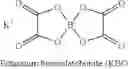
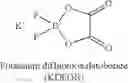
Preference is also given to spiro-oxo borates and spiro-oxo phosphates, particularly preferably spiro-oxo borates.
The invention furthermore relates to an electrolyte comprising at least one conductive salt, an aprotic solvent or solvent mixture, at least one, ionic liquid of the above-mentioned formula I according to the invention, and optionally further additives.
In a preferred embodiment (for example on use of the electrolyte in lithium or lithium ion batteries), the conductive salt is a lithium conductive salt, such as LiPF6, LiN(SO2CF3)2, LiN(SO2C2F5)2, LiF3P(C2F5)3, LiF3P(C4F9)3, LiB(C2O4)2 or LiF2B(C2O4)2.
In a further preferred embodiment (for example on use of the electrolyte in double-layer capacitors or supercapacitors), the conductive salt is a compound from the group N(C2H5)4BF4N(C2H5)4PF6, N(C2H5)3(CH3)BF4, N(C2H5)3(CH3)PF6, N(C2H5)4N(SO2CF3)2, N(C2H5)3(CH3)N(SO2CF3)2, N(C2H5)4F3P(C2F5)3, N(C2H5)3(CH3)F3P(C2F5)3.
The aprotic solvent of the electrolyte preferably consists of organic open-chain or cyclic carbonates, carboxylic acid esters, nitriles, ethers or lactones or a mixture thereof. Nitriles, in particular acetonitrile, are preferably employed as solvent in double-layer capacitors.
The present invention furthermore relates to a process for the preparation of ionic liquids of the formula I:
-
- Preparation of heterocyclic cations K+ containing alkyl-, carboxylate-, carbonate- or cyano-containing side chains according to Claim 1 as onium chlorides or bromides from the corresponding amines, phosphines, halocarboxylates, halocarbonates, haloalkyl-nitriles or alkyl halides by conventional wet-chemical methods,
- Reaction of these cationic onium chlorides or bromides with the corresponding anionic
- potassium and/or sodium fluoroalkylphosphates or potassium and/or sodium bis(fluoroalkyl)phosphinates or potassium and/or sodium fluoroalkylphosphonates or fluoroalkylphosphoric acids or bis(fluoroalkyl)phosphinic acids or fluoroalkylphosphonic acids or alkyl, in particular methyl, bis(fluoroalkyl)-phosphinates or
- lithium imides or methides or trifluoromethanesulfonic acid or potassium or lithium trifluoroacetates or triflates or alkyl triflates or trimethylsilyl triflates or trifluoromethanesulfonic anhydride or trifluoroacetic anhydride or
- lithium or potassium borates, phosphates or aluminates in an aqueous and/or alcoholic medium or an organic solvent or without a solvent.
The preparation of the cations is known to the person skilled in the art and can be carried out by processes as described, for example, in P. Wasserscheid and T. Welton (Eds.) “Ionic Liquids in Synthesis”, Wiley-VCH, 2003, pp. 7-40 in general or for imidazolium cations in N. Gathergood, P. J. Scammells, Aust. J. Chem, 55 (2002), No. 9, pp. 557-560; E. Alcalde, M. Gisbert, L. Perez-Garcia, Heterocycles, 43 (1996), No. 3, pp. 567-580; Z. Fei, D. Zhao, T. J. Geldbach, R. Scopelliti, P. J. Dyson, Chem. Europ. J., 10 (2004), No. 19, pp. 4886-4893; D. Liu, Ji. Gui, X. Zhu, L. Song, Z. Sun, Synth. Commun., 37 (2007), No. 5, pp. 759-765; Ya. Peng, F. Yi, G. Song, Yi. Zhang, Monatsh. Chem., 136 (2005), No. 10, pp. 1751-1755; J. F. Dubreuil, J. P. Bazureau, Tetrahedron Lett., 41 (2000), No. 38, pp. 7351-7356; S.-K. Fu, Sh.-T. Liu, Synth. Commun., 36 (2006), No. 14, pp. 2059-2067; M. Yoshizawa, A. Narita, H. Ohno, Aust. J. Chem.; 57 (2004), No. 2, pp. 139-144; A. Narita, W. Shibayama, H. Ohno, J. Mater. Chem., 16 (2006), No. 15, pp. 1475-1482; T. Mizumo, E. Marwanta, N. Matsumi, H. Ohno, Chem. Lett., 33 (2004), No. 10, pp. 1360-1361; D. Zhao, Zh. Fei, T. J. Geldbach, R. Scopelliti, G. Laurenczy, P. J. Dyson, Hel. Chim. Acta., 88 (2005), No. 3, pp. 665-675; A. Horvath, Synthesis, 1994, pp. 102-106; or for pyrrolidinium cations in L. Horner, A. Mentrup, Justus Liebigs Ann. Chem. 646 (1961), pp. 49-64; Bates et al., J. Chem. Soc. 1956, pp. 388-395, v. Braun Chem. Ber. 70 (1937), p. 983; Z. Dega-Szafran, R. Przybylak, J. Mol. Struct., 436 (1997), No. 1, pp. 107-122; or for piperidinium cations in Walther et al., Chem. Ber., 89 (1956), pp. 60-65; or for morpholinium cations in Gresham et al., J. Am, Chem. Soc., 73 (1951), pp. 3168-3171; D. Le Berre, Bull. Soc. Chim. Fr., 1973, pp. 2404-2407; O. A. Kazantsev, Kazakov, K. V. Shirshin, S. M. Danov, Russ. J. Org. Chem., 36 (2000), No. 3, pp. 343-349; or for piperazinium cations in Z. Dega-Szafran, M. Jaskolski, I. Kurzyca, P. Barczynski, M. Szafran, J. Mol. Struct., 614 (2002), No. 1-3, pp. 23-32.
The anions according to the invention are oxidation-stable, as can be seen from Tables 1.1 to 1.3.
| TABLE 1.1 |
| Electrochemical stability of reactive ionic liquids having |
| a tris(pentafluoroethyl)trifluorophosphate anion (FAP |
| anion) and a bis(pentafluoroethyl)phosphinate anion, |
| (C2F5)2P(O)O−, compared with similar ionic liquids |
| having triflate and tetrafluoroborate anions |
| Electrochem. | |||
| Reactive ionic liquid | E(ox), V | E(red), V | window |
| 1-Ethyl-3-methyl- | 3.9 | −2.5 | 6.4 |
| imidazolium FAP | |||
| 1-Ethyl-3-methyl- | 3.6 | −2.6 | 6.2 |
| imidazolium (C2F5)2P(O)O− | |||
| 1-Ethyl-3-methyl- | 2.8 | −2.5 | 5.3 |
| imidazolium triflate | |||
| 1-Ethyl-3-methylimidazolium | 2.6 | −2.6 | 5.2 |
| BF4− | |||
| TABLE 1.2 |
| Electrochemical stability of reactive ionic liquids having a bis(trifluoro- |
| methylsulfonyl)imide anion and a triflate anion compared with |
| the ionic liquid having a tetrafluoroborate anion |
| Electrochem. | |||
| Reactive ionic liquid | E(ox), V | E(red), V | window |
| 1-Butyl-1-methylpyrrolidinium | −3.5 | −3.3 | 6.8 |
| bis(trifluoromethylsulfonyl)imide | |||
| Trihexyl(tetradecyl)phos- | −3.4 | 6.5 | |
| phontum bis(trifluoromethyl- | |||
| sulfonyl)imide | |||
| 1-Hexyl-3-methylimidazolium | 3.7 | −2.6 | 6.3 |
| bis(trifluoromethylsulfonyl)imide | |||
| 1-Ethyl-3-methylimidazolium | 2.8 | −2.5 | 5.3 |
| triflate | |||
| 1-Ethyl-3-methylimidazolium | 2.6 | −2.6 | 5.2 |
| BF4− | |||
| TABLE 1.3 |
| Electrochemical stability of ionic liquids having borate, phosphate and |
| aluminate anions |
| E(ox), vs. Li/Li+ | ||
| 4.7-4.8 | V | ||
| 4.8-5.0 | V | ||
| 4.8-5.0 | V | ||
| 4.7-4.8 | V | ||
| 4.8-5.0 | V | ||
| >5 | V | ||
The fluoroalkylphosphate-based reactive ionic liquids are prepared by reaction of the corresponding cationic onium chlorides or onium bromides with the corresponding potassium or sodium fluoroalkylphosphates or fluoroalkylphosphoric acid (HFAP) in an aqueous medium.
The bis(fluoroalkyl)phosphinate-based ionic liquids are prepared by three different methods:
-
- preparation of these ionic liquids by means of phosphinic acid (see Example 5.1)
- preparation of these ionic liquids via the corresponding potassium salts (such as potassium fluoroalkylphosphinate) (see Example 5.2)
- preparation of these ionic liquids via the corresponding alkyl bis-(fluoroalkyl)phosphinates, preferably methyl phosphinates (see Example 5.3).
The preparation of the bis(fluoroalkyl)phosphinate-based ionic liquids via phosphinic acid and methyl phosphinates is preferred here.
The imide- and methide-based ionic liquids are prepared by reaction of the corresponding, cationic onium chlorides or onium bromides with the corresponding lithium salts in an aqueous medium.
The trifluoroacetate- and triflate-based ionic liquids are prepared by three different methods:
-
- preparation of the triflate-based ionic liquids by means of triflic acid (see Example 5.1)
- preparation of the ionic liquids via the corresponding potassium or lithium trifluoroacetates or triflates (see Example 5.2)
- preparation of the ionic liquids via the corresponding methyl triflates, trimethylsilyl triflates, triflic anhydrides or trifluoroacetic anhydrides (see Example 5.3).
The preparation of the trifluoroacetate- and triflate-based ionic liquids via the triflic acid or trifluoroacetic acid and/or methyl or ethyl triflate or trifluoroacetate or trimethylsilyl triflate, triflic anhydride or trifluoroacetic anhydride method is preferred here.
The borate-, phosphate- or aluminate-based reactive ionic liquids are prepared by reaction of the corresponding, cationic onium chlorides or onium bromides with the corresponding anionic potassium or lithium borates, phosphates or aluminates in an aqueous or organic medium.
The reaction of the cations according to the invention with the anions to give the end product can be carried out at temperatures of 0 to 150° C., preferably at 0 to 50° C. and in particular at room temperature.
Suitable solvents or solvent mixtures are water or deionised water, alcohols, dioxane, acetonitrile and acetone. The alcohol employed is preferably methanol or isopropanol. In the case of the use of methyl phosphinates, a solvent is usually not needed.
The present invention furthermore relates to an electrochemical and/or electro-optical device containing at least one electrolyte which comprises at least one ionic liquid of the general formula I. The device can preferably be a solar cell, a lithium or lithium ion battery, a double-layer capacitor or supercapacitor, a lithium capacitor, a light-emitting device, an electrochemical sensor and/or a biosensor.
The present invention furthermore relates to the use of the said reactive ionic liquids of the general formula I as conductive salt or additive in electrolytes for electrochemical or electro-optical cells.
In a further preferred embodiment, the reactive ionic liquids according to the invention are used as conductive salt or additive in electrolytes for batteries, secondary lithium batteries, double-layer capacitors and supercapacitors or lithium capacitors.
The present invention furthermore relates to the use of the electrolytes according to the invention in electrochemical and/or electro-optical devices. These devices are preferably lithium or lithium ion batteries, double-layer capacitors, supercapacitors or lithium capacitors.
The following examples are intended to illustrate the present invention. However, they should in no way be regarded as limiting. All compounds or components which can be used in the compositions are either known and commercially available or can be synthesised by known methods. The temperatures indicated in the examples are always in ° C. It furthermore goes without saying that, both in the description and in the examples, the added amounts of the components in the compositions always add up to a total of 100%. Percentage data given should always be regarded in the given context. However, they usually always relate to the weight of the part amount or total amount indicated.
EXAMPLES
Preparation of the Cations
Example 1
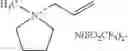
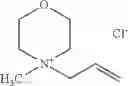
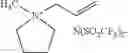
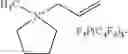
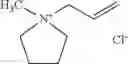
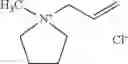
Preparation of Heterocyclic Cations Containing Allyl Side Chains
General Procedure:
1.1 mol of an allyl chloride are added dropwise to 1 mol of the corresponding amine or phosphine. It must be ensured here that the temperature is held at between 30 and 35° C. The reaction mixture is then stirred at 40° C. to 50° C. for 3 h to 48 h (in the case of the formation of solid products, the reaction mixture is diluted with dichloromethane or acetonitrile), and the excess allyl chloride and solvent are then distilled off in vacuo (2·10−3 mbar). The product yield is virtually quantitative.
| TABLE 1 | ||
| Amine/ | ||
| phosphine | Allyl chloride | |
| employed | employed | Product |
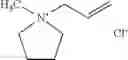
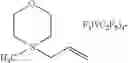
| N(C2H5)3 | Cl—CH2—CH═CH2 | [N(C2H5)3(CH2—CH═CH2)] Cl |
| N(CH3)(C2H5)2 | Cl—CH2—CH═CH2 | [N(CH3)(C2H5)3 |
| (CH2—CH═CH2)]Cl | ||
| P(C4H9)3 | Cl—CH2—CH═CH2 | [P(C4H9)3(CH2—CH═CH2)] Cl |
| Cl—CH2—CH═CH2 | ||
| Cl—CH2—CH═CH2 | ||
| Cl—CH2—CH═CH2 | ||
| Cl—CH2—CH═CH2 | ||
| Cl—CH2—CH═CH2 | ||
| Cl—CH2—CH═CH2 | ||
Example 2
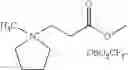
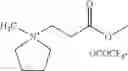
Preparation of Heterocyclic Cations Containing Carboxylate Side Chains or Carbonate Side Chains
General Procedure:
1 mol of the corresponding amine or phosphine in 300 ml of acetonitrile are initially introduced in a 2 l multinecked round-bottomed flask with precision glass stirrer and brought to 80° C. 1.1 mol of the corresponding halocarboxylate or -carbonate (preferably bromocarboxylate or -carbonate) are subsequently slowly added dropwise over the course of 1.5 h.
The reaction mixture is then allowed to react further at this temperature for 0.5 to 48 hours and stirred into 1 l of ethyl acetate, whereupon the product precipitates as a white solid. The product is filtered off with suction, rinsed with ethyl acetate and dried (rotary evaporator with water bath at about 30° C.). The yield is between 90 and 95%.
| TABLE 2 | ||
| Amine/phosphine | Chloro(bromo)- | |
| employed | alkylcarboxylate | Product |
| N(C2H5)3 | Br—CH2—C(O)—O—C2H5 | [N(C2H5)3(CH2—C(O)—O—C2H5)] |
| Br | ||
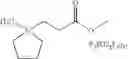
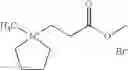
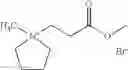
| N(CH3)2(C2H5) | Br—CH2—CH2—C(O)—O—CH3 | [N(CH3)2(C2H5) |
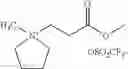
| (CH2—CH2—C(O)—O—CH3)] Br | ||
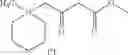
| N(CH3)2(C2H5) | Br—CH2—C(O)—CH2—C(O)—O—CH3 | [N(CH3)2(C2H5) |
| (CH2—C(O)—CH2—C(O)—O—CH3)] Br | ||
| N(CH3)2(C2H5) | Br—CH2—O—C(O)—O—CH3 | [N(CH3)2(C2H5) |
| (CH2—O—C(O)—O—CH3)] Br | ||
| P(C4H9)3 | Br—CH2—C(O)—O—C2H5 | [P(C4H9)3(CH2—C(O)—O—C2H5)] |
| Br | ||
| Br—CH2—CH2—C(O)—O—CH3 | ||
| Br—CH2—C(O)—CH2—C(O)—O—CH3 | ||
| Br—CH2—O—C(O)—O—CH3 | ||
| Br—CH2—CH2—C(O)—O—CH3 | ||
| Br—CH2—CH2—C(O)—O—CH3 | ||
| Cl—CH2—O—C(O)—O—CH3 | ||
| Cl—CH2—C(O)—CH2—C(O)—O—CH3 | ||
| Cl—CH2—CH2—C(O)—O—CH3 | ||
| Cl—CH2—CH2—C(O)—O—CH3 | ||
| Cl—CH2—CH2—C(O)—O—CH3 | ||
Example 3
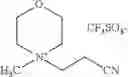
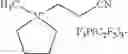
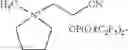
Preparation of Heterocyclic Cations Containing Cyano-Containing Side Chains
General Procedure:
1.1. mol of a chloroalkyl nitrile (or bromo- or iodoalkyl nitrile) are added dropwise to 1 mol of the corresponding amine or phosphine. It must be ensured here that the temperature is held at between 30 and 50°. The reaction mixture is then stirred at 50° C. to 80° C. for 3 h to 48 h (in the case of the formation of solid products, the reaction mixture is diluted with acetonitrile), and the excess chloroalkyl nitrile and solvent is then distilled off in vacuo (2·10−3 mbar). The product yield is virtually quantitative.
| TABLE 3 | ||
| Amine/ | ||
| phosphine | Chloroalkyl | |
| employed | nitrile | Product |
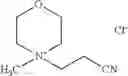
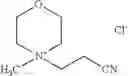
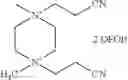
| N(C2H5)3 | Cl—CH2—CH2—CN | [N(C2H5)3(CH2—CH2—CN)] Cl |
| N(CH3)2(C2H5) | Cl—CH2—CH2—CN | [N(CH3)2(C2H5) |
| (CH2—CH2—CN)] Cl | ||
| P(C4H9)3 | Cl—CH2—CH2—CN | [P(C4H9)3(CH2—CH2—CN)] Cl |
| Cl—CH2—CH2—CN | ||
| Cl—CH2—CH2—CN | ||
| Cl—CH2—CH2—CN | ||
| Cl—CH2—CH2—CN | ||
| Cl—CH2—CH2—CN | ||
| Cl—CH2—CH2—CN | ||
Preparation of Fluoroalkylphosphate- and Fluoroalkylphosphinate-Based Reactive Ionic Liquids
Example 4
Preparation of Fluoroalkylphosphate-Based Reactive Ionic Liquids
General Procedure
1 mol of the corresponding onium chloride or onium bromide (from the examples described above) are dissolved in 200 ml of deionised water in a flask with magnetic stirrer bar, and 1 mol of the corresponding potassium (or sodium) fluoroalkylphosphate is subsequently added slowly. 2 phases immediately form.
These two phases are stirred at room temperature for a further 1 h. The organic phase is then separated off and washed 5 times with 100 ml of deionised water each time until free from chloride (evidence: 1 molar silver nitrate solution) and dried at 80° C.-90° C. in vacuo.
Example 5.1
Preparation of Bis(Fluoroalkyl)Phosphinate-Based Reactive Ionic Liquids by Means of Phosphonic Acid
General Procedure
1 mol of the corresponding onium chloride (from the examples described above) are dissolved in 200 ml of deionised water in a flask with magnetic stirrer bar, and 1 mol of the corresponding bis(fluoroalkyl)phosphinic acid is subsequently added slowly.
The reaction mixture is stirred at room temperature for a further 1 h, and water is distilled off together with hydrochloric acid formed. In order to achieve complete removal of hydrochloric acid, repeated azeotropic distillation with dioxane and water can be used (until a negative test with silver nitrate solution). Drying at 80° C.-90° C. in vacuo gives the bis(fluoroalkyl)-phosphinates in virtually quantitative yield.
Example 5.2
Preparation of Bis(Fluoroalkyl)Phosphinate-Based Reactive Ionic Liquids Via the Corresponding Potassium Salts
General Procedure
1 mol of the corresponding onium chloride (from the examples described above) is dissolved in isopropanol (or methanol or acetonitrile) in a flask with magnetic stirrer bar, and 1 mol of the corresponding potassium fluoroalkylphosphinate is subsequently added slowly.
The reaction mixture is stirred at room temperature for a further 1 h, and KCl formed is filtered off. Removal of isopropanol (or methanol or acetonitrile) in vacuo with the aid of a rotary evaporator gives the bis(fluoroalkyl)-phosphinates in virtually quantitative yield.
Example 5.3
Preparation of Bis(Fluoroalkyl)Phosphinate-Based Reactive Ionic Liquids Via the Corresponding Methylphosphinates
1 to 1.1 mol of the corresponding methyl bis(fluoroalkyl)phosphinate are added to 1 mol of the corresponding onium chloride (or bromide) (from the examples described above) in a flask with magnetic stirrer bar.
The reaction mixture is stirred at room temperature or with heating up to 100° C. for 1 to 20 h, and CH3Cl (or CH3Br) formed and excess methyl bis-(fluoroalkyl)phosphinate are removed in vacuo. Bis(fluoroalkyl)phosphinates form in virtually quantitative yield.
| TABLE 4 | ||
| Potassium salt or | ||
| phosphinic acid or | ||
| methyl phosphin- | ||
| Onium salt employed | ate employed | Ionic liquid |
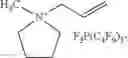
| [N(C2H5)3(CH2—CH═CH2)] Cl | K F3P(C2F5)3 | [N(C2H5)3(CH2—CH═CH2)] |
| F3P(C2H5)3 | ||
| [N(C2H5)3(CH2—CH═CH2)] Cl | K F3P(C4F9)3 | [N(C2H5)3(CH2—CH═CH2)] |
| F3P(C4H9)3 | ||
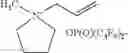
| [N(C2H5)3(CH2—CH═CH2)] Cl | K OP(O)(C2F5)2 | [N(C2H5)3(CH2—CH═CH2)] |
| HOP(O)(C2F5)2 | OP(O)(C2F5)2 | |
| CH3OP(O)(C2F5)2 | ||
| [N(C2H5)3(CH2—CH═CH2)] Cl | K OP(O)(C4F9)2 | [N(C2H5)3(CH2—CH═CH2)] |
| HOP(O)(C4F9)2 | OP(O)(C4F9)2 | |
| CH3OP(O)(C4F9)2 | ||
| [N(CH3)(C2H5)3(CH2—CH═CH2)] | K F3P(C2F5)3 | [N(CH3)(C2H5)3(CH2—CH═CH2)] |
| Cl | F3P(C2F5)3 | |
| [P(C4H9)3(CH2—CH═CH2)] Cl | K F3P(C2F5)3 | [P(C4H9)3(CH2—CH═CH2)] |
| F3P(C2H5)3 | ||
| K F3P(C2F5)3 | ||
| K F3P(C4F9)3 | ||
| K OP(O)(C2F5)2 HOP(O)(C2F5)2 CH3OP(O)(C2F5)2 | ||
| K OP(O)(C4F9)2 HOP(O)(C4F9)2 CH3OP(O)(C4F9)2 | ||
| K F3P(C2F5)3 | ||
| K F3P(C2F5)3 | ||
| K F3P(C2F5)3 | ||
| TABLE 5 | ||
| Potassium salt | ||
| or methyl | ||
| Onium salt employed | phosphinate employed | Ionic liquid |
| [N(C2H5)3(CH2—C(O)—O—(C2H5)] Br | K F3P(C2F5)3 | [N(C2H5)3(CH2—C(O)—O—(C2H5)] |
| F3P(C2F5)3 | ||
| [N(C2H5)3(CH2—C(O)—O—(C2H5)] Br | K F3P(C4F9)3 | [N(C2H5)3(CH2—C(O)—O—(C2H5)] |
| F3P(C4F9)3 | ||
| [N(C2H5)3(CH2—C(O)—O—(C2H5)] Br | K OP(O)(C2F5)3 | [N(C2H5)3(CH2—C(O)—O—(C2H5)] |
| OP(O)(C2F5)2 | ||
| [N(C2H5)3(CH2—C(O)—O—(C2H5)] Br | K OP(O)(C4F9)2 | [N(C2H5)3(CH2—C(O)—O—(C2H5)] |
| CH3OP(O)(C4F9)2 | OP(O)(C4F9)2 | |
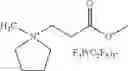
| [N(CH3)2(C2H5) | K F3P(C2F5)3 | [N(CH3)2(C2H5) (CH2—CH2—C(O)—O—(CH3)] |
| (CH2—CH2—C(O)—O—CH3)] Br | F3P(C2F5)3 | |
| [N(CH3)2(C2H5) | K F3P(C2F5)3 | [N(CH3)2(C2H5) |
| (CH2—C(O)—CH2—C(O)—O—CH3)] | (CH2—C(O)—CH2—C(O)—O—(CH3)] | |
| Br | F3P(C2F5)3 | |
| [N(CH3)2(C2H5) | K F3P(C2F5)3 | [N(CH3)2(C2H5) (CH2—O—C(O)—O—(CH3)] |
| (CH2—O—C(O)—O—CH3)] Br | F3P(C2F5)3 | |
| [P(C4H9)3(CH2—C(O)—O—(C2H5)] Br | K F3P(C2F5)3 | [P(C4H9)3(CH2—C(O)—O—(C2H5)] F3P(C2F5)3 |
| K F3P(C2F5)3 | ||
| K F3P(C4F9)3 | ||
| K OP(O)(C2F5)2 CH3OP(O)(C2F5)2 | ||
| K OP(O)(C4F9)2 CH3OP(O)(C4F9)2 | ||
| K F3P(C2F5)3 | ||
| K F3P(C2F5)3 | ||
| K F3P(C2F5)3 | ||
| K F3P(C2F5)3 | ||
| K F3P(C2F5)3 | ||
| K F3P(C2F5)3 | ||
| K F3P(C2F5)3 | ||
| K F3P(C2F5)3 | ||
| K F3P(C2F5)3 | ||
| TABLE 6 | ||
| Potassium salt | ||
| or phosphinic | ||
| acid or methyl | ||
| Onium salt | phosphinate | |
| employed | employed | Ionic liquid |
| [N(C2H5)3(CH2—CH2—CN)] Cl | K F3P(C2F5)3 | [N(C2H5)3(CH2—CH2—CN)] |
| F3P(C2F5)3 | ||
| [N(C2H5)3(CH2—CH2—CN)] Cl | K F3P(C4F9)3 | [N(C2H5)3(CH2—CH2—CN)] |
| F3P(C4F9)3 | ||
| [N(C2H5)3(CH2—CH2—CN)] Cl | K OP(O)(C2F5)2 | [N(C2H5)3(CH2—CH2—CN)] |
| HOP(O)(C2F5)2 | OP(O)(C2F5)2 | |
| CH3OP(O)(C2F5)2 | ||
| [N(C2H5)3(CH2—CH2—CN)] Cl | K OP(O)(C4F9)2 | [N(C2H5)3(CH2—CH2—CN)] |
| HOP(O)(C4F9)2 | OP(O)(C4F9)2 | |
| CH3OP(O)(C4F9)2 | ||
| [N(CH3)2(C2H5) | K F3P(C2F5)3 | [N(CH3)2(C2H5) (CH2—CH2—CN)] |
| (CH2—CH2—CN)] Cl | F3P(C2F5)3 | |
| [P(C4H9)3(CH2—CH2—CN)] Cl | K F3P(C2F5)3 | [P(C4H9)3(CH2—CH2—CN)] |
| F3P(C2F5)3 | ||
| K F3P(C2F5)3 | ||
| K F3P(C4F9)3 | ||
| K OP(O)(C2F5)2 HOP(O)(C2F5)2 CH3OP(O)(C2F5)2 | ||
| K OP(O)(C4F9)2 HOP(O)(C4F9)2 CH3OP(O)(C4F9)2 | ||
| K F3P(C2F5)3 | ||
| K F3P(C2F5)3 | ||
| K F3P(C2F5)3 | ||
| K F3P(C2F5)3 | ||
| K F3P(C2F5)3 | ||
Preparation of Acetate-, Triflate-, Imide- and Methide-Based Reactive Ionic Liquids
Example 5
Preparation of Imide- and Methide-Based Ionic Liquids
General Procedure
1 mol of the corresponding onium chloride or onium bromide (from the examples described above) are dissolved or partially suspended in 200-500 ml of deionised water in a 1 litre flask with magnetic stirrer bar, and 1 mol of the corresponding lithium salt or potassium salt or 1 mol of bis(tri-fluoromethylsulfonyl)imide (N—H acid) or tris(trifluoromethylsulfonyl)methide (C—H acid) is subsequently added slowly. 2 phases immediately form.
These two phases are stirred at room temperature for a further 1 to 10 hours. The emulsion is then extracted by shaking 3 times with 50 ml of dichloromethane each time. The organic phase is then washed 5 times with 100 ml of deionised water each time until free from chloride (evidence: 1 molar silver nitrate solution).
10 g of Al2O3 and 1.4 g of activated carbon are added to the organic solution, and the mixture is filtered again after about 1 h and evaporated in a rotary evaporator with a water bath at about 80° C.
| TABLE 7 | ||
| Lithium salt or | ||
| bis(trifluoro- | ||
| methylsulfonyl)- | ||
| imide or tris(tri- | ||
| fluoromethyl- | ||
| sulfonyl)methide | ||
| Onium salt employed | employed | Ionic liquid |
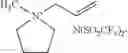
| [N(C2H5)3(CH2—CH═CH2)] Cl | Li N(SO2CF3)2 | [N(C2H5)3(CH2—CH═CH2)] |
| HN(SO2CF3)2 | N(SO2CF3)2 | |
| [N(C2H5)3(CH2—CH═CH2)] Cl | Li C(SO2CF3)2 | [N(C2H5)3(CH2—CH═CH2)] |
| HN(SO2CF3)2 | ||
| [N(CH3)(C2H5)3(CH2—CH═CH2)] | Li N(SO2CF3)2 | [N(CH3)(C2H5)3(CH2—CH═CH2)] |
| Cl | HN(SO2CF3)2 | N(SO2CF3)2 |
| [P(C4H9)3(CH2—CH═CH2)] Cl | Li N(SO2CF3)2 | [P(C4H9)3(CH2—CH═CH2)] |
| HN(SO2CF3)2 | N(SO2CF3)2 | |
| Li N(SO2CF3)2 HN(SO2CF3)2 | ||
| Li C(SO2CF3)2 HC(SO2CF3)2 | ||
| Li N(SO2CF3)2 HN(SO2CF3)2 | ||
| Li N(SO2CF3)2 HN(SO2CF3)2 | ||
| Li N(SO2CF3)2 HN(SO2CF3)2 | ||
| Li N(SO2CF3)2 HN(SO2CF3)2 | ||
| Li N(SO2CF3)2 HN(SO2CF3)2 | ||
| TABLE 8 | ||
| Lithium salt or | ||
| bis(trifluoro- | ||
| methylsulfonyl)- | ||
| imide or tris(tri- | ||
| fluoromethyl- | ||
| sulfonyl)methide | ||
| Onium salt employed | employed | Ionic liquid |
| [N(C2H5)3(CH2—C(O)—O—(C2H5)] Br | Li N(SO2CF3)2 | [N(C2H5)3(CH2—C(O)—O—(C2H5)] |
| HN(SO2CF3)2 | N(SO2CF3)2 | |
| [N(C2H5)3(CH2—C(O)—O—(C2H5)] Cl | Li OSO2CF3 | [N(C2H5)3(CH2—C(O)—O—(C2H5)] |
| OSO2CF3 | ||
| [N(C2H5)3(CH2—C(O)—O—(C2H5)] Cl | Li OCOCF3 | [N(C2H5)3(CH2—C(O)—O—(C2H5)] |
| OCOCF3 | ||
| [N(C2H5)3(CH2—C(O)—O—(C2H5)] Br | Li C(SO2CF3)2 | [N(C2H5)3(CH2—C(O)—O—(C2H5)] |
| HC(SO2CF3)2 | C(SO2CF3)3 | |
| [N(CH3)2(C2H5) | Li N(SO2CF3)2 | [N(CH3)2(C2H5) (CH2—CH2—C(O)—O—(CH3)] |
| (CH2—C(O)—O—(CH3)] Br | HN(SO2CF3)2 | N(SO2CF3)2 |
| [N(CH3)2(C2H5) | Li N(SO2CF3)2 | [N(CH3)2(C2H5) |
| (CH2—C(O)—CH2—C(O)—O—(CH3)] | HN(SO2CF3)2 | (CH2—C(O)—CH2—C(O)—O—(CH3)] |
| Br | N(SO2CF3)2 | |
| [N(CH3)2(C2H5) | Li N(SO2CF3)2 | [N(CH3)2(C2H5) |
| (CH2—O—C(O)—O—(CH3)] Br | HN(SO2CF3)2 | (CH2—O—C(O)—O—(CH3)] N(SO2CF3)2 |
| [P(C4H9)3(CH2—C(O)—O—(C2H5)] Br | Li N(SO2CF3)2 | [P(C4H9)3(CH2—C(O)—O—(C2H5)] |
| HN(SO2CF3)2 | N(SO2CF3)2 | |
| Li N(SO2CF3)2 HN(SO2CF3)2 | ||
| Li C(SO2CF3)3 HC(SO2CF3)3 | ||
| Li N(SO2CF3)2 HN(SO2CF3)2 | ||
| Li N(SO2CF3)2 HN(SO2CF3)2 | ||
| Li N(SO2CF3)2 HN(SO2CF3)2 | ||
| Li N(SO2CF3)2 HN(SO2CF3)2 | ||
| Li N(SO2CF3)2 HN(SO2CF3)2 | ||
| Li N(SO2CF3)2 HN(SO2CF3)2 | ||
| Li N(SO2CF3)2 HN(SO2CF3)2 | ||
| Li N(SO2CF3)2 HN(SO2CF3)2 | ||
| Li N(SO2CF3)2 HN(SO2CF3)2 | ||
| TABLE 9 | ||
| Lithium salt or | ||
| bis(trifluoro- | ||
| methylsulfonyl)- | ||
| imide or tris | ||
| (trifluoromethyl- | ||
| sulfonyl)methide | ||
| Onium salt employed | employed | Ionic liquid |
| [N(C2H5)3(CH2—CH2—CN)] Cl | Li N(SO2CF3)2 | [N(C2H5)3(CH2—CH2—CN)] |
| HN(SO2CF3)2 | N(SO2CF3)2 | |
| [N(C2H5)3(CH2—CH2—CN)] Cl | Li C(SO2CF3)3 | [N(C2H5)3(CH2—CH2—CN)] |
| HC(SO2CF3)3 | C(SO2CF3)2 | |
| [N(CH3)2(C2H5) | Li N(SO2CF3)2 | [N(CH3)2(C2H5) |
| (CH2—CH2—CN)] Cl | HN(SO2CF3)2 | (CH2—CH2—CN)] N(SO2CF3)2 |
| [P(C4H9)3(CH2—CH2—CN)] Cl | Li N(SO2CF3)2 | [P(C4H9)3(CH2—CH2—CN)] |
| HN(SO2CF3)2 | N(SO2CF3)2 | |
| Li N(SO2CF3)2 HN(SO2CF3)2 | ||
| Li C(SO2CF3)3 HC(SO2CF3)3 | ||
| Li N(SO2CF3)2 HN(SO2CF3)2 | ||
| Li N(SO2CF3)2 HN(SO2CF3)2 | ||
| Li N(SO2CF3)2 HN(SO2CF3)2 | ||
| Li N(SO2CF3)2 HN(SO2CF3)2 | ||
| Li N(SO2CF3)2 HN(SO2CF3)2 | ||
Preparation of Trifluoroacetate- or Triflate-Based Ionic Liquids
Example 6.1
Preparation of Triflate-Based Ionic Liquids by Means of Triflic Acid
General Procedure
1 mol of the corresponding onium chloride (from the examples described above) is dissolved in 200-500 ml of deionised water in a flask with magnetic stirrer bar, and 1 mol of triflic acid (=trifluoromethanesulfonic acid) is subsequently added slowly.
The reaction mixture is stirred at room temperature for a further 1 h, and water is distilled off together with HCl formed. In order to achieve complete removal of HCl, repeated azeotropic distillation with dioxane and water can be used (until a negative test with silver nitrate solution). Drying at 80° C.-90° C. in vacuo gives the corresponding triflates in virtually quantitative yield.
Example 6.2
Preparation of Trifluoroacetate- or Triflate-Based Ionic Liquids Via the Corresponding Potassium or Lithium Salts
General Procedure
1 mol of the corresponding onium chloride (from the examples described above) is dissolved in isopropanol (or methanol or acetonitrile) in a flask with magnetic stirrer bar, and 1 mol of the corresponding potassium (or lithium) trifluoroacetate or triflate is subsequently added slowly.
The reaction mixture is stirred at room temperature for a further 1 h, and KCl (or LiCl) formed is filtered off. Removal of isopropanol (or methanol or acetonitrile) in vacuo with the aid of a rotary evaporator gives the trifluoroacetates or triflates in virtually quantitative yield.
Example 6.3
Preparation of Trifluoroacetate- and Triflate-Based Ionic Liquids Via the Corresponding Methyl Triflates, Trimethylsilyl Triflates, Triflic Anhydrides or Trifluoroacetic Anhydrides
1 to 1.1 mol of the corresponding methyl triflates or trimethylsilyl triflates or triflic anhydrides or trifluoroacetic anhydrides are added to 1 mol of the corresponding onium chloride (or bromide) (from the examples described above) in a flask with magnetic stirrer bar.
The reaction mixture is stirred at room temperature or with heating up to 100° C. for a further 1 to 48 h, and CH3Cl (or CH3Br or (CH3)3SiCl or CF3SO2Cl or CF3COCl or CF3COBr) formed and excess methyl or trimethylsilyl triflates or anhydrides are removed in vacuo. Trifluoroacetates or triflates form in virtually quantitative yield.
| TABLE 10 | ||
| Lithium or potas- | ||
| slum salt or | ||
| methyl triflate or | ||
| anhydride em- | ||
| Onium salt employed | ployed | Ionic liquids |
| [N(C2H5)3(CH2—CH═CH2)] Cl | K OSO2CF3, | [N(C2H5)3(CH2—CH═CH2)] |
| HOSO2CF3, | ||
| CH3OSO2CF3, | ||
| (CH3)3SiOSO2CF3, | ||
| [N(C2H5)3(CH2—CH═CH2)] Cl | Li OCOCF3, | [N(C2H5)3(CH2—CH═CH2)] |
| (CF3CO)2O | ||
| K OSO2CF3, HOSO2CF3, CH3OSO2CF3, (CH3)3SiOSO2CF3, | ||
| Li OCOCF3, (CF3CO)2O | ||
| [N(C2H5)3(CH2—C(O)—O—(C2H5)] Br | K OSO2CF3, | [N(C2H5)3(CH2—C(O)—O—(C2H5)] |
| HOSO2CF3, | OSO2CF3 | |
| CH3OSO2CF3, | ||
| (CH3)3SiOSO2CF3, | ||
| [N(C2H5)3(CH2—C(O)—O—(C2H5)] Br | K OCOCF3, | [N(C2H5)3(CH2—C(O)—O—(C2H5)] |
| (CF3CO)2O | OCOCF3 | |
| K OSO2CF3, HOSO2CF3, CH3OSO2CF3, (CH3)3SiOSO2CF3 | ||
| K OCOCF3, (CF3CO)2O | ||
| K OSO2CF3, HOSO2CF3, CH3OSO2CF3, (CH3)3SiOSO2CF3 | ||
| K OCOCF3, (CF3CO)2O | ||
| K OSO2CF3, HOSO2CF3, CH3OSO2CF3, (CH3)3SiOSO2CF3 | ||
| K OSO2CF3, HOSO2CF3, CH3OSO2CF3, (CH3)3SiOSO2CF3 | ||
| K OSO2CF3, HOSO2CF3, CH3OSO2CF3, (CH3)3SiOSO2CF3 | ||
| TABLE 11 | ||
| Lithium or potas- | ||
| sium salt or | ||
| methyl triflate or | ||
| anhydride | ||
| Onium salt employed | employed | Ionic liquids |
| [N(C2H5)3(CH2—CH2—CN)] Cl | K OSO2CF3, | [N(C2H5)3(CH2—CH2—CN)] OSO2CF3 |
| HOSO2CF3, | ||
| CH3OSO2CF3, | ||
| (CH3)3SiOSO2CF3 | ||
| [N(C2H5)3(CH2—CH2—CN)] Cl | K OCOCF3, | [N(C2H5)3(CH2—CH2—CN)] OCOCF3 |
| (CF3CO)2O | ||
| K OSO2CF3, HOSO2CF3, CH3OSO2CF3, (CH3)3SiOSO2CF3 | ||
| K OCOCF3, (CF3CO)2O | ||
| K OSO2CF3, CH3OSO2CF3, (CH3)3SiOSO2CF3 | ||
| K OSO2CF3, HOSO2CF3, CH3OSO2CF3, (CH3)3SiOSO2CF3 | ||
| K OSO2CF3, HOSO2CF3, CH3OSO2CF3, (CH3)3SiOSO2CF3 | ||
| K OSO2CF3, HOSO2CF3, CH3OSO2CF3, (CH3)3SiOSO2CF3 | ||
| K OSO2CF3, HOSO2CF3, CH3OSO2CF3, (CH3)3SiOSO2CF3 | ||
Example 7
Preparation of Borate-, Phosphate- and Acuminate-Based Ionic liquids
General Procedure
1 mol of the corresponding onium chloride or onium bromide (from the examples described above) is dissolved in 2 l of dichloromethane in a 3 litre flask with magnetic stirrer bar, and 1 mol of the corresponding potassium or lithium salt is subsequently added slowly. After addition, the reaction mixture is stirred for 5 days. 500 ml of deionised water are then added to the batch. 2 phases form. The organic phase is separated off, the aqueous phase is washed with 300 ml of dichloromethane, and all organic phases are combined. The organic phase is washed further twice with 250 ml of deionised water each time and then evaporated to ⅓ and subsequently stirred into 1 l of n-heptane.
Two phases form. The n-heptane phase comprising the ionic liquid is separated off overnight and evaporated in a rotary evaporator with a water bath at 60 to 70° C.
| TABLE 12 | ||
| Onium salt | Potassium or lithium salt | |
| employed | employed | Ionic liquid |
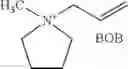
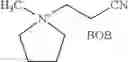
| [N(C2H5)3(CH2—CH═CH2)] Cl | [N(C2H5)3(CH2—CH═CH2)] BOB | |
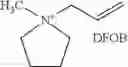
| [N(C2H5)3(CH2—CH═CH2)] Cl | [N(C2H5)3(CH2—CH═CH2)] DFOB | |
| [N(C2H5)3(CH2—CH═CH2)] Cl | [N(C2H5)3(CH2—CH═CH2)] D(Ac)OB | |
| [N(C2H5)3(CH2—CH═CH2)] Cl | [N(C2H5)3(CH2—CH═CH2)] DFGB | |
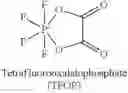
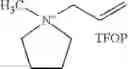
| [N(C2H5)3(CH2—CH═CH2)] Cl | [N(C2H5)3(CH2—CH═CH2)] TFOP | |
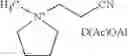
| [N(C2H5)3(CH2—CH═CH2)] Cl | [N(C2H5)3(CH2—CH═CH2)] D(Ac)OAl | |
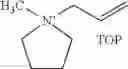
| [N(C2H5)3(CH2—CH═CH2)] Cl | [N(C2H5)3(CH2—CH═CH2)] TOP | |
| [N(C2H5)3(CH2—CH═CH2)] Cl | [N(C2H5)3(CH2—CH═CH2)] DFPB | |
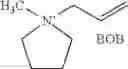
| [N(CH3)(C2H5)3(CH2—CH═CH2)] Cl | K or Li BOB | [N(CH3)(C2H5)3(CH2—CH═CH2)] |
| BOB | ||
| [N(CH3)(C2H5)3(CH2—CH═CH2)] Cl | K or Li DFOB | [N(CH3)(C2H5)3(CH2—CH═CH2)] |
| DFOB | ||
| [P(C4H9)3(CH2—CH═CH2)] Cl | K or Li BOB | [P(C4H9)3(CH2—CH═CH2)] |
| BOB | ||
| [P(C4H9)3(CH2—CH═CH2)] Cl | K or Li DFOB | [P(C4H9)3(CH2—CH═CH2)] |
| DFOB | ||
| K or Li BOB | ||
| K or Li DFOB | ||
| K or Li TOP | ||
| K or Li TFOP | ||
| K or Li D(Ac)OAl | ||
| K or Li BOB | ||
| K or Li DFOB | ||
| K or Li BOB | ||
| K or Li DFOB | ||
| K or Li BOB | ||
| K or Li DFOB | ||
| K or Li BOB | ||
| K or Li DFOB | ||
| K or Li BOB | ||
| K or Li DFOB | ||
| TABLE 13 | ||
| Potassium or | ||
| lithium salt | ||
| Onium salt employed | employed | Ionic liquid |
| [N(C2H5)3(CH2—C(O)—O—C2H5)] Br | K or Li BOB | [N(C2H5)3(CH2—C(O)—O—C2H5)] BOB |
| [N(C2H5)3(CH2—C(O)—O—C2H5)] Br | K or Li DFOB | [N(C2H5)3(CH2—C(O)—O—C2H5)] DFOB |
| [N(C2H5)3(CH2—C(O)—O—C2H5)] Br | K or Li TOP | [N(C2H5)3(CH2—C(O)—O—C2H5)] TOP |
| [N(C2H5)3(CH2—C(O)—O—C2H5)] Br | K or Li D(Ac)OAl | [N(C2H5)3(CH2—C(O)—O—C2H5)] D(Ac)Oal |
| [N(CH3)2(C2H5)(CH2—CH2—C(O)—O—CH3)] Br | K or Li BOB | [N(CH3)2(C2H5)(CH2—CH2—C(O)—O—CH3)] BOB |
| [N(CH3)2(C2H5)(CH2—CH2—C(O)—O—CH3)] Br | K or Li DFOB | [N(CH3)2(C2H5)(CH2—CH2—C(O)—O—CH3)] DFOB |
| [N(CH3)2(C2H5)(CH2—C(O)—CH2—C(O)—O—CH3)] Br | K or Li BOB | [N(CH3)2(C2H5)(CH2—C(O)—CH2—C(O)—O—CH3)] BOB |
| [N(CH3)2(C2H5)(CH2—C(O)—CH2—C(O)—O—CH3)] Br | K or Li DFOB | [N(CH3)2(C2H5)(CH2—C(O)—CH2—C(O)—O—CH3)] BDFOB |
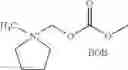
| [N(CH3)2(C2H5)(CH2—O—C(O)—O—CH3)] Br | K or Li BOB | [N(CH3)2(C2H5)(CH2—O—C(O)—O—CH3)] BOB |
| [N(CH3)2(C2H5)(CH2—O—C(O)—O—CH3)] Br | K or Li DFOB | [N(CH3)2(C2H5)(CH2—O—C(O)—O—CH3)] DFOB |
| [P(C4H9)3(CH2—C(O)—O—C2H5)] Br | K or Li BOB | [P(C4H9)3(CH2—C(O)—O—C2H5)] BOB |
| [P(C4H9)3(CH2—C(O)—O—C2H5)] Br | K or Li DFOB | [P(C4H9)3(CH2—C(O)—O—C2H5)] DFOB |
| K or Li BOB | ||
| K or Li DFOB | ||
| K or Li TOP | ||
| K or Li D(Ac)OAl | ||
| K or Li BOB | ||
| K or Li DFOB | ||
| K or Li BOB | ||
| K or Li DFOB | ||
| K or Li BOB | ||
| K or Li DFOB | ||
| K or Li BOB | ||
| K or Li DFOB | ||
| K or Li BOB | ||
| K or Li DFOB | ||
| K or Li BOB | ||
| K or Li DFOB | ||
| K or Li BOB | ||
| K or Li DFOB | ||
| K or Li BOB | ||
| K or Li DFOB | ||
| K or Li BOB | ||
| K or Li DFOB | ||
| TABLE 14 | ||
| Lithium or | ||
| potassium salt | ||
| or methyl triflate | ||
| or anhydride | ||
| Onium salt employed | employed | Ionic liquid |
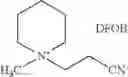
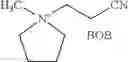
| N(C2H5)3(CH2—CH2—CN)] Cl | LiBOB or KBOB | N(C2H5)3(CH2—CH2—CN)] BON |
| N(C2H5)3(CH2—CH2—CN)] Cl | K or Li DFOB | N(C2H5)3(CH2—CH2—CN)] DFOB |
| K or Li DFOB | ||
| LiBOB or KBOB | ||
| K or LiTOP | ||
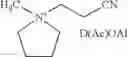
| K or Li D(Ac)OAl | ||
| K or Li DFOB | ||
| LiBOB or KBOB | ||
| K or Li DFOB | ||
| K or Li DFOB | ||
| LiBOB or KBOB | ||
| K or Li DFOB | ||
| K or Li DFOB | ||
| LiBOB or KBOB | ||
| K or Li DFOB | ||
| LiBOB or KBOB | ||
Example 8
Investigations on Graphite
In each case, 5 cyclic voltammograms are recorded successively in a measurement cell with graphite anode (SFG 44 with PVDF binder), lithium counterelectrode and lithium reference electrode. To this end, the potential is firstly lowered starting from the rest potential to 0 V against Li/Li+ at a rate of 0.1 mV/s and then returned to the rest potential.
The electrolyte used is 1 M LiPF6 in ethylene carbonate:diethylene carbonate (ratio 3:7) to which about 2% of a reactive ionic liquid selected from Table 7 is added in each case. The reactive ionic liquid forms a passivating top layer at potentials between about 2 V and 0.9 V against Li/Li+. From the second cycle, a 95% yield (±5% measurement tolerance) of the inclusion and extraction of lithium ions in the graphite is achieved.
Co-intercalation of the reactive ionic liquid selected from Table 15 in the graphite cannot be observed.
| TABLE 15 | |
| Yield in % |
| Cycle | Cycle | Cycle | Cycle | Cycle | |
| Ionic liquid | 1 | 2 | 3 | 4 | 5 |
| Reference* no IL additive | 80 | 82 | 90 | 93 | 95 |
| 75 | 95 | 98 | 99 | 99 | |
| 76 | 98 | 99 | 99 | 99 | |
| 72 | 96 | 98 | 98 | 99 | |
| 70 | 95 | 98 | 99 | 99 | |
| 77 | 97 | 99 | 99 | 100 | |
| 72 | 95 | 97 | 98 | 99 | |
| 78 | 97 | 99 | 99 | 100 | |
| 75 | 94 | 96 | 99 | 99 | |
| 72 | 93 | 94 | 97 | 99 | |
| 74 | 99 | 95 | 99 | 99 | |
| 74 | 96 | 98 | 98 | 99 | |
| 72 | 95 | 98 | 99 | 99 | |
| 72 | 95 | 98 | 99 | 99 | |
| 77 | 97 | 99 | 99 | 100 | |
| 72 | 94 | 97 | 98 | 99 | |
| 72 | 95 | 98 | 98 | 99 | |
| 80 | 97 | 99 | 99 | 100 | |
| 75 | 95 | 97 | 99 | 100 | |
| 72 | 93 | 97 | 98 | 99 | |
| 74 | 93 | 95 | 99 | 99 | |
| 74 | 95 | 96 | 99 | 99 | |
| 72 | 93 | 95 | 98 | 99 | |
| 74 | 96 | 98 | 98 | 99 | |
| 72 | 93 | 96 | 98 | 99 | |
| 72 | 94 | 96 | 98 | 99 | |
| 72 | 95 | 98 | 99 | 99 | |
| 77 | 97 | 99 | 100 | 100 | |
| 72 | 94 | 97 | 98 | 99 | |
| 72 | 95 | 98 | 98 | 99 | |
| 80 | 97 | 99 | 100 | 100 | |
| 80 | 97 | 99 | 99 | 100 | |
| *Reference = LiPF6 in EC:DEC (3:7) |
Example 9
Investigations on Graphite
In each case, 5 cyclic voltammograms are recorded successively in a measurement cell with graphite anode (SFG 44 with PVDF binder), lithium counterelectrode and lithium reference electrode. To this end, the potential is firstly lowered starting from the rest potential to 0 V against Li/Li+ at a rate of 0.1 mV/s and then returned to the rest potential.
The electrolyte used is 1 M LiPF6 in EC:DEC (3:7) to which about 10% of a reactive ionic liquid selected from Table 8 is added in each case. The reactive ionic liquid forms a passivating top layer at potentials between about 2 V and 0.9 V against Li/Li+. From the second cycle, a greater than 90% yield (±5% measurement tolerance) of the inclusion and extraction of lithium ions in the graphite is achieved.
Co-intercalation of the reactive ionic liquid selected from Table 16 in the graphite cannot be observed.
| TABLE 16 | |
| Yield in % |
| Cycle | Cycle | Cycle | Cycle | Cycle | |
| Ionic liquid (IL) | 1 | 2 | 3 | 4 | 5 |
| Reference* no IL additive | 80 | 82 | 90 | 93 | 95 |
| 70 | 93 | 98 | 99 | 99 | |
| 72 | 96 | 99 | 99 | 99 | |
| 69 | 90 | 98 | 98 | 99 | |
| 69 | 95 | 98 | 99 | 99 | |
| 72 | 97 | 99 | 99 | 100 | |
| 70 | 92 | 97 | 98 | 99 | |
| 75 | 95 | 99 | 99 | 100 | |
| 70 | 92 | 95 | 98 | 99 | |
| 69 | 90 | 93 | 97 | 99 | |
| 72 | 90 | 95 | 99 | 99 | |
| 70 | 92 | 97 | 98 | 99 | |
| 72 | 90 | 95 | 99 | 99 | |
| 72 | 92 | 98 | 99 | 99 | |
| 73 | 95 | 99 | 99 | 100 | |
| 70 | 92 | 97 | 98 | 99 | |
| 73 | 95 | 98 | 98 | 99 | |
| 75 | 97 | 99 | 99 | 100 | |
| 70 | 90 | 96 | 98 | 100 | |
| 69 | 91 | 96 | 97 | 99 | |
| 71 | 91 | 95 | 98 | 99 | |
| 72 | 92 | 94 | 99 | 99 | |
| 70 | 90 | 92 | 97 | 99 | |
| 71 | 94 | 97 | 98 | 99 | |
| 70 | 91 | 94 | 97 | 99 | |
| 69 | 93 | 94 | 98 | 99 | |
| 69 | 93 | 97 | 98 | 99 | |
| 75 | 95 | 98 | 198 | 100 | |
| 71 | 91 | 97 | 98 | 99 | |
| 70 | 93 | 96 | 98 | 99 | |
| 78 | 97 | 99 | 100 | 100 | |
| 78 | 97 | 99 | 99 | 100 | |
| *Reference = LiPF6 in EC:DEC (3:7) |
Example 10
Investigations of the Oxidation Stability
In each case, 5 cyclic voltammograms are recorded successively in a measurement cell with platinum working electrode, lithium counterelectrode and lithium reference electrode. To this end, the potential is firstly increased starting from the rest potential to 6.0 V against Li/Li+ at a rate of 10 mV/s and then returned to the rest potential.
The electrolyte used is 1 M LiPF6 in EC:DEC (3:7), to which about 2% of a reactive ionic liquid selected from Table 17 is added in each case. The oxidation potential is determined as >5 V against Li/Li+.
A signal below the oxidation stability of the reference electrolyte is not found in any of the systems investigated.
| TABLE 17 | ||
| Oxidation stability | ||
| EOX | ||
| Reference* no IL additive | >5 V | |
| >5 V | ||
| >5 V | ||
| >5 V | ||
| >5 V | ||
| >5 V | ||
| >5 V | ||
| >5 V | ||
| >5 V | ||
| >5 V | ||
| >5 V | ||
| >5 V | ||
| >5 V | ||
| >5 V | ||
| >5 V | ||
| >5 V | ||
| >5 V | ||
| >5 V | ||
| >5 V | ||
| >5 V | ||
| >5 V | ||
| >5 V | ||
| >5 V | ||
| >5 V | ||
| >5 V | ||
| >5 V | ||
| >5 V | ||
| >5 V | ||
| >5 V | ||
| >5 V | ||
| >5 V | ||
| >5 V | ||
| *Reference = LiPF6 in EC:DEC (3:7) |
Example 11
Investigations of the Oxidation Stability
In each case, 5 cyclic voltammograms are recorded successively in a measurement cell with platinum working electrode, lithium counterelectrode and lithium reference electrode. To this end, the potential is firstly increased starting from the rest potential to 6.0 V against Li/Li+ at a rate of 10 mV/s and then returned to the rest potential.
The electrolyte used is 1 M LiPF6 in EC:DEC to which about 10% of a reactive ionic liquid selected from Table 18 is added in each case. The oxidation potential is determined as >5 V against Li/Lip. A signal below the oxidation stability of the reference electrolyte is not found in any of the systems investigated.
| TABLE 18 | ||
| Oxidation stability | ||
| Ionic liquid | EOX | |
| Reference* no IL additive | >5 V | |
| >5 V | ||
| >5 V | ||
| >5 V | ||
| >5 V | ||
| >5 V | ||
| >5 V | ||
| >5 V | ||
| >5 V | ||
| 4.6-4.8 V | ||
| 4.5-4.7 V | ||
| >5 V | ||
| 4.6-4.8 V | ||
| 4.7-4.8 V | ||
| >5 V | ||
| 4.6-4.8 V | ||
| 4.5-4.7 V | ||
| >5 V | ||
| 4.7-4.8 V | ||
| 4.8-5.0 V | ||
| 4.8-5.0 V | ||
| 4.7-4.8 V | ||
| >5 V | ||
| 4.7-4.8 V | ||
| 4.8-5.0 V | ||
| 4.7-4.8 V | ||
| >5 V | ||
| 4.7-4.8 V | ||
| 4.8-5.0 V | ||
| 4.7-4.8 V | ||
| 4.7-4.8 V | ||
| 4.8-5.0 V | ||
| *Reference = LiPF6 in EC:DEC (3:7) |
Claims
1. Ionic liquids of the general formula I
K+A− (I)
in which:
K+ denotes a cation selected from the group of the general formulae II to IX
where
X denotes CH2, O, S or NR′
R′ denotes —(CH2)n—CN, C1- to C16-alkyl, preferably methyl, ethyl, propyl, H
R denotes H, C1- to C16-alkyl, preferably methyl, ethyl, propyl
R5 denotes —(CH2)n—O—C(O)—R, —(CH2)n—C(O)—OR, —(CH2)n—O—C(O)—OR, —(CH2)n—HC═CH—R or —(CH2)n—CN, where individual CH2 groups may be replaced by O, S or NR,
where n=1 to 8
and
A− denotes an anion selected from the group
[FyP(CmF2m+1)6−y]−
(CmF2m+1)2P(O)O−
CmF2m+1P(O)O22−
O_C(O)—CmF2m+1
O—S(O)2—CmF2m+1
N(C(O)—CmF2m+1)2
N(S(O)2—CmF2m+1)2
N(C(O)—CmF2m+1)(S(O)2—CmF2m+1)
N(C(O)—CmF2m+1)(C(O)F)
N(S(O)2—CmF2m+1)(S(O)2F)
N(S(O)2F)2
C(C(O)—CmF2m+1)3
C(S(O)2—CmF2m+1)3
where y=1, 2, 3, 4 or 5 and m=1 to 8, preferably 1 to 4,
where some of the CF2 groups may be replaced by O, S(O)2, NR or CH2, and where
denotes a 1,2- or 1,3-diol, a 1,2- or 1,3-dicarboxylic acid or a 1,2- or 1,3-hydroxycarboxylic acid
X denotes B or Al
R1 to R4 denote halogen, in particular F, and/or a fluorinated or non-fluorinated alkoxy or carboxyl radical.
2. Ionic liquids according to claim 1, characterised in that the cation K+ is a compound selected from the general formula IV
where
X denotes CH2, O, S or NR′
R′ denotes —(CH2)n—CN, C1- to C16-alkyl, preferably methyl, ethyl, propyl, H
R denotes H, C1- to C16-alkyl, preferably methyl, ethyl, propyl
R5 denotes —(CH2)n—O—C(O)—R, —(CH2)n—C(O)—OR, —(CH2)n—O—C(O)—OR, —(CH2)n—HC═CH—R or —(CH2)n—CN, where individual CH2 groups are replaced by O, S or NR,
where n=1 to 8.
3. Electrolyte comprising at least one conductive salt, an aprotic solvent or solvent mixture, at least one ionic liquid according to claim 1 and optionally further additives.
4. Electrolyte according to claim 3, characterised in that the conductive salt is a lithium conductive salt, such as LiPF6, LiN(SO2CF3)2, LiN(SO2C2F5)2, LiF3P(C2F5)3, LiF3P(C4F9)3, LiB(C2O4)2 or LiF2B(C2O4)2.
5. Electrolyte according to claim 3, characterised in that the conductive salt is selected from the following compounds:
N(C2H5)4BF4, N(C2H5)4PF6, N(C2H5)3(CH3)BF4, N(C2H5)3(CH3)PF6, N(C2H5)4N(SO2CF3)2, N(C2H5)3(CH3)N(SO2CF3)2, N(C2H5)4F3P(C2F5)3, N(C2H5)3(CH3)F3P(C2F5)3.
6. Electrolyte according to claim 3, characterised in that the aprotic solvent consists of organic open-chain or cyclic carbonates, carboxylic acid esters, nitrites, ethers, lactones or a mixture thereof.
7. Process for the preparation of ionic liquids of the formula I according to claim 1, comprising the following steps:
Preparation of heterocyclic cations K+ having alkyl-, carboxylate-, carbonate- or cyano-containing side chains according to claim 1 as onium chlorides or bromides from the corresponding amines, phosphines, halocarboxylates, halocarbonates, haloalkyl nitriles or alkyl halides by conventional wet-chemical methods.
Reaction of these cationic onium chlorides or bromides with the corresponding anionic potassium and/or sodium fluoroalkylphosphates and/or potassium and/or sodium bis(fluoroalkyl)phosphinates and/or potassium and/or sodium fluoroalkylphosphonates and/or fluoroalkylphosphoric acids and/or bis(fluoroalkyl)phosphinic acids and/or fluoroalkylphosphonic acids and/or alkyl, in particular methyl, bis(fluoroalkyl)phosphinates or
lithium imides or methides and/or trifluoromethanesulfonic acid or potassium or lithium trifluoroacetates or triflates or alkyl triflates or trimethylsilyl triflates and/or trifluoromethanesulfonic anhydride or trifluoroacetic anhydride or
lithium or potassium borates, phosphates or aluminates in aqueous and/or alcoholic medium or an organic solvent or without a solvent.
8. Electrochemical and/or electro-optical device containing at least one electrolyte which comprises at least one ionic liquid of the general formula I according to claim 1.
9. Electrochemical and/or electro-optical device according to claim 8, characterised in that it is at least one solar cell, lithium ion battery, lithium battery, double-layer capacitor or supercapacitor, lithium capacitor, light-emitting device, electrochemical sensor and/or biosensor.
10. An electrochemical or electro-optical cells, comprising an ionic liquid according to claims 1.
11. A battery, comprising an ionic liquid according to claim 1.
12. A secondary lithium battery, comprising an ionic liquid according to claim 1.
13. A double-layer capacitor or supercapacitor or lithium capacitors comprising an ionic liquid according to claim 1.
14. (canceled)
15. A lithium or lithium ion battery, comprising an ionic liquid according to claim 1.
16. (canceled)
Images & Drawings included:


















































































































































Sources:
- United States Patent and Trademark Office - verify current appl. status at the USPTO↗
Similar patent applications:
- » 20150137666
Reactive ionic liquid, and ion-immobilized metal oxide particle, ion-immobilized elastomer, and transducer using same - » 20160075835
Reactive ionic liquid, and ion-immobilized metal oxide particle, ion-immobilized elastomer, and transducer using same - » 20170033405
Use of reactive ionic liquids as additives for electrolytes in secondary lithium ion batteries - » 20140300247
Reactive ionic liquid, and ion-immobilized metal oxide particle, ion-immobilized elastomer, and transducer using same - » 20150152045
Reactive ionic liquids - » 10888586
Production, refining and recycling of lightweight and reactive metals in ionic liquids - » 9982190
Production, refining and recycling of lightweight and reactive metals in ionic liquids
Recent applications in this class:
- » 20250197343 2025-06-19
CATIONIC LIPID - » 20240383843 2024-11-21
MC3-Type Lipids - » 20240368071 2024-11-07
LIPID FORMULATIONS FOR GENE EDITING - » 20240360072 2024-10-31
Cationic Lipid Compound and Composition for Delivery of Nucleic Acids and Use Thereof - » 20240124388 2024-04-18
Compounds and compositions for intracellular delivery of therapeutic agents - » 20240116852 2024-04-11
Lipid nanoparticle compositions for delivering circular polynucleotides - » 20240067598 2024-02-29
Constrained lipids and methods of use thereof - » 20240018093 2024-01-18
NEW AMMONIUM COMPOUNDS USEFUL AS SURFACTANTS - » 20240010609 2024-01-11
Lipid formulations for gene editing - » 20230348361 2023-11-02
Ionizable lipid compounds
Recent applications for this Assignee:
- » 20250185653 2025-06-12
Herbicidal compositions comprising 2,4-D - » 20250040553 2025-02-06
Herbicidal compositions comprising trifludimoxazin - » 20240402694 2024-12-05
METHOD FOR MONITORING AND/OR CONTROLLING ONE OR MORE CHEMICAL PLANT(S) - » 20240402684 2024-12-05
MANUFACTURING SYSTEM FOR MONITORING AND/OR CONTROLLING ONE OR MORE CHEMICAL PLANT(S) - » 20240360314 2024-10-31
PROCESS FOR PREPARATION OF ASPHALT MIX COMPOSITION - » 20240309409 2024-09-19
Methods for making L-glufosinate - » 20240301452 2024-09-12
Methods for making L-glufosinate - » 20240239728 2024-07-18
Method and Plant for Producing Ethylene and/or Other Olefins by Steam Cracking - » 20240211517 2024-06-27
KNOWLEDGE INSIGHT CAPTURING SYSTEM - » 20240130221 2024-04-18
HETEROLEPTIC CARBENE COMPLEXES AND THE USE THEREOF IN ORGANIC ELECTRONICS