Multiple-position heel piece with easy engagement/release for Ski-touring bindings
US20110049821A1
2011-03-03
12/850,164
2010-08-04
Abstract:
Heel piece for ski-touring bindings, comprising a base piece (10) fixed to the ski, a slide (20) joined to said base piece and displaceable relative thereto in the longitudinal direction (X-X), wherein said slide has, formed thereon, a body (24) which contains the means (30) for resilient reaction of the heel piece and which has, pivotably mounted thereon, a first rear lever (120) for operating the heel piece, rotationally movable between different working positions, and a front fork (110) engageable with the heel (1a) of a boot (1), in turn movable rotationally between different working positions, said front fork (110) comprising two arms (111) each of which has a free upper end in the form of a hook (112) designed to engage with a corresponding pin (1b) on the heel (1a) of the boot (1).
Assignee:
- SKI TRAB S.r.I. 1 🇮🇹 Bormio (SO), Italy
Interested in similar patents?
Get notified when new applications in this technology area are published.
Classification:
A63C9/0807 » CPC main
Ski bindings yieldable or self-releasing in the event of an accident, i.e. safety bindings for both towing and downhill skiing
A43B5/0417 » CPC further
Footwear for sporting purposes; Ski or like boots; Accessories for soles or associated with soles of ski boots; for ski bindings
A43B5/0423 » CPC further
Footwear for sporting purposes; Ski or like boots; Accessories for soles or associated with soles of ski boots; for ski bindings located on the sides of the sole
A43B5/0496 » CPC further
Footwear for sporting purposes; Ski or like boots boots for touring or hiking skis
A63C9/006 » CPC further
Ski bindings with a climbing wedge
A63C9/0841 » CPC further
Ski bindings yieldable or self-releasing in the event of an accident, i.e. safety bindings with heel hold-downs, e.g. swingable with a single jaw
A63C9/0842 » CPC further
Ski bindings yieldable or self-releasing in the event of an accident, i.e. safety bindings with heel hold-downs, e.g. swingable with a single jaw the jaw pivoting on the body or base about a transverse axis
A63C9/086 » CPC further
Ski bindings yieldable or self-releasing in the event of an accident, i.e. safety bindings using parts which are fixed on the shoe of the user and are releasable from the ski binding
A63C9/084 IPC
Ski bindings yieldable or self-releasing in the event of an accident, i.e. safety bindings with heel hold-downs, e.g. swingable
Description
The present invention relates to a multiple-position heel piece for ski-touring bindings. It is known in the technical sector of ski-touring that there exists the need to provide safety bindings which comprise a front member, or toe piece, able to clamp the toe of the boot, while allowing rotation thereof about a substantially horizontal axis, and a rear member, or heel piece, able to co-operate with the heel of the boot so as to allow three different modes of use, i.e.: release of the heel (walking mode); resting of the boot with greater/lesser inclination (uphill mode); and locking of the heel (downhill mode).
Also known, for example from EP 0,199,096, are bindings of the type described above which, however, have the drawback arising from the fact that the toe piece is without autonomous means for releasing the boot in the transverse direction, as required in the event of a fall or a twisting movement during descent, said safety function being performed by corresponding rear operating means of the heel piece which therefore has a very complex and heavy design, resulting in an assembly which has poor rigidity and is difficult to use.
The technical problem which is posed, therefore, is to provide a ski-binding heel piece which is able to perform:
-
- locking of the heel of the boot with the rigidity normally required for such applications;
- improved locking of the heel with a reduction in the lateral play;
- the possibility of assuming any one of the three operating configurations in a simple and rapid manner suitable for the conditions of use of said heel pieces.
In connection with this problem it is also required that this heel piece should be formed by a small number of small-size and low-weight parts which are easy and inexpensive to produce and assemble and can be easily applied to skis using normal standardized connection means.
These results are achieved according to the present invention by a heel piece for ski bindings according to the characteristic features of Claim 1.
Further details may be obtained from the following description of a non-limiting example of embodiment of the subject of the present invention provided with reference to the accompanying drawings in which:
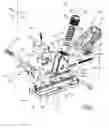
FIG. 1 shows an exploded view of the heel piece according to the present invention;
FIG. 2 shows a side view of the heel piece in the open position;
FIG. 3 shows a side view of the open heel piece during insertion of the boot;
FIG. 4 shows a side view of the heel piece in the closed position for downhill use;
FIG. 5 shows a side view of the heel piece in a first (low) position for raising the free heel so as to allow walking;
FIG. 6 shows a side view of the heel piece in a second (middle) position for raising the heel; and
FIG. 7 shows a side view of the heel piece in a third (high) position for raising the heel.
As shown in FIG. 1 and with reference to a set of three axes, i.e. longitudinal axis X-X, transverse axis Y-Y and vertical axis Z-Z and the arrangements shown by way of example in the figures, conventionally assumed solely for the sake of convenience of the description, so that “front/inner” is regarded as being the part of the heel piece directed towards the boot and rear/outer as being the opposite part, the heel piece according to the present invention comprises:
-
- a fixed base piece 10 which is elongated in the longitudinal direction and is formed by a perimetral frame 11 which defines an inner seat 12 which is open in the vertical direction Z-Z; holes 14 with a vertical axis for fixing the base piece to the ski, not shown, by means of screws 14a are formed in the longitudinal arms 11a of the frame 11.
Said inner seat 12 of the base piece forms a guide for:
-
- a slide 20 which is movable in both directions along the longitudinal axis X-X, following operation of conventional screw means 25 which, passing through the rear transverse side of the base piece 11, cooperate with a nut 25a which is fixed to the slide itself so that rotation of the screw causes displacement of the slide.
The front of the slide has, formed therein, a seat 21 for housing lugs 22a of a step 22 covered by a reinforcing cover piece 23 which is fixed in position by means of a vertical screw 23a so as to allow the heel 1a of the boot 1 to rest thereon (FIG. 3); it is also possible to insert spacers (not shown) between the step and the cover piece in order to adjust precisely the height of the heel; said housing seat 21 is also shaped so as to allow the step 22 to assume at least two stable positions in the longitudinal direction.
The rear part of the slide 20 is provided with a body 24 which has, formed inside it, a hollow cylindrical seat 26 suitable for housing resilient means 30 comprising a spring 31 which is fixed under compression inside the seat 26 between a top closing cap 33 with threading 33a which can be screwed into a female thread 26a of the seat 26 itself and a bottom shaped foot 32.
Said body 24 also has longitudinal tracks 24a formed on the front surface of the said body and designed to form guides for corresponding roller wheels 113a associated with the front fork 110; said longitudinal tracks 24a have an inclination from the top downwards and from the rear towards the front and preferably at least one change in direction along their extension.
The shaped foot 32 has a through-hole 32a in the transverse direction designed to receive a cross-pin 34 which passes through the body 24 via respective substantially vertical eyelets 24b formed in the sides of the body itself.
By means of said pin 34 it is envisaged that a kinematic chain for transmitting the forces for operation of the heel piece is also is incorporated in the body 24; said kinematic chain comprises:
-
- a rear lever 120 which can be operated by the user and rotates on the pin 34;
- a front rotating fork 110 which is able to engage with the heel la of a boot 1 and in turn rotates on the pin 34;
- a rear lever 120 which can be operated by the user and rotates on the pin 34;
In greater detail:
-
- the rear operating lever 120 is formed by a fork with parallel arms 121 which have respective transverse holes 121a through which the said pin 34 passes;
- the front fork 110 is formed by two arms 111, the front free end of which is formed in the manner of a hook 112 and the bottom end of which is pivotably mounted on the pin 34 by means of respective holes 113;
- a connecting cross-pin 113 is arranged between said arms 111, being inserted through corresponding holes 111a;
- which pin 113 carries two roller wheels 113a designed to roll on the corresponding longitudinal tracks 24a of the body 24;
- a further pin 114 projecting transversely outwards and designed for insertion inside suitable respective shaped eyelets 122 in the arms 121 of the lever 120 is also present on each arm 111 of the fork 110;
closing in this way the kinematic chain which will transfer the movement from the operating lever 120 to the front fork 110, as will emerge more clearly below with reference to operation of the heel piece.
According to a preferred embodiment of the heel piece it is envisaged that the bottom end of the lever 120 is formed in the manner of a cam 123 consisting of a first surface 123a, substantially parallel to the longitudinal direction X-X, a second surface 123b, forming an obtuse angle with said first surface 123a, and a third surface 123c, forming an obtuse angle with said second surface 123b.
Similarly the bottom end of the arms 111 of the fork 110 has a respective cam 115 formed by a first surface 115a, substantially parallel to the longitudinal direction X-X, a second surface 115b, forming an acute angle with said first surface 115a.
With this configuration the operating principle of the heel piece is as follows:
-
- once the binding has been fixed to the ski and the desired height of the boot adjusted by means of the support piece 23,
- after arranging the heel piece in the open configuration (FIGS. 2 and 3), rotating the rear lever 120 downwards so that the front fork 110 is recalled upwards by the combined action of the pin 34 and the cams 123 and totally pulled towards the rear by the eyelets 122,
- the heel 1a of the boot 1 is inserted into the heel piece (FIG. 4) and the latter is closed by releasing the lever 120 which, pulled by the spring 31, rotates upwards so that the upwards rotation causes the downwards travel of the roller wheels 113a along the tracks 24a which, as a result of their particular profile, produce a pressure such as to force the fork 110 to rotate towards the heel of the boot until the respective surfaces 123a,115a of the cams 123,115 of the lever 120 of the fork 110 assume a longitudinal position, resting on the base piece 10; in this position the hooks 112 engage with the pins lb of the boot and the heel piece is ready for downhill use;
- in the event of different use of the binding for walking (FIG. 5) it is possible to:
- open the binding pressing the lever 120 downwards so as to cause retraction/rotation of the front fork 110 until the pins 1b of the heel 1a are released from engagement with the hooks 112,
- extract the heel 1a and rotate again towards the front the lever 120 until the second surface 123b of the cam 123 is positioned parallel to the longitudinal axis X-X and rests on the base piece 10;
said operation of the lever 120 causes, via the eyelet 122 which acts on the pins 114, the simultaneous rotation of the fork 110 which pivots downwards towards the front so as to position the second surface 115b of the cam 115 so that it is parallel to the longitudinal axis X-X and rests on the base piece 10; the rear surface 110a of the hook is thus made available for resting the boot thereon (FIG. 5), the boot being retained only by the toe piece (not shown), while the heel 1a is free to be raised/lowered during the walking movement of the user; - in the event of use for uphill walking on steeper slopes (FIG. 6), the lever 120 is rotated towards the rear until the cam 123 and therefore the front fork 110 assumes the initial condition again, the cover piece 23 is pushed to the end of its travel towards the rear, creating a raised support surface on which the hooks 112 of the arms 111 rest; in this position the heel 1a of the boot rests on the convex upper surface 110b of the hooks 112;
- if it is required to use the heel piece for even steeper slopes the lever 120 can be rotated (FIG. 7) towards the front until the third surface 123c of the cam 123 is positioned parallel to the longitudinal axis and rests on the base piece 10 and therefore the front fork 110 is pivoted down towards the front; in this position the lever 120 stably presses against the base piece 10 and rests on the arms 111 and the heel la of the boot rests on the free end of the lever 120, causing a greater inclination of the boot itself, particularly favourable for steeper slopes.
Safety release of the heel piece during downhill use is performed as per the following sequence:
-
- the pulling force exerted by the boot 1 on the hooks 112 of the fork 110 causes the latter to move upwards again and then rotate towards the rear against the pushing force of the spring 31 on the pin 34 and guided by the roller wheels 113a which roll along the tracks 24a, causing as a result disengagement of the hooks 112 from the pins of the boot which is thus free to separate from the ski.
It can therefore be seen how the heel piece according to the present invention, while ensuring a high degree of rigidity and absence of play in the transverse direction compared to the bindings known in the art, forms an assembly with a small number of component parts which is particularly light and simple to use, allowing a fast change in configuration by means of the rear lever which may also be operated using the ski stick, without the user having to bend over, this solution being particularly useful in the conditions of use which are typical of ski touring.
In addition, the heel piece according to the invention incorporates the vertical release system which is provided by the backwards/rotational action of the heel piece, said action in turn causing compression of the reaction spring, this vertical release representing an obvious advance in the ski-touring sector also in view of the simple design and lightness of the assembly.
Claims
1. Heel piece for ski-touring bindings, comprising a base piece (10) fixed to the ski, a slide (20) joined to said base piece and displaceable relative thereto in the longitudinal direction (X-X), characterized in that said slide has, formed thereon, a body (24) which contains the means (30) for resilient reaction of the heel piece and which has, pivotably mounted thereon, a first rear lever (120) for operating the heel piece, rotationally movable between different working positions, and a front engaging member (110) for engaging with the heel (1a) of the boot (1), in turn movable rotationally between different working positions, said lever (120) and engaging member (110) being directly connected together via respective means (114,122) for transmitting the movement from the lever (120) to the engaging member (110).
2. Heel piece according to claim 1, characterized in that said fixed base piece (10) is formed by a perimetral frame (11) which is elongated in the longitudinal direction (X-X) and defines an inner seat which is open in the vertical direction (Z-Z) and forms a guide for the slide (20).
3. Heel piece according to claim 2, characterized in that the front part of the slide (20) has, formed therein, a seat (21) for housing lugs (22a) of a step (22).
4. Heel piece according to claim 3, characterized in that said housing seat (21) is shaped so as to allow the step (22) to assume at least two stable positions in the longitudinal direction.
5. Heel piece according to claim 4, characterized in that one of said two positions of the step (22) is designed to form a raised base for supporting the front fork (110).
6. Heel piece according to claim 1, characterized in that said body (24) has, formed inside it, a hollow cylindrical seat (26) suitable for housing the resilient means (30) comprising a spring (31) extending in a substantially vertical direction (Z-Z) and fixed under compression between a closing cap (33) and a bottom shaped foot (32).
7. Heel piece according to claim 5, characterized in that the shaped foot (32) has a transverse through-hole (32a) designed to receive a cross-pin (34) mounted on the body (24) via corresponding eyelets (24b).
8. Heel piece according to claim 5, characterized in that the body (24) has longitudinal tracks (24a) formed on the front surface of the same body (24) and designed to form guides for corresponding roller wheels (113a) associated with the front fork (110).
9. Heel piece according to claim 8, characterized in that said longitudinal tracks (24a) have an inclination from the top downwards and from the rear towards the front.
10. Heel piece according to claim 9, characterized in that said longitudinal tracks (24a) have at least one change in inclination along their extension.
11. Heel piece according to claim 1, characterized in that the rear operating lever (120) is formed in the manner of a fork with parallel arms (121) which have respective holes (121a) for receiving a cross-pin (34).
12. Heel piece according to claim 7, characterized in that each arm (121) of said rear operating lever (120) has a respective eyelet (122) at the bottom end.
13. Heel piece according to claim 7, characterized in that the bottom end of each arm (121) of the lever (120) is formed in the manner of a cam (123) consisting of a first surface (123a) substantially parallel to the longitudinal direction (X-X), a second surface (123b) forming an obtuse angle with said first surface (123a) and a third surface (123c) forming an obtuse angle with said second surface.
14. Heel piece according to claim 1, characterized in that the front fork (110) is formed by two arms (111) which have a respective first upper hole (111a) and a second bottom hole (113a).
15. Heel piece according to claim 11, characterized in that a connecting cross-pin (113) is arranged between the said arms (111), being inserted between the said first holes (111a) in the arms (111).
16. Heel piece according to claim 16, characterized in that the connecting cross-pin (113) carries a pair of roller wheels (113a) designed to roll along the tracks (24a) of the body (24).
17. Heel piece according to claim 11, characterized in that said second bottom holes (113a) are designed to engage with the cross-pin (34) supporting the lever (120).
18. Heel piece according to claim 11, characterized in that, at its bottom end, each arm (111) has a pin (114) projecting outwards in the transverse direction (Y-Y).
19. Heel piece according to claim 14, characterized in that said pins (114) are suitable for insertion inside a corresponding shaped eyelet (122) in the arms (121) of the operating lever (120).
20. Heel piece according to claim 14, characterized in that each arm (111) of the engaging member (110) has a top free end in the form of a hook (112) designed to engage with a corresponding pin (1b) on the heel (1a) of the boot (1).
21. Heel piece according to claim 11, characterized in that the bottom end of the arms (111) of the engaging member (110) has a respective cam (115) formed by a first surface (115a) substantially parallel to the longitudinal direction (X-X) and a second surface (115b) forming an acute angle with said first surface (115a).
22. Heel piece according to claim 1, characterized in that said different relative working positions of the lever (120) and the engaging member (110) comprise a closed heel-piece position for downhill use and at least two different open heel-piece positions for uphill use where the heel of the boot rests on different surfaces of the fork (110).
23. Heel piece according to claim 18, characterized in that said surfaces of the fork are the rear surface (110a) and the top surface (110b), respectively.
24. Heel piece according to claim 1, characterized in that said different relative working positions of the lever (120) and the fork (110) comprise a third open position of the heel piece for very steep slopes where the heel of the boot (1) rests on the free end of the operating lever (120).
Images & Drawings included:



Sources:
- United States Patent and Trademark Office - verify current appl. status at the USPTO↗
Recent applications in this class:
- » 20250058200 2025-02-20
Binding System for a Touring Ski Binding - » 20240165489 2024-05-23
FRONT UNIT COMPRISING A LOWERABLE HOLDING DEVICE - » 20220219069 2022-07-14
Brake arrangement for a touring binding - » 20220088466 2022-03-24
Brake arrangement for a touring binding - » 20210283491 2021-09-16
Heel unit comprising a release and adjustment mechanism - » 20210252373 2021-08-19
SKI BINDING, IN PARTICULAR A TELEMARK SKI BINDING, AND SKI PROVIDED WITH SUCH A BINDING - » 20210236909 2021-08-05
Heel unit for a downhill or a combined downhill and alpine touring ski binding - » 20190381388 2019-12-19
Cross-country or ski touring binding - » 20190344153 2019-11-14
Automatic front unit for a ski binding - » 20170209771 2017-07-27
Heel unit fora touring ski-binding