Allergens from , and method of detecting a mold allergy caused by interior rooms
US20110052638A1
2011-03-03
12/667,902
2008-07-03
✅ Patent granted
US 8,394,383 B2
2013-03-12
WO; PCT/EP2008/058581; 20080703
WO; WO2009/007298; 20090115
Brian J Gangle
Norris McLaughlin & Marcus, P.A.
2028-08-28
Abstract:
The invention relates to seven allergens of Aspergillus versicolor which are suitable for specific diagnostics of this mold which predominantly pollutes the interior. The invention is also directed to an immunological method of detecting a sensitization to A. versicolor, especially an allergy, wherein one or more of the above-mentioned seven allergens found are employed as diagnostic markers. The invention further relates to a pharmaceutical composition which includes one or more of these seven allergens as active substance, and to the use of one or more of these seven allergens for the desensitization to A. versicolor.
Inventors:
- Andrea Müller 1 🇩🇪 Taucha, Germany
- Dirk Benndorf 1 🇩🇪 Leipzig, Germany
- Katharina Bock 1 🇩🇪 Frankfurt, Germany
- Martin Von Bergen 1 🇩🇪 Leipzig, Germany
- Olaf Herbarth 1 🇩🇪 Leipzig, Germany
Assignee:
- HELMHOLTZ-ZENTRUM FÜR UMWELT-FORSCHUNG GMBH 1 🇩🇪 LEIPZIG, Germany
- Helmholtz-Zentrum fur Umwelt-Forschung GmbH 1 🇩🇪 Leipzig, Germany
Applicant:
Interested in similar patents?
Get notified when new applications in this technology area are published.
Classification:
A61K39/35 » CPC main
Medicinal preparations containing antigens or antibodies Allergens
A61P37/08 » CPC further
Drugs for immunological or allergic disorders Antiallergic agents
A61K39/00 IPC
Medicinal preparations containing antigens or antibodies
C12N9/88 IPC
Enzymes; Proenzymes; Compositions thereof ; Processes for preparing, activating, inhibiting, separating or purifying enzymes Lyases (4.)
C07K14/38 » CPC further
Peptides having more than 20 amino acids; Gastrins; Somatostatins; Melanotropins; Derivatives thereof from fungi from Aspergillus
C07H21/04 IPC
Compounds containing two or more mononucleotide units having separate phosphate or polyphosphate groups linked by saccharide radicals of nucleoside groups, e.g. nucleic acids with deoxyribosyl as saccharide radical
C12N1/00 IPC
Microorganisms, e.g. protozoa; Compositions thereof ; Processes of propagating, maintaining or preserving microorganisms or compositions thereof; Processes of preparing or isolating a composition containing a microorganism; Culture media therefor
A61P37/04 » CPC further
Drugs for immunological or allergic disorders; Immunomodulators Immunostimulants
G01N33/53 IPC
Investigating or analysing materials by specific methods not covered by groups -; Biological material, e.g. blood, urine ; Haemocytometers; Chemical analysis of biological material, e.g. blood, urine; Testing involving biospecific ligand binding methods; Immunological testing Immunoassay; Biospecific binding assay; Materials therefor
C07H21/00 IPC
Compounds containing two or more mononucleotide units having separate phosphate or polyphosphate groups linked by saccharide radicals of nucleoside groups, e.g. nucleic acids
Description
The invention relates to seven allergens of Aspergillus versicolor which are suitable for specific diagnostics and for the sensitization to this mold which predominantly pollutes the interior. The invention is also directed to an immunological method of detecting a sensitization to A. versicolor, especially an allergy, wherein one or more of the above-mentioned seven allergens found are employed as diagnostic markers. The invention further relates to a pharmaceutical composition which includes one or more of these seven allergens as active substance, and to the use of one or more of these seven allergens for the desensitization to A. versicolor.
Today, the health of humans is being more and more impaired by allergies. Triggers of allergic reactions can be both natural and artificial substances. Apart from genetic disposition, the so-called lifestyle plays an important role in the development of allergies. People in modern industrial nations spend a large amount of their time in living-rooms and workrooms, and the quality of the indoor air represents an important factor for their well-being. Faulty constructions and insufficient ventilation may result in indoor mold colonization and may directly impair the health of occupants because mold growth leads to liberation of mold spores which may reach high concentrations in the indoor air. In addition to mycoses in immunodeficient patients or mycotoxicoses caused by mold toxins, molds can trigger allergies. Probably more than 5% of the German population is affected by a mold allergy.
The allergenic effect is caused by proteins located in the spores of molds and entering the human organism mainly via the respiratory tract to potentially cause respiratory ailments and impaired well-being. Development of a mold allergy is promoted by frequently staying indoors and the thus-increased exposition to allergens, especially during the cold season. The pollution caused by molds can either be detected by investigating the visible mold or by determining the spore concentration in air or dust samples. Various studies have shown that apart from the highly pathogenic A. fumigatus, Aspergillus versicolor frequently occurs indoors. Possible sensitization of patients to molds is determined in the prick test or by determining specific IgEs. Currently marketed well-known diagnostic kits cover a relatively large spectrum of diet- and environment-specific molds, but just not those types having particular indoor relevance.
Despite the frequent indoor occurrence of A. versicolor, nothing is known about its allergens and there are no specific tests for detecting an allergy to A. versicolor. To date, no allergens of A. versicolor have been deposited in the recognized allergen data base of Allergome (www.allergome.org). Up to now it has been unknown in the art that A. versicolor has any proteins at all that would be suitable as allergens. On the contrary, Sing et al. have reported e.g. that none of the serums of 19 individuals working in a bakery, none of the serums of 53 atopic patients and none of the serums of 15 healthy control subjects gave a specific reaction with a protein fraction of A. versicolor, whereas such reactions were detectable in the other investigated Aspergillus species, especially in A. fumigatus (Singh et al., Sensitization to different species of Aspergillus in bakery workers and general atopic population, Asian Pacific Journal of Allergy and Immunology (1998) 16, 5-15). Up to the present it has been assumed that A. versicolor has no suitable allergens which would be specific to these species and could be utilized for diagnostics or sensitization. According to the general understanding, A. versicolor is not suitable for searching new allergens.
Three major allergens and four additional allergens of A. versicolor have now been found which are located in the spores and, surprisingly, have been unknown as allergens of any other mold. Consequently, they have neither been covered in allergy testing for Aspergillus fumigatus. These seven inventive marker antigens of Aspergillus versicolor now permit specific diagnostics of A. versicolor so that the diagnostics of allergies to indoor-relevant molds can be significantly improved.
The invention is directed to the seven proteins found that are illustrated in Table 1 and FIG. 3. Preferred proteins are selected from the group comprising a glyceraldehyde-3-phosphate dehydrogenase (GAPDH; Asp a, b, c) with the amino acid sequence SEQ ID No. 1 or parts thereof as long as these parts are not identical to parts of the amino acid sequence of GAPDH of Aspergillus fumigatus, a hypothetical xylol/sorbitol reductase with the amino acid sequence SEQ ID No. 3 or parts thereof as long as these parts are not identical to parts of the amino acid sequence of the corresponding protein of Aspergillus fumigatus having the genebank accession number gi/71002394/ref/XP—755878.1, a katalase A with a molecular weight of 84,108 Daltons and an isoelectric point of 6.02 (Asp e), a protein with a molecular weight of 26,713 Daltons and an isoelectric point of 6.53 (Asp f), an enolase with a molecular weight of 47,519 Daltons and an isoelectric point of 5.37 (Asp g), a protein with a molecular weight of 22,007 Daltons and an isoelectric point of 5.85 (Asp h), a malate dehydrogenase with a molecular weight of 35,764 Daltons and an isoelectric point of 8.82 (Asp i).
The proteins with SEQ ID No. 1 and SEQ ID No.3 have a sequence identity to their homologs from Aspergillus fumigatus of 83% and 82%, respectively.
In a preferred fashion the allergens of Aspergillus versicolor are selected from the group comprising a glyceraldehyde-3-phosphate dehydrogenase (GAPDH; allergen designation Asp a, b, c) with the amino acid sequence SEQ ID No. 1 or parts thereof as long as these parts are not identical to parts of the amino acid sequence of GAPDH from Aspergillus fumigatus and a hypothetical xylol/sorbitol reductase (protein AO090012000287; allergen designation Asp d) with the amino acid sequence SEQ ID No. 3 or parts thereof as long as these parts are not identical to parts of the amino acid sequence of the corresponding protein of Aspergillus fumigatus with the genebank accession number gi/71002394/ref/XP—755878.1.
In the meaning of the present invention the term “allergens of Aspergillus versicolor” comprises not only allergens directly isolated or recovered from A. versicolor, spores or parts or homogenizates thereof, but also allergens produced synthetically or by means of genetic engineering.
The proteins and allergens according to the invention are particularly suitable for use as diagnostic markers for the in vitro detection of a mold allergy to A. versicolor, as medicaments, and for the desensitization to A. versicolor.
The invention is also directed to nucleic acids including at least one nucleic acid sequence which encodes an allergen according to the invention. Preferred nucleic acids include a sequence selected from a nucleic acid sequence with SEQ ID No. 2 which encodes the allergen with SEQ ID No. 1 and a nucleic acid sequence with SEQ ID No. 4 which encodes the allergen with SEQ ID No. 3. Nucleic acids according to the invention can be natural or artificial nucleic acids. They can be constituted of DNA or RNA or derivatives thereof or may include the same. Nucleic acids according to the invention also comprise nucleic acids which bear a nucleic acid sequence encoding one of the allergens and additional sequence sections which permit transport of the nucleic acid into a cell or a microorganism by means of genetic engineering, such as a suitable vector system. Those skilled in the art will be familiar with suitable vector systems and techniques of producing and cloning nucleic acids according to the invention.
The invention also relates to a method for the preparation of one or more of these allergens. A preferred method uses nucleic acids according to the invention. Nucleic acids encoding an allergen of the invention can be cloned into a suitable vector system, for example, which is subsequently used to transfect or transform a suitable cell or microorganism. The genetically modified cells or microorganisms thus produced will express the desired allergen. Optionally, the allergen can subsequently be isolated and/or purified. A particularly preferred method for the preparation of one or more allergens comprises the steps of:
- a) using a nucleic acid according to the invention,
- b) transforming a microorganism or transfecting a cell with a nucleic acid including a nucleic acid of the invention, and
- c) optionally purifying the produced allergen.
The allergens or the genetically modified cells or microorganisms thus produced are particularly suitable for further uses according to the invention.
The invention is directed to genetically modified cells or microorganisms including at least one nucleic acid according to the invention.
The invention is also directed to an immunological method for the in vitro detection of a mold allergy to A. versicolor, which method is characterized in that the allergens found are used to detect A. versicolor-specific IgE and/or IgG antibodies in a sample of body fluid by binding to these specific allergens. The inventive detection of the specific IgE and/or IgG antibodies preferably proceeds in an enzyme immunoassay or radioimmunoassay, with antibodies or aptamers or derivatives thereof preferably being used for detection in an assay according to the invention.
In a particularly preferred fashion the ELISA solid phase technique is used. To this end, the allergen(s) according to the invention is/are bound to a solid phase, incubated with the patient samples containing the specific IgE and/or IgG antibodies to be detected, and binding is detected via enzyme- or fluorescence-labeled secondary antibodies or secondary aptamers against the antibodies of the patient (anti-IgE and/or anti-IgG antibodies). For example, peroxidase, alkaline phosphatase, or galactosidase enzymes and suitable substrates can be used as detection system.
It is of course also possible to enhance the signals by binding a plurality of secondary antibodies or secondary aptamers to the IgE/IgG primary antibodies. Moreover, the use of streptavidin and biotinylated marker enzyme permits linkage of a relatively large number of enzyme molecules to an antibody molecule.
According to the invention, the body fluid sample can be blood, serum, plasma, urine, cerebrospinal fluid, or saliva, and serum samples are used in particular.
The A. versicolor allergens according to the invention were usually obtained and identified in such a way that the spore proteins of A. versicolor were separated using one- and two-dimensional electrophoresis, blotted and detected with the IgE antibodies contained in patient serum. The allergens according to the invention were cut out of the 2D gels, tryptically digested, and identified by means of mass spectrometry. For use in diagnostics and therapy, the allergens were purified from spore extracts using chromatographic methods. Overexpression in E. coli or Pichia pastoris (or other expression systems) of the genes to be sequenced and coupling to tags such as His-tag or Strep-tag during expression facilitate purification and preparation of relatively large amounts of the allergens.
In a particularly preferred fashion the method according to the invention uses allergens selected from the group comprising a glyceraldehyde-3-phosphate dehydrogenase (GAPDH; allergen designation Asp a, b, c) with the amino acid sequence SEQ ID No. 1 or parts thereof as long as these parts are not identical to parts of the amino acid sequence of GAPDH from Aspergillus fumigatus and a hypothetical xylol/sorbitol reductase (protein AO090012000287; allergen designation Asp d) with the amino acid sequence SEQ ID No. 3 or parts thereof as long as these parts are not identical to parts of the amino acid sequence of the corresponding protein of Aspergillus fumigatus with the genebank accession number gi/71002394/ref/XP—755878.1.
The invention is also directed to the use of one or more of the allergens according to the invention as diagnostic markers for the in vitro detection of a mold allergy to A. versicolor. As diagnostic markers it is particularly preferred to use allergens selected from the group comprising a glyceraldehyde-3-phosphate dehydrogenase (GAPDH; allergen designation Asp a, b, c) with the amino acid sequence SEQ ID No. 1 or parts thereof as long as these parts are not identical to parts of the amino acid sequence of GAPDH from Aspergillus fumigatus and a hypothetical xylol/sorbitol reductase (protein AO090012000287; allergen designation Asp d) with the amino acid sequence SEQ ID No. 3 or parts thereof as long as these parts are not identical to parts of the amino acid sequence of the corresponding protein of Aspergillus fumigatus with the genebank accession number gi/71002394/ref/XP—755878.1.
The invention also relates to a pharmaceutical composition comprising as active component at least one component selected from the group comprising one or more allergens according to the invention, lysate of mycelium or spores of A. versicolor, a nucleic acid according to the invention or a genetically modified cell or microorganism including such an inventive nucleic acid. The pharmaceutical composition is used for the desensitization to A. versicolor. In addition to the active component(s), the pharmaceutical composition includes conventional auxiliary agents, especially carriers and/or adjuvants. The pharmaceutical composition of the invention is preferably provided as injection or infusion solution, e.g. as an aqueous solution or an aqueous or oily suspension. The active component(s) is/are included in the pharmaceutical composition in therapeutic or preventive amounts, preferably in an amount of from 0.05 to 80 wt. %, based on the overall weight of the formulation.
The invention is also directed to the use of one or more of the allergens or nucleic acids according to the invention in the production of a drug for the desensitization to A. versicolor. Similarly, the genetically modified cells and microorganisms are used in the production of a drug for the desensitization to A. versicolor.
As part of the desensitization measures it is possible to use single allergens or a plurality of allergens. In this method, patients reacting allergically to proteins from Aspergillus versicolor are contacted with low doses of the allergens according to the invention. In this method, accustoming to such a low-dosed exposition results in a reduction of the allergic symptoms upon recontacting with A. versicolor or spores thereof.
A preferred method for the desensitization to A. versicolor uses proteins selected from the group comprising a glyceraldehyde-3-phosphate dehydrogenase (GAPDH; Asp a, b, c) with the amino acid sequence SEQ ID No. 1 or parts thereof as long as these parts are not identical to parts of the amino acid sequence of GAPDH of Aspergillus fumigatus, a hypothetical xylol/sorbitol reductase with the amino acid sequence SEQ ID No. 3 or parts thereof as long as these parts are not identical to parts of the amino acid sequence of the corresponding protein of Aspergillus fumigatus having the genebank accession number gi/71002394/ref/XP—755878.1, a katalase A with a molecular weight of 84,108 Daltons and an isoelectric point of 6.02 (Asp e), a protein with a molecular weight of 26,713 Daltons and an isoelectric point of 6.53 (Asp f), an enolase with a molecular weight of 47,519 Daltons and an isoelectric point of 5.37 (Asp g), a protein with a molecular weight of 22,007 Daltons and an isoelectric point of 5.85 (Asp h), a malate dehydrogenase with a molecular weight of 35,764 Daltons and an isoelectric point of 8.82 (Asp i).
Without intending to be limiting, the invention will be illustrated in more detail below with reference to the examples.
EXAMPLES
Identification of Allergens from A. versicolor
A precondition for identifying allergens and detecting sensitization of patients is the presence of specific serum IgEs targeted to proteins of A. versicolor. Reactivity is detected on blot membranes loaded with electrophoretically separated proteins of A. versicolor. A band or spot is detected in a subsequent immunostaining using secondary anti-IgE antibodies (coupled to alkaline phosphatase), and each one represents an allergenic protein.
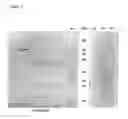
FIG. 1 shows 2D and 1D immunostaining of a patient exhibiting specific reaction to spore proteins of A. versicolor. The marked area represents protein spots most frequently detected in 2D immunostaining.
A.v.=Aspergillus versicolor, A.f.=Aspergillus fumigatus, P.e.=Penicilium expansum.
Initial analysis of patient serums using 1D immunostaining showed positive reaction to allergen extracts of the molds A. versicolor, A. fumigatus or P. expansum in 47 out of 100 patients who had attended treatment for general allergic symptoms. Conspicuously, there was not even one patient serum that reacted exclusively to A. fumigatus or P. expansum (see FIG. 2). However, among the 47 positive patient serums there were 31 serums that reacted to all mold extracts, while 8 serums reacted only to A. versicolor. These data demonstrate that a test based on extracts of A. fumigatus or P. expansum does not automatically detect sensitization to A. versicolor.
FIG. 2 shows an intersection diagram to illustrate the reactivity of patient serums to the spore proteins of the molds A. versicolor, A. fumigatus and P. expansum in 1D immunostaining, wherein the numbering corresponds to the number of reactive serums. Reaction only to Aspergillus versicolor (8, white), reaction only to Aspergillus fumigatus (0, shaded), reaction only to Penicilium expansum (0, mesh), reaction to Penicilium expansum and Aspergillus fumigatus (1), reaction to Aspergillus versicolor and Penicilium expansum (1), reaction to Aspergillus versicolor and Aspergillus fumigatus (7), reaction to all three molds (31), total number of patients (100, gray).
Immunodetection of Allergens
Here, detection of allergens via mediation of the patients' own IgE antibodies is the method of finding the allergens and simultaneously the proof of principle for a method of detecting sensitization of these patients based on the patients' own IgE antibodies. On the one hand, sensitization can be detected using the Western blot procedures described herein, but it is also possible to switch to the ELISA format. However, primary detection of the allergen proceeds via the patients' own IgE antibodies in the ELISA format as well.
Furthermore, the data obtained permit identification of allergens from spores of A. versicolor. For identification, the allergens that had been recognized were cut out of the 2D gels, tryptically digested, and the peptide masses as well as the fragment masses thereof were measured using mass spectrometry (see FIG. 3, cf. Table 1). The three major allergens were found in more than 70% of the patients analyzed and showed the strongest reaction intensity in 2D immunostaining. Similarly, the four other allergens were found in more than 50% of the patients.
FIG. 3 shows the proteins of A. versicolor separated according to isoelectric point and molecular weight in a 2D gel. Table 1 summarizes the characterization of the allergens found.
| TABLE 1 | |||
| Designation | Isoelectric | Molecular weight | |
| of allergen | Name of allergen | point | (Daltons) |
| Asp a, b, c | Glyceraldehyde-3- | 6.97 | 36,389 |
| phosphate dehydro- | |||
| genase (GAPDH) | |||
| Asp d | Protein AO090012000287 | 6.11 | 28,784 |
| Asp e | Katalase A | 6.02 | 84,108 |
| Asp f | Protein AN6918.2 | 6.53 | 26,713 |
| Asp g | Enolase | 5.37 | 47,519 |
| Asp h | Protein AN0297.2 | 5.85 | 22,007 |
| Asp i | Malate dehydrogenase | 8.82 | 35,764 |
Claims
1. Allergens of Aspergillus versicolor, selected from the group comprising a glyceraldehyde-3-phosphate dehydrogenase (GAPDH; Asp a, b, c) with the amino acid sequence SEQ ID No. 1 or parts thereof as long as these parts are not identical to parts of the amino acid sequence of GAPDH of Aspergillus fumigatus, a hypothetical xylol/sorbitol reductase with the amino acid sequence SEQ ID No. 3 or parts thereof as long as these parts are not identical to parts of the amino acid sequence of the corresponding protein of Aspergillus fumigatus having the genebank accession number gi/71002394/ref/XP—755878.1, a katalase A with a molecular weight of 84,108 Daltons and an isoelectric point of 6.02 (Asp e), a protein with a molecular weight of 26,713 Daltons and an isoelectric point of 6.53 (Asp f), an enolase with a molecular weight of 47,519 Daltons and an isoelectric point of 5.37 (Asp g), a protein with a molecular weight of 22,007 Daltons and an isoelectric point of 5.85 (Asp h), a malate dehydrogenase with a molecular weight of 35,764 Daltons and an isoelectric point of 8.82 (Asp i).
2. An allergen according to claim 1, selected from the group comprising a glyceraldehyde-3-phosphate dehydrogenase (GAPDH; Asp a, b, c) with the amino acid sequence SEQ ID No. 1 or parts thereof as long as these parts are not identical to parts of the amino acid sequence of GAPDH from Aspergillus fumigatus and a hypothetical xylol/sorbitol reductase with the amino acid sequence SEQ ID No. 3 or parts thereof as long as these parts are not identical to parts of the amino acid sequence of the corresponding protein of Aspergillus fumigatus with the genebank accession number gi/71002394/ref/XP—755878.1.
3. A nucleic acid including at least one sequence which encodes an allergen according to claim 2.
4. The nucleic acid according to claim 3, including at least one sequence selected from SEQ ID No. 2 and SEQ ID No. 4.
5. (canceled)
6. (canceled)
7. Genetically modified cell or microorganism including at least one nucleic acid according to claim 3.
8. A method for the in vitro detection of a mold allergy to Aspergillus versicolor, wherein A. versicolor-specific IgE and/or IgG antibodies in a sample of body fluid are detected by binding to one or more of the specific allergens of A. versicolor according to claims 1 and 2.
9. The method according to claim 8, wherein detection proceeds in an enzyme immunoassay or a radioimmunoassay.
10. The method according to claim 8, wherein detection proceeds in an ELISA.
11. The method according to claim 8, wherein the body fluid is blood, serum, plasma, urine, cerebrospinal fluid, or saliva, preferably serum.
12. (canceled)
13. Pharmaceutical compositions comprising as active component at least one component selected from the group comprising one or more allergens according to claim 1, lysate of mycelium or spores of A. versicolor, a nucleic acid according to claim 3 or a genetically modified cell or microorganism according to claim 7.
14. (canceled)
15. (canceled)
16. (canceled)
17. (canceled)
18. (canceled)
19. (canceled)
Images & Drawings included:



Sources:
- United States Patent and Trademark Office - verify current appl. status at the USPTO↗
Recent applications in this class:
- » 20250262297 2025-08-21
ALLERGY ANTIGEN AND EPITOPE THEREOF - » 20250249091 2025-08-07
TREATMENT OF ALLERGY WITH DIMERIC IgA or SECRETORY IgA ANTIGEN IMMUNE COMPLEXES - » 20250049913 2025-02-13
NUCLEIC ACID STRUCTURE UTILIZING SNARE - » 20250000970 2025-01-02
COMPOSITIONS AND METHODS FOR FOOD ALLERGY PREVENTION - » 20240415955 2024-12-19
NOVEL IMMUNOTHERAPEUTIC COMPOSITION AND USES THEREOF - » 20240390486 2024-11-28
PEANUT ALLERGY EPITOPE - » 20240390485 2024-11-28
HYPOALLERGENIC PEANUT ALLERGENS, PRODUCTION AND USE THEREOF - » 20240358822 2024-10-31
ALLERGY TREATMENT - » 20240342273 2024-10-17
IMMUNOTHERAPEUTIC METHOD FOR INCREASING CASHEW TOLERANCE IN A SUBJECT - » 20240325524 2024-10-03
COMPOSITIONS AND METHODS FOR INDUCING IMMUNE TOLERANCE