THERMAL ADHESIVE TAPE AND MANUFACTURING METHOD OF THE SAME
US20110052864A1
2011-03-03
12/795,853
2010-06-08
Abstract:
Disclosed is a thermal adhesive tape, in which a conductor that generates heat by a high frequency wave is disposed in the middle of the thermal adhesive tape to thereby improve productivity and give strong adhesive strength while thermally adhering materials having a low thermal conductivity with each other. The thermal adhesive tape for a portable terminal, includes a heated sheet made of a conductor; a first melting sheet adhered to one face of the heated sheet; and a second melting sheet adhered to the other face of the heated sheet, wherein the first and second melting sheets are made of a polyester composition, the heated sheet is made of aluminum or copper, and the first and second melting sheets are melted upon heating of the heated sheet by a high frequency induction to adhere the case and the LCD cover with each other.
Assignee:
- IL SHIN TECH CO., LTD. 2 🇰🇷 Ansan-si, South Korea
Interested in similar patents?
Get notified when new applications in this technology area are published.
Classification:
C09J167/00 » CPC main
Adhesives based on polyesters obtained by reactions forming a carboxylic ester link in the main chain ; Adhesives based on derivatives of such polymers
B29C65/3644 » CPC further
Joining of preformed parts ; Apparatus therefor by heating, with or without pressure using heated elements which remain in the joint, e.g. "verlorenes Schweisselement" heated by induction characterised by the type of elements heated by induction which remain in the joint being a ribbon, band or strip
B29C65/368 » CPC further
Joining of preformed parts ; Apparatus therefor by heating, with or without pressure using heated elements which remain in the joint, e.g. "verlorenes Schweisselement" heated by induction characterised by the composition of the elements heated by induction which remain in the joint being metallic with a polymer coating
B29C65/44 » CPC further
Joining of preformed parts ; Apparatus therefor by heating, with or without pressure Joining a heated non plastics element to a plastics element
B29C65/4815 » CPC further
Joining of preformed parts ; Apparatus therefor using adhesives, i.e. using supplementary joining material; solvent bonding characterised by the type of adhesives; Non-reactive adhesives, e.g. physically hardening adhesives Hot melt adhesives, e.g. thermoplastic adhesives
B29C65/4855 » CPC further
Joining of preformed parts ; Apparatus therefor using adhesives, i.e. using supplementary joining material; solvent bonding characterised by their physical properties, e.g. being electrically-conductive
B29C65/5021 » CPC further
Joining of preformed parts ; Apparatus therefor using adhesives, i.e. using supplementary joining material; solvent bonding using adhesive tape, e.g. thermoplastic tape; using threads or the like characterised by the structure of said adhesive tape, threads or the like being multi-layered
B29C65/5057 » CPC further
Joining of preformed parts ; Apparatus therefor using adhesives, i.e. using supplementary joining material; solvent bonding using adhesive tape, e.g. thermoplastic tape; using threads or the like positioned between the surfaces to be joined
B29C65/5092 » CPC further
Joining of preformed parts ; Apparatus therefor using adhesives, i.e. using supplementary joining material; solvent bonding using adhesive tape, e.g. thermoplastic tape; using threads or the like characterised by the tape handling mechanisms, e.g. using vacuum
B29C66/1122 » CPC further
General aspects of processes or apparatus for joining preformed parts; General aspects dealing with the joint area or with the area to be joined; Particular design of joint configurations particular design of the joint cross-sections; Joint cross-sections comprising a single joint-segment, i.e. one of the parts to be joined comprising a single joint-segment in the joint cross-section; Single lapped joints Single lap to lap joints, i.e. overlap joints
B29C66/45 » CPC further
General aspects of processes or apparatus for joining preformed parts; General aspects of joining substantially flat articles, e.g. plates, sheets or web-like materials; Making flat seams in tubular or hollow articles; Joining single elements to substantially flat surfaces; Joining substantially flat articles ; Making flat seams in tubular or hollow articles Joining of substantially the whole surface of the articles
B29C66/5346 » CPC further
General aspects of processes or apparatus for joining preformed parts; General aspects of joining tubular articles; General aspects of joining long products, i.e. bars or profiled elements; General aspects of joining single elements to tubular articles, hollow articles or bars; General aspects of joining several hollow-preforms to form hollow or tubular articles; Joining tubular articles, profiled elements or bars; Joining single elements to tubular articles, hollow articles or bars; Joining several hollow-preforms to form hollow or tubular articles; Joining single elements to tubular articles, hollow articles or bars; Joining single elements to open ends of tubular or hollow articles or to the ends of bars said single elements being substantially flat
B29C66/61 » CPC further
General aspects of processes or apparatus for joining preformed parts; General aspects of joining tubular articles; General aspects of joining long products, i.e. bars or profiled elements; General aspects of joining single elements to tubular articles, hollow articles or bars; General aspects of joining several hollow-preforms to form hollow or tubular articles Joining from or joining on the inside
B29C66/7422 » CPC further
General aspects of processes or apparatus for joining preformed parts characterised by the composition, physical properties or the structure of the material of the parts to be joined; Joining with non-plastics material; Joining plastics material to non-plastics material to metals or their alloys Aluminium or alloys of aluminium
B29C66/74281 » CPC further
General aspects of processes or apparatus for joining preformed parts characterised by the composition, physical properties or the structure of the material of the parts to be joined; Joining with non-plastics material; Joining plastics material to non-plastics material to metals or their alloys; Transition metals or their alloys Copper or alloys of copper
B29C66/8322 » CPC further
General aspects of processes or apparatus for joining preformed parts; General aspects of machine operations or constructions and parts thereof characterised by the movement of the joining or pressing tools; Reciprocating joining or pressing tools Joining or pressing tools reciprocating along one axis
B29C66/83413 » CPC further
General aspects of processes or apparatus for joining preformed parts; General aspects of machine operations or constructions and parts thereof characterised by the movement of the joining or pressing tools moving with the parts to be joined; Roller, cylinder or drum types; Band or belt types; Ball types; Roller, cylinder or drum types cooperating rollers, cylinders or drums
B29C66/91411 » CPC further
General aspects of processes or apparatus for joining preformed parts; Measuring or controlling the joining process by measuring or controlling the temperature, the heat or the thermal flux by controlling or regulating the temperature, the heat or the thermal flux by controlling or regulating the temperature of the parts to be joined, e.g. the joining process taking the temperature of the parts to be joined into account
B29C66/91651 » CPC further
General aspects of processes or apparatus for joining preformed parts; Measuring or controlling the joining process by measuring or controlling the temperature, the heat or the thermal flux by controlling or regulating the temperature, the heat or the thermal flux by controlling or regulating the heat or the thermal flux, i.e. the heat flux by controlling or regulating the heat generated by Joule heating or induction heating
B32B3/266 » CPC further
Layered products comprising a layer with external or internal discontinuities or unevennesses, or a layer of non-planar form ; Layered products having particular features of form characterised by a particular shape of the outline of the cross-section of a continuous layer; characterised by a layer with cavities or internal voids ; characterised by an apertured layer characterised by an apertured layer, the apertures going through the whole thickness of the layer, e.g. expanded metal, perforated layer, slit layer regular cells
B32B7/06 » CPC further
Layered products characterised by the relation between layers; Layered products characterised by the relative orientation of features between layers, or by the relative values of a measurable parameter between layers, i.e. products comprising layers having different physical, chemical or physicochemical properties; Layered products characterised by the interconnection of layers; Interconnection of layers permitting easy separation
B32B7/12 » CPC further
Layered products characterised by the relation between layers; Layered products characterised by the relative orientation of features between layers, or by the relative values of a measurable parameter between layers, i.e. products comprising layers having different physical, chemical or physicochemical properties; Layered products characterised by the interconnection of layers; Interconnection of layers using interposed adhesives or interposed materials with bonding properties
B32B15/08 » CPC further
Layered products comprising a layer of metal comprising metal as the main or only constituent of a layer, next to another layer of a of synthetic resin
B32B15/20 » CPC further
Layered products comprising a layer of metal comprising aluminium or copper
B32B27/08 » CPC further
Layered products comprising synthetic resin as the main or only constituent of a layer, next to another layer of a of synthetic resin
B32B27/302 » CPC further
Layered products comprising synthetic resin comprising vinyl (co)polymers; comprising acrylic (co)polymers comprising aromatic vinyl (co)polymers, e.g. styrenic (co)polymers
B32B27/308 » CPC further
Layered products comprising synthetic resin comprising vinyl (co)polymers; comprising acrylic (co)polymers comprising acrylic (co)polymers
B32B27/32 » CPC further
Layered products comprising synthetic resin comprising polyolefins
B32B27/36 » CPC further
Layered products comprising synthetic resin comprising polyesters
B32B27/365 » CPC further
Layered products comprising synthetic resin comprising polyesters comprising polycarbonates
C09J7/28 » CPC further
Adhesives in the form of films or foils characterised by their carriers Metal sheet
G02F1/133308 » CPC further
Devices or arrangements for the control of the intensity, colour, phase, polarisation or direction of light arriving from an independent light source, e.g. switching, gating or modulating; Non-linear optics for the control of the intensity, phase, polarisation or colour based on liquid crystals, e.g. single liquid crystal display cells; Constructional arrangements; Operation of liquid crystal cells; Circuit arrangements; Constructional arrangements; Manufacturing methods Support structures for LCD panels, e.g. frames or bezels
B29C66/91413 » CPC further
General aspects of processes or apparatus for joining preformed parts; Measuring or controlling the joining process by measuring or controlling the temperature, the heat or the thermal flux by controlling or regulating the temperature, the heat or the thermal flux by controlling or regulating the temperature of the parts to be joined, e.g. the joining process taking the temperature of the parts to be joined into account the parts to be joined having different temperatures
B29C66/91421 » CPC further
General aspects of processes or apparatus for joining preformed parts; Measuring or controlling the joining process by measuring or controlling the temperature, the heat or the thermal flux by controlling or regulating the temperature, the heat or the thermal flux by controlling or regulating the temperature of the joining tools
B29C66/91655 » CPC further
General aspects of processes or apparatus for joining preformed parts; Measuring or controlling the joining process by measuring or controlling the temperature, the heat or the thermal flux by controlling or regulating the temperature, the heat or the thermal flux by controlling or regulating the heat or the thermal flux, i.e. the heat flux by controlling or regulating the heat generated by Joule heating or induction heating by controlling or regulating the current intensity
B29C66/919 » CPC further
General aspects of processes or apparatus for joining preformed parts; Measuring or controlling the joining process by measuring or controlling the temperature, the heat or the thermal flux characterised by specific temperature, heat or thermal flux values or ranges
B29C66/93451 » CPC further
General aspects of processes or apparatus for joining preformed parts; Measuring or controlling the joining process by measuring or controlling the speed by controlling or regulating the speed by controlling or regulating the rotational speed, i.e. the speed of revolution
B29C66/939 » CPC further
General aspects of processes or apparatus for joining preformed parts; Measuring or controlling the joining process by measuring or controlling the speed characterised by specific speed values or ranges
B32B2250/40 » CPC further
Layers arrangement Symmetrical or sandwich layers, e.g. ABA, ABCBA, ABCCBA
B32B2307/20 » CPC further
Properties of the layers or laminate having particular electrical or magnetic properties, e.g. piezoelectric
B32B2307/202 » CPC further
Properties of the layers or laminate having particular electrical or magnetic properties, e.g. piezoelectric Conductive
B32B2307/30 » CPC further
Properties of the layers or laminate having particular thermal properties
B32B2307/302 » CPC further
Properties of the layers or laminate having particular thermal properties Conductive
B32B2405/00 » CPC further
Particular articles
B32B2405/00 » CPC further
Adhesive articles, e.g. adhesive tapes
B32B2457/202 » CPC further
Electrical equipment; Displays, e.g. liquid crystal displays, plasma displays LCD, i.e. liquid crystal displays
C09J2467/00 » CPC further
Presence of polyester
G02F1/133325 » CPC further
Devices or arrangements for the control of the intensity, colour, phase, polarisation or direction of light arriving from an independent light source, e.g. switching, gating or modulating; Non-linear optics for the control of the intensity, phase, polarisation or colour based on liquid crystals, e.g. single liquid crystal display cells; Constructional arrangements; Operation of liquid crystal cells; Circuit arrangements; Constructional arrangements; Manufacturing methods; Support structures for LCD panels, e.g. frames or bezels Assembling processes
B29C66/71 » CPC further
General aspects of processes or apparatus for joining preformed parts characterised by the composition, physical properties or the structure of the material of the parts to be joined; Joining with non-plastics material characterised by the composition of the plastics material of the parts to be joined
G02F2202/28 » CPC further
Materials and properties Adhesive materials or arrangements
Y10T156/10 » CPC further
Adhesive bonding and miscellaneous chemical manufacture Methods of surface bonding and/or assembly therefor
Y10T156/1056 » CPC further
Adhesive bonding and miscellaneous chemical manufacture; Methods of surface bonding and/or assembly therefor with cutting, punching, tearing or severing Perforating lamina
Y10T428/24322 » CPC further
Stock material or miscellaneous articles; Structurally defined web or sheet [e.g., overall dimension, etc.] including aperture Composite web or sheet
Y10T428/31681 » CPC further
Stock material or miscellaneous articles; Composite [nonstructural laminate]; Of metal Next to polyester, polyamide or polyimide [e.g., alkyd, glue, or nylon, etc.]
B29K2067/00 » CPC further
Use of polyesters or derivatives thereof , as moulding material
B29C65/02 IPC
Joining of preformed parts ; Apparatus therefor by heating, with or without pressure
B32B38/04 IPC
Ancillary operations in connection with laminating processes Punching, slitting or perforating
B32B15/09 IPC
Layered products comprising a layer of metal comprising metal as the main or only constituent of a layer, next to another layer of a of synthetic resin comprising polyesters
Description
BACKGROUND OF THE INVENTION
1. Field of the Invention
The present invention relates to a thermal adhesive tape and a manufacturing method of the same, and more particularly, to a thermal adhesive tape that is melted between objects to be adhered, when heat is applied, thereby adhering the objects to each other, and a manufacturing method of the same.
2. Description of Related Art
FIG. 1A is a structural diagram of a conventional thermal adhesive tape.
As shown in FIG. 1A, the conventional thermal adhesive tape is provided with a non-woven fabric 10 in the middle thereof and a first adhesive sheet 20 and a second adhesive sheet 30 on both sides of the non-woven fabric 10.
Adhesion of two adherends with each other using the conventional thermal adhesive tape is carried out in such a manner that the thermal adhesive tape is first disposed between the adherends and heat is directly applied to the adherends by a thermocompressing apparatus to be then transferred to the first melting sheet 20 and the second melting sheet 30 through the adherends, and thereby the first melting sheet 20 and the second melting sheet 30 are melted and adhered to the adherends.
Therefore, to adhere the conventional thermal adhesive tape to the adherends, at least one of the two adherends should be a heat-transferable material (for example, SUS, metal, etc.).
That is, since the heat should be transferred to the thermal adhesive tape placed between the adherends, at least one of the adherends should have a high thermal conductivity.
In the case of adhering two adherends, both having low thermal conductivity, e.g. synthetic resins, another adhering method is used since the conventional thermal adhesive tape as described above has a problem that the adherends are deformed by the heat before the first melting sheet 10 or the second melting sheet 20 is melted.
For example, a conventional technique for adhering a case and a LCD cover of a portable terminal will be described.
FIG. 1B is a sectional view showing that a case and a LCD cover of a portable terminal are adhered.
In general, a case 41 and a LCD cover 42 of a portable terminal and a small electronic appliance are adhered with a double sided tape 43 as shown in FIG. 1B.
In recent, with miniaturization of a portable terminal and enlargement in a size of a LCD, an area of the double sided tape 43 that comes into contact with the LCD cover 42 and the case 41 has been reduced.
However, the reduction in the adhesion area of the double sided tape 43 results in an insufficiency in adhesive strength for coupling the LCD cover 42 and the case and resultant easy separation of the LCD cover 42 from the case 41.
Also, it may be possible to carry out the adhesion using a silicon bond instead of the double sided tape 43, but there is a problem that productivity is significantly dropped since a compression and dry process in a jig for 10 hours or more is required after the bonding process.
Further, the silicon bond has a problem that its impact resistance becomes worse with time to thereby cause trouble.
SUMMARY OF THE INVENTION
Embodiments of the present invention are directed to a thermal adhesive tape, in which a conductor that generates heat by a high frequency wave is disposed in the middle of the thermal adhesive tape to thereby improve productivity and give strong adhesive strength while thermally adhering materials having a low thermal conductivity with each other.
In one embodiment, a thermal adhesive tape for a portable terminal, which couples a case and a LCD cover of the portable terminal with each other, includes a heated sheet made of a conductor; a first melting sheet adhered to one face of the heated sheet; and a second melting sheet adhered to the other face of the heated sheet, wherein the first and second melting sheets are made of a polyester composition, the heated sheet is made of aluminum or copper, and the first and second melting sheets are melted upon heating of the heated sheet by a high frequency induction to adhere the case and the LCD cover with each other.
Preferably, the second melting sheet is provided with a removable transparent base film on a side thereof opposite to the heated sheet.
Preferably, the heated sheet is formed with a through hole that penetrates therethrough in a direction from the first melting sheet to the second melting sheet and vice versa.
Preferably, the heated sheet has a thickness thinner than those of the first and second melting sheets.
In another embodiment, a method of manufacturing a thermal adhesive tape, which includes a heated sheet made of a conductor; a first melting sheet adhered to one face of the heated sheet; and a second melting sheet adhered to the other face of the heated sheet, and couples a case and a LCD cover of a portable terminal with each other, wherein the first and second melting sheets are compressed and heated by a heating roller toward the heated sheet on opposite sides of the heated sheet, respectively, to thereby be adhered to the heated sheet.
Preferably, the heated sheet is formed with a through hole that penetrates therethrough in a direction from the first melting sheet to the second melting sheet and vice versa, and the first and second melting sheets are adhered with each other through the through hole when the first and second melting sheets are compressed and heated toward the heated sheet.
The thermal adhesive tape for a portable terminal has advantages as follows.
It is possible to adhere adherends made of synthetic resin having a low thermal conductivity such as polycarbonate, acryl and ABS as the heated sheet, which is heated by a high frequency induction, is disposed between the first melting sheet and the second melting sheet, give an adhesive strength stronger than a general bonds as the adhesion is carried out by heat, and improve productivity as the adhesion is carried out in a short time.
As the base film made of a transparent material is attached on the second melting sheet, the location is easily seen when the thermal adhesive tape is mounted on the case and this facilitates assembly.
As the base film is removably attached on the second melting sheet, the base film can be easily removed upon the assembly and this improves the productivity.
As the through hole is formed in the heated sheet, the first melting sheet and the second melting sheet are coupled directly to each other and this improves the adhesive strength between the adherends coupled by the first melting sheet and the second melting sheet.
As the heated sheet has a thickness thinner than those of the first and second melting sheets, it is possible to reduce the heat transferred to the case and the LCD cover when the heated sheet is heated and to thereby prevent the case and the LCD cover from being deformed by the heat.
As the first melting sheet and the second melting sheet are disposed between the heating roller and adhered by compression and heating, the work is carried out continuously and speedily to improve the productivity, and the first melting sheet, the heated sheet and the second melting sheet are modularized to facilitate the work upon the adhesion of the case and the LCD cover.
BRIEF DESCRIPTION OF THE DRAWINGS
FIG. 1 is a structural diagram of a conventional thermal adhesive tape.
FIG. 2 is structural diagram of a thermal adhesive tape in accordance with an embodiment of the present invention.
FIG. 3 is a view illustrating a manufacturing process of the thermal adhesive tape for a portable terminal in accordance with an embodiment of the present invention.
FIG. 4 is structural diagram of a case module for a portable terminal using the thermal adhesive tape in accordance with an embodiment of the present invention.
FIGS. 5 through 8 are views illustrating processes of assembling a case module for a portable terminal the thermal adhesive tape in accordance with an embodiment of the present invention.
FIG. 9 is structural diagram of a thermal adhesive tape in accordance with another embodiment of the present invention.
DESCRIPTION OF SPECIFIC EMBODIMENTS
Hereinafter, preferred embodiments of the present invention will be described in detail with reference to accompanying drawings.
FIG. 2A is a plan view of a thermal adhesive tape in accordance with an embodiment of the present invention, FIG. 2B is a sectional view taken along a line A-A of FIG. 2A, FIG. 3 is a view illustrating a manufacturing process of the thermal adhesive tape for a portable terminal in accordance with an embodiment of the present invention, FIG. 4A is a plan view of a case module for a portable terminal using the thermal adhesive tape in accordance with an embodiment of the present invention, and FIG. 4B is a sectional view taken along a line B-B of FIG. 4A.
As illustrated in FIGS. 2 and 3, a thermal adhesive tape in accordance with an embodiment of the present invention includes a heated sheet 200, a first melting sheet 310, a second melting sheet 320 and a base film 400.
Also, as illustrated in FIG. 4, a case module for a portable terminal using the thermal adhesive tape in accordance with an embodiment of the present invention includes a case 110, a LCD cover 120, the heated sheet 200, the first melting sheet 310, and the second melting sheet 320.
The case 110 is an element that forms an appearance of a display part of a portable terminal and is disposed on a front face of a LCD module.
Also, the case 110 is openly formed of a screen part 111 so that a screen of the LCD module is seen from the outside.
The screen part 111 is formed in a rectangular shape through the case in front and rear directions and has a width smaller than a width of the LCD cover 120, which will be described later.
Further, the case 110 is formed of a mounting recess 112 in which the heated sheet 200, the first melting sheet 310 and the second melting sheet 320 are inserted.
The mounting recess 112 has a rectangular shape, is communicated with the screen part 111 and is opened in a direction toward the front, i.e. a direction toward the LCD cover 120.
Also, the mounting recess 112 has a depth greater than sum of the thicknesses of the heated sheet 200, the first melting sheet 310 and the second melting sheet 320, which will be described later.
The LCD cover 120 is formed in a shape of a thin plate and is made of a transparent material so that the screen of the LCD module mounted in an inside of the portable terminal is seen from the outside.
Also, the periphery of the LCD cover 120 has an opaque design of a border shape so that the rest components other than the LCD module are not seed from the outside and tidy appearance can be obtained.
Further, LCD cover 120 has a width greater than the width of the screen part 111 and smaller than the width of the mounting recess 112.
This LCD cover 120 is disposed so as to face the case 100 and is inserted in the mounting recess 112 so as to seal the screen part 111.
Meanwhile, the heated sheet 200 is disposed between the case 110 and the LCD cover 120.
The heated sheet 200 is formed in a shape of a hollow rectangular and is made of aluminum or copper through which current flows well.
Of course, the heated sheet 200 can be formed of other conductor other than the aluminum or copper, but it is preferred to employ the aluminum or copper which has high thermal conductivity and electric conductivity and is easily worked.
Also, the heated sheet 200 has a thickness of about 7 to 14 μm, which is, as will be described later, smaller than the thicknesses of the first melting sheet 310 and the second melting sheet 320.
The heated sheet 200 is adhered with its one face to the first melting sheet 310 and with the other face to the second melting sheet 320.
The first melting sheet 310 and the second melting sheet 320 are formed in a hollow rectangular shape like the heated sheet 200, and have a thickness of about 70 μm.
Also, the first melting sheet is thermally adhered with the case 110 and the second melting sheet 320 is thermally adhered with the LCD cover 120.
As the heated sheet 200 has the thickness thinner than those of the first melting sheet 310 and the second melting sheet 320 as described above, it is possible to reduce the heat transferred to the case 110 and the LCD cover 120 when the heated sheet 200 is heated and to thereby prevent the case 110 and the LCD cover 120 from being deformed by the heat.
Also, the first melting sheet 310 and second melting sheet 320 are made of polyester composition.
The polyester is a generic term of a polymer compound having an ester group as a linker.
Also, all of the first melting sheet 310, the heated sheet 200 and the second melting sheet 320 are formed in the same hollow rectangular shape and have an inner width greater than the width of the screen part 111 and an outer width smaller than the LCD cover 120.
That is, the first melting sheet 310, the heated sheet 200 and the second melting sheet 320 are formed so as to be disposed within a section in which the LCD cover 120 and the case 110 are overlapped with each other.
As the first melting sheet 310, the heated sheet 200 and the second melting sheet 320 have the inner width greater than the width of the screen part 111 and the outer width smaller than the LCD cover 120 as described above, the first melting sheet 310, the heated sheet 200 and the second melting sheet 320 are disposed only in the section where the LCD cover 120 and the case 110 are overlapped with each other, thereby capable of reducing waste and decreasing the manufacturing cost.
Also, the sum of the first melting sheet 310, the heated sheet 200, the second melting sheet 320 and the LCD cover 120 is smaller than the depth of the mounting recess 112.
As the sum of the first melting sheet 310, the heated sheet 200, the second melting sheet 320 and the LCD cover 120 is smaller than the depth of the mounting recess 112 as described above, the LCD cover 120 is inserted so as not to projected out of the case 110 and is prevented from being separated from the case 110 by external force.
Also, the second melting sheet 320 is provided with the base film 400 on a side thereof opposite to the heated sheet 200.
The base film 400 is formed in a thin rectangular shape and is made of a transparent material.
As the base film 400 is made of a transparent material, the location is easily seen when the first melting sheet 310 as described above, the heated sheet 200 and the second melting sheet 320 are mounted on the case and this facilitates assembly.
Also, the base film 400 is mounted removably on the second melting sheet 320.
Specifically, the base film 400 is provided with a removable adhesive layer on the face thereof at the side of the second melting sheet 320.
The removable adhesive is suitable to temporarily adhere the base film 400 to the second melting sheet 320 since it has excellent re-adhesive property and re-detachability.
As the base film 400 is mounted removably on the second melting sheet 320 as described above, the base film 400 can be easily removed upon the assembly and this improves the productivity.
Hereinafter, a process for manufacturing the thermal adhesive tape in accordance with an embodiment of the present invention having the structure as described above will be described.
As illustrated in FIG. 3, the first melting sheet 310 and the second melting sheet 320 are adhered to the heated sheet 200 by heat.
Specifically, the first melting sheet 310, the heated sheet 200 and the second melting sheet 320 are sequentially stacked between two heating rollers 50a and 50b.
At this time, the first melting sheet 310, the heated sheet 200 and the second melting sheet 320 are wound on a bobbin in a state of a raw material, respectively.
The heating rollers 50a and 50b having a cylindrical shape are heated to about 100° C. and rotate at a speed of 5 m/min.
As these heating rollers 50a and 50b rotate in opposite directions, the first melting sheet 310, the heated sheet 200 and the second melting sheet 320 are compressed and heated from the upper and lower sides.
At this time, the first melting sheet 310 and the second melting sheet 320 are slightly melted by the heat of the heating rollers 50a and 50b and adhered to the heated sheet 200.
After that, the first melting sheet 310, the heated sheet 200 and the second melting sheet 320 adhered to each other are wound again on another bobbin disposed in the transport direction.
As the first melting sheet 310, the heated sheet 200 and the second melting sheet 320 are disposed between the heating rollers 50a and 50b and adhered to each other by compression and heating as described above, the work is carried out continuously and quickly and this improves the productivity.
After that, the base film 400 is stacked on the second melting sheet 320 and adhered to the second melting sheet 320 using a roller.
Finally, the first melting sheet 310, the heated sheet 200 and the second melting sheet 320 except for the base film 400 are cut into a hollow rectangular shape to remove the unnecessary portions therein.
Hereinafter, a method of adhering a case and a LCD cover for a portable terminal using the thermal adhesive tape in accordance with an embodiment of the present invention having the structure as described above will be described.
FIGS. 5 through 8 are views illustrating processes of assembling a case module for a portable terminal the thermal adhesive tape in accordance with an embodiment of the present invention.
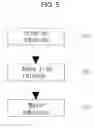
As illustrated in FIG. 5, the adhering method using the thermal adhesive tape in accordance with an embodiment of the present invention is carried out in a sequence of interim-adhesion step (S10), base film release step (S20) and main-adhesion step (S30).
FIG. 6 illustrates the interim-adhesion step (S10), FIG. 7 illustrates the base film release step (S20) and FIG. 8 illustrates the main-adhesion step (S30).
As illustrated in FIG. 6, in the interim-adhesion step (S10), the first melting sheet 310 is adhered to the case 110.
Specifically, the first melting sheet 310 is inserted in the mounting recess 112 together with the heated sheet 200, the second melting sheet 320 and the base film 400, and the first melting sheet 310 is disposed to face one face of the case 110.
After that, the base film 400 is compressed and heated toward the case 110 with a heated mold 60.
Of course, a jig or the like is disposed below the case 110 so that the case is not bent.
The mold 60 has a rectangular shape, of which width is smaller than or equal to the width of the mounting recess 112 and greater than or equal to the width of the first melting sheet 310.
This mold 60 is heated to about 60° C., which is lower than the melting points of the base film 400, the first melting sheet 310 and the second melting sheet 320.
Also, the melting point of the base film 400 is higher than those of the first melting sheet 310 and the second melting sheet 320.
That is, the temperature of the mold 60 is lower than the melting points of the base film 400 and the first melting sheet 310, but is close to the melting point of the first melting sheet 310 rather than the melting point of the base film 400.
Therefore, when compressing and heating the base film 400 with the mold 60, the base film 400 is not melted but the first melting sheet 310 is slightly melted by the heat of the mold transferred through the base film 400 and coupled with the case 110.
Of course, the adhesive strength of the first melting sheet 310 with the case 110 is not large since it has not been completely melted.
As the base film 400 has a melting point higher than the melting point of the first melting sheet 310 and the temperature of the mold 60 is set to be lower than the melting points of the base film 400 and the first melting sheet 310 in the interim-adhesion step (S10) as described above, the temperature of the mold 60 is closer to the melting point of the first melting sheet 310 than to the melting point of the base film 400 to thereby minimize deformation of the base film 400.
In the base film release step (S20) after the interim-adhesion step (S10) is ended, the base film 400 is removed from the second melting sheet 320 as illustrated in FIG. 7.
The base film 400 is easily detached since it is attached to the melting sheet so as to be detached well from the melting sheet.
As the base film 400 is mounted removably on the second melting sheet 320 as described above, the base film 400 can be easily removed upon the assembly and this improves the productivity.
After that, in the main-adhesion step (S30) as illustrated in FIG. 8, the LCD cover 120 is adhered to one face of the second melting sheet 320 from which the base film 400 is removed.
Specifically, the LCD cover 120 is inserted in the mounting recess 112 so that it is in contact with the second melting sheet 320, and the LCD cover 120 is pushed toward the case 110 by a press.
Of course, a jig or the like is disposed below the case 110 so that the case is not bent.
Also, the press 90 is not heated unlike the mold 60 but remains at room temperature.
Further, a coil 70 through which current flows is disposed outside the heated sheet 200.
The coil 70 has thick diameter and is formed in a rectangular shape around the heated sheet 200.
This coil 70 is connected with a high frequency induction heater 80, and the high frequency induction heater 80 applies an alternate current in a high frequency range to the coil 70.
An output power of the high frequency induction heater 80 is 10 to 15 kw, and applies current to the coil 70 for 3 to 15 seconds.
When an alternate current is applied to the coil 70, a magnetic field is formed in an internal space surrounded by the coil 70 and current flows through the heated sheet 200 by the principle of electromagnetic induction.
That is, alternate magnetic flux is generated while the alternate current flows through the coil 70, and to thereby make an induced current flowing through the heated sheet 200.
As the induced current flows through the heated sheet 200, Joule's heat is generated by an eddy current loss.
At this time, the heated sheet 200 is heated to 120 to 150° C.
As the coil 70 is disposed outside the heated sheet 200 and a high frequency alternate current is applied to the coil 770 in the main-adhesion step (S30) as described above, current flows in the inside of the heated sheet 200 by the principle of electromagnetic induction and the heated sheet 200 is heated itself without direct power apply thereto.
Then, by this heat, the first melting sheet 210 and the second melting sheet 320 are melted, and they are hardened to thereby couple the case 110 and the LCD cover 120 with each other when a predetermined time is elapsed with the LCD cover 120 being pressed on the case 110 after the removal of the coil 70.
That is, the first melting sheet 310 is melted to couple the heated sheet 200 and the case 110, and the second melting sheet 320 is melted to couple the heated sheet 200 and the LCD cover 120.
At this time, the heated temperature of the heated sheet 200 is lower than the melting points of the case 110 and the LCD cover 120 and higher than the melting points of the first melting sheet 310 and the second melting sheet 320.
As the heated temperature of the heated sheet 200 is lower than the melting points of the case 110 and the LCD cover 120 and higher than the melting points of the first melting sheet 310 and the second melting sheet 320 as described above, it is possible to minimize deformation of the case 110 and the LCD cover 120 upon the heating of the heated sheet 200.
It is possible to adhere adherends made of synthetic resin having a low thermal conductivity such as polycarbonate, acryl and ABS as the heated sheet 200, which is heated by a high frequency induction, is disposed between the first melting sheet 310 and the second melting sheet 320 to couple the case 100 and the LCD cover 120, give an adhesive strength stronger than a general bonds as the adhesion is carried out by heat, and improve productivity as the adhesion is carried out in a short time.
If necessary, the heated sheet 250 may be formed of a through hole 251 that penetrates therethrough in a direction from the first melting sheet 310 to the second melting sheet 320 and vice versa.
FIG. 9 is structural diagram of a thermal adhesive tape in accordance with another embodiment of the present invention.
As illustrated in FIG. 9, the through hole 251 having a cylindrical shaped is formed in plural in the heated sheet 250.
The through hole 251 makes the first melting sheet 310 and the second melting sheet 320 adhered with each other therethrough upon the manufacture of the thermal adhesive tape or in the main-adhesion step (S30).
The first melting sheet 310 and the second melting sheet 320 are made of a polyester composition, and it is possible to show stronger adhesive strength when the first melting sheet 310 and the second melting sheet 320 are adhered with each other rather than when they are adhered to the heated sheet 250 made of aluminum or copper.
As the through hole 251 is formed in the heated sheet 250 as described above, the first melting sheet 310 and the second melting sheet 320 are coupled directly to each other and this improves the adhesive strength between the adherends coupled by the first melting sheet 310 and the second melting sheet 320.
While the present invention has been described with respect to the specific embodiments, it will be apparent to those skilled in the art that various changes and modifications may be made without departing from the spirit and scope of the invention as defined in the following claims.
Claims
What is claimed is:1. A thermal adhesive tape for a portable terminal, which couples a case and a LCD cover of the portable terminal with each other, comprising: a heated sheet made of a conductor; a first melting sheet adhered to one face of the heated sheet;
and a second melting sheet adhered to the other face of the heated sheet, wherein the first and second melting sheets are made of a polyester composition, the heated sheet is made of aluminum or copper, and the first and second melting sheets are melted upon heating of the heated sheet by a high frequency induction to adhere the case and the LCD cover with each other.
2. The thermal adhesive tape of claim 1, wherein the second melting sheet is provided with a removable transparent base film on a side thereof opposite to the heated sheet.
3. The thermal adhesive tape of claim 1, wherein the heated sheet is formed with a through hole that penetrates therethrough in a direction from the first melting sheet to the second melting sheet and vice versa.
4. The thermal adhesive tape of claim 1, wherein the heated sheet has a thickness thinner than those of the first and second melting sheets.
5. A method of manufacturing a thermal adhesive tape, which includes a heated sheet made of a conductor; a first melting sheet adhered to one face of the heated sheet; and a second melting sheet adhered to the other face of the heated sheet, and couples a case and a LCD cover of a portable terminal with each other, wherein the first and second melting sheets are compressed and heated by a heating roller toward the heated sheet on opposite sides of the heated sheet, respectively, to thereby be adhered to the heated sheet.
6. The method of claim 5, wherein the heated sheet is formed with a through hole that penetrates therethrough in a direction from the first melting sheet to the second melting sheet and vice versa, and the first and second melting sheets are adhered with each other through the through hole when the first and second melting sheets are compressed and heated toward the heated sheet.
Images & Drawings included:







Sources:
- United States Patent and Trademark Office - verify current appl. status at the USPTO↗
Recent applications in this class:
- » 20250129276 2025-04-24
MODIFIED WAX THAT CAN IMPROVE THE ADHESION BETWEEN POLYPROPYLENE AND A METAL SUBSTRATE - » 20240141217 2024-05-02
RESIN SHEET AND USE THEREOF - » 20240076534 2024-03-07
Multi-Purpose Compound - » 20230174835 2023-06-08
Epoxy phosphate ester - » 20220033693 2022-02-03
ADHESIVE AGENT AND ADHESIVE SHEET - » 20200369931 2020-11-26
PLASTIC FILM ADHESIVE AGENT - » 20200115601 2020-04-16
RESIN-METAL COMPOSITE MEMBER FOR TIRE, AND TIRE - » 20200115600 2020-04-16
RESIN-METAL COMPOSITE MEMBER FOR TIRE, AND TIRE - » 20200115599 2020-04-16
RESIN-METAL COMPOSITE MEMBER FOR TIRE, AND TIRE - » 20200063006 2020-02-27
Adhesive composition having anti-fogging property
Recent applications for this Assignee:
- » 20110052844 2011-03-03
Case module for portable terminal using thermal adhesive tape