Device and method for maintaining and operating a flame
US20110053101A1
2011-03-03
12/863,092
2009-01-16
✅ Patent granted
US 8,529,246 B2
2013-09-10
WO; PCT/DE2009/000052; 20090116
WO; WO2009/089830; 20090723
Kenneth Rinehart | Jorge Pereiro
Jordan and Hamburg LLP
2030-07-05
Abstract:
Disclosed is a device and a method for maintaining and operating a flame. The device has a burner, a burner attachment having an outlet geometry, wherein on a side of the burner attachment facing away from the burner, an anode is provided on one side of the outlet geometry of the burner attachment. A dielectric is provided on the other side of the outlet geometry, wherein a cathode is located in the dielectric. The device and method: do not require continuous flame monitoring; positively influence the deposition behavior of layer-forming components of the fuel gas flame; and reduce the thermal impact of the burner and the operating costs thereof.
Inventors:
- Bernd GRUENLER 5 🇩🇪 Zeulenroda, Germany
- Jens Ploetner 1 🇩🇪 Hermsdorf, Germany
- Hans-Juergen Tiller 1 🇩🇪 Jena, Germany
- Christian Tiller 2 🇩🇪 Jena, Germany
Assignee:
- INNOVENT e.V. Technologieentwicklung 1 🇩🇪 Jena, Germany
Applicant:
Interested in similar patents?
Get notified when new applications in this technology area are published.
Classification:
F23D14/58 » CPC main
Burners for combustion of a gas, e.g. of a gas stored under pressure as a liquid; Details, e.g. noise reduction means; Nozzles characterised by the shape or arrangement of the outlet or outlets from the nozzle, e.g. of annular configuration
F23C99/001 » CPC further
Subject-matter not provided for in other groups of this subclass Applying electric means or magnetism to combustion
F23D14/74 » CPC further
Burners for combustion of a gas, e.g. of a gas stored under pressure as a liquid; Details, e.g. noise reduction means; Safety devices, e.g. operative in case of failure of gas supply Preventing flame lift-off
F23D91/02 » CPC further
Burners specially adapted for specific applications, not otherwise provided for for use in particular heating operations
F23D2207/00 » CPC further
Ignition devices associated with burner
F23D2900/21005 » CPC further
Special features of, or arrangements for burners using fluid fuels or solid fuels suspended in a carrier gas; Burners specially adapted for a particular use for flame deposition, e.g. FHD, flame hydrolysis deposition
F23D14/00 IPC
Burners for combustion of a gas, e.g. of a gas stored under pressure as a liquid
F23C15/00 IPC
Apparatus in which combustion takes place in pulses influenced by acoustic resonance in a gas mass
Description
BACKGROUND OF THE INVENTION
The invention relates to a device and method for maintaining and operating a flame.
Gas burners, in which a flame is produced by a continuously burning flow of gas are known in the art. The flame can be used to deposit layers on diverse substrates and to also to modify surfaces of items.
The known burners are disadvantageous in that the flame must be continuously produced in an operating state after a single ignition. Thus, the flame requires a high fuel gas mixture consumption and consequently incurs high operating costs. The deposition behavior of layer-forming components is negatively influenced by the thermal impact of such a known burner.
Furthermore, the flame must be continuously monitored due to the risk of explosion and production facilities that operate a large number of burners or extensive burner flames must take extreme safety precautions to avoid explosions.
SUMMARY OF THE INVENTION
The object of the invention is to overcome the disadvantages of prior art by providing a device and method for maintaining and operating a flame that does not require continuous flame monitoring, while positively influencing the deposition behavior of layer-forming components of the burner gas flame and reducing the thermal impact of the burner and the operating costs thereof compared to prior art.
The invention provides controlled ignition of a fuel gas mixture by combining an ignition source with a flame. An ignition source initiates the oxidation or combustion of the fuel gas mixture. In particular, the ignition source can be a corona or battery discharge.
In the disclosed method of the present invention, the flame-producing gas mixture is lead through or channeled past the ignition source so that a simultaneous ignition of the gas mixture is possible over the whole burner extension.
Consequently, the inventive method makes it possible to ignite combustible gas mixtures that do not burn without the support of the ignition source and thus the flame can be maintained.
The invention allows operation of flames in a non-pulsed or pulsed, continuous or discontinuous mode and the pulse frequency (i.e., alternating between on and off positions) and/or the ignition energy of the ignition source can be varied over extensive ranges so that a high variability of the flame geometry and the flame parameters is attained. In this way the deposition behavior of the layer-forming components or most diverse surface modifications (e.g. hydrophobizing of the surface energy) can be positively influenced.
BRIEF DESCRIPTION OF THE DRAWINGS
The invention is explained with reference to the following figures without intent of limiting the scope of claimed subject matter to the disclosed embodiment(s). They show:
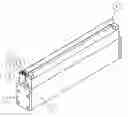
FIG. 1 depicts an embodiment of the inventive device in the operating state in a basic representation; and
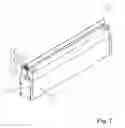
FIG. 2 depicts the embodiment according to FIG. 1 in a cross-sectional view.
DETAILED DESCRIPTION OF THE INVENTION
The inventive device shown in FIG. 1 comprises a burner (1), a burner attachment (2), an anode (3), a flame (4) in its operating state, a dielectric (5), a cathode (6), and an outlet geometry (7).
The burner attachment (2) is mounted on a known burner (1) and the electrically impeded barrier is mounted on said attachment. The electrically impeded barrier has an anode (3) and a cathode (6), the latter of which is insulated by a dielectric (5). If a voltage is applied between the anode (3) and the cathode (6), a dielectrically impeded discharge is initiated between the anode (3) and the cathode (6) through the dielectric (5). The discharge ignites the fuel gas that flows through the burner (1) and the burner attachment (2) with an appropriate outlet geometry (7) through the barrier.
A not independently flammable gas mixture can be fed to the inventive device and be ignited by the dielectrically impeded barrier, and thus the flame geometry can be controlled via the barrier voltage and/or the pulse width of the barrier discharge.
A not independently flammable gas can be generated, for example, by reducing the fuel gas content relative to the amount of oxygen (e.g. from 5% to 2.75% for propane). Thus, the required fuel gas concentration is reduced, and consequently, the fuel gas consumption is decreased by more than 40% when compared to conventional burners.
Reactive and/or layer-forming substances or components such as metal-organic compounds or suitable halides, or hybrids in powder form, as gases or liquids in a mixture (e.g. as a solution or a single component) can be added to the fuel gas mixture. The addition to the fuel gas mixture can either be realized before ignition, and thus before the ignition source, e.g. the corona or barrier discharge, or alternatively, only when the fuel gas mixture has passed the ignition source (corona or barrier discharge).
The corona/barrier and the flame can be combined in different geometrical shapes. Linear, bended or circular corona or barrier geometries can be used. Depending on the gas flow, the outlet cross section geometry can have different shapes.
Organic gases and also hydrogen can be used as the fuel gas for the flame. In an inert gas flow, oxygen is added to this fuel gas. The inert gas can be nitrogen or other inert gases.
Example
A commercially available burner with a length of 300 mm is employed. A ceramic attachment having a length of 270 mm and a height of 30 mm, having a gap geometry with a width of 2.5 mm is screwed onto the burner. A cathode insulated by a 1 mm dielectric of aluminum oxide is mounted on the upper gap edge over the total burner width. The Kanthal anode is adjusted parallel to the cathode at a distance of 2.5 mm. A barrier voltage of 100 KV is applied between the anode and the cathode. The voltage source has a HV generator with an input that can be clock-pulsed and is connected with a generator. At the burner inlet, a 0.6 percent precursor TMS (tetramethyl silane) is added to the propane via a venturi tube. In this process, the following volume flow rates are used:
-
- air volume flow rate 200 l/min
- propane volume flow rate (with 0.6 percent TMS) 5.6 l/min
A discontinuous operation of the process has been achieved by connecting and disconnecting the barrier voltage. The propane volume flow can be additionally connected or disconnected in a delayed mode.
An optimum homogeneous deposition (30 nm) on glass specimens, which are guided under the flame at a distance of 20 mm and a speed of 170 mm/s, is achieved by a 50 Hz-pulsed barrier voltage in the ratio alternating between on and off positions of on and off of 1:2.
It is within the invention that in the inventive device and method:
-
- a mixture of fuel gas, an oxygen-containing inert gas and a layer-forming gaseous, liquid or solid additive is ignited by means of a ignition source (e.g. barrier discharge) and the produced flame is maintained;
- the ignition source (e.g. barrier discharge) is operated in a pulsed mode in the range of between 0 Hz to 100 Hz, with a pulse ratio alternating between on and off positions of from 2:1 to 1:3;
- a continuous or discontinuous operation of the inventive burner is possible;
- the gas mixture or parts thereof flow through the ignition source (e.g. barrier discharge);
- the gas mixture or parts thereof are channeled past the ignition source (e.g. barrier discharge);
- an alkane, preferably propane, butane or methane, is used as a single substance or in a mixture as the fuel gas;
- a hydrocarbon or a mixture of hydrocarbons is used as the fuel gas;
- the mixture, in its composition, is preferably below the explosion limit and does not produce a self-maintaining flame;
- air or an oxygen-containing inert gas is added to the fuel gas and the mixture is preferably below the explosion or ignition composition;
- the mixture of air and propane is used in the ratio of >20 to 1, advantageously from 23 to 1 to 40 to 1;
- the layer-forming component, separated from the carrier gas and fuel gas, is added to the carrier gas and fuel gas after having passed the ignition source (e.g. barrier discharge);
- the fuel gas and the carrier gas pass the ignition source (e.g. barrier) and the layer-forming components are added to the carrier gas and fuel gas before passing the barrier discharge;
- the layer-forming component is a silicon-organic or metallorganic compound;
- the layer-forming component is a hydride or halide;
- the layer-forming compound is added to an organic liquid, preferably alcohol;
- the layer-forming component is a metallic salt that is dissolved in an organic medium, preferably an alcohol;
- the ignition source (e.g. barrier discharge) has the shape of a linear gap;
- the ignition source (e.g. barrier discharge) has the shape of a circular gap;
- the ignition source (e.g. barrier discharge) is segmented;
- the gas guidance through the ignition source (e.g. barrier discharge) has a vertical profile, and the barrier is advantageously arranged at the most narrow part of the vertical profile, and further, the outlet geometries can vary;
and - single inventive devices can be operated in cascades next to each other or one behind the other above a substrate so that layer-forming substances or components can be deposited on large areas of the substrate by flame-aided deposition.
The inventive device and inventive method allow for maintenance and operation of a flame by barrier discharge, and the flame can be switched on and off continuously or discontinuously in a pulsed mode.
Owing to the precise clock-pulsing and design of the barrier, diverse surface morphologies can be generated through flame deposition.
Claims
1. A device for maintaining and operating a flame, comprising a burner, a burner attachment having an outlet geometry, wherein on the side of the burner attachment facing away from the burner an anode is provided on one side of the outlet geometry of the burner attachment and a dielectric is provided on the other side of the outlet geometry of the burner attachment, and a cathode is located inside the dielectric.
2. A method for maintaining and operating a flame employing a device according to claim 1, comprising the steps of flowing a fuel gas mixture below a self-ignition limit for the mixture through the outlet geometry and igniting a flame.
3. Method The method for maintaining and operating a flame according to claim 2, wherein the flame is produced by means of a corona or barrier discharge.
4. The method for maintaining and operating a flame according to claim 2, further comprising controlling temperature and geometry of the flame through preselected variation of at least one of a frequency of turning the flame on and off, a pulse ratio, and a barrier voltage of a discharge selected from corona discharge and barrier discharge, whereby deposition behavior and change of surface morphology or surface characteristics are effected by the control.
5. The method according to claim 2, further comprising adding a layer-depositing additive in a powder, gaseous or liquid form to the fuel gas mixture after discharge selected from corona discharge and barrier discharge.
6. A plurality of devices according to claim 1 arranged preselectively.
7. The method according to claim 3, further comprising adding a layer-depositing additive in a powder, gaseous or liquid form is added to the fuel gas mixture after discharge selected from corona discharge and barrier discharge.
8. The method according to claim 4, further comprising adding a layer-depositing additive in a powder, gaseous or liquid form is added to the fuel gas mixture after discharge selected from corona discharge and barrier discharge.
9. The method for according to claim 3, comprising producing a continuous flame.
10. The method for according to claim 3, comprising producing a discontinuous flame.
11. The plurality of devices according to claim 6, wherein said devices are arranged in a modular manner for a variable burner width.
12. The plurality of devices according to claim 6, wherein said devices are arranged in cascades in several rows.
Images & Drawings included:

Sources:
- United States Patent and Trademark Office - verify current appl. status at the USPTO↗
Recent applications in this class:
- » 20250198616 2025-06-19
NOZZLE ASSEMBLY WITH A CENTRAL FUEL SUPPLY AND AT LEAST ONE AIR CHANNEL - » 20250172291 2025-05-29
BURNER - » 20250052418 2025-02-13
BURNER FOR AN AIRCRAFT GAS TURBINE ENGINE - » 20240337380 2024-10-10
HYDROGEN FLAME IONIZATION DETECTOR AND GAS CHROMATOGRAPH - » 20240200772 2024-06-20
FIRE-RESISTANT BURNER - » 20240191873 2024-06-13
OUTDOOR INVISIBLE-IGNITION BURNER - » 20240003538 2024-01-04
Hollow nozzle, combustor including hollow nozzle, and gas turbine including combustor - » 20230103813 2023-04-06
ORNAMENTAL-FLAME BURNER - » 20220364723 2022-11-17
PASSIVELY COOLED ALUMINUM BARBECUE PIT - » 20220113024 2022-04-14
Injector nose for turbomachine comprising a primary fuel circuit arranged around a secondary fuel circuit