Portable heating pad
US20110061839A1
2011-03-17
12/562,097
2009-09-17
✅ Patent granted
US 8,528,833 B2
2013-09-10
-
-
Steven B McAllister | Daniel E Namay
2030-08-04
Abstract:
A portable heating system used to heat a person while in cold environments. A heating unit containing a fuel combustion chamber and a heat exchanger oxidizes a fuel to produce heat. The heat from the oxidation process is transferred to the fluid using the heat exchanger. The fluid either boils or simply becomes less dense then cooler fluid in the heat exchanger and thus more buoyant. Convection moves the heated fluid upwards in to a thin bladder encapsulating the fluid and held against a person. The elevated kinetic energy in the bladder creates an entropy differential to the person. This differential allows the kinetic energy in the bladder to flow to the person thus warming them. The fluid now having less energy, now denser, flows back down the bladder to the heating unit by gravity.
Assignee:
- Ryan R Munson 2 🇺🇸 Tampa, FL, United States
Applicant:
Interested in similar patents?
Get notified when new applications in this technology area are published.
Classification:
F28D1/0226 » CPC main
Heat-exchange apparatus having stationary conduit assemblies for one heat-exchange medium only, the media being in contact with different sides of the conduit wall, in which the other heat-exchange medium is a large body of fluid, e.g. domestic or motor car radiators with heat-exchange conduits immersed in the body of fluid with an intermediate heat-transfer medium, e.g. thermosiphon radiators
A61F7/02 » CPC further
Heating or cooling appliances for medical or therapeutic treatment of the human body Compresses or poultices for effecting heating or cooling
A61F7/0085 » CPC further
Heating or cooling appliances for medical or therapeutic treatment of the human body Devices for generating hot or cold treatment fluids
A61F2007/0054 » CPC further
Heating or cooling appliances for medical or therapeutic treatment of the human body with a closed fluid circuit, e.g. hot water
F28D15/00 IPC
Heat-exchange apparatus with the intermediate heat-transfer medium in closed tubes passing into or through the conduit walls ; Heat-exchange apparatus employing intermediate heat-transfer medium or bodies
F28D15/00 IPC
Heat-exchange apparatus employing intermediate heat-transfer media or bodies
F28D21/00 IPC
Heat-exchange apparatus not covered by any of the groups -
A41D13/005 IPC
Professional, industrial or sporting protective garments, e.g. surgeons' gowns or garments protecting against blows or punches with controlled internal environment with controlled temperature
Description
BACKGROUND OF THE INVENTION
1. Field of the Invention
The invention relates to human body temperature management systems and in particular to devices for therapeutically heating.
2. Description of the Prior Art
The human body is constantly producing heat when metabolizing food. This heat is an import part of bodily function and sometimes the human body can not produce enough heat and fall subject to hypothermia. Core body temperature is maintained near a constant level through biologic homeostasis. But when the body is exposed to cold its internal mechanisms may be unable to replenish the heat that is being lost to the environment.
U.S. Pat. No. 2,590,212 to Samuels (1952) is a flexible therapeutic heating pad device for heating a body part. It uses electric resistance heating coils to produce heat. The coils are embedded in a flexible pad that is worn or pressed a against the body part to be heated. This device requires a large amount of electrical power to operate limiting its portability while in use.
U.S. Pat. No. 3,894,213 to Agarwala (1975) is a heating pad using a fluid, an electrically heated reservoir, a circulating pump and a fluid filled pad with an inlet and an outlet for the fluid to flow. The fluid is heated in the reservoir then pumped in to the inlet of the pad. There it circulates through the pad warming the person and then exits the pad via the outlet and returns to the reservoir. This device requires electrical power to heat the fluid and to pump the fluid through the pad.
U.S. Pat. No. 5,562,604 to Yablon (1996) is a portable therapeutic device for treating a patient undergoing hot or cold therapy. This device is comprised of a flexible containment bag means comprising a sealed closed-loop fluid channel containing a liquid, an electromagnetic pumping means, a self-contained source of a therapeutic temperature and microprocessor temperature control. While this device is configured for heating the liquid is heated in the temperature control unit. The heated liquid is pumped to the flexible containment bag using an electromagnetic pump. The flexible containment bag is warn against the person receiving the therapy. Heat is transferred from the bag which contains the liquid to the person. The liquid cools off and is returned to the self-contained source of therapeutic temperature control. This portable therapeutic device relies on an electromagnetic pump to move the liquid. Electromagnetic pumps require that the liquid it pumps be a good electrical conductor and uses electrical power to produce the magnet field to pump the liquid.
U.S. Pat. No. 4,077,390 to Stanley et al (1978) a heating pad is made by enclosing a supersaturated aqueous sodium acetate solution with an activator strip in a flexible container. The heating pad is charged by applying heat to the pad until the sodium acetate is completely dissolved in the water. As the pad is cooled the sodium acetate remains dissolved in the water forming the supercooled solution. When the user wants to release the latent heat trapped in the solution he activates the flexible metal strip which causes the solution to crystallize. Heat is released until the crystallization process finishes.
All of the aforementioned devices have the ability to heat a person. Each one has it's own method of accomplishing basically the same thing. Likewise each method has strengths and limitations. The Samuels device uses electrical resistance heating coils to produce heat. This method uses large amounts of electrical power making it infeasible for portable heating. The Agarwala device electrically heats a liquid and uses an electrically powered pump to move the heated liquid through a bladder. This method requires a large amount of electrical power and added weight of a pump both of which limit the portability of the device. The Stanley et al device is very portable for a one time use. However the amount of heat it produces is very limited and recharging the device take a lot of time and requires a much larger device like a stove. None of these inventions use a form of combustion to produce heat. Typically combustion produces an intensely high temperature heat that will burn the skin of a person if they come in contact with it. This is unfortunate because a small amount of fuel like propane can produce a large amount of heat for a long period of time. However this intensely high temperature heat can be spread over a larger area to produce a safe and comfortable amount of heat for a person.
SUMMARY OF THE INVENTION
The present invention provides a portable heating system to add heat to a person when their body can not produce enough heat through biologic homeostasis. The invention provides a pliant bladder to be pressed against the person to be heated, a fluid used as a transfer medium and a combustion based heating unit. The bladder is a thin fluid filled container with vertical channels to guide the flow of the fluid up and down. In the heating unit a fuel such as propane is combusted either by open flame or catalytic process to produce an intense heat. This combustion is done inside of a heat exchanger where heat from the combustion is transferred in to the fluid. The addition of the heat to the fluid causes it to expand and become less dense and thus more buoyant than the cooler fluid. Potentially the fluid could be in liquid form while in the heating unit and a gas when it exists. Convection moves heated fluid upwards in the bladder to the person being heated as it is simultaneously replaced by cooler fluid returning either by gravity or a wicking system. The now heated fluid is warmer then the body temperature of the person being heated allowing transfer of heat energy from the fluid in the bladder to move to the person. This cools the fluid and makes it more dense. Fluid in gaseous form may condense back in to a liquid when its heat is transferred. Heavier fluid will flow down to the heating unit.
This portable heating pad is a novel device for warming people in cold environmental conditions. It has the ability to produce a proper amount of heat spread comfortably over an area of the human body for long periods of time while remaining very light weight. This is ideal for a person that needs to perform a task outside in the winter months. Often when electricians or plumbers work outside in the cold their hands lose dexterity and become unable to complete their task. Adding heat to their back raises their core body temperature and improves circulation to the hands returning dexterity.
BRIEF DESCRIPTION OF THE DRAWINGS
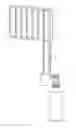
FIG. 1 is a perspective view of the preferred embodiment.
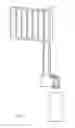
FIG. 2 is an exploded partial perspective view of the heating unit with the enclosure removed.
FIG. 3 is a perspective view of the preferred embodiment on a persons back.
DESCRIPTION OF THE PREFERRED EMBODIMENT
FIG. 1 depicts a perspective view of one preferred embodiment of the present invention. The bladder (1) is comprised of two sheets of polyurethane which are sandwiched and sealed at the edges using RF welding. Further seals within the bladder (1) are added in a vertical manner to create channels (5). This gives the bladder (1) structure and are used to guide the liquid in the bladder up and down. In this preferred embodiment the liquid in the bladder (1) is water. The heating unit (3) is a heat exchanger with a combustion chamber and a fluid channel with an inlet and an outlet containing water. Fuel for combustion is stored in the can (4). The present invention must be oriented so that it pitches down with the heating unit (3) on the bottom. This ensures that the warmed water floats towards the bladder (1). In this preferred embodiment the bladder (1) has two tubes (2) connecting it to the heating unit (3). These tubes (2) give passage for the water to move from the heating unit (3) to the bladder (1) in a closed circuit. One tube (2) goes to the inlet of the heating unit (3) and the other the outlet. When the water in the heating unit (3) is heated up by the combustion process it expands becoming lighter and more buoyant. The now lighter water floats up and out of the heating unit (3) outlet, through the tube (2) and up to the bladder (1). Channels (5) in the bladder (1) ensure that the water floats all the way up to the top of the bladder (1) with little interaction with other water molecules in the bladder (1). This method of passive heat exchange based on natural convection which circulates liquid in a vertical closed-loop circuit without requiring a conventional pump is called a thermosiphon.
FIG. 2 is an exploded partial perspective view of the heating unit with the enclosure removed incorporated in the present invention giving a more detailed view of the heating unit then FIG. 1. The heat exchanger (6) is an aluminum manifold and a combustion chamber with an inlet (10) and an outlet (9) hole at the top which holds the water separate from the combustion chamber. A block of catalytic material (7) is contained in the combustion chamber of the heat exchanger (6). A control valve (11) is used to regulate the amount of fuel that is added to the combustion chamber. A can (4) stores the fuel for combustion. In the preferred embodiment the fuel is propane. When in normal operation fuel from the can (4) travels out of the can (4) through the control valve (11) the combustion chamber of the heat exchanger (6). While in the combustion chamber the fuel comes in contact with the catalytic material (7). The catalytic material (7) has the ability to oxidize the propane fuel which produces an intense heat. Heat from the oxidation process heats the surrounding aluminum of the heat exchanger (6). Aluminum is an excellent conductor of heat so the heat is quickly transferred to the water in the heat exchanger (6). The heated water is now more buoyant and floats out of the outlet (9) while colder denser water sinks in through inlet (10). A schrader valve (8) is used to add water to the system while keeping the system sealed.
FIG. 3 is a perspective view of the preferred embodiment attached to a persons back. The present invention (13) is attached to the back of a person (12) with the pliant bladder (1) covering the lower back of the person (12). When a person (12) wears the present invention (13) in this configuration heat produced by the present invention (13) is absorbed through their back.
Claims
What is claimed is:1. A passive flow portable heating system comprising:
a combustion powered heating unit;
a heat transfer fluid;
a pliant bladder built in thermosiphon configuration and in closed loop thermal circuit with said heating unit using said fluid as transfer medium.
2. The portable heating system of claim 1, further comprising a fluid flow rate regulator.
Images & Drawings included:


Sources:
- United States Patent and Trademark Office - verify current appl. status at the USPTO↗
Similar patent applications:
- » 20060288949
Portable Heated padding for pets - » 20230397734
Portable Heating Pad Assembly - » 20100050907
Angle-adjustable heat-dissipating pad for portable computer - » 20090127250
Portable Body Joint Electric Heating Pad Fabric - » 20170356121
Portable, unattended heating device for stain treatment pad
Recent applications in this class:
- » 20230341186 2023-10-26
AIR SHROUDS WITH INTEGRATED HEAT EXCHANGER - » 20230324124 2023-10-12
Series connected water cooling structure - » 20220373262 2022-11-24
SOLAR ENERGY COLLECTOR SYSTEM - » 20220290923 2022-09-15
Safety buffered multi-fluid heat exchanger and safety buffered multi-fluid heat exchange process - » 20220187023 2022-06-16
Shrouded powder patch - » 20170299269 2017-10-19
RADIATOR ASSEMBLY - » 20140199055 2014-07-17
Hydronic/biphasic radiator with reduced thermal inertia and low environmental impact - » 20140199054 2014-07-17
Biphasic heat exchange radiator with optimisation of the boiling transient
Recent applications for this Assignee:
- » 20090287281 2009-11-19
Therapeutic cooling system