Key cylinder punch-in protector
US20110072864A1
2011-03-31
12/566,931
2009-09-25
Abstract:
An assembly that includes solid blocking placed between the interior door panel and the key cylinder of a vehicle that restricts the cylinder from being turned without the appropriate key when the cylinder is pushed into the cavity of the door.
Interested in similar patents?
Get notified when new applications in this technology area are published.
Classification:
E05B77/44 » CPC main
Vehicle locks characterised by special functions or purposes Burglar prevention, e.g. protecting against opening by unauthorised tools
E05B77/00 » CPC further
Locks for vehicles other than bicycles
E05B77/00 » CPC further
Vehicle locks characterised by special functions or purposes
Y10T70/5155 » CPC further
Locks; Special application; For closures Door
E05B65/00 IPC
Locks or fastenings for special use
Description
CROSS-REFERENCE TO RELATED APPLICATIONS
Not Applicable
BACKGROUND/TECHNICAL FIELD OF THE INVENTION
This invention relates generally to automobile security devices.
Current technology/manufacturing of doors has an exterior and interior panel of the door with a cavity between them. Traditionally the locking mechanism is attached to the exterior panel. On some model the area between the backside of the locking mechanism and the interior panel allows the key cylinder to be pushed inwards allowing the entire mechanism to turn freely inside the cavity of the door. In many vehicles the amount of force required to break the mechanism designed to hold the cylinder to the exterior panel is so small that the average person can hit the exterior of the cylinder with a blow from their hand and break the cylinder free.
BRIEF SUMMARY OF THE INVENTION
This design consists of solid blocking placed between the interior panel of the door and the backside of the key cylinder. The blocking is placed so as to remove the void behind the cylinder. Any force applied to the exterior of the key cylinder is distributed to the rigid interior panel preventing the key cylinder to be pushed out of the key cylinder housing. The blocking is secured to the interior panel of the door with a screw. If the factory mechanism designed to hold the key cylinder in place fails, the blocking is sized and positioned to keep the cylinder from moving out of its housing but still allowing rotational movement for normal operation.
BRIEF DESCRIPTION OF VIEWS OF THE DRAWING
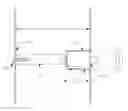
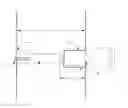
FIG. 1 is a side cross sectional view of the preferred embodiment of the present invention.
DETAILED DESCRIPTION OF THE INVENTION
The key cylinder punch-in protector of the present invention, in any of its alternative embodiments, illustrated in FIGS. 1, is solid blocking 1 that is sized and shaped to fill the cavity 2 of the door panel of a vehicle behind the key cylinder 3. The solid blocking 1 is attached to the interior panel 4 of the vehicle with a screw 5 so as to distribute pressure from the exterior of the key cylinder 6 to the interior door panel 4 and thus maintaining the key cylinder's position within the key cylinder's housing 7.
The illustrations and description of the key cylinder punch-in protector of the present invention are to be considered as illustrative and not restrictive in character, it being understood that only the preferred embodiment has been shown and described and that all changes and modifications that come within the spirit of the invention are desired to be protected.
Claims
1. Key cylinder punch-in protector, consisting of:
a rigid solid block that fills the void between an interior door panel and key cylinder so that when pressure is applied to the exterior of the cylinder, the force is distributed to thee interior panel to which the block is attached.
Images & Drawings included:
Sources:
- United States Patent and Trademark Office - verify current appl. status at the USPTO↗
Recent applications in this class:
- » 20250101774 2025-03-27
MINIMALIST SECONDARY BARRIER - » 20210246693 2021-08-12
Time of flight based security for multiple key fobs - » 20200115931 2020-04-16
VEHICLE KEY DETECTION AND STORAGE - » 20190218830 2019-07-18
Security lock for vehicles - » 20180195316 2018-07-12
Lock hasp - » 20170328091 2017-11-16
Blocking mechanism for preventing the opening of tail gates and related rear doors on light trucks and SUVS - » 20170260776 2017-09-14
Locking system for car wheel - » 20170218665 2017-08-03
VEHICLE COMPUTER LOCK - » 20170211299 2017-07-27
Vehicle door latch device - » 20170130489 2017-05-11
Locking system for car wheel