Production and use of antitumoral cyclodepsipeptides
US20110077205A1
2011-03-31
12/863,319
2008-11-20
✅ Patent granted
US 8,772,445 B2
2014-07-08
WO; PCT/DE2008/001915; 20081120
WO; WO2009/089810; 20090723
James H Alstrum Acevedo | Jeanette Lieb
Diederiks & Whitelaw, PLC
2031-09-09
Abstract:
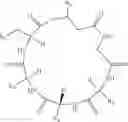
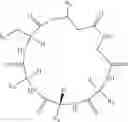
A compound having the general structure
-
- R1, R2, R3 and R4 being selected from the group consisting of a hydrogen atom (H) and a C1-C20 alkyl,
and - R5 being a phenyl radical.
- R1, R2, R3 and R4 being selected from the group consisting of a hydrogen atom (H) and a C1-C20 alkyl,
Inventors:
- Johannes Imhoff 3 🇩🇪 Preetz, Germany
- Jutta Wiese 3 🇩🇪 Eutin, Germany
- Holger Kalthoff 5 🇩🇪 Kiel, Germany
- Gerhard Lang 2 🇨🇭 Gurwolf, Switzerland
- Zhiguo Yu 1 🇨🇳 Shenyang, China
- Gerhard Lang 1 🇨🇭 Marly, Switzerland
- Stephanie Klose 1 🇩🇪 Kiel, Germany
- Stefanie Klose 1 🇩🇪 Wolfsburg, Germany
Assignee:
- LEIBNITZ-INSTITUT FUER MEERESWISSENSCHAFTEN 1 🇩🇪 Kiel, Germany
- Helmholtz-Zentrum Fuer Ozeanforschung Kiel (Geomar) 1 🇩🇪 Kiel, Germany
Applicant:
Interested in similar patents?
Get notified when new applications in this technology area are published.
Classification:
C07K7/06 » CPC main
Peptides having 5 to 20 amino acids in a fully defined sequence; Derivatives thereof; Linear peptides containing only normal peptide links having 5 to 11 amino acids
A61K38/15 » CPC further
Medicinal preparations containing peptides; Peptides having up to 20 amino acids in a fully defined sequence; Derivatives thereof Depsipeptides; Derivatives thereof
A61K38/00 » CPC further
Medicinal preparations containing peptides
A61K38/12 IPC
Medicinal preparations containing peptides; Peptides having up to 20 amino acids in a fully defined sequence; Derivatives thereof Cyclic peptides, e.g. bacitracins; Polymyxins; Gramicidins S, C; Tyrocidins A, B or C
C07K7/64 IPC
Peptides having 5 to 20 amino acids in a fully defined sequence; Derivatives thereof Cyclic peptides containing only normal peptide links
A61P35/00 » CPC further
Antineoplastic agents
C07K5/00 IPC
Peptides containing up to four amino acids in a fully defined sequence; Derivatives thereof
A61K38/04 IPC
Medicinal preparations containing peptides Peptides having up to 20 amino acids in a fully defined sequence; Derivatives thereof
Description
The invention relates to cyclical peptides that are suited for producing pharmaceuticals for treating cancer. The invention also relates to a method for producing theses compounds and their use as pharmaceuticals.
Until now many cancers cannot be treated by selectively acting biological agents. According to the World Health Organization (WHO) about 10 million people were diagnosed as having cancer in 2000, about 6 million died (World Cancer Report 2003. http://www.iarc.fr/IARCPress/pdfs/wcr/WorldCancerReport.pdf). According to WHO estimates the number of deaths caused by cancer will rise to about 11.5 million a year by 2030 (Worlds Health Statistics-2007. http://www.who.int/whosis/whostat2007—10highlights.pdf). Starting approximately from 2010, cancer will be the main cause for deaths after infectious diseases, followed by ischemic cardiac diseases, apoplexy (stroke), and HIV/AIDS.
Peptides produced by microorganisms are among promising candidates for treating cancer. For example actinomycin D that is produced by Streptomyces parvulus is already being used a pharamaceutical for treating cancer (BC Cancer Agency Cancer Drug Manual-1994. http://www.bccancer.bc.ca/NR/rdonlyres/852A1FC3-5BD2-481B-BFAA-45ACBFA77FAC/22684/Dactinomycinmonograph—5APR07.pdf). Thiocoralin, a product of Micromonspora marina, inhibits the growth of tumor cells (Romero, F. et al. “Thiocoraline, a New Depsipeptide with Antitumor Activity Produced by a Marine Micromonospora. I. Taxonomy, Fermentation, Isolation, and Biological Activities.” J. Antibiot. 1997; 50 (9): 734-7). The marine fungus isolate Exserohilum rostratum produces the cyclical dipeptides rostratin A-D that are having a cytotoxic effect (Tan, R. X. “Isolation and Structure Assignments of Rostratins A-D, Cytotoxic Disulfides Produced by the Marine-Derived Fungus Exserohilum rostratum.” J. Nat. Prod. 2004 August; 67(8): 1374-82).
Despite the wide knowledge on the species Scopulariopsis even in the marine habitat there is only limited knowledge on natural products from these organisms. As far as we know the only natural product known to date from this species is a pyranol derivate, patented for its antimycotic activity (U.S. Pat. No. 5,270,334).
With a view to the large number of humans that are suffering from cancer, the unfavorable prognosis for curing certain types of cancer (e.g. pancreas) due to the low efficienecy of previous pharamaceuticals, side effects, and the development of resistance against pharmaceuticals used there is an urgent need for new cancer pharmaceuticals.
Therefore the present invention is based on the objective of providing further antitumorally acting peptides and to illustrate a way for their production.
According to the invention, this objective is achieved by the compound having the features of claim 1. The sub-claims specify advantageous embodiments of the invention.
During the course of a scientific program for isolating biologically active natural products from marine microorganisms the inventors have examined the fungus Scopulariopsis brevicaulis, isolated from the marine sponge Tethya aurantium.
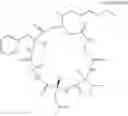
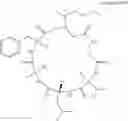
The antitumoral peptides Scopularid A and Scopularid B preferred according to the invention were isolated from cultures of the fungus Scopulariopsis brevicaulis by preparative HPLC.
The physical data of Scopularid A and B are given in the Tables 1 and 2 that are attached, Table 1 showing the NMR data (600 MHz, MeOD) of Scopularid A and Table showing 2 the NMR data (600 MHz, MeOD) of Scopularid B.
The examination of the antiproliferative effect against tumor cells confirmed that Scopularid B shows a significant inhibitive effect against tumor cell lines, in particular against pancreas tumor cell line Colo357 (cf. Example 4).
The propagation and identification of the fungus Scopulariopsis brevicaulis and the purification of Scopularid A and Scopularid B from cultures of the fungus and the determination of the antiproliferative effect against tumor cells are described in the following examples.
1) Propagation of a Culture of the Fungus Scopulariopsis brevicaulis
The propagation of the fungus cultures for obtaining Scopularides took place in 2 Litre Erlenmeyer flasks that were each loaded with 700 mL nutrient solution having the following composition (modified according to Wickerham, L. J. “Taxonomy of yeasts.” US Dept. Technol. Bull. 1951; 1029: 1-56.): 3.0 g yeast extract; 3.0 g malt extract; 5.0 g peptone; 10.0 g glucose; 30.0 g NaCl; pH 6.8. Sterilization of the nutrient solution was by autoclaving at 121° C./1 bar for 20 minutes. As inoculum for the experimental fungus culture, cell material was transferred from a 14 day old preculture that had been propagated on WM medium into the feed stock of the main culture using an inoculation loop. Incubation of the inoculated nutrition solution was carried out over a period of 14 days at a constant temperature of 28° C. in a static culture in darkness.
2) Identification of the Fungus as Scopulariopsis brevicaulis
The morphological features of the fungus are determined using scanning electron microscope examinations. The fungus shows single conidiophores that emerge from hyphae. The hyphae are unbranched or subdivided vertically once or twice. The conidiogenous cells ary cylindrical, sometimes with a swollen base, and with an annelating zone of variable length and uniform width. The conidiae are spherical to oval (4-6×6-7 μm) and exhibit a flattened base and rough elevations. Genetic identification is via 18S rDNA analysis. The morphological characteristics and the 18S rDNA sequence result in an unambiguous identification of the fungus as Scopulariopsis brevicaulis.
3) Purification of Scopularid A and Scopularid B from Cultures of the Fungus Scopulariopsis brevicaulis
The fungus mycelium is separated off the culture supernatant, comminuted and extracted using acetone. The acetone extract is evaporated to dryness, and the residue is rinsed sequentially with a methanol water mixture (2:8) and with n-hexane. The remaining residue is subjected to a separation by preparative high-performance liquid chromatography.
-
- Separation column: Phenomenex Luna C18, 21.2×250 mm, 5 μm
- Solvent: water+0.1% formic acid and acetonitrile+0.1% formic acid (30:70)
- Flow rate: 18 mL/min
The substances Scopularid A and Scopularid B are eluted after 13 and 8 min. After removing the solvents by drying in a vacuum the desired pure substances are obtained as white solids.
4) Determination of the Antiproliferative Effect Against Tumor Cells
The substances Scopularid A and Scopularid B have shown significant inhibitory action against tumor cell lines, in particular pancreatic tumor cell lines Colo357 and Panc89 and also intestinal tumor cell lines HT29 (on average an inhibition between 25-50% at 1 μg/mL). This activitiy was determined using the crystal violet assay (Siegmund, D. et al. “Death receptor-induced signalling pathways are differentially regulated by gamma interferon upstream of caspase 8 processing.” Mol. Cell. Biol. 2005; 25: 6363-6379).
| TABLE 1 |
| Scopularid A |
| Colorless finely-crystalline solid. |
| Melting point: 229-230° C. |
| Optical activity: [α]25D −38° (c 0.5, MeOH) |
| HRESIMS: m/z 672.4331 [M + H]+ (calculated for C36H58N5O7 672.4336) |
| NMR data (600 MHz; in MeOH-d4) |
| Position | δC, mult. | δH (J in Hz) | COSY | HMBC |
| Phe | 1 | 173.6, | qC | ||||
| 2 | 55.3, | CH | 4.79, | m | 3a, 3b | 1, 3 | |
| 3 | 39.4, | CH2 | 3.18, | dd (13.5, 7.5) | 2, 3b | 1, 2, 4, 5/9 | |
| 3.03, | dd (13.5, 8.2) | 2, 3a | 1, 2, 4, 5/9 | ||||
| 4 | 137.8, | qC | |||||
| 5/9 | 130.3, | CH | 7.24, | m | 6/8 | 3, 7, 5/9 | |
| 6/8 | 129.6, | CH | 7.28, | m | 5/9 | 4, 6/8 | |
| 7 | 128.0, | CH | 7.21, | m | 5/9 | ||
| Ala | 1 | 174.1, | qC | ||||
| 2 | 50.3, | CH | 4.29, | q (7.3) | 3 | 1, 3, Leu-1 | |
| 3 | 17.6, | CH3 | 1.27, | d (7.3) | 2 | 1, 2 | |
| Leu | 1 | 175.1, | qC | ||||
| 2 | 54.7, | CH | 4.19, | m | 3 | 1, 3, 4 | |
| 3 | 40.3, | CH2 | 1.58, | m | 2, 4 | 1, 2, 4 | |
| 4 | 26.0, | CH | 1.68, | m | 3, 5, 6 | 2, 3, 5, 6 | |
| 5 | 23.1, | CH3 | 1.00, | d (6.6) | 4 | 3, 4, 6 | |
| 6 | 22.3, | CH3 | 0.95, | d (6.6) | 4 | 3, 4, 5 | |
| Val | 1 | 173.4, | qC | ||||
| 2 | 59.9, | CH | 4.20, | m | 3 | 1, 3, 4, Gly-1 | |
| 3 | 31.0, | CH | 2.19, | m | 2, 4, 5 | 1, 2, 4, 5 | |
| 4 | 19.0, | CH3 | 0.98, | d (6.7) | 3 | 2, 3, 5 | |
| 5 | 19.7, | CH3 | 0.97, | d (6.7) | 3 | 2, 3, 4 | |
| Gly | 1 | 171.9, | qC | ||||
| 2 | 44.0, | CH2 | 4.24, | d (16.8) | 1, HMDA-1 | ||
| 3.53, | d (16.8) | 1, HMDA-1 | |||||
| HMDAa | 1 | 174.5, | qC | ||||
| 2 | 40.9, | CH2 | 2.42, | m | 3 | 1, 3, 4 | |
| 3 | 78.6, | CH | 4.77, | m | 2, 4 | 2, 4, 4-Me | |
| 4 | 39.0, | CH | 1.54, | m | 3, 4-Me | ||
| 5 | 33.6, | CH2 | 1.22, | m | |||
| 0.95, | m | ||||||
| 6 | 30.6, | CH2 | 1.30, | m | |||
| 7 | 28.2, | CH2 | 1.29, | m | |||
| 8 | 33.0, | CH2 | 1.26, | m | |||
| 9 | 23.7, | CH2 | 1.31, | m | 10 | ||
| 10 | 14.42, | CH3 | 0.91, | t (7.2) | 9 | 9, 8 | |
| 4-Me | 14.41, | CH3 | 0.83, | d (6.9) | 4 | 3, 4, 5 | |
| aHMDA: 3-hydroxy-4-methyl decanoic acid |
| TABLE 2 |
| Scopularid B |
| White amorphous solid |
| Optical activity: [α]25D −43° (c 0.5, MeOH) |
| HRESIMS: m/z 644.4007 [M + H]+ (calculated for C34H54N5O7 644.4023) |
| NMR data (600 MHz; in MeOH-d4) |
| Position | δC, mult. | δH(JJin Hz) | COSY | HMBC |
| Phe | 1 | 173.6, | qC | ||||
| 2 | 55.3, | CH | 4.78, | m | 3a, 3b | 1, 3 | |
| 3 | 39.4, | CH2 | 3.18, | dd (13.5, 7.5) | 2, 3b | 1, 2, 4, 5/9 | |
| 3.03, | dd (13.5, 8.2) | 2, 3a | 1, 2, 4, 5/9 | ||||
| 4 | 137.8, | qC | |||||
| 5/9 | 130.3, | CH | 7.24, | m | 6/8 | 3, 7, 5/9 | |
| 6/8 | 129.6, | CH | 7.28, | m | 5/9 | 4, 6/8 | |
| 7 | 128.0, | CH | 7.21, | m | 5/9 | ||
| Ala | 1 | 174.1, | qC | ||||
| 2 | 50.3, | CH | 4.29, | q (7.3) | 3 | 1, 3, Leu-1 | |
| 3 | 17.6, | CH3 | 1.28, | d (7.3) | 2 | 1, 2 | |
| Leu | 1 | 175.1, | qC | ||||
| 2 | 54.7, | CH | 4.19, | m | 3 | 1, 3, 4 | |
| 3 | 40.4, | CH2 | 1.58, | m | 2, 4 | 1, 2, 4 | |
| 4 | 26.0, | CH | 1.69, | m | 3, 5, 6 | 2, 3, 5, 6 | |
| 5 | 23.1, | CH3 | 0.99, | d (6.6) | 4 | 3, 4, 6 | |
| 6 | 22.3, | CH3 | 0.95, | d (6.6) | 4 | 3, 4, 5 | |
| Val | 1 | 173.4, | qC | ||||
| 2 | 59.9, | CH | 4.20, | m | 3 | 1, 3, 4, Gly-1 | |
| 3 | 31.0, | CH | 2.18, | m | 2, 4, 5 | 1, 2, 4, 5 | |
| 4 | 19.0, | CH3 | 0.98, | d (6.7) | 3 | 2, 3, 5 | |
| 5 | 19.7, | CH3 | 0.97, | d (6.7) | 3 | 2, 3, 4 | |
| Gly | 1 | 171.9, | qC | ||||
| 2 | 44.0, | CH2 | 4.24, | d (16.8) | 1, HMOA-1 | ||
| 3.53, | d (16.8) | 1, HMOA-1 | |||||
| HMOAa | 1 | 174.5, | qC | ||||
| 2 | 40.9, | CH2 | 2.41, | m | 3 | 1, 3, 4 | |
| 3 | 78.6, | CH | 4.77, | m | 2, 4 | 2, 4, 4-Me | |
| 4 | 39.0, | CH | 1.54, | m | 3, 4-Me | ||
| 5 | 33.3, | CH2 | 1.22, | m | |||
| 0.96, | m | ||||||
| 6 | 30.5, | CH2 | 1.32, | m | 6b | ||
| 1.32, | m | 6a | |||||
| 7 | 23.8, | CH2 | 1.16, | m | 8 | ||
| 8 | 14.38, | CH3 | 0.90, | t (7.2) | 7 | 6, 7 | |
| 4-Me | 14.41, | CH3 | 0.83, | d (6.9) | 4 | 3, 4, 5 | |
| aHMOA: 3-hydroxy-4-methyl octane acid |
Claims
1. A compound having the general structure
R1, R2, R3 and R4 being selected from the group consisting of a hydrogen atom (H) and a C1-C20 alkyl,
and
R5 being a phenyl radical.
2. The compound according to claim 1, characterized in that the alkyl and/or the phenyl radical exhibits a substituent selected from the group consisting of an acyl radical, a formyl, acetyl, trichloroacetyl, fumaryl, maleyl, succinyl, or benzoyl group, a halogen radical, an aminoalkyl group, a hydroxyl group, an ether group or a carboxyl group.
5. A method for producing a compound according to one of the preceding claims, characterized by the following steps:
cultivating a fungus of the species Scopulariopsis in a manner known per se and
isolating the compound from the culture medium and/or the fungus.
6. The method according to claim 5, characterized in that the fungus is Scopulariopsis brevicaulis.
7. Use of a substance according to one of claims 1 to 6 as anti-tumor agent.
8. The use of the substance according to claim 7 for the treatment and prophylaxis of pancreatic cancer.
Images & Drawings included:

Sources:
- United States Patent and Trademark Office - verify current appl. status at the USPTO↗
Similar patent applications:
Recent applications in this class:
- » 20250282821 2025-09-11
LIPOPOLYSACCHARIDE-BINDING PEPTOIDS, AND COMPOSITIONS AND METHODS OF USE THEREOF - » 20250282820 2025-09-11
PEPTIDE COMPLEX HAVING TRKB BINDING ACTIVITY - » 20250282819 2025-09-11
MITOCHONDRIA-SPECIFIC PEPTIDE THAT CAN BE INTRACELLULARLY DELIVERED AT NANOMOLAR CONCENTRATION, AND USE THEREOF - » 20250277000 2025-09-04
PHOSPHORYLATED ANTIGEN AND ANTIBODY AT SER23 SITE OF PGAM1 PROTEIN AS WELL AS PREPARATION METHODS AND APPLICATIONS - » 20250276999 2025-09-04
PEPTIDES FOR PROMOTING HAIR FOLLICLE NEOGENESIS, AND PREVENTION/MITIGATION OF UNTOWARD EFFECTS OF RADIATION TREATMENT - » 20250276998 2025-09-04
NOVEL DAROBACTIN DERIVATIVES - » 20250270255 2025-08-28
CASPASE-2 INHIBITOR COMPOUNDS - » 20250270254 2025-08-28
PROBES AND KITS FOR THE EARLY DIAGNOSIS OF DIFUSE LARGE B-CELL LYMPHOMA - » 20250263435 2025-08-21
PEPTIDE COMPOSITIONS CAPABLE OF BINDING LANTHIONINE SYNTHETASE C-LIKE PROTEIN (LANCL) AND USES THEREOF - » 20250263434 2025-08-21
OLIGOPEPTIDE HAVING BLOOD PRESSURE REDUCING EFFECT, AND PREPARATION METHOD THEREFOR AND APPLICATION THEREOF