SOLAR ENERGY SYSTEM FOR A BUILDING
US20110080045A1
2011-04-07
12/852,595
2010-08-09
Abstract:
A solar energy system that maximizes the amount of a building surface space exposed to sunlight to capture the energy produce by the sun's rays. The solar paneling attached to the window frames, door frames and other natural architectural entry points of the building, electrical circuitry to link the solar energy system to the existing electrical system of the building and a battery station for storing energy generated by the solar energy system for use on demand at a later time.
Assignee:
- Anthony C. Spikes 1 🇺🇸 New York, NY, United States
Interested in similar patents?
Get notified when new applications in this technology area are published.
Classification:
H02J7/35 » CPC main
Circuit arrangements for charging or depolarising batteries or for supplying loads from batteries; Parallel operation in networks using both storage and other dc sources, e.g. providing buffering with light sensitive cells
H02J3/32 » CPC further
Circuit arrangements for ac mains or ac distribution networks; Arrangements for balancing of the load in a network by storage of energy using batteries with converting means
H02J3/381 » CPC further
Circuit arrangements for ac mains or ac distribution networks; Arrangements for parallely feeding a single network by two or more generators, converters or transformers Dispersed generators
H02J3/383 » CPC further
Circuit arrangements for ac mains or ac distribution networks; Arrangements for parallely feeding a single network by two or more generators, converters or transformers; Dispersed generators the generators exploiting renewable energy Solar energy, e.g. photovoltaic energy
H02S40/38 » CPC further
Components or accessories in combination with PV modules, not provided for in groups -; Electrical components Energy storage means, e.g. batteries, structurally associated with PV modules
H02J2300/24 » CPC further
Systems for supplying or distributing electric power characterised by decentralized, dispersed, or local generation; The dispersed energy generation being of renewable origin; The renewable source being solar energy of photovoltaic origin
H02J2310/14 » CPC further
The network for supplying or distributing electric power characterised by its spatial reach or by the load; The network having a local or delimited stationary reach; The local stationary network supplying a household or a building The load or loads being home appliances
Y02B10/10 » CPC further
Integration of renewable energy sources in buildings Photovoltaic [PV]
Y02B10/10 » CPC further
Integration of renewable energy sources in buildings Photovoltaic [PV]
Y02B10/20 » CPC further
Integration of renewable energy sources in buildings Solar thermal
Y02B10/20 » CPC further
Integration of renewable energy sources in buildings Solar thermal
Y02B70/30 » CPC further
Technologies for an efficient end-user side electric power management and consumption Systems integrating technologies related to power network operation and communication or information technologies for improving the carbon footprint of the management of residential or tertiary loads, i.e. smart grids as climate change mitigation technology in the buildings sector, including also the last stages of power distribution and the control, monitoring or operating management systems at local level
Y02B70/30 » CPC further
Technologies for an efficient end-user side electric power management and consumption Systems integrating technologies related to power network operation and communication or information technologies for improving the carbon footprint of the management of residential or tertiary loads, i.e. smart grids as climate change mitigation technology in the buildings sector, including also the last stages of power distribution and the control, monitoring or operating management systems at local level
Y02B70/3225 » CPC further
Technologies for an efficient end-user side electric power management and consumption; Systems integrating technologies related to power network operation and communication or information technologies for improving the carbon footprint of the management of residential or tertiary loads, i.e. smart grids as climate change mitigation technology in the buildings sector, including also the last stages of power distribution and the control, monitoring or operating management systems at local level Demand response systems, e.g. load shedding, peak shaving
Y02B70/3225 » CPC further
Technologies for an efficient end-user side electric power management and consumption; Systems integrating technologies related to power network operation and communication or information technologies for improving the carbon footprint of the management of residential or tertiary loads, i.e. smart grids as climate change mitigation technology in the buildings sector, including also the last stages of power distribution and the control, monitoring or operating management systems at local level Demand response systems, e.g. load shedding, peak shaving
Y02E10/56 » CPC further
Energy generation through renewable energy sources; Photovoltaic [PV] energy Power conversion systems, e.g. maximum power point trackers
Y02E10/56 » CPC further
Energy generation through renewable energy sources; Photovoltaic [PV] energy Power conversion systems, e.g. maximum power point trackers
Y02E70/30 » CPC further
Systems combining energy storage with energy generation of non-fossil origin
Y02E70/30 » CPC further
Systems combining energy storage with energy generation of non-fossil origin
Y04S20/222 » CPC further
Management or operation of end-user stationary applications or the last stages of power distribution; Controlling, monitoring or operating thereof; End-user application control systems Demand response systems, e.g. load shedding, peak shaving
Y04S20/242 » CPC further
Management or operation of end-user stationary applications or the last stages of power distribution; Controlling, monitoring or operating thereof; End-user application control systems Home appliances
H02J1/00 IPC
Circuit arrangements for dc mains or dc distribution networks
H02J7/00 IPC
Circuit arrangements for charging or depolarising batteries or for supplying loads from batteries
H02J3/00 IPC
Circuit arrangements for ac mains or ac distribution networks
Description
CROSS-REFERENCE TO RELATED APPLICATION
The present application claims priority from United States Provisional Application No. 61/232,450 filed on Aug. 9, 2009, the content of which is hereby incorporated by reference into this application.
DESCRIPTION OF INVENTION
The invention is a new Solar Energy System that maximizes the amount of a building's surface space exposed to sunlight to capture the energy produced by the Sun's rays. The solar energy system of the present invention will be both standardized and customized.
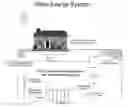
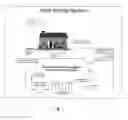
Particularly the invention standardizes the application of solar energy generating systems by incorporating solar paneling attached to the window frames, door frames and other natural architectural entry points of existing buildings and electrical circuitry to link the solar energy system to the building's existing electrical system. The present invention is illustrated, for example, in FIG. 1.
For new building construction the invention incorporates the solar energy system into the initial architecture of the building to employ the maximum amount of surface space of the building to capture and harness solar energy yet maintain the architectural and aesthetic appeal of the building.
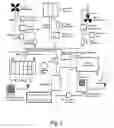
In both cases the solar energy system of the invention has a plug in feature that allows the captured solar energy to be fed directly into the building's electrical system to address immediate electricity use and demand or be redirected to a battery station to be stored for electricity demand at a later time as illustrated, for example in FIG. 2. FIG. 2 also shows other elements that may be included in the invention, such as, shunts, charge controllers, fuses or circuit breakers, auxiliary batteries chargers, meters, batteries, diverters, engine generators, etc. The solar energy system of the invention will increase electrical output of current solar systems in the range of 20%-200% for existing buildings and 100%-5000% or greater when incorporated in the design of new buildings.
The invention makes use of small and miniature solar panels that can be incorporated into the design and architecture of existing homes and commercial buildings to deliver both direct and indirect (stored) electrical current. As described in the Sustainability section, the present invention addresses the fact that current solar energy systems are very inefficient because they are most often roof mounted or completely detached and only harness a small amount of solar energy relative the amount of sunlight that bombards and showers the building. On any given day, the Sun's rays not only hit the roof top but shower 60%-100% of a building depending on location and design. The present invention could be used in conjunction with existing solar technology and design.
BRIEF DESCRIPTION OF DRAWINGS
FIG. 1 shows an illustration of a typical home with a solar retention system;
FIG. 2 illustrates a feature that allows the captured solar energy to be fed directly into the building's electrical system to address immediate electricity use and demand or be redirected to a battery station to be stored for electricity demand at a later time.
DETAILED DESCRIPTION OF THE DRAWINGS
In FIG. 1, the solar energy generates a system by incorporating solar paneling attached to the window frames, door frames and other natural architectural entry points of existing buildings and electrical circuitry to link the solar energy system to the building's existing electrical system.
In FIG. 2, other elements such as shunts, charge controllers, fuses or circuit breakers, auxiliary batteries charges, meters, batteries, diverters, engine and generators will increase electrical output of current solar systems in the range of 20%-200% for existing buildings and 100%-5000% or greater when incorporated in the design of new buildings.
Invention Category: Energy
Our invention category is Energy because we propose to reconfigure and increase the output of current solar energy systems.
Sustainability Issue Addressed
The sustainability issued addressed is that the solar energy system of the present invention optimizes the amount of surface space of a building to capture sun rays and convert them into electricity. The solar energy system of the present invention can completely eliminate the “Grid” dependency of both existing and newly constructed buildings. As described in the Description of Invention section, current solar systems are mostly roof mounted or completely detached. As a result, the amount of surface space exposed to sunlight is not optimized and thus the energy output is not optimal. Our system on the other hand is compatible with current solar technology and can be used with current systems and technology to increase solar energy output. In addition, the solar energy system of the present invention not only applies to buildings but also applies to other structures that rely on electricity.
How Does the Invention Relate to Buildings
The solar energy system of the present invention relates to buildings because it is designed to be incorporated into the building's structure to optimize the amount of the building's surface space to capture and convert solar energy to electricity. The standardized application of the present invention incorporates solar paneling into the window frames, door frames and other natural architectural entry points of existing buildings and electrical circuitry to link the solar energy system to the building's existing electrical system. For new building construction the solar energy system of the present invention is incorporated into the architecture of the building to employ the maximum amount of surface space of the building to capture and harness solar energy yet maintain the architectural and aesthetic appeal of the building.
Conventional Systems
Conventional solar energy systems do not address the issue of maximizing a building's surface space to harness the most solar energy possible as in the present invention.
Claims
What is claimed is:1. A solar energy system for use on a building comprising:
solar paneling attached to the window frames, door frames and other natural architectural entry points of the building; and
electrical circuitry to link the solar energy system to the existing electrical system of the building.
2. The solar energy system according to claim 1, further comprising:
a battery station for storing energy generated by the solar energy system for use on demand at a later time.
3. The solar energy system according to claim 2, further comprising:
a shunt that selectively directs energy generated by the solar energy system to the electrical circuitry to supply energy to the existing electrical system of the building or the battery station to store energy generated by the solar energy system for later use.
Images & Drawings included:
Sources:
- United States Patent and Trademark Office - verify current appl. status at the USPTO↗
Similar patent applications:
- » 20180372336
Building-integrated solar energy system - » 20140096762
Solar collector, collector element, building roof, building, and solar energy recovery system - » 20110232633
Solar energy integrated building and solar collector system thereof - » 20110271952
SYSTEM FOR RECLAIMING SOLAR ENERGY IN BUILDINGS - » 20090064991
Solar Energy Capturing Building Construction Materials, Systems and Methods - » 20170298615
Reproducible building structure with integrated solar energy system - » 20120291768
Solar energy-powered heating and cooling system for buildings - » 20070227531
Modular solar energy-collecting enclosure element, and modular system for forming solar energy-collecting enclosures on buildings - » 20250137672
INTEGRATED CONTROL SYSTEM FOR HEAT PUMP TO OPTIMIZE ENERGY OF SOLAR POWER BUILDING - » 20160276514
SOLAR ENERGY COLLECTION SYSTEMS UTILIZING HOLOGRAPHIC OPTICAL ELEMENTS USEFUL FOR BUILDING INTEGRATED PHOTOVOLTAICS
Recent applications in this class:
- » 20250167583 2025-05-22
CLEANING APPARATUS FOR SURFACE SUBMERGED IN LIQUID - » 20250141257 2025-05-01
VEHICLE - » 20250118988 2025-04-10
Solar Panel Charging Block and Load Outlets - » 20250096590 2025-03-20
COMBINATION WIND/SOLAR DC POWER SYSTEM - » 20250079879 2025-03-06
SOLAR CHARGING SYSTEM - » 20250055307 2025-02-13
MICROINVERTERS FOR PHOTOVOLTAIC APPLICATIONS - » 20250047128 2025-02-06
SERVER SYSTEM AND SERVER INTEGRATED CABINET - » 20250038564 2025-01-30
SOLAR POWERED BATTERY CHARGER - » 20250038563 2025-01-30
INDOOR CHARGER EQUIPMENT CROSS REFERENCE TO RELATED APPLICATIONS - » 20250023381 2025-01-16
Power management systems, devices, and methods