Air sanitization system with variable speed fan
US20110081273A1
2011-04-07
12/573,240
2009-10-05
✅ Patent granted
US 8,128,869 B2
2012-03-06
-
-
Jill Warden | Monzer Chorbaji
2030-10-06
Abstract:
An air sanitization system including a reactive oxygen species generator, a variable speed fan, a pathogen sensor and a controller. The reactive oxygen species generator generates reactive oxygen species from an oxygen-containing gas and discharges the reactive oxygen species to a conditioned space. The variable speed fan directs the oxygen-containing gas to the reactive oxygen species generator at a controlled speed. The pathogen sensor senses a level of airborne pathogens in the conditioned space and generates a signal indicative of the level of pathogens sensed. The controller receives the signal from the pathogen sensor and varies the speed of the variable speed fan in response to the signal to decrease a speed of the variable speed fan in response to an increase in the level of airborne pathogens sensed by the pathogen sensor.
Assignee:
- HUSSMANN CORPORATION 175 🇺🇸 Bridgeton, MO, United States
Interested in similar patents?
Get notified when new applications in this technology area are published.
Classification:
A61L2/00 IPC
Methods or apparatus for disinfecting or sterilising materials or objects other than foodstuffs or contact lenses; Accessories therefor
A61L2/00 IPC
Disinfection or sterilising
A61L9/046 » CPC main
Disinfection, sterilisation or deodorisation of air using gaseous or vaporous substances, e.g. ozone using substances evaporated in the air without heating with the help of a non-organic compound
A61L9/12 » CPC further
Disinfection, sterilisation or deodorisation of air using gaseous or vaporous substances, e.g. ozone using substances evaporated in the air without heating Apparatus, e.g. holders, therefor
A61L9/22 » CPC further
Disinfection, sterilisation or deodorisation of air using physical phenomena Ionisation
F24F11/77 » CPC further
Control or safety arrangements; Control systems characterised by their outputs; Constructional details thereof for controlling the supply of treated air, e.g. its pressure for controlling air flow rate or air velocity by controlling the speed of ventilators
A61L2209/111 » CPC further
Aspects relating to disinfection, sterilisation or deodorisation of air; Apparatus features; Apparatus for controlling air treatment Sensor means, e.g. motion, brightness, scent, contaminant sensors
A61L2209/13 » CPC further
Aspects relating to disinfection, sterilisation or deodorisation of air; Apparatus features Dispensing or storing means for active compounds
A61L2209/16 » CPC further
Aspects relating to disinfection, sterilisation or deodorisation of air; Apparatus features Connections to a HVAC unit
A61L2209/21 » CPC further
Aspects relating to disinfection, sterilisation or deodorisation of air; Method-related aspects Use of chemical compounds for treating air or the like
A61L2209/211 » CPC further
Aspects relating to disinfection, sterilisation or deodorisation of air; Method-related aspects; Use of chemical compounds for treating air or the like Use of hydrogen peroxide, liquid and vaporous
A61L2209/212 » CPC further
Aspects relating to disinfection, sterilisation or deodorisation of air; Method-related aspects; Use of chemical compounds for treating air or the like Use of ozone, e.g. generated by UV radiation or electrical discharge
F24F8/20 » CPC further
Treatment, e.g. purification, of air supplied to human living or working spaces otherwise than by heating, cooling, humidifying or drying by sterilisation
F24F8/60 » CPC further
Treatment, e.g. purification, of air supplied to human living or working spaces otherwise than by heating, cooling, humidifying or drying by adding oxygen
F24F2110/66 » CPC further
Control inputs relating to air properties; Air quality properties; Concentration of specific substances or contaminants Volatile organic compounds [VOC]
Y02B30/70 » CPC further
Energy efficient heating, ventilation or air conditioning [HVAC] Efficient control or regulation technologies, e.g. for control of refrigerant flow, motor or heating
Y02B30/70 » CPC further
Energy efficient heating, ventilation or air conditioning [HVAC] Efficient control or regulation technologies, e.g. for control of refrigerant flow, motor or heating
Y10S588/90 » CPC further
Hazardous or toxic waste destruction or containment Apparatus
A61L2/24 IPC
Methods or apparatus for disinfecting or sterilising materials or objects other than foodstuffs or contact lenses; Accessories therefor Apparatus using programmed or automatic operation
A61L9/00 IPC
Disinfection, sterilisation or deodorisation of air
B01J19/08 IPC
Chemical, physical or physico-chemical processes in general; Their relevant apparatus Processes employing the direct application of electric or wave energy, or particle radiation; Apparatus therefor
B09B3/00 IPC
Destroying solid waste or transforming solid waste into something useful or harmless
B08B3/12 IPC
Cleaning by methods involving the use or presence of liquid or steam; Cleaning involving contact with liquid with additional treatment of the liquid or of the object being cleaned, e.g. by heat, by electricity, by vibration by sonic or ultrasonic vibrations
B03C3/36 IPC
Separating dispersed particles from gases or vapour, e.g. air, by electrostatic effect; Constructional details or accessories or operation thereof Controlling flow of gases or vapour
B01D46/30 IPC
Filters or filtering processes specially modified for separating dispersed particles from gases or vapours Particle separators, e.g. dust precipitators, using loose filtering material
B03C3/00 IPC
Separating dispersed particles from gases or vapour, e.g. air, by electrostatic effect
F24F7/007 IPC
Ventilation with forced flow
H01T19/04 IPC
Devices providing for corona discharge having pointed electrodes
A61N5/00 IPC
Radiation therapy
G01N19/10 IPC
Investigating materials by mechanical methods Measuring moisture content, e.g. by measuring change in length of hygroscopic filament; Hygrometers
Description
BACKGROUND
The present invention relates to an air sanitization system generating ozone and other reactive oxygen species, and a control system therefor.
U.S. Patent Publication No. 2007/0154344 discloses a sterilizer unit that produces ozone for killing mold and viruses in an interior space. The temperature and relative humidity of the interior space are measured by sensors and are indicative of the favorability of growing conditions for the mold and viruses. A control unit determines a mode of operation based on the sensed temperature and relative humidity. For more favorable mold and virus growing conditions, the control unit increases ozone production and increases a speed of a blower unit to the ozone generator.
SUMMARY
In one embodiment, the invention provides an air sanitization system including a reactive oxygen species generator, a variable speed fan, a pathogen sensor and a controller. The reactive oxygen species generator generates reactive oxygen species from an oxygen-containing gas and discharges the reactive oxygen species to a conditioned space. The variable speed fan directs the oxygen-containing gas to the reactive oxygen species generator at a controlled speed. The pathogen sensor senses a level of airborne pathogens in the conditioned space and generates a signal indicative of the level of pathogens sensed. The controller receives the signal from the pathogen sensor and varies the speed of the variable speed fan in response to the signal to decrease a speed of the variable speed fan in response to an increase in the level of airborne pathogens sensed by the pathogen sensor.
In another embodiment, the invention provides a method of controlling an air sanitization system for sanitizing a conditioned space. The method includes generating short-lived reactive oxygen species in the reaction chamber, generating long-lived reactive oxygen species in the reaction chamber, passing a pathogen-containing gas through the reaction chamber to remove at least a portion of pathogens from the pathogen-containing gas, distributing the long-lived reactive oxygen species to the conditioned space and onto surfaces in the conditioned space, sensing an amount of pathogens in the pathogen-containing gas, increasing a dwell time of a portion of the pathogen-containing gas within the reaction chamber in response to an increase in the amount of pathogens sensed to increase exposure of the pathogens to the short-lived reactive oxygen species, and decreasing the dwell time of a portion of the pathogen-containing gas within the reaction chamber in response to a decrease in the amount of pathogens to increase distribution of long-lived reactive oxygen species to the conditioned space for sanitizing the surfaces.
In yet another embodiment, the invention provides an air sanitization system. The air sanitization system includes a reactive oxygen species generator, a variable speed fan, a pathogen sensor, and a controller. The reactive oxygen species generator generates reactive oxygen species from an oxygen-containing gas and discharges the reactive oxygen species to a conditioned space. The variable speed fan directs the oxygen-containing gas to the reactive oxygen species generator at a controlled speed. The pathogen sensor senses a level of airborne pathogens in the conditioned space and generates a signal indicative of the level of pathogens sensed. The controller receives the signal from the pathogen sensor and varies the speed of the variable speed fan in response to the signal to decrease a speed of the variable speed fan in response to an increase in the level of airborne pathogens sensed by the pathogen sensor and to increase the speed of the variable speed fan in response to a decrease in the level of airborne pathogens sensed by the pathogen sensor. The controller decreases the fan speed by a predetermined percentage when the level of airborne pathogens is greater than or equal to a predetermined maximum level of airborne pathogens. The controller increases the fan speed by another predetermined percentage when the pathogen level is less than or equal to a predetermined minimum level of airborne pathogens. The reactive oxygen species include at least ozone and vapor phase hydrogen peroxide, and the ozone and vapor phase hydrogen peroxide are delivered to the conditioned space to provide surface and air decontamination.
Other aspects of the invention will become apparent by consideration of the detailed description and accompanying drawings.
BRIEF DESCRIPTION OF THE DRAWINGS
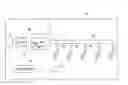
FIG. 1 is a schematic diagram of an air sanitization system in accordance with the present invention.
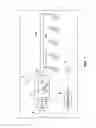
FIG. 2 is a flow chart of an algorithm for controlling the air sanitization system of FIG. 1.
DETAILED DESCRIPTION
Before any embodiments of the invention are explained in detail, it is to be understood that the invention is not limited in its application to the details of construction and the arrangement of components set forth in the following description or illustrated in the following drawings. The invention is capable of other embodiments and of being practiced or of being carried out in various ways. Also, it is to be understood that the phraseology and terminology used herein is for the purpose of description and should not be regarded as limiting. The use of “including,” “comprising,” or “having” and variations thereof herein is meant to encompass the items listed thereafter and equivalents thereof as well as additional items. Unless specified or limited otherwise, the terms “mounted,” “connected,” “supported,” and “coupled” and variations thereof are used broadly and encompass both direct and indirect mountings, connections, supports, and couplings. Further, “connected” and “coupled” are not restricted to physical or mechanical connections or couplings.
FIG. 1 illustrates an air sanitization system 10 for sanitizing air and surfaces of a conditioned space 12. The air sanitization system 10 has a reaction chamber 14 having an inlet 18 and an outlet 22, a reactive oxygen species (ROS) generator 26 housed within the reaction chamber 14 and positioned between the inlet 18 and outlet 22, and a variable speed fan 30 positioned to deliver a variable speed flow of pathogen- and oxygen-containing gas to the inlet 18 of the reaction chamber 14. The outlet 22 is coupled to a diffuser 34 for distributing cleaned air and reactive oxygen species to the conditioned space 12.
The ROS generator 26 preferably includes a dielectric barrier discharge (DBD) plasma generator, such as the ROS generator described in U.S. Patent Application Publication No. 2007/0119699, filed Nov. 30, 2005, which is incorporated by reference herein. The ROS generator 26 generates reactive oxygen species from an oxygen-containing gas. Reactive oxygen species oxidize pollutants to effectively remove them from the air and surfaces. Reactive oxygen species include one or more of oxygen ions, free radicals, organic and inorganic peroxides, ozone, and other reactive oxygen species, some of which are long-lived and some of which are short-lived. For example, hydroxide and nitric oxide are short-lived reactive oxygen species, and vapor phase hydrogen peroxide and ozone are long-lived reactive oxygen species. The long-lived ROS survive to be distributed into the conditioned space 12, while the short-lived ROS are active substantially within the reaction chamber 14. In other constructions, other types of ROS generators may be employed.
The variable speed fan 30 is positioned adjacent the inlet 18 of the reaction chamber 14 and delivers a flow of pathogen- and oxygen-containing gas from the conditioned space 12 to the ROS generator 26 to be converted into reactive oxygen species and cleaned. The fan 30 is operable at multiple speeds and is preferably operable at one- or five-percent increments of speed between zero and 100% full speed. In other constructions, the variable speed fan 30 may be positioned elsewhere upstream or downstream of the ROS generator 26 to direct gas to the ROS generator 26, and other types of variable speed fans capable of being controlled to operate at multiple speeds may also be employed.
The diffuser 34 is coupled to the outlet 22 of the reaction chamber 14 for directing an output gas from the reaction chamber 14 into the conditioned space 12. The output gas includes cleaned air and reactive oxygen species containing primarily long-lived ROS generated by the ROS generator 26. The diffuser 34 includes multiple outlets 38 for distributing the output gas to various locations within the conditioned space 12, preferably for even, or nearly even, distribution. In other constructions, the distribution of the output gas can be distributed unevenly by the diffuser. In yet other constructions, other types of diffusers may be employed, and in other constructions still, no diffuser may be employed.
A pathogen sensor 42 is positioned in the conditioned space 12 for sensing a level of pathogens in the conditioned space 12, and more particularly, the level of airborne pathogens in the conditioned space 12. Pathogens include, but are not limited to, bacteria, viruses, mold and fungi. The pathogen sensor 42 is preferably an electrochemical sensor chip for rapid pathogen detection and generation of an electrical signal indicative of a level of pathogens sensed. Several rapid response pathogen sensing technologies currently exist and are suitable for use with the present invention. In other constructions, other types of pathogen sensors may be employed.
The pathogen sensor 42 is operatively coupled to a controller 46 for supplying an electrical signal to the controller 46 indicative of the level of pathogens in the conditioned space 12. The controller 46 is operatively coupled to the variable speed fan 30 for controlling the speed of the fan 30 dependent on the level of pathogens sensed by the pathogen sensor 42. The controller 46 is operable to decrease the speed of the variable speed fan 30 in response to an increase in the level of airborne pathogens sensed by the pathogen sensor 42. Conversely, the controller 46 is operable to increase the speed of the variable speed fan 30 in response to a decrease in the level of airborne pathogens sensed by the pathogen sensor 42. Decreasing the speed of the variable speed fan 30 increases a dwell time of a volume of air within the reaction chamber 14. Conversely, increasing the speed of the variable speed fan 30 decreases the dwell time of a volume of air within the reaction chamber 14.
The generation of ROS decreases when the fan 30 is slowed because less oxygen is introduced to the generator 26 for conversion into ROS. However, the short-lived ROS, which are active substantially within the reaction chamber 14, are able to find and neutralize more pathogens when pathogens dwell longer within the reaction chamber 14. Thus, when the fan speed is decreased, more airborne pathogens are neutralized within the reaction chamber 14. Conversely, the generation of ROS increases when the speed of the fan 30 is increased because more oxygen is converted to ROS. When the fan speed is increased, more long-lived ROS are released to the conditioned space 12 for increased surface sanitization in the conditioned space. Thus, maximum benefit of the air sanitization system 10 is achieved in both pathogen removal from the room atmosphere (i.e., the conditioned space 12) as well as surface sanitization within the conditioned space 12 by decreasing the fan speed with increasing pathogen level, and increasing the fan speed with decreasing pathogen level.
FIG. 2 illustrates an algorithm for controlling the air sanitization system 10. At action 50, the algorithm starts and moves to action 54. At action 54, the controller 46 sets the speed of the fan 30 to 100% (full speed), and moves to action 58. At action 58, the controller 46 reads a signal from the pathogen sensor 42 corresponding to a pathogen level, and moves to action 62. At action 62, the controller 46 determines whether the pathogen level is greater than or equal to a maximum pathogen level, which is a predetermined level at which more pathogen removal within the reaction chamber 14 is desired. If the pathogen level is greater than or equal to the maximum, the controller 46 moves to action 66 to determine whether the speed of the fan 30 is equal to twenty percent. If the speed is not equal to twenty percent, the controller 46 moves to action 70 and decreases the fan speed by five percent, and then moves to action 74 to a ten minute delay before returning to action 58. If the speed is equal to twenty percent, the controller 46 moves directly to action 74 for a ten minute delay before returning to action 58.
If, at action 62, the pathogen level is not greater than or equal to the maximum, the controller moves to action 78 to determine whether the fan speed is equal to 100% (full speed). If the fan speed is not equal to 100%, the controller moves to action 82 to determine whether the pathogen level is less than or equal to a minimum pathogen level, which is a predetermined level at which more surface sanitization is desired. If the pathogen level is less than or equal to the minimum, the controller 46 moves to action 86 to increase the speed of the fan 30 by five percent, and then moves to action 74 to a ten minute delay before returning to action 58. If the pathogen level is not less than nor equal to the minimum, the controller 46 moves to action 74 for a ten minute delay before returning to action 58.
In operation, the ROS generator 26 generates short- and long-lived ROS for cleaning the air and surfaces of the conditioned space 12. The controller 46 decreases the speed of the fan 30 in five percent increments when the pathogen level is over the maximum pathogen level, but does not decrease the speed below twenty percent. Decreasing the fan speed increases the dwell time of the pathogen-containing air in the reaction chamber 14, which increases the effectiveness of the short-lived ROS. If the pathogen level is below the minimum level, the controller 46 increases the speed of the fan 30 in five percent increments. At higher fan speeds, more long-lived ROS are delivered to the conditioned space 12 for surface and air sanitization. Regardless of the fan speed, cleaned air and ROS are delivered from the reaction chamber 14 to the conditioned space 12 by way of the diffuser 34, which distributes the air and ROS throughout the conditioned space.
In another construction, the controller 46 includes a user input feature. For example, a user may select one of maximum air sanitization and maximum surface decontamination. When maximum air sanitization is selected, the controller 46 decreases the fan speed. For example, the fan speed may be decreased to twenty percent. When maximum surface decontamination is selected, the controller 46 increases the fan speed. For example, the fan speed may be increased to full speed. The user input feature may be added to the air sanitization system 10 of FIGS. 1-2, or may be a feature of a different air sanitization system.
Thus, the invention provides, among other things, a control system for an air sanitization system and a method of operating the air sanitization system. Various features and advantages of the invention are set forth in the following claims.
Claims
What is claimed is:1. An air sanitization system, comprising:
a reactive oxygen species generator for generating reactive oxygen species from an oxygen-containing gas and for discharging the reactive oxygen species to a conditioned space;
a variable speed fan for directing the oxygen-containing gas to the reactive oxygen species generator at a controlled speed;
a pathogen sensor for sensing a level of airborne pathogens in the conditioned space and for generating a signal indicative of the level of pathogens sensed; and
a controller for receiving the signal from the pathogen sensor, the controller varying the speed of the variable speed fan in response to the signal to decrease a speed of the variable speed fan in response to an increase in the level of airborne pathogens sensed by the pathogen sensor.
2. The air sanitization of claim 1, wherein the controller is operable to increase the speed of the variable speed fan in response to a decrease in the level of airborne pathogens sensed by the pathogen sensor.
3. The air sanitization of claim 1, wherein the reactive oxygen species generator is a dielectric barrier discharge plasma generator.
4. The air sanitization of claim 1, wherein the reactive oxygen species include at least ozone and vapor phase hydrogen peroxide, and wherein the ozone and vapor phase hydrogen peroxide are delivered to the conditioned space to provide surface and air decontamination.
5. The air sanitization of claim 4, further comprising a diffusion apparatus attached to an outlet of the reactive oxygen species generator, wherein the diffusion apparatus distributes the reactive oxygen species to the conditioned space.
6. The air sanitization of claim 1, wherein the controller further comprises a user input receiving function including a maximum air sanitization option and a maximum surface decontamination option, wherein the controller decreases the fan speed when the maximum air sanitization option is selected and increases the fan speed when the maximum surface decontamination option is selected.
7. The air sanitization of claim 1, wherein the controller decreases the fan speed by a predetermined percentage when the level of airborne pathogens is greater than or equal to a predetermined maximum level of airborne pathogens.
8. The air sanitization of claim 7, wherein the controller increases the fan speed by another predetermined percentage when the pathogen level is less than or equal to a predetermined minimum level of airborne pathogens.
9. The air sanitization of claim 8, wherein the controller delays a reading of the pathogen sensor by a predetermined time period each time the fan speed is changed.
10. A method of controlling an air sanitization system for sanitizing a conditioned space, the method comprising:
generating short-lived reactive oxygen species in the reaction chamber;
generating long-lived reactive oxygen species in the reaction chamber;
passing a pathogen-containing gas through the reaction chamber to remove at least a portion of pathogens from the pathogen-containing gas;
distributing the long-lived reactive oxygen species to the conditioned space and onto surfaces in the conditioned space;
sensing an amount of pathogens in the pathogen-containing gas;
increasing a dwell time of a portion of the pathogen-containing gas within the reaction chamber in response to an increase in the amount of pathogens sensed to increase exposure of the pathogens to the short-lived reactive oxygen species; and
decreasing the dwell time of a portion of the pathogen-containing gas within the reaction chamber in response to a decrease in the amount of pathogens to increase distribution of long-lived reactive oxygen species to the conditioned space for sanitizing the surfaces.
11. The method of claim 10, wherein generating long-lived reactive oxygen species includes generating at least one of ozone and vapor phase hydrogen peroxide.
12. The method of claim 11, wherein generating short-lived reactive oxygen species includes generating at least one of hydroxide and nitric oxide.
13. The method of claim 10, wherein increasing the dwell time includes decreasing a fan speed to decrease an amount of gas passing through the reaction chamber.
14. The method of claim 13, wherein decreasing the dwell time includes increasing the fan speed to increase the amount of gas passing through the reaction chamber.
15. The method of claim 13, wherein increasing the dwell time includes decreasing the fan speed in increments of a predetermined percentage.
16. The method of claim 14, wherein increasing the dwell time includes decreasing the fan speed in increments of a first predetermined percentage, and decreasing the dwell time includes increasing the fan speed in increments of a second predetermined percentage.
17. The method of claim 16, further comprising waiting a predetermined time period between increasing or decreasing the fan speed and sensing the amount of pathogens in the pathogen-containing gas.
18. The method of claim 10, wherein distributing the long-lived reactive oxygen species includes directing the long-lived reactive oxygen species from an outlet of the reaction chamber to a diffuser.
19. The method of claim 10, further comprising:
increasing the dwell time of a portion of air within the reaction chamber in response to a user input requesting air sanitization; and
decreasing the dwell time of a portion of air within the reaction chamber in response to a user input requesting surface decontamination in the conditioned space.
20. An air sanitization system, comprising:
a reactive oxygen species generator for generating reactive oxygen species from an oxygen-containing gas and for discharging the reactive oxygen species to a conditioned space;
a variable speed fan for directing the oxygen-containing gas to the reactive oxygen species generator at a controlled speed;
a pathogen sensor for sensing a level of airborne pathogens in the conditioned space and for generating a signal indicative of the level of pathogens sensed; and
a controller for receiving the signal from the pathogen sensor, the controller varying the speed of the variable speed fan in response to the signal to decrease a speed of the variable speed fan in response to an increase in the level of airborne pathogens sensed by the pathogen sensor and increase the speed of the variable speed fan in response to a decrease in the level of airborne pathogens sensed by the pathogen sensor;
wherein the controller decreases the fan speed by a predetermined percentage when the level of airborne pathogens is greater than or equal to a predetermined maximum level of airborne pathogens;
wherein the controller increases the fan speed by another predetermined percentage when the pathogen level is less than or equal to a predetermined minimum level of airborne pathogens; and
wherein the reactive oxygen species include at least ozone and vapor phase hydrogen peroxide, and wherein the ozone and vapor phase hydrogen peroxide are delivered to the conditioned space to provide surface and air decontamination.
Images & Drawings included:

Sources:
- United States Patent and Trademark Office - verify current appl. status at the USPTO↗
Recent applications in this class:
- » 20240299609 2024-09-12
Bi-Voltage Air and Surface Sanitizer Device - » 20240207477 2024-06-27
PEROXIDE-ENHANCED GERMICIDAL IRRADIATION FOR THE TREATMENT OF AIRBORNE AND SURFACE-ASSOCIATED CONTAMINANTS - » 20240075179 2024-03-07
PHARMACEUTICAL UNIT AND METHOD FOR OPERATING A PHARMACEUTICAL UNIT - » 20230355823 2023-11-09
DEVICE FOR GENERATING HYDROXYL RADICALS - » 20220160922 2022-05-26
STERILIZATION, DEODORIZATION, AND VIRUS INFECTION PREVENTION TECHNOLOGY USING NATURAL SUBSTANCES - » 20220054694 2022-02-24
Peroxide-generating air purification element - » 20200289693 2020-09-17
SYSTEM AND METHOD FOR DETECTING AND REMOVING ODOR AND BACTERIA FROM A SEALED VOLUME OF AN APPLIANCE USING OZONE - » 20180093005 2018-04-05
Clothing treatment apparatus - » 20140332006 2014-11-13
Portable intake air sterilizing apparatus - » 20140332004 2014-11-13
Portable intake air sterilizing apparatus
Recent applications for this Assignee:
- » 20240197086 2024-06-20
CASE FRAME AND DOOR ASSEMBLY FOR A MERCHANDISER - » 20240078513 2024-03-07
Food display system integrating retailer services with consumer engagement - » 20240016314 2024-01-18
MERCHANDISER - » 20230109417 2023-04-06
Break-away door handle - » 20220228757 2022-07-21
Variable refrigerant flow (VRF) dehumidification system - » 20220160146 2022-05-26
Merchandiser including track door system - » 20220079352 2022-03-17
Case frame and door assembly for a merchandiser - » 20220049885 2022-02-17
TEMPERATURE-CONTROLLED CONTAINER - » 20210378421 2021-12-09
Merchandiser - » 20210180844 2021-06-17
Refrigeration system and method of refrigeration load control