METHOD AND DEVICE FOR DATA PROCESSING AND COMMUNICATION SYSTEM COMPRISING SUCH DEVICE
US20110090782A1
2011-04-21
13/000,081
2009-06-17
Abstract:
In a method and a device for data processing at a network component the following steps are carried out: a multiple-input-multiple-output processing is conducted and based on such processing a crosstalk and/or interference is at least partially reduced or cancelled. The device may be incorporated into a communication system.
Inventors:
- Thomas Haustein 89 🇩🇪 Potsdam, Germany
- Wolfgang Zirwas 55 🇩🇪 Munchen, Germany
- ROBERTO BIANCHI 5 🇩🇪 ERLANGEN, Germany
- Thomas Treyer 15 🇩🇪 Munchen, Germany
- Bernhard Schweyer 5 🇩🇪 Bad Kohlgrub, Germany
- Josef Mück 4 🇩🇪 Munchen, Germany
Assignee:
- NOKIA SIEMENS NETWORKS OY 981 🇫🇮 Espoo, Finland
Interested in similar patents?
Get notified when new applications in this technology area are published.
Classification:
H04B3/32 » CPC main
Line transmission systems; Details Reducing cross-talk, e.g. by compensating
H04L2025/03426 » CPC further
Baseband systems; Details ; arrangements for supplying electrical power along data transmission lines; Shaping networks in transmitter or receiver, e.g. adaptive shaping networks; Arrangements for removing intersymbol interference characterised by the type of transmission transmission using multiple-input and multiple-output channels
H04J3/10 IPC
Time-division multiplex systems; Details Arrangements for reducing cross-talk between channels
Description
The invention relates to a method and to a device for data processing and to a communication system comprising such a device.
DSL or xDSL, is a family of technologies that provide digital data transmission over the wires of a local telephone network.
Asymmetric Digital Subscriber Line (ADSL) is a form of DSL, a data communications technology that enables faster data transmission over copper telephone lines than a conventional voice band modem can provide. Such fast transmission is achieved by utilizing frequencies that are normally not used by a voice telephone call, in particular, frequencies higher than normal human hearing.
VDSL (Very High Speed DSL) is an xDSL technology providing faster data transmission over a single twisted pair of wires. High bit rates are achieved at a range of about 300 meters (1000 ft), which allows for 26 Mbit/s with symmetric access or up to 52 Mbit/s in downstream—12 Mbit/s in upstream with asymmetric access.
Currently, standard VDSL uses up to 4 different frequency bands, two for upstream (from the client to the telecom provider) and two for downstream. Suitable modulation techniques are QAM (quadrature amplitude modulation) or DMT (discrete multitone modulation).
According to its high bandwidth, VDSL is capable of supporting applications like HDTV, as well as telephone services (e.g., Voice over IP) and general Internet access, over a single connection.
VDSL2 (Very High Speed Digital Subscriber Line 2) is an access technology that exploits the existing infrastructure of copper wires that were originally used for plain old telephone service (POTS). It can be deployed from central offices (COs), from fiber-fed cabinets preferably located near the customer premises, or within buildings.
ITU-T G.993.2 (VDSL2) is an enhancement to G.993.1 (VDSL) that permits the transmission of asymmetric and symmetric (full duplex) aggregate data rates up to 200 Mbit/s on twisted pairs using a bandwidth up to 30 MHz.
The xDSL wide band modulation approaches are susceptible regarding crosstalk interference that is introduced to the twisted pair transmission line and received by the modem.
Crosstalk occurs when wires are coupled, in particular between wire pairs of the same or a nearby bundle that are used for different signal transmission. Hence, data signals from one or more sources can be superimposed on and contaminate a data signal. The crosstalk comprises a near-end crosstalk (NEXT) and a far-end crosstalk (FEXT).
Based on such crosstalk, data signals transmitted over twisted-pair lines can be considerably degraded by the crosstalk interference generated on one or more adjacent twisted-pair phone line in the same and/or a nearby multi-core cable or bundle. With an increasing transmission speed, this situation even deteriorates, which may significantly limit a maximum data rate to be transmitted via a single line.
Furthermore, idle data sent induce crosstalk interference and hence disturb user data sent via other lines of, e.g., a multi-core cable. As there are typically 50 lines within one multi-core cable, such crosstalk could significantly impair the overall performance of the transmitting capability.
Regarding ADSL or VDSL systems there is an attempt to improve an overall capacity or coverage for VDSL systems by utilizing a suitable precoding mechanism, e.g., by a matrix multiplication processed at the transmitting side. As typical VDSL systems support up to 50 customer premises equipments (CPEs) over one single cable the full crosstalk channel matrix is of size 50×50, which leads to a significant processing effort.
Fortunately, the far end crosstalk (FEXT) between the lines of the cable is often rather small thus leading to a sparsely occupied crosstalk matrix. Typically, the crosstalk matrix has basically a block diagonal structure that stems from the fact that the cable is separated into sub-bundles with high crosstalk, while the crosstalk of the sub-bundles is reduced due to a special drilling of said sub-bundles.
Precoding techniques like zero-forcing or MMSE estimation are known and may be utilized to at least partially compensate the crosstalk.
DSL layer 3 involves in particular the following challenges:
- a) Processing of the precoding matrix at the central office (CO) may require processing a 50×50 precoding matrix, which results in a significant area on the chip and hence high power consumption. Hence, for systems to be practicable, useful solutions are required resulting in high performance gains at a moderate processing effort.
- b) Up to 100 lines (50 lines in and 50 lines out) are attached to the precoding processing unit.
- c) Ideally, almost no or only minimal changes to the current ADSL standard would be helpful for a new solution to remain (at least partially) compatible with existing equipment.
- d) Estimation of all frequency selective cable channels and especially of crosstalk from each input to each output line with high accuracy and low protocol overhead would be required.
In a DSLAM architecture according to FIG. 1 several line cards are provided in parallel, each comprising an IP connection via a passive backplane towards an Ethernet switch of a central card. Furthermore, each line card serves several ports, e.g., 12 or 24 ports.
These ports of the line cards are arbitrarily connected to the physical lines. One reason is that physical lines are attached in the order of user requests for being provided with a DSL connection. Hence, the lines attached to the ports of one particular line card may be associated with different cable bundles or, even worse, the lines attached to a single line card receive interference or crosstalk from lines that are attached to other line cards (as all such lines may be merged to one cable bundle).
This issue results in a significant challenge for multiple-input-multiple-output (MIMO) techniques like joint transmission and/or joint detection as it may not be possible to perform such processing on a single line card in particular as there is no fast direct interconnection between line cards available.
Currently, operators assign a new customer or subscriber to the next free port of a VDSL line card. So far, no information of potential crosstalk is available. Hence, there is no order of connecting subscribers or upgrading customers, e.g., to VDSL services. As a consequence, wires of a cable binder can be connected to several VDSL line cards and/or to a VDSL line card comprising several (e.g., 48) ports.
Existing DSLAM architecture disadvantageously thus does not provide good joint transmission crosstalk cancellation options.
The problem to be solved is to overcome the disadvantages set forth above and in particular based on the current architecture to provide crosstalk cancellation, even in case usual lines of one bundle or cable binder are distributed over several line cards.
This problem is solved according to the features of the independent claims. Further embodiments result from the depending claims.
In order to overcome this problem, a method for data processing at a network component is provided comprising the following steps:
-
- a multiple-input-multiple-output (MIMO) processing is conducted and
- based on such processing a crosstalk and/or interference is at least partially reduced or cancelled.
For the operator this approach is of great benefit as it allows to add crosstalk cancellation with the current cable infrastructure preferably via software update in a plug and play manner.
In an embodiment, said network component is or is associated with a central office (CO) and/or a digital subscriber line access multiplexer (DSLAM).
In another embodiment, the network component is attached to or comprises several line cards to which digital subscriber lines are attached.
It is noted that the line cards may be capable of processing optical signals and/or electrical signals.
In a further embodiment, said digital subscriber lines are at least partially merged into at least one cable binder.
In a next embodiment, receive and/or transmit multiple-input-multiple-output processing is provided at a central card that is connected via an passive backplane to at least one line card.
It is also an embodiment that the central card comprises an Ethernet switch to be connected to a discrete multi tone (DMT) unit at each line card connected.
Pursuant to another embodiment, said receive and/or transmit multiple-input-multiple-output processing is done, mapped to discrete multi tones and conveyed via said Ethernet switch towards the at least one line card.
According to an embodiment, a clock signal is conveyed from said central card to enable substantially coherent operations of and/or at the at least one line card, in particular at the port of the at least one line card.
It is an embodiment that receive and/or transmit multiple-input-multiple-output (MIMO) processing is provided, in particular substantially in parallel and/or substantially synchronously.
According to another embodiment, receive and/or transmit multiple-input-multiple-output (MIMO) processing is provided at the at least one line card.
In yet another embodiment, said receive and/or transmit multiple-input-multiple-output processing is done substantially in parallel and/or substantially synchronously.
According to a next embodiment, multiple-input-multiple-output processing is synchronized on different line cards.
Pursuant to yet an embodiment, a parameter (e.g., a MIMO-weight or the like) for multiple-input-multiple-output processing is conveyed from the at least one line card to a central card and/or vice versa.
It is another embodiment that fixed scheduling and/or bitloading rules are utilized for synchronization purposes.
The problem stated above is also solved by a device comprising a and/or associated with a processor unit and/or a hard-wired circuit and/or a logic device that is arranged such that the method as described herein is executable on said processor unit.
According to an embodiment, the device is a communication device, in particular a or associated with a central office or digital subscriber line access multiplexer.
The problem stated supra is further solved by a communication system comprising the device as described herein.
Embodiments of the invention are shown and illustrated in the following figures:
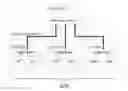
FIG. 2 shows a DSLAM architecture with CPEs attached to a CO via a cable bundle;
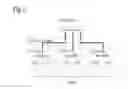
FIG. 3 shows a block diagram of a DSLAM comprising a central card with centralized MIMO processing capability;
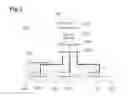
FIG. 4 shows a block diagram of a block diagram of a DSLAM for distributed crosstalk cancellation.
The approach provided allows for an efficient data MIMO (pre-)processing at a network component, in particular at a CO or at a DSLAM. Based on such preprocessing any kind of disturbance or noise, in particular crosstalk and/or interference may be reduced and/or at least partially cancelled.
FIG. 2 shows an exemplary DSLAM architecture comprising a central office CO that is connected via a cable bundler 201 comprising several sub-bundles 202, 203 and 204 with higher mutual crosstalk to customer premises equipments CPEs that are located at various distances d1 to d4 from the central office CO.
Hereinafter, exemplary embodiments of such efficient preprocessing are described.
Solution (a):
In this approach, the network component comprises a central card or entity providing a central processing functionality for at least one line card that is connected to and/or associated with the network component.
Such central card or entity may refer to or be associated with a central functionality, e.g., a program running at the network component or being associated with the network component, enabling said central processing functionality.
The central card or entity may be used to replace an existing function of the network component. It may also be added to said existing function of the network component.
FIG. 3 shows a block diagram of a DSLAM 300 comprising a central card 301 that is connected via a passive backplane 302 to line cards 303, 304 and 305. Each line card is connected to several digital subscriber lines that may be merged to one or more cable binders (not shown).
The central card 301 comprises packet queues 306, MIMO processing means 307, DMT to Ethernet processing means 308 and an Ethernet switch 309.
Each line card 303 to 305 comprises a DMT unit 310 to 312 that is fed with MIMO processed data via the Ethernet switch 309. The DMT unit 310 is further connected to the digital subscriber lines in order to convey data towards the CPEs.
In this approach, the receive and transmit MIMO processing and/or calculation is done in the central card 301. Hence, interference and/or crosstalk can be reduced or at least partially cancelled between any ports of the DSLAM 300, in particular regarding interferences between line cards 303 to 305.
After being determined or calculated, the discrete multi tones (DMTs) for transmission are encapsulated in Ethernet frames and are sent via the Ethernet switch 309 over the passive backplane 302 to the line cards 303 to 305. At the respective line card 303 to 305 the DMT unit 310 to 312 removes the Ethernet encapsulation and sends the DMT data over the digital subscriber line drivers to the twisted pair cables.
In receive or upstream direction, the DMTs are measured in the line card 303 to 305, the DMTs determined are then encapsulated in Ethernet frames and sent over the passive backplane 302 to the Ethernet switch 309 of the central card 301. In this case, the central card 301 can as well do a fully coherent calculation over all DSL ports in order to suppress and/or reduce crosstalk and/or interference.
The transmission of DMTs over the passive backplane 302 may require VDSL2 256 Mbit/s (e.g., 2000 frequencies, 16 bits per number, real and imaginary parts per frequency, 4 kHz sampling interval) per DSL port, which corresponds to a packet payload of 100 Mbit/s. Compared to the amount of data to be transferred, the DMT transfer over the passive backplane 302 is only 2.5 times larger than transferring the packet payload directly over the backplane. It is, however, a main difference that in the case of direct packet payload transfer, statistical multiplexing is possible, which is not in the case of DMT transfer.
This analogy changes completely if MIMO over different line cards is considered. Regarding the scenario of DMT transfer over Ethernet (i.e. the passive backplane 302) as shown in FIG. 3, the amount of data transmitted does not change. In case of packet payload transfer, however, all packets need to be transmitted to all line cards. If there are more than two line cards, the DMT transfer described leads to significantly less data generated for the passive backplane 302.
As an option, an additional clock (e.g., at a frequency of 4 kHz) can be distributed from the central card 301 over the passive backplane 302 to all line cards 303 to 305 in order to allow a coherent operation of several (in particular all) DSL ports.
The Ethernet transmission described, however, may not have to be synchronized. A jitter in the Ethernet transmission may be significantly below 4 kHz, hence the DMT data in the Ethernet frames can be mapped to the proper 4 kHz interval.
Solution (b):
As an alternative to solution (a), a distributed approach may be utilized without a deployment of a particular central processing unit.
FIG. 4 shows a central card 401 comprising an Ethernet switch that is coupled via a passive backplane 402 to several line cards 403 to 405. Each line card 403 to 405 has an aggregator and a digital signal processor to which several digital subscriber lines are connected. The central card 401 provides data multicast and each line card provides MIMO processing.
Instead of such central processing entity or function, the MIMO (pre-)processing like joint transmission may be provided at the line cards involved, wherein such processing can be done in parallel and/or synchronously without any direct data exchange required between the line cards themselves.
In case that the MIMO processing on the line cards is exactly the same, there may be no difference between the distributed or central processing.
A particular task for this solution (b) is to “synchronize” MIMO processing on different line cards.
Hence, in particular the following requirements may be met:
- i) Any weights for MIMO processing, i.e. results of channel estimations determined may be transmitted from the line cards to the central card and afterwards distributed from the central card to all line cards involved.
- Regarding VDSL systems, channel weights may be exchanged or distributed at a low speed as they are regarded quite stable over a considerably long period of time.
- Instead of utilizing the central card for exchanging MIMO weights, crosstalk channels can be used for data exchange as well.
- ii) Data for all ports involved from all line cards involved may need to be multiplexed to all line cards involved. IP multicast groups may be used for such purpose, i.e. for distributing data to several line cards.
- iii) Additionally, fixed scheduling and bitloading rules may be provided to ensure that data is transmitted in a synchronized manner.
A precise timing may be required for synchronizing transmit frames and/or receive frames in the order of one time sample. This may be feasible within a shelter where all line cards may be supplied by one local oscillator. For this purpose, an additional clock (e.g., at a frequency of 4 kHz) with respect to dynamic spectrum management (DSM) spanning over several DSLAMs could be provided that allows synchronizing several DSLAMs to one master clock. Such master clock could be deployed externally.
The following solutions may apply to achieve an efficient distributed crosstalk and/or interference handling:
- (1) The DSLAM will have to deal with a high amount of data traffic due to multicasting same data to several line cards. Such data traffic may exceed a maximum data rate of the Ethernet lines within the DSLAM. However, the amount of data can be reduced utilizing in particular at least one of the following concepts:
- a. Only if data is to be transmitted over a specific port, the data will be multicast to the line cards involved. During idle time, transmission data can be generated at the line cards according to predefined rules so that this data does not have to be sent over the Ethernet line.
- b. MIMO processing can be restricted to such (few) lines that lead to significant crosstalk with one another. Hence, cancelling or reducing crosstalk for these lines leads to a significant performance gain in case of MIMO pre-processing or post-processing.
- The decision regarding lines that substantially contribute to crosstalk effects can be made, e.g., based on thresholds and/or separately for each subcarrier. Due to slow variations inherent to the VDSL system, the decision about subcarriers which shall participate in crosstalk cancellation can be done at a low time scale hence resulting in a low amount of additional data overhead to be processed by the central card.
- Only a portion of the overall data can be sent for a specific CPE to all line cards involved thereby generating a significant amount of crosstalk on specific subcarriers. The line cards (as an option, additionally an information about the overall amount of data for a specific time frame may be given to the line card) may use specific mapping rules so that MIMO processing is done for the predefined subcarriers generating crosstalk to other lines of the cable binder (bundle).
- Bit loading as well as selection of a modulation and coding scheme (MCS) may be done based on predefined rules to synchronize the data transmission.
- The data distribution to the digital subscriber lines affected may be provided based on multicast groups, wherein all digital subscriber lines affected need to join the multicast group. These multicast groups can be different for the same line cards and they can be associated with different subcarriers and different ports.
- (2) Each line card may comprise and/or be associated with a (small) data buffer to compensate delay differences resulting from different Ethernet connections.
- (3) To avoid different scheduling decisions between line cards in case of HARQ retransmission, a reserved channel for HARQ retransmission may be provided without joint MIMO processing at the main CPE line.
- (4) Interfering lines with strong crosstalk need to be identified to allow for an efficient block-diagonalized MIMO preprocessing, i.e. to achieve a high performance gain at a feasible or efficient processing effort. Hence, existing, upcoming or already defined measurement procedures or solutions like information transfer over crosstalk could be utilized.
Furthermore, MIMO groups can be built mapping ports on a DSLAM level. However, such mapping may be a time consuming process. It can thus be an approach to store (e.g., regularly, such as every weekday) MIMO groups that have already been identified to be reused for fast adaptation purposes.
This advantageously allows for a fast adjustment to particular user behavior: For example, IPTV at evening primetime results in different crosstalk dependency compared to business traffic during weekdays or low traffic after midnight.
Advantageously, lines of strong mutual crosstalk once identified shall be stored at the central office.
IMPLEMENTATION AND ADVANTAGES
One particular advantage provided by this approach is that crosstalk cancellation can be supplied to already deployed systems by adding a central MIMO processing card or by updating a firmware of a system.
Thus, an operator has the benefit of an improved performance without any need for rearrangement of physical lines to line cards, just by replacing available line cards or by a software and/or firmware update.
The approach may enable plug and play, i.e. comprising identification of line cards with large crosstalk, definition of multicast groups, organization of the distributed MIMO processing etc.
The solution (a), MIMO processing at the central card, is in particular useful if a high number of lines show crosstalk. The solution (b), distributed MIMO processing, however, can be advantageously utilized in case there are few lines which cause significant trouble, e.g., in case of a minor number of CPEs that are connected via long lines to the CO and are therefore very susceptible to crosstalk.
ABBREVIATIONS
ACK acknowledge
ADC analog-to-digital converter
AGC automatic gain control
ARQ automatic repeat-query (or query)
CO central office
CPE customer premises equipment
DL downlink
DMT discrete multi tone
DSL digital subscriber line
DSLAM digital subscriber line access multiplexer
DSP digital signal processing
HARQ hybrid automatic repeat request
MC multicast
MCS modulation and coding scheme
MIMO multiple-input-multiple-output
MS mobile station
MMSE minimum mean square error estimation
NACK not acknowledge
PSD power spectral density
SC sub-carrier
ZF zero forcing
Claims
1-17. (canceled)
18. A method of data processing at a digital subscriber line access multiplexer, which comprises:
providing the digital subscriber line access multiplexer with a plurality of line cards having digital subscriber lines attached thereto and a central card with an Ethernet switch coupled to the line cards;
conducting a receive and/or transmit multiple-input-multiple-output processing; and
thereby at least partially reducing or canceling crosstalk and/or interference based on the processing.
19. The method according to claim 18, wherein the digital subscriber lines are at least partially merged into at least one cable binder.
20. The method according to claim 18, which comprises providing the receive and/or transmit multiple-input-multiple-output processing at the central card, and connecting the central card to the line cards via a passive backplane.
21. The method according to claim 20, wherein the Ethernet switch is connected to a discrete multi tone unit at each connected line card.
22. The method according to claim 21, wherein the receive and/or transmit multiple-input-multiple-output processing is done, mapped to discrete multi tones and conveyed via the Ethernet switch towards the line cards.
23. The method according to claim 20, which comprises conveying a clock signal from the central card to enable substantially coherent operations of and/or at the line cards.
24. The method according to claim 20, which comprises conveying a clock signal from the central card to enable substantially coherent operations at the port of the line cards.
25. The method according to claim 18, which comprises carrying out the receive and/or transmit multiple-input-multiple-output processing substantially in parallel and/or substantially synchronously.
26. The method according to claim 18, which comprises performing the receive and/or transmit multiple-input-multiple-output processing at the line cards.
27. The method according to claim 26, which comprises carrying out the receive and/or transmit multiple-input-multiple-output processing substantially in parallel and/or substantially synchronously.
28. The method according to claim 26, which comprises synchronizing the multiple-input-multiple-output processing on different line cards.
29. The method according to claim 26, which comprises conveying a parameter for multiple-input-multiple-output processing from the line cards to the central card and/or from the central card to the line cards.
30. The method according to claim 26, which comprises utilizing fixed scheduling and/or bitloading rules for synchronization purposes.
31. A data processing device, comprising at least one of a processor unit or a hard-wired circuit or a logic device configured to execute thereon the method according to claim 18.
32. The device according to claim 31, configured as a communication device.
33. The device according to claim 32, wherein said communication device is incorporated in a central office, associated with a central office, or a digital subscriber line access multiplexer.
34. A communication system, comprising a device configured and programmed to carry out the method according to claim 18.
Images & Drawings included:


Sources:
- United States Patent and Trademark Office - verify current appl. status at the USPTO↗
Similar patent applications:
- » 20110310911
Method and device for data processing and communication system comprising such device - » 20100128767
Method and Device for Processing Data and Communication System Comprising Such Device - » 20100138556
Method and device for processing data and communication system comprising such device - » 20110134975
METHOD AND DEVICE FOR DATA PROCESSING AND COMMUNICATION SYSTEM COMPRISING SUCH DEVICE - » 20110176588
METHOD AND DEVICE FOR DATA PROCESSING AND COMMUNICATION SYSTEM COMPRISING SUCH DEVICE - » 20080279151
METHOD AND DEVICE FOR PROCESSING DATA AND COMMUNICATION SYSTEM COMPRISING SUCH DEVICE - » 20100246447
METHOD AND DEVICE FOR PROCESSING DATA AND COMMUNICATION SYSTEM COMPRISING SUCH DEVICE - » 20100302929
Method and device for data processing and communication system comprising such device - » 20110002423
Method and device for processing data and communication system comprising such device - » 20110122920
Method and device for processing data and communication system comprising such device
Recent applications in this class:
- » 20250096843 2025-03-20
ACTIVE SINGLE-ENDED TRANSMISSION CABLE - » 20250080164 2025-03-06
Method and System for Crosstalk Prevention in Wired Communication Systems - » 20240348285 2024-10-17
SELF-INTERFERENCE, ECHO AND CROSSTALK MITIGATION IN MULTI-LANE INTERCONNECTS - » 20240305332 2024-09-12
Near-end Crosstalk Mitigation in a SerDes Device - » 20240305331 2024-09-12
TRANSMITTER, RECEIVER, AND TRANSCEIVER INCLUDING TRANSMITTER AND RECEIVER - » 20240235611 2024-07-11
NETWORK USING ASYMMETRIC UPLINK AND DOWNLINK BAUD RATES TO REDUCE CROSSTALK - » 20240235610 2024-07-11
Systems and methods for crosstalk suppression - » 20240214029 2024-06-27
MITIGATING NEXT INTERFERENCE - » 20240113743 2024-04-04
ACTIVE ELECTRONIC SIGNAL CROSSTALK CANCELLATION - » 20240063846 2024-02-22
APPARATUS AND METHOD FOR CANCELLATION OF RF INTERFERENCE IN A WIRED DATA COMMUNICATION LINK
Recent applications for this Assignee:
- » 20160192434 2016-06-30
System information acquisition based on paging message indicators for normal and extended modification periods - » 20160128046 2016-05-05
Bearer Configuration in Dual Connectivity Communication - » 20160112911 2016-04-21
Small cell mobility enhancement - » 20150180556 2015-06-25
Method and apparatus for codebook-based precoding in MIMO systems - » 20150119083 2015-04-30
Method to trigger devices based on their location - » 20150071083 2015-03-12
ADAPTING A SYSTEM BANDWIDTH TO BE USED BY A USER EQUIPMENT FOR AN UPLINK COMMUNICATION CHANNEL - » 20150065108 2015-03-05
COORDINATED SCHEDULING WITH ADAPTIVE MUTING - » 20150049676 2015-02-19
Configuration Uncertainty - » 20150031355 2015-01-29
METHOD AND APPARATUS FOR SINGLE-RADIO-VOICE-CALL CONTINUITY - » 20150029943 2015-01-29
Shared access of uplink carrier